People

Umar ibn al-Khattab

Umar ibn al-Khattab was the second Rashidun caliph. His rule from 634 to 644 saw major Muslim victories over Byzantine and Sasanian forces, the organisation of garrison cities, provincial government and military registers.

Born
c. 584 CE
Died
644 CE
Role
Caliph

Second caliph (c. 584-644)

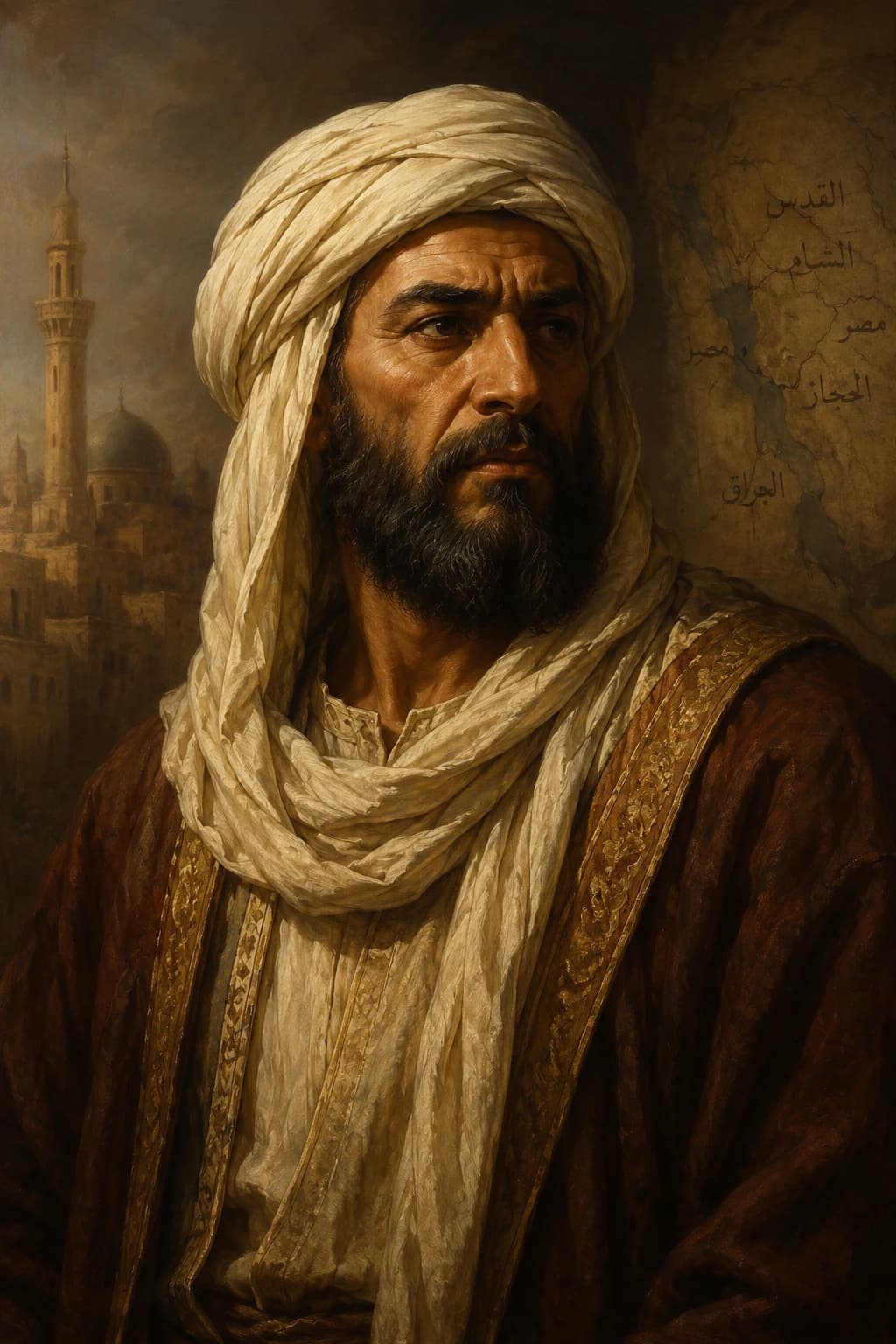
Portrait-style illustration of Umar ibn al-Khattab before a map of early Islamic expansion

Quick answer

Umar ibn al-Khattab was the second Rashidun caliph. His rule from 634 to 644 saw major Muslim victories over Byzantine and Sasanian forces, the organisation of garrison cities, provincial government and military registers.

Born
c. 584 CE
Died
644 CE
Role
Caliph
Years
c. 584-644 CE
Quick facts

Profile details

Additional identity and tagging details that are not already covered in the introduction.

Also known as
Umar, Omar ibn al-Khattab, Umar al-Faruq
Region
Arabia, Syria, Iraq, Egypt, Persia, Arabia and the early caliphate
Facts

Umar ibn al-Khattab timeline facts

Selected specifics from this profile's life story.

before 622
A Meccan convert

Umar belonged to the Quraysh in Mecca and became one of the most prominent early Muslims.

622-632
Senior companion

In Medina, Umar was counted among Muhammad's senior companions as the Muslim community took political form.

634-644
Empire taking shape

Under Umar, Muslim forces took Syria, Egypt, Iraq and much of the Sasanian world.

644 onward
Assassination and legacy

Umar was assassinated in 644 and remembered as one of the central Rashidun caliphs in Sunni tradition.

Life Journey

The caliph who organised early expansion

Follow Umar from Meccan opposition and conversion to the rapid growth and administration of the early caliphate.

Complete chronology

before 622

A Meccan convert

Umar ibn al-Khattab came from the Quraysh, the Meccan tribe connected to the Kaaba and the city's public life. Islamic tradition remembers his conversion as a major strengthening moment for the early Muslim community, because he brought force of character, social standing and public confidence to a movement under pressure. The details of conversion stories belong to sacred memory, but Umar's later importance is clear. He emerged as one of the companions whose authority mattered when Islam moved from a Meccan message to an organised community.
622-632

Senior companion

After the Hijra, Medina became the centre of an organised Muslim community. Umar belonged to the circle of senior companions who witnessed the community's transformation through worship, law, alliances, disputes and war. His importance was not only military. Later Islamic memory associated him with judgement, discipline and a demanding sense of communal obligation. Those qualities helped make him a plausible leader when the first caliphate had to survive beyond Muhammad and Abu Bakr.

634

Second caliph

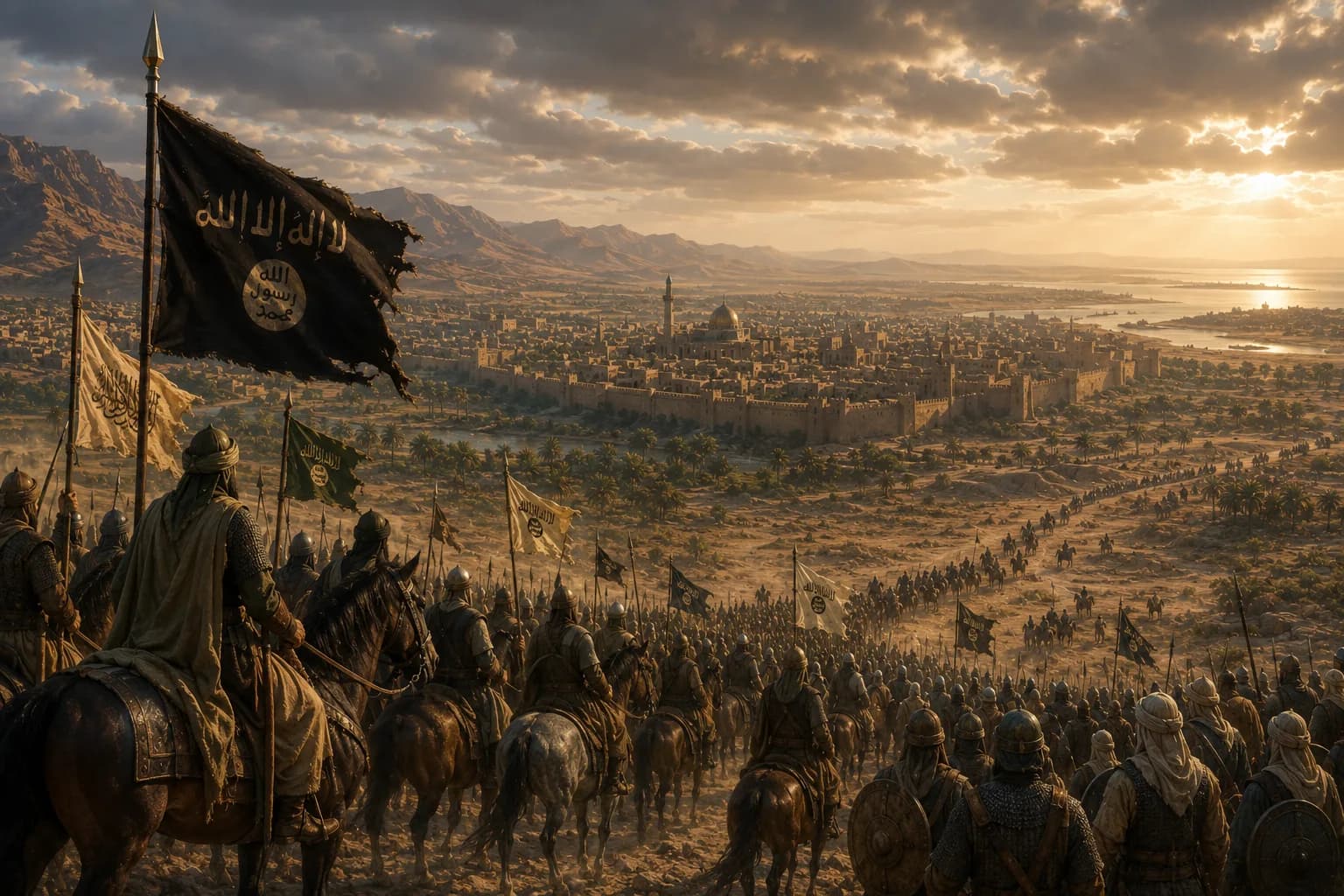
When Abu Bakr died in 634, Umar became the second caliph. He inherited a community that had survived the Ridda Wars and was now fighting on the Byzantine and Sasanian frontiers. The scale of events was extraordinary. The caliphate was still young, but its armies were entering regions shaped by centuries of imperial rule. Umar's task was not simply to approve conquest. He had to keep expanding forces connected to central authority and turn military success into governable territory.

634-644

Empire taking shape

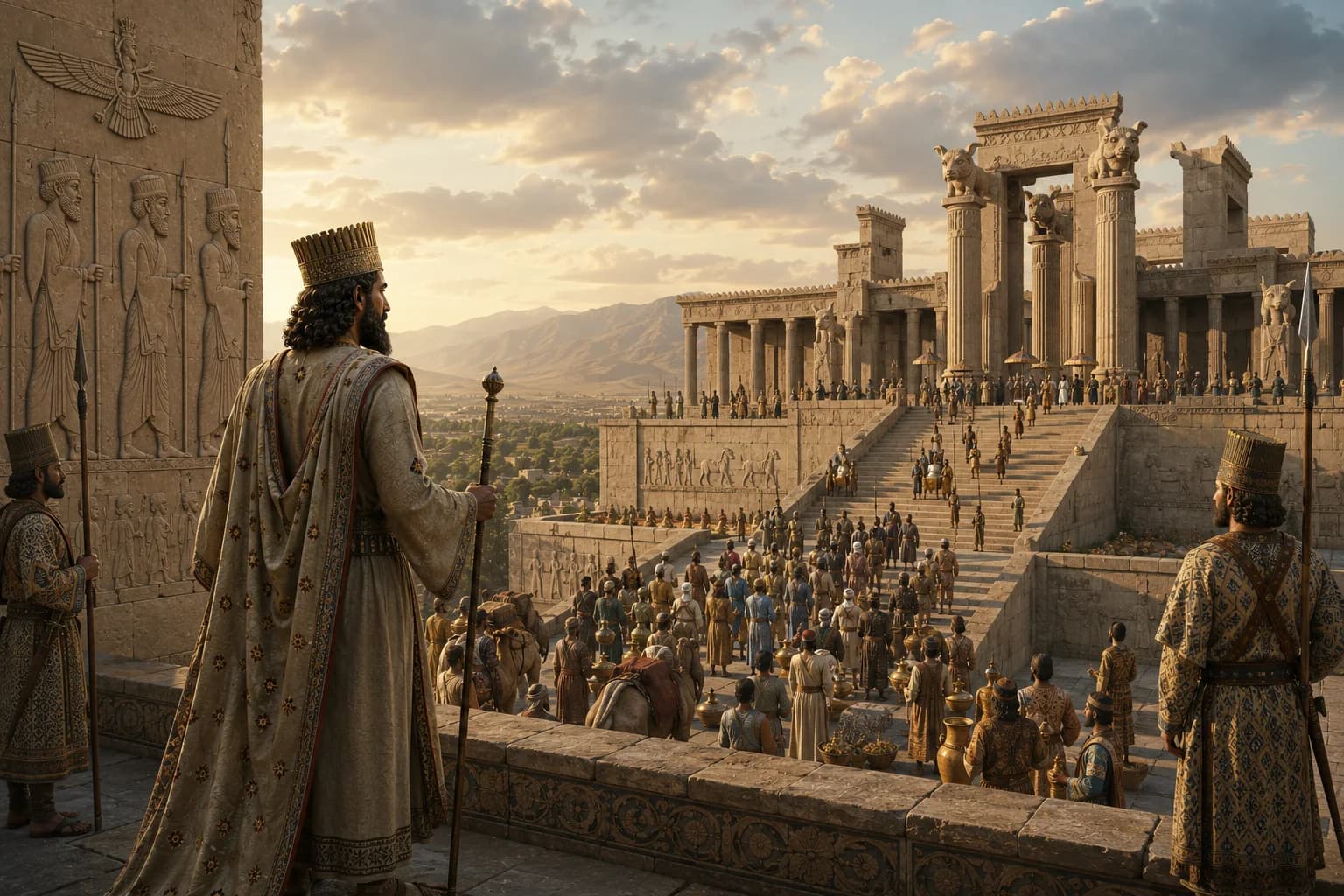
Umar's caliphate coincided with decisive victories over older imperial powers. Byzantine Syria and Egypt came under Muslim rule, while Sasanian power in Iraq and Persia was broken. Later tradition connected Umar with garrison cities such as Kufa, Basra and Fustat, registers for military stipends, provincial governors and systems for managing conquered land and revenue. These arrangements did not yet form a polished imperial bureaucracy, but they helped the early caliphate survive the shock of success.

644 onward

Assassination and legacy

Umar was assassinated in Medina in 644. His death forced another succession decision and brought Uthman ibn Affan to the caliphate. Umar's reputation remained enormous, especially in Sunni memory, where he stands as the second of the Rashidun, the rightly guided caliphs. His legacy is tied to expansion, public discipline, administrative order and the transformation of the early Muslim community into a ruling power that had to govern lands far beyond Arabia.

Continue in context

Connected stories

Move from the profile into the wider events and settings this figure belongs to.

Tertiary paths

Content note

This profile is written for educational use and connects to related Stories of History pages. Visuals are reviewed for educational context and may include historical images, archival material, or interpretive reconstructions. Image policy

References

Sources & Further Reading

Reliable reference works, archives and reading paths connected to this profile.

Further reading

  1. Encyclopaedia Britannica, Search results for Umar ibn al-Khattab,” accessed June 2026.Open source
  2. WorldCat, Books and library holdings for Umar ibn al-Khattab,” accessed June 2026.Open source

Primary sources

  1. Library of Congress, Search results for Umar ibn al-Khattab,” accessed June 2026.Open source

Reviewed claim sources

Loading reviewed claim sources...

A weekly route through history

Find out first about the latest published stories, feature notes and occasional Premium offers in one weekly email.