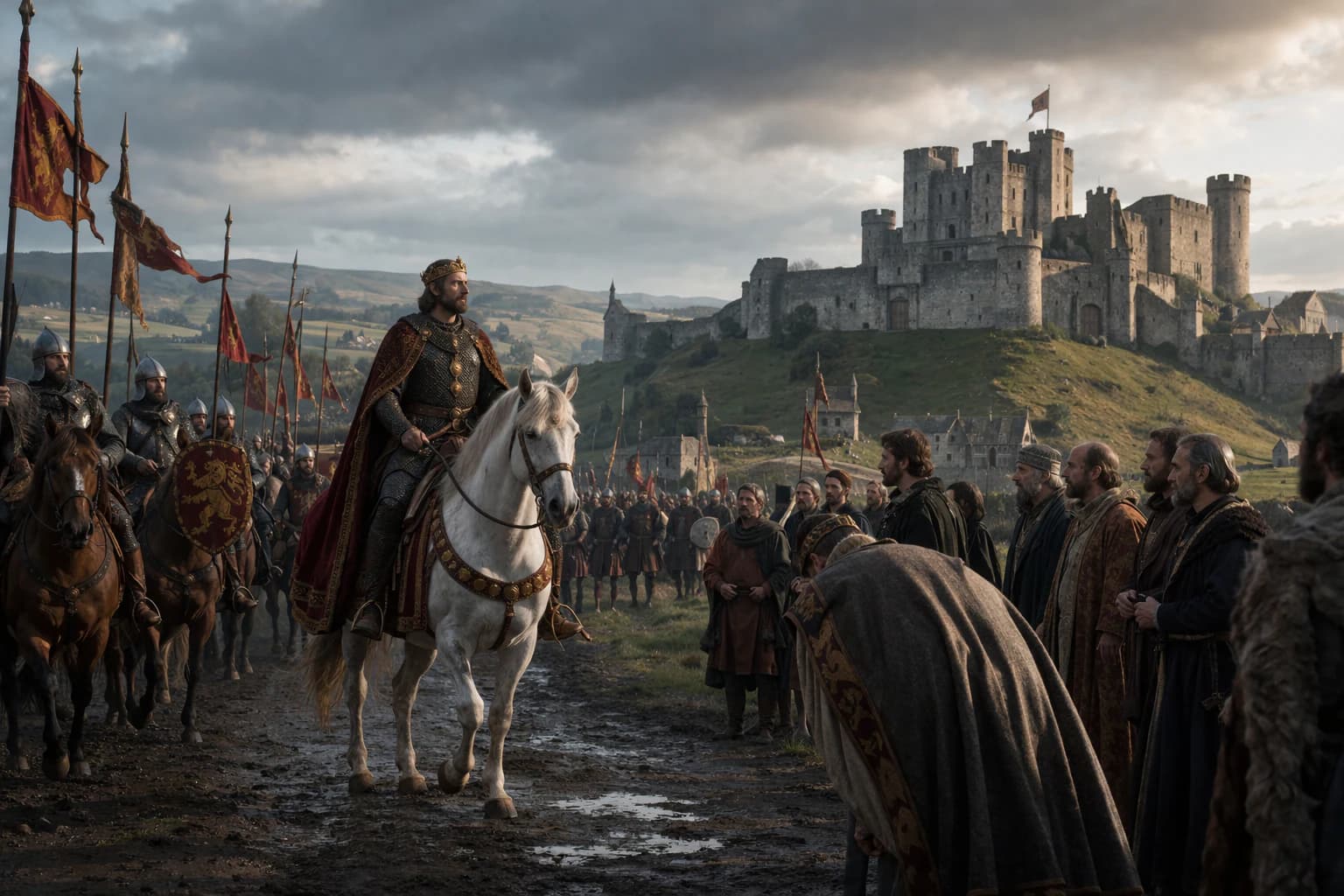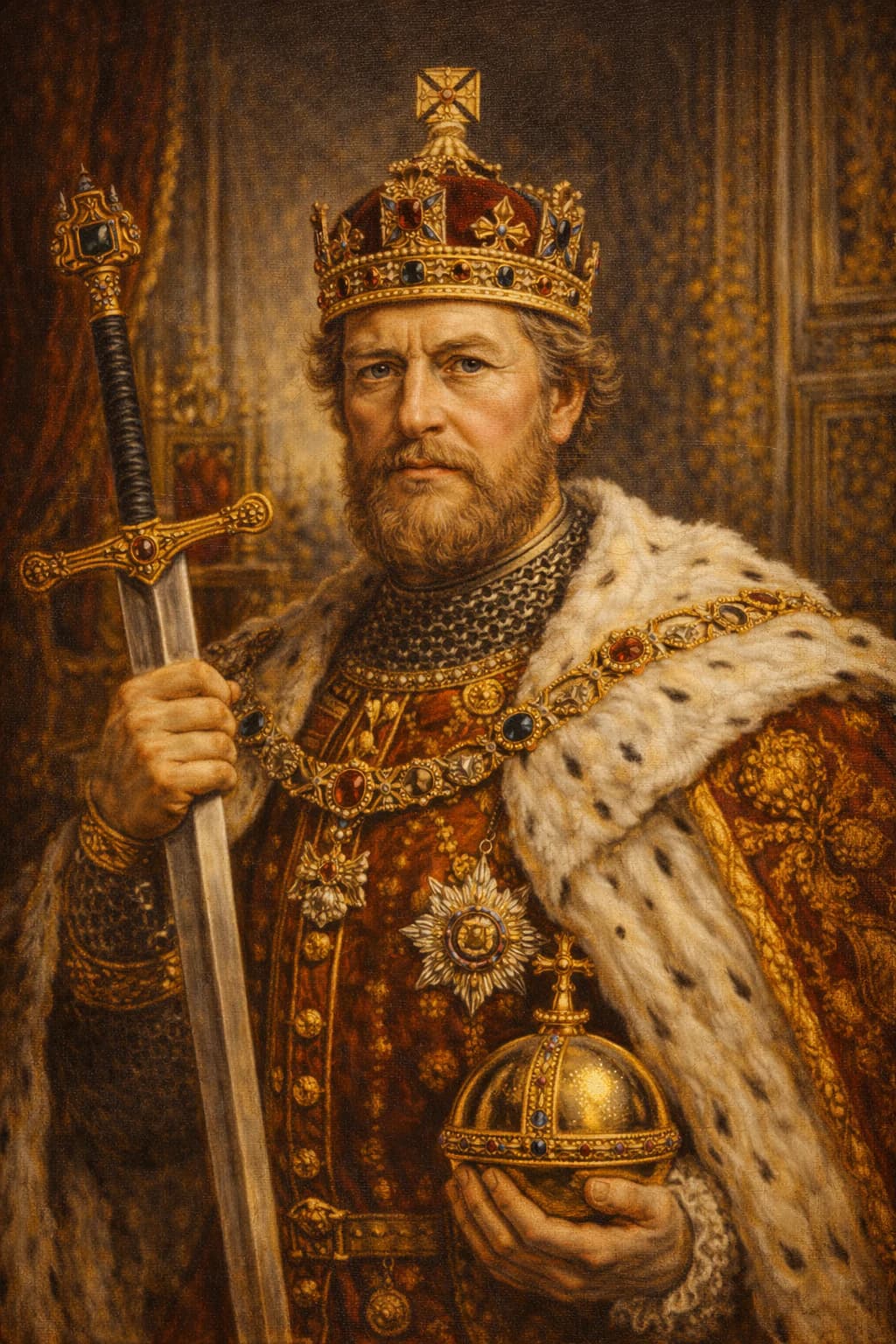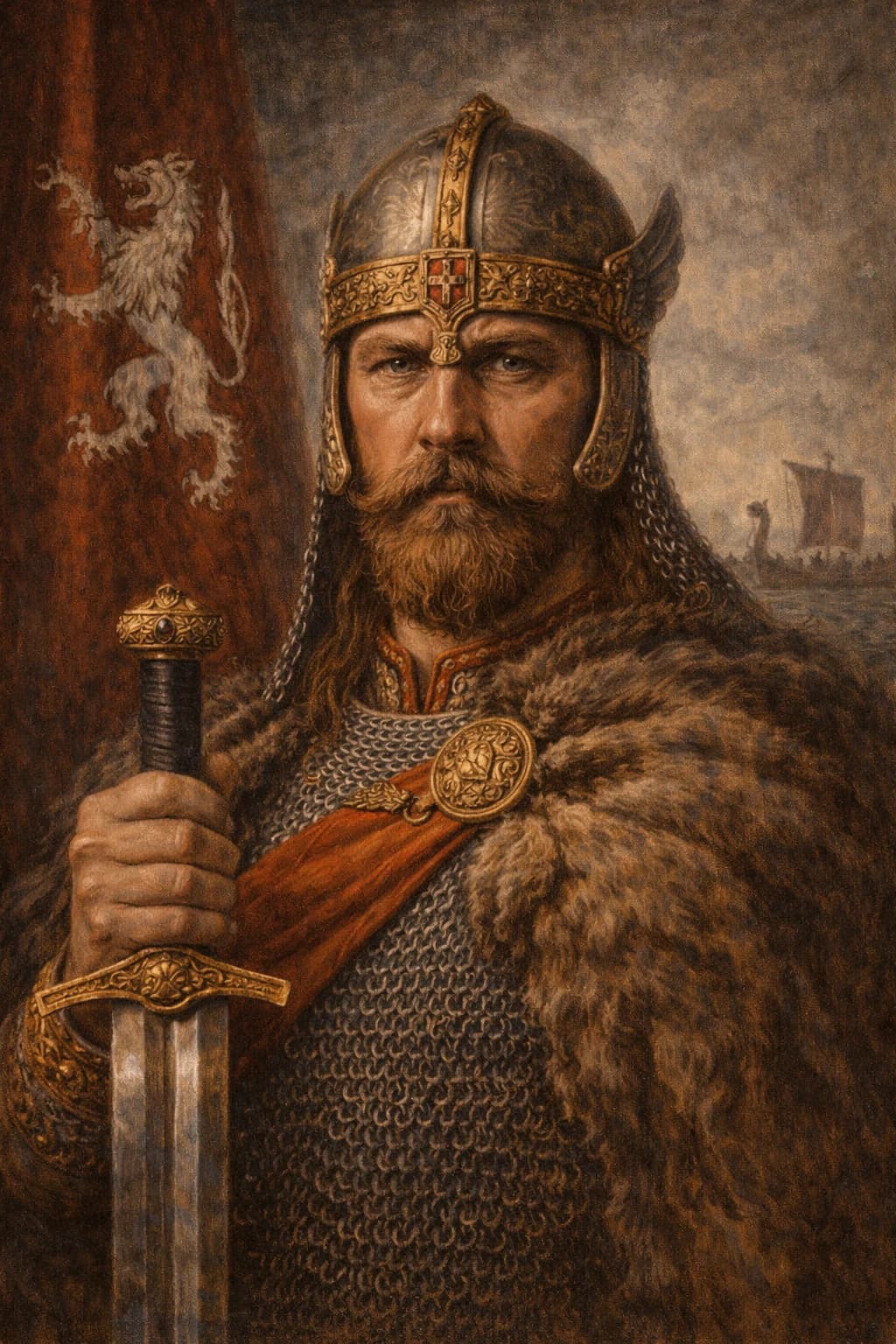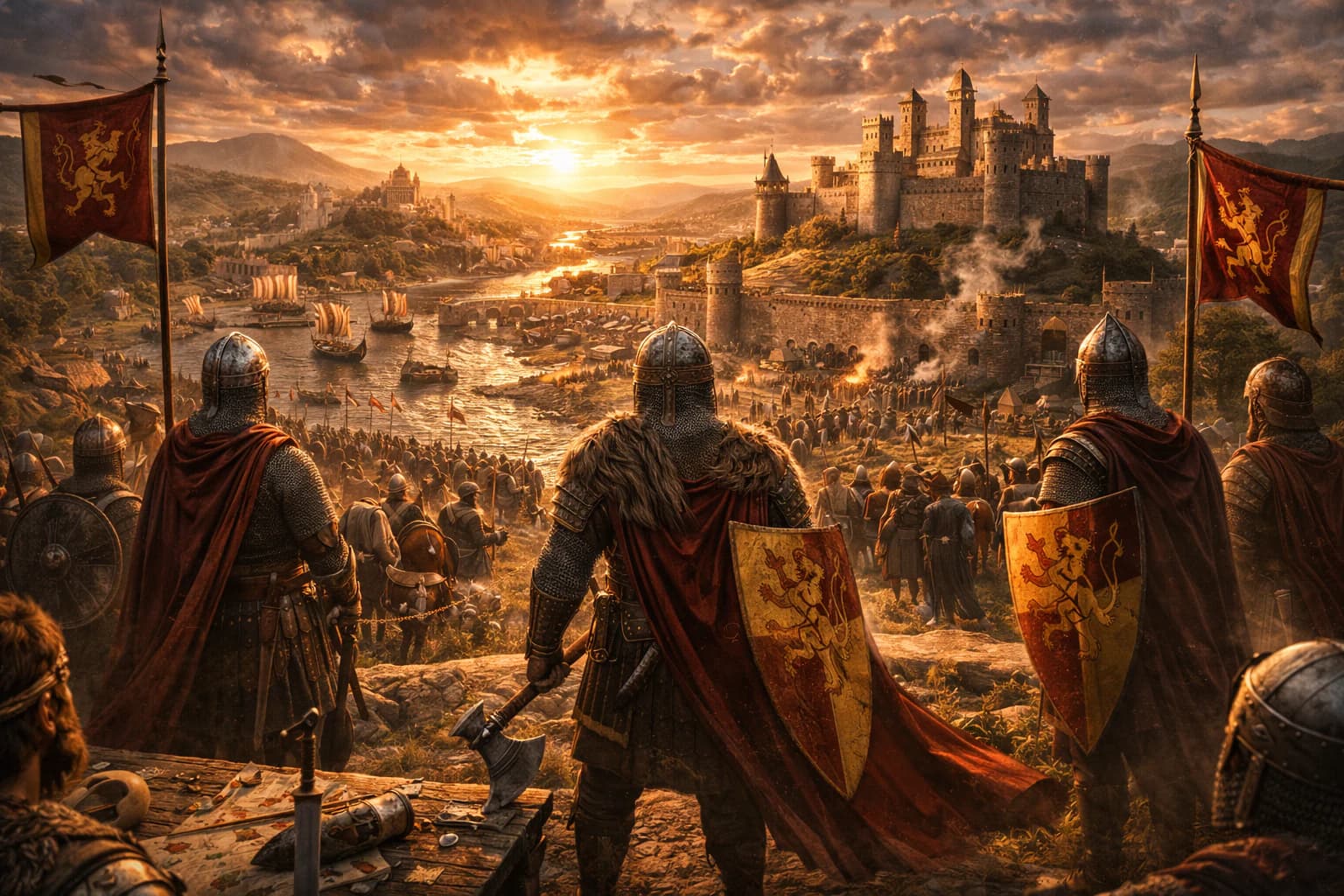
Armoured Norman horsemen during the Norman Conquest of England, with a timber motte-and-bailey castle and the Channel coast under a cold medieval sky
Free Story

The Norman Conquest of England

Follow the Normans from Viking settlers to 1066, castles, conquest, and a transformed England.

10 chapters

Next
Context

Introduction

Overview

The Norman Conquest of England was the takeover of the kingdom by William, Duke of , after his victory at the Battle of in 1066. Often shortened to the Norman Conquest, it replaced much of the Anglo-Saxon ruling elite, reshaped landholding, strengthened royal power, and tied England more closely to continental Europe. Castles, the Domesday Book, Norman French influence, and new forms of government made 1066 one of the most important turning points in English history.

What you’ll learn: You’ll see how the Normans turned military skill and political ambition into lasting power. This story explains why 1066 mattered so much and how Norman rule changed England and influenced the wider medieval world.

Key forces

The Making of Normandy
911 CE
Step 1 of 10911 CEAccessible mode

The Making of Normandy

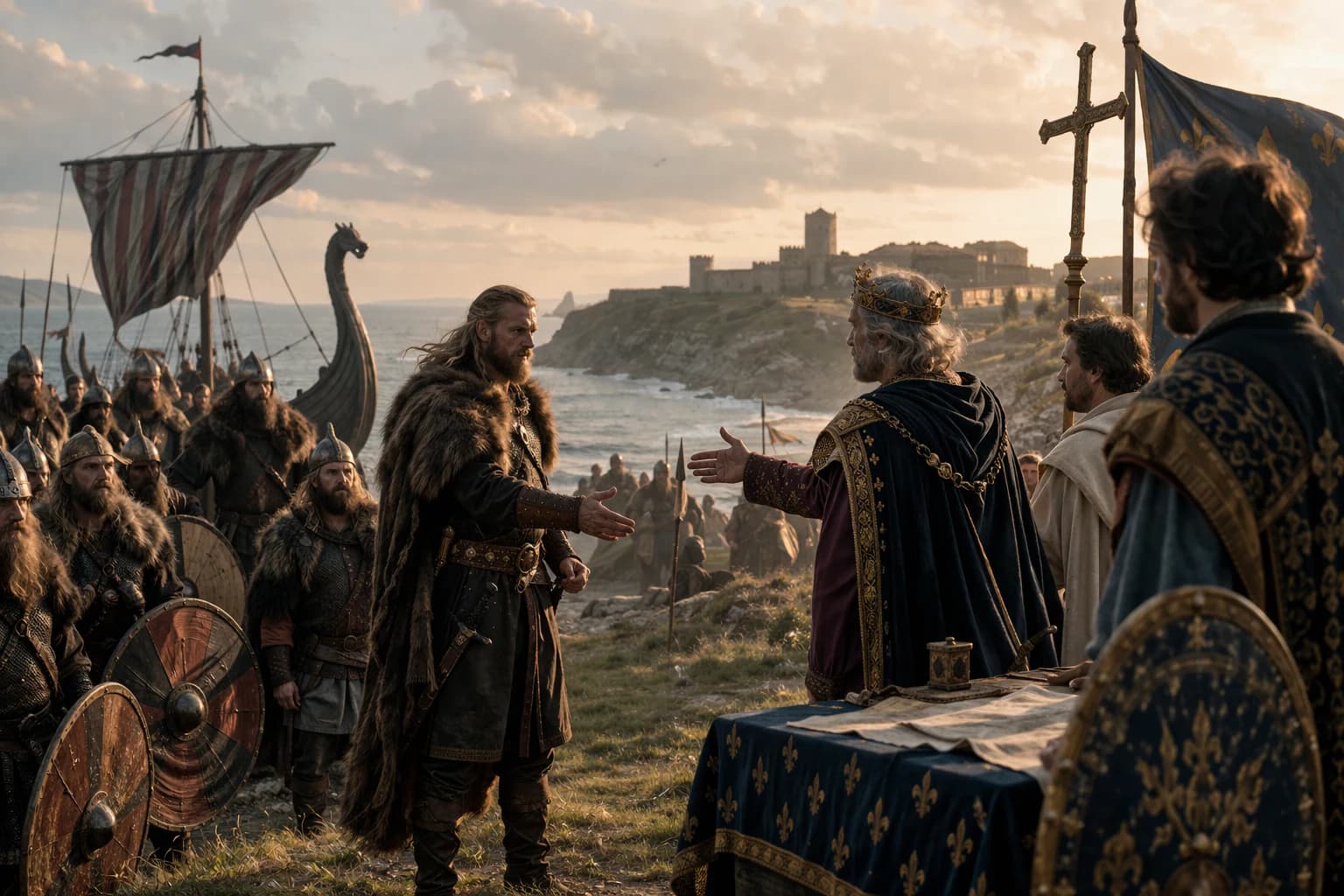
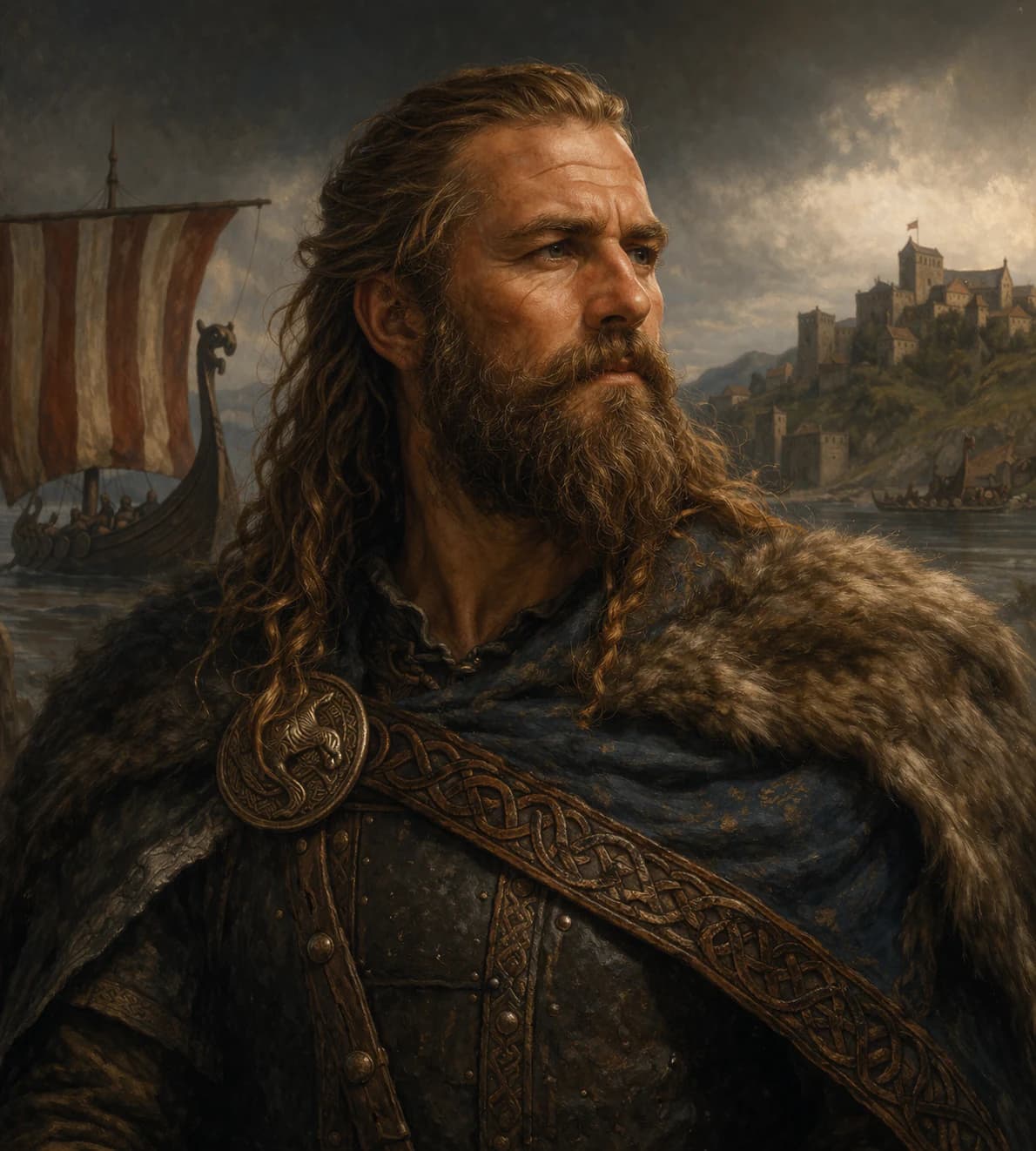
A deal in 911 changed a feared Viking force into new rulers in northern France. That deal began .

For years, Viking raiders attacked the lands of the Frankish kings. They sailed up rivers, struck towns, and then vanished.

One leader, Rollo, became too powerful to ignore. Instead of endless fighting, the Frankish crown offered him land near the lower .

The raiders won a home, and the home changed them.

Rollo accepted the grant, settled his followers, and entered the Christian world through baptism. His people mixed with local Franks, learned the language, and defended the region.

This changed daily life. The violence did not vanish at once, but the newcomers became landholders, rulers, and soldiers tied to local society.

later produced Duke William, who conquered England in 1066. This step shows how a settlement can reshape both a people and a kingdom.

Ducal Power Takes Shape
1047 CE
Step 2 of 101047 CEAccessible mode

Ducal Power Takes Shape

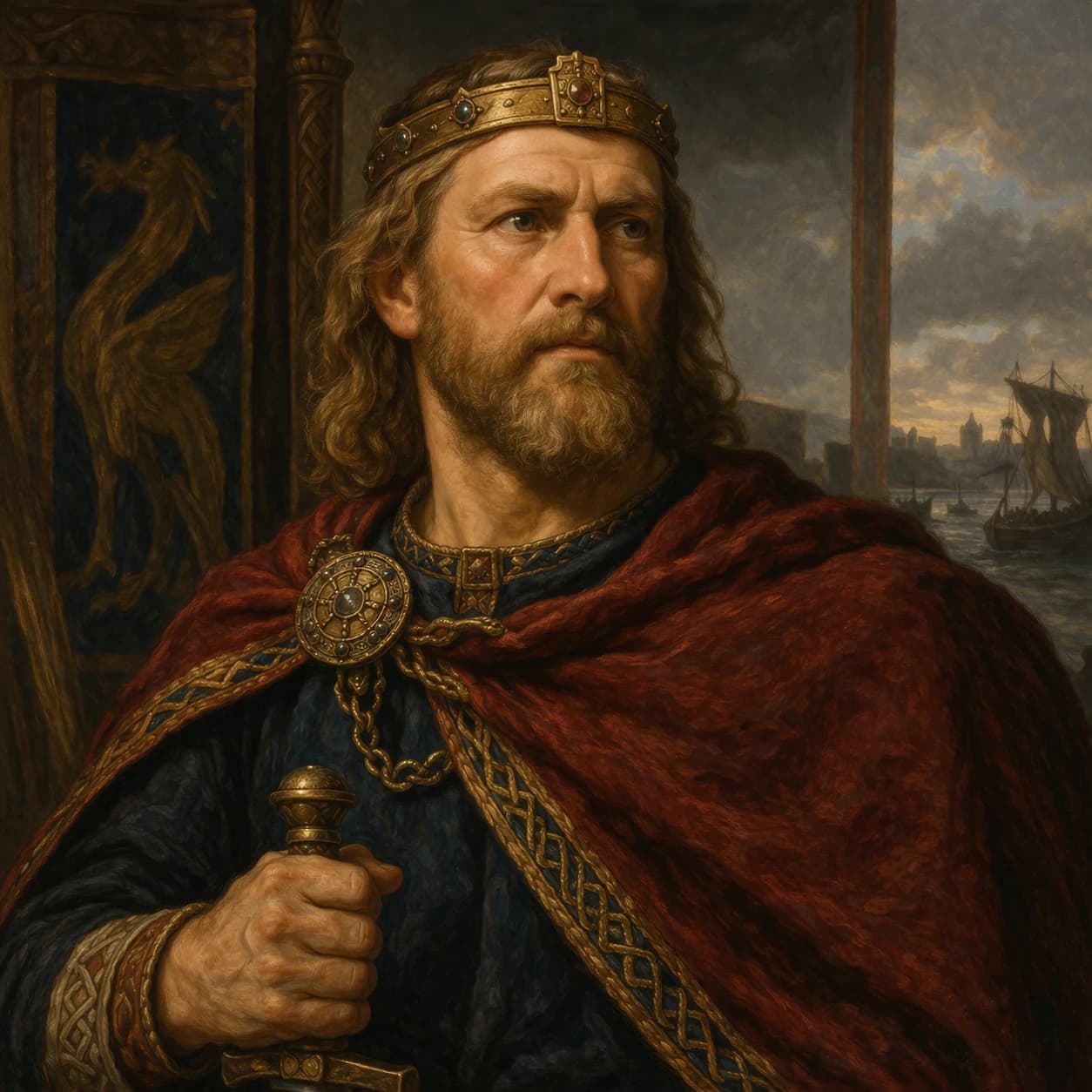
was not always strong. Young Duke William had to fight to stay in power.

Before 1047, was unstable. Powerful nobles often ignored the duke and fought each other. Law and order were weak, and control was spread out.

This began to change when William, still young, faced a major rebellion. He needed allies and strong leadership to survive.

Power in would come from control, not chaos.

At the , William and his ally, the King of France, defeated the rebellious lords. This victory helped William take real control.

After this, William punished rebels and built loyalty. Castles were strengthened, and knights were expected to serve him directly.

By bringing order to , William created a disciplined military state. This strong system later made his invasion of England possible.

Edward’s Death Sparks a Crisis
1066 CE
Step 3 of 101066 CEAccessible mode

Edward’s Death Sparks a Crisis

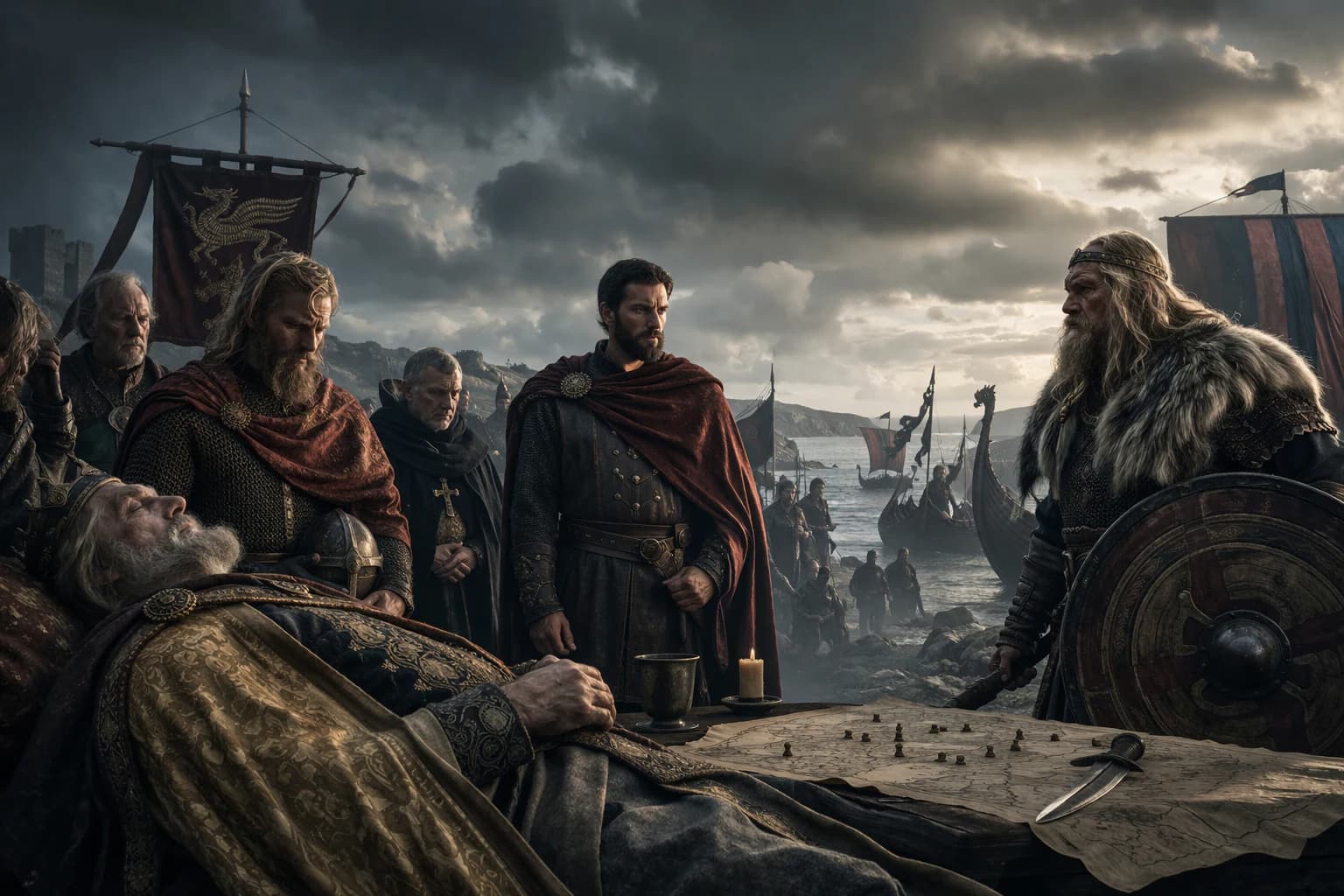
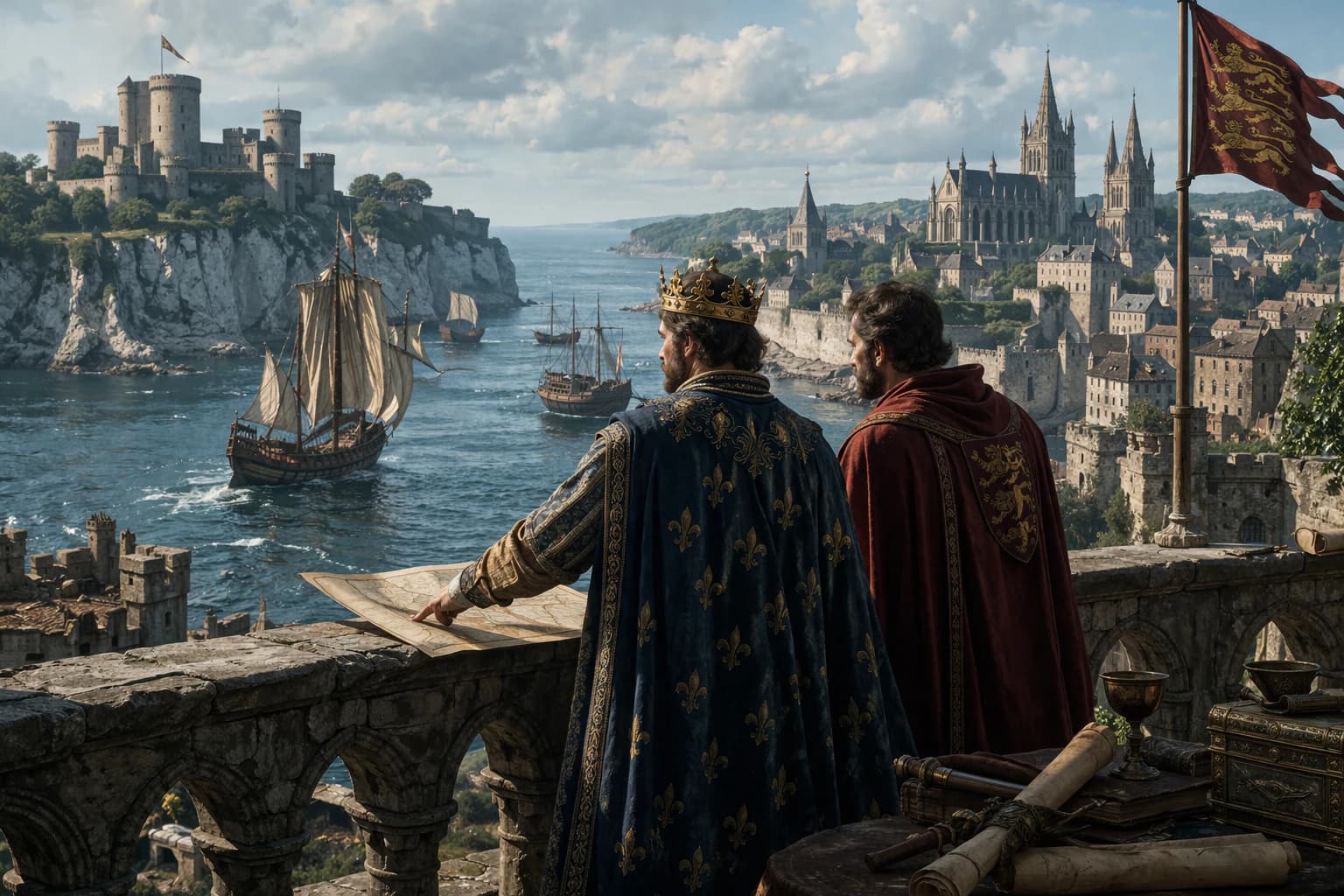
When King Edward the Confessor died in 1066, England suddenly had no clear next king. That turned one death into a three way fight.

Before Edward died, England was rich, organized, and well connected across . Its throne was not just important to English nobles. Powerful rulers abroad were watching too.

Harold Godwinson, England’s strongest earl, was chosen king right after Edward’s death. But William, duke of , said Edward had promised him the throne. Harald Hardrada, king of Norway, also claimed England through an older Scandinavian agreement.

England was not just losing a king. It was becoming a prize.

These rival claims turned a succession problem into an international struggle. looked across , Norway looked back to Viking age power, and Harold had to defend his crown from both.

For ordinary people, this meant taxes, military call ups, fear, and uncertainty. Armies were gathering, and everyone knew a decision would be forced by war.

This crisis helps explain why 1066 changed England so deeply. The battle was not only about one crown. It tied England’s future to the wider politics of Europe.

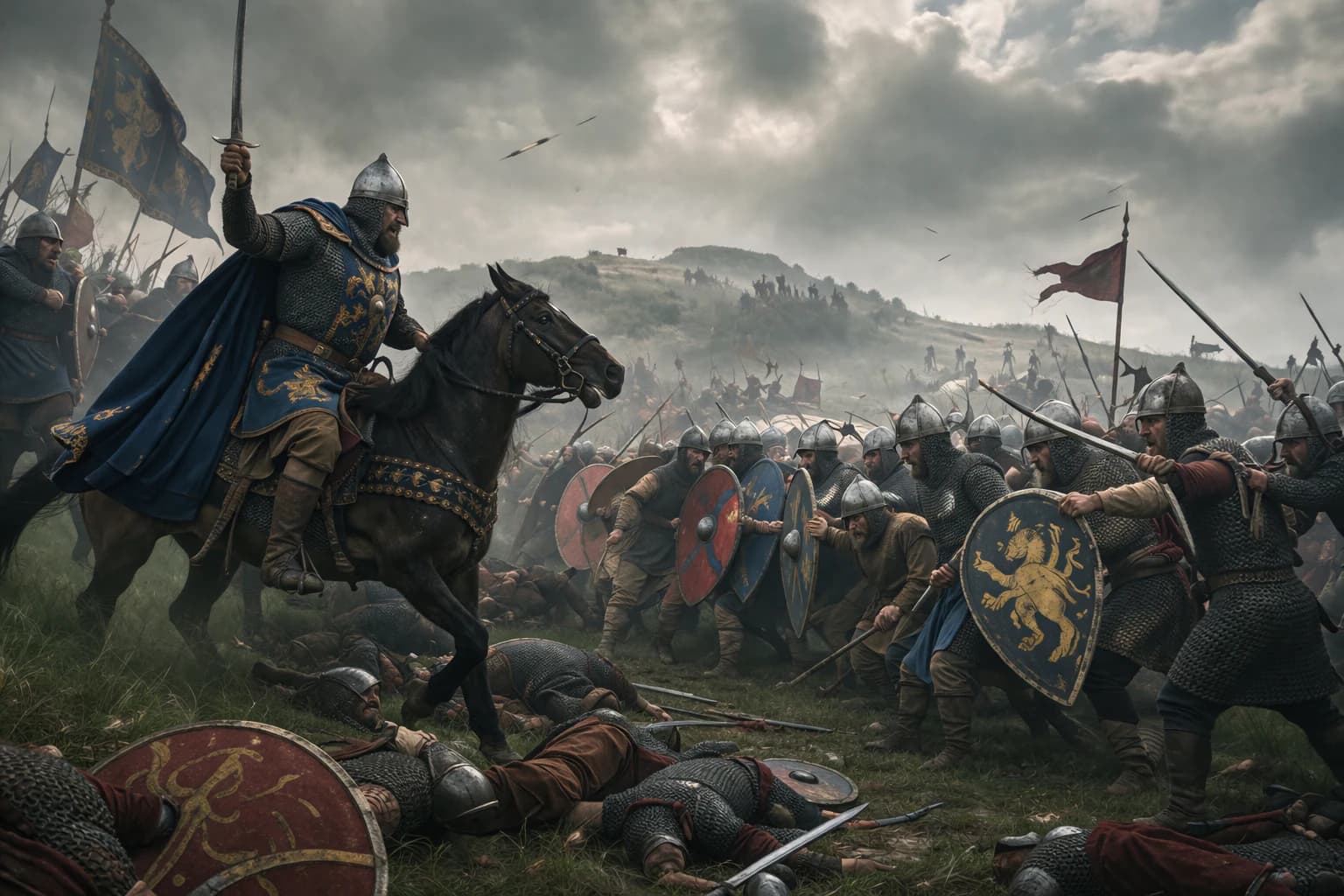
The Battle of Hastings during the Norman Conquest of England in 1066
1066 CE
Step 4 of 101066 CEAccessible mode

The Battle of Hastings

A single battle would decide who ruled England. Everything came down to one brutal day in 1066.

England was already in chaos. King Harold had just fought and won a hard battle in the north at . His army was tired and had marched for days.

At the same time, William of landed in the south with a fresh, well-prepared force. He wanted the English crown and was ready to fight for it.

One exhausted army faced one prepared army, and the result would shape a nation.

The two sides met at . Harold’s men held a strong defensive line on a hill. William’s forces attacked again and again, even pretending to retreat to break the line.

By the end of the day, Harold was dead and his army collapsed. Without a king, England had no clear leader to resist William.

This battle changed everything. It opened the door for Norman rule, reshaping England’s language, power, and culture in ways still felt today.

William Secures England
1066 CE
Step 5 of 101066 CEAccessible mode

William Secures England

Winning one battle was not enough. William still had to turn victory into control.

After , England did not instantly become Norman. was still outside William’s hands, and important English nobles still had choices to make.

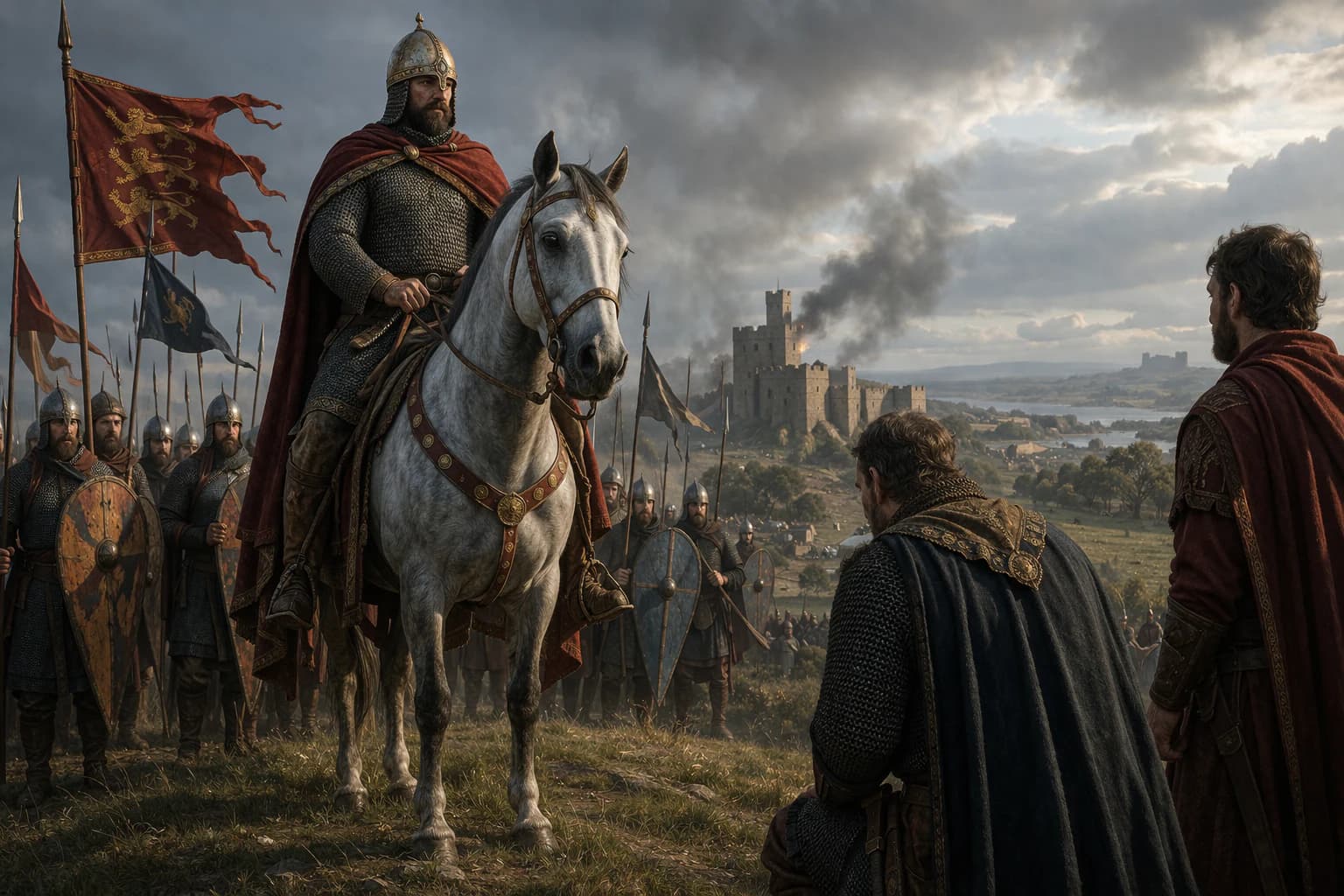
William marched through southern England instead of rushing straight into . He burned and threatened where needed, but he also showed that resisting him would only bring more loss.

won the field. Submission won the kingdom.

Key churchmen and nobles finally gave in. Edgar the Aetheling, Earls Edwin and Morcar, and Archbishop Stigand submitted as William closed in on the capital.

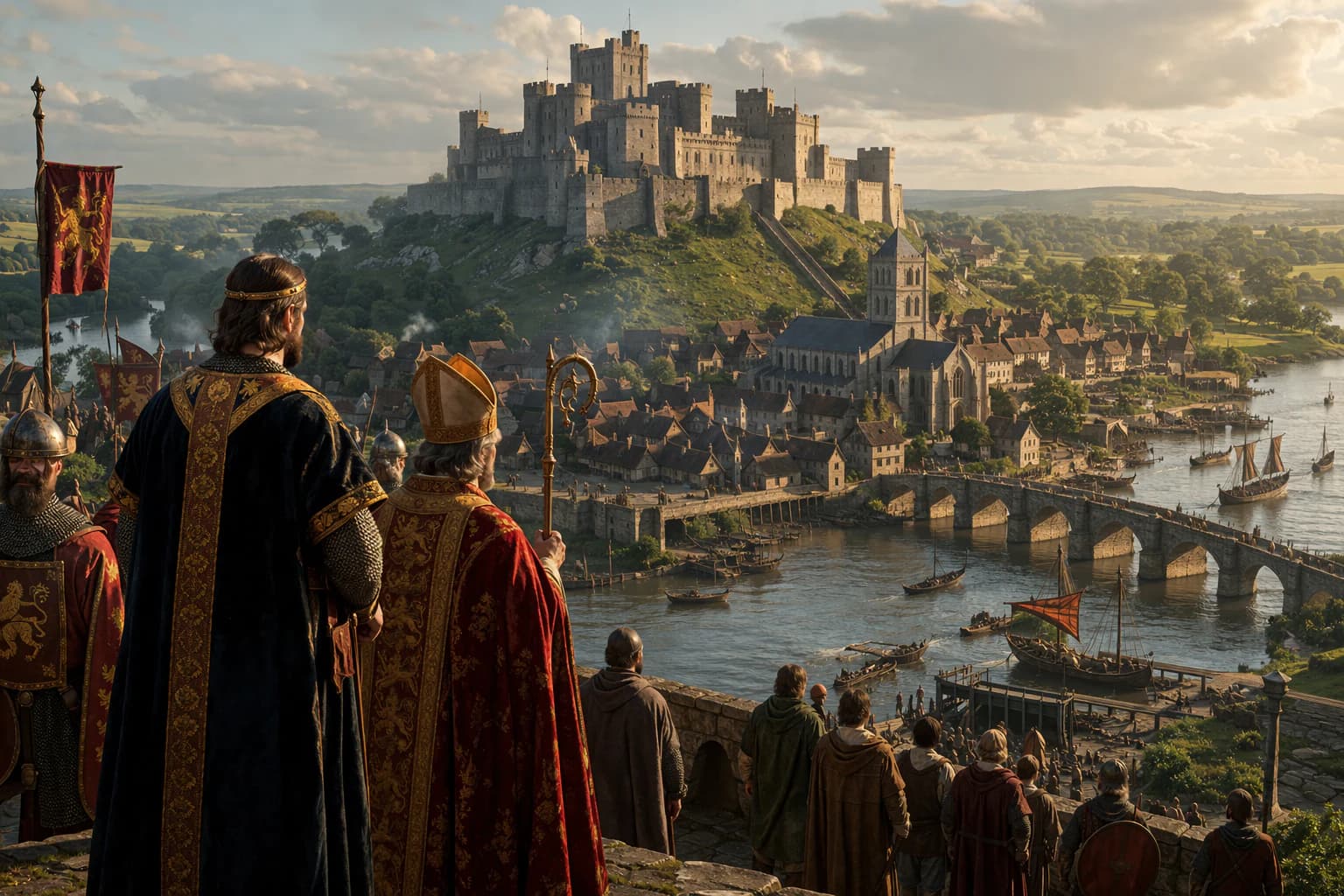
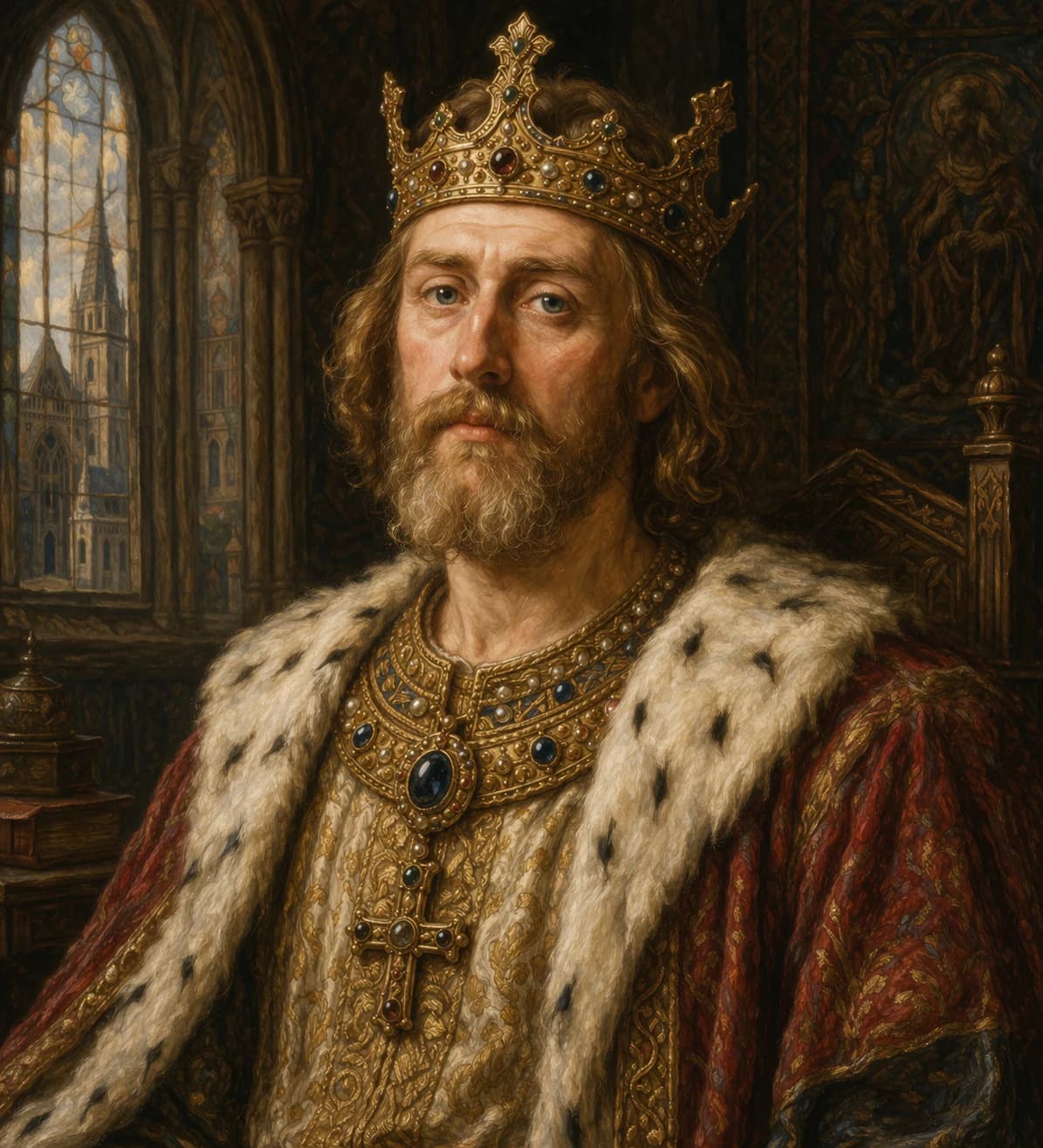
On Christmas Day 1066, William was crowned king in Westminster Abbey. That ceremony turned a foreign invasion into a new monarchy people now had to live under.

This is why the Norman Conquest shaped England so deeply. It was not only about a battle, but about who held power, land, and the crown.

Castles and Resistance
1069 CE
Step 6 of 101069 CEAccessible mode

Castles and Resistance

England did not quietly accept Norman rule. In 1069, William still had to fight to hold the kingdom he had won.

After 1066, many English people, especially in the north, were angry, fearful, and ready to resist. Local leaders joined rebellions, and some even looked to Danish help.

William answered with force. He wanted to crush revolt fast and show that resistance would bring terrible consequences.

The Normans ruled not just by victory, but by fear made permanent.

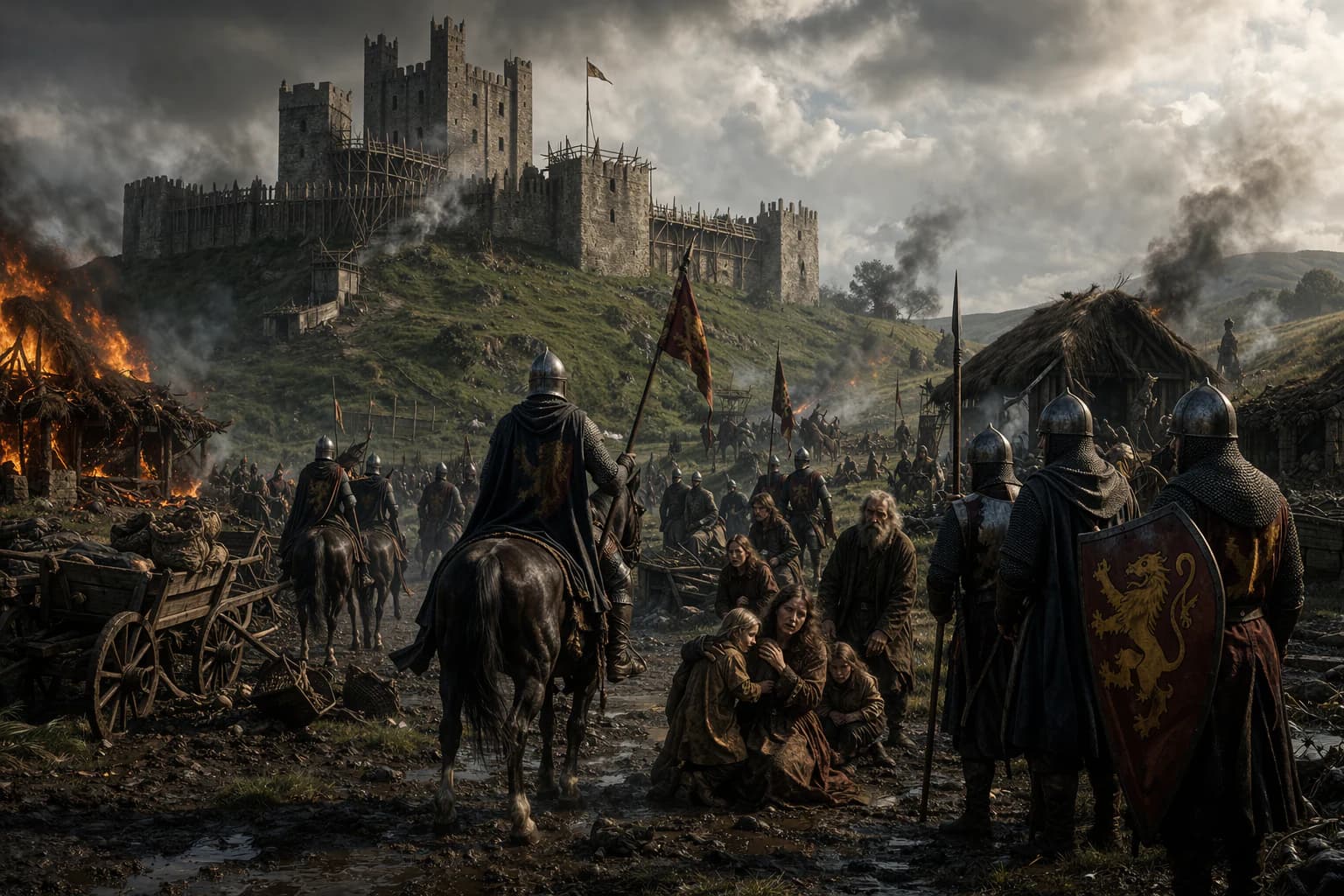
In the Harrying of the North, Norman armies burned villages, destroyed food, and left whole areas ruined. At the same time, castles rose across England with shocking speed.

These castles were forts, warning signs, and power centers. Soldiers could control roads, collect taxes, and watch nearby towns from behind their walls.

This changed England for generations. The conquest was no longer just one battle. It became an occupation, and castles still show how rulers used violence and building to hold power.

A New Feudal Order
1086 CE
Step 7 of 101086 CEAccessible mode

A New Feudal Order

Twenty years after , England looked very different. By 1086, Norman rule had been built into the way land, power, and government worked.

Before the conquest, English nobles held much of the land. After William’s victory, huge estates were taken from them and handed to Norman lords loyal to the king.

This was not just about reward. William wanted every important landholder tied to him, so power flowed back to the crown more tightly than before.

The conquest changed who owned England, and that changed who ruled it.

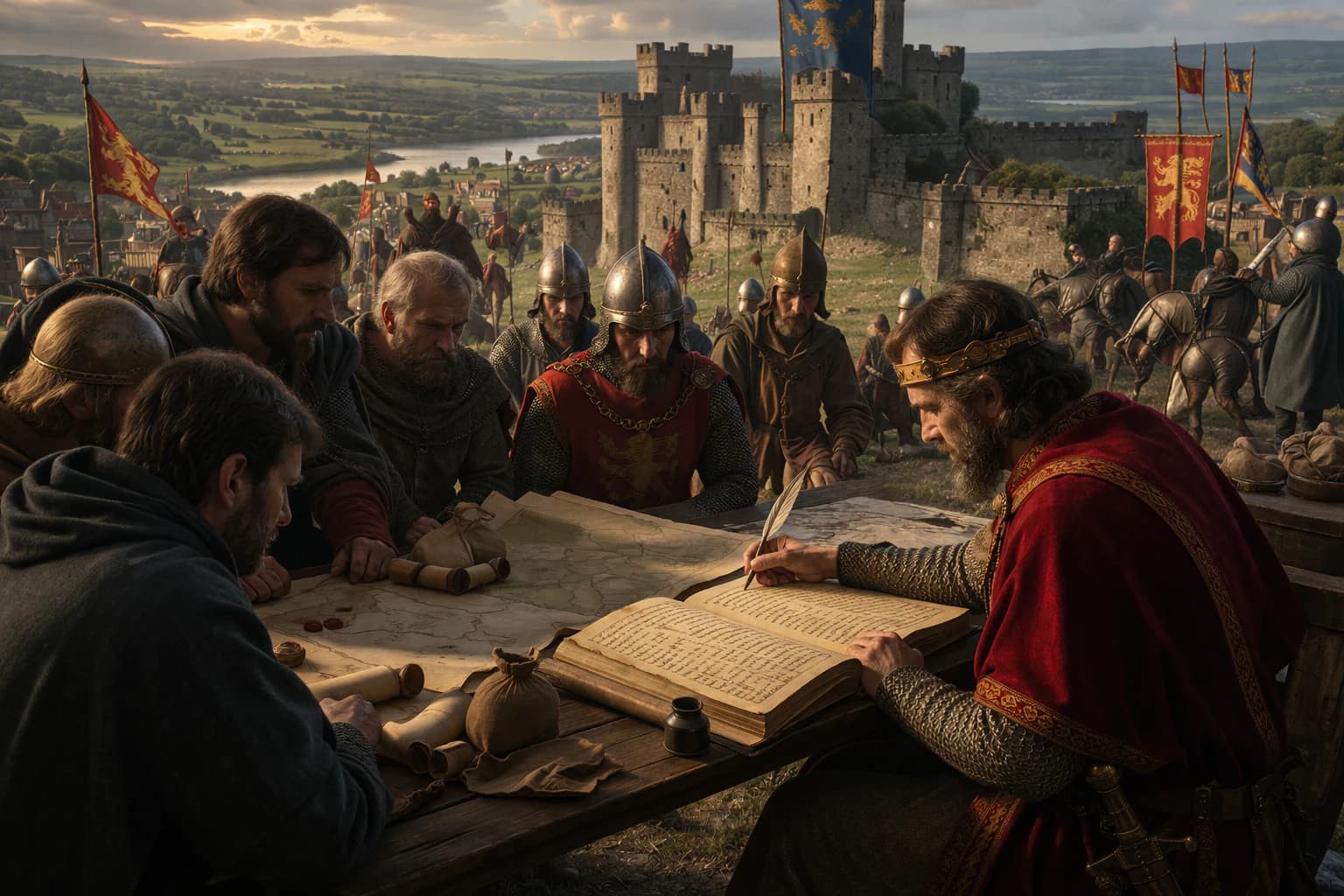
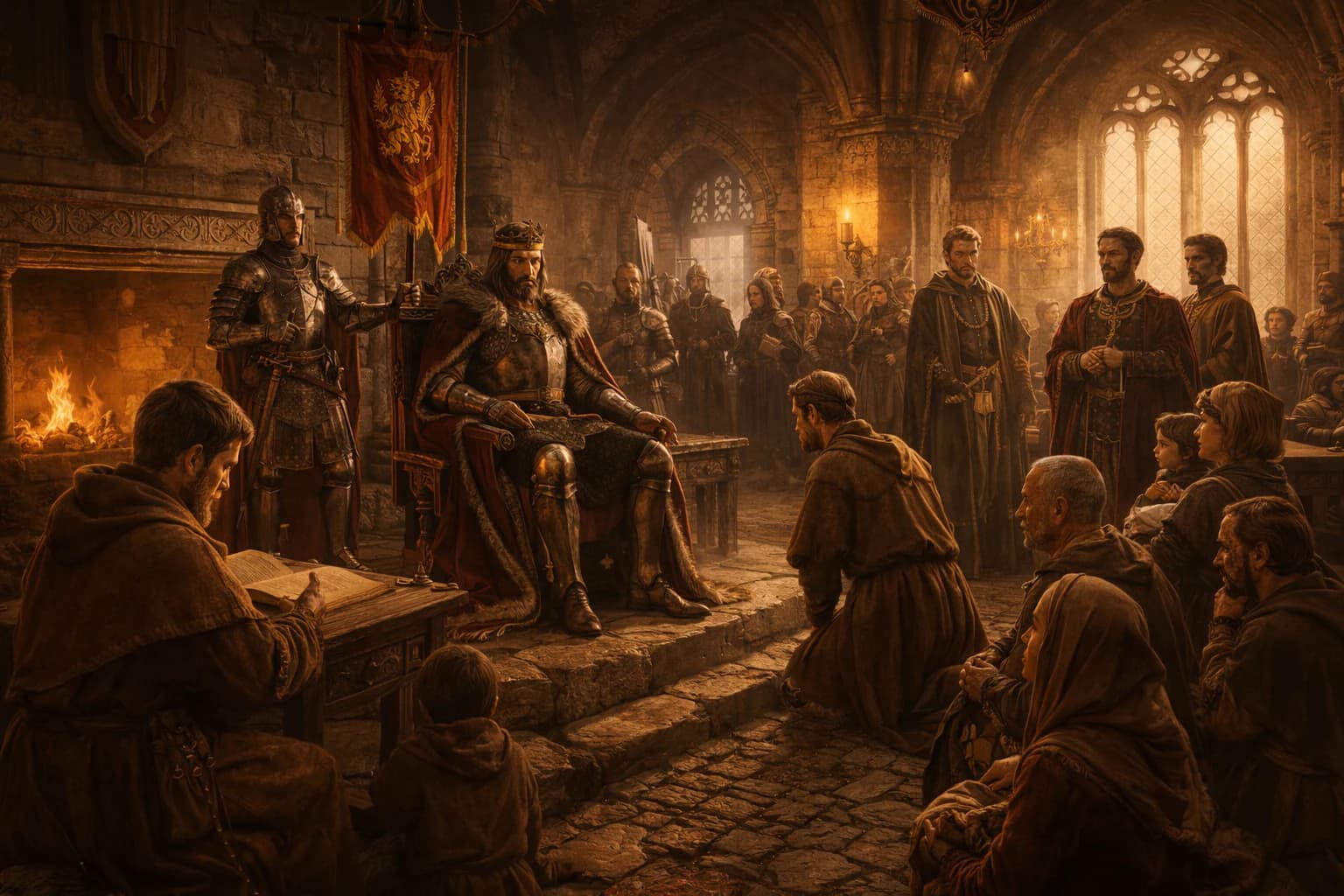
Domesday Book, ordered in 1085 and finished in 1086, recorded land, people, and wealth across much of the kingdom. It showed who owned what and what each place could provide.

For ordinary people, this meant new lords, new demands, and closer control. Much of the old English elite had been pushed aside and replaced by a Norman ruling class.

That new order shaped England for centuries. Ideas about land, taxation, records, and royal power still echo in how states track property and govern today.

Norman Power Crosses Frontiers
1091 CE
Step 8 of 101091 CEAccessible mode

Norman Power Crosses Frontiers

The Normans did not stop with England. They became a powerful force across Europe.

After 1066, many Norman leaders looked beyond England. Some had already gone south to Italy, where they worked as soldiers and slowly took land.

In southern Italy and Sicily, Norman rulers defeated local powers and even pushed out Muslim rulers. They built new kingdoms and mixed different cultures.

The Normans were not just conquerors of England, but builders of a wider world.

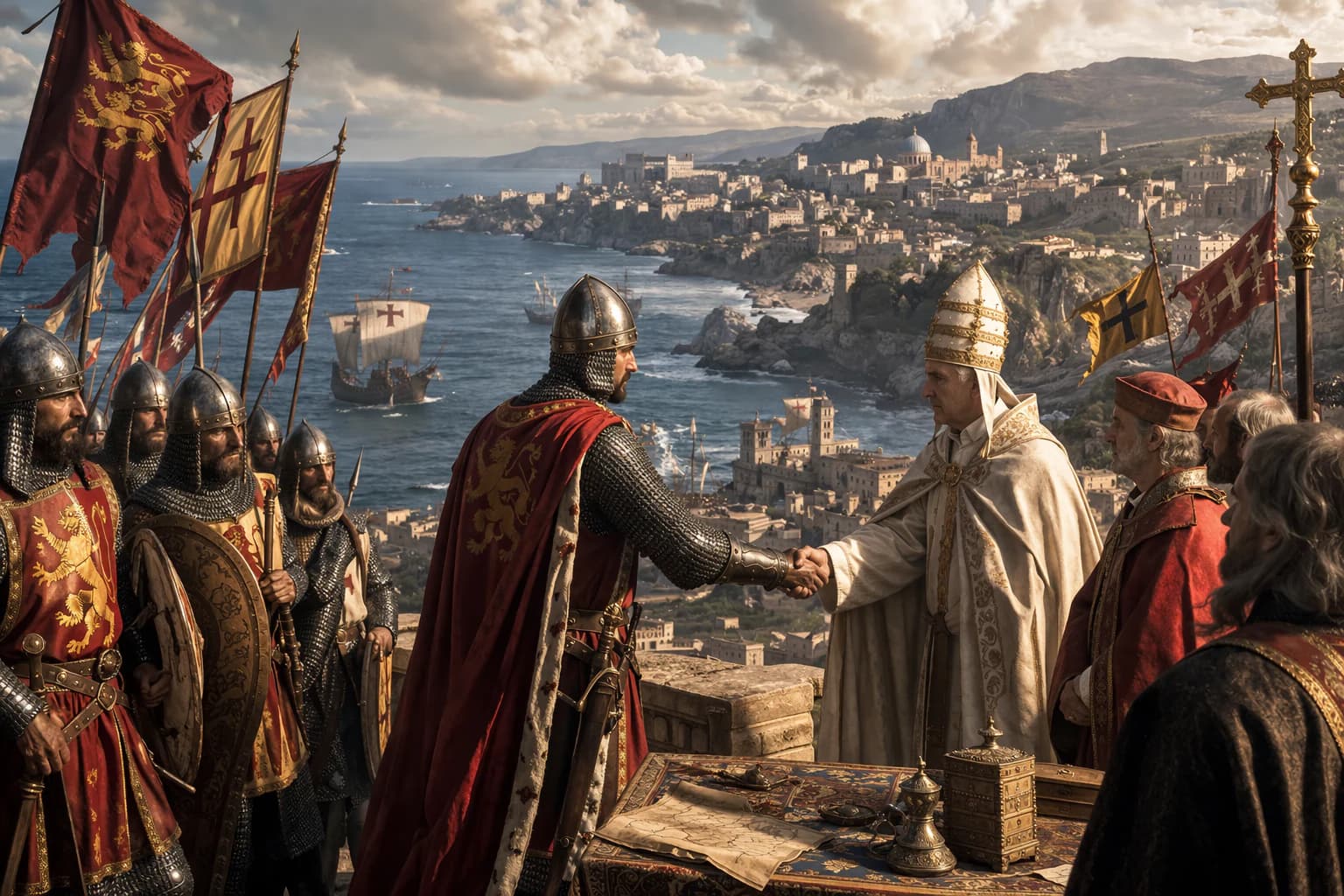
Norman leaders made deals with the pope and fought or cooperated with the Byzantine Empire. Their power stretched from to the Mediterranean.

This meant England was now linked to events far beyond its shores. Ideas, trade, and people began moving more widely.

These connections helped shape medieval Europe and explain why England became part of a larger international story.

Kingdoms Become Connected
1100 CE
Step 9 of 101100 CEAccessible mode

Kingdoms Become Connected

After William the Conqueror died, England and did not drift apart. They became tied together by one ruling family and one shared political world.

Before this, England had its own old customs, laws, and local leaders. , across in northern France, followed a different noble culture and spoke French.

William's sons inherited both lands in different ways, and that forced kings and nobles to think across the sea. Power now depended on holding land, loyalty, and armies in both places.

became a link, not a barrier.

Kings strengthened royal government. They used sheriffs, courts, records, and royal officials to keep closer control over England while protecting Norman interests.

Everyday life slowly changed too. Norman castles, French speech, and new church styles mixed with English law, farming, and local habits.

That blend helped shape the English monarchy, legal system, and language. It is one reason England developed with strong links to both the British Isles and continental Europe.

The Norman Legacy Endures
1135 CE
Step 10 of 101135 CEAccessible mode

The Norman Legacy Endures

Long after the battles ended, the Normans kept shaping England. Their influence did not fade with time.

Before the conquest, England had its own ways of ruling, building, and organizing society. Power was shared among local leaders, and many systems were less strict and less connected.

After 1066, Norman rulers brought tighter control. They built strong stone castles, gave land to loyal nobles, and worked closely with the Church to strengthen authority.

The conquest changed how power worked, not just who held it.

By 1135, these changes were firmly in place. Castles stood across the land, the aristocracy followed Norman traditions, and royal records like surveys and laws shaped daily life.

People experienced more organized rule, but also stricter control. Justice, taxes, and land ownership were all more carefully managed than before.

Today, traces of Norman influence remain in law, language, and buildings. The conquest helped shape the England that would later grow into a powerful kingdom.

Continue reading

Finished The Norman Conquest of England?

Choose the next story, explore the people behind this one, or trace the line of power that shaped this world.

Browse stories

References

Sources & Further Reading

Reliable sources, primary-source collections and reading paths connected to this page.

Sources used

  1. The British Library, The Norman Conquest,” Open source
  2. English Heritage, 1066 Battle of Hastings,” Open source

Further reading

  1. Marc Morris, The Norman Conquest, Pegasus.

Primary sources

  1. Fordham University, William of Poitiers: The Deeds of William, Duke of the Normans and King of the English,” Open source

A weekly route through history

Find out first about the latest published stories, feature notes and occasional Premium offers in one weekly email.