Complete chronology
Full overview and deeper context for every journey step.
c. 860
Northern beginnings
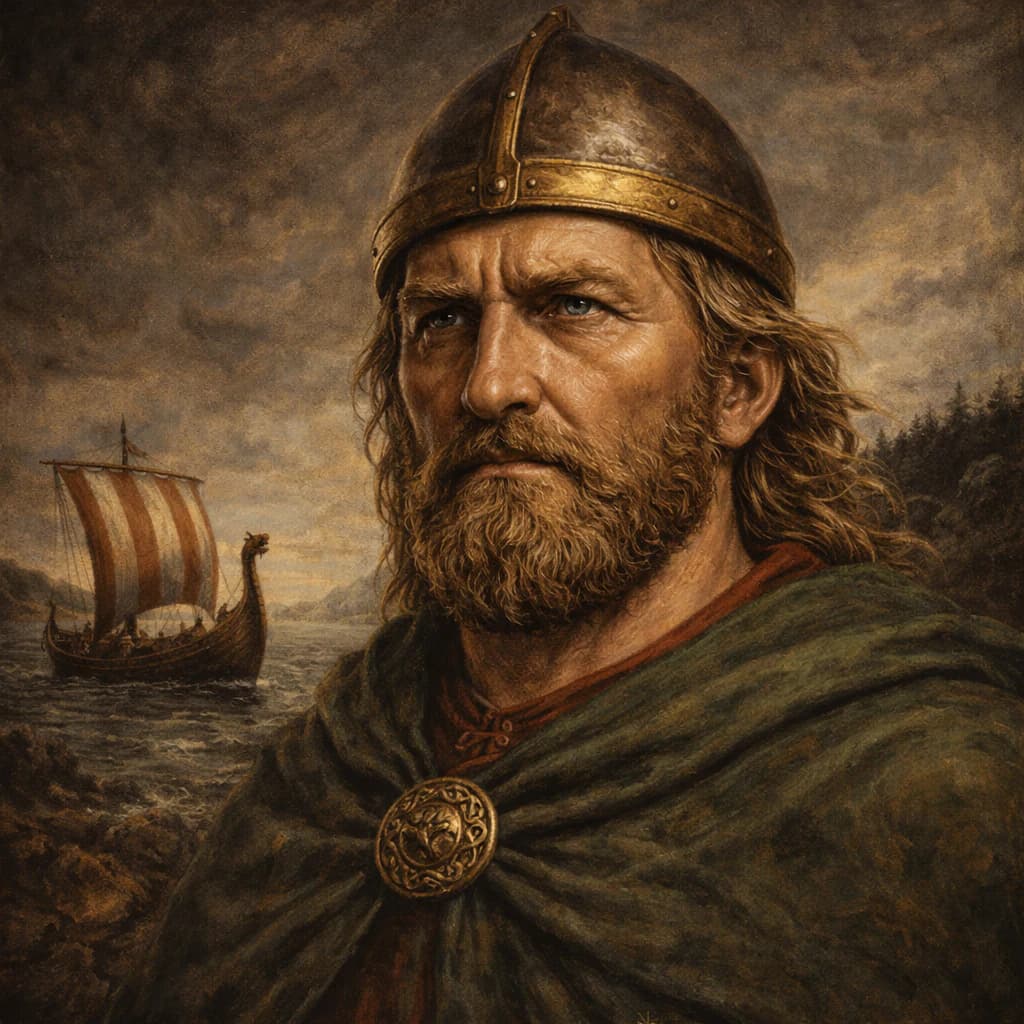
The first difficulty in any Rollo biography is that the evidence is late, political, and sometimes legendary. Norman tradition made him a founder; Scandinavian sagas tried to attach him to northern lineages; Frankish sources cared mainly about the damage Viking armies caused. He may have come from Norway or Denmark, and his birth date is usually placed around the mid-ninth century, but certainty is impossible. What is clear is the wider world that produced him. Viking leaders built followings through ships, silver, violence, and opportunity. They raided, traded, took service, and sometimes settled permanently. Rollo belonged to that flexible frontier, where identity was less a passport than a reputation won among armed companions.
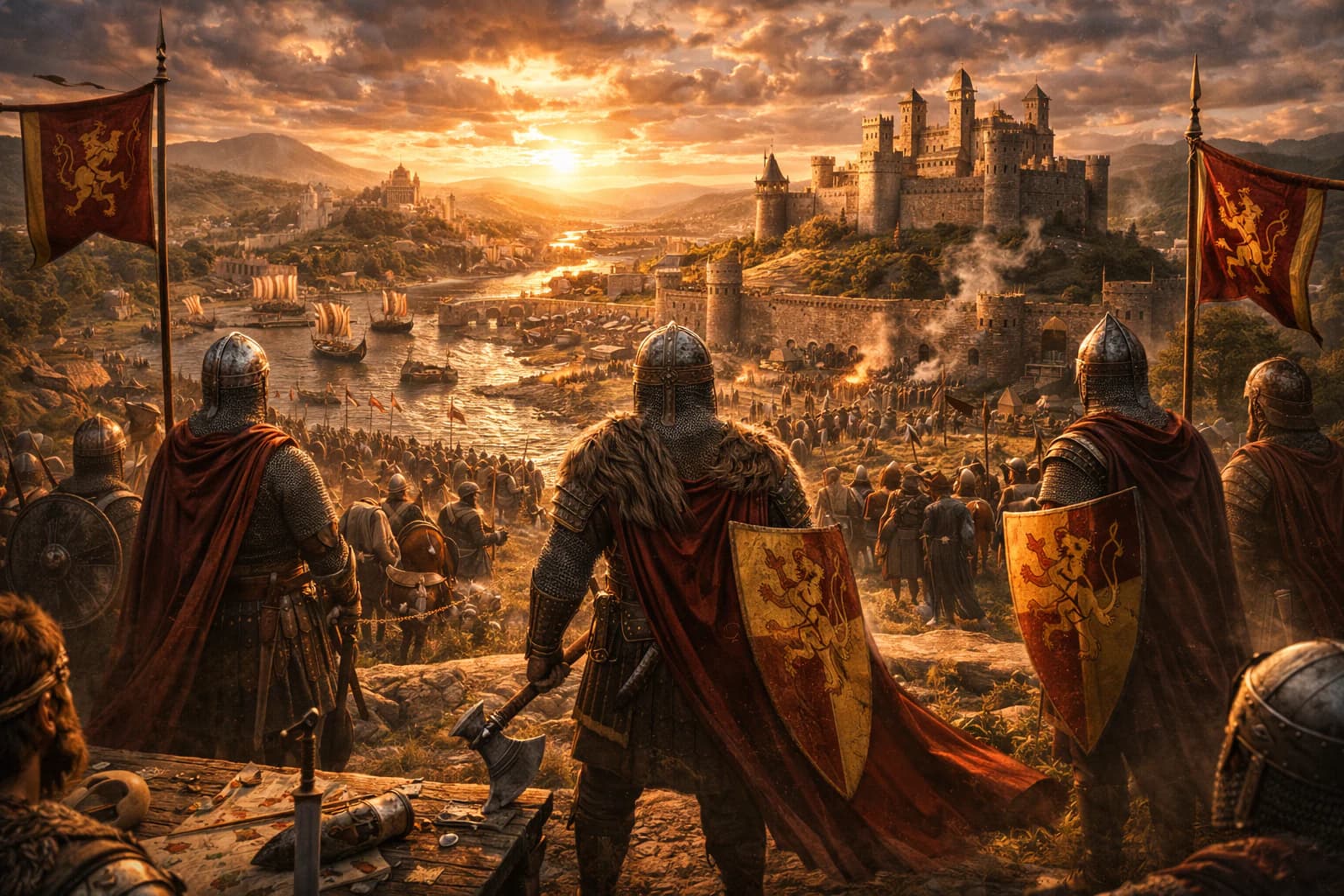
His early world rewarded bold movement, making expansion almost inevitable for someone with ambition.
880s
Rise among raiders
Viking leadership was practical and unstable. Men followed a chieftain who could deliver plunder, protection, land, and status; they left one who failed. Rollo's rise therefore implies more than brute force. He had to command ships, negotiate alliances, distribute rewards, and keep warriors together through long campaigns. By the late ninth century, Viking activity in the Frankish world had moved beyond seasonal raiding. Armies wintered, demanded tribute, exploited dynastic weakness, and looked for places where temporary violence could become permanent advantage. Rollo's importance lies in recognising that possibility. He was not merely a raider who stumbled into land. He was part of a generation learning how to turn mobility into rule.
Authority in Viking culture was earned continuously, not granted once and kept.
890s
Raids in Francia
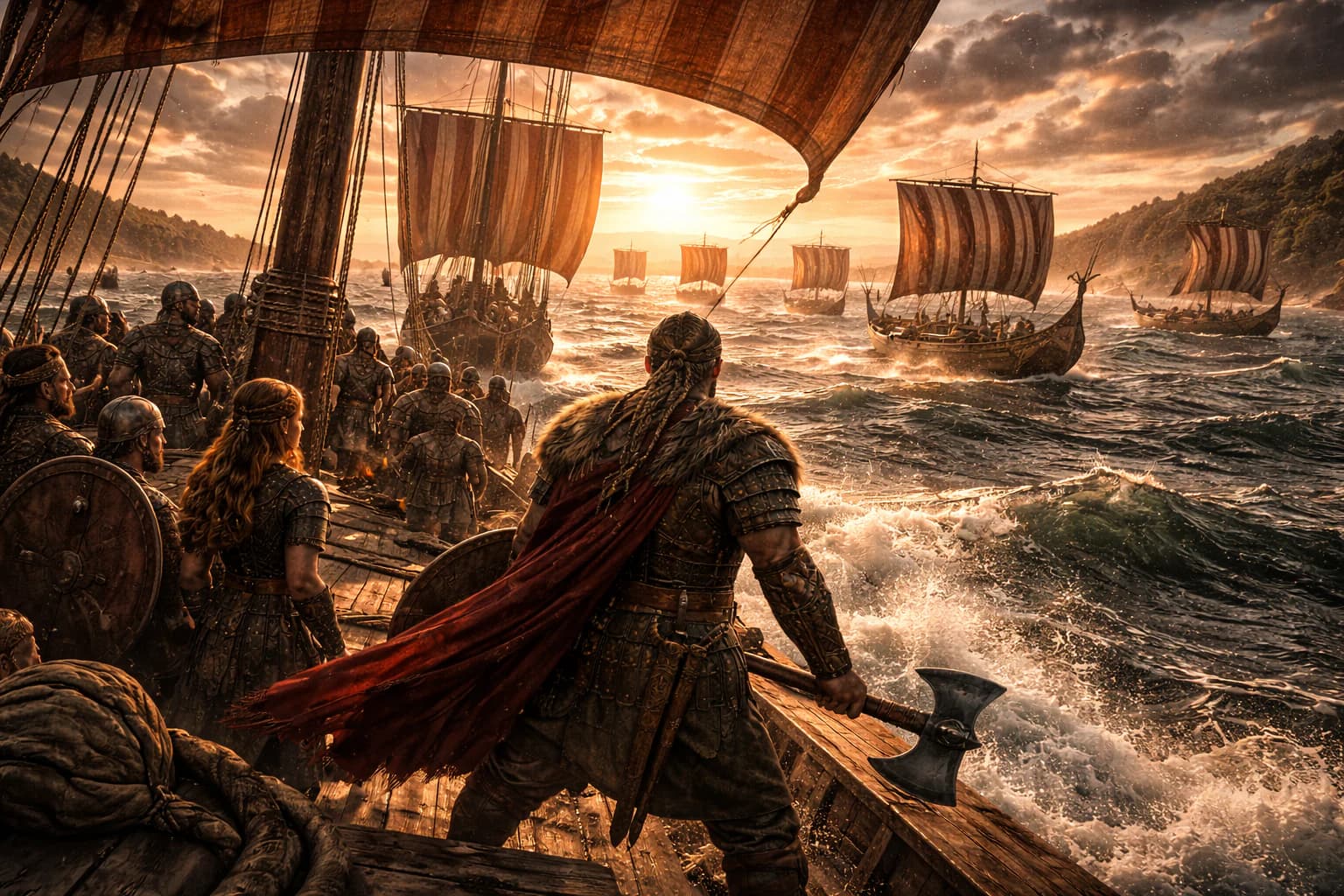
West Francia was vulnerable because its wealth sat along navigable rivers and its political authority was fragmented. The Carolingian world had divided into competing kingdoms, local counts guarded their own interests, and kings often lacked the resources to defend every exposed settlement. Viking fleets could move quickly from coast to interior, appearing where resistance was weakest and extracting tribute where defence was too costly. Rollo's group became part of this pressure around the lower Seine, near Rouen and the approaches to Paris. The threat was not only economic. Repeated Viking presence made royal weakness visible. If a king could not stop raiders, he had to find a way to domesticate them.
Repeated exposure to weakness in Francia encouraged a transition from raiding to settlement.
911
Siege of Chartres
The battle or siege associated with Chartres is one of the turning points in the Rollo timeline, though the details are filtered through later accounts. Frankish resistance, aided by regional magnates and ecclesiastical prestige, checked Viking momentum. For Rollo, the lesson was that raiding could win wealth but not necessarily durable security against organised opposition. For Charles the Simple, the lesson was equally clear: defeating one Viking army did not end the structural problem of northern defence. The lower Seine needed a guardian strong enough to resist future raiders and invested enough to defend the land. Out of that mutual realism came the settlement usually linked to Saint-Clair-sur-Epte.
A failed push can reveal new strategies more clearly than repeated victories.
911
Treaty of settlement
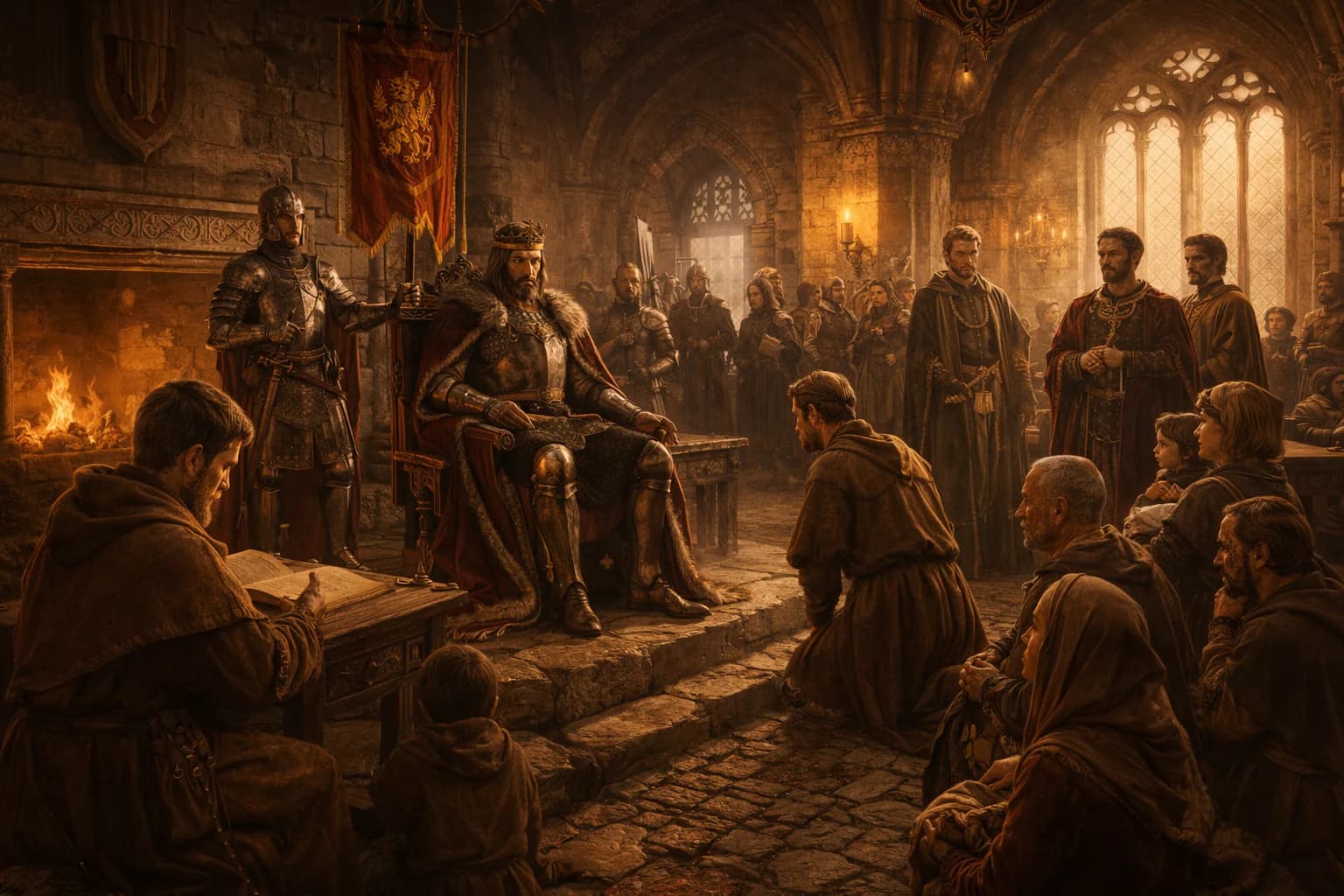
The agreement of 911 did not instantly create the polished duchy later known as Normandy, but it gave that future its foundation. Charles the Simple recognised Rollo's control over territory around Rouen and the lower Seine, expecting him to defend it as a Frankish subordinate rather than ravage it as an outsider. Rollo accepted baptism, took the Christian name Robert in some traditions, and entered the language of legitimate rule. The arrangement was pragmatic rather than sentimental. Charles used land to buy security; Rollo used recognition to convert military occupation into inheritance. The result was one of medieval Europe's most successful acts of political absorption: a Viking threat turned into a frontier principality.
Compromise can transform a threat into an asset when both sides recognize mutual limits.
early 900s
Adoption of new identity
Rollo's success depended on changing without disappearing. Conversion to Christianity was politically essential because bishops, monasteries, oaths, marriages, and written grants formed the grammar of Frankish legitimacy. His warriors also had to become landholders, neighbours, patrons, and defenders. Over time they adopted the local Romance language and Frankish legal habits while retaining a memory of northern origin and a taste for military enterprise. This fusion produced the Normans: not simply Vikings in France, and not simply French nobles with exotic ancestors, but a new regional elite shaped by both traditions. The speed of that adaptation is one reason Normandy became unusually dynamic in the eleventh century.
Lasting power often depends on adaptation rather than rigid loyalty to origins.
910s–920s
Building Normandy
Building Normandy required more than holding a treaty. Rollo had to command loyalty from Scandinavian followers, work with local landowners and churchmen, and resist new Viking groups that might see the settlement as weakness or invitation. Rouen became the centre of his authority, and the lower Seine, once a corridor for raiding, became the backbone of a new territorial order. The early Norman polity was rough, but it was effective enough to survive succession and expansion. Its rulers learned to combine military force with unusually coherent ducal authority. That strength would later allow Normandy to project power into England, southern Italy, Sicily, and the eastern Mediterranean.
True success is measured not by conquest, but by what can be sustained afterward.
c. 927
Transfer of power
The transfer of power to William Longsword is crucial because many raiding confederations collapsed when the leader died or rewards stopped flowing. Rollo's settlement survived because it became dynastic. William inherited land, Christian legitimacy, armed followers, and the task of negotiating between Frankish kings, neighbouring counts, and Scandinavian settlers. The succession did not make Normandy secure forever, but it proved that Rollo's achievement could outlast his personal authority. A war band had become a ruling house. That shift is why Rollo matters more than many Viking leaders whose names appear only as flashes of destruction in monastic chronicles.
Planning for succession can secure achievements more effectively than holding power indefinitely.
after 930
Enduring legacy
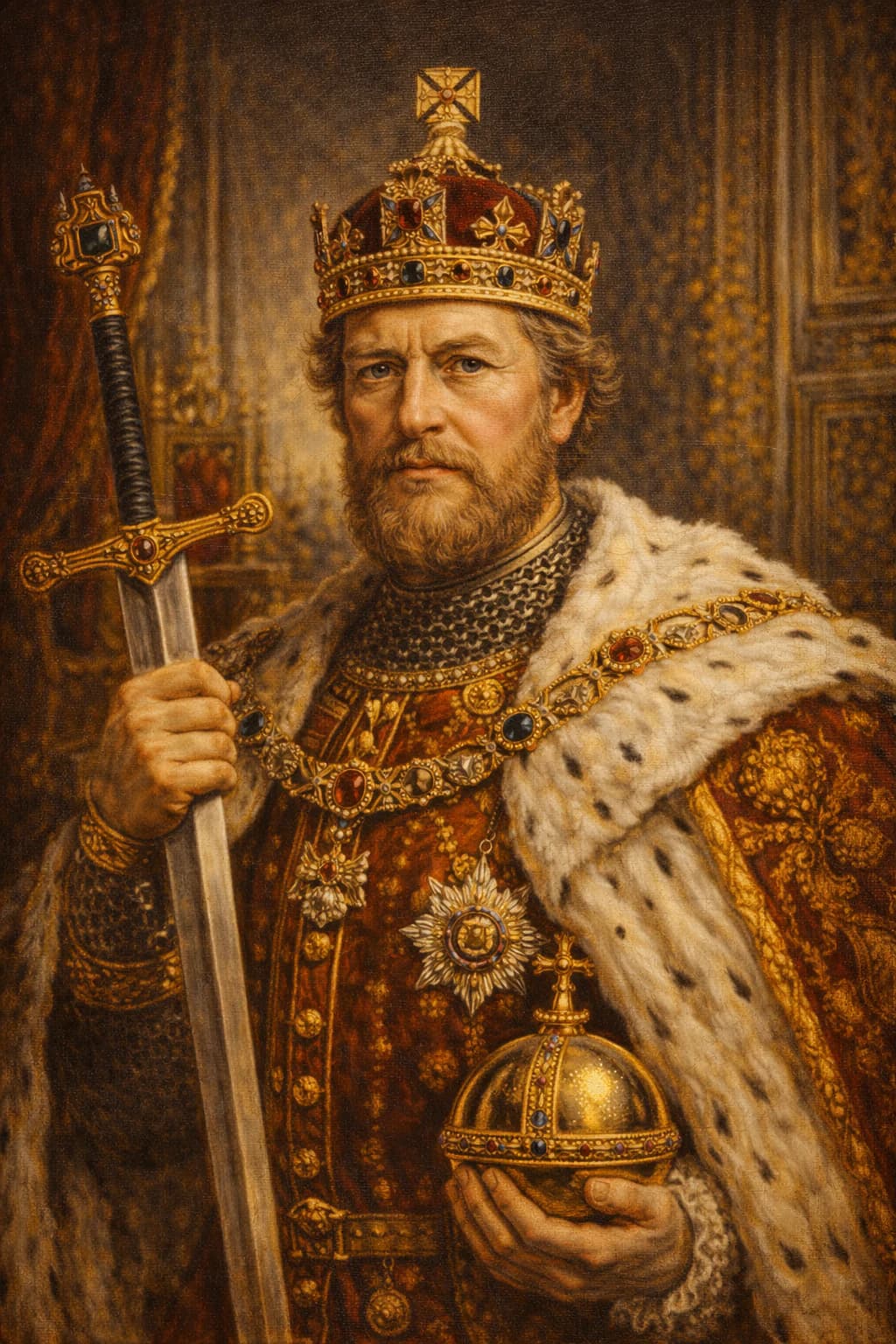
Rollo's death, usually placed around 930, did not end the story he began. Normandy became one of the most energetic principalities in medieval Europe, and his descendants learned to use ducal authority with remarkable ambition. The most famous was William the Conqueror, who claimed the English throne and won it at Hastings in 1066, reshaping England's aristocracy, language, law, and relationship with continental Europe. Other Normans carved out power in southern Italy and Sicily. Rollo himself remains partly hidden behind legend, but his historical importance is clear: he stands at the hinge between Viking expansion and Norman state-building. He did not merely raid the edge of Francia. He founded a political culture that changed the map of Europe.
A leader’s greatest impact may lie in the systems they leave behind rather than the battles they win.