Complete chronology
Full overview and deeper context for every journey step.
1003
Royal birth
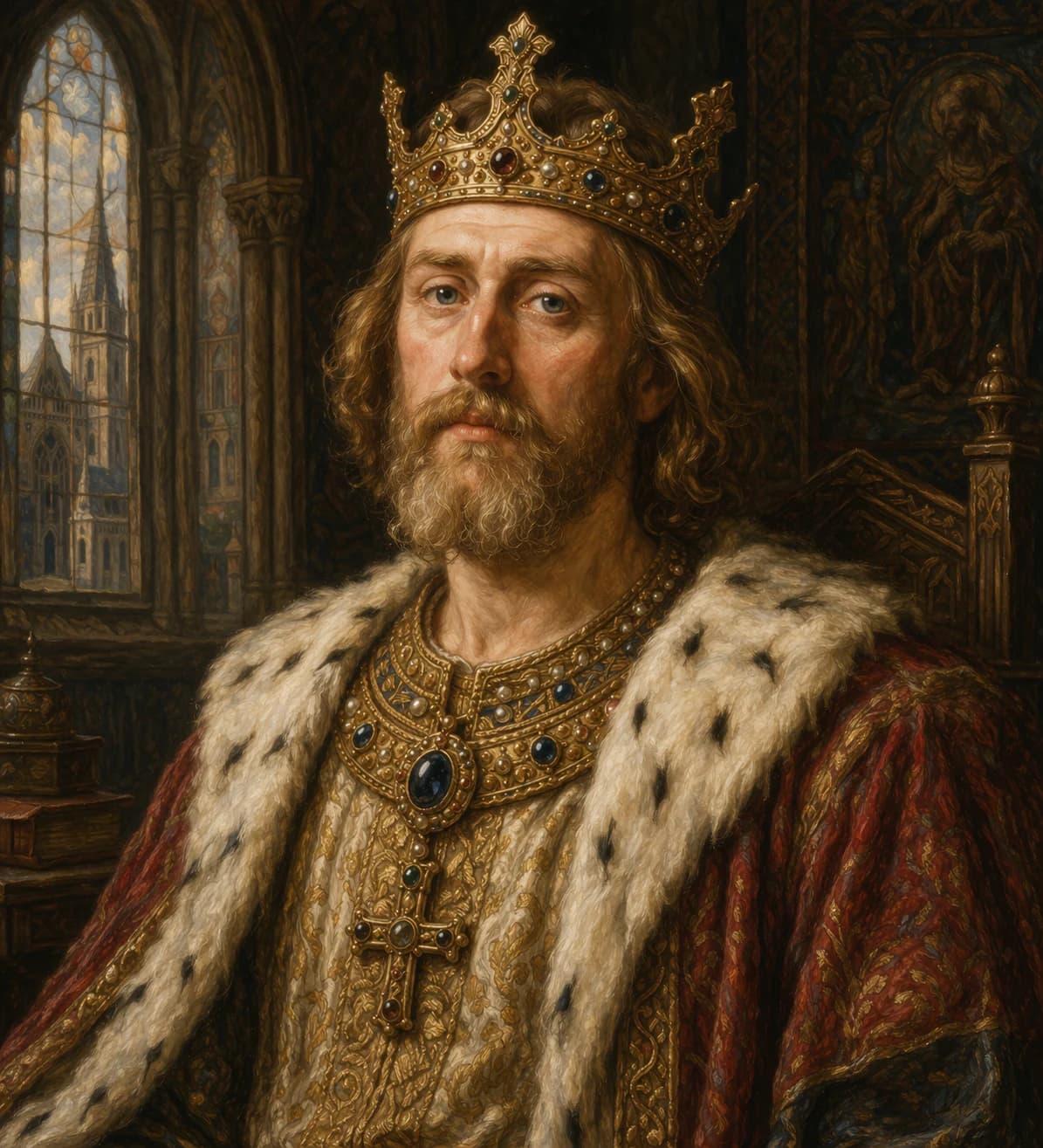
Edward the Confessor was born into the old West Saxon royal line at a moment when that line was struggling to survive. His father, Aethelred II, faced repeated Scandinavian attacks, heavy tribute payments, and collapsing confidence among English elites. His mother, Emma of Normandy, connected him to the Norman ducal house across the Channel, a relationship that would later matter enormously. Edward's childhood was therefore shaped by two worlds: an English monarchy losing ground and a Norman family network that offered refuge. Long before he became king, he learned that royal blood did not guarantee possession of a kingdom.
Early exposure to uncertainty often leaves rulers more cautious than bold in later life.
1016–1041
Years in exile
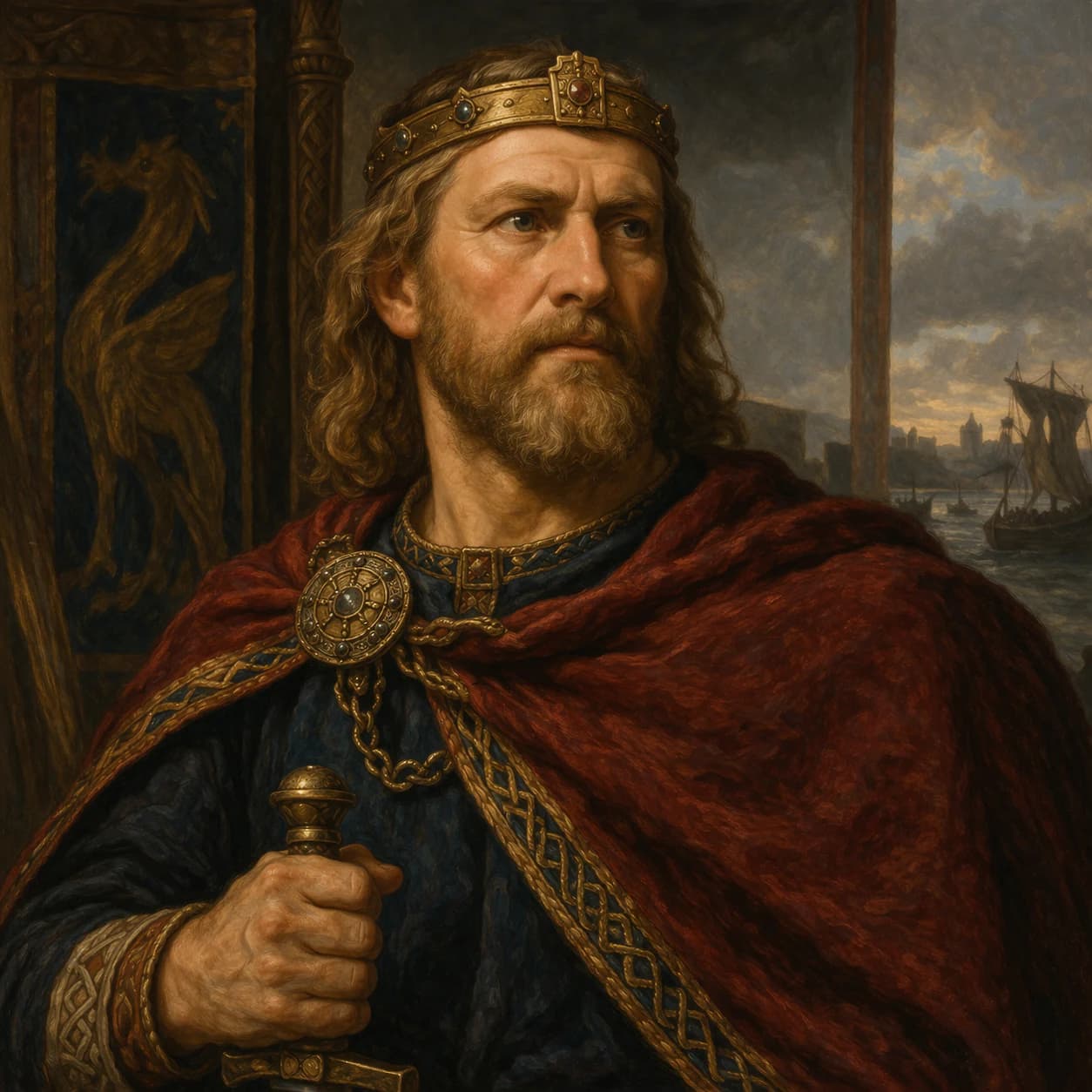
Edward's exile was not a short interruption. After the Danish conquest, Cnut ruled England and married Edward's mother Emma, creating a new political reality in which Edward's own prospects were marginal. Normandy became the place where he grew up, worshipped, learned courtly habits, and formed relationships with men who later expected favour when he returned. This mattered because England in the eleventh century was not culturally isolated, but it was politically sensitive to foreign influence. When Edward eventually brought Norman clerics and associates into English office, powerful families could interpret it as gratitude, dependency, or threat. Exile had preserved him, but it also made him partly foreign to the realm he would one day rule.
Long exile can distance a ruler from the people they are meant to govern.
1041
Return to England
Edward's return was carefully managed. Harthacnut, son of Cnut and Emma, brought him back to England, probably as a recognised heir or associate in rule. When Harthacnut died suddenly in 1042, Edward's claim offered continuity without another Scandinavian succession struggle. Yet he did not return as an all-powerful native liberator. England was dominated by great earls, especially Godwin of Wessex, whose family controlled immense resources and whose support was essential. Edward's kingship began as a settlement between royal legitimacy and aristocratic power. He had the bloodline; the earls had the machinery of local authority.
A crown regained through support often comes with lasting obligations.
1042
Crowned king
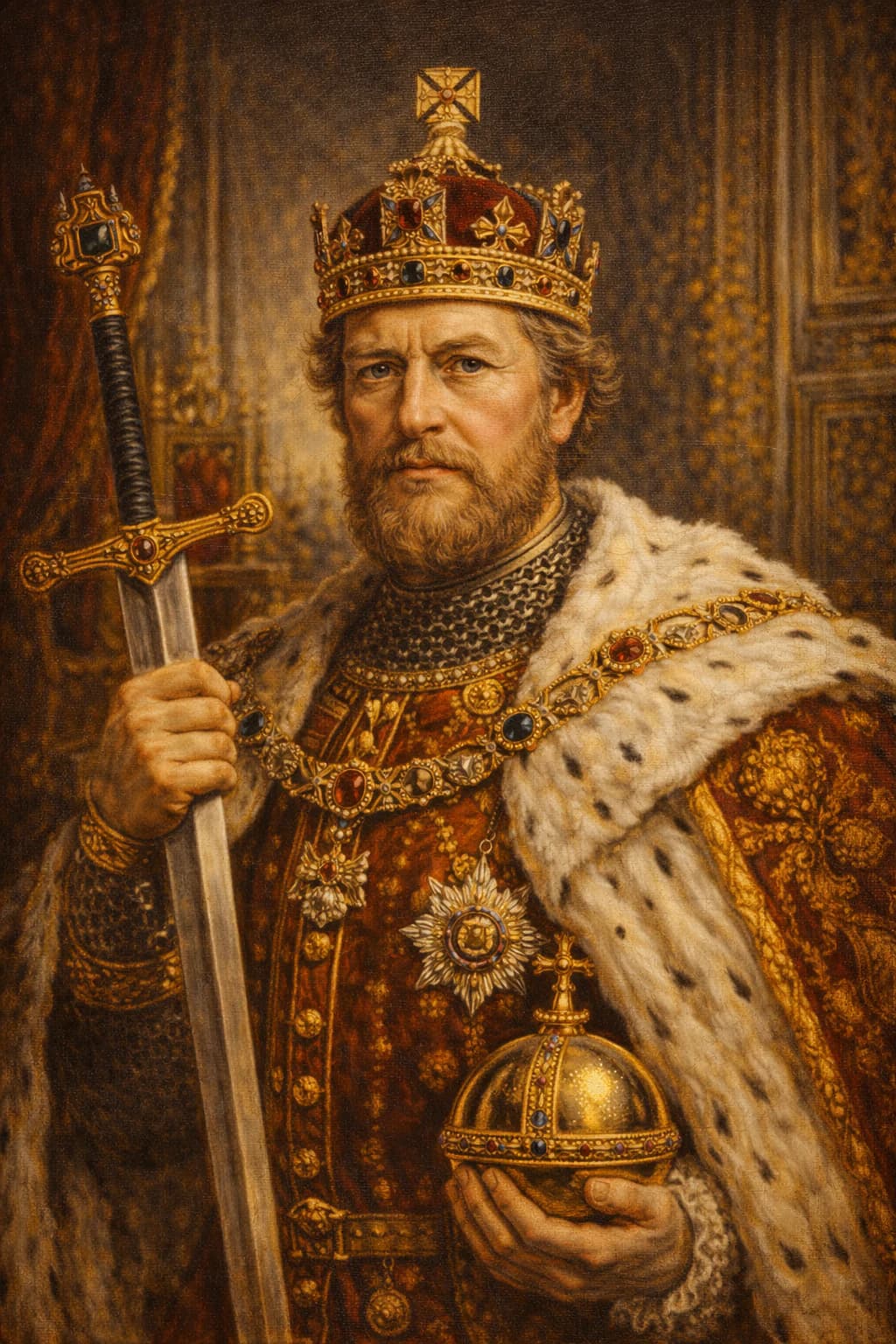
Edward's coronation in 1043 opened a reign that looked peaceful compared with the upheavals before and after it. That quietness can be misleading. His authority depended on managing men who were almost royal in regional power: Godwin of Wessex, Leofric of Mercia, Siward of Northumbria, and later Harold Godwinson. Edward's style was pious, formal, and often cautious, but he was not irrelevant. He could confiscate his mother's treasure, promote trusted churchmen, and use exile or favour as political weapons. Still, his kingship worked best when it balanced competing forces rather than when it tried to dominate them outright. The calm of his reign was an achievement, but a delicate one.
Authority can be maintained through balance as much as through strength.
1040s–1050s
Religious devotion
Edward's title, the Confessor, reflects the religious memory that later gathered around him. He was certainly devout, generous to churches, and closely associated with reform-minded clergy. Yet the image of an almost otherworldly king needs careful handling. Much of it comes from later writers who wanted a royal saint for England and who presented his childless marriage, miracles, and spiritual seriousness as signs of holiness. In life, Edward was also a political ruler making worldly decisions: appointing bishops, managing earls, rewarding allies, and defending royal honour. His sanctity became historically powerful because it gave post-Conquest England a native holy king, but it should not erase the practical politics beneath the halo.
A ruler’s personal values can shape how history judges their effectiveness.
1050s
Noble tensions
The conflict with Earl Godwin exposed both Edward's ambitions and his limits. In 1051, after violence at Dover involving visitors connected to Count Eustace of Boulogne, Edward ordered Godwin to punish the town. Godwin refused, and the confrontation widened into a struggle over influence at court, Norman favourites, and the power of the Wessex family. Edward managed to exile Godwin, Harold, and their kin, a striking assertion of royal authority. But the victory did not hold. In 1052 the Godwins returned with naval strength and broad support, forcing Edward to restore them. From then on Harold Godwinson rose steadily, becoming the dominant figure in English politics. Edward had shown that he could challenge the great earls, but also that he could not rule against the political nation for long.
Unresolved tensions can quietly build beneath an outwardly stable rule.
1060s
Westminster Abbey
Westminster Abbey was Edward's most visible legacy. He rebuilt the church on a scale that drew on continental Romanesque models, placing a magnificent religious foundation beside the royal palace at Westminster. The abbey was consecrated on 28 December 1065, only days before Edward died, and he was buried there soon afterward. Its importance went far beyond architecture. Westminster tied monarchy, sanctity, ceremony, and memory to one place. Later kings would be crowned there; Edward's shrine would become a focus of royal devotion; and the abbey would help make Westminster the ceremonial heart of English kingship. In a reign without great conquests, building a sacred royal centre was a different kind of statecraft.
Lasting monuments can define a ruler’s legacy more than political victories.
1066
No clear heir
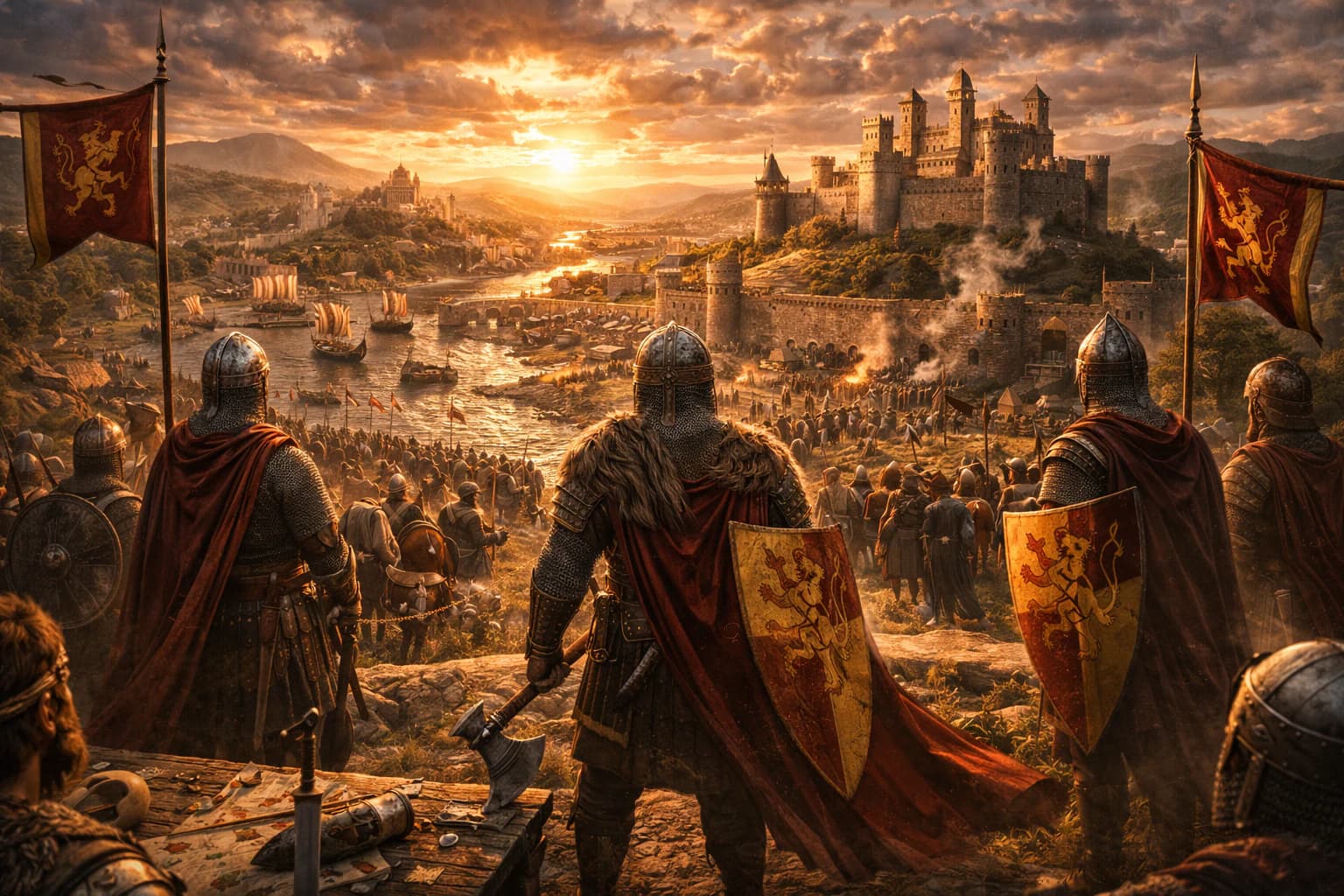
Edward's childlessness was the unresolved problem at the heart of his reign. His marriage to Edith, daughter of Earl Godwin, produced no children, and later tradition turned that fact into a story of holy chastity. Politically, it was a disaster waiting for a death. William of Normandy later claimed that Edward had promised him the throne, a claim impossible to prove with certainty but plausible enough to become part of Norman justification. Harold Godwinson claimed the crown through election by the English elite and Edward's alleged deathbed commendation. Harald Hardrada of Norway drew on older Scandinavian ambitions, while Edgar Aetheling had blood from the old royal line but little power. When Edward died on 5 January 1066, the succession did not simply open. It detonated.
Unclear succession can undo years of careful stability in an instant.
Post-1066
Enduring legacy
Edward the Confessor became more important after death than he had often seemed in life. He was canonised in 1161, and later Plantagenet kings promoted his cult at Westminster because a native English royal saint gave sacred depth to their own monarchy. At the same time, historians remember him as the king whose unresolved succession made 1066 possible. That does not mean he caused the Norman Conquest by inaction alone. England's politics, Scandinavian ambitions, Norman opportunity, and Harold Godwinson's power all mattered. But Edward's reign held those tensions in suspension without solving them. His death released them into war. He remains a hinge figure: the last old-line Anglo-Saxon king, a saint of Westminster, and the quiet centre of the storm that remade England.
A ruler’s legacy can be defined as much by what follows their death as by their life.