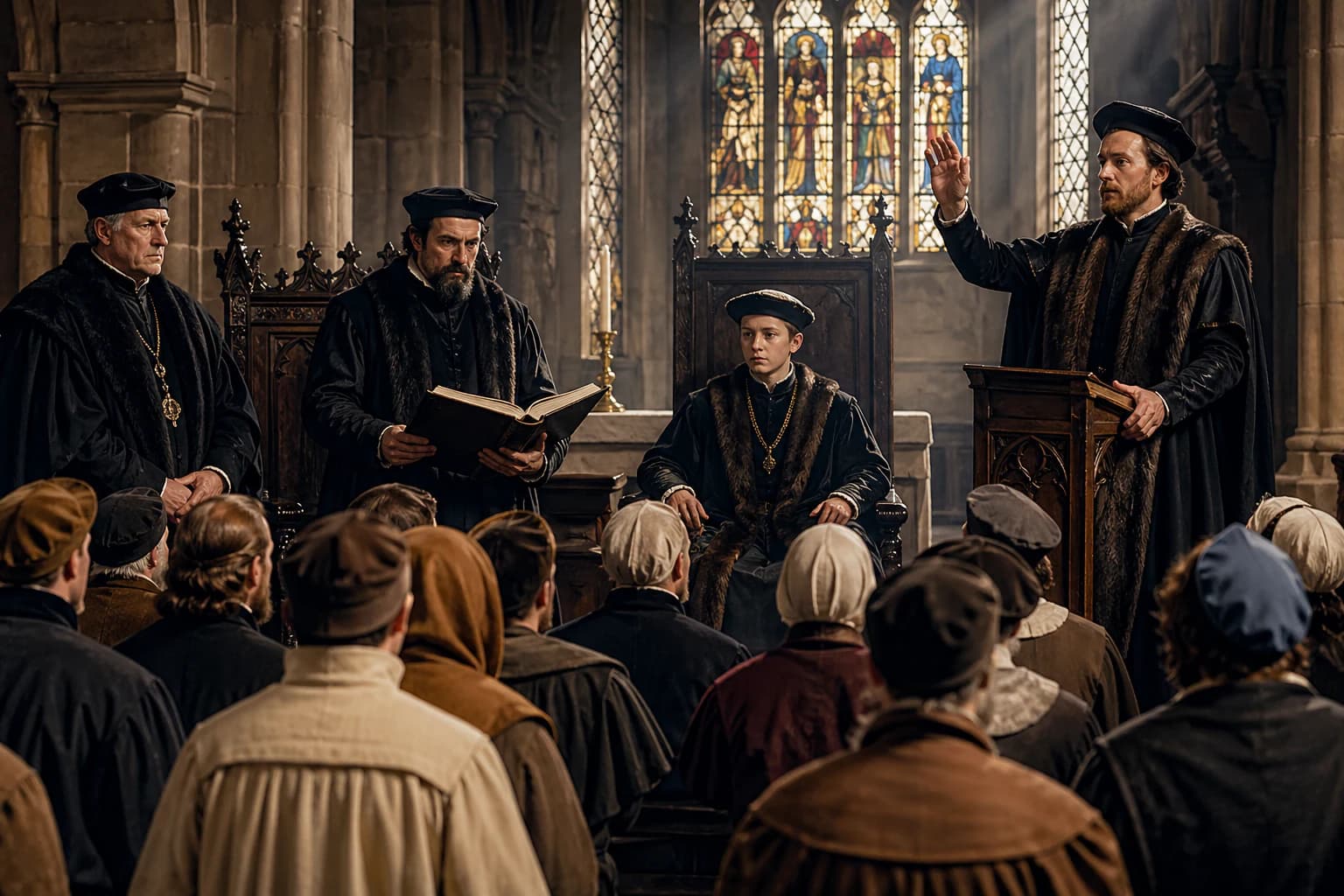
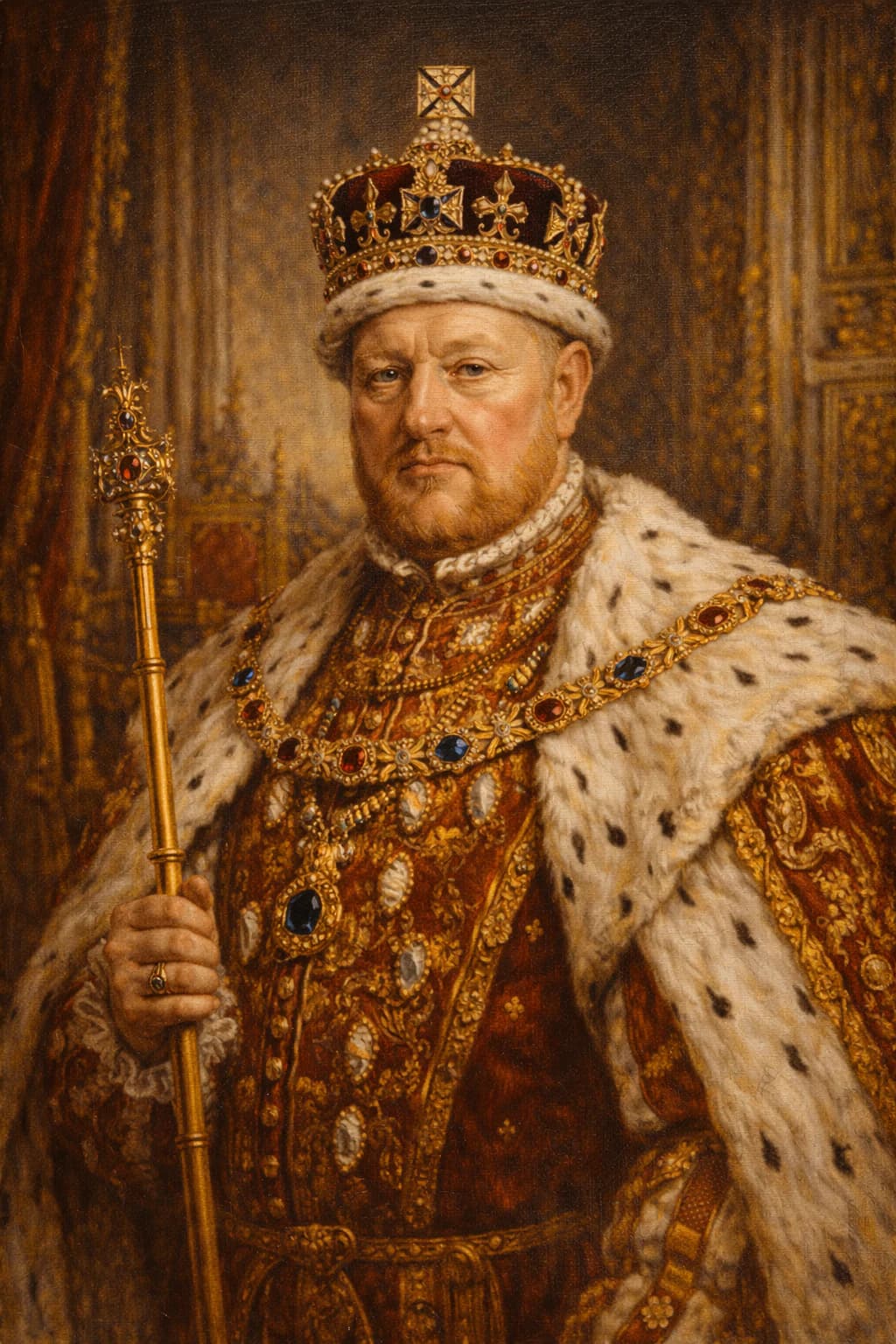
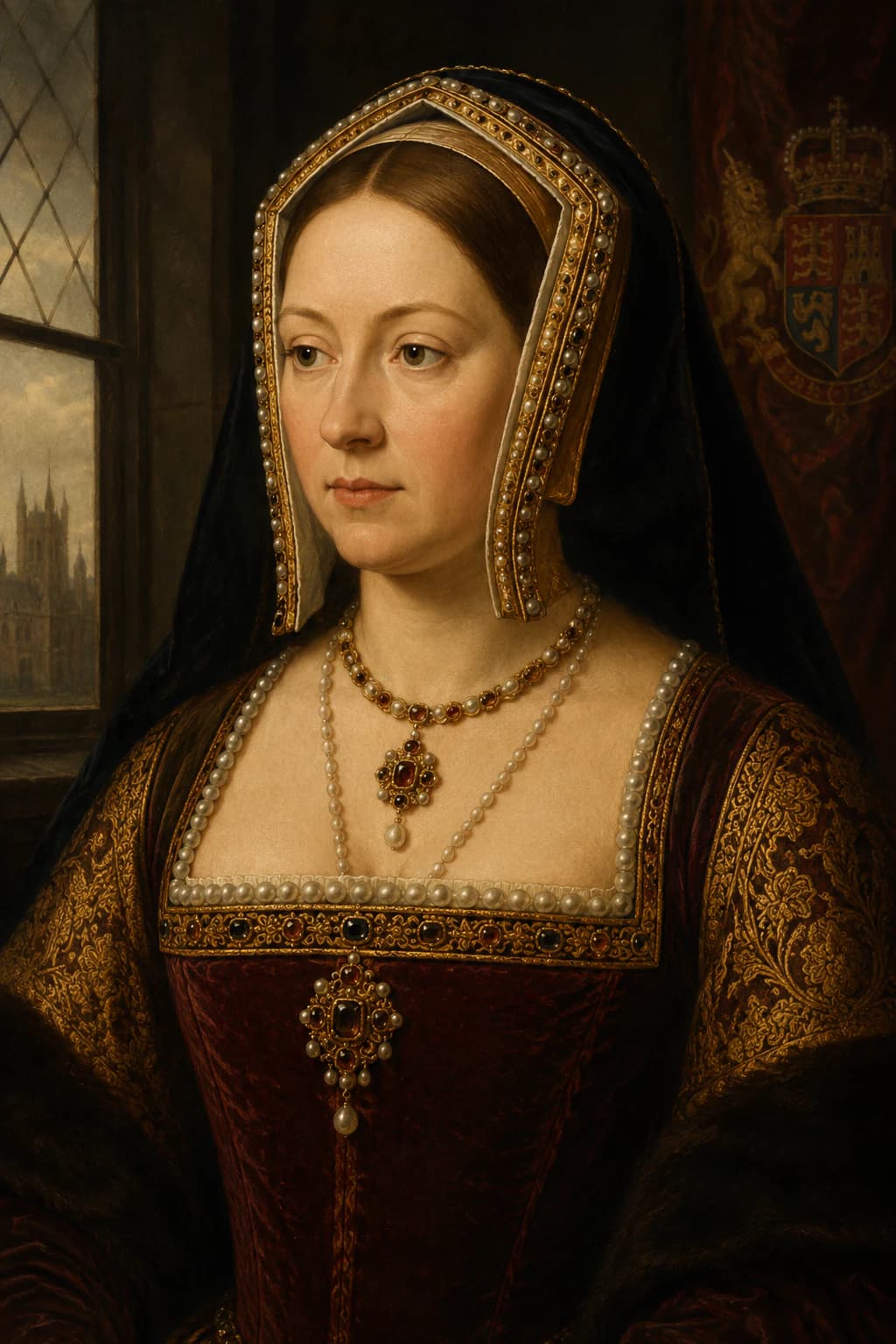
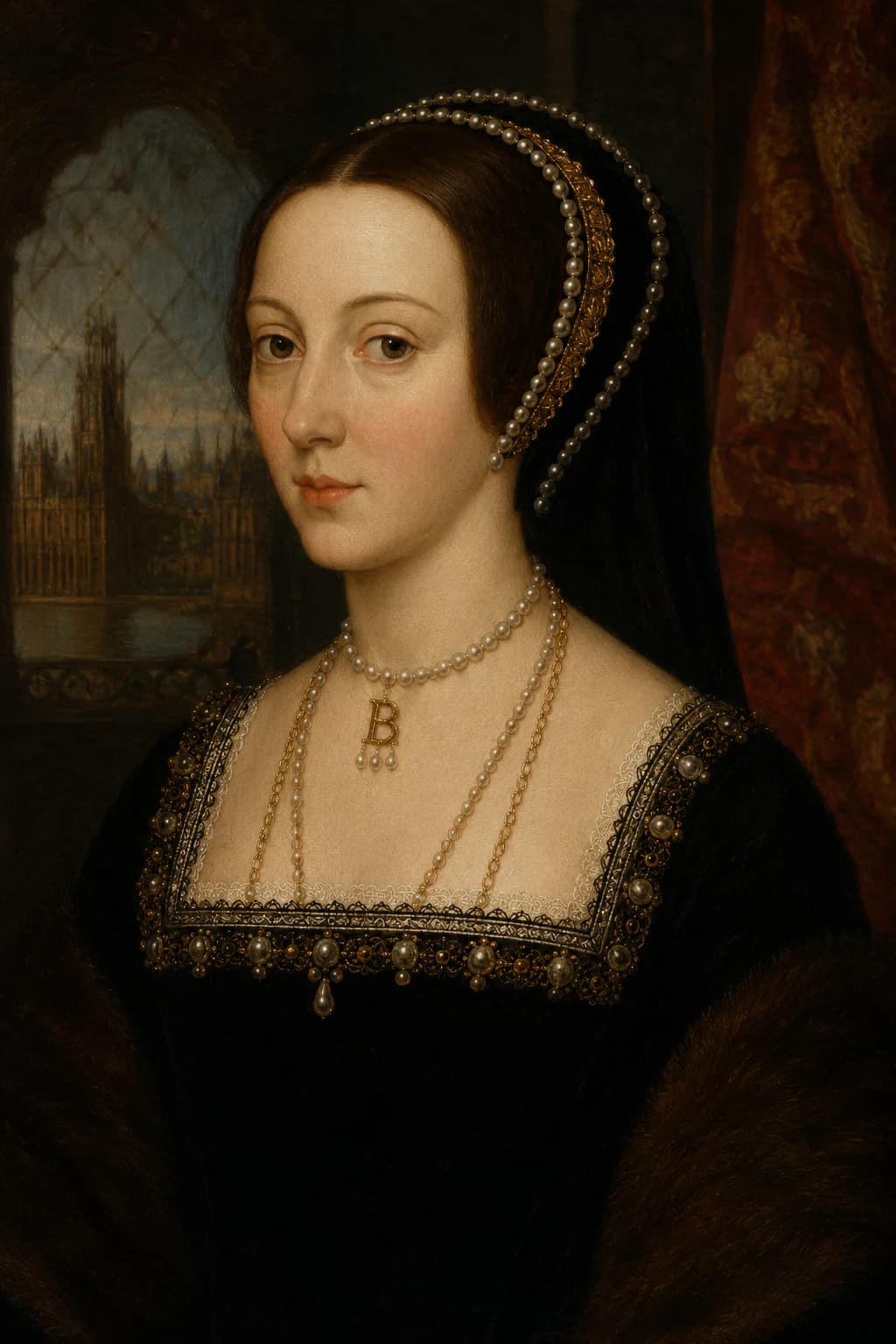
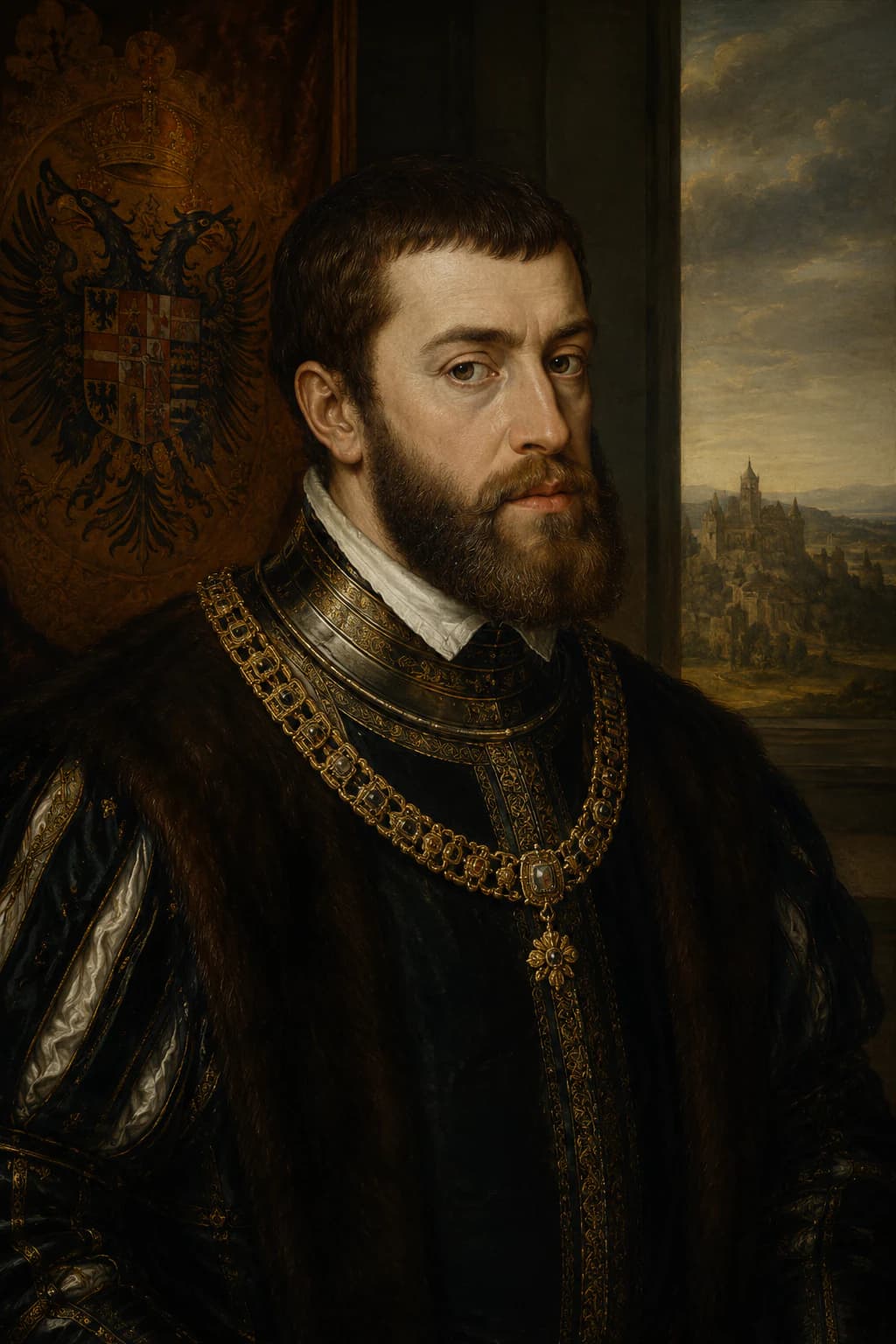
King Henry VIII presiding over a court during the English Reformation
Premium Story

The English Reformation

See how the English Reformation turned a royal marriage crisis into a lasting break with Rome.

11 chapters

Next
Context

Introduction

What you'll learn: You will follow how a royal marriage crisis became a religious revolution, how England's faith swung between Catholic and Protestant rule, and why the Reformation's consequences shaped English identity, politics, and institutions for centuries.

Key forces

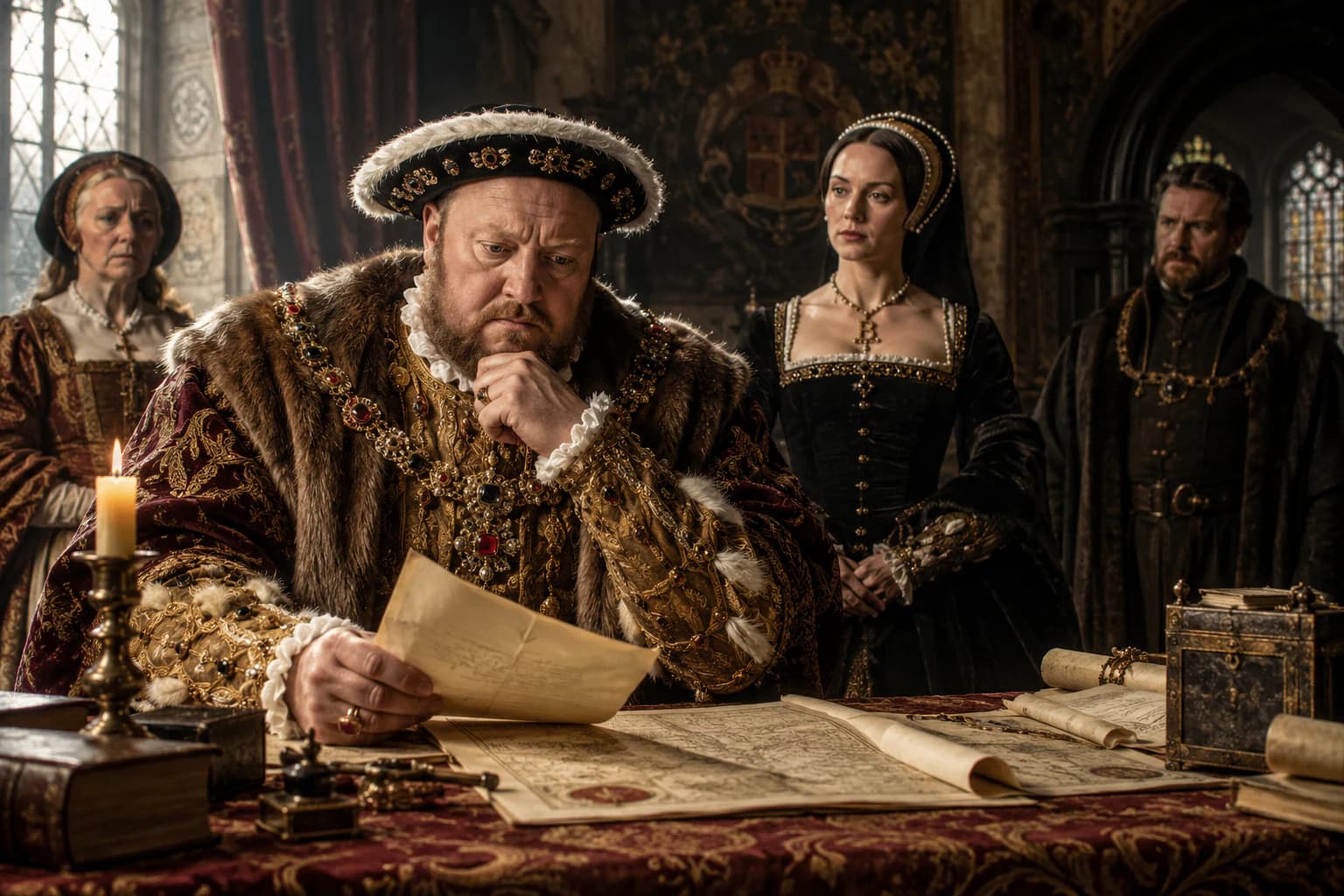
Henry VIII studying annulment documents with Anne Boleyn and papal officials nearby.
1527 CE
Step 1 of 101527 CEAccessible mode

Henry VIII Seeks an Annulment

In 1527, Henry VIII decided he wanted out of his marriage to Catherine of Aragon.

Henry had been married to Catherine for nearly twenty years. She had not given him a surviving male heir. He saw this as a serious problem.

In Tudor England, kings needed sons to ensure the dynasty continued. Without one, civil war and instability seemed possible after Henry's death.

Henry became convinced his marriage was invalid. He believed he needed an annulment from the Pope to be free to marry again.

But Catherine was the aunt of Charles V, the most powerful ruler in Europe. The Pope, Clement VII, was under Charles's influence and refused to cooperate.

Anne Boleyn, a clever and ambitious woman at court, was waiting in the wings. Henry wanted to marry her and hoped she would give him the son he needed.

What began as a personal problem became a political crisis. Henry could not get what he wanted through . That would push him to look for another way.

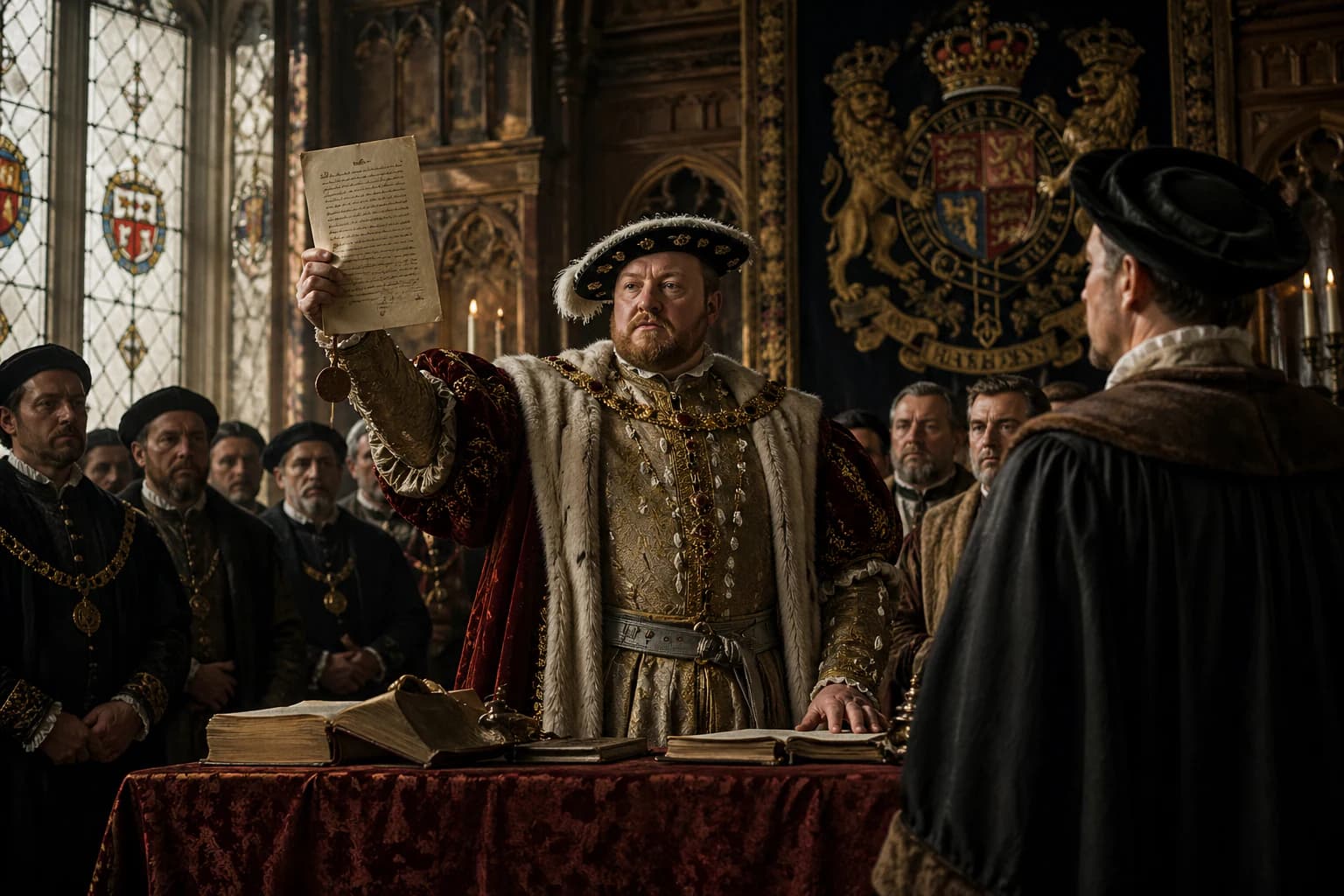
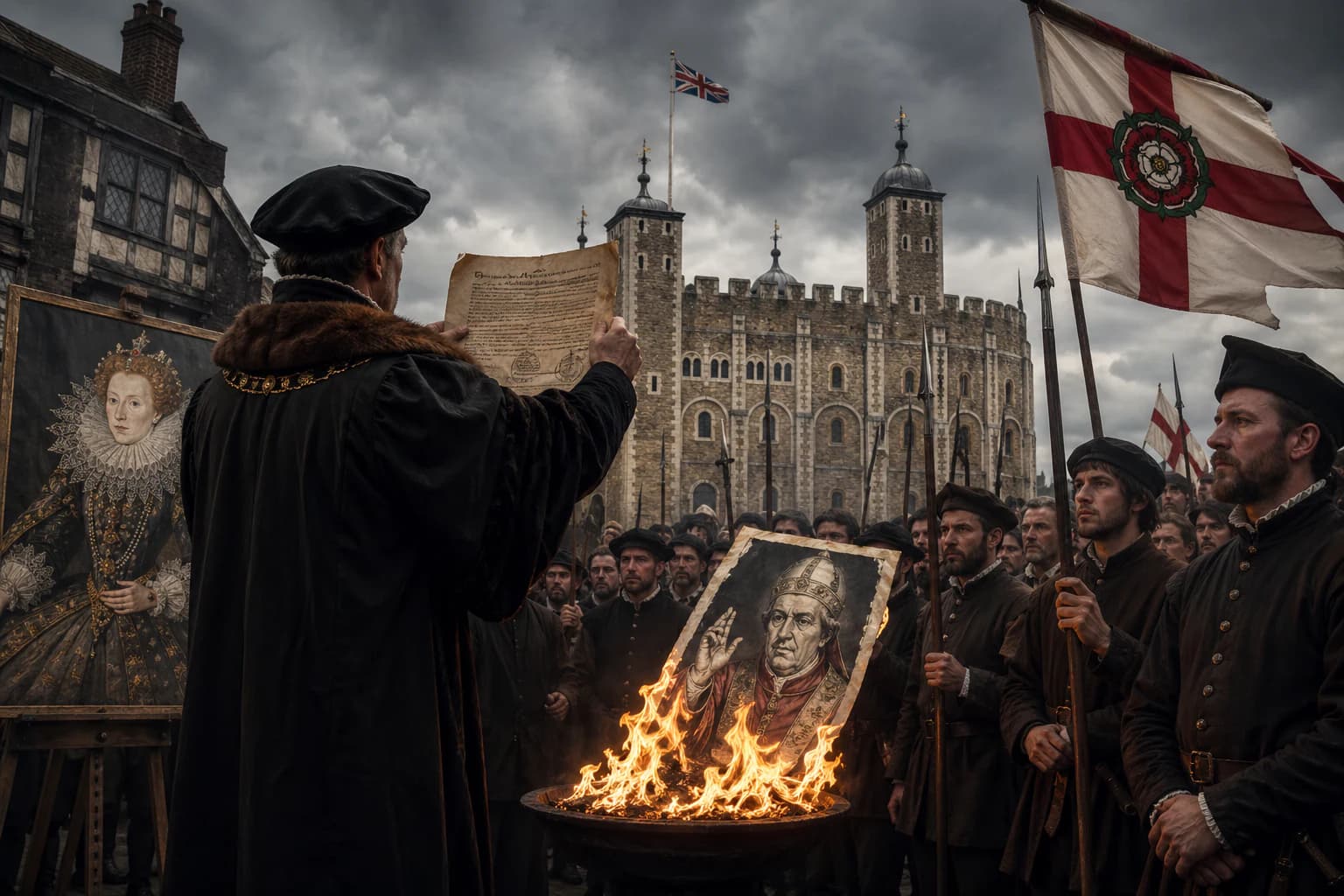
Henry VIII presenting a royal decree as England breaks from papal authority.
1534 CE
Step 2 of 101534 CEAccessible mode

The Break with Rome

In 1534, Henry VIII declared himself the Supreme Head of the Church of England, ending papal authority in the country.

After years of failed diplomacy, Henry stopped waiting for the Pope. Parliament passed a series of laws transferring religious authority to the king.

The Act of Supremacy made it official. The Pope no longer had any role in the English church. Henry was now in charge of both state and church.

Thomas Cranmer, Henry's new Archbishop of , granted the annulment Henry had been seeking. Henry then married Anne Boleyn.

For those who refused to accept the change, the consequences were severe. Sir Thomas More, a respected former royal adviser, was executed for refusing to swear the new oath.

This was not just a religious change. It was a revolutionary shift in how power worked in England. The crown now controlled the church, its appointments, and its wealth.

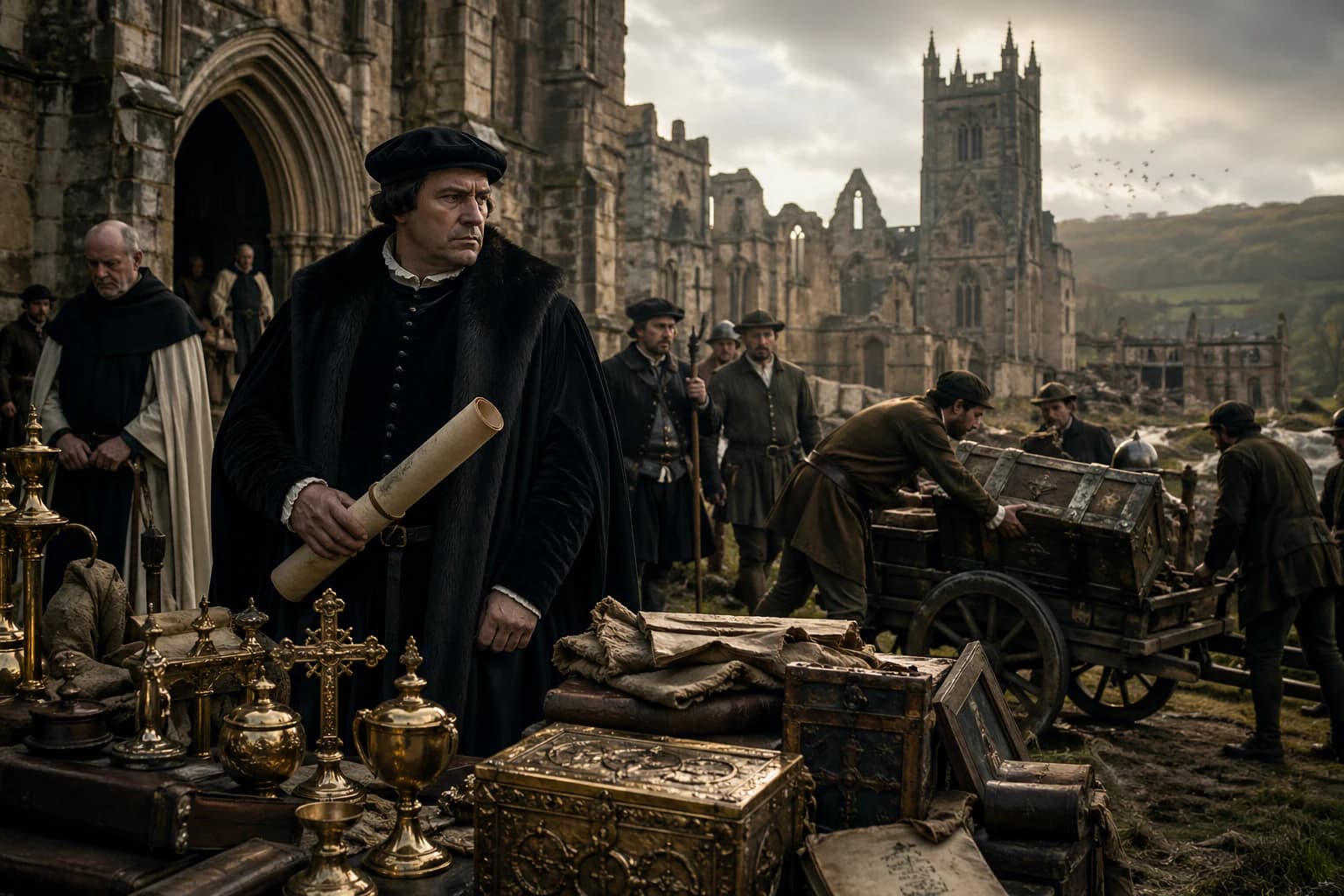
Thomas Cromwell overseeing the removal of monastic treasures during the dissolution of the monasteries.
1536 CE
Step 3 of 101536 CEAccessible mode

The Dissolution of the Monasteries

From 1536, Henry's government began closing England's monasteries and seizing their wealth.

Thomas Cromwell sent inspectors across the country to assess the monasteries. Their reports were used to justify closures, citing corruption and poor standards.

The smaller monasteries were dissolved first. The larger ones followed. By 1540, virtually every religious house in England had been shut down.

The crown gained enormous amounts of land, buildings, and treasure. Some of this wealth funded royal projects. Much of it was sold off to landowners and merchants.

The social impact was enormous. Monasteries had been centres of education, hospitality, and poor relief. Their closure left gaps in local communities that were not easily filled.

The landscape of England changed permanently. Ancient abbeys were stripped, abandoned, or converted into private houses. The physical presence of medieval Catholic life was dismantled.

The dissolution transferred religious wealth to secular hands, strengthening a new landowning class with a direct interest in keeping the Reformation in place.

Premium

You've reached the turning point

The opening chapters show Henry VIII breaking England away from Rome. Premium follows the human cost of that break: rebellion, monastery closures, Protestant reform, Catholic restoration and persecution as faith becomes inseparable from power.

Continue into the reversals, crises and human stakes that make the story matter.

Unlock full story

What Premium unlocks next

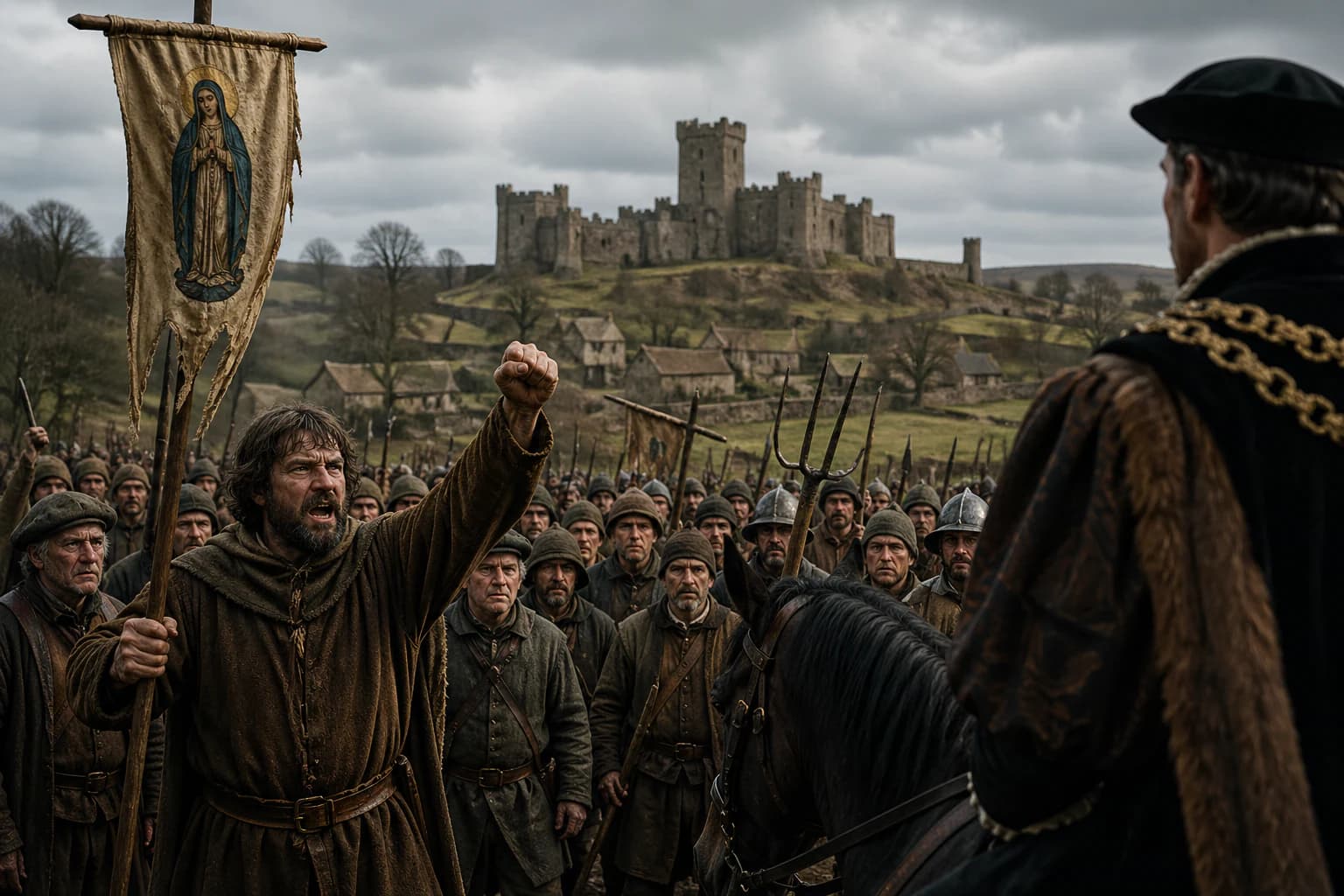
  1. 4The Pilgrimage of Grace
  2. 5The Protestant Turn Under Edward VI
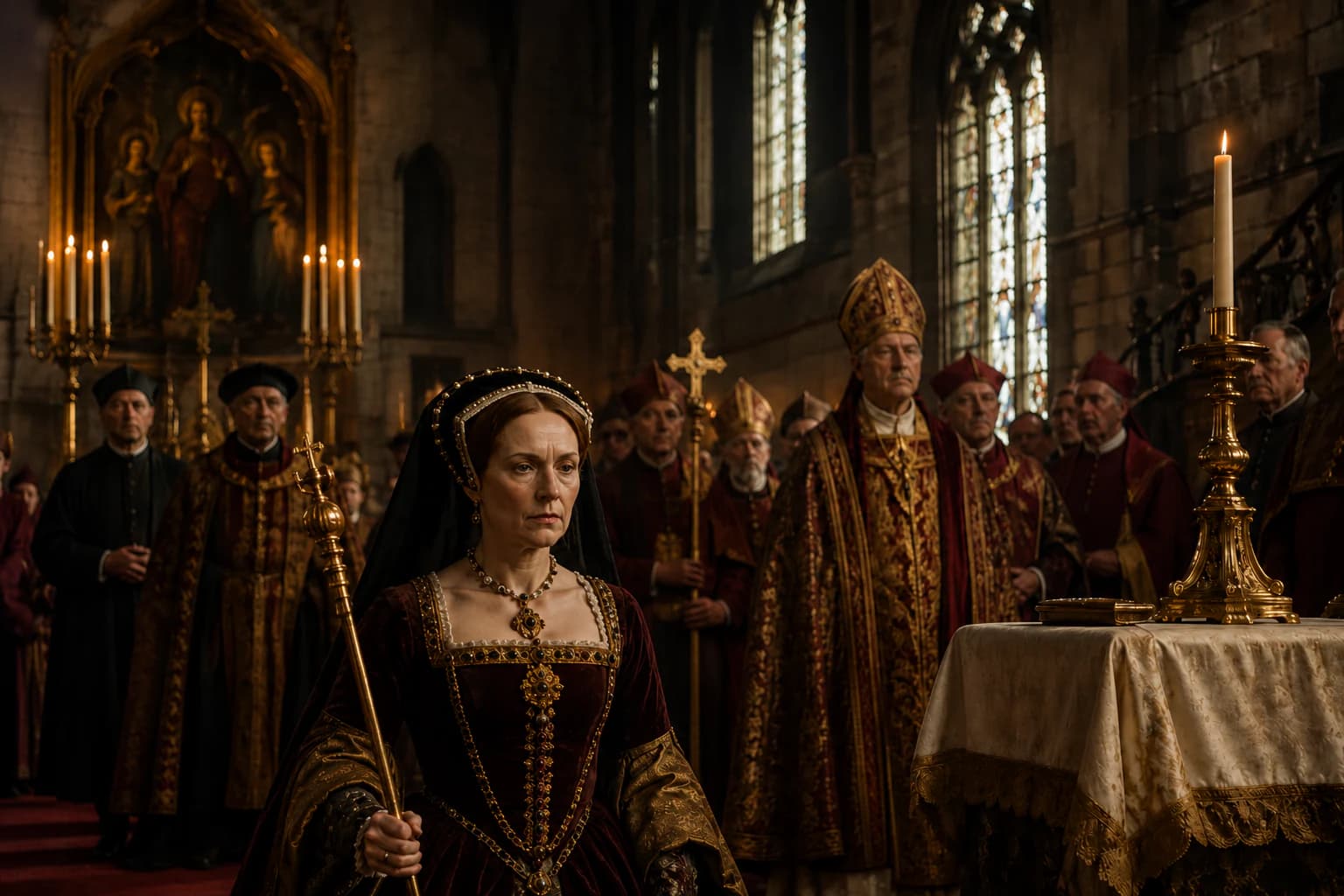
  3. 6Mary I Restores Catholic Rule
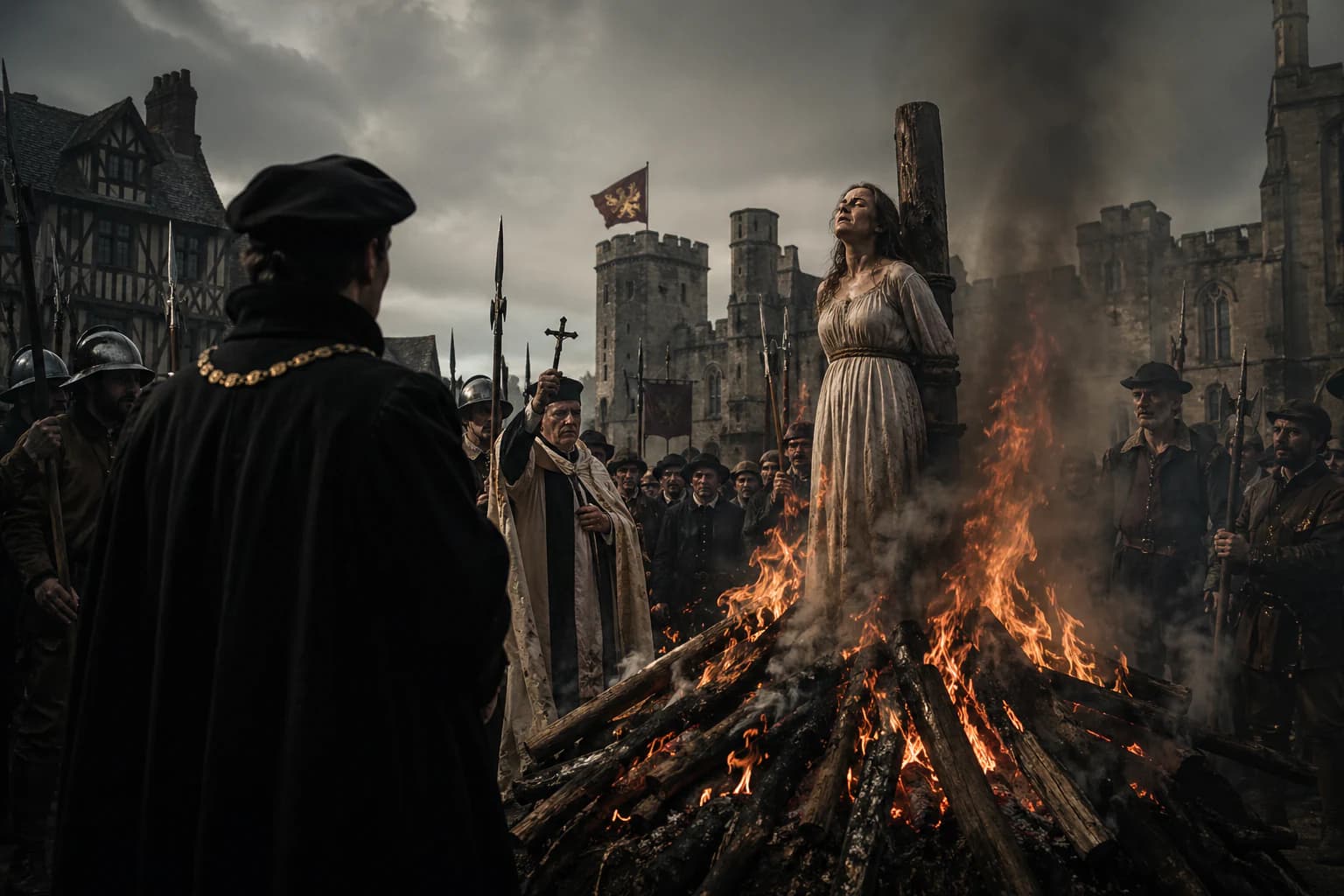
  4. 7The Marian Persecutions
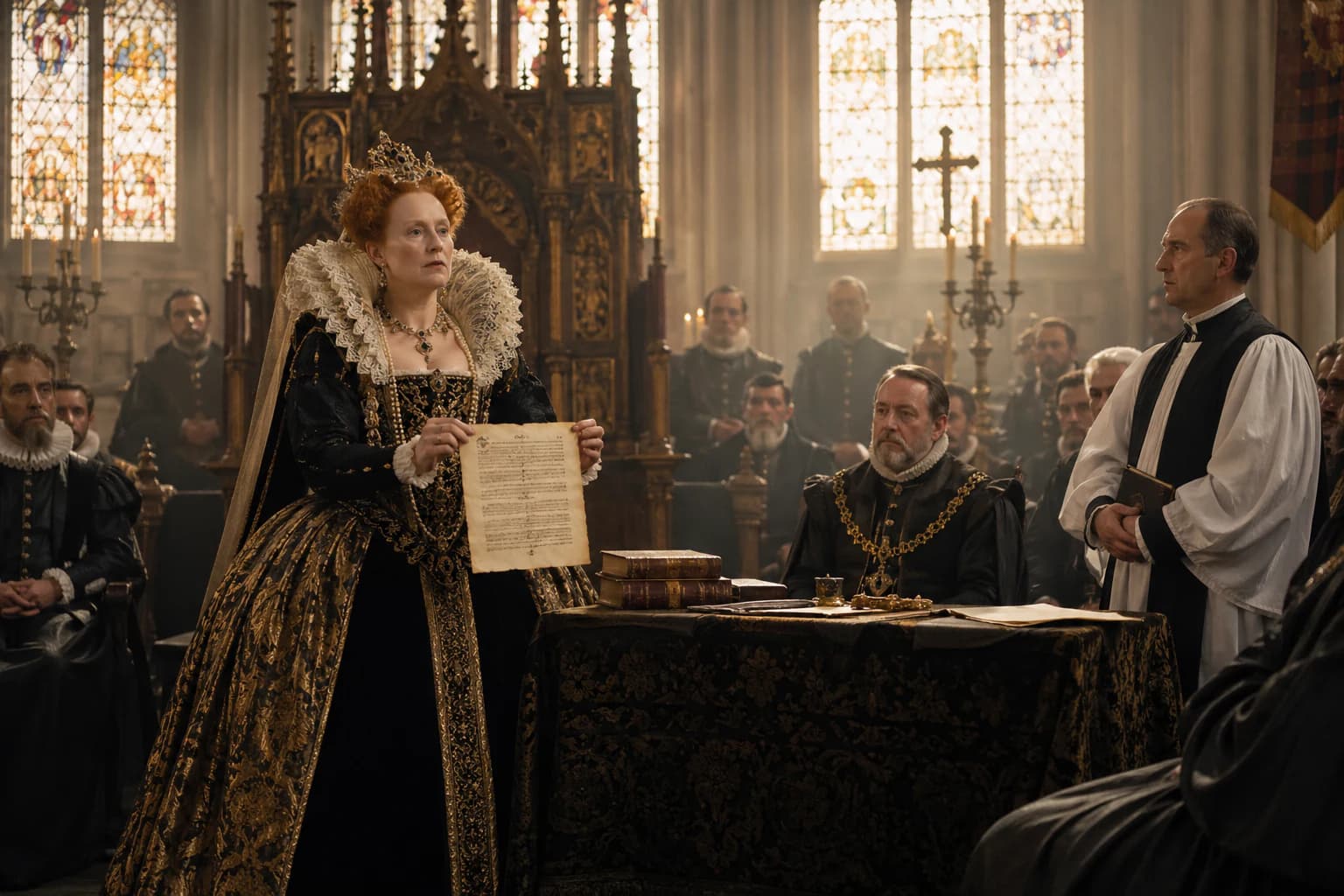
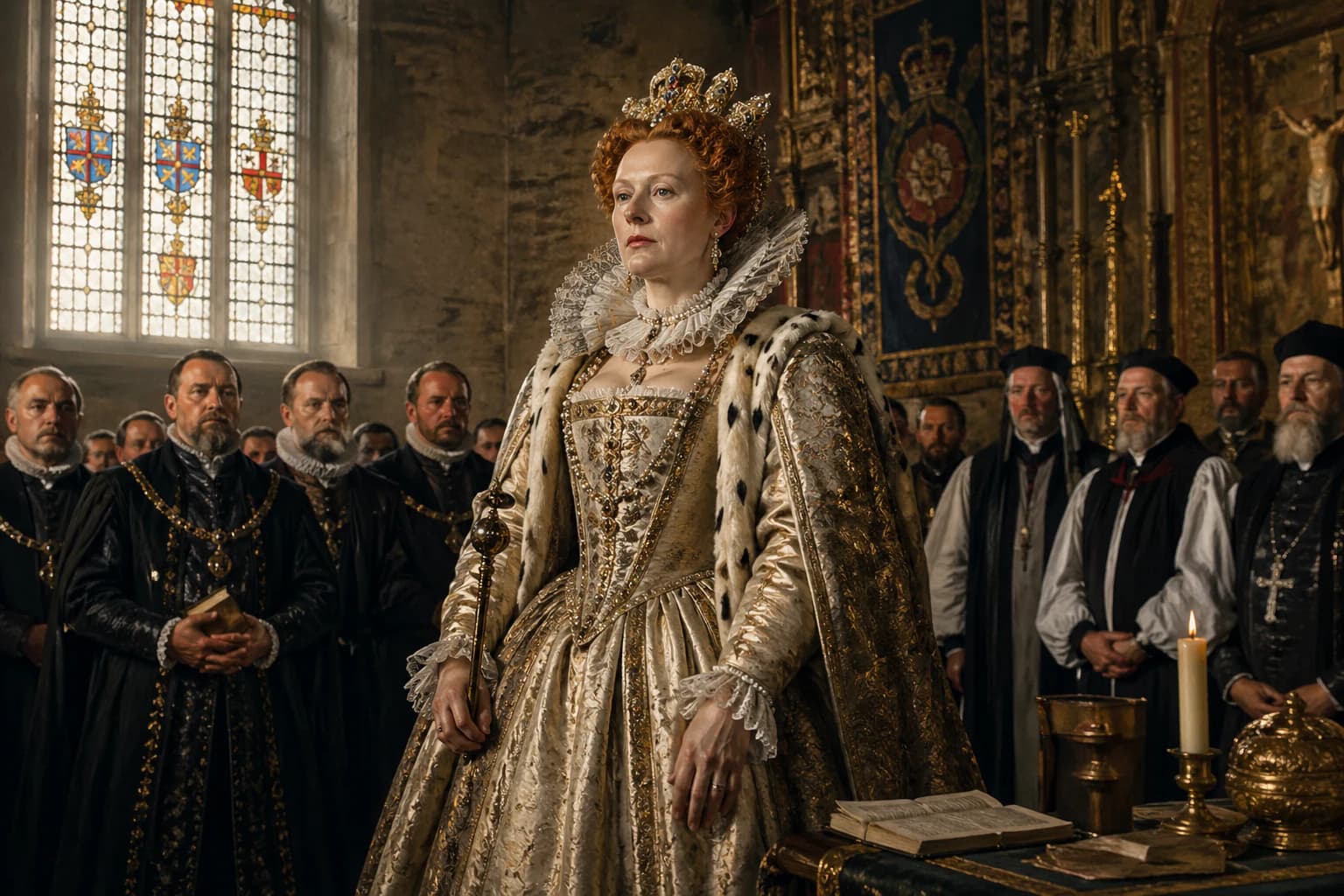
  5. 8The Elizabethan Settlement
  6. 9Catholic Threats and Protestant Identity
  7. 10The Reformation's National Legacy

Browse stories

Browse stories for free

Explore the people connected to this turning point or enjoy one of our free stories.

Unlock full storyBrowse stories

References

Sources & Further Reading

Reliable sources, primary-source collections and reading paths connected to this page.

Sources used

  1. The British Library, The Reformation,” Open source
  2. The National Archives, Henry VIII and the Reformation,” Open source

Further reading

  1. Diarmaid MacCulloch, The Reformation, Penguin.

Primary sources

  1. Fordham University, Internet Modern History Sourcebook: Reformation,” Open source

A weekly route through history

Find out first about the latest published stories, feature notes and occasional Premium offers in one weekly email.