Lineage

Chinese Dynasties Timeline

This list of Chinese dynasties follows China's major ruling houses and state transitions in chronological order, from early kingship to the end of imperial rule.

The core dynasty chain ends with the Qing in 1912. The Republic of China and People's Republic of China are included as a post-imperial handoff so the succession from monarchy to modern state remains clear.

c. 2070 BCE to 1912
14 dynastic phases
Modern handoff included
Transitions and legitimacy
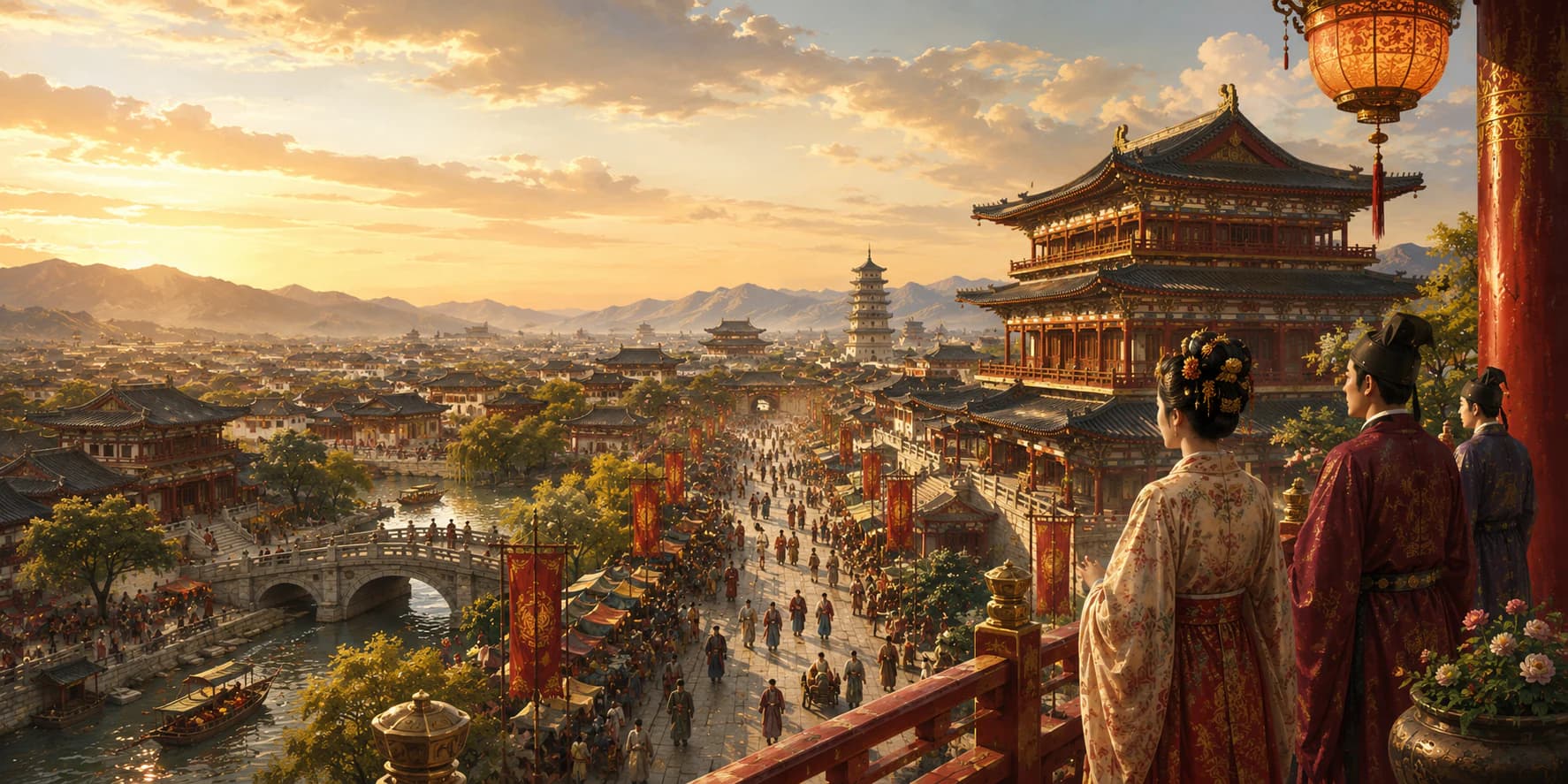
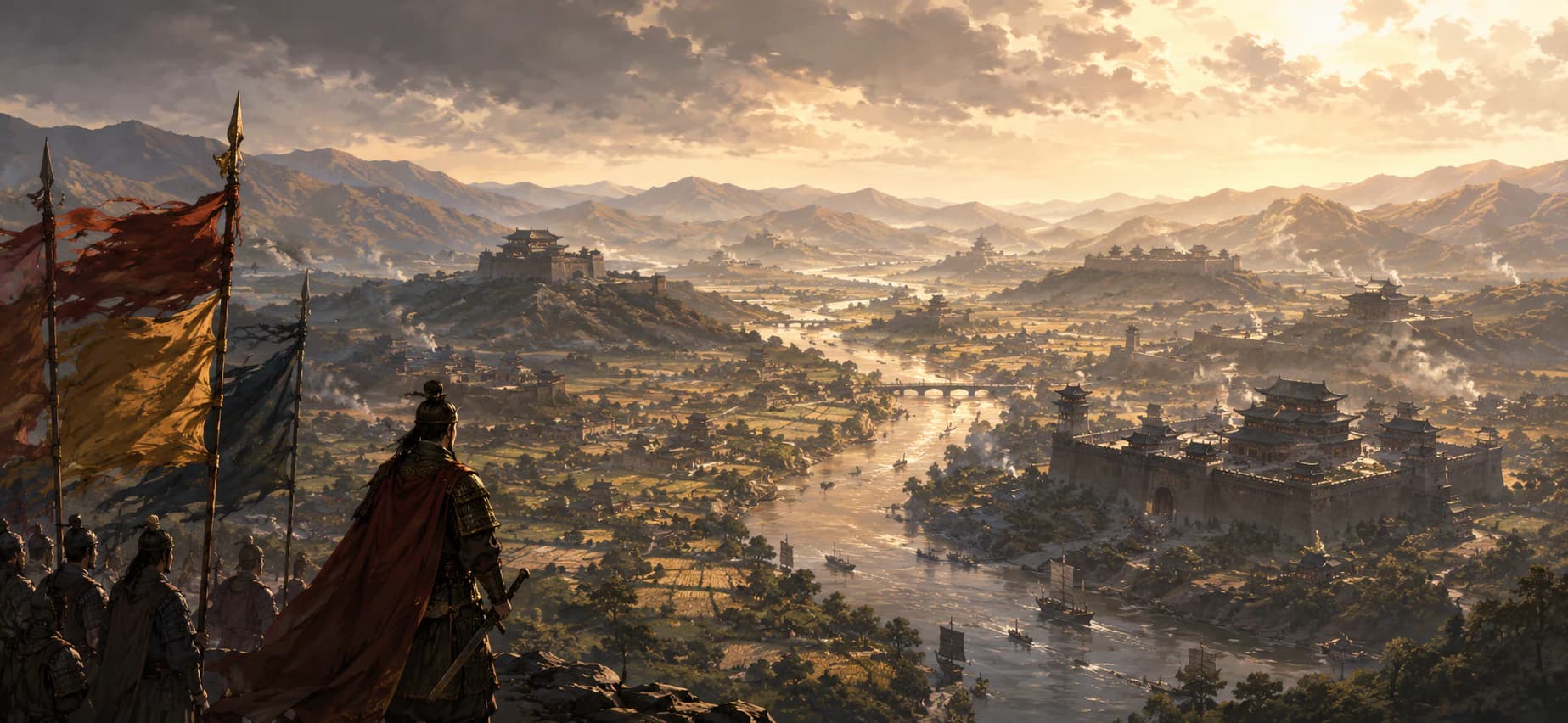
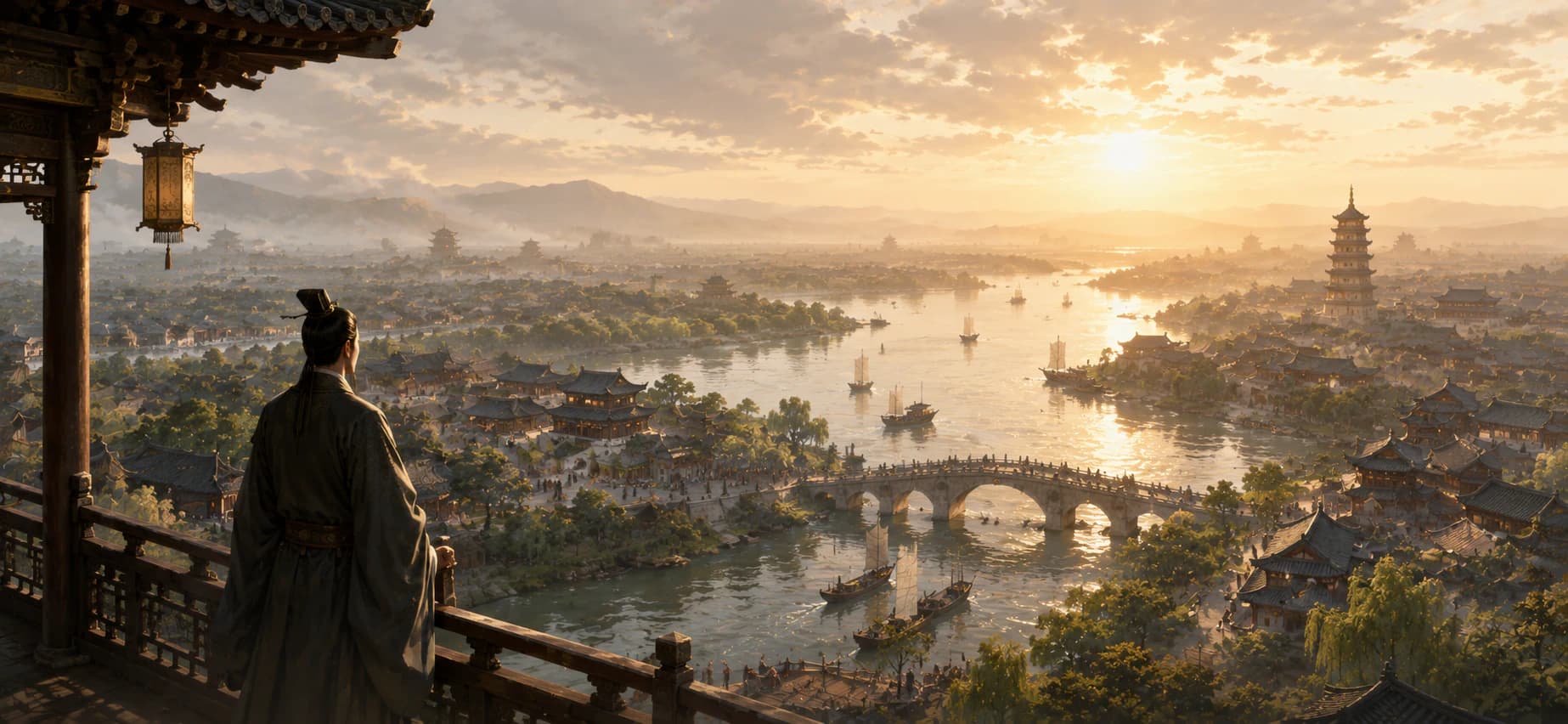
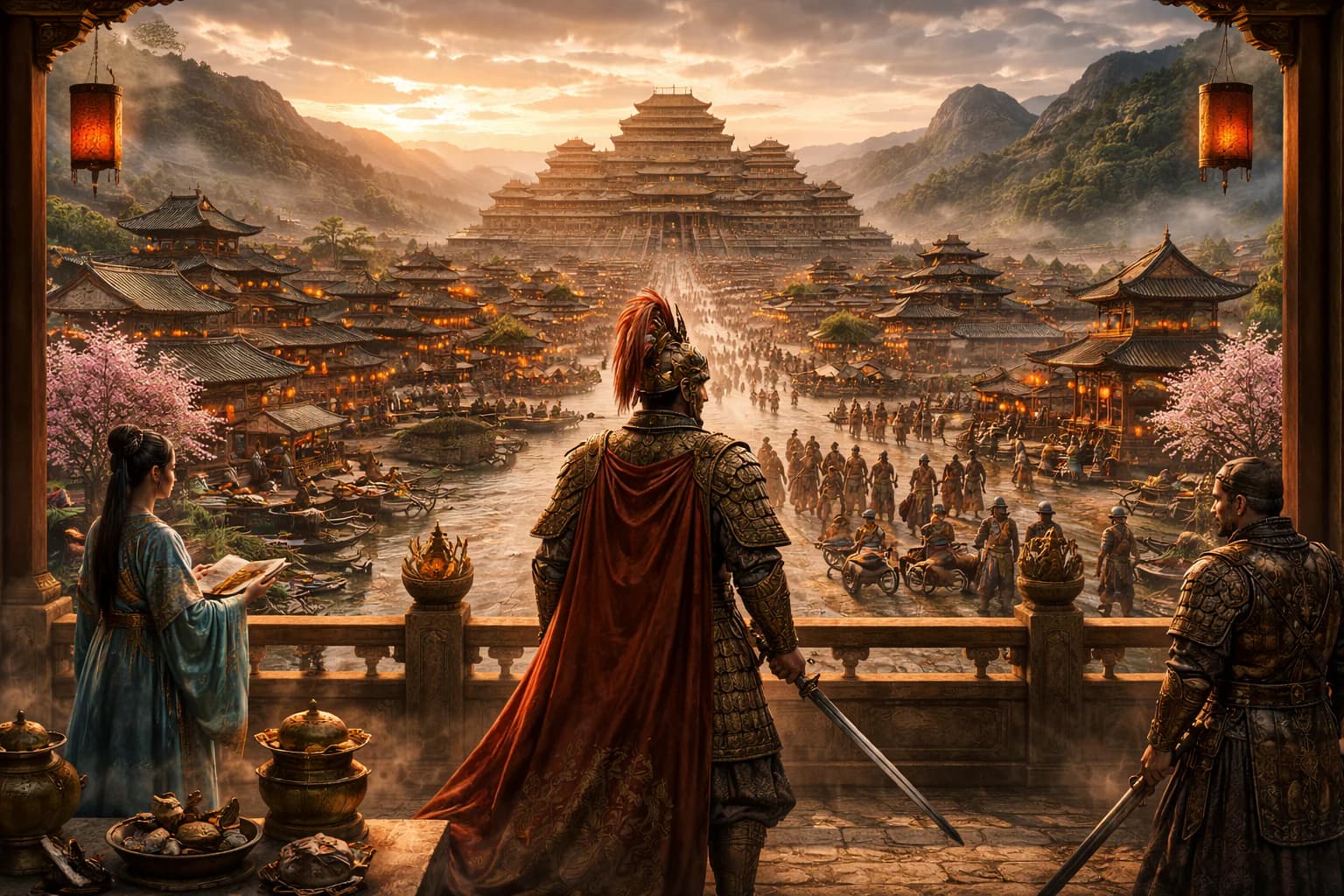
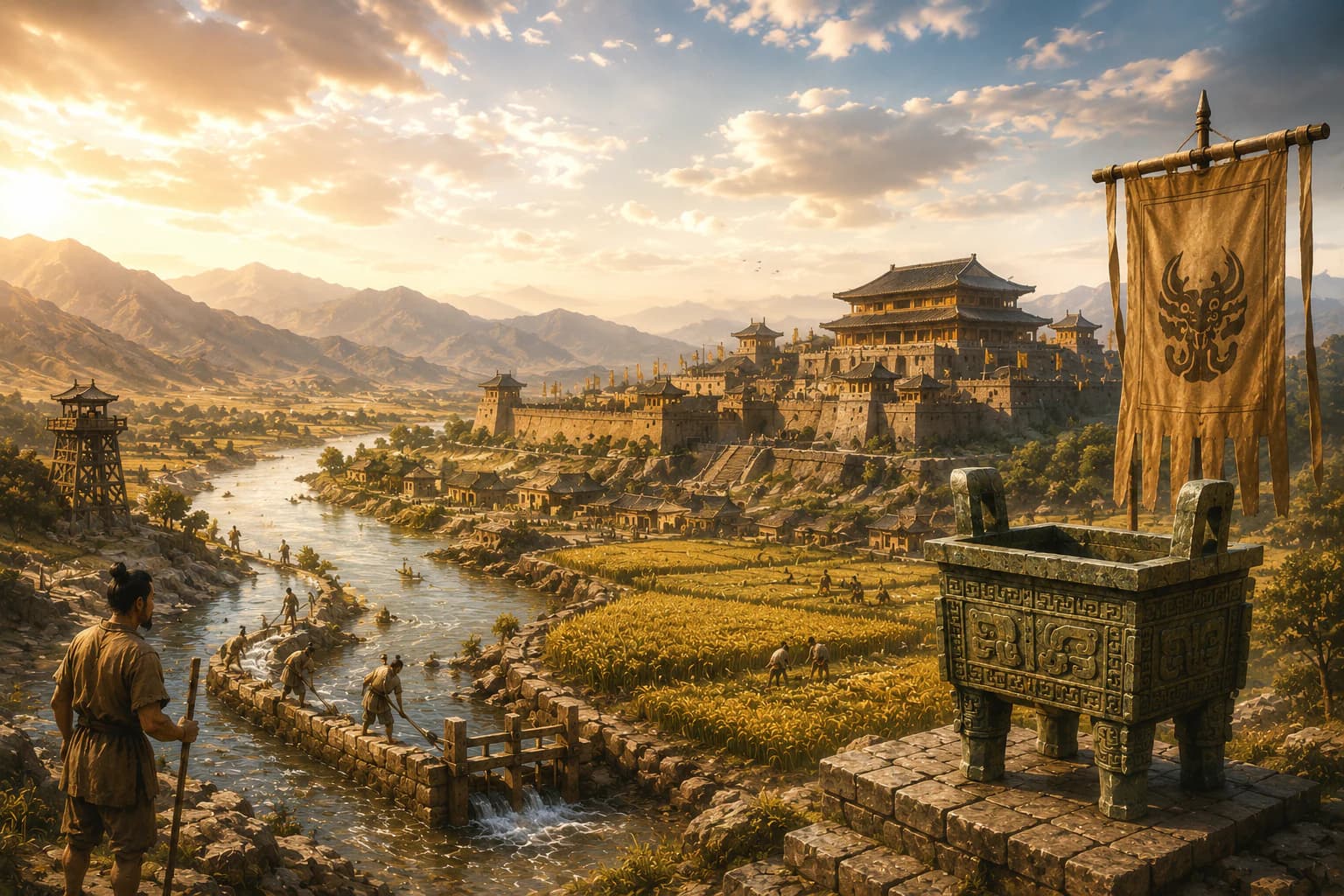
Ancient Chinese royal city with palaces, rivers and distant mountains

Chinese Dynasties Key Facts

  • Traditional first dynasty: Xia, c. 2070-1600 BCE
  • First fully documented dynasty: Shang, c. 1600-1046 BCE
  • First unified empire: Qin, 221-206 BCE
  • Longest-lasting major dynasty here: Zhou, 1046-256 BCE
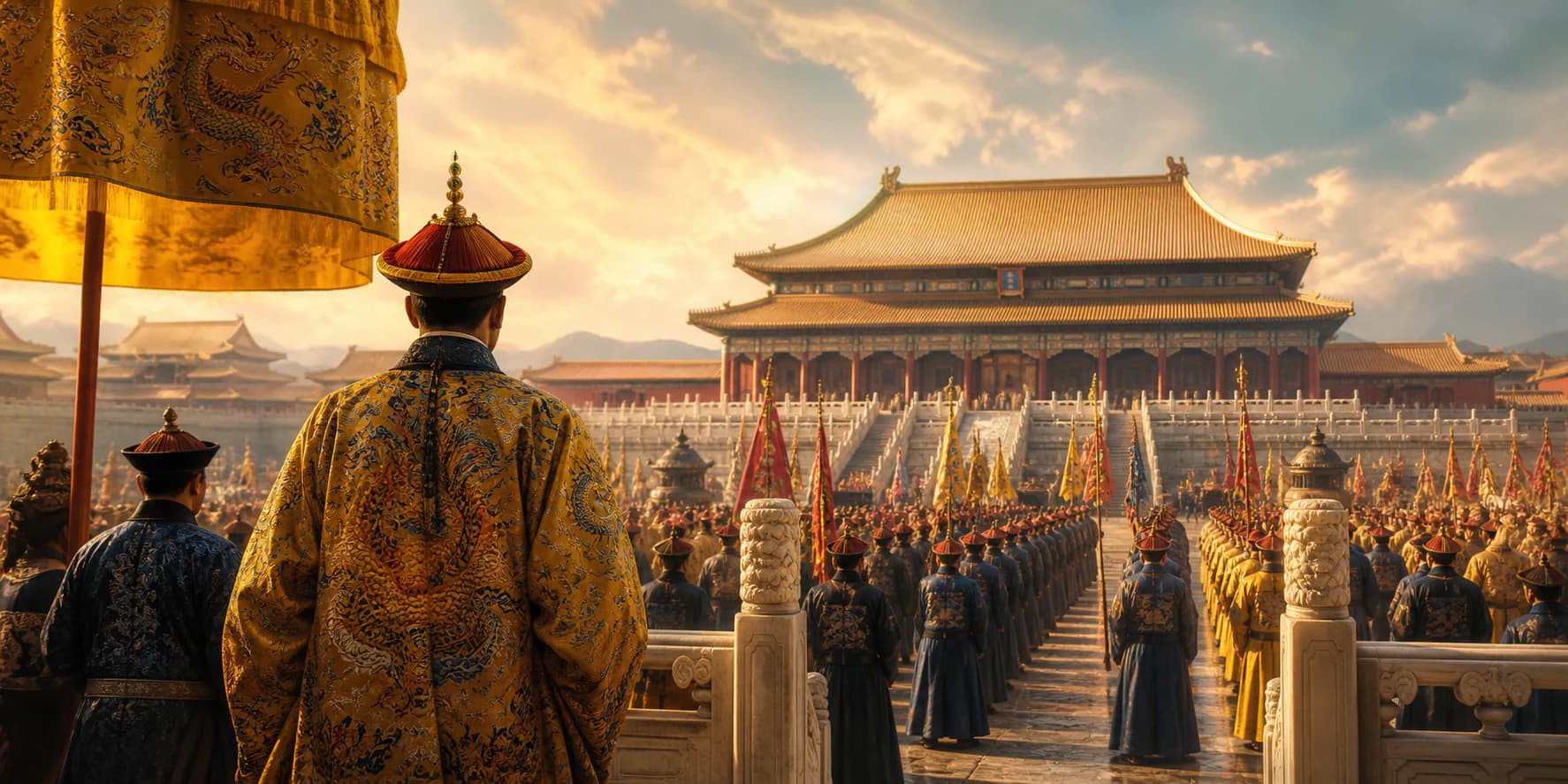
  • Last imperial dynasty: Qing, 1644-1912

How to Read This Chinese Dynasty Timeline

Chinese dynastic history is not a single unbroken handoff. It moves through royal houses, unified empires, rival states, conquest regimes, restorations and post-imperial states. The same dynasty can be a family line, a ruling institution, a legitimacy claim and a memory later regimes argued with.

The transitions are the important part. Shang to Zhou introduces the Mandate of Heaven. Qin to Han turns brutal unification into durable empire. Sui to Tang repeats the pattern of short founding dynasty and long successor. Yuan, Ming and Qing show how conquest, restoration and multiethnic empire reshaped what China meant.
Xia dynasty visual
01c. 2070-1600 BCE
Early Kingship

Xia

Remembered as China's first royal house

The Xia sits at the edge of archaeology and later historical memory. It represents the traditional beginning of hereditary kingship before the better-attested Shang world.

CapitalErlitou region
Span2070 BCE to 1600 BCE

Use it as the origin point for dynastic imagination: rule passes through a house, not simply through a single charismatic leader.

Shang dynasty visual
02c. 1600-1046 BCE
Early Kingship

Shang

Bronze kingship and oracle-bone authority

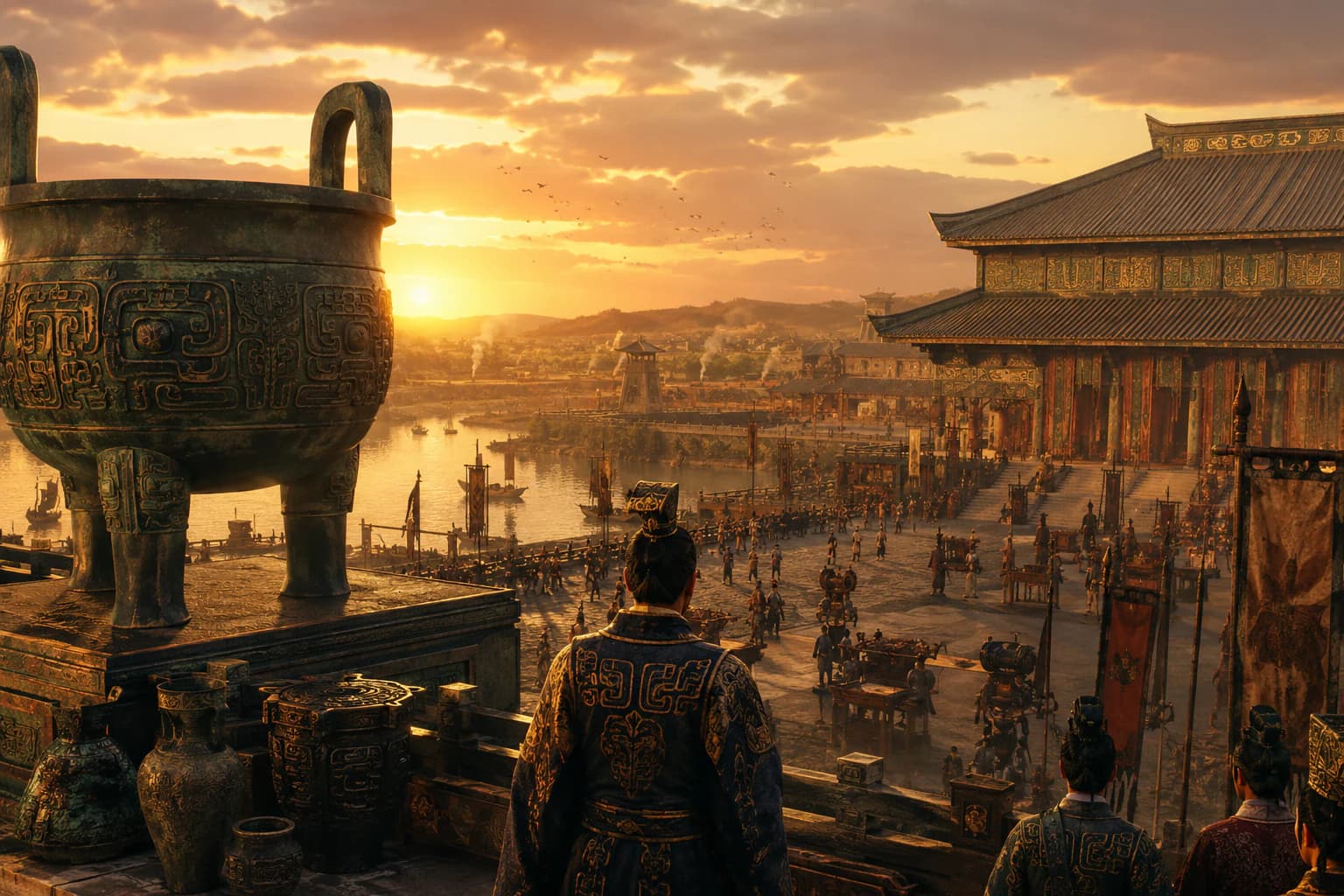
The Shang is the first Chinese dynasty supported by extensive written evidence. Its kings ruled through warfare, ancestor ritual, bronze production and divination.

CapitalAnyang
Span1600 BCE to 1046 BCE

It gives the lineage a documented foundation: writing, royal ritual and elite power become visible together.

Zhou dynasty visual
031046-256 BCE
Early Kingship

Zhou

Mandate of Heaven replaces Shang legitimacy

The Zhou overthrew the Shang and justified their rule through the Mandate of Heaven. Over time, royal authority weakened as regional lords became independent powers.

CapitalHaojing, Luoyang
Span1046 BCE to 256 BCE

It created the language later dynasties used to explain why one house could lose Heaven's approval and another could inherit it.

Qin dynasty visual
04221-206 BCE
Imperial Formation

Qin

Conquest unifies the Warring States

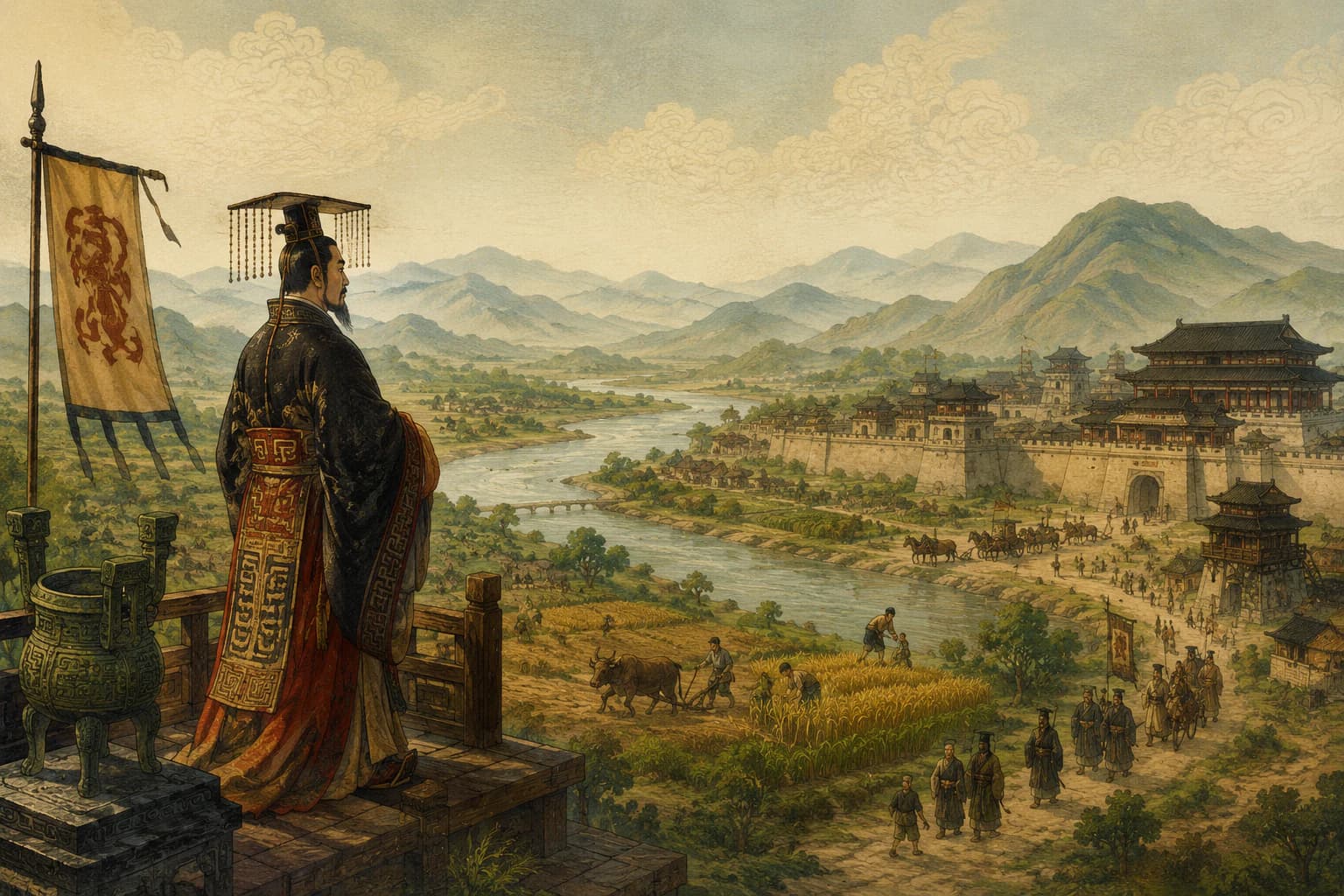
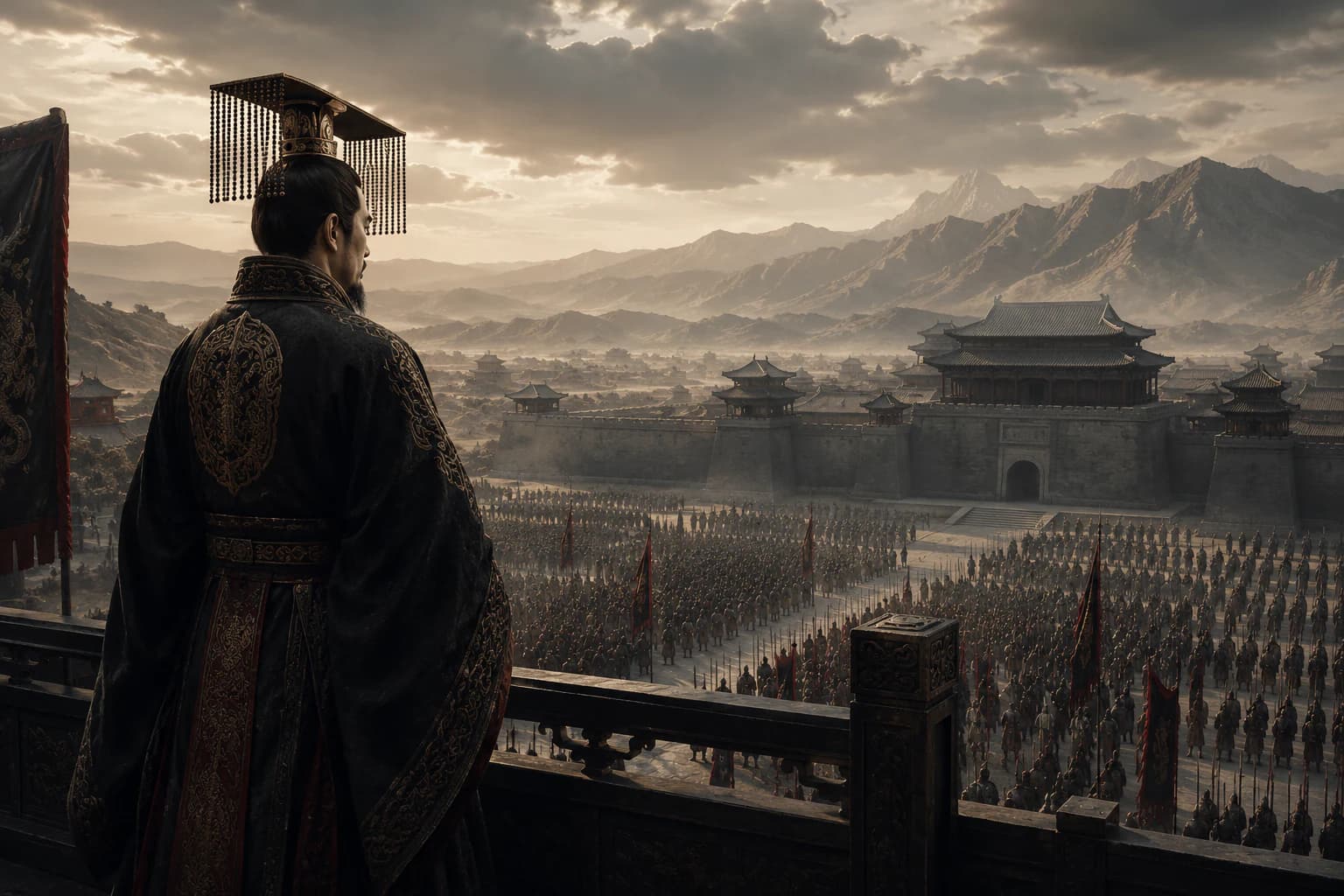
The Qin ended centuries of interstate war and created the first unified Chinese empire. Its reforms standardized administration, law, measures, writing and imperial rule.

CapitalXianyang
Span221 BCE to 206 BCE

Short-lived but foundational: later dynasties inherited the imperial frame Qin built.

Han dynasty visual
05206 BCE-220 CE
Imperial Formation

Han

Rebellion turns Qin empire into durable rule

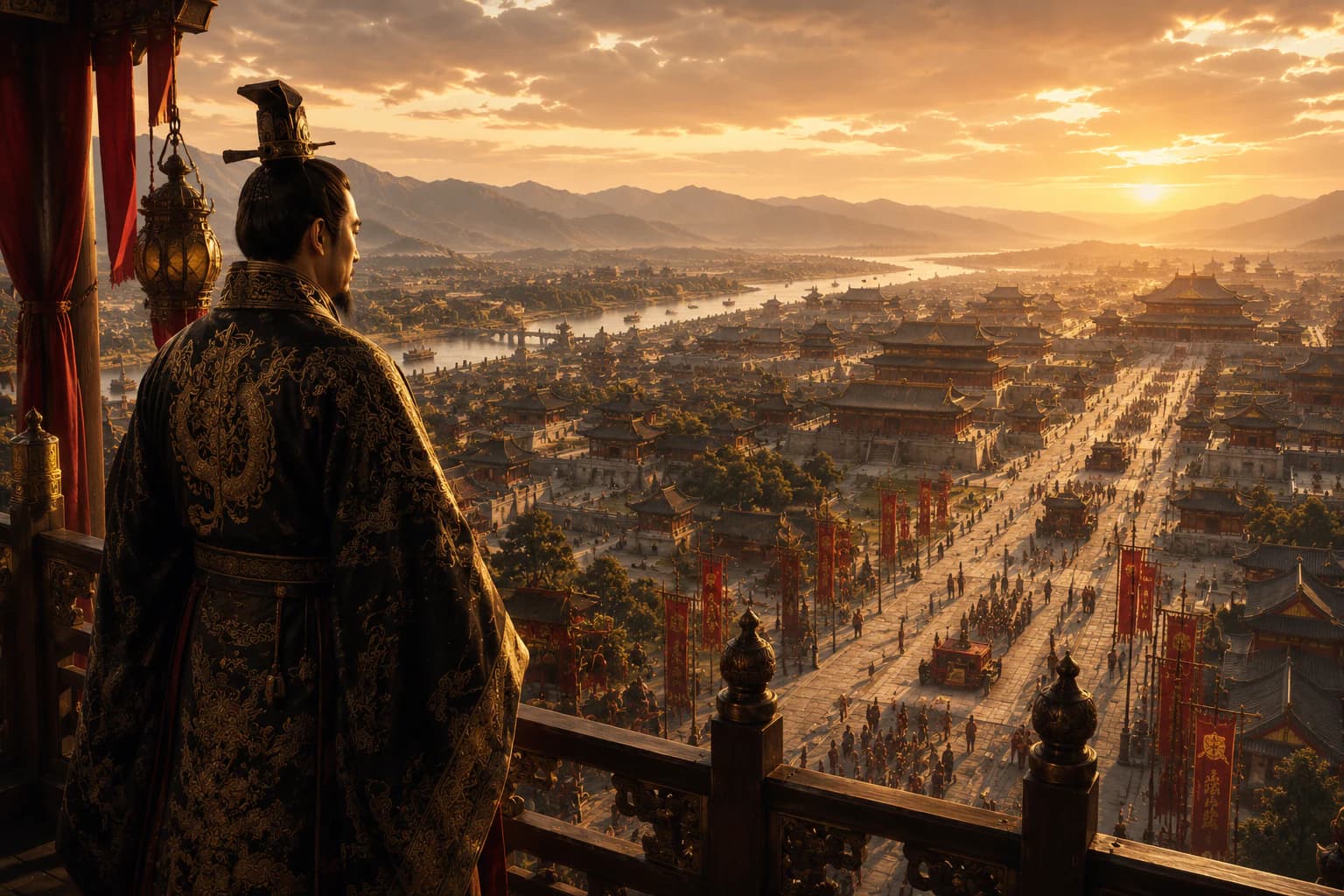
The Han transformed the Qin imperial skeleton into a long-lasting state. It expanded westward, elevated Confucian learning and gave later Chinese identity one of its central names.

CapitalChang'an, Luoyang
Span206 BCE to 220 CE

The Han made empire feel enduring rather than experimental.

Three Kingdoms dynasty visual
06220-280
Division and Restoration

Three Kingdoms

Han collapse fragments the imperial world

Wei, Shu and Wu competed after the Han collapse. The period became one of China's great political and literary memories of strategy, rivalry and lost unity.

CapitalLuoyang, Chengdu, Jianye
Span220 CE to 280 CE

It shows that dynastic lineage is not always a neat handoff; sometimes the line breaks into rival claims.

Jin dynasty visual
07266-420
Division and Restoration

Jin

Brief reunification gives way to northern collapse

The Jin reunited China after the Three Kingdoms, but internal conflict and pressure from northern powers split the realm again into northern and southern traditions.

CapitalLuoyang, Jiankang
Span266 CE to 420 CE

Its story turns restoration into a warning: reunification can be fragile if elite politics and frontier power fracture together.

Sui dynasty visual
08581-618
Division and Restoration

Sui

Northern and southern worlds are reunited

The Sui reunified China after centuries of division and launched enormous state projects, including the Grand Canal. Its overreach helped bring it down quickly.

CapitalDaxing
Span581 CE to 618 CE

Like Qin, the Sui was short-lived but structurally decisive: it prepared the ground for a greater successor.

Tang dynasty visual
09618-907
Division and Restoration

Tang

Sui collapse becomes cosmopolitan imperial revival

The Tang built one of China's most influential imperial orders, combining military expansion, urban culture, poetry, Buddhism and far-reaching Eurasian connections.

CapitalChang'an
Span618 CE to 907 CE

It is one of the dynasty chain's high points: confident, outward-looking and culturally magnetic.

Five Dynasties and Ten Kingdoms dynasty visual
10907-960
Division and Restoration

Five Dynasties and Ten Kingdoms

Tang collapse splinters the realm

After the Tang, northern courts rose and fell quickly while southern kingdoms developed their own centers of power. The period bridged Tang imperial culture and Song restoration.

CapitalKaifeng and regional courts
Span907 CE to 960 CE

It keeps the lineage honest: between great dynasties, power often moved through short regimes and regional experiments.

Song dynasty visual
11960-1279
Conquest and Native Rule

Song

Civil bureaucracy restores order

The Song built a sophisticated civil state with commercial growth, printing, scholarship and urban life, even as it faced powerful northern rivals and eventually Mongol conquest.

CapitalKaifeng, Lin'an
Span960 CE to 1279 CE

It shifts the dynasty story from conquest to administration, economy and culture.

Yuan dynasty visual
121271-1368
Conquest and Native Rule

Yuan

Mongol conquest turns China into part of a wider empire

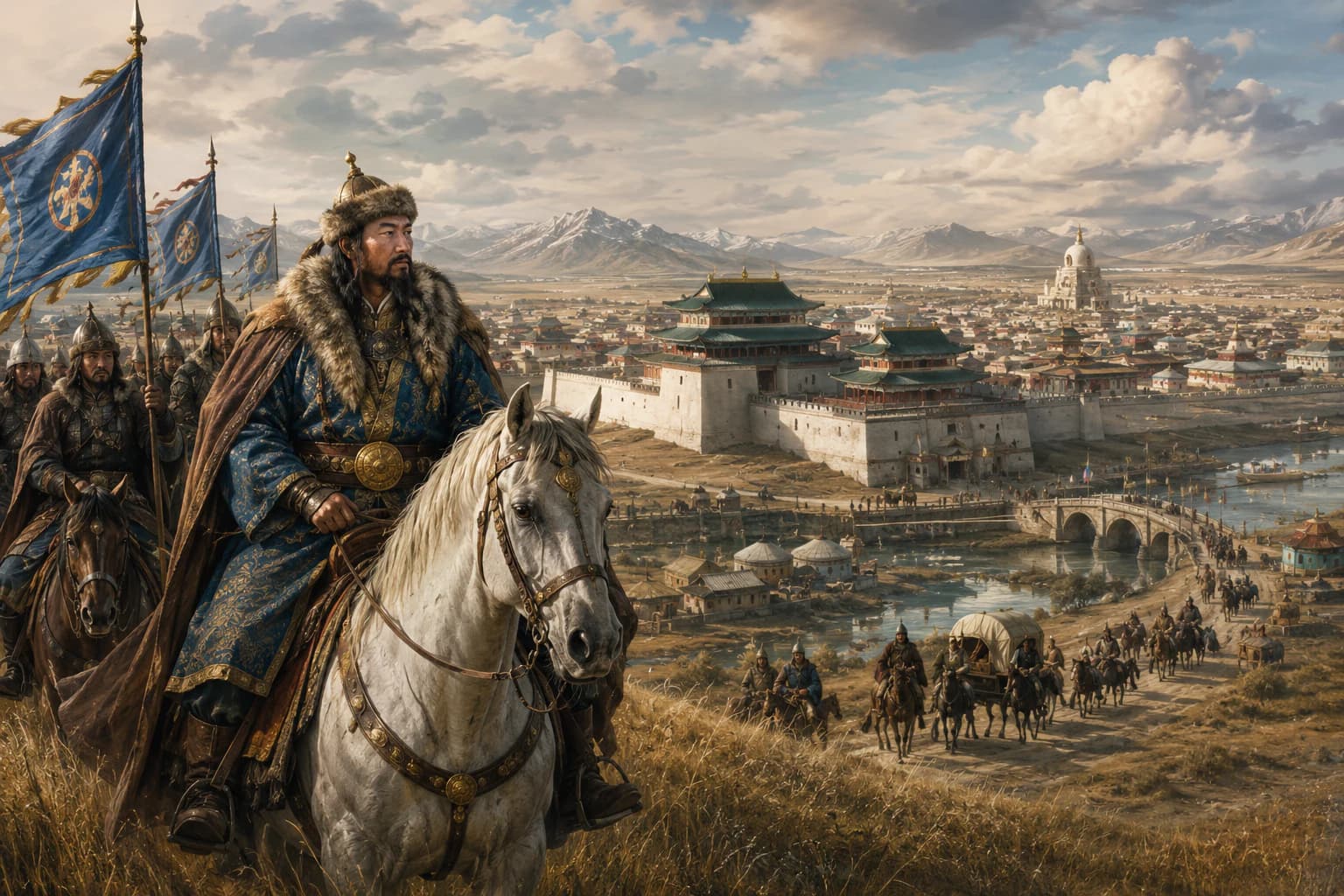
Founded by Kublai Khan, the Yuan placed China inside the Mongol imperial world. It connected China to Eurasian exchange while ruling through a conquest-dynasty order.

CapitalDadu
Span1271 CE to 1368 CE

It makes lineage more complex: a Chinese dynasty could also be a Mongol imperial regime.

Ming dynasty visual
131368-1644
Conquest and Native Rule

Ming

Native restoration after Mongol rule

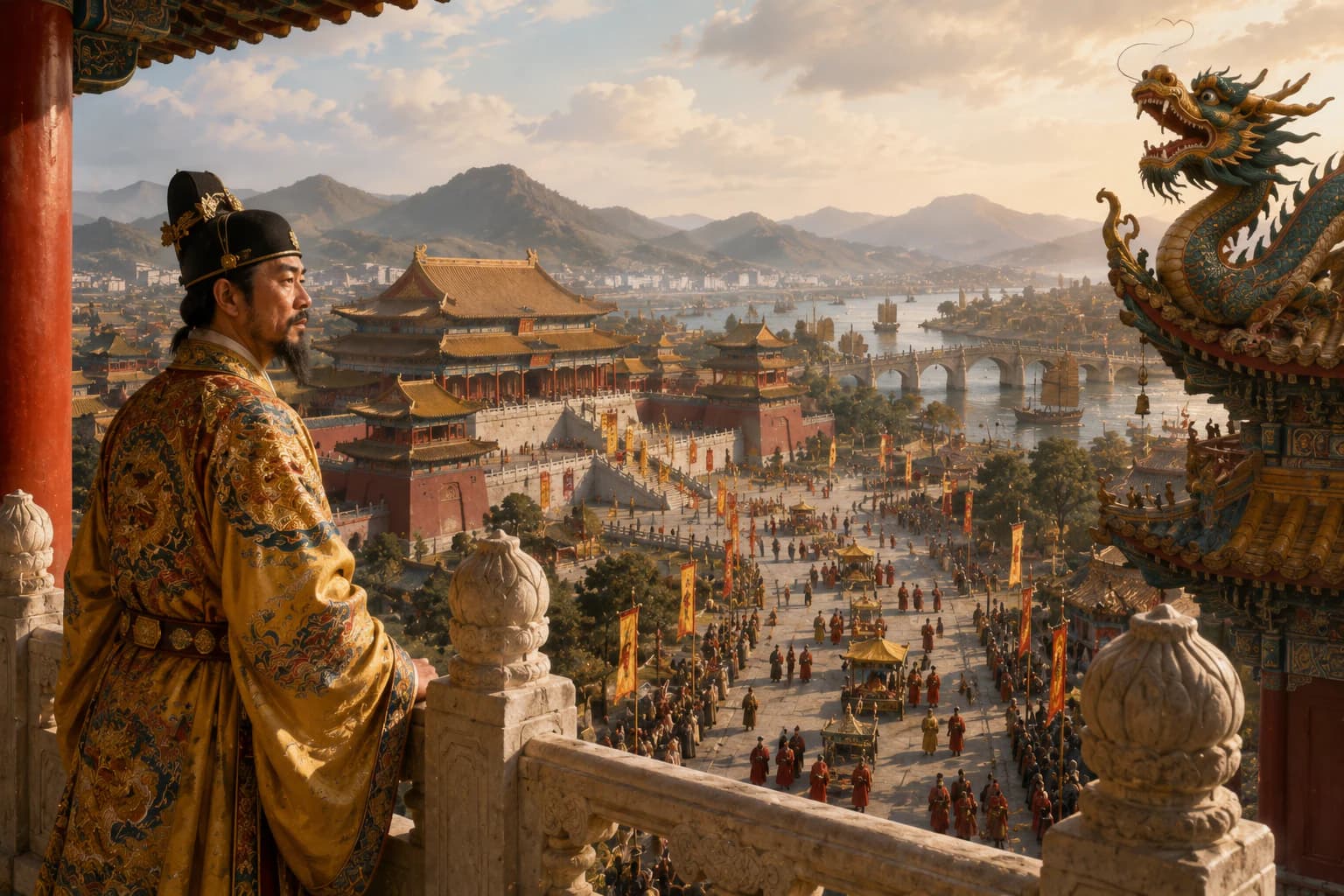
The Ming restored Han Chinese imperial rule after the Yuan. It rebuilt institutions, sponsored maritime expeditions, strengthened the Great Wall and later struggled with fiscal and military pressure.

CapitalNanjing, Beijing
Span1368 CE to 1644 CE

It is a restoration dynasty that gradually became a defensive late-imperial state.

Qing dynasty visual
141644-1912
Late Imperial Crisis

Qing

Manchu conquest creates the last imperial dynasty

The Qing expanded China's territorial reach under Manchu rule, then faced population pressure, rebellions, Western imperialism, reform crises and revolution.

CapitalBeijing
Span1644 CE to 1912 CE

It closes the imperial lineage: conquest empire, territorial expansion and final dynastic collapse meet in one long arc.

Republic of China dynasty visual
151912-1949
Late Imperial Crisis

Republic of China

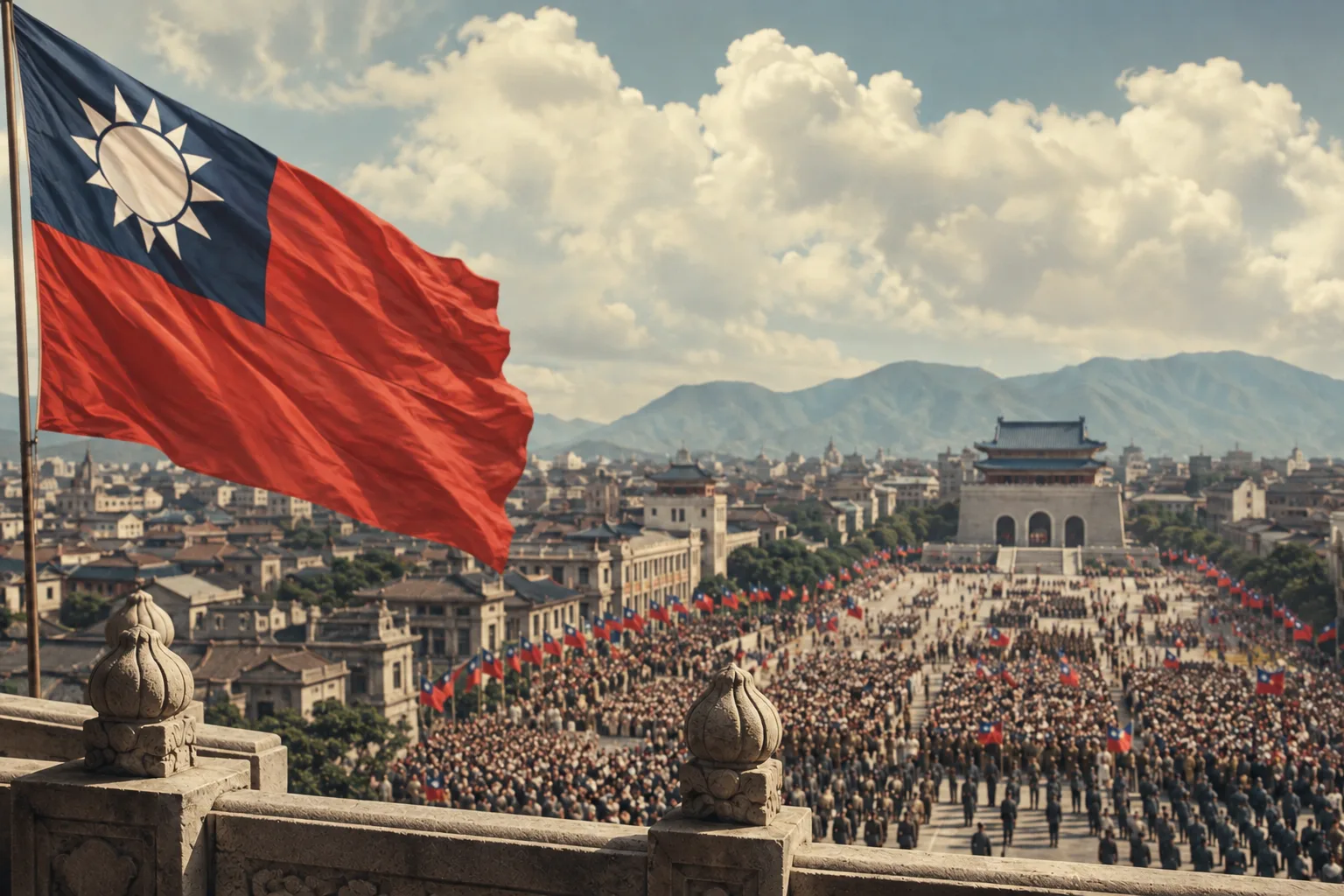
The 1911 Revolution ends monarchy

The Republic replaced dynastic rule, but its mainland years were marked by warlordism, party-state building, Japanese invasion and civil war.

CapitalNanjing, Chongqing, Taipei
Span1912 CE to 1949 CE

It is the bridge from dynastic legitimacy to modern sovereignty, nationalism and party rule.

People's Republic of China dynasty visual
161949-present
Late Imperial Crisis

People's Republic of China

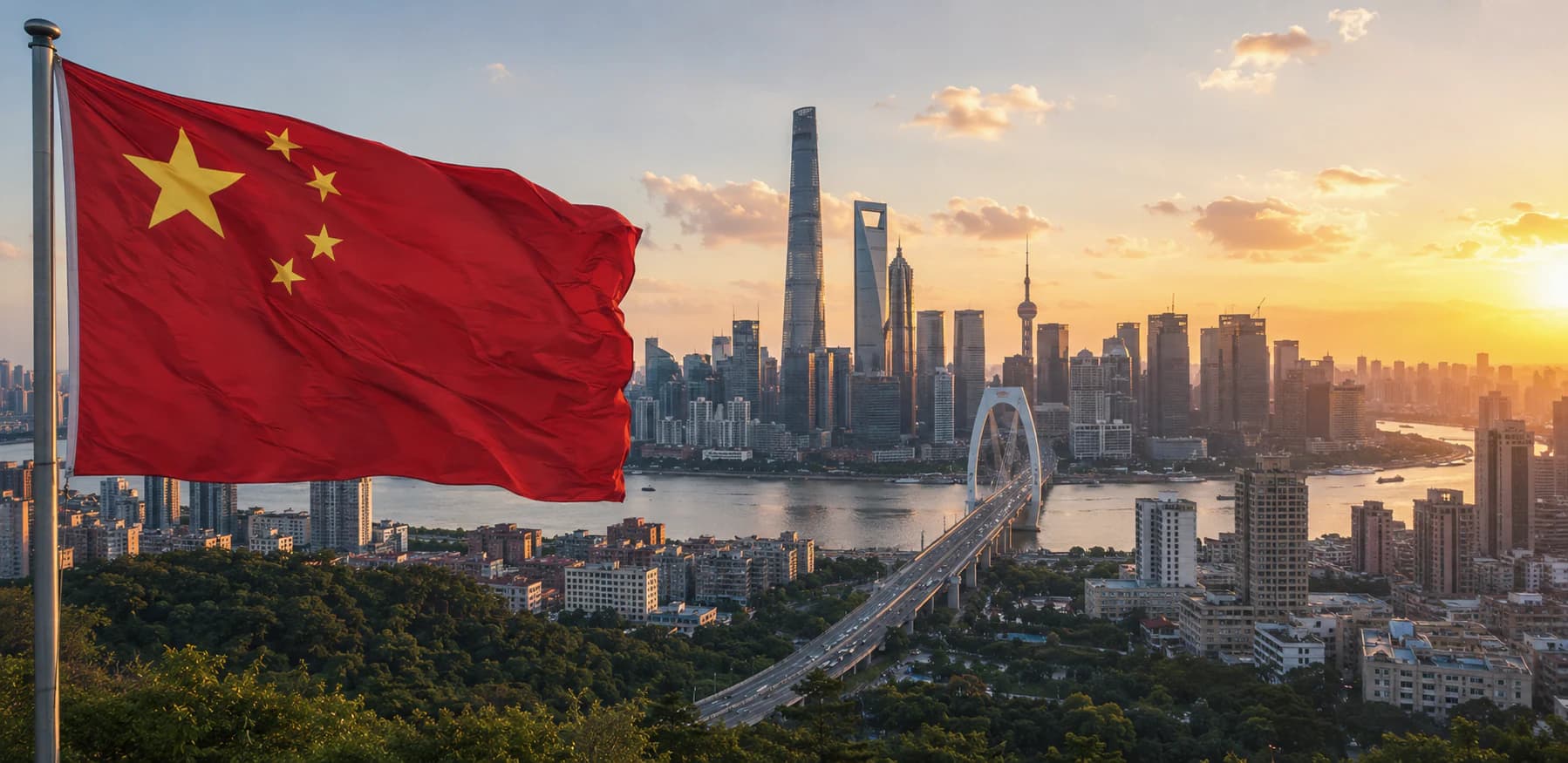
Communist victory creates a new state

The People's Republic replaced the Republic on the mainland after the Chinese Civil War. It is not a dynasty, but it completes the succession from imperial China into the modern state.

CapitalBeijing
Span1949 CE to 2026 CE

Including it makes the handoff visible: dynastic China did not simply end, it became part of a longer question about state continuity.

Frequently asked questions

What was the first Chinese dynasty?

The Xia is traditionally treated as the first dynasty, though its historicity is debated. The Shang is the first dynasty supported by extensive written evidence, especially oracle-bone inscriptions.

Which dynasty first unified China?

The Qin dynasty first unified China in 221 BCE after conquering the Warring States. Its empire lasted only briefly, but its administrative model shaped later Chinese imperial government.

What was the last Chinese dynasty?

The Qing was the last imperial dynasty of China, ruling from 1644 until the monarchy ended in 1912.

Why include the Republic and PRC?

They are not dynasties, but they show what happened to the state after dynastic monarchy ended. Including them makes the transition from imperial legitimacy to modern sovereignty visible.

A weekly route through history

Find out first about the latest published stories, feature notes and occasional Premium offers in one weekly email.