People

William Shakespeare

William Shakespeare was an English playwright, poet and actor from Stratford-upon-Avon. His biography spans the Globe Theatre, the Lord Chamberlain's Men, major tragedies, comedies, histories and sonnets.

Born
1564 CE
Died
1616 CE
Role
English playwright and poet

English playwright and poet (1564–1616)

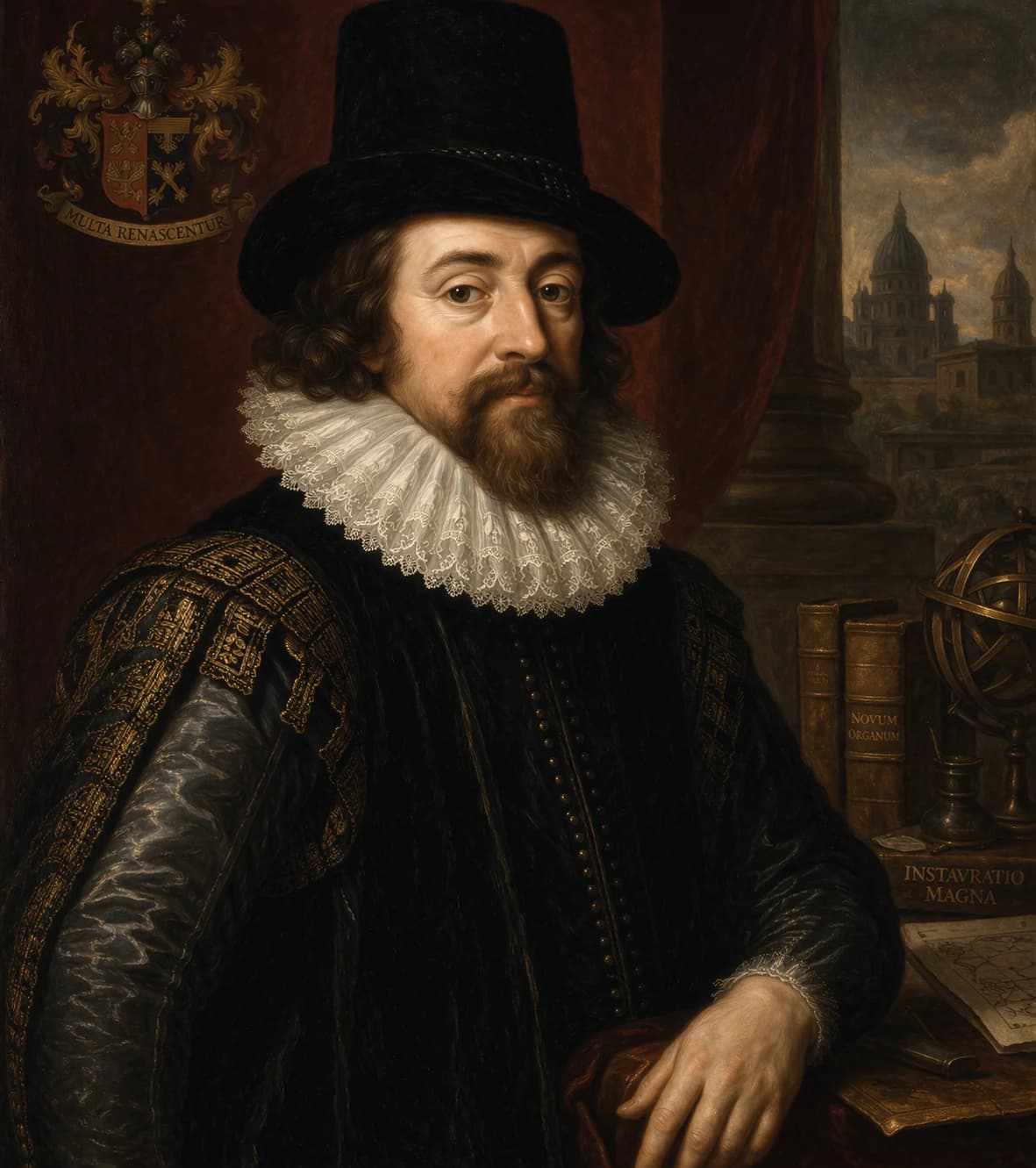
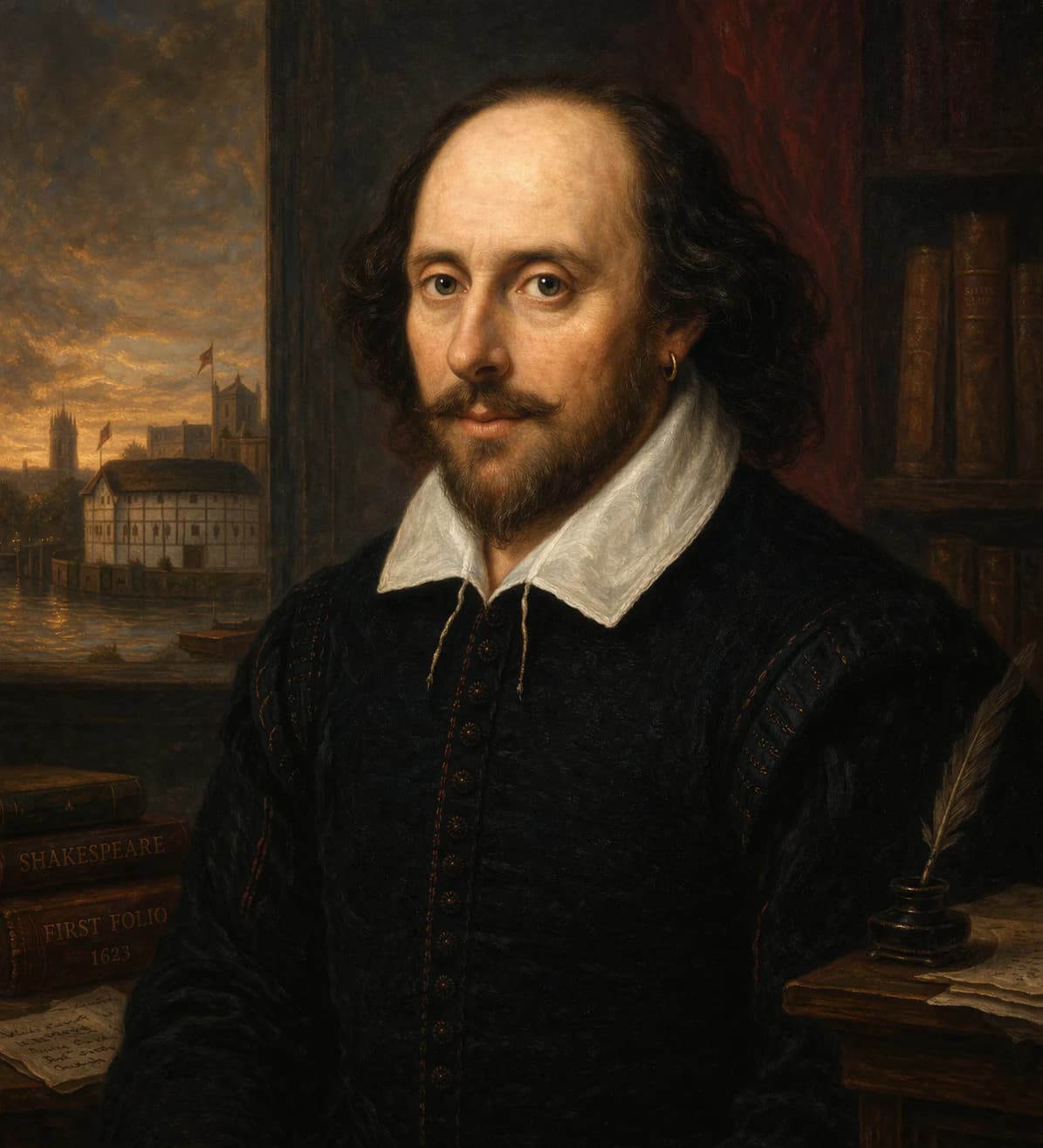
AI-generated portrait of William Shakespeare in Elizabethan attire
AI-assisted historical reconstruction

An illustrative reconstruction based on historical context. It is not a photograph or documentary likeness. Image policy

Quick answer

William Shakespeare was an English playwright, poet and actor from Stratford-upon-Avon. His biography spans the Globe Theatre, the Lord Chamberlain's Men, major tragedies, comedies, histories and sonnets.

Born
1564 CE
Died
1616 CE
Role
English playwright and poet
Years
1564-1616 CE
Facts

William Shakespeare timeline facts

Selected specifics from this profile's life story.

1564
Birth in Stratford

William Shakespeare was born in Stratford-upon-Avon in 1564, the son of a glover and civic officeholder in a market town connected to both rural England and national trade.

Late 1580s
Move to London

By the early 1590s, Shakespeare was active in London's theatre world, where playhouses, patrons, plague closures and rival writers created a fierce creative marketplace.

1600–1608
Great tragedies

Between about 1600 and 1608, Shakespeare wrote the tragedies that made his name global: Hamlet, Othello, King Lear, Macbeth and others.

1616 and beyond
Enduring legacy

After Shakespeare's death, the 1623 First Folio preserved many plays that might otherwise have vanished, making his long afterlife possible.

Life Journey

Stratford, the Globe, and the making of English drama

Follow the story in a more continuous narrative, with a reading mode that matches how much depth you want.

Complete chronology

1564

Birth in Stratford

Shakespeare was baptised at Holy Trinity Church in Stratford-upon-Avon in April 1564, probably born a few days earlier. His father, John Shakespeare, worked as a glover and rose to become bailiff of the town before financial trouble damaged the family's standing. His mother, Mary Arden, came from a local family with deeper rural roots. This mixture of civic ambition, household insecurity and country knowledge matters because Shakespeare's imagination never belonged only to courts or only to taverns. His plays move easily between kings, soldiers, servants, merchants, fools, lovers and labourers. The documentary record of his childhood is thin, but Stratford gave him a language-world rich enough to last a lifetime.
1570s

Grammar school learning

No school register survives to prove Shakespeare's attendance, but the assumption is strong: a bailiff's son in Stratford would likely have had access to the King's New School. Grammar-school education was demanding. Boys translated Latin, memorised passages, practised rhetoric and absorbed authors such as Ovid, Seneca, Plautus and Terence. Shakespeare did not write like a university scholar showing off credentials. He wrote like a practical dramatist who had internalised the power of argument, antithesis, disguise, mistaken identity and moral reversal. His genius lay not in inventing every plot, but in taking inherited stories and giving them voices that feel newly alive.

1582–1585

Marriage and family

Shakespeare was eighteen when he married Anne Hathaway, who was several years older and already pregnant. Susanna was born in 1583, followed by the twins Hamnet and Judith in 1585. Then the record falls largely silent until Shakespeare appears in the London theatre world. These so-called lost years have invited speculation: schoolmaster, lawyer's clerk, actor, fugitive poacher, travelling player. Evidence is too slight for certainty. What is clear is that he became both a family man in Stratford and a professional man in London. The distance between domestic obligation and theatrical ambition may help explain the emotional pressure in plays where marriage, inheritance, absence and mistaken loyalty carry such force.

Late 1580s

Move to London

London made Shakespeare possible. The city was expanding, noisy, politically watchful and hungry for entertainment. Public theatres such as the Theatre, the Curtain and later the Globe drew mixed audiences, while acting companies depended on noble patronage for legal protection. Shakespeare entered this world as actor, shareholder and writer, a combination that gave him unusually practical knowledge of performance. He wrote for particular colleagues, particular stages and audiences who could be impatient, witty and unforgiving. Plague closures periodically interrupted the theatres, pushing him toward poetry and patronage. London taught him that literature was not separate from business. It had to live in breath, bodies, tickets and timing.

1590s

Emerging playwright

The 1590s show Shakespeare learning at extraordinary speed. The Henry VI plays and Richard III turned recent English history into popular political theatre. Comedies such as The Comedy of Errors, The Two Gentlemen of Verona and A Midsummer Night's Dream developed his fascination with mistaken identity, desire and theatrical illusion. Romeo and Juliet made lyric intensity inseparable from social violence. The narrative poems Venus and Adonis and The Rape of Lucrece helped establish him in print while the theatres were disrupted by plague. Robert Greene's hostile reference to an 'upstart crow' suggests that Shakespeare's rise irritated university-educated rivals. He was becoming impossible to ignore.

1599

The Globe Theatre

The Lord Chamberlain's Men became one of London's leading companies, and Shakespeare's role as sharer meant he profited from performance as well as writing. In 1599, the company opened the Globe on the south bank of the Thames, a playhouse built for speed, intimacy and crowd energy. This business structure mattered creatively. Shakespeare could write for actors he knew, including Richard Burbage and Will Kempe, and for a company whose survival depended on repertory strength. After James I's accession in 1603, the company became the King's Men, gaining higher prestige. Shakespeare's art was never the lonely production of a desk. It was collaborative, commercial and brilliantly adapted to theatrical conditions.

1600–1608

Great tragedies

The great tragedies did not simply add darkness to Shakespeare's work; they enlarged what theatre could ask. Hamlet turns revenge into thought, delay and theatrical self-consciousness. Othello makes private jealousy inseparable from race, trust and manipulation. King Lear breaks kingship, family and language down to exposure on a heath. Macbeth compresses ambition, prophecy and guilt into terrifying speed. These plays are not timeless because they float above history. They are rooted in succession anxiety, religious uncertainty, court politics, gender order and Jacobean fears of disorder. Yet they reach beyond their moment because Shakespeare lets characters think themselves into catastrophe with a precision audiences still recognise.

1610–1613

Return to Stratford

Shakespeare's later career was not a clean retirement but a gradual loosening. He had bought New Place in Stratford, invested in land and tithes, and secured the status of a prosperous gentleman. Late plays such as The Winter's Tale, Cymbeline and The Tempest move toward reconciliation, loss recovered imperfectly and art's power to stage forgiveness. Some final works were collaborations, especially with John Fletcher, reflecting changing company practice. In 1613, the Globe burned during a performance of Henry VIII, though the company rebuilt. Shakespeare died in Stratford in 1616, leaving a will famous partly for its ordinary domestic details and partly for the mysteries it does not solve.

1616 and beyond

Enduring legacy

Shakespeare's survival depended on colleagues. In 1623, John Heminges and Henry Condell published the First Folio, preserving plays including Macbeth, Julius Caesar, Twelfth Night and The Tempest. His reputation changed over time: admired in the seventeenth century, adapted freely in the Restoration, elevated in the eighteenth and nineteenth centuries into national genius, then globalised through empire, education, translation, film and performance. The authorship doubts that attract attention today remain a minority position; the documentary evidence for Shakespeare of Stratford as actor, sharer and playwright is stronger than the romance of hidden alternatives suggests. His legacy lies in a body of work that keeps producing new meanings because it is built from conflict, ambiguity and verbal life.

Continue in context

Connected stories

Move from the profile into the wider events and settings this figure belongs to.

Tertiary paths

Content note

This profile is written for educational use and connects to related Stories of History pages. The main portrait is an AI-assisted historical reconstruction, included as an illustrative aid rather than documentary evidence. Image policy

References

Sources & Further Reading

Reliable reference works, archives and reading paths connected to this profile.

Further reading

  1. Encyclopaedia Britannica, Search results for William Shakespeare,” accessed June 2026.Open source
  2. WorldCat, Books and library holdings for William Shakespeare,” accessed June 2026.Open source

Primary sources

  1. Library of Congress, Search results for William Shakespeare,” accessed June 2026.Open source

Reviewed claim sources

Loading reviewed claim sources...

A weekly route through history

Find out first about the latest published stories, feature notes and occasional Premium offers in one weekly email.