People

James I

James I, also James VI of Scotland, was the first Stuart king of England. His reign united the crowns in 1603 and produced the King James Bible.

Born
1566 CE
Died
1625 CE
Role
King of England and Scotland

King of England and Scotland (1566–1625)

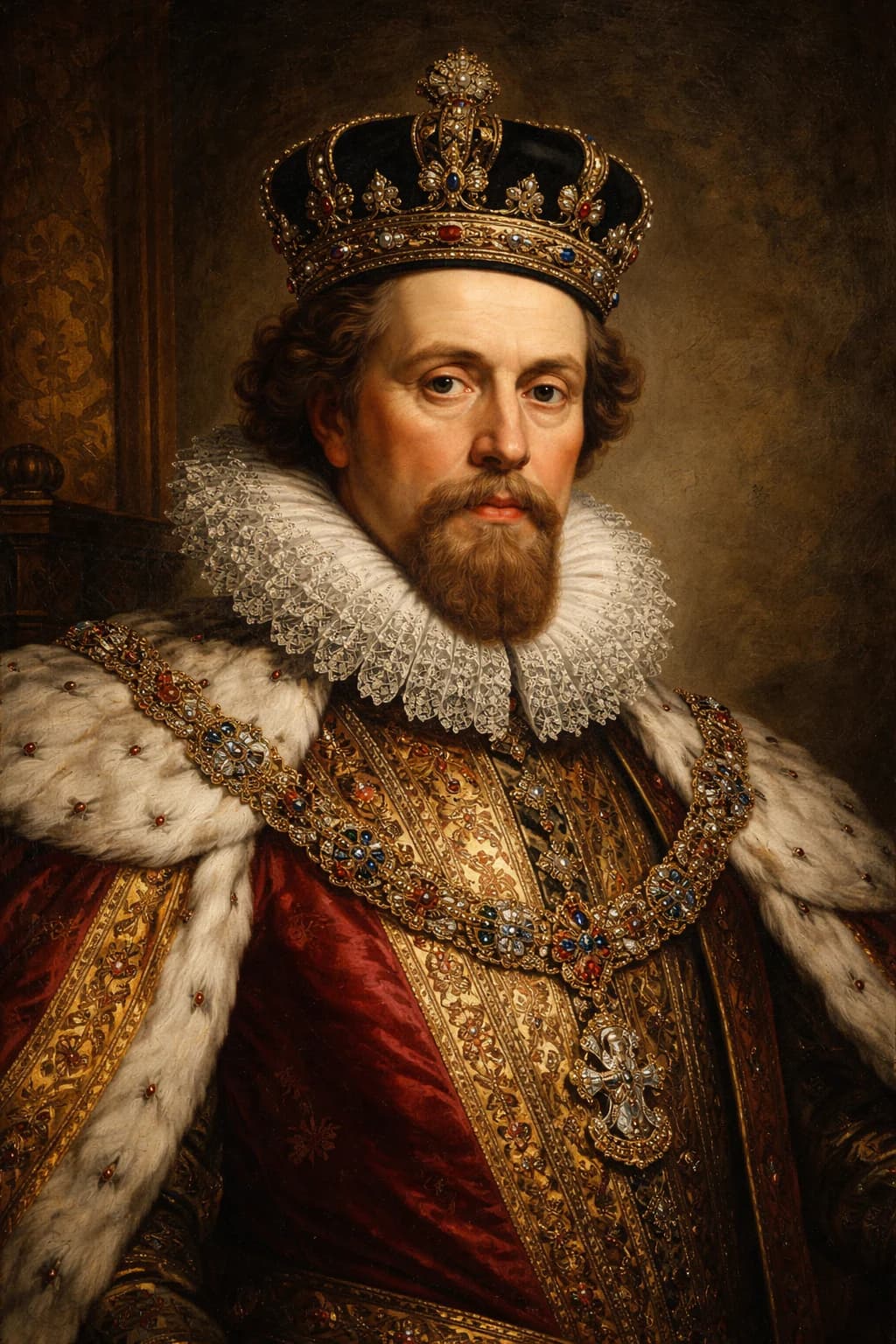
AI-generated portrait of James I in Stuart royal attire
AI-assisted historical reconstruction

An illustrative reconstruction based on historical context. It is not a photograph or documentary likeness. Image policy

Quick answer

James I, also James VI of Scotland, was the first Stuart king of England. His reign united the crowns in 1603 and produced the King James Bible.

Born
1566 CE
Died
1625 CE
Role
King of England and Scotland
Years
1566-1625 CE
Quick facts

Profile details

Additional identity and tagging details that are not already covered in the introduction.

Also known as
James VI of Scotland
Facts

James I timeline facts

Selected specifics from this profile's life story.

1566–1583
Violent Scottish childhood

James was born into Scottish dynastic crisis, saw Lord Darnley murdered, lost Mary Queen of Scots to deposition and was raised by Protestant regents.

1605
Gunpowder Plot

The Gunpowder Plot of 1605, led by Catholic conspirators including Robert Catesby and Guy Fawkes, shaped the religious politics of James's reign.

1610s–1620s
Favourites and scandal

James's reliance on favourites such as Robert Carr and George Villiers stirred scandal and resentment at the Jacobean court.

Post-1625
Between two eras

James I stands between Elizabeth I and the Civil War, remembered for union, scripture, divine-right theory and unresolved Stuart tensions.

Life Journey

Two crowns, one difficult king

Follow the story in a more continuous narrative, with a reading mode that matches how much depth you want.

Complete chronology

1566–1583

Violent Scottish childhood

James Stuart was born at Edinburgh Castle on 19 June 1566, the son of Mary Queen of Scots and Henry Stuart, Lord Darnley. He entered a world already soaked in suspicion. Darnley was murdered in 1567; Mary was forced to abdicate soon afterward and fled to England, where Elizabeth I kept her imprisoned until her execution in 1587. James became king of Scotland as an infant and was raised at Stirling Castle by Protestant regents, several of whom were destroyed by factional violence. His education was severe and highly intellectual, giving him a real scholarly temperament. But childhood taught him something darker too: kingship was never secure merely because it was lawful.
1583–1603

King of Scotland

James assumed effective government in Scotland in 1583 and proved a more capable ruler than his chaotic minority might have suggested. He managed a powerful Presbyterian Kirk, which believed it had authority to rebuke kings, through compromise, pressure and occasional assertion. He handled noble factions by patronage, diplomacy and careful balancing. His marriage to Anne of Denmark in 1589 was dynastically productive, producing several children including the future Charles I and Elizabeth, later Queen of Bohemia. During these years he also wrote Basilikon Doron and The True Law of Free Monarchies, works that set out divine-right kingship with a clarity that would sound very different once addressed to an English Parliament with its own traditions.

1603

Accession in England

Elizabeth I died childless in March 1603, and James inherited the English throne through his Tudor descent from Margaret Tudor, Henry VIII's sister. The succession was remarkably smooth given decades of anxiety. James travelled south from Edinburgh to London amid public curiosity and real enthusiasm, becoming James I of England while remaining James VI of Scotland. The union was personal, not constitutional: England and Scotland kept separate parliaments, laws and churches. James wanted a fuller British union and used the title King of Great Britain, but English MPs resisted. He had gained the prize his mother had lost, yet the new kingdom came with assumptions about Parliament, law and finance that he never fully mastered.

1605

Gunpowder Plot

In November 1605, officials uncovered a conspiracy to destroy Parliament on its opening day, killing the king, royal family and much of the political nation. Guy Fawkes was found guarding gunpowder beneath the House of Lords, but the plot was led by Robert Catesby and a group of disaffected Catholics angered by persecution and disappointed hopes of toleration. James's wife, Anne of Denmark, was Catholic, and some English Catholics had hoped the new king might ease their position. Instead, the plot confirmed Protestant fears about Catholic conspiracy and loyalty. James survived, but the memory of the attempt became a lasting ritual of English anti-Catholic culture.

1611

King James Bible

The new Bible translation emerged from the Hampton Court Conference of 1604, where James met bishops and Puritan representatives soon after his English accession. The project suited him perfectly: it was theological, scholarly and politically stabilizing. The translators were divided into learned companies and worked from earlier English versions as well as Hebrew and Greek texts. The result, published in 1611, became one of the most influential works of English prose ever printed. James did not personally translate it, but he sponsored the settlement that made it possible. Long after his arguments with Parliament faded into specialist history, the King James Bible shaped worship, literature, speech and political imagination across the English-speaking world.

1610s

Parliamentary conflicts

James's English Parliaments were difficult because the crown needed money and MPs expected grievances to be heard before supply was granted. Disputes over impositions, the failed Great Contract of 1610, the Addled Parliament of 1614 and claims to free speech in the Commons revealed a constitutional culture under strain. James was not simply an absolutist villain; he often preferred peace, disliked war taxes and avoided the brutal confrontations his son would later choose. But he repeatedly spoke as though Parliament needed instruction in the theory of monarchy. His divine-right language made political bargaining feel like a lecture from a king who did not understand the room.

1610s–1620s

Favourites and scandal

James's dependence on favourites was politically costly. Robert Carr, Earl of Somerset, rose rapidly before collapsing in the Overbury murder scandal, a poisonous court drama that fed suspicions about corruption and intimacy around the king. George Villiers, later Duke of Buckingham, replaced him and became the dominant court figure, controlling access, patronage and influence to a degree many found alarming. Modern arguments about James's sexuality must be handled carefully: emotional and possibly erotic attachment mattered, but the political problem was patronage concentration. A court that seemed to flow through favourites encouraged the belief that government was being privatized around the king's affections.

1620s–1625

Later reign and death

The Thirty Years' War, beginning in 1618, placed James under pressure he hated. His daughter Elizabeth and son-in-law Frederick V lost the Palatinate after Frederick accepted the Bohemian crown and was defeated by Catholic forces. English Protestants wanted active support for the Protestant cause, but James preferred negotiation, dynastic marriage and peace. The proposed Spanish Match for Prince Charles was meant to secure diplomatic advantage, yet many in England saw it as dangerous softness toward Catholic Spain. When Charles and Buckingham's 1623 journey to Madrid failed, policy lurched toward war. James died in March 1625 with his health failing and his kingdoms unsettled.

Post-1625

Between two eras

James I matters because his reign sits at the hinge between Tudor survival and Stuart breakdown. He was learned, witty, peace-seeking and often shrewder than caricature allows. He also spent too much of his English reign assuming that political intelligence could substitute for political tact. His achievements were real: he managed Scotland for decades, secured a peaceful succession in England, avoided major war for most of his rule and sponsored the Bible that bears his name. Yet he left serious problems unresolved: royal finance, parliamentary privilege, religious mistrust, court favoritism and the place of England in European Protestant politics. Charles I would turn many of James's arguments into confrontations. To ask why James I was important is to see the Stuart monarchy before catastrophe, already brilliant in places, already cracking in others.

Continue in context

Connected stories

Move from the profile into the wider events and settings this figure belongs to.

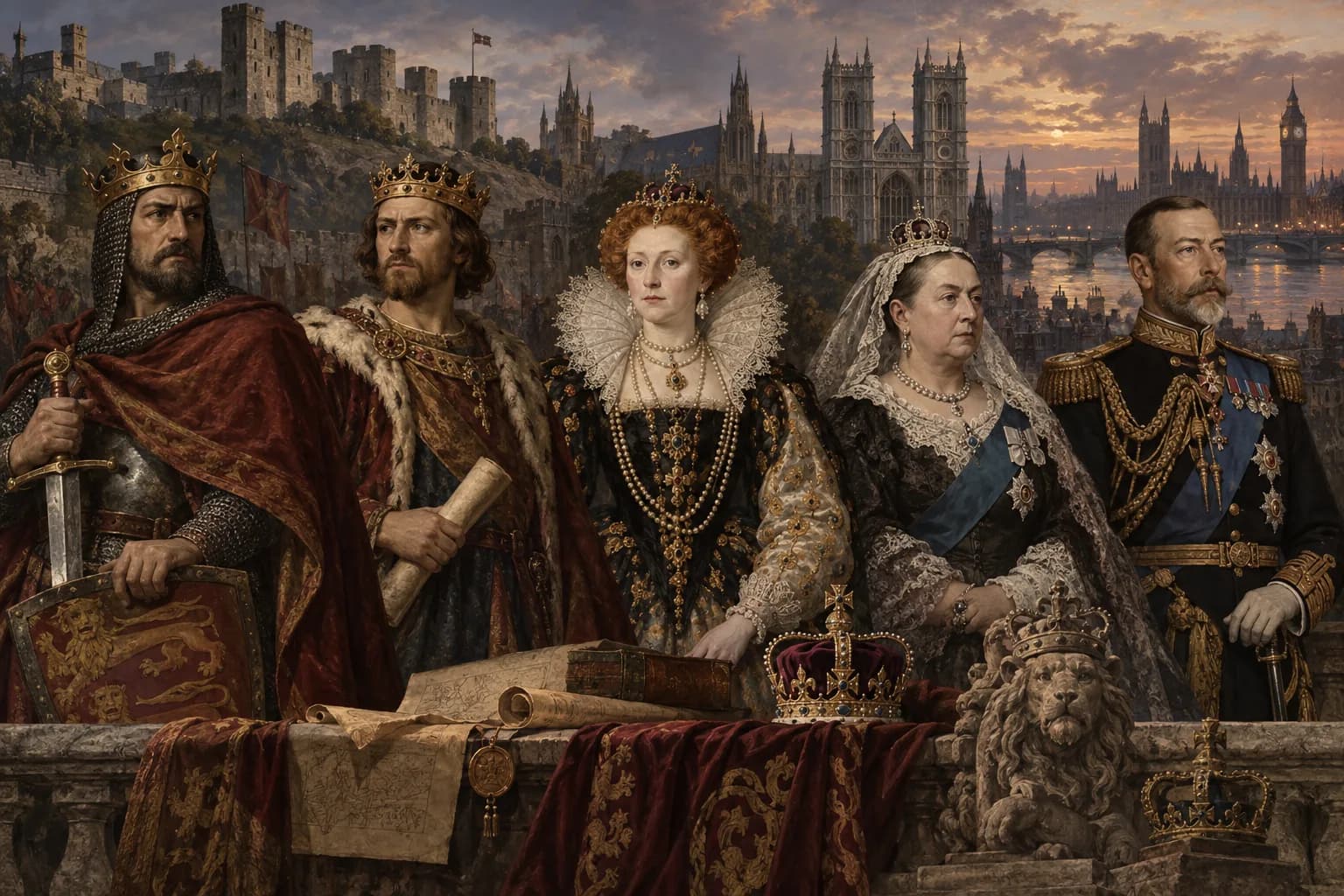
British Monarchs lineage
Lineage42 rulers
British Monarchs
1066 CE–present

Trace the English and later British monarchy from William I to today.

View lineage
Tertiary paths

Content note

This profile is written for educational use and connects to related Stories of History pages. The main portrait is an AI-assisted historical reconstruction, included as an illustrative aid rather than documentary evidence. Image policy

References

Sources & Further Reading

Reliable reference works, archives and reading paths connected to this profile.

Further reading

  1. Encyclopaedia Britannica, Search results for James I,” accessed June 2026.Open source
  2. WorldCat, Books and library holdings for James I,” accessed June 2026.Open source

Primary sources

  1. Library of Congress, Search results for James I,” accessed June 2026.Open source

Reviewed claim sources

Loading reviewed claim sources...

A weekly route through history

Find out first about the latest published stories, feature notes and occasional Premium offers in one weekly email.