People

William III

William III, William of Orange, became king after the Glorious Revolution of 1688. He ruled with Mary II, accepted the Bill of Rights and led coalitions against Louis XIV.

Born
1650 CE
Died
1702 CE
Role
King of England, Scotland and Ireland

King of England, Scotland and Ireland (1650–1702)

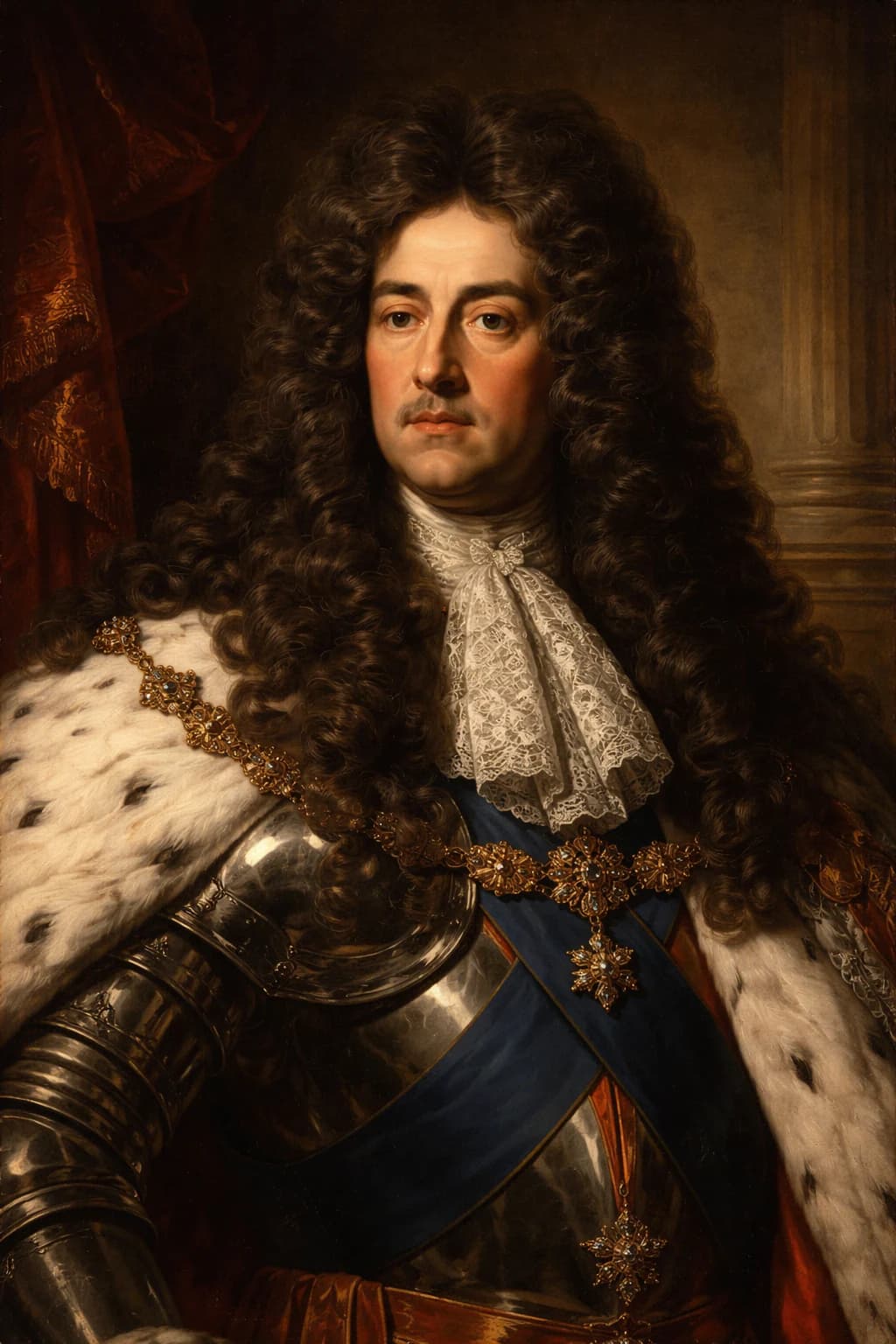
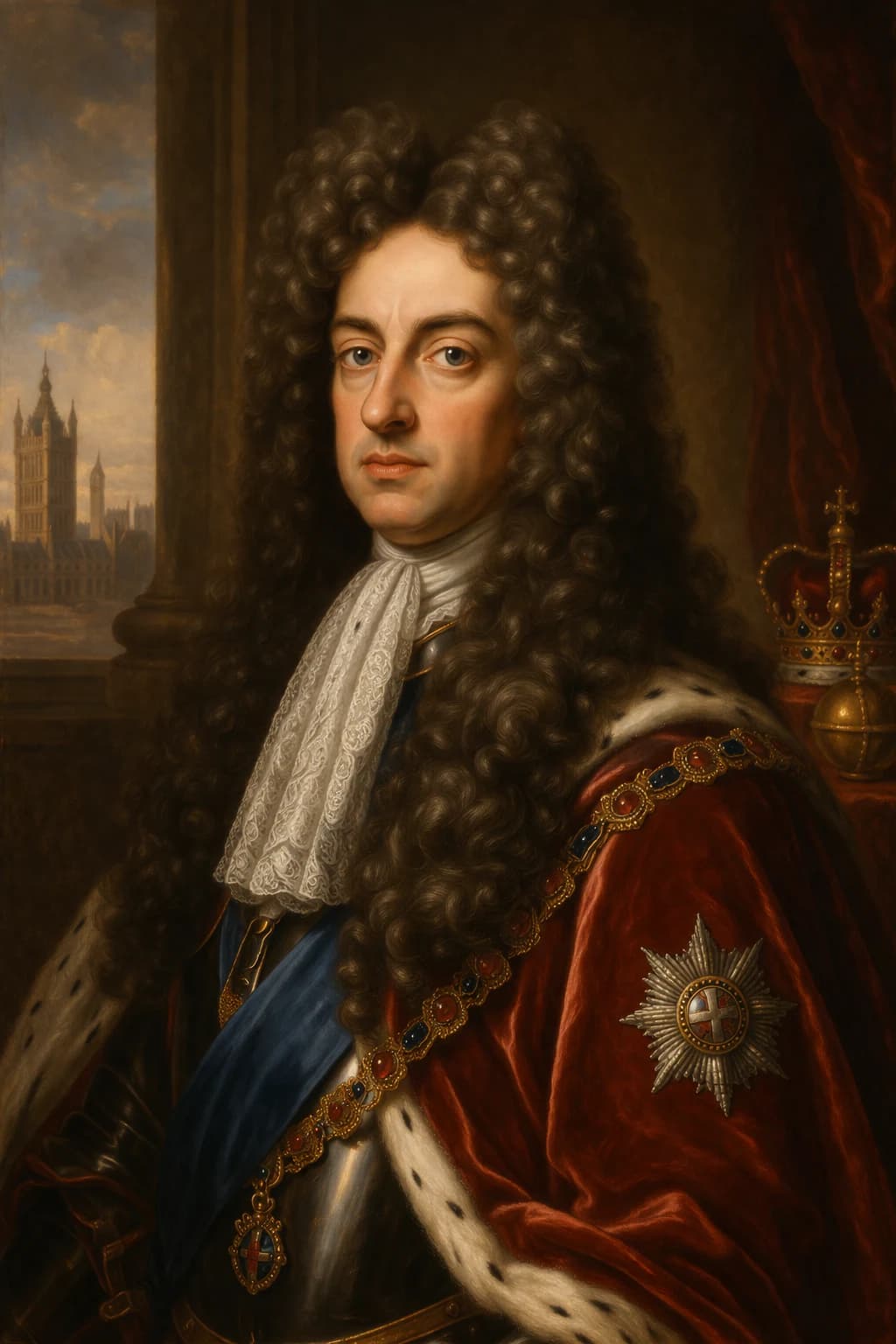
AI-generated portrait of William III in late 17th-century royal attire
AI-assisted historical reconstruction

An illustrative reconstruction based on historical context. It is not a photograph or documentary likeness. Image policy

Quick answer

William III, William of Orange, became king after the Glorious Revolution of 1688. He ruled with Mary II, accepted the Bill of Rights and led coalitions against Louis XIV.

Born
1650 CE
Died
1702 CE
Role
King of England, Scotland and Ireland
Years
1650-1702 CE
Quick facts

Profile details

Additional identity and tagging details that are not already covered in the introduction.

Also known as
William of Orange, William the Deliverer
Facts

William III timeline facts

Selected specifics from this profile's life story.

1650
Born into conflict

William of Orange was born in The Hague eight days after his father's death, inheriting a contested dynastic role inside a Dutch Republic threatened by larger powers.

1688
The invitation and invasion

Invited by English Protestant leaders alarmed by James II's policies, William landed at Torbay in November 1688 with a force larger than the Spanish Armada.

1690s
Domestic difficulties

William's English reign was marked by political friction, the Glencoe massacre in Scotland, and the constant tension between his European priorities and English domestic concerns.

Post-1702
The constitutional king

William III's legacy lies in the 1689 settlement, the Bank of England, the national debt and Britain's emergence as a parliamentary war state.

Life Journey

Orange, revolution, and the making of constitutional war power

Follow the story in a more continuous narrative, with a reading mode that matches how much depth you want.

Complete chronology

1650

Born into conflict

William was born at The Hague on 4 November 1650, eight days after his father William II of Orange died of smallpox. His birth was posthumous in a dynasty whose power was contested within the Dutch Republic itself. The House of Orange had supplied stadtholders and military leaders, but the republican merchant elite of Holland periodically preferred government without Orange dominance. William therefore grew up with a name that carried expectation but not automatic command. The Dutch Republic's vulnerability to larger monarchies, first Spain and then France, formed the permanent background to his life. Long before he became king of England, his political imagination centred on one question: how could a small, rich republic survive the ambitions of Louis XIV?
1672

Stadtholder of the Netherlands

The French invasion of 1672 — the rampjaar or disaster year — brought the Dutch Republic to the brink of destruction. The army collapsed, the cities fell, and the republican regime that had excluded Orange for two decades was overthrown in a popular reaction that included the murder of the De Witt brothers by a mob. William was made Stadtholder and Captain-General, though he initially had almost nothing to work with. He ordered the opening of the sluices to flood the countryside around Amsterdam and bought time with every available means. His determination in extremis, combined with diplomatic skill in assembling the coalition that eventually halted Louis, established him as Europe's leading opponent of French dominance. He was twenty-one years old.

1677

Marriage to Mary

William's marriage to Mary, the elder daughter of James Duke of York, in November 1677 was a diplomatic match that served multiple purposes. For England, it demonstrated Protestant succession planning. For William, it secured an alliance with England against France and gave him a connection to the English throne that would become critical a decade later. The marriage was not personally warm at first — the fifteen-year-old Mary wept throughout the wedding ceremony — but it developed into a genuine partnership. Mary was deeply loyal to her husband even when the choices he forced upon her, particularly the deposition of her own father, required painful personal sacrifices. William's relationship with Mary was the most politically consequential marriage of his life.

1688

The invitation and invasion

William did not stumble into the English throne; he planned it carefully. The invitation from seven English nobles and bishops in June 1688 provided the political cover he needed. His actual motivation was the strategic imperative of bringing England into the anti-French coalition — James II's Catholic sympathies and French connections threatened to leave England neutral or hostile in the coming conflict. He assembled a force of around 15,000 men and 52 warships, larger than any fleet England had faced since the Armada, and sailed when a favourable wind pinned the English fleet in port. His march from Torbay to London was a masterpiece of political theatre, each defection from James making the next one more likely. He arrived in London without fighting a significant battle.

1689

Settlement of 1689

William's acceptance of the English crown came with conditions attached. The Convention Parliament offered the throne to William and Mary jointly alongside the Declaration of Right, soon enacted as the Bill of Rights. It condemned suspending laws by prerogative, restricted standing armies without parliamentary consent, protected parliamentary debate and required regular parliaments. William accepted the settlement because he needed England's money, ships and manpower for the war against France. He was not a romantic constitutional liberal in the modern sense. Yet his strategic needs and Parliament's leverage produced a durable rearrangement of power. The monarch would still matter, but the fiscal and legal centre of gravity had shifted.

1689–1697

War of the Grand Alliance

The Nine Years' War, which England entered in 1689, was what William had been working toward since 1672. As king, he commanded English forces in person in the campaigns in the Low Countries, suffering a significant defeat at Steenkerque in 1692 and Landen in 1693 but maintaining the coalition's cohesion. He was not a battlefield genius — Louis's marshals generally outmanoeuvred him — but he was a strategist of the first order, understanding that the objective was to deny France a dominant position in Europe rather than to win individual engagements. The Treaty of Ryswick in 1697 restored the territorial status quo. Louis recognised William as king of England, which was in itself a significant diplomatic gain. The war had cost England enormously but created the National Debt and the Bank of England as permanent fiscal institutions.

1690s

Domestic difficulties

William was never entirely at home in England, and England was not entirely at home with him. He was taciturn, asthmatic — London's coal smoke was particularly bad for his health, which was partly why he preferred Kensington and Hampton Court to Whitehall — and personally uncharming in the English style his predecessor had mastered. The Massacre of Glencoe in 1692, in which a company of Campbell soldiers killed members of the MacDonald clan of Glencoe who were their hosts, was carried out under warrants bearing William's signature. He claimed not to have read the orders closely; the episode left a permanent mark on his Scottish reputation. Politically, he navigated the party conflicts of Whig and Tory with pragmatic flexibility, using and discarding ministers according to their usefulness rather than their factional colour.

1700–1702

Spanish succession crisis

The death of the Spanish king Charles II in November 1700 and Louis XIV's acceptance of the Spanish throne for his grandson created exactly the concentration of power in French hands that William had spent his political life opposing. His final years were consumed with assembling the Grand Alliance that would fight the War of the Spanish Succession. He died in March 1702, thrown from his horse at Hampton Court when it stumbled in a molehill, succumbing to the resulting injuries. The Jacobites toasted the mole as the little gentleman in a black velvet coat. He died knowing that the alliance was built and the war was coming, though he would not live to see how it ended. The work was done even if the outcome was uncertain.

Post-1702

The constitutional king

William III is more important to British constitutional history than his often cold English reputation suggests. The settlement of 1689 established a practical framework of limited monarchy and parliamentary authority that later generations deepened. The financial innovations of his reign — the Bank of England, the funded national debt and the expansion of public credit — transformed Britain's ability to fight long wars. In Ireland, his victory at the Boyne became a Protestant foundation myth with consequences far beyond the seventeenth century. He was not a sentimental national king, and many subjects experienced him as foreign, austere and preoccupied with Europe. But the institutions of his reign outlived the discomfort. William helped turn Britain into a state that could borrow, tax, legislate and fight at a scale no Stuart monarch had achieved.

Continue in context

Connected stories

Move from the profile into the wider events and settings this figure belongs to.

British Monarchs lineage
Lineage42 rulers
British Monarchs
1066 CE–present

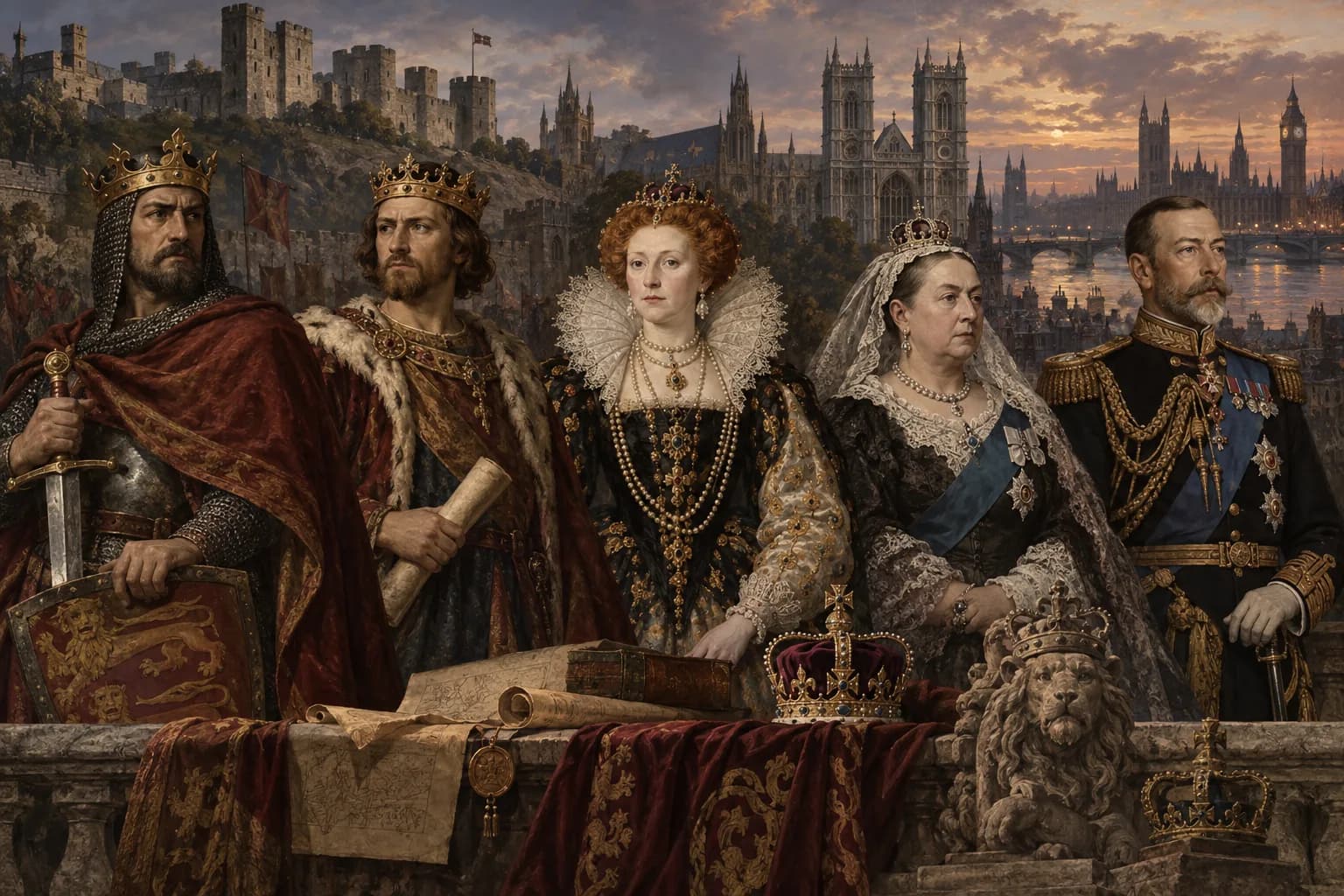
Trace the English and later British monarchy from William I to today.

View lineage
Tertiary paths

Content note

This profile is written for educational use and connects to related Stories of History pages. The main portrait is an AI-assisted historical reconstruction, included as an illustrative aid rather than documentary evidence. Image policy

References

Sources & Further Reading

Reliable reference works, archives and reading paths connected to this profile.

Further reading

  1. Encyclopaedia Britannica, Search results for William III,” accessed June 2026.Open source
  2. WorldCat, Books and library holdings for William III,” accessed June 2026.Open source

Primary sources

  1. Library of Congress, Search results for William III,” accessed June 2026.Open source

Reviewed claim sources

Loading reviewed claim sources...

A weekly route through history

Find out first about the latest published stories, feature notes and occasional Premium offers in one weekly email.