People

Mary II

Mary II was joint monarch of England, Scotland and Ireland with William III from 1689 to 1694. A Protestant Stuart princess, she accepted the throne after the Glorious Revolution, helped depose her father James II, and governed during William's absences.

Born
1662 CE
Died
1694 CE
Role
Joint queen of England

Joint queen of England (1662–1694)

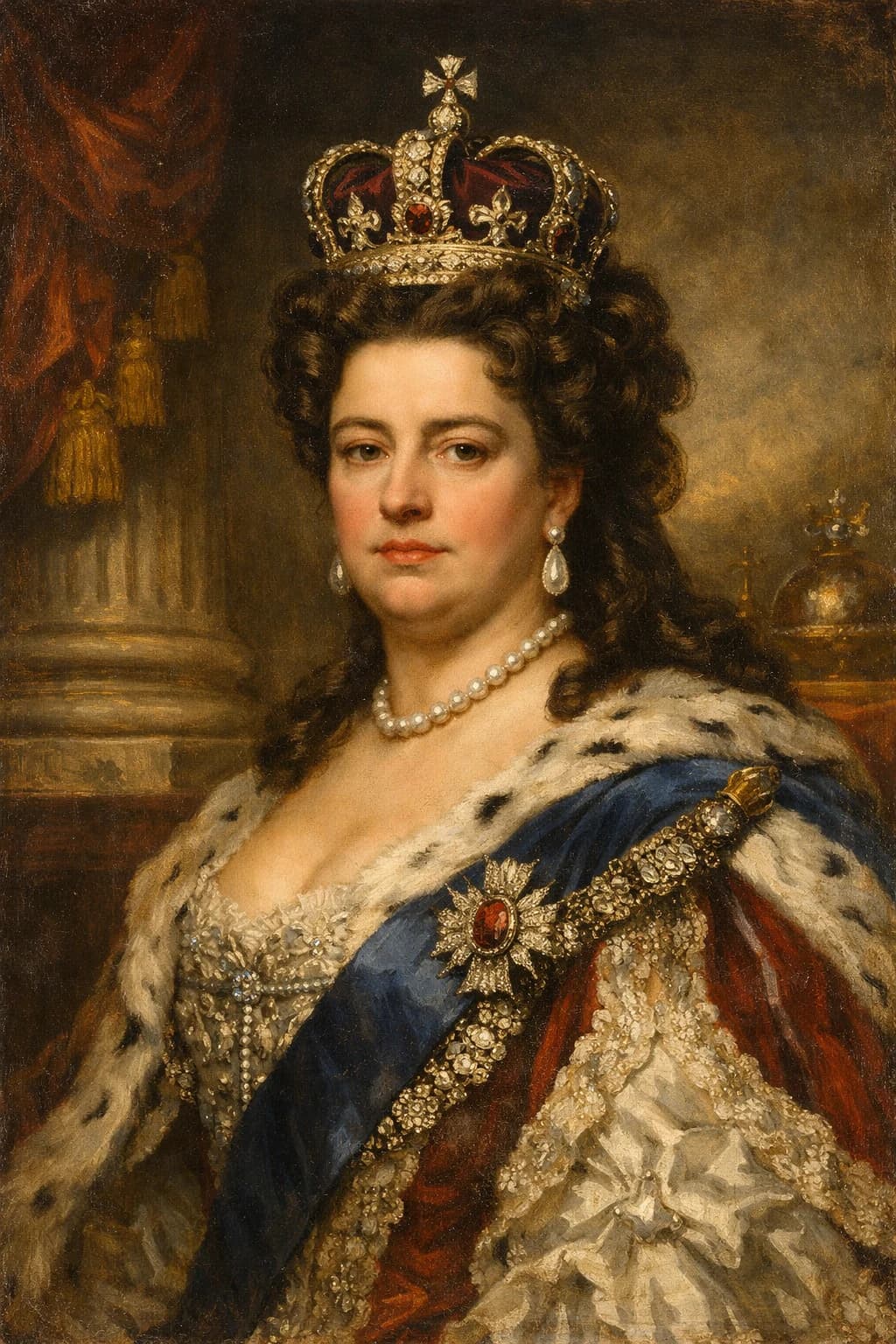
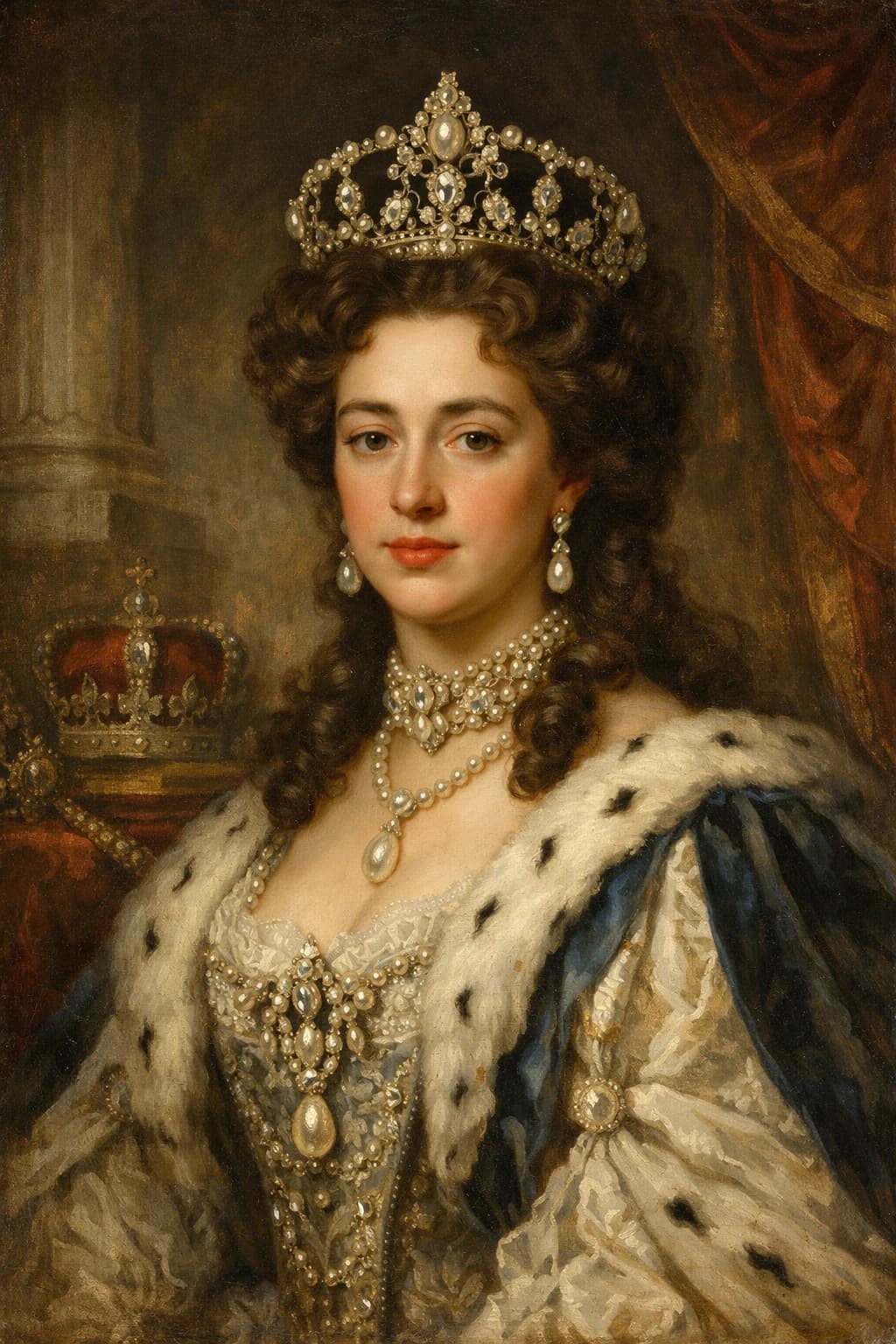
AI-generated portrait of Mary II in late 17th-century royal attire
AI-assisted historical reconstruction

An illustrative reconstruction based on historical context. It is not a photograph or documentary likeness. Image policy

Quick answer

Mary II was joint monarch of England, Scotland and Ireland with William III from 1689 to 1694. A Protestant Stuart princess, she accepted the throne after the Glorious Revolution, helped depose her father James II, and governed during William's absences.

Born
1662 CE
Died
1694 CE
Role
Joint queen of England
Years
1662-1694 CE
Facts

Mary II timeline facts

Selected specifics from this profile's life story.

1662–1677
Stuart princess

Mary grew up as the elder daughter of James, Duke of York, raised Protestant while her father's Catholicism made the Stuart succession increasingly explosive.

1688
The terrible choice

When William decided to invade England, Mary was forced to choose between her father's legitimacy and the Protestant cause, a choice that caused her genuine anguish.

1690s
Family estrangement

Mary's relationship with her sister Anne broke down over Anne's favouritism toward Sarah Churchill and Marlborough, creating a painful family rift in her final years.

Post-1694
A brief and consequential reign

Mary II's short reign helped legitimise the Glorious Revolution, the Bill of Rights settlement and the Protestant succession that followed.

Life Journey

A queen who chose principle over family

Follow the story in a more continuous narrative, with a reading mode that matches how much depth you want.

Complete chronology

1662–1677

Stuart princess

Mary was born at St James's Palace in April 1662, the eldest surviving child of James, Duke of York, and his first wife Anne Hyde. She was raised as a Protestant by order of Charles II, who understood that the religion of the succession could decide the future of the restored monarchy. The contrast between Mary's upbringing and her father's Catholic devotion created the central tension of her life before she had any power to shape it. She was educated in the conventional accomplishments expected of royal women, but her Protestant conviction became more than courtly compliance. Mary grew up inside a sophisticated, anxious Stuart world where dynasty, religion and parliament were already entangled. Her biography cannot be separated from the unresolved crisis of the English Civil War and Restoration.
1677

Marriage to William

Mary's marriage to William of Orange in November 1677 was not her choice in any meaningful sense. She was fifteen; he was twenty-seven, physically unprepossessing, and made no attempt to charm her. She wept throughout the ceremony and for much of the following weeks. Yet the marriage to the foremost Protestant prince in Europe was precisely what the Protestant political nation in England needed as a counterweight to her father's Catholicism. Over time, Mary's feelings toward William deepened into genuine loyalty and love, though the relationship was unequal. William respected her as his partner and consulted her, but he was always the dominant figure, pursuing his European strategic objectives with a single-mindedness that left little emotional space for anything else.

1677–1688

Princess in The Hague

The years in the Netherlands were formative for Mary in ways the English court had not been. She developed her Protestant faith more deeply in a Dutch Reformed environment, engaged with devotional writing, and grew into a woman of genuine intellectual and spiritual seriousness. The Dutch Republic also exposed her to a political culture where war, commerce, Protestant alliance and anti-French strategy mattered daily. From a distance she watched her father's accession in 1685 and his promotion of Catholics in army, university and government drive England toward crisis. The birth of James's Catholic son in June 1688 displaced Mary from the immediate succession and made a lasting Catholic dynasty possible. The Glorious Revolution became politically urgent and personally devastating at the same time.

1688

The terrible choice

The decision to support William's invasion was for Mary not a political calculation but a personal sacrifice. Her father wrote to her urging loyalty, and the correspondence between them in the months before the invasion was painful on both sides. She came to the conclusion that duty to God and to the Protestant religion superseded filial obligation, a conclusion she reached with evident anguish rather than cold calculation. When William sailed, she remained in the Netherlands. She later wrote in her memoirs of the suffering involved in this period, describing it as the hardest thing she had ever done. The revolution that followed was glorious for many people; for Mary, it was a source of ongoing personal grief.

1689

Joint monarchy

The settlement of 1689 might have given Mary the crown alone, as the daughter of the deposed king and the more direct Stuart heir. Mary refused this. She would not be queen unless William was king, not merely consort. She made this position clear to the parliamentary leaders who came to negotiate, and parliament accepted joint monarchy with William III holding the executive authority. This arrangement was partly a reflection of Mary's genuine belief in her husband's claims and abilities, and partly a practical recognition that William would accept nothing less. The settlement that emerged — joint monarchs, with William exercising the actual government — reflected the reality of where power in the new arrangement lay.

1690–1694

Governing in William's absence

William's repeated absences on military campaign left Mary as the effective governor of England for extended periods. She took this role seriously, attending council meetings, managing ministers, dealing with the political consequences of Jacobite conspiracies, and maintaining the administrative continuity of the regime. Her governance was generally praised, and she developed more confidence in her political judgments during these periods than she had exercised when William was present. She dealt firmly with the aftermath of the Glencoe massacre and managed parliamentary relationships with a tact that William, always preoccupied with European affairs, often lacked when in London. The regency periods demonstrated that she was a capable ruler in her own right.

1690s

Family estrangement

The estrangement between Mary and her sister Anne, who was herself heir presumptive to the throne, was one of the more painful features of the latter part of her reign. The immediate cause was Anne's intense friendship with Sarah Marlborough and her husband John Churchill, Duke of Marlborough, whom William dismissed from his military command in 1692 on grounds of suspected Jacobite contact. Anne refused to distance herself from the Churchills, Mary demanded it, and the two sisters ceased to have meaningful relations. Mary refused to see Anne when Anne came to attend her during her final illness. The estrangement was characteristic of the emotional cost that the revolution had imposed on almost every personal relationship in the Stuart family.

December 1694

Early death

Mary contracted smallpox in December 1694 and died at Kensington Palace on 28 December, aged thirty-two. William, who had never expressed much visible emotion in her presence, was devastated. He collapsed in grief, was unable to speak for hours, and told those around him that he had never known what was good in life until it was gone. His grief was widely observed and surprised many who had seen him only as the cold Dutch strategist. Mary's death without children left the Protestant succession precarious: the crown would now pass after William to Anne, whose own surviving children were few and sickly. The vulnerability of the Protestant settlement to dynastic accident had been suddenly exposed.

Post-1694

A brief and consequential reign

Mary II is often overshadowed by William III in accounts of the Glorious Revolution, but her contribution to its success was real. Her willingness to accept the throne alongside William, rather than simply inherit after her father, gave the settlement a legitimacy a purely Dutch accession would have lacked. Her Stuart blood and Protestant credentials supplied a domestic foundation William alone could not provide. During her regencies, she showed that the new monarchy could govern through council, parliament and law while the king pursued European war. Her death in 1694 cut short a reign that might otherwise have developed more visibly in her own right. She is remembered as someone who made a sacrifice, choosing Protestant constitutional revolution over filial loyalty with evident anguish rather than easy ambition. That gives her a rare moral weight in the history of regime change.

Continue in context

Connected stories

Move from the profile into the wider events and settings this figure belongs to.

British Monarchs lineage
Lineage42 rulers
British Monarchs
1066 CE–present

Trace the English and later British monarchy from William I to today.

View lineage
Tertiary paths

Content note

This profile is written for educational use and connects to related Stories of History pages. The main portrait is an AI-assisted historical reconstruction, included as an illustrative aid rather than documentary evidence. Image policy

References

Sources & Further Reading

Reliable reference works, archives and reading paths connected to this profile.

Further reading

  1. Encyclopaedia Britannica, Search results for Mary II,” accessed June 2026.Open source
  2. WorldCat, Books and library holdings for Mary II,” accessed June 2026.Open source

Primary sources

  1. Library of Congress, Search results for Mary II,” accessed June 2026.Open source

Reviewed claim sources

Loading reviewed claim sources...

A weekly route through history

Find out first about the latest published stories, feature notes and occasional Premium offers in one weekly email.