People

Anne

Queen Anne was the last Stuart monarch of Great Britain. Her reign saw the Acts of Union with Scotland in 1707 and British military victories under Marlborough in the War of the Spanish Succession.

Born
1665 CE
Died
1714 CE
Role
Queen of Great Britain

Queen of Great Britain (1665–1714)

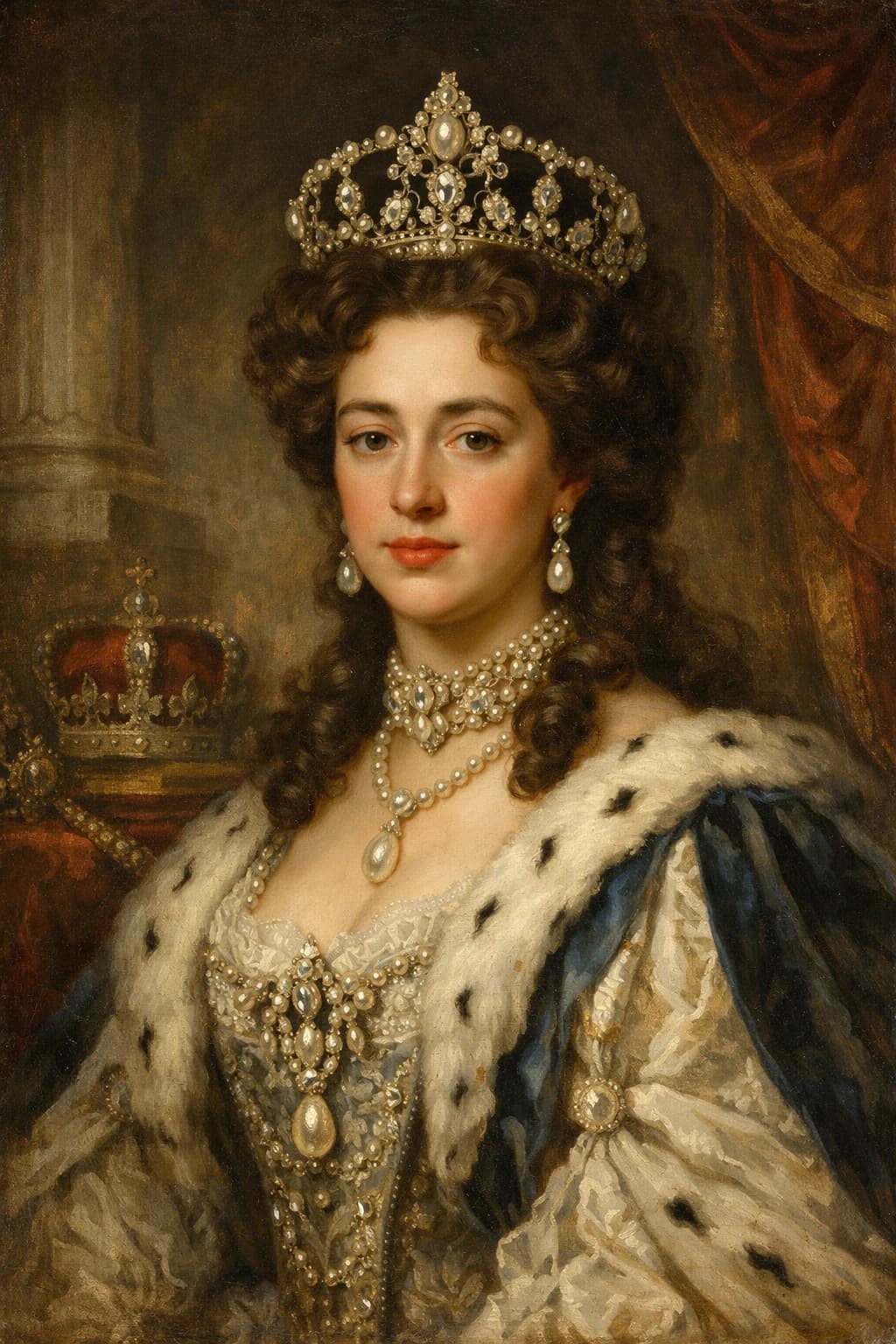
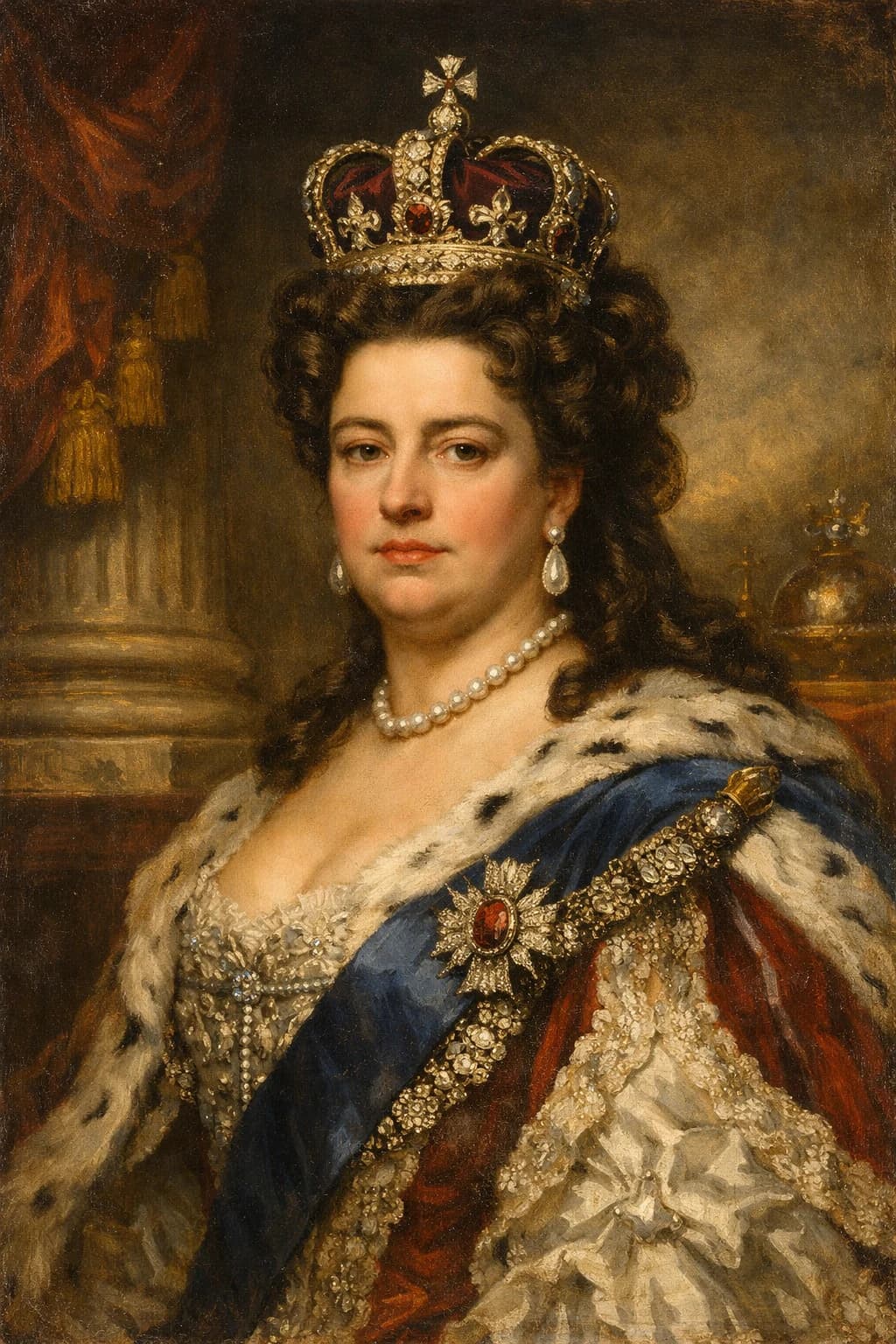
AI-generated portrait of Queen Anne in early 18th-century royal attire
AI-assisted historical reconstruction

An illustrative reconstruction based on historical context. It is not a photograph or documentary likeness. Image policy

Quick answer

Queen Anne was the last Stuart monarch of Great Britain. Her reign saw the Acts of Union with Scotland in 1707 and British military victories under Marlborough in the War of the Spanish Succession.

Born
1665 CE
Died
1714 CE
Role
Queen of Great Britain
Years
1665-1714 CE
Quick facts

Profile details

Additional identity and tagging details that are not already covered in the introduction.

Also known as
Queen Anne, Anne Stuart
Facts

Anne timeline facts

Selected specifics from this profile's life story.

1665–1683
Stuart upbringing

Anne grew up as the younger daughter of James Duke of York, raised Protestant despite her father's Catholicism and destined for the kind of dynastic marriage that would shape seventeenth-century royal women.

1702
Accession

Anne came to the throne on William III's death as a popular choice, a native-born Anglican queen after years of a Dutch king, greeted with genuine national affection.

1708–1711
Fall of the Churchills

Anne's friendship with Sarah Churchill collapsed under political pressure and personal friction, ending with the Marlboroughs' dismissal and a decisive shift in the ministry.

Post-1714
The last Stuart legacy

Queen Anne's reign bequeathed a united Britain, a constitutional monarchy, and a Europe in which French dominance had been decisively checked.

Life Journey

The last Stuart: a reign built on loss and partnership

Follow the story in a more continuous narrative, with a reading mode that matches how much depth you want.

Complete chronology

1665–1683

Stuart upbringing

Anne was born at St James's Palace in February 1665, the younger sister of Mary and the second surviving daughter of James Duke of York and his first wife Anne Hyde. Her childhood unfolded inside a restored Stuart court still haunted by civil war, religious suspicion, and the question of succession. Although her father later converted openly to Catholicism, Anne and Mary were raised Protestant at the insistence of Charles II, who understood that monarchy depended on more than bloodline: it had to be acceptable to a Protestant political nation. Childhood eye trouble sent Anne to France for treatment, but her deepest loyalties remained Anglican and domestic. Her friendship with Sarah Jennings, later Sarah Churchill, began before either woman held real power. That bond gave Anne emotional intimacy in a world of ceremony, and later gave politics a route straight into her private life.
1683–1700s

Marriage and tragedy

Anne married Prince George of Denmark in 1683, a dynastic match that proved unusually affectionate. George was loyal, good-natured, and politically unthreatening, qualities that made him a steady presence rather than a rival center of power. The marriage's great failure was not emotional but dynastic. Anne experienced seventeen pregnancies between 1683 and 1700, with repeated miscarriages, stillbirths, infant deaths, and only one child, William Duke of Gloucester, surviving beyond early childhood. His death in 1700, aged eleven, destroyed the last realistic hope that the Stuart Protestant line would continue through Anne. The physical cost was severe, contributing to the gout, pain, and restricted movement that marked her adult life. The political cost was just as profound. Her personal bereavement forced Parliament to look beyond the Stuarts through the Act of Settlement, linking private loss to the future Hanoverian succession.

1680s–1702

Relationship with the Churchills

The friendship between Anne and Sarah Jennings, who became Sarah Churchill on her marriage to John Churchill, was the defining personal relationship of Anne's life for over two decades. Sarah was vivacious, frank, and politically astute; Anne was devoted, seeking in the relationship the warmth and equality that formal court life denied her. They used informal names with each other — Mrs Morley and Mrs Freeman — as a way of stepping outside the rigidity of royal hierarchy. John Churchill's extraordinary military talent and political connections made him indispensable to Anne's government. The Marlborough-Churchill partnership was the engine of her early reign, but it was always built partly on personal affection and partly on political utility, a combination that had a natural expiry date.

1702

Accession

Anne succeeded William III in March 1702 with what contemporary observers recognised as genuine public warmth. She was English, Anglican, and Stuart, in contrast to the distant, asthmatic, and Dutch William who had preceded her. Her accession speech — she declared that her heart was entirely English — captured a mood of relief after thirteen years of a king whose priorities had been European. She was already in poor health, carried into parliament in a sedan chair due to her gout, but she radiated personal dignity and a clear sense of duty. England was at war with France in the War of the Spanish Succession, and the early years of her reign would be defined by Marlborough's extraordinary string of military victories on the continent.

1702–1708

Marlborough's victories

The War of the Spanish Succession under Marlborough produced a string of victories that fundamentally altered the European balance of power. Blenheim in 1704, fought alongside Prince Eugene of Savoy, was the first major defeat of a French army in over a century and saved the Holy Roman Empire from collapse. Ramillies in 1706 and Oudenarde in 1708 followed, each more decisive than the last. Anne's reign coincided with British military supremacy in a way that no preceding reign had fully achieved. She supported Marlborough loyally through these years and took genuine pride in the victories. Blenheim Palace, built at public expense and named for the most famous of the battles, was the physical monument to this era of triumph.

1707

Act of Union

The political union of England and Scotland, which came into effect on 1 May 1707, was the most durable settlement of Anne's reign. It emerged from overlapping anxieties: English ministers feared that Scotland might choose a different successor and become a route for French or Jacobite influence, while many Scottish negotiators wanted access to English colonial markets after the financial disaster of the Darien scheme. The Acts of Union abolished the separate English and Scottish parliaments and created the Parliament of Great Britain. Scotland retained its established church, legal system, and important institutional distinctiveness, making the settlement a union rather than simple administrative erasure. Anne supported the project and understood its dynastic importance. It was bitterly contested in Scotland and never free from arguments over consent, advantage, and identity, but it created the constitutional framework within which modern Britain developed.

1708–1711

Fall of the Churchills

The friendship between Anne and Sarah Churchill, which had been the emotional core of the reign's early years, deteriorated from around 1708 onward. Sarah had grown imperious and politically demanding, and Anne had found a new favourite in Abigail Masham, Sarah's own cousin, who had been introduced to the queen's household by Sarah herself. The political implications were significant: Masham was associated with the Tory politician Robert Harley, while the Marlboroughs were connected to the Whigs. As peace negotiations with France became the central political issue, the Marlboroughs' insistence on continuing the war conflicted with Anne's genuine desire for settlement. In 1711, Marlborough was dismissed. The relationship between Anne and Sarah ended with a bitterness on both sides that neither concealed.

1711–1714

Peace and succession

The Treaty of Utrecht in 1713 ended Britain's part in the War of the Spanish Succession on terms that divided opinion. Critics thought the Tory ministry had abandoned allies and wasted Marlborough's battlefield success; supporters argued that Britain had secured a realistic peace after years of costly war. The gains were significant: Gibraltar, Minorca, recognition of the Protestant succession, and commercial advantages, including the Asiento, a contract to supply enslaved Africans to Spanish America. That last provision is an essential part of the settlement's moral history, tying Britain's imperial rise to the Atlantic slave trade. In Anne's final months, succession anxiety sharpened as her health failed. The Act of Settlement pointed to the Protestant Hanoverian line; the Electress Sophia died shortly before Anne, leaving Sophia's son George as heir. Anne died on 1 August 1714, and with her the Stuart dynasty ended.

Post-1714

The last Stuart legacy

Anne's legacy is substantial even if she rarely receives the attention given to more theatrical rulers. The union of Great Britain was her most permanent constitutional achievement, while Marlborough's campaigns and the settlement at Utrecht helped confirm Britain as a major European and maritime power. Her reign also belongs to the history of parliamentary monarchy. Whigs and Tories became more coherent political forces, ministerial management mattered increasingly, and the crown had to govern through party realities rather than personal command alone. Anne was not a passive figure, but she was a constitutional monarch in practice: devoutly Anglican, attentive to church and succession, and capable of firmness within the limits of her age and health. Her life also resists easy triumph. The same reign that produced British union and military prestige was shadowed by child loss, factional bitterness, war finance, and imperial commerce tied to slavery. She remains important because modern Britain took recognizable shape under a queen whose private world had repeatedly fallen apart.

Continue in context

Connected stories

Move from the profile into the wider events and settings this figure belongs to.

British Monarchs lineage
Lineage42 rulers
British Monarchs
1066 CE–present

Trace the English and later British monarchy from William I to today.

View lineage
Tertiary paths

Content note

This profile is written for educational use and connects to related Stories of History pages. The main portrait is an AI-assisted historical reconstruction, included as an illustrative aid rather than documentary evidence. Image policy

References

Sources & Further Reading

Reliable reference works, archives and reading paths connected to this profile.

Further reading

  1. Encyclopaedia Britannica, Search results for Anne,” accessed June 2026.Open source
  2. WorldCat, Books and library holdings for Anne,” accessed June 2026.Open source

Primary sources

  1. Library of Congress, Search results for Anne,” accessed June 2026.Open source

Reviewed claim sources

Loading reviewed claim sources...

Defining related moments

A weekly route through history

Find out first about the latest published stories, feature notes and occasional Premium offers in one weekly email.