People

George I

George I was the first Hanoverian king of Great Britain. He came to the throne in 1714 as a German-speaking Protestant, and his reign saw the development of cabinet government and the rise of Robert Walpole.

Born
1660 CE
Died
1727 CE
Role
King of Great Britain

King of Great Britain (1660–1727)

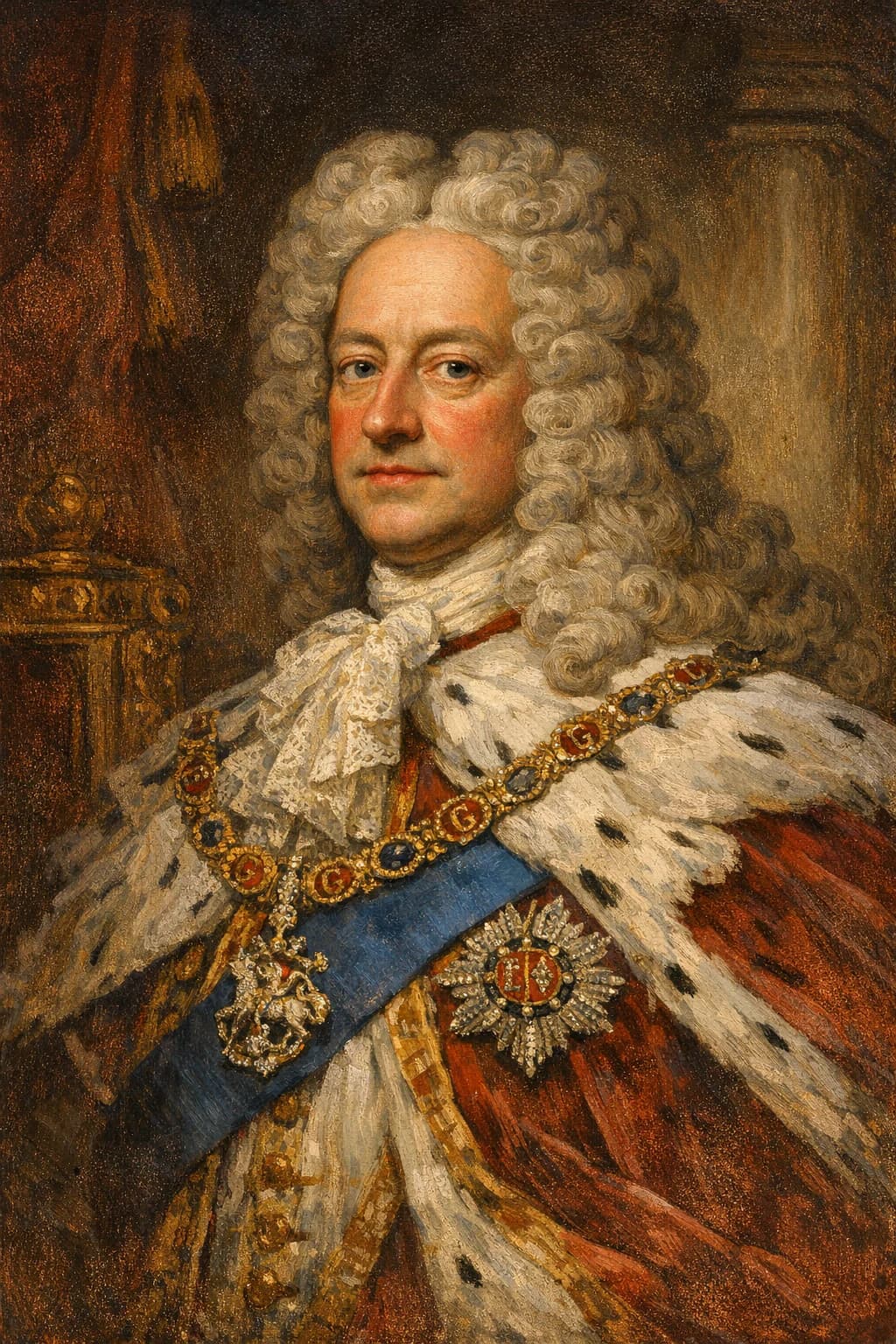
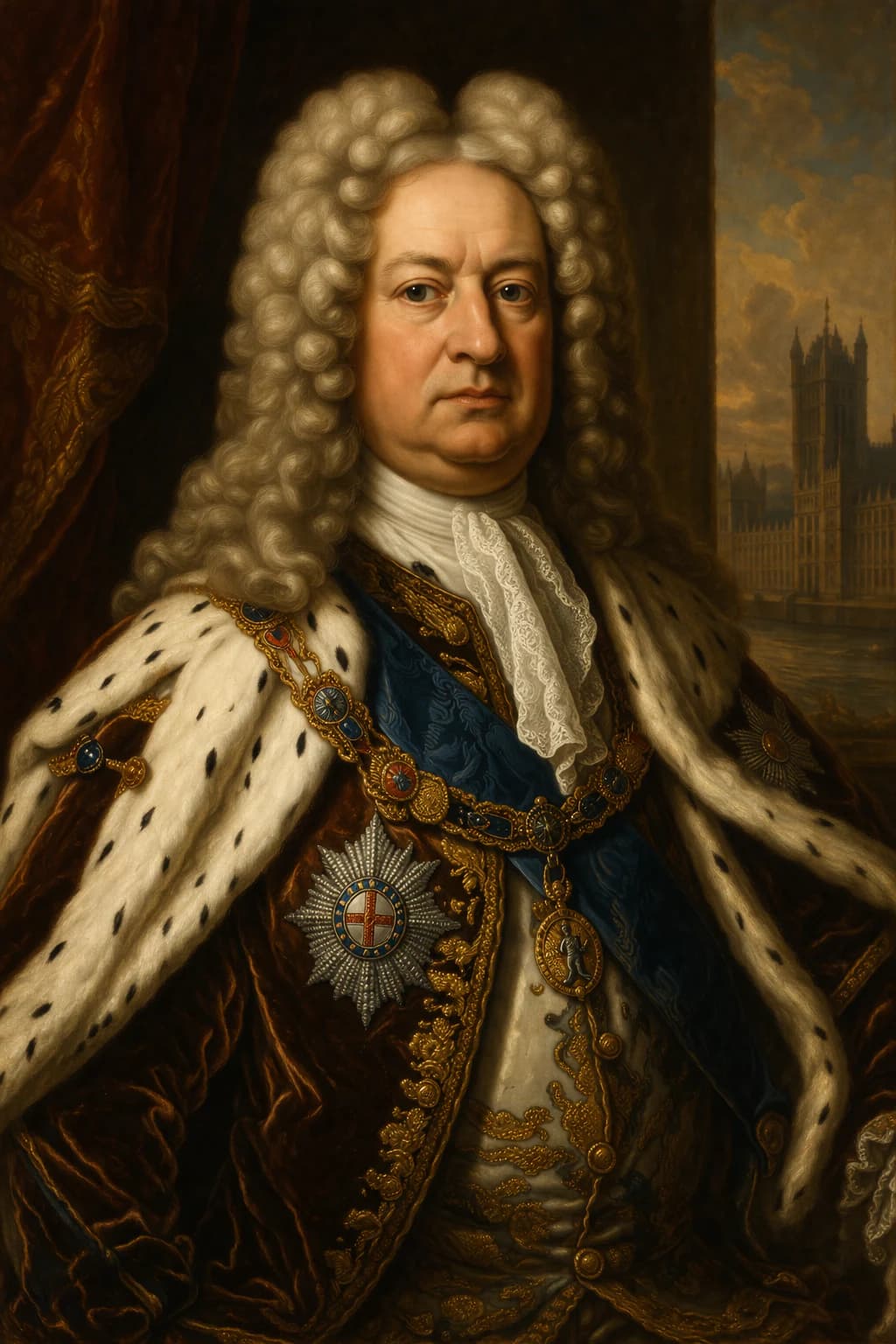
AI-generated portrait of George I in Hanoverian royal attire
AI-assisted historical reconstruction

An illustrative reconstruction based on historical context. It is not a photograph or documentary likeness. Image policy

Quick answer

George I was the first Hanoverian king of Great Britain. He came to the throne in 1714 as a German-speaking Protestant, and his reign saw the development of cabinet government and the rise of Robert Walpole.

Born
1660 CE
Died
1727 CE
Role
King of Great Britain
Years
1660-1727 CE
Quick facts

Profile details

Additional identity and tagging details that are not already covered in the introduction.

Also known as
Georg Ludwig
Facts

George I timeline facts

Selected specifics from this profile's life story.

1660–1680s
Hanoverian prince

George Ludwig grew up as the heir to the Electorate of Hanover, trained as a German prince with no expectation of ever becoming king of Britain.

1714
Arrival in Britain

George arrived in Britain in September 1714, bringing a German court and two German mistresses, to a country cautiously welcoming and fundamentally uncertain about what it had just chosen.

1721–1727
Walpole's ascendancy

Robert Walpole dominated the ministry in George's final years, establishing the practices of cabinet government and the office of Prime Minister that would define British politics.

Post-1727
The Hanoverian foundation

George I's reign established the Hanoverian succession as permanent, introduced Robert Walpole's governing model, and began the long process of redefining the British monarchy.

Life Journey

A reluctant king in a country he never fully understood

Follow the story in a more continuous narrative, with a reading mode that matches how much depth you want.

Complete chronology

1660–1680s

Hanoverian prince

George Ludwig was born in Osnabruck on 28 May 1660, the son of Ernest Augustus, later Elector of Hanover, and Sophia of the Palatinate. Through Sophia, a granddaughter of James VI and I, he belonged to the Protestant line that would become crucial after England's seventeenth-century religious conflicts. As a young man, however, George was formed as a German prince, not a future British monarch. He learned war, estate management, dynastic calculation and the politics of the Holy Roman Empire. He fought against France and became a capable, practical ruler of Hanover. His British future was a contingency created by deaths, religion and parliamentary law.

1682–1694

The marriage disaster

George's marriage to his cousin Sophia Dorothea of Celle in 1682 was politically useful and personally disastrous. It produced two children, including the future George II, but collapsed amid mutual dislike and extramarital relationships. Sophia Dorothea's association with Count Philip Christoph von Konigsmarck became scandalous; in 1694 Konigsmarck disappeared, probably murdered by Hanoverian courtiers, though proof remains elusive. Sophia Dorothea was divorced and confined at Ahlden, where she remained until her death in 1726, forbidden to see her children. The episode followed George to Britain as rumor and moral stain. Yet for Parliament, his Protestant legitimacy mattered more than the cruelty of his domestic life.

1698–1714

Elector of Hanover

George became Elector of Hanover in 1698 and governed with sober competence. He was not a philosopher-king, but he understood administration, military affairs and dynastic interest. The British succession moved toward him because Queen Anne's children died and Parliament refused to accept the Catholic Stuart claimant, James Francis Edward Stuart. The Act of Settlement of 1701 chose Sophia of Hanover and her Protestant heirs, placing religion and parliamentary authority above hereditary closeness. Sophia died in June 1714, just weeks before Anne. When Anne died on 1 August, George became king of Great Britain not because Britain loved him, but because the political nation preferred a distant Protestant to a nearer Catholic.

1714

Arrival in Britain

George arrived at Greenwich in September 1714, aged fifty-four, with German advisers, German habits and limited English. His mistresses, Melusine von der Schulenburg and Sophia von Kielmansegg, became targets of London gossip, and his foreignness was impossible to miss. The reception was careful rather than warm. Many Tories were suspected of sympathy with the Stuarts, while Whigs presented themselves as guardians of the Protestant succession. The Jacobite rising of 1715 tested the new regime almost immediately. It failed because the Stuart claimant did not generate enough English support and because many Britons preferred a foreign Protestant king to the risks of Catholic restoration.

1715–1720

Political settlement

The failed rising strengthened George I by clarifying the political choice. Support for the Stuarts could now be treated not as romantic loyalty but as danger to the settlement of 1688 and 1714. George's government moved against Tory leaders suspected of Jacobite sympathy, and Whig dominance hardened into a long political ascendancy. This mattered for the constitution. A king who lacked English fluency and depended on reliable ministers increasingly governed through those who could manage Parliament. The cabinet became more important, not because George designed modern parliamentary government, but because his reign made ministerial management indispensable.

1720

South Sea Bubble

The South Sea Bubble of 1720 threatened the credibility of the Hanoverian regime. The South Sea Company promised financial engineering, government debt conversion and imagined wealth from Spanish American trade. Its stock soared, then collapsed, ruining investors and implicating courtiers, ministers and members of Parliament. George himself was not untouched by the political embarrassment. Robert Walpole emerged as the essential manager of the aftermath, protecting parts of the system while allowing enough punishment to satisfy outrage. The crisis helped make Walpole dominant because he offered what panicked financial politics needed most: steadiness, arithmetic and parliamentary control.

1721–1727

Walpole's ascendancy

Walpole's ascendancy after 1721 created the recognizable beginnings of prime ministerial government. As First Lord of the Treasury and Chancellor of the Exchequer, he controlled finance, patronage and Commons management. George still mattered: he chose ministers, cared about Hanover and foreign policy, and retained royal authority. But Walpole governed the daily political machine. He kept the Whig coalition together, soothed the king, and treated stability as the highest achievement after decades of revolution, succession conflict and war. The arrangement was not modern democracy. It relied on patronage and a narrow electorate. Still, it shifted the center of gravity away from personal monarchy toward parliamentary administration.

June 1727

Death in Hanover

George I died on 11 June 1727 near Osnabruck while traveling to Hanover, the world he still understood best. He had never become emotionally British, and he continued to divide attention between his kingdom and his electorate. His relationship with his son, the future George II, remained bitter, with the Prince of Wales acting as a focus for political opposition. This father-son hostility became a Hanoverian pattern, repeated in later generations. George's death on the road to his German homeland was historically fitting. He had secured the British throne without ever fully belonging to Britain.

Post-1727

The Hanoverian foundation

George I's importance lies less in personal charisma than in constitutional consequence. He secured the Protestant Hanoverian succession, survived the Jacobite challenge and anchored a Whig political order that reshaped British government. His foreignness, limited English and reliance on ministers helped Robert Walpole build the habits of cabinet and prime ministerial rule. George did not intend to reduce monarchy into ceremony; kingship remained powerful. But his reign accelerated a transfer of practical authority toward ministers who could command Parliament. To ask why George I was important is to see how an apparently awkward succession helped produce the governing style of modern Britain.

Continue in context

Connected stories

Move from the profile into the wider events and settings this figure belongs to.

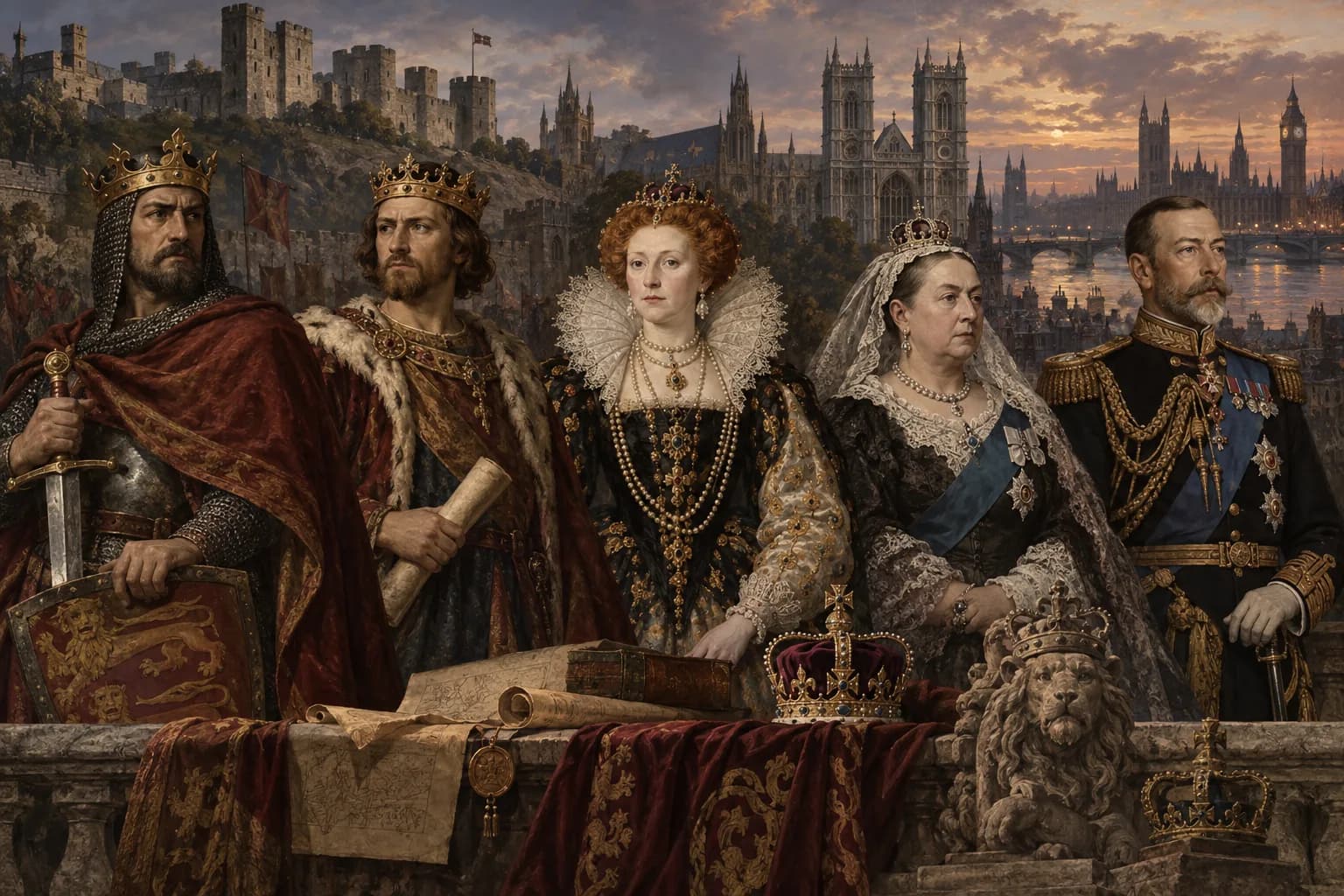
British Monarchs lineage
Lineage42 rulers
British Monarchs
1066 CE–present

Trace the English and later British monarchy from William I to today.

View lineage
Tertiary paths

Content note

This profile is written for educational use and connects to related Stories of History pages. The main portrait is an AI-assisted historical reconstruction, included as an illustrative aid rather than documentary evidence. Image policy

References

Sources & Further Reading

Reliable reference works, archives and reading paths connected to this profile.

Further reading

  1. Encyclopaedia Britannica, Search results for George I,” accessed June 2026.Open source
  2. WorldCat, Books and library holdings for George I,” accessed June 2026.Open source

Primary sources

  1. Library of Congress, Search results for George I,” accessed June 2026.Open source

Reviewed claim sources

Loading reviewed claim sources...

A weekly route through history

Find out first about the latest published stories, feature notes and occasional Premium offers in one weekly email.