People

Wang Jian

Wang Jian was a leading Qin general in the late Warring States period, central to the conquest of Zhao, Yan and Chu before Qin unified China in 221 BC.

Role
General

Qin General (active late 3rd century BC)

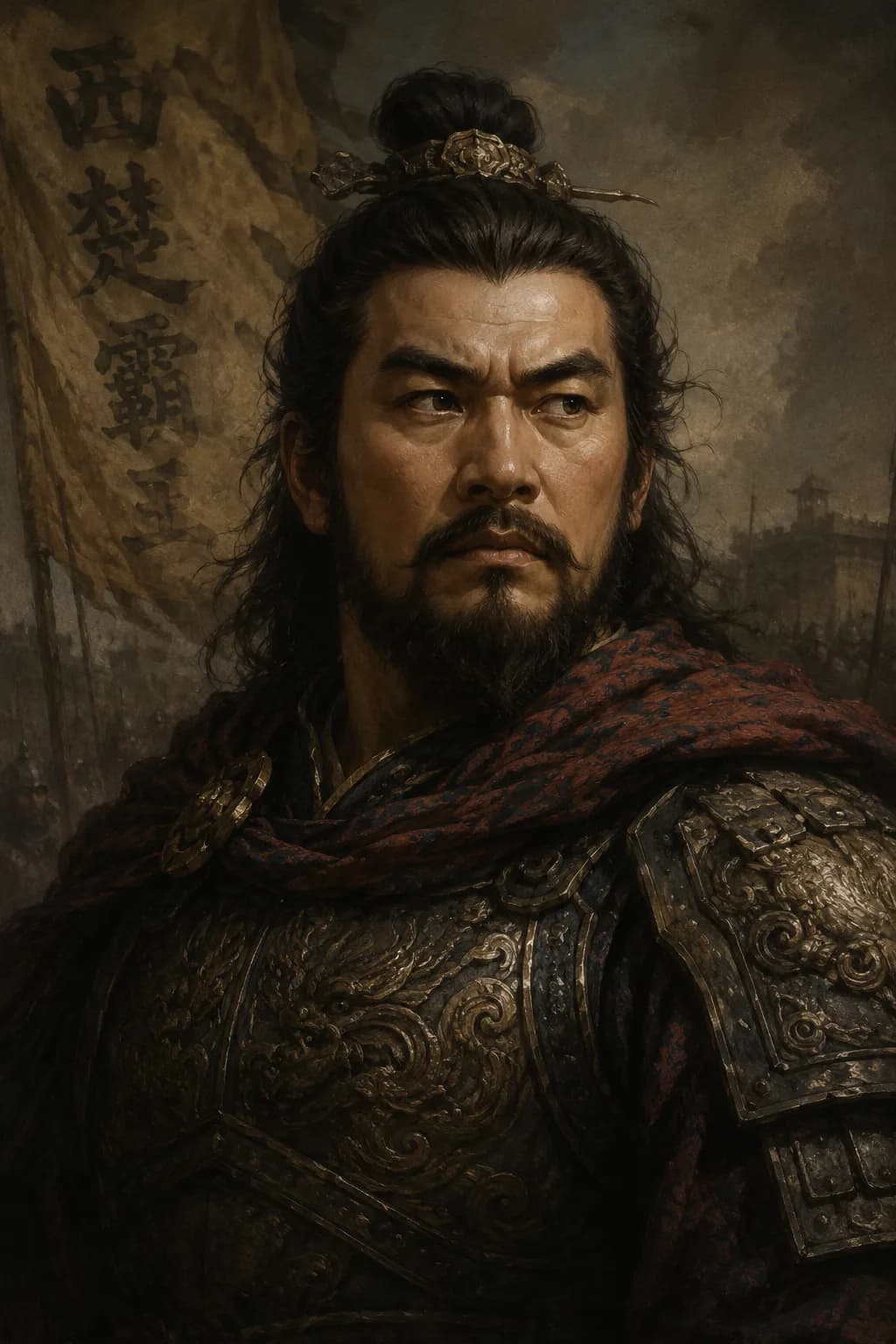
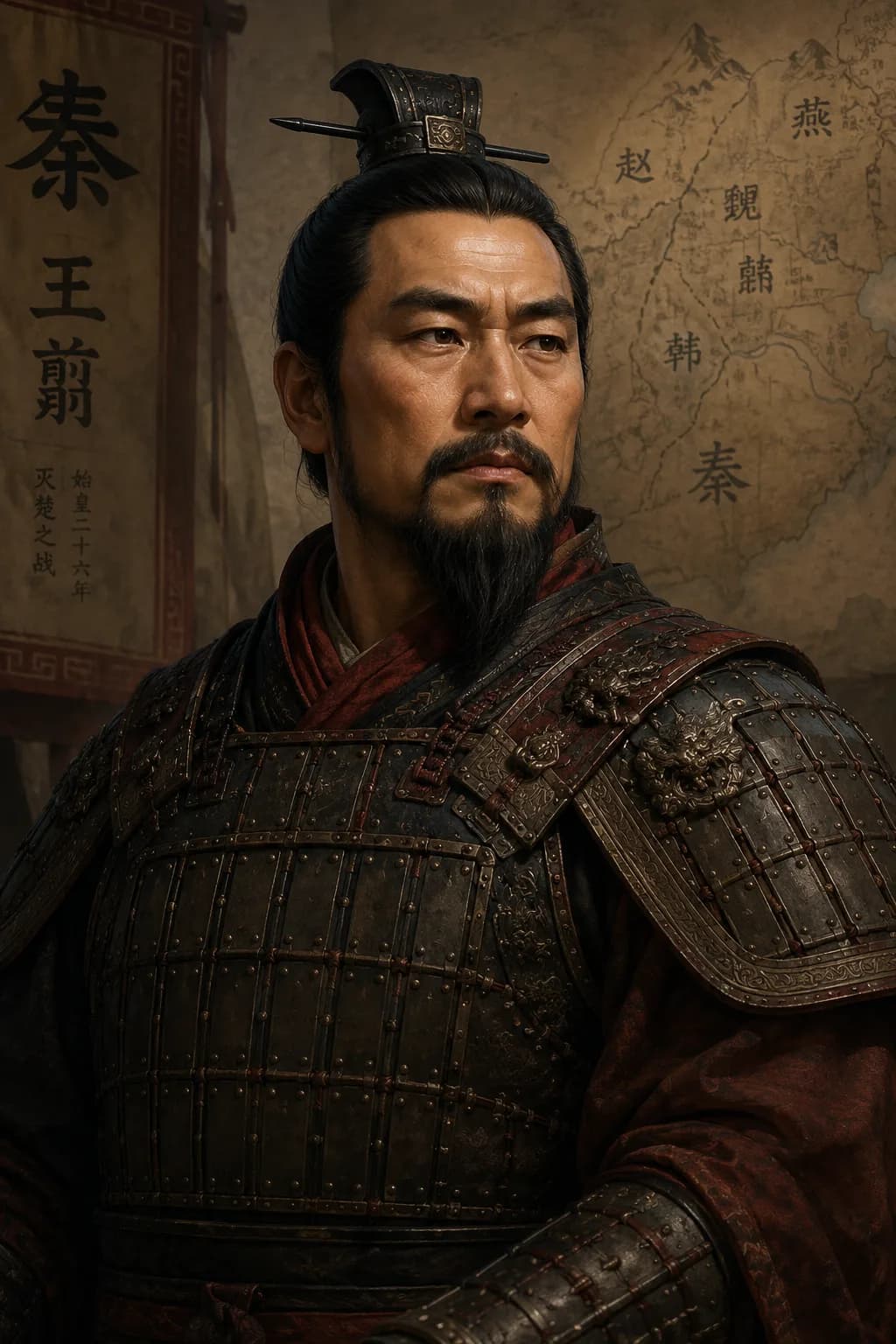
AI-generated portrait of Wang Jian in Qin armour before a campaign map
AI-assisted historical reconstruction

An illustrative reconstruction based on historical context. It is not a photograph or documentary likeness. Image policy

Quick answer

Wang Jian was a leading Qin general in the late Warring States period, central to the conquest of Zhao, Yan and Chu before Qin unified China in 221 BC.

Role
General
Years
active late 3rd century BCE
Quick facts

Profile details

Additional identity and tagging details that are not already covered in the introduction.

Also known as
Wang Chien
Facts

Wang Jian timeline facts

Selected specifics from this profile's life story.

-230s
A Qin Commander

Wang Jian served Qin during the final phase of the Warring States period, when King Zheng pushed for total victory over rival states.

-229 to -222
Pressure on Zhao and Yan

Wang Jian played a major role in Qin's northern campaigns, including the defeats of Zhao and Yan.

-223
Conquest of Chu

Wang Jian's victory over Chu in 223 BC removed Qin's strongest remaining obstacle to unification.

-221 onward
Military Legacy

Wang Jian became remembered as one of the great late Warring States generals, a symbol of Qin's disciplined path to empire.

Life Journey

The general who helped make Qin victory possible

Follow the story in a more continuous narrative, with a reading mode that matches how much depth you want.

Complete chronology

-230s

A Qin Commander

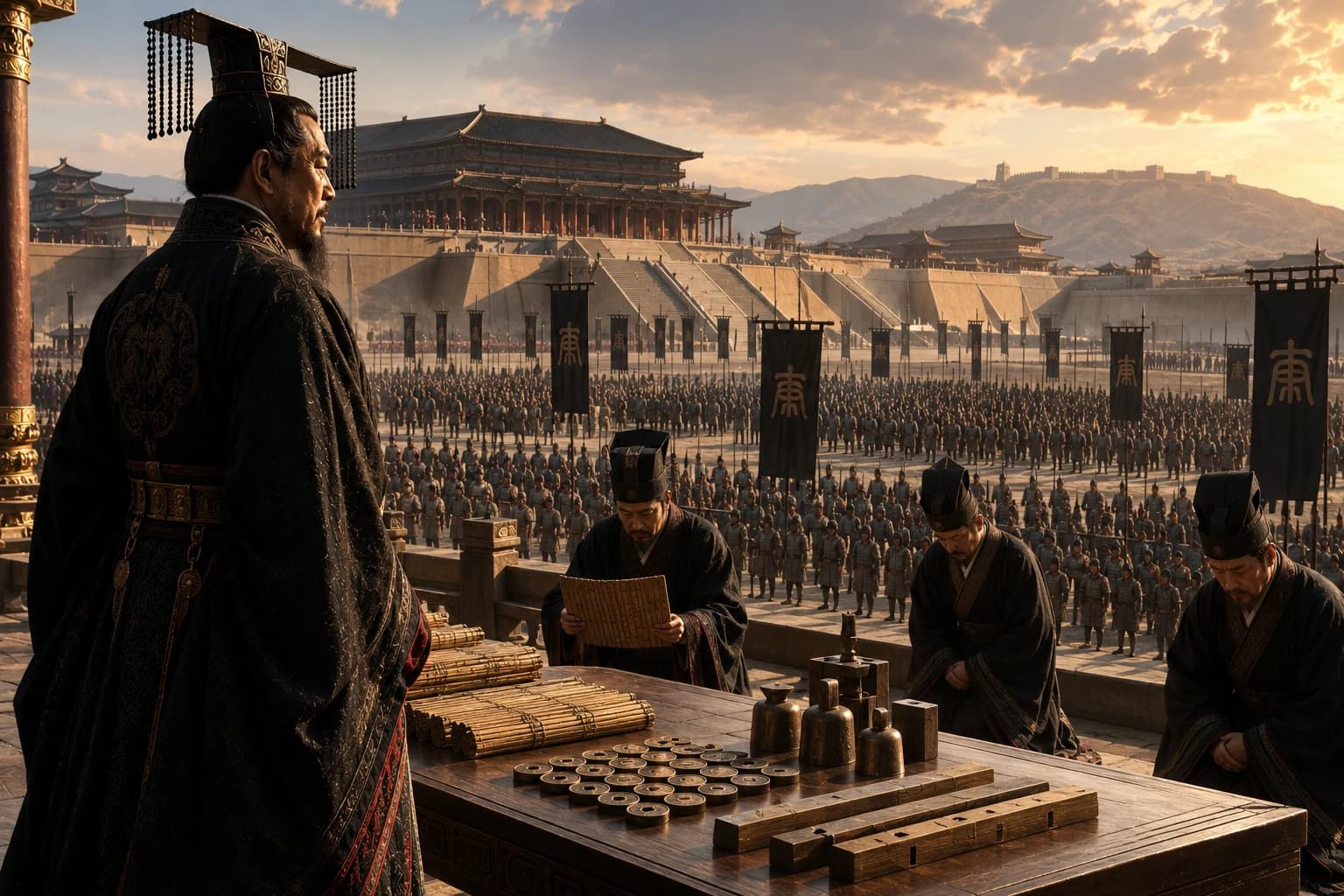
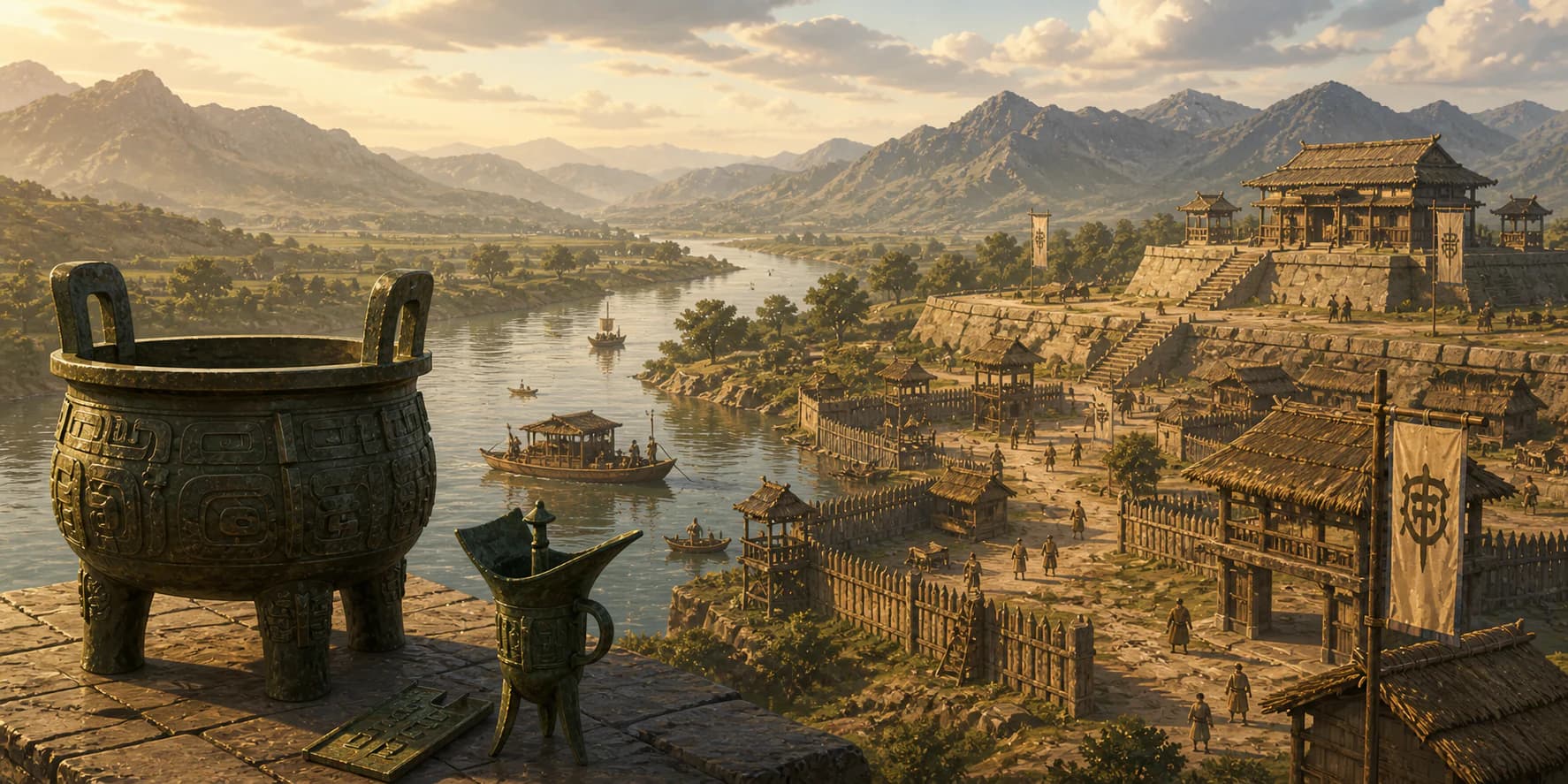
Wang Jian appears in the record as one of Qin's most important commanders during the wars of unification. His personal beginnings are less visible than his campaigns, which is itself revealing. Qin's rise depended not only on famous rulers and ministers, but on professional military command within a state able to supply, reward and discipline large armies. By the late third century BC, Qin had accumulated decades of institutional advantage. Wang Jian's task was to convert that advantage into battlefield and siege success against opponents who still had deep resources, strong walls and proud military traditions.
-229 to -222

Pressure on Zhao and Yan

Zhao had long been one of Qin's fiercest rivals, and its fall was essential to unification. Wang Jian was associated with the campaigns that broke Zhao resistance and pushed Qin power across the north. Yan later suffered the same pressure after the failed assassination attempt against King Zheng sharpened Qin's determination. These campaigns were not simply heroic field battles. They involved timing, logistics, siegecraft, political fracture among rivals and the ability to keep armies in motion across difficult terrain. Wang Jian's reputation rests on being the kind of commander Qin needed: methodical, effective and trusted with immense force.

-224

The Chu Challenge

The conquest of Chu tested Qin more severely than any smaller state. Chu controlled broad southern territories and retained enormous manpower. Traditional accounts contrast Wang Jian's caution with the confidence of the younger general Li Xin, whose campaign failed after asking for a smaller force. Wang Jian insisted that Chu required a massive army and patient command. Whether every detail of the story is shaped by later moralising, its lesson fits Qin's situation: not every enemy could be crushed by speed. Chu required scale, preparation and the willingness to let overwhelming capacity do its work slowly.

-223

Conquest of Chu

In 223 BC, Qin conquered Chu after a campaign traditionally associated with Wang Jian's command. The victory mattered beyond the destruction of one rival. Chu was vast, culturally distinct and militarily formidable. Its fall showed that no remaining state could withstand Qin alone. Yan and Qi followed, and by 221 BC King Zheng ruled the former territories of all six rival states. Wang Jian's contribution was therefore foundational. Qin Shi Huang's empire needed ministers to standardise and govern it, but first it needed generals capable of winning wars on a continental scale.

-221 onward

Military Legacy

Wang Jian's later life is less certain than his military reputation. Later tradition remembers him among the outstanding generals of the late Warring States period. His importance lies in the way he represents Qin's conquest machine at its most capable: large armies, disciplined command, patient strategy and service to a ruler with imperial ambitions. His victories also carried a long afterlife. The conquest of Chu helped unify China, but memories of defeated Chu later fed rebellion against Qin. Military success solved the problem of rival states; it did not automatically create loyalty to the new empire. That tension shaped the dynasty's short life.

Continue in context

Connected stories

Move from the profile into the wider events and settings this figure belongs to.

Tertiary paths

Content note

This profile is written for educational use and connects to related Stories of History pages. The main portrait is an AI-assisted historical reconstruction, included as an illustrative aid rather than documentary evidence. Image policy

References

Sources & Further Reading

Reliable reference works, archives and reading paths connected to this profile.

Further reading

  1. Encyclopaedia Britannica, Search results for Wang Jian,” accessed June 2026.Open source
  2. WorldCat, Books and library holdings for Wang Jian,” accessed June 2026.Open source

Primary sources

  1. Library of Congress, Search results for Wang Jian,” accessed June 2026.Open source

Reviewed claim sources

Loading reviewed claim sources...

A weekly route through history

Find out first about the latest published stories, feature notes and occasional Premium offers in one weekly email.