People

Vladimir Monomakh

Vladimir Monomakh was Grand Prince of Kiev from 1113 to 1125, a leading Rurikid prince associated with campaigns against the Cumans, the Liubech congress, and the Instruction of Vladimir Monomakh.

Born
1053 CE
Died
1125 CE
Role
Grand Prince of Kiev

Grand Prince of Kiev (1053-1125)

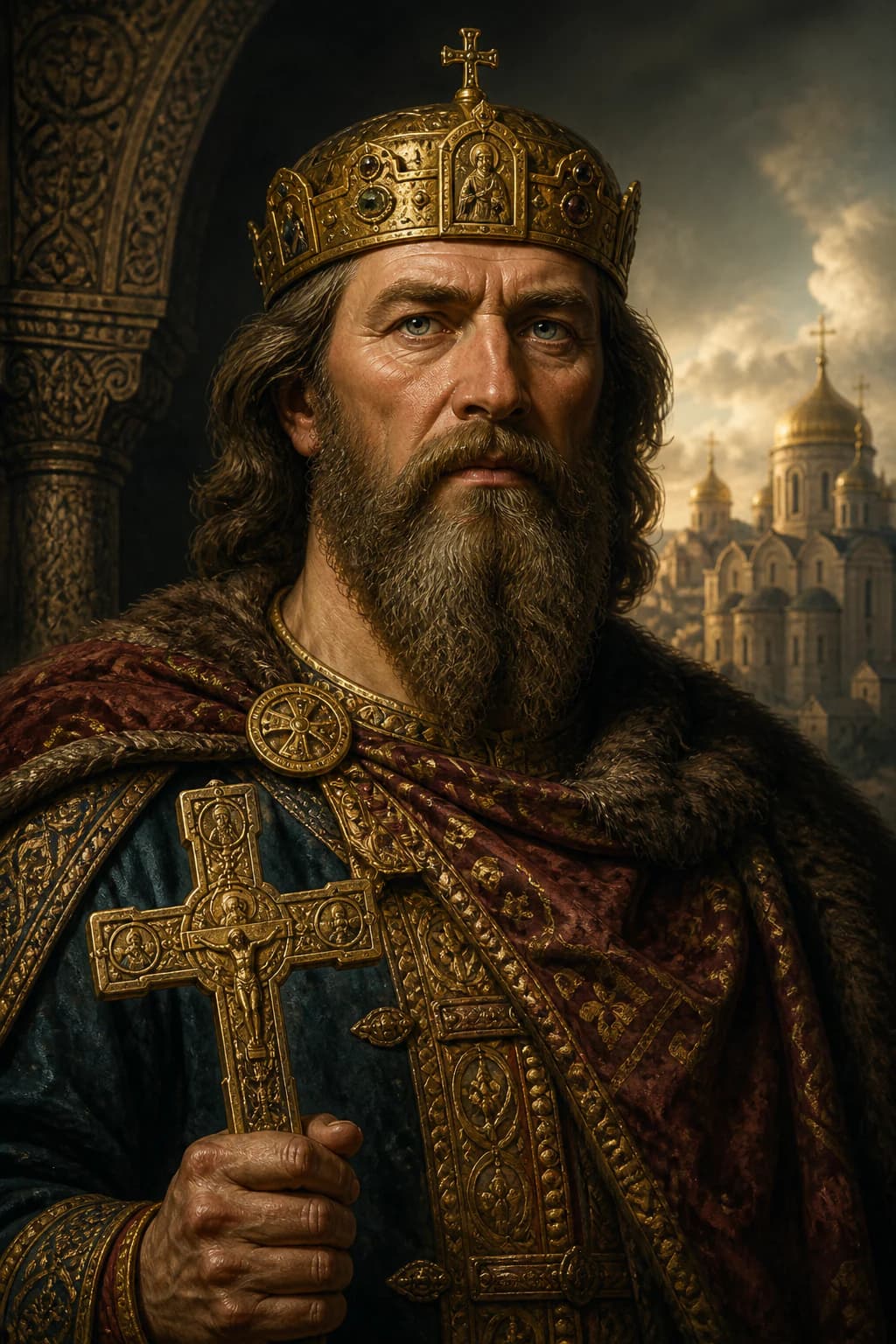
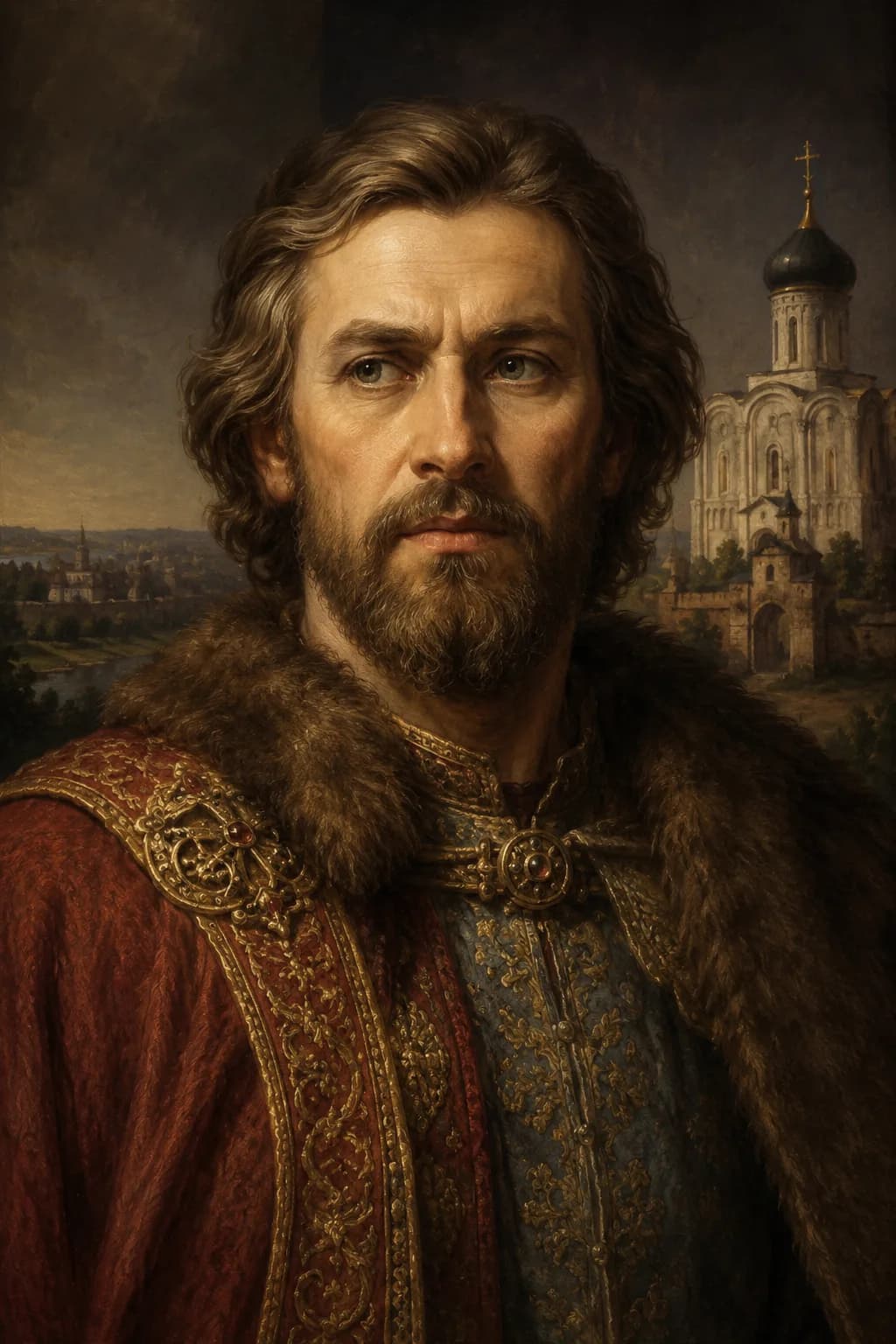
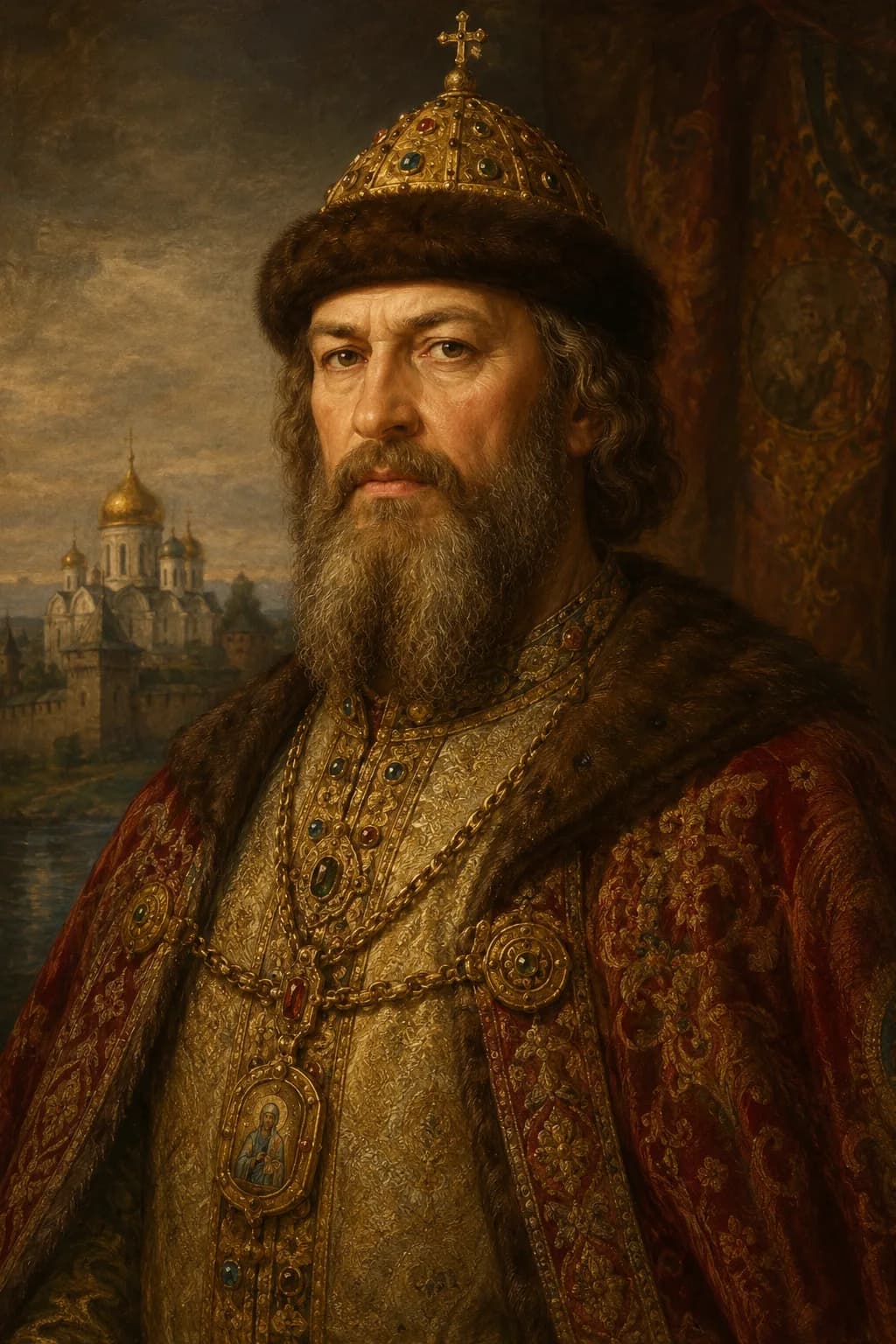
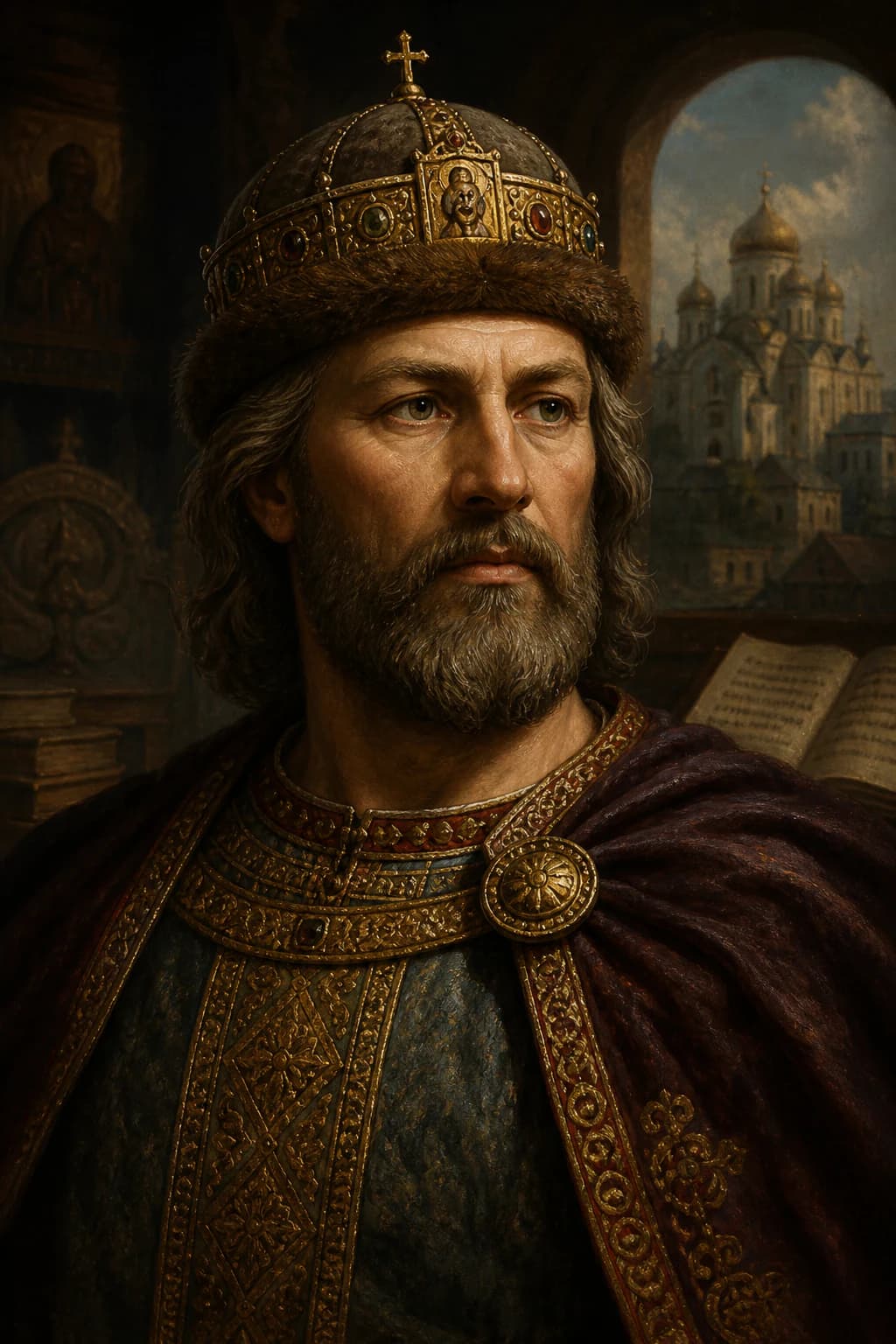
AI-generated portrait of Vladimir Monomakh wearing a jeweled crown and princely robes
AI-assisted historical reconstruction

An illustrative reconstruction based on historical context. It is not a photograph or documentary likeness. Image policy

Quick answer

Vladimir Monomakh was Grand Prince of Kiev from 1113 to 1125, a leading Rurikid prince associated with campaigns against the Cumans, the Liubech congress, and the Instruction of Vladimir Monomakh.

Born
1053 CE
Died
1125 CE
Role
Grand Prince of Kiev
Years
1053-1125 CE
Quick facts

Profile details

Additional identity and tagging details that are not already covered in the introduction.

Full name
Vladimir Vsevolodovich Monomakh
Also known as
Vladimir Vsevolodovich, Volodymyr Monomakh
Facts

Vladimir Monomakh timeline facts

Selected specifics from this profile's life story.

1053
Rurikid Heir

Vladimir Monomakh was born into the generation after Yaroslav the Wise, when the Rus lands were already being divided among competing princely branches.

1097
Liubech Congress

Monomakh helped lead the Liubech congress of 1097, where Rus princes tried to reduce destructive conflict by recognizing patrimonial lands.

1113-1125
Grand Prince

In 1113, Monomakh became Grand Prince of Kiev and presided over a late revival of Kievan authority.

1125 onward
Legacy of Restraint

After Monomakh's death, Kievan authority weakened again, making his reign look like a temporary recovery rather than a permanent solution.

Life Journey

Why Vladimir Monomakh matters

Follow the story in a more continuous narrative, with a reading mode that matches how much depth you want.

Complete chronology

1053

Rurikid Heir

Vladimir Vsevolodovich, later known as Vladimir Monomakh, was born in 1053 into the senior world of the Rurikid dynasty. His father, Vsevolod, was a son of Yaroslav the Wise, and his mother was linked in tradition to the Byzantine imperial family, giving rise to the name Monomakh. He grew up in a political order shaped by Yaroslav's attempt to distribute power among his sons. That arrangement gave the dynasty breadth, but it also made conflict almost constant. Vladimir's career belongs to the difficult period when princes still spoke the language of shared Rus identity while competing fiercely for cities, tribute, and prestige.
1070s-1090s

Frontier Commander

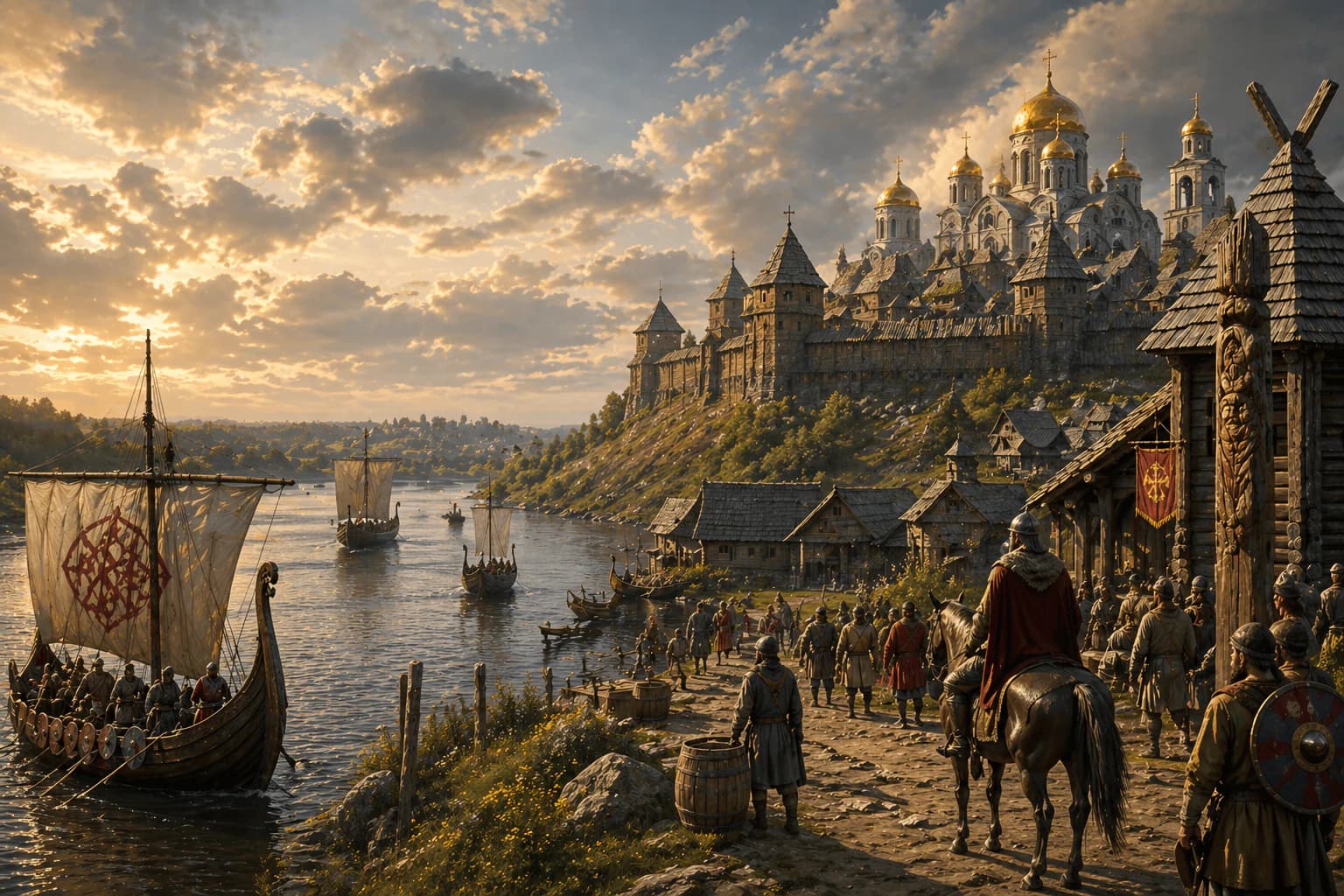
Monomakh became prominent through the practical work of princely government: defending frontiers, commanding campaigns, negotiating with rivals, and ruling important towns. The southern steppe frontier demanded particular attention as Cuman, or Polovtsian, raids threatened Rus lands. Monomakh's reputation grew because he combined military energy with political discipline. He was not simply another claimant in a family quarrel. He appeared to many contemporaries as a prince capable of organizing common action against shared dangers, a rare quality in a world where dynastic rivalry often overwhelmed collective interest.

1097

Liubech Congress

The Liubech congress was one of the most important attempts to manage Rurikid fragmentation. Convened in 1097 under Monomakh's leadership and that of other major princes, it addressed the chaos caused by shifting claims to cities and territories. The principle associated with the congress was that each prince should hold his patrimony, his inherited land, rather than constantly fighting to move up a ladder of seniority. The idea was practical and revealing. It acknowledged that the old system no longer worked smoothly. Rus unity could not be restored by pretending that regional power bases did not exist.

after 1097

Limits of Agreement

Liubech did not solve the structural problem it identified. Soon after the congress, princely betrayal and renewed conflict showed that agreements were only as strong as the political will behind them. Monomakh remained a leading figure, but he could not create institutions capable of enforcing permanent peace across the dynasty. The episode matters because it marks a realistic turning point. By the late eleventh century, Kievan Rus was not collapsing all at once, but it was becoming a federation of powerful regional interests. Monomakh's authority slowed that process; it did not reverse it.

1113-1125

Grand Prince

Monomakh became Grand Prince of Kiev in 1113 after unrest in the city created an opening for a ruler with broad legitimacy. His reign is often seen as a final strong moment for old Kievan authority. He strengthened princely prestige, continued campaigns against steppe enemies, and worked to moderate internal conflict. Later tradition also remembers his Instruction, a princely testament that presented ideals of justice, piety, energy, and responsibility. Whether read as political advice or moral self-fashioning, it shows how Monomakh wanted rulership to be understood: not only as possession of power, but as duty.

1125 onward

Legacy of Restraint

Monomakh died in 1125. His son Mstislav held the realm together for a time, but after that the centrifugal forces of Rus politics became harder to contain. Regional centres grew stronger, princely branches entrenched themselves, and Kiev's authority became increasingly symbolic. Monomakh's legacy is therefore poignant. He was not a founder like Rurik or a converter like Vladimir, but he represented the last major attempt to make the old Rus order function with discipline and shared purpose. His career helps explain why fragmentation was not simply failure. It was the result of deep structural pressures that even a capable ruler could only manage for a while.

Continue in context

Connected stories

Move from the profile into the wider events and settings this figure belongs to.

Tertiary paths

Content note

This profile is written for educational use and connects to related Stories of History pages. The main portrait is an AI-assisted historical reconstruction, included as an illustrative aid rather than documentary evidence. Image policy

References

Sources & Further Reading

Reliable reference works, archives and reading paths connected to this profile.

Further reading

  1. Encyclopaedia Britannica, Search results for Vladimir Monomakh,” accessed June 2026.Open source
  2. WorldCat, Books and library holdings for Vladimir Monomakh,” accessed June 2026.Open source

Primary sources

  1. Library of Congress, Search results for Vladimir Monomakh,” accessed June 2026.Open source

Reviewed claim sources

Loading reviewed claim sources...

A weekly route through history

Find out first about the latest published stories, feature notes and occasional Premium offers in one weekly email.