People

Rurik

Rurik was a ninth-century Varangian ruler traditionally credited with founding the Rurik dynasty, the ruling house of Kievan Rus and later medieval Rus principalities.

Born
830 CE
Died
879 CE
Role
Varangian ruler and traditional founder of the Rurik dynasty

Varangian ruler and traditional founder of the Rurik dynasty (c. 830-879)

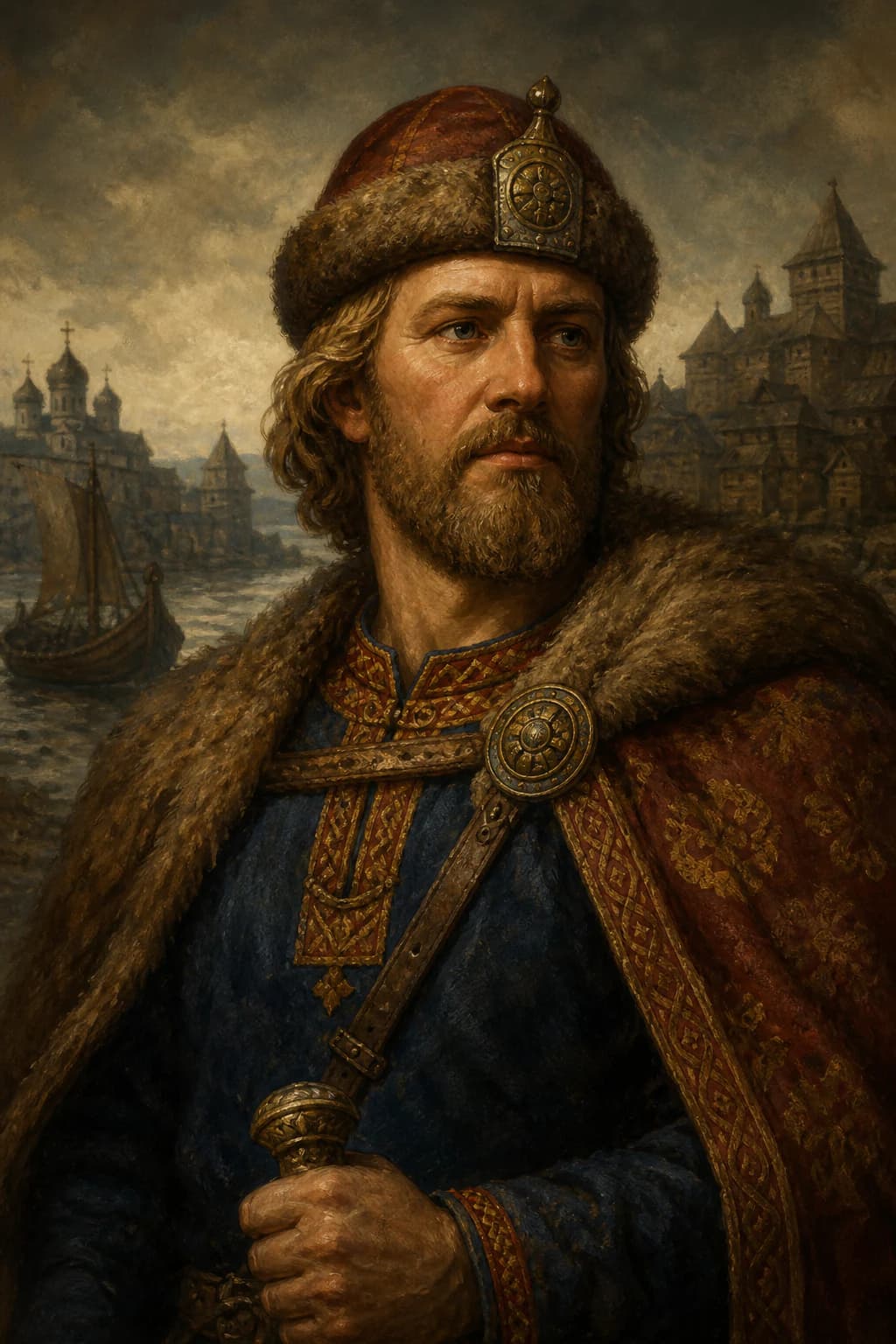
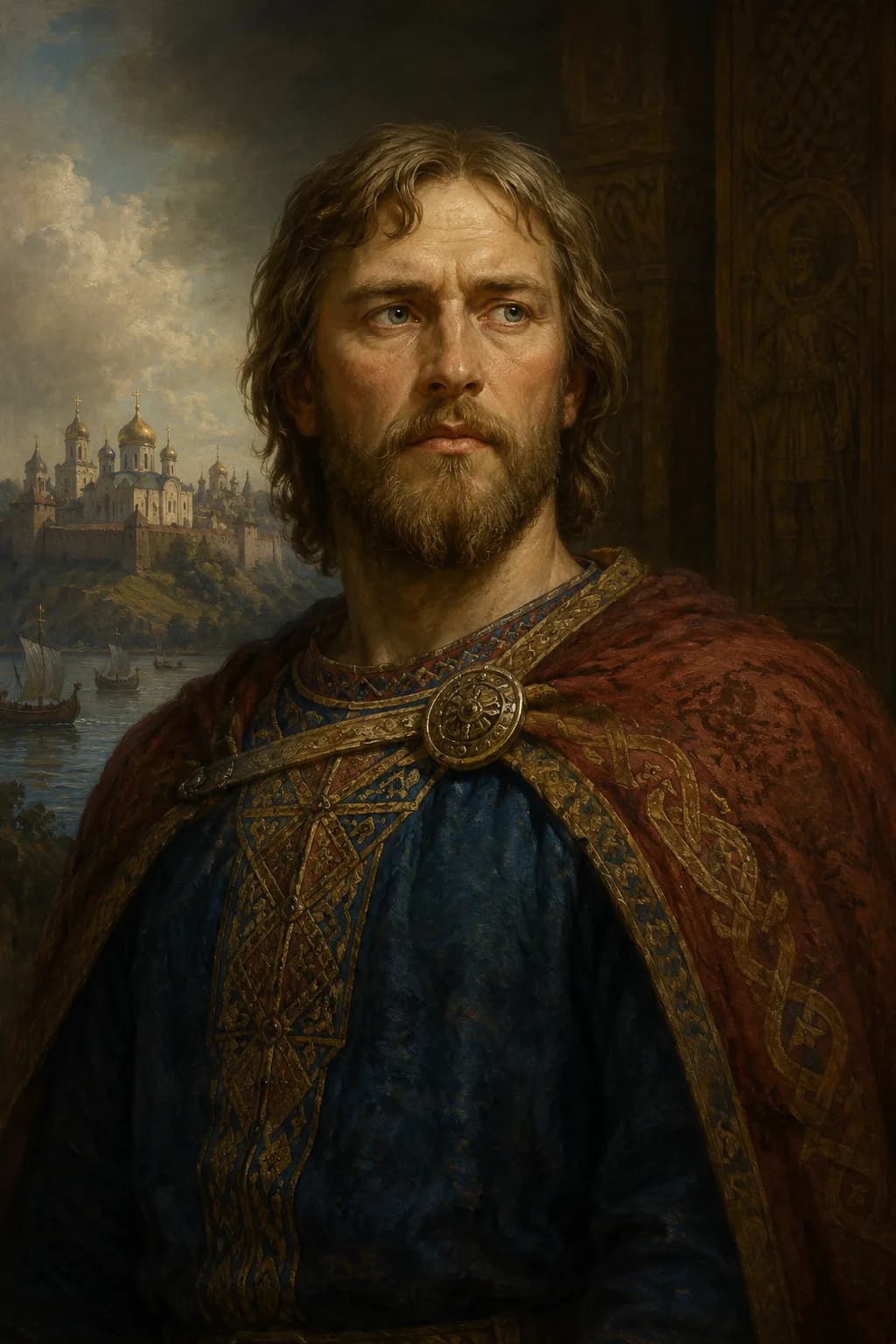
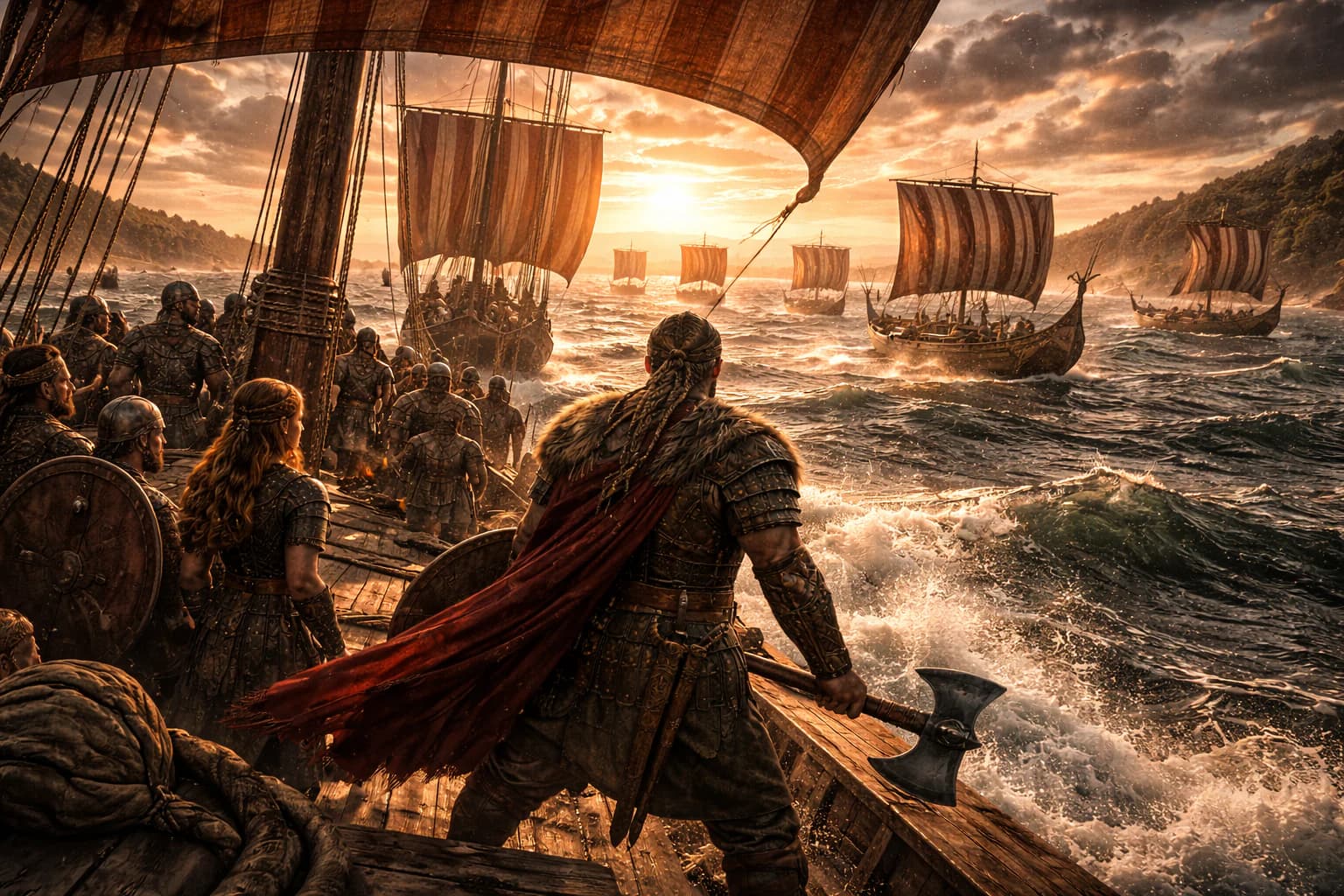
AI-generated portrait of Rurik in Varangian attire beside river craft
AI-assisted historical reconstruction

An illustrative reconstruction based on historical context. It is not a photograph or documentary likeness. Image policy

Quick answer

Rurik was a ninth-century Varangian ruler traditionally credited with founding the Rurik dynasty, the ruling house of Kievan Rus and later medieval Rus principalities.

Born
830 CE
Died
879 CE
Role
Varangian ruler and traditional founder of the Rurik dynasty
Years
830-879 CE
Facts

Rurik timeline facts

Selected specifics from this profile's life story.

9th century
Varangian world

Rurik belonged to the northern world of Varangian traders and warriors whose boats moved between the Baltic, the river systems of eastern Europe, and the Black Sea.

862
Called to rule

The Primary Chronicle says Rurik and his brothers were invited to bring order to the northern Rus lands, though historians treat the account cautiously.

879
Succession to Oleg

At his death, tradition says Rurik left a young son, Igor, under the guardianship of Oleg, who would move Rus power toward Kiev.

After 879
Dynastic memory

The Rurikid dynasty ruled Kievan Rus, many later Rus principalities, and ultimately Muscovy, making Rurik a powerful symbol of political legitimacy.

Life Journey

Why Rurik matters

Follow the story in a more continuous narrative, with a reading mode that matches how much depth you want.

Complete chronology

9th century

Varangian world

Rurik's historical setting matters as much as the sparse details of his life. In the ninth century, Scandinavian and Slavic communities were being drawn together by river routes that carried furs, slaves, wax, silver, weapons, and political influence between the Baltic and Byzantium. The people later called Rus were not a modern nation but a shifting world of war bands, merchants, local elites, tribute takers, and fortified settlements. Rurik is remembered as a Varangian, a term used in eastern Europe for Scandinavian-connected warriors and traders. The early chronicles place him at the point where mobile military power began to harden into dynastic rule. Whether every detail of the later story is reliable is doubtful; that a northern warrior elite helped shape early Rus power is widely accepted.
862

Called to rule

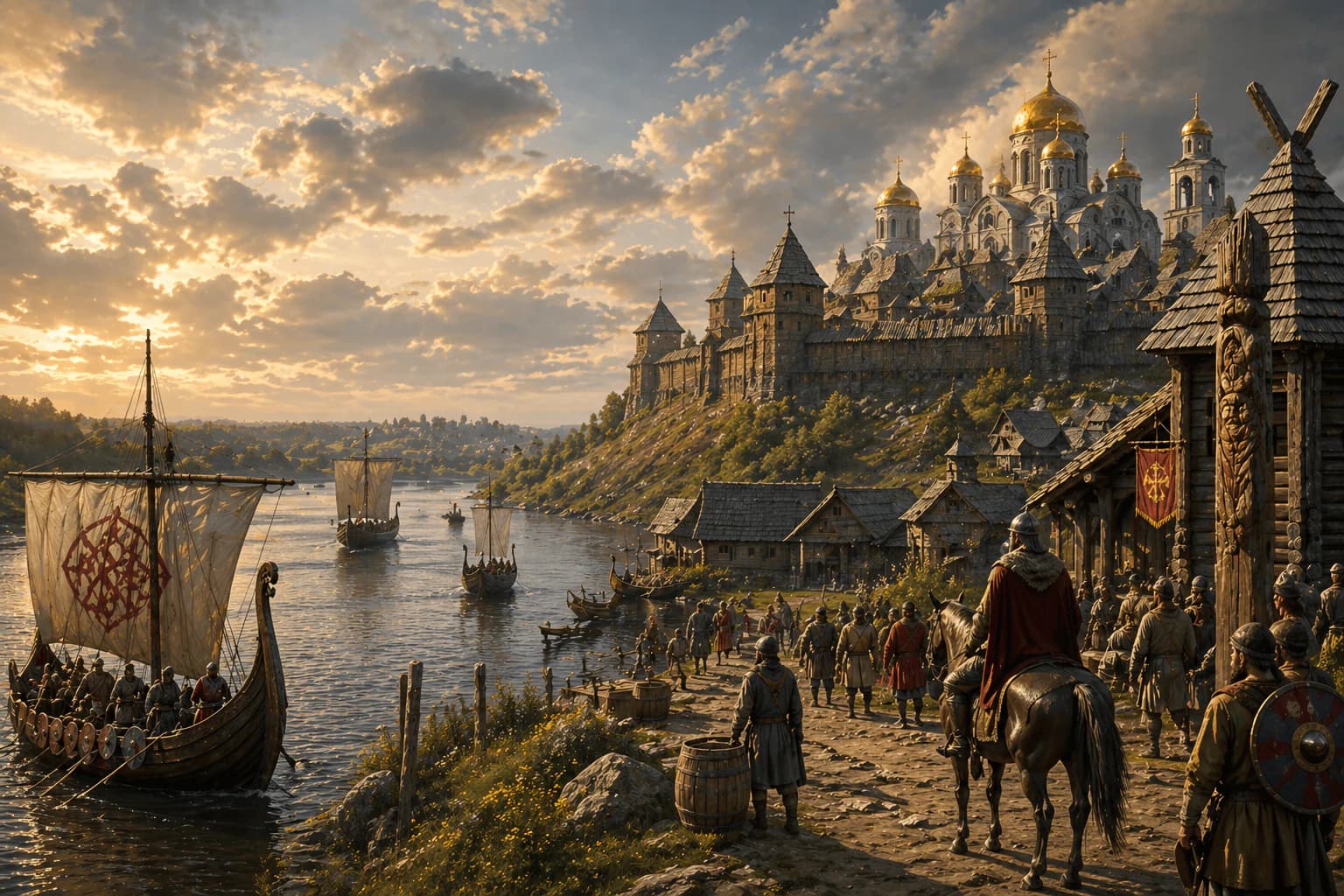
The famous chronicle tradition says that local peoples, divided by conflict, invited the Varangians to rule them in 862. Rurik came with his brothers Sineus and Truvor, settled first at Ladoga or Novgorod in different traditions, and became the surviving centre of authority after his brothers died. The story is too polished to read as a simple transcript of events. It explains political rule as consent, gives a foreign dynasty a legitimate beginning, and reduces a complicated process of violence, bargaining, trade, and tribute into a memorable scene. Yet it preserves something important: northern Rus power seems to have depended on the ability of armed outsiders and local elites to cooperate. Rurik's authority, whether invited or imposed, became the remembered starting point for a ruling house.

860s-870s

Northern power base

Rurik did not found a state in the modern sense. His significance lies in the formation of a durable ruling centre in the north, tied to fortified settlements, tribute networks, and long-distance commerce. The later city of Novgorod became central to his memory, though the earliest archaeological and textual details remain debated. What is clear is that the northern zone was strategically valuable. Control there meant access to the Volkhov, Lake Ladoga, the Dnieper approaches, and the routes that connected Scandinavia to Constantinople. Rurik's rule belongs to a moment when leadership was personal and military, but already dynastic enough for succession to matter. His name became the hinge between raiding society and princely government.

879

Succession to Oleg

Rurik is said to have died in 879, leaving his son Igor too young to rule independently. The chronicle presents Oleg as a kinsman or guardian who took power on Igor's behalf. This transition is crucial because it connects Rurik's northern base with the next great step in Rus history: the seizure of Kiev in 882. Rurik himself may have ruled only a regional power, but the dynasty attached to his name soon controlled the Dnieper corridor and built a political centre capable of dealing with Byzantium. The succession also shows why Rurik's importance is dynastic rather than biographical. Almost everything known about him is filtered through later memory, but the rulers who claimed descent from him shaped eastern Europe for centuries.

After 879

Dynastic memory

Rurik's legacy is enormous precisely because it rests on a thin foundation. The Rurikids became the ruling house of Kievan Rus and later supplied princes to Novgorod, Vladimir-Suzdal, Galicia-Volhynia, Tver, Moscow, and other Rus lands. Ivan IV, known as Ivan the Terrible, still claimed Rurikid descent in the sixteenth century. That long afterlife turned Rurik from a ninth-century frontier ruler into an ancestor of statehood. Modern debates about him can become tangled in national claims, especially because early Rus history is shared by the histories of Ukraine, Russia, Belarus, and the wider Baltic-Black Sea world. The careful view is that Rurik is both historical problem and historical force: difficult to reconstruct as a person, impossible to ignore as a dynastic idea.

Continue in context

Connected stories

Move from the profile into the wider events and settings this figure belongs to.

Tertiary paths

Content note

This profile is written for educational use and connects to related Stories of History pages. The main portrait is an AI-assisted historical reconstruction, included as an illustrative aid rather than documentary evidence. Image policy

References

Sources & Further Reading

Reliable reference works, archives and reading paths connected to this profile.

Further reading

  1. Encyclopaedia Britannica, Search results for Rurik,” accessed June 2026.Open source
  2. WorldCat, Books and library holdings for Rurik,” accessed June 2026.Open source

Primary sources

  1. Library of Congress, Search results for Rurik,” accessed June 2026.Open source

Reviewed claim sources

Loading reviewed claim sources...

A weekly route through history

Find out first about the latest published stories, feature notes and occasional Premium offers in one weekly email.