People

Igor of Kiev

Igor of Kiev was a tenth-century prince of Kievan Rus, traditionally remembered as Rurik's son, Olga's husband, and the ruler killed by the Drevlians in 945.

Born
c. 878 CE
Died
945 CE
Role
Prince of Kiev

Prince of Kiev (c. 878-945)

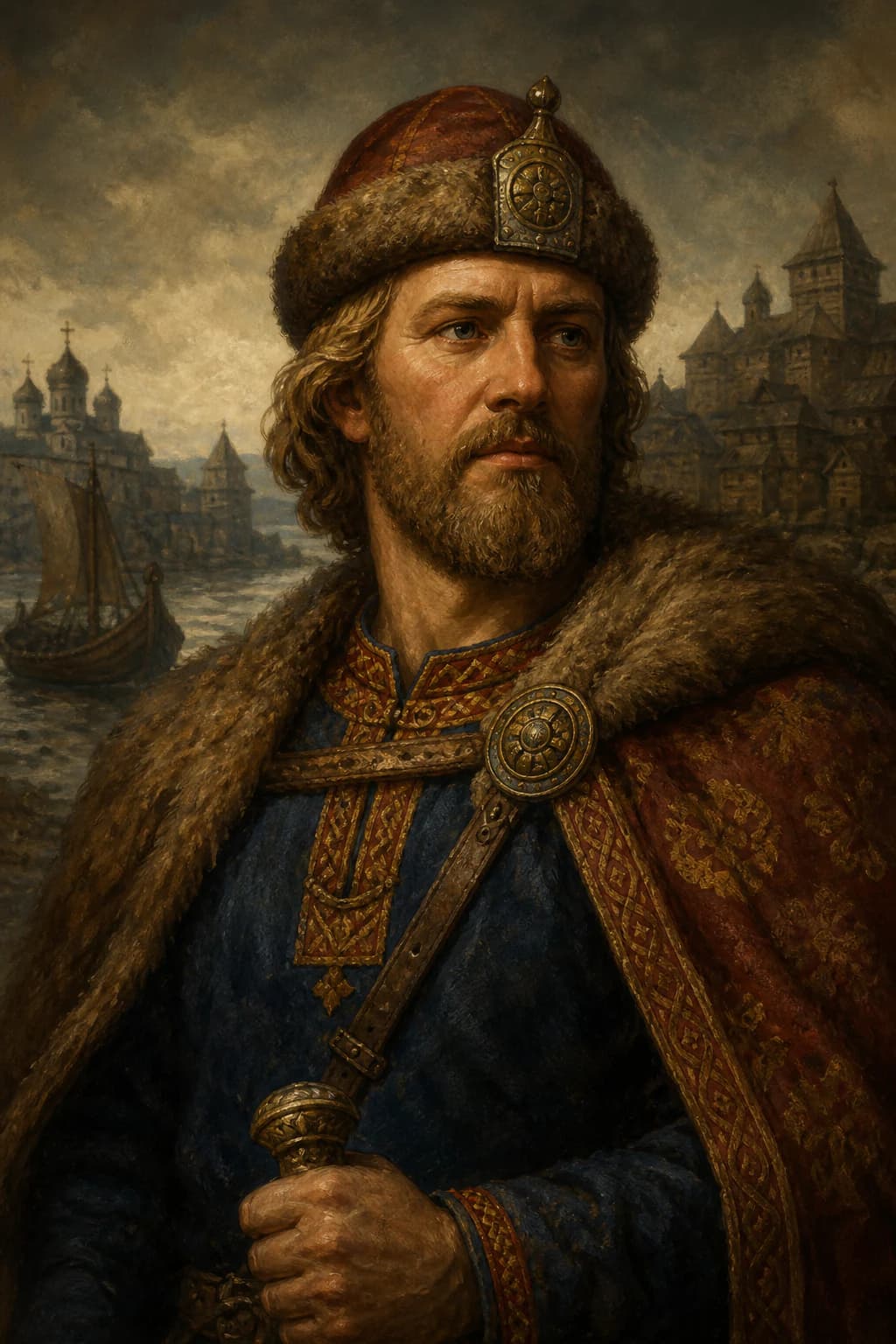
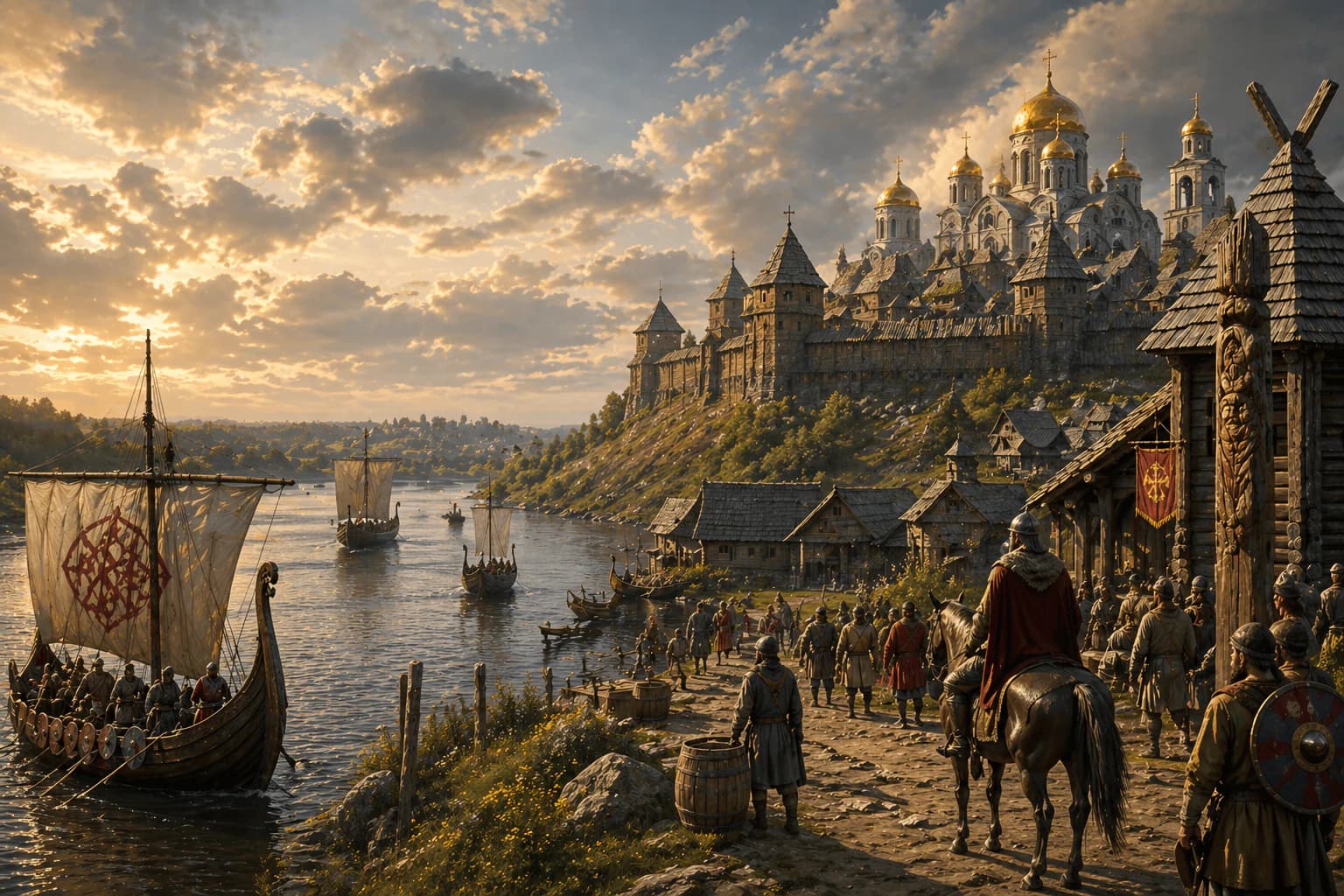
AI-generated portrait of Igor of Kiev in princely Rus attire with Kiev and river boats behind him
AI-assisted historical reconstruction

An illustrative reconstruction based on historical context. It is not a photograph or documentary likeness. Image policy

Quick answer

Igor of Kiev was a tenth-century prince of Kievan Rus, traditionally remembered as Rurik's son, Olga's husband, and the ruler killed by the Drevlians in 945.

Born
c. 878 CE
Died
945 CE
Role
Prince of Kiev
Years
c. 878-945 CE
Quick facts

Profile details

Additional identity and tagging details that are not already covered in the introduction.

Also known as
Prince Igor, Igor
Facts

Igor of Kiev timeline facts

Selected specifics from this profile's life story.

late 9th century
Dynastic Inheritance

Igor is remembered as Rurik's son and the heir whose claim connected Oleg's seizure of Kiev to the wider Rurikid dynasty.

941-944
Byzantine Pressure

Igor campaigned against Byzantium and later secured a treaty, showing that Rus power still looked south toward Constantinople.

945
Death Among the Drevlians

In 945, the Drevlians killed Igor after he demanded further tribute, creating a crisis for the ruling house of Kiev.

after 945
Legacy Through Olga

Igor is remembered largely through what followed: Olga's revenge, her tribute reforms, and the survival of the Rurikid line.

Life Journey

Why Igor of Kiev matters

Follow the story in a more continuous narrative, with a reading mode that matches how much depth you want.

Complete chronology

late 9th century

Dynastic Inheritance

Igor of Kiev stands close to the uncertain border between chronicle memory and recoverable history. The Primary Chronicle presents him as the son of Rurik, left young when Rurik died and placed under the protection of Oleg. That story matters because it gave the rulers of Kiev a dynastic line stretching back to the northern Varangian founder. Whether every detail can be verified is less important than the political function of the memory. Igor linked the new Kievan centre to Rurik's name, allowing later princes to describe their authority as inherited rather than merely seized.
912

After Oleg

When Oleg died, Igor received a political inheritance that was powerful but still unstable. Kiev controlled the Dnieper route toward Byzantium and drew tribute from surrounding peoples, but this was not a deeply institutionalized kingdom. Authority depended on personal leadership, armed followers, seasonal collection, and the willingness of local communities to submit. Igor's task was to keep together a world that Oleg had expanded. That required diplomacy, raiding, tribute enforcement, and the ability to reward the retinue that made princely power possible.

941-944

Byzantine Pressure

Igor's reign continued the pattern of direct engagement with Byzantium. A Rus attack in 941 failed badly when Byzantine forces used Greek fire against the fleet, but Igor returned to pressure the empire again and a treaty followed in 944. The agreement was less triumphant than the legendary memories attached to Oleg, yet it confirms that Rus rulers remained major actors in the Black Sea world. Constantinople mattered as market, rival, model, and source of prestige. Igor's campaigns show a ruler trying to preserve access to the wealth and status that made Kiev valuable.

940s

Tribute Demands

Tribute was the lifeblood of early Kievan power. It supplied goods, rewarded followers, and tied distant communities to the prince. But tribute collection could also become a flashpoint. Igor's retinue expected wealth, and subject peoples expected that demands would remain within recognizable limits. The chronicles remember Igor as returning to the Drevlians for a second collection in the same season. Even if the details are shaped by moral storytelling, the problem was real: a ruler who pushed extraction too far risked turning obedience into revolt.

945

Death Among the Drevlians

Igor's death in 945 became one of the defining cautionary episodes of early Rus history. The Drevlians, already subject to Kievan tribute, rejected his renewed demand and killed him with his men. The act was more than a local murder. It revealed that princely authority was not automatic and that communities under Rus domination could resist violently when demands became intolerable. For Kiev, the danger was immediate. A prince was dead, his heir Sviatoslav was young, and rivals could interpret widowhood and minority as weakness.

after 945

Legacy Through Olga

Igor's historical legacy is inseparable from Olga's response. His widow crushed the Drevlian challenge and then reworked tribute collection through more fixed obligations and collection points. In that sense, Igor's failure produced one of the first major administrative reforms in Rus history. He also remained important as a dynastic link: husband of Olga, father of Sviatoslav, and ancestor of Vladimir the Great and Yaroslav the Wise. Igor was not the most successful early Rus ruler, but his reign revealed the problem that later rulers had to solve. Power needed more than force and appetite; it needed system.

Continue in context

Connected stories

Move from the profile into the wider events and settings this figure belongs to.

Tertiary paths

Content note

This profile is written for educational use and connects to related Stories of History pages. The main portrait is an AI-assisted historical reconstruction, included as an illustrative aid rather than documentary evidence. Image policy

References

Sources & Further Reading

Reliable reference works, archives and reading paths connected to this profile.

Further reading

  1. Encyclopaedia Britannica, Search results for Igor of Kiev,” accessed June 2026.Open source
  2. WorldCat, Books and library holdings for Igor of Kiev,” accessed June 2026.Open source

Primary sources

  1. Library of Congress, Search results for Igor of Kiev,” accessed June 2026.Open source

Reviewed claim sources

Loading reviewed claim sources...

A weekly route through history

Find out first about the latest published stories, feature notes and occasional Premium offers in one weekly email.