People

Sviatoslav I

Sviatoslav I was a tenth-century prince of Kievan Rus, son of Igor and Olga, known for destroying Khazar power, campaigning in the Balkans, and dying at the hands of the Pechenegs.

Born
c. 943 CE
Died
972 CE
Role
Prince of Kiev

Prince of Kiev (c. 943-972)

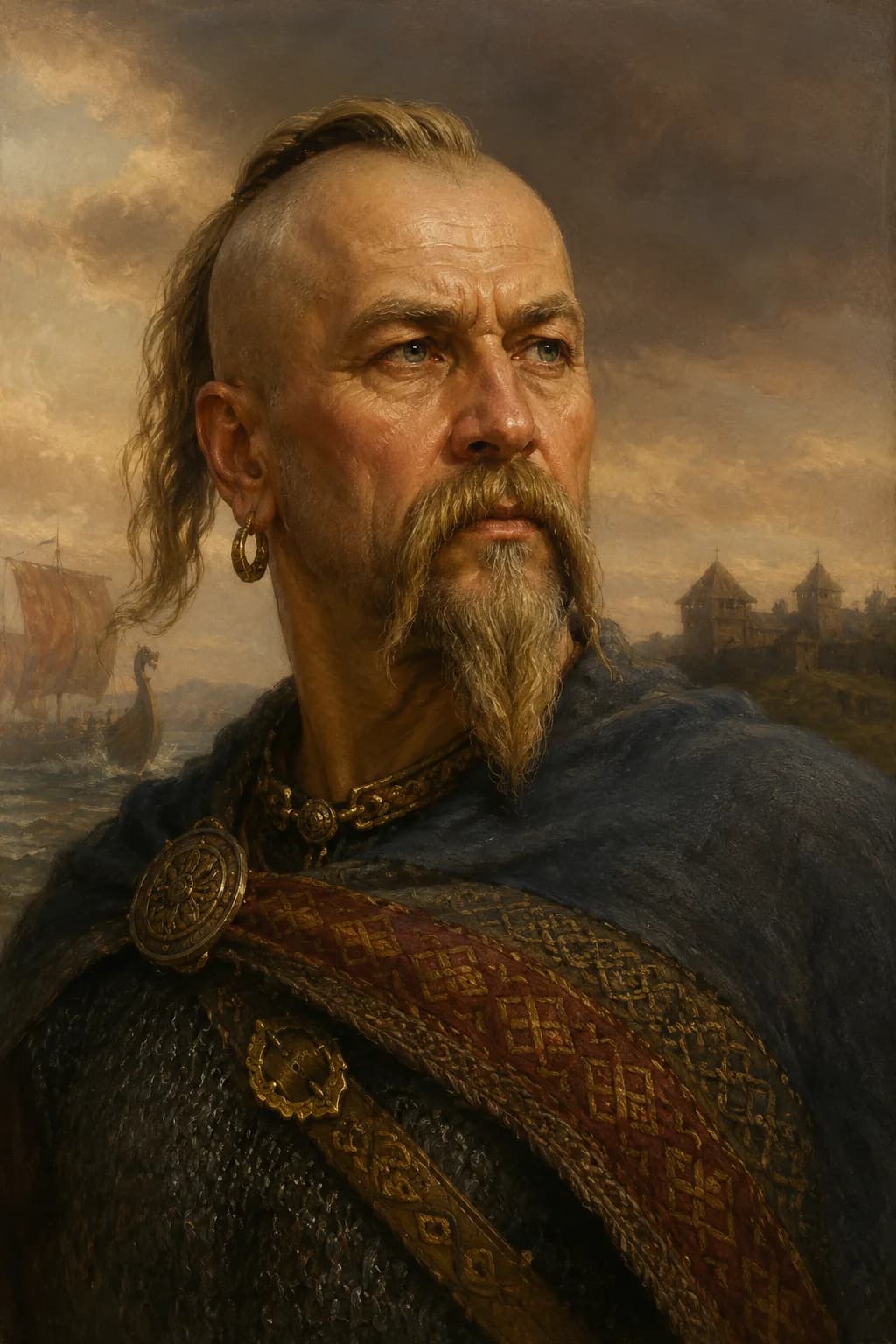
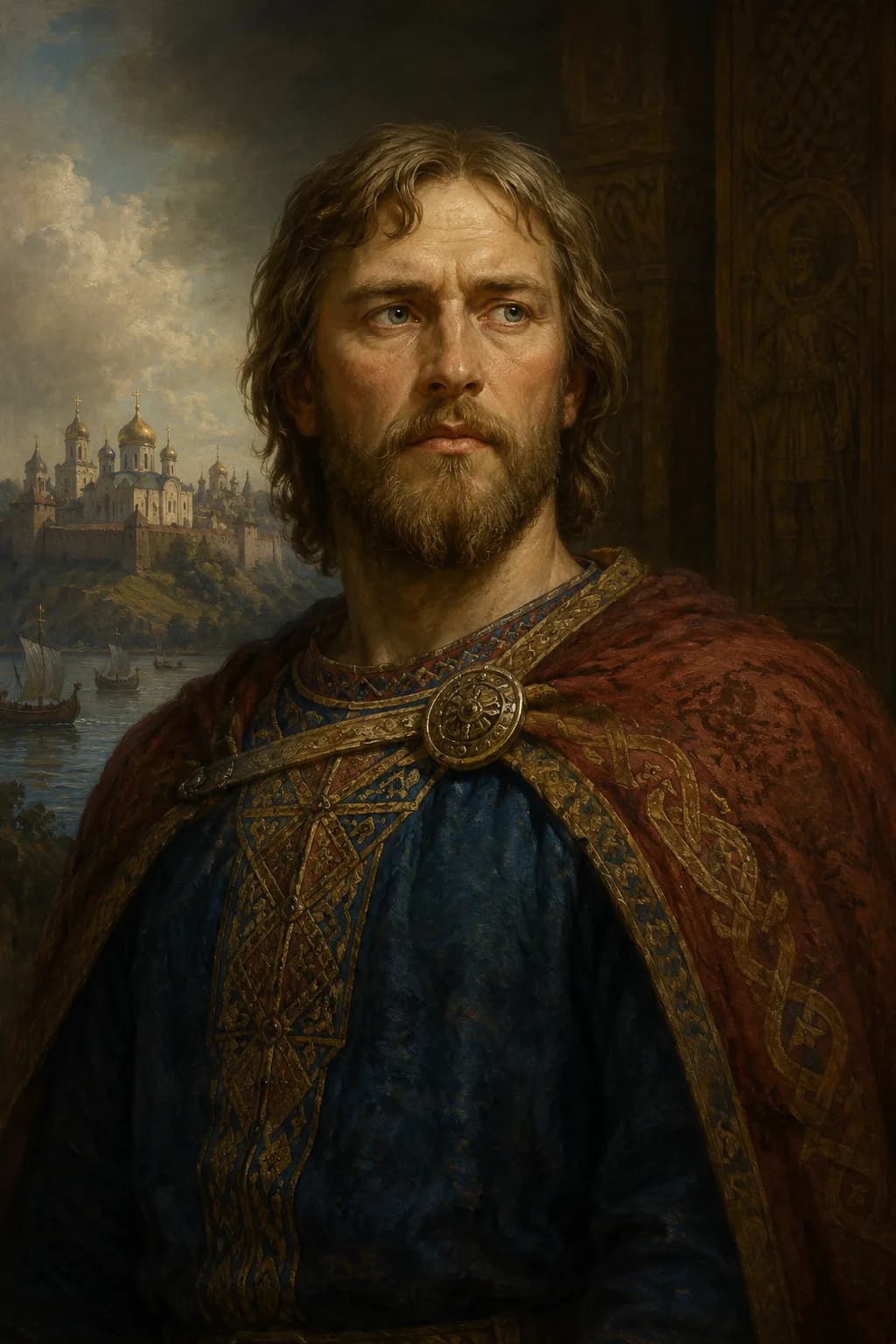
AI-generated portrait of Sviatoslav I in warrior attire with ships and a fortified settlement behind him
AI-assisted historical reconstruction

An illustrative reconstruction based on historical context. It is not a photograph or documentary likeness. Image policy

Quick answer

Sviatoslav I was a tenth-century prince of Kievan Rus, son of Igor and Olga, known for destroying Khazar power, campaigning in the Balkans, and dying at the hands of the Pechenegs.

Born
c. 943 CE
Died
972 CE
Role
Prince of Kiev
Years
c. 943-972 CE
Quick facts

Profile details

Additional identity and tagging details that are not already covered in the introduction.

Full name
Sviatoslav Igorevich
Also known as
Sviatoslav
Facts

Sviatoslav I timeline facts

Selected specifics from this profile's life story.

945
Son of Crisis

Sviatoslav was still young when his father Igor was killed, leaving his mother Olga to govern as regent.

960s
Khazar Campaigns

Sviatoslav's greatest victory was the destruction of the Khazar Khaganate, a major steppe power controlling trade and tribute east of the Dnieper.

968
Kiev Exposed

While Sviatoslav was away campaigning, the Pechenegs attacked Kiev, exposing the risks of a ruler who lived on the frontier.

972
Death and Legacy

Sviatoslav was killed by the Pechenegs after withdrawing from the Balkans, leaving his sons to fight over the Rus inheritance.

Life Journey

Why Sviatoslav I matters

Follow the story in a more continuous narrative, with a reading mode that matches how much depth you want.

Complete chronology

945

Son of Crisis

Sviatoslav I entered politics through a dynastic emergency. His father Igor was killed by the Drevlians in 945, and his mother Olga ruled as regent while Sviatoslav was too young to command in his own right. Olga's regency preserved the dynasty, punished rebellion, and made tribute collection more stable. Sviatoslav inherited the benefits of that survival, but not his mother's temperament. Where Olga became associated with order, diplomacy, and Christian conversion, Sviatoslav became remembered as a warrior prince whose life was spent on campaign.
960s

Warrior Style

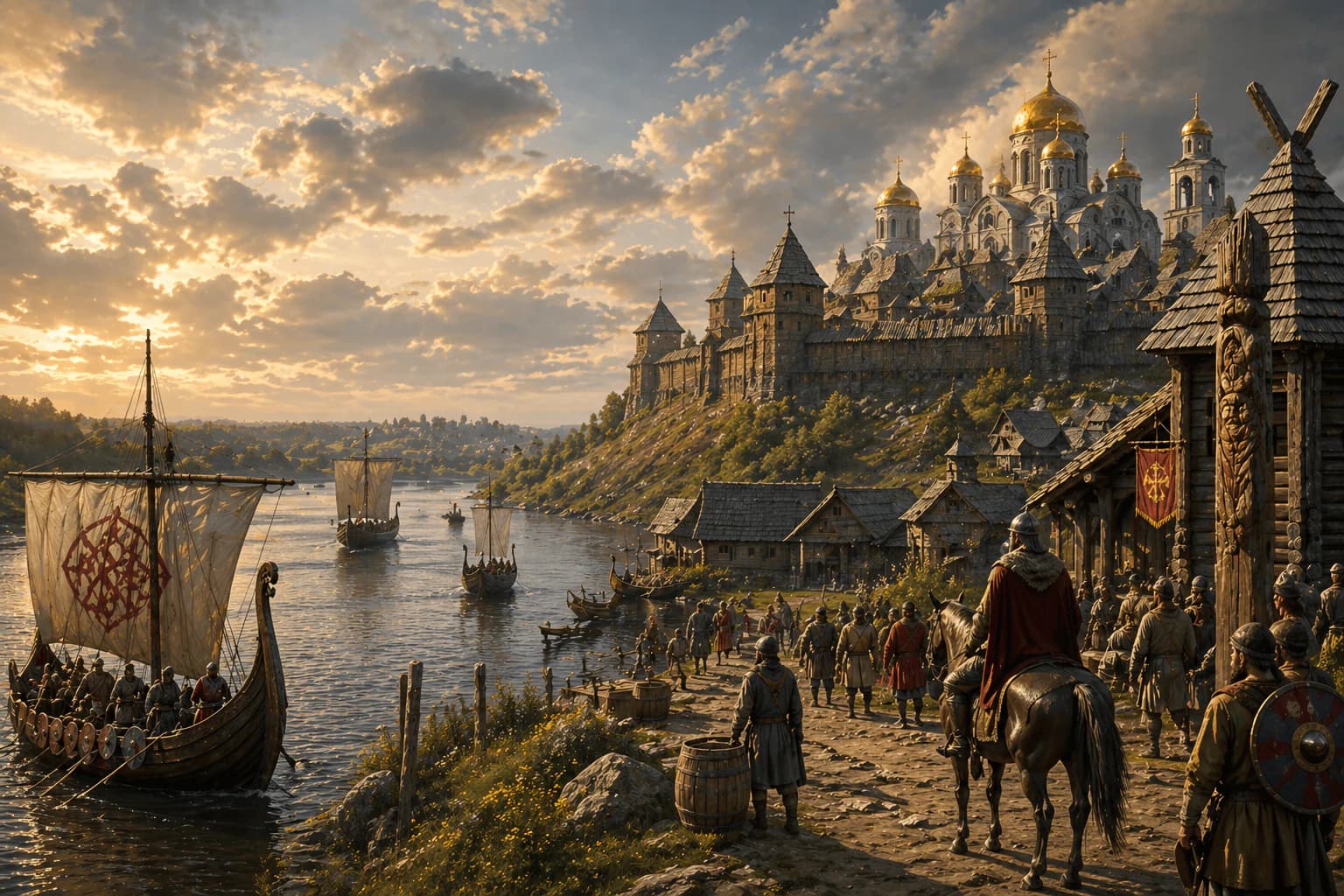
Byzantine descriptions and Rus tradition present Sviatoslav as a starkly martial figure: mobile, austere, and most at home with his army. This image may be stylized, but it matches the broad pattern of his reign. He did not build his reputation through law codes, churches, or court ceremony. He built it through speed, campaigns, and the destruction of rival powers. His famous warning to enemies, remembered as a direct announcement of attack, fits the way later memory shaped him: a ruler whose legitimacy came from movement and battle.

960s

Khazar Campaigns

Sviatoslav's campaign against the Khazar Khaganate was one of the most consequential acts of early Rus history. The Khazars had dominated key steppe and river routes, including access to the Volga and Caspian worlds. By striking Khazar strongholds and disrupting their political infrastructure, Sviatoslav removed a major rival to Rus ambitions. The victory opened opportunities, but it also changed the balance of power. Khazar dominance had acted as a buffer against other steppe peoples. Its collapse left the southern frontier more exposed to new pressures, including the Pechenegs.

967-971

Balkan Ambitions

Sviatoslav's ambitions did not stop at the steppe. Drawn into Balkan politics, he attacked Bulgaria and found the Danube region rich enough to imagine as a new centre of power. That possibility alarmed Byzantium. A Rus ruler established near the lower Danube would threaten imperial interests and unsettle the balance of southeastern Europe. The campaigns brought Sviatoslav into direct conflict with Byzantine Emperor John I Tzimiskes, who defeated him and forced his withdrawal in 971. The episode shows both the range of Rus military power and the difficulty of turning long-distance conquest into stable rule.

968

Kiev Exposed

Sviatoslav's campaigning left Kiev vulnerable. In 968, the Pechenegs besieged the city while Olga and Sviatoslav's children were inside. The crisis forced him to return, but it did not end his appetite for Balkan war. The episode makes the central weakness of his reign clear. His victories expanded Rus horizons, yet his absence strained the political centre that made those victories meaningful. A ruler who defined power through movement could leave the capital dangerously still.

972

Death and Legacy

Sviatoslav died in 972 while returning from his failed Balkan ambitions. The Pechenegs ambushed him near the Dnieper rapids, ending a reign defined by movement, risk, and violence. His death opened rivalry among his sons, including Vladimir, whose later conversion to Christianity would transform Rus in a direction Sviatoslav had resisted. Sviatoslav's legacy is therefore double-edged. He demonstrated that Kievan Rus could intervene across the steppe and the Balkans, but he also showed that expansion without stable governance could pull a realm apart.

Continue in context

Connected stories

Move from the profile into the wider events and settings this figure belongs to.

Tertiary paths

Content note

This profile is written for educational use and connects to related Stories of History pages. The main portrait is an AI-assisted historical reconstruction, included as an illustrative aid rather than documentary evidence. Image policy

References

Sources & Further Reading

Reliable reference works, archives and reading paths connected to this profile.

Further reading

  1. Encyclopaedia Britannica, Search results for Sviatoslav I,” accessed June 2026.Open source
  2. WorldCat, Books and library holdings for Sviatoslav I,” accessed June 2026.Open source

Primary sources

  1. Library of Congress, Search results for Sviatoslav I,” accessed June 2026.Open source

Reviewed claim sources

Loading reviewed claim sources...

A weekly route through history

Find out first about the latest published stories, feature notes and occasional Premium offers in one weekly email.