People

Tariq ibn Ziyad

Tariq ibn Ziyad was a commander associated with the Muslim conquest of Iberia in 711. His crossing near Gibraltar and victory over Visigothic forces helped open the way for al-Andalus.

Role
Military commander

Commander in Iberia (active 711)

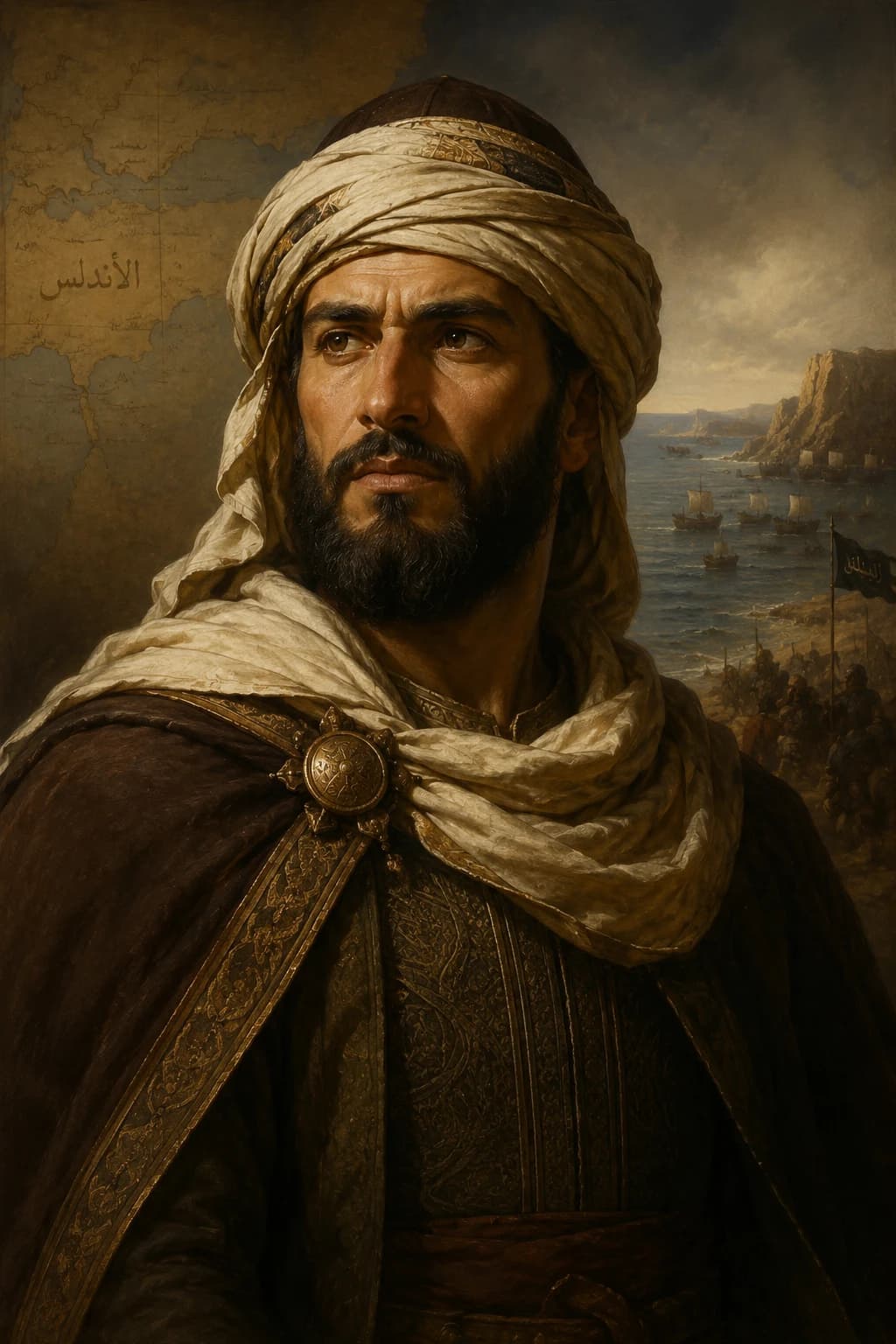
Portrait-style illustration of Tariq ibn Ziyad before a map and ships crossing toward Iberia

Quick answer

Tariq ibn Ziyad was a commander associated with the Muslim conquest of Iberia in 711. His crossing near Gibraltar and victory over Visigothic forces helped open the way for al-Andalus.

Role
Military commander
Years
active 711
Quick facts

Profile details

Additional identity and tagging details that are not already covered in the introduction.

Also known as
Tariq, Tariq ibn Ziyad al-Laythi
Region
North Africa, Iberia, al-Andalus, North Africa and Iberia
Facts

Tariq ibn Ziyad timeline facts

Selected specifics from this profile's life story.

before 711
North African frontier

Tariq ibn Ziyad emerged from the western frontier of the Umayyad world in North Africa.

711
Crossing the strait

In 711, Tariq crossed from North Africa into Iberia with forces that challenged Visigothic rule.

711-714
Toward al-Andalus

The campaign helped create al-Andalus, the Islamic-ruled Iberian world of the Middle Ages.

later memory
A name on the map

Tariq's name endured through Gibraltar and through the memory of Islam's expansion into Europe.

Life Journey

The commander at the threshold of al-Andalus

Follow Tariq's remembered role in the crossing from North Africa into Iberia and the beginning of Muslim rule in much of the peninsula.

Complete chronology

before 711

North African frontier

Tariq ibn Ziyad is associated with the western edge of the early Islamic world, where Umayyad authority had reached across North Africa. His exact origins are debated in the sources, and later traditions often present him as a Berber commander. What matters historically is the frontier setting. North Africa was not simply a distant province. It became the launch point for movement across the narrow strait into Iberia, where Visigothic politics were unstable and opportunity opened quickly.
711

Crossing the strait

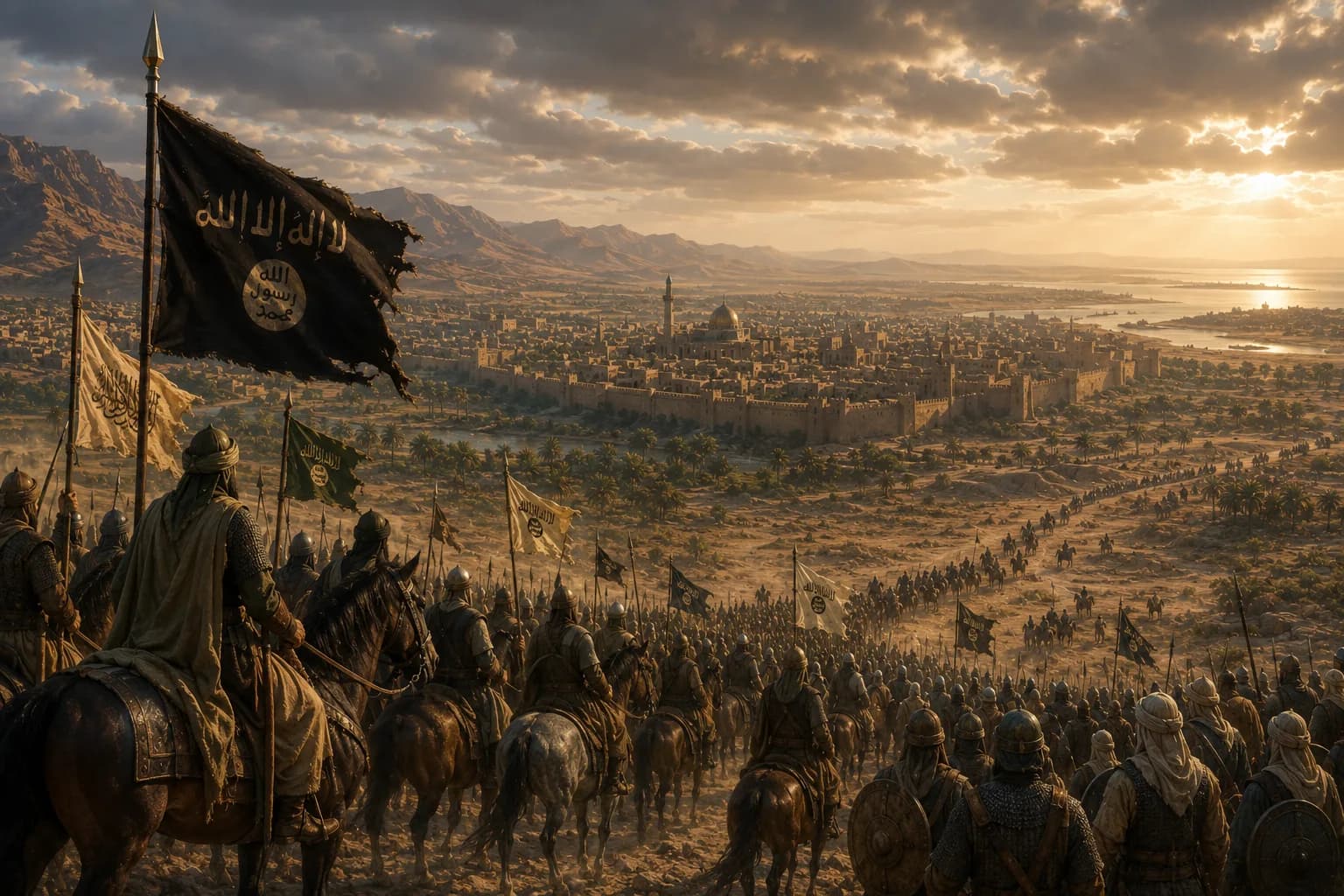
In 711, Tariq crossed the strait into Iberia. The place later known as Gibraltar preserves his name through Jabal Tariq, the mountain of Tariq. The crossing became one of the emblematic moments in the westward expansion of Muslim rule. It was not the movement of an entire civilisation in a single moment, but a military opening that connected North Africa to the politics of the Iberian Peninsula. Once made, that opening proved difficult to close.

711

Defeat of Visigothic power

Tariq's campaign is linked to the defeat of Visigothic forces under King Roderic, often associated with the Battle of Guadalete. The sources are difficult and later storytelling shaped the memory of events, but the outcome is unmistakable. Visigothic central power collapsed rapidly in much of Iberia. Local deals, elite rivalries, military momentum and the arrival of further commanders all helped turn a raid or expedition into conquest.

711-714

Toward al-Andalus

After Tariq's crossing, Muslim rule spread across much of the Iberian Peninsula. The new political world became known as al-Andalus. It did not erase Iberia's older societies, languages or religious communities, but it transformed their political setting. Cities, landholding, taxation, military command and cultural exchange developed within a western Islamic framework. Tariq's personal later career is much less clear than the consequences attached to his name.

later memory

A name on the map

Tariq ibn Ziyad's memory endures partly because geography kept his name visible. Gibraltar's Arabic origin as Jabal Tariq linked the commander to a permanent landmark at the entrance to the Mediterranean. Later histories, legends and national memories reshaped his image, sometimes adding dramatic speeches or symbolic acts that are hard to verify. The careful historical point is enough: Tariq became attached to the opening of Iberia to Muslim rule and to the long history of al-Andalus.

Continue in context

Connected stories

Move from the profile into the wider events and settings this figure belongs to.

Tertiary paths

Content note

This profile is written for educational use and connects to related Stories of History pages. Visuals are reviewed for educational context and may include historical images, archival material, or interpretive reconstructions. Image policy

References

Sources & Further Reading

Reliable reference works, archives and reading paths connected to this profile.

Further reading

  1. Encyclopaedia Britannica, Search results for Tariq ibn Ziyad,” accessed June 2026.Open source
  2. WorldCat, Books and library holdings for Tariq ibn Ziyad,” accessed June 2026.Open source

Primary sources

  1. Library of Congress, Search results for Tariq ibn Ziyad,” accessed June 2026.Open source

Reviewed claim sources

Loading reviewed claim sources...

A weekly route through history

Find out first about the latest published stories, feature notes and occasional Premium offers in one weekly email.