People

Spencer Perceval

Spencer Perceval was British Prime Minister from 1809 to 1812. A Tory lawyer and wartime leader, he remains the only British prime minister to have been assassinated in office.

Born
1762 CE
Died
1812 CE
Role
British Prime Minister

British Prime Minister (1762–1812)

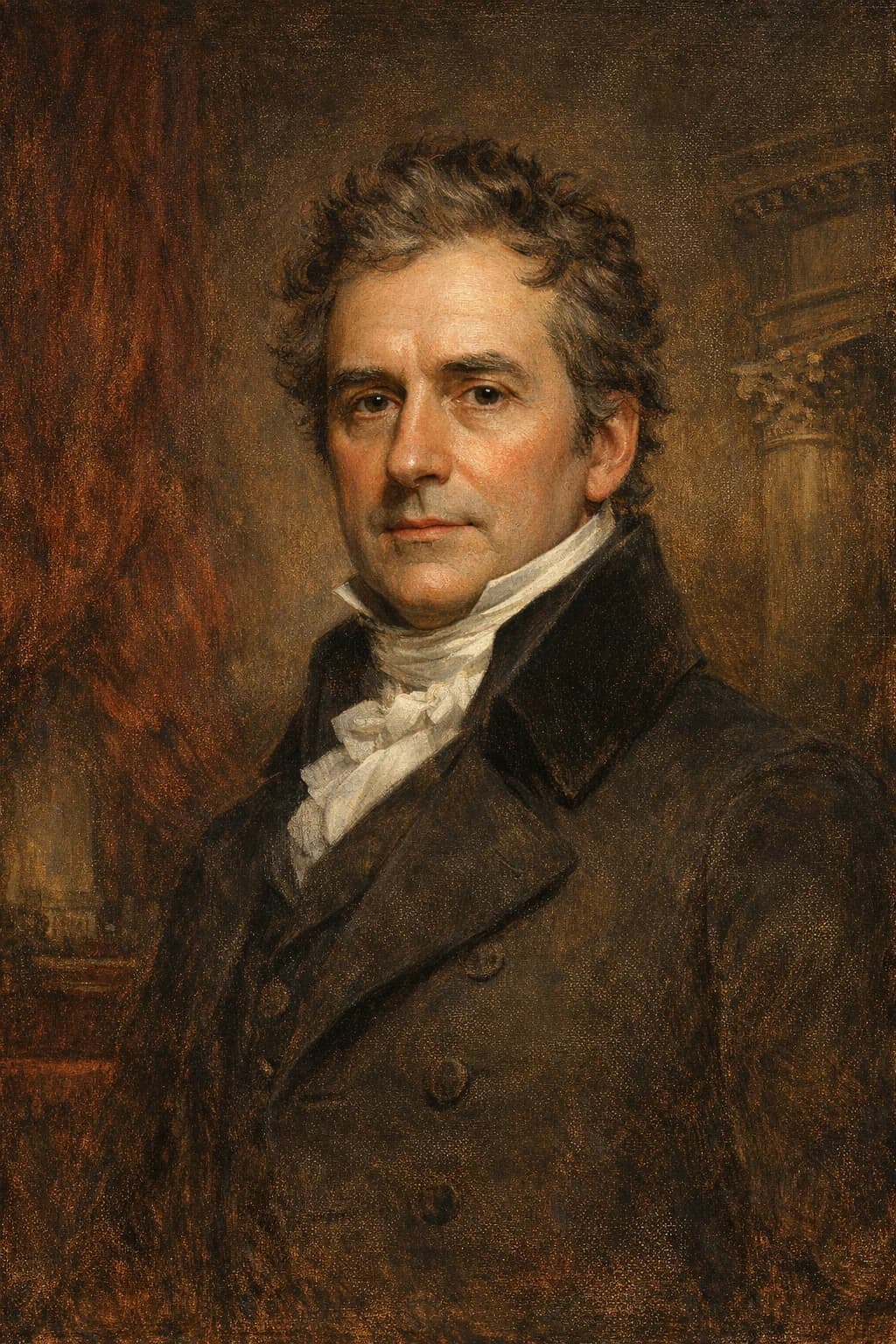
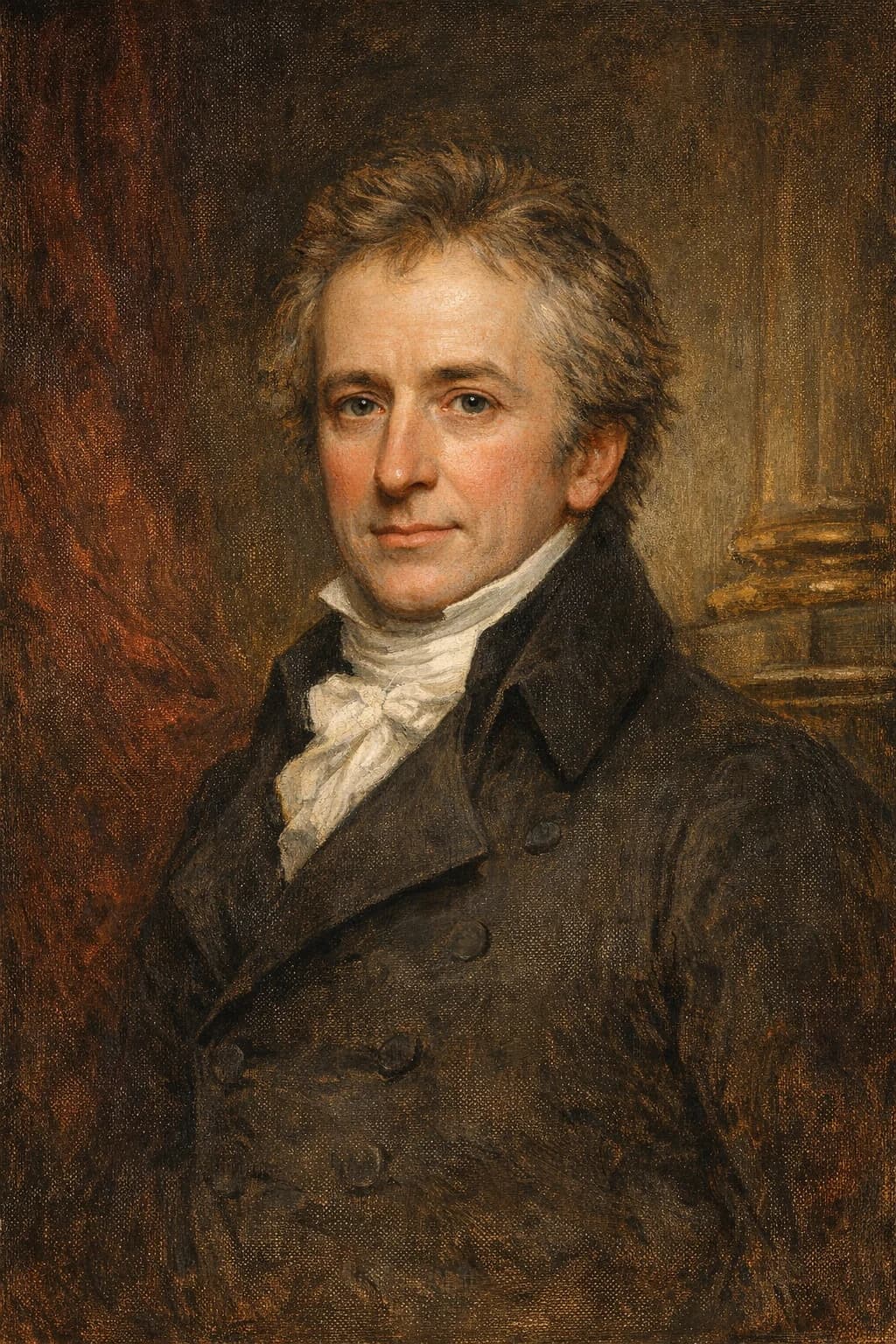
AI-generated portrait of Spencer Perceval in formal Regency-era attire
AI-assisted historical reconstruction

An illustrative reconstruction based on historical context. It is not a photograph or documentary likeness. Image policy

Quick answer

Spencer Perceval was British Prime Minister from 1809 to 1812. A Tory lawyer and wartime leader, he remains the only British prime minister to have been assassinated in office.

Born
1762 CE
Died
1812 CE
Role
British Prime Minister
Years
1762-1812 CE
Quick facts

Profile details

Additional identity and tagging details that are not already covered in the introduction.

Also known as
Prime Minister Perceval, Perceval
Facts

Spencer Perceval timeline facts

Selected specifics from this profile's life story.

1762
Aristocratic beginnings

Spencer Perceval was born in 1762 into an aristocratic but not vastly wealthy family, the younger son of the Earl of Egmont.

1800–1807
Climbing government ranks

As Solicitor General, Attorney General and Chancellor of the Exchequer, he built a reputation for competence, integrity and fierce loyalty to king and constitution.

1812
Mounting tensions

By 1812, Perceval faced parliamentary opposition and public distress, but the danger that killed him came from one man's private grievance.

Post-1812
A unique legacy

Perceval is remembered as a dutiful wartime premier, a Protestant Tory conservative and the only British prime minister assassinated in office.

Life Journey

Law, wartime government, and assassination in Parliament

Follow the story in a more continuous narrative, with a reading mode that matches how much depth you want.

Complete chronology

1762

Aristocratic beginnings

Perceval's birth gave him status, but not effortless security. As a younger son of John Perceval, 2nd Earl of Egmont, he belonged to the governing world of eighteenth-century Britain without inheriting the full independence of a great estate. That position mattered. He needed a profession, and he developed the habits of a man who expected to work within institutions rather than simply preside over them. His upbringing combined Anglican seriousness, Tory loyalty and a strong sense of moral duty. In later politics he could seem narrow, even severe, but his convictions were not decorative. He believed public life should be guided by religion, law, order and resistance to revolutionary upheaval.

1780s

Legal training

Perceval's legal career was central to his public identity. Called to the bar, he became known for diligence, clarity and a formidable command of argument. Law taught him to move from principle to detail, to defend positions under pressure and to treat institutional order as a safeguard against chaos. It also gave him independence before high office. He was not a grand aristocrat playing at politics; he was a professional who had mastered a demanding craft. This legal cast remained visible when he entered government. Perceval preferred tight reasoning to sweeping rhetoric, and he often approached political conflict as if correct constitutional and moral positions could be established by disciplined argument.

1796

Entering Parliament

Perceval entered the Commons at a time when British politics was dominated by fear of French revolutionary ideas, war finance and the defence of monarchy and church. He aligned with the Pittite Tory tradition, opposing radicalism and supporting the war against France. He was not merely a quiet administrator. In debate he could be sharp, moralistic and persistent, especially on questions of constitutional order and religion. His opposition to Catholic emancipation later marked him as a defender of the Protestant constitution, a position admired by many Conservatives and bitterly resented by others. By the early 1800s he had established himself as a serious parliamentary figure: not glamorous, but hard to dismiss.

1800–1807

Climbing government ranks

Perceval's ministerial rise came through offices that demanded technical skill. As Solicitor General and Attorney General, he operated at the intersection of law and politics. As Chancellor of the Exchequer and Leader of the House of Commons, he had to handle wartime finance, parliamentary management and the pressures created by Britain's struggle against Napoleon. He was respected for personal integrity and command of business, though not loved for warmth or imagination. His ascent also reflected crisis. The Duke of Portland's ministry fractured, George III's health remained a constitutional concern, and leading politicians distrusted one another. Perceval became attractive because he was able, loyal and morally dependable in a world of unstable coalitions.

1809

Becoming Prime Minister

Perceval became prime minister after the collapse of the Portland ministry, and his position was never comfortable. He combined the premiership with the Exchequer, a sign both of his ability and of the shortage of trusted alternatives. Britain was locked in the Napoleonic struggle, financing coalitions, supporting the Peninsular War and trying to damage French power through economic pressure. At home, the king's illness led to the Regency crisis, while industrial hardship and trade disruption fed unrest. Perceval did not offer grand reform. He offered continuity, Protestant Tory principle and careful management. To critics, he was limited and rigid. To supporters, he was exactly the steady hand wartime government required.

1810–1812

Economic strain

Perceval's most controversial wartime policy environment centred on economic warfare. Britain's Orders in Council tried to restrict neutral trade with Napoleonic Europe, but they also harmed merchants, manufacturers and workers tied to Atlantic commerce. The policy contributed to tensions with the United States and deepened domestic frustration. Meanwhile, the Regency crisis of 1810-1811 forced Perceval to manage the transfer of royal authority to the Prince Regent while preserving his ministry. He survived politically, but at a cost. His government looked principled and resilient to allies, inflexible and unsympathetic to opponents. The Luddite disturbances and wider hardship showed how war policy reached into workshops, ports and households far from the battlefield.

1812

Mounting tensions

The atmosphere in 1812 was tense, but Perceval's assassin was not the agent of a revolutionary conspiracy. John Bellingham was a merchant who believed the British government had failed to compensate him after imprisonment in Russia. He had petitioned officials repeatedly and developed a fixed grievance against the state. Perceval became, in Bellingham's mind, the embodiment of that refusal. This distinction matters. Perceval was politically controversial, but his murder was not an organised political uprising. It was a personal act of violence made possible by the open physical world of Parliament, where ministers could still move through public spaces with little protection.

1812

Assassinated in Parliament

Perceval's death was sudden, public and shocking. On 11 May 1812, as he entered the lobby of the House of Commons, John Bellingham shot him at close range. Perceval collapsed and died soon afterwards. The location gave the event extraordinary force: the prime minister was killed at the threshold of parliamentary government. Bellingham made little attempt to escape and was quickly arrested. His trial and execution followed within days. The murder stunned Britain not because Perceval had been universally adored, but because assassination seemed alien to the self-image of British constitutional politics. The war continued, the ministry was replaced, and government endured, but the vulnerability of public men had been exposed.

Post-1812

A unique legacy

Perceval's legacy is often reduced to his murder, but his career deserves a fuller view. He led Britain through a difficult phase of the Napoleonic Wars, maintained support for the Peninsular campaign and survived the Regency crisis with his ministry intact. He was also a narrow and divisive figure in important respects: firmly opposed to Catholic emancipation, cautious on reform and committed to policies that imposed real economic pain. Historians therefore judge him less as a visionary than as a capable crisis manager whose life ended before his premiership could fully reveal its direction. The assassination ensures his name remains familiar, but the deeper significance is that he embodied a wartime Tory state under strain: principled, disciplined, embattled and exposed.

Continue in context

Connected stories

Move from the profile into the wider events and settings this figure belongs to.

British Prime Ministers lineage
LineagePrime ministers in sequence
British Prime Ministers
1721 CE–present

Explore British prime ministers from Walpole to the present.

View lineage
Tertiary paths

Content note

This profile is written for educational use and connects to related Stories of History pages. The main portrait is an AI-assisted historical reconstruction, included as an illustrative aid rather than documentary evidence. Image policy

References

Sources & Further Reading

Reliable reference works, archives and reading paths connected to this profile.

Further reading

  1. Encyclopaedia Britannica, Search results for Spencer Perceval,” accessed June 2026.Open source
  2. WorldCat, Books and library holdings for Spencer Perceval,” accessed June 2026.Open source

Primary sources

  1. Library of Congress, Search results for Spencer Perceval,” accessed June 2026.Open source

Reviewed claim sources

Loading reviewed claim sources...

A weekly route through history

Find out first about the latest published stories, feature notes and occasional Premium offers in one weekly email.