People

Robert Jenkinson

Lord Liverpool was Britain's Tory prime minister from 1812 to 1827, leading through the defeat of Napoleon, postwar unrest, Peterloo, the Six Acts, Catholic emancipation debates, and the first cautious moves toward economic liberalisation.

Born
1770 CE
Died
1828 CE
Role
Tory Prime Minister

Tory Prime Minister (1770–1828)

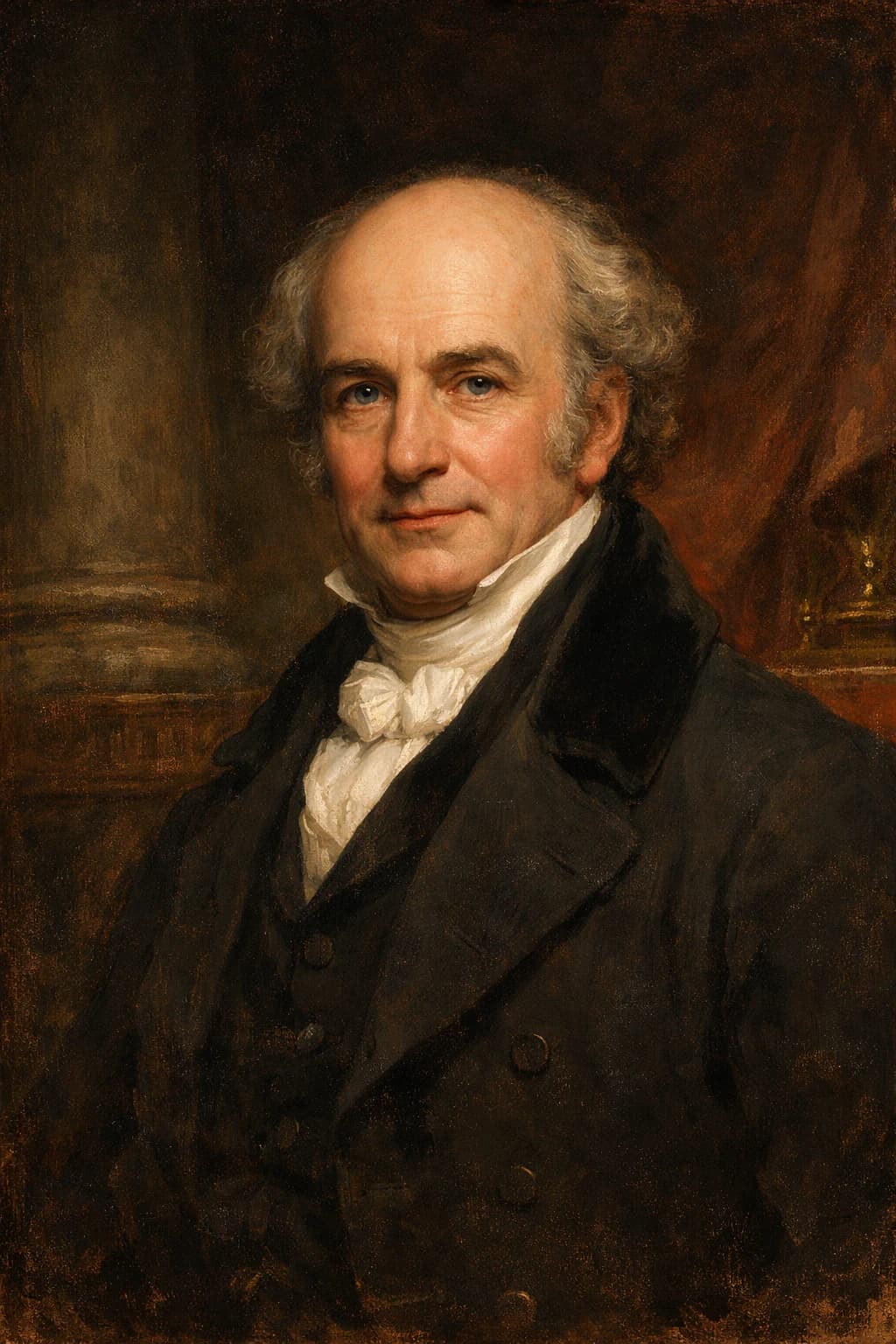
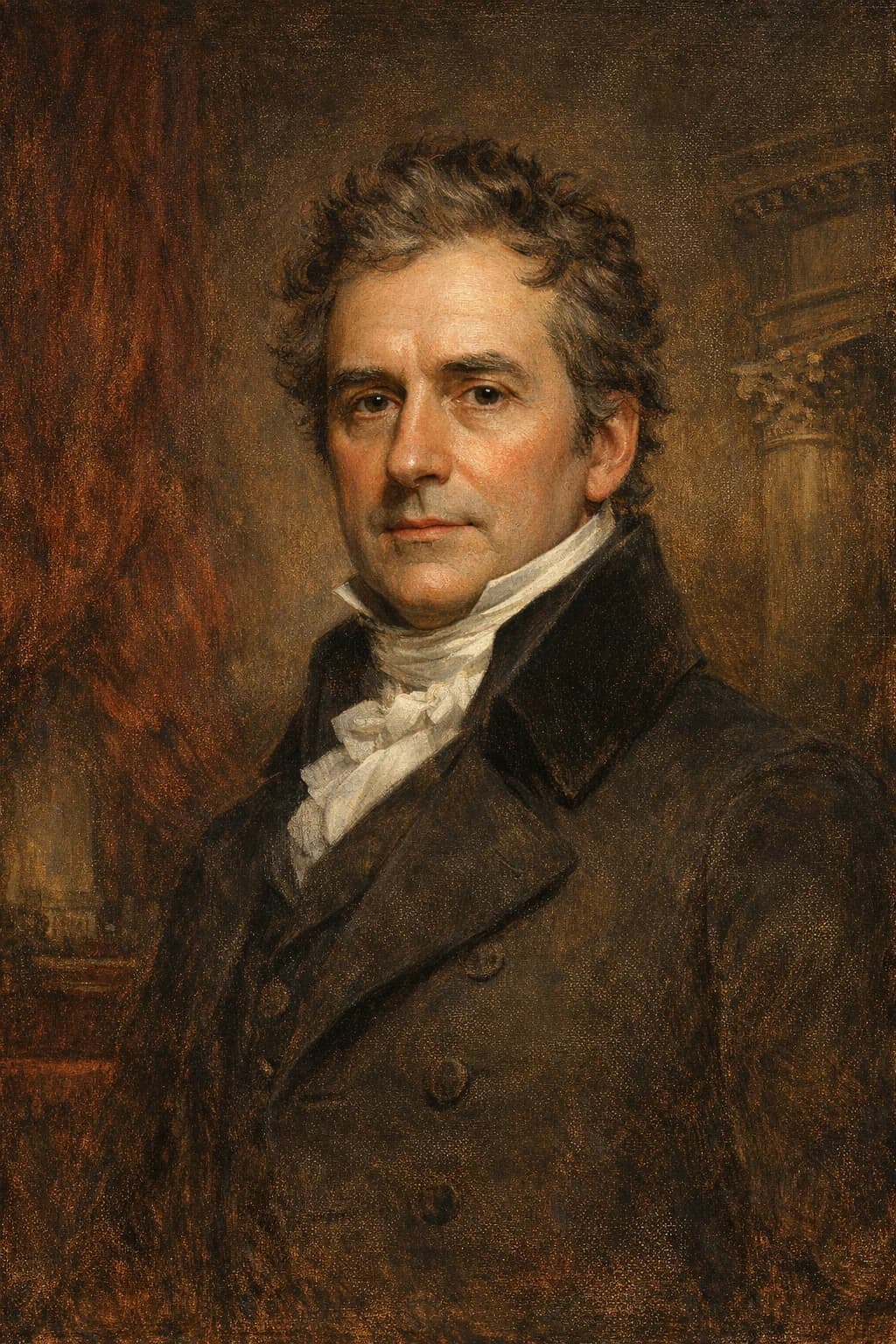
AI-generated portrait of Lord Liverpool in formal Regency-era attire
AI-assisted historical reconstruction

An illustrative reconstruction based on historical context. It is not a photograph or documentary likeness. Image policy

Quick answer

Lord Liverpool was Britain's Tory prime minister from 1812 to 1827, leading through the defeat of Napoleon, postwar unrest, Peterloo, the Six Acts, Catholic emancipation debates, and the first cautious moves toward economic liberalisation.

Born
1770 CE
Died
1828 CE
Role
Tory Prime Minister
Years
1770-1828 CE
Quick facts

Profile details

Additional identity and tagging details that are not already covered in the introduction.

Full name
Robert Jenkinson, 2nd Earl of Liverpool
Also known as
Lord Liverpool, Earl of Liverpool, 2nd Earl of Liverpool
Facts

Robert Jenkinson timeline facts

Selected specifics from this profile's life story.

1770
Political upbringing

Robert Jenkinson was born in 1770 into a political family, giving him early access to the elite world that governed Georgian Britain.

1812
Becomes prime minister

Liverpool became prime minister in 1812 after Spencer Perceval's assassination, inheriting war, debt and political uncertainty.

1819
Peterloo response

After the Peterloo Massacre in 1819, Liverpool's government backed the Six Acts, tightening controls on meetings, arms and radical publishing.

1828 and beyond
Legacy debated

Lord Liverpool is remembered as a steady wartime and postwar prime minister whose defence of order delayed, but could not prevent, reform.

Life Journey

A premiership shaped by war, fear, and fragile peace

Follow the story in a more continuous narrative, with a reading mode that matches how much depth you want.

Complete chronology

1770

Political upbringing

Robert Banks Jenkinson, later 2nd Earl of Liverpool, was born in 1770 into a family already close to power. His father, Charles Jenkinson, 1st Earl of Liverpool, was an influential adviser and officeholder, linking the young Robert to the machinery of government from childhood. Educated at Charterhouse and Christ Church, Oxford, he belonged to the governing class of late Georgian Britain: aristocratic, Anglican, cautious and trained to see order as a public good. This background did not make him a dramatic political visionary. It made him something more useful to his age: a disciplined administrator shaped by war, revolution abroad and fear of instability at home.
1790s

Entry into politics

Jenkinson entered Parliament in 1790, just as the French Revolution was turning European politics into an argument about monarchy, liberty, violence and social order. Britain was not immune to that shock. Reform societies, wartime taxation, naval power, food prices and fears of French invasion all shaped political debate. Jenkinson aligned with the Pittite and Tory world that believed stability had to be defended before reform could be considered. He was not famous for thunderous rhetoric. His value lay in reliability, detail and loyalty. Those qualities helped him rise in governments that needed men who could hold offices under pressure rather than simply ornament debate.

1800–1812

Rise to office

Liverpool's rise was gradual but substantial. He served as Foreign Secretary, Home Secretary, and Secretary of State for War and the Colonies before reaching the premiership. These were not ceremonial stepping stones. They exposed him to diplomacy, security, war administration, Ireland, colonial policy and the management of a state fighting Revolutionary and Napoleonic France. He gained a reputation as calm, conservative and competent. In a political culture still shaped by aristocratic connection, competence mattered because war magnified every weakness. Liverpool's later authority rested on this accumulation of experience: he knew the departments, the personalities and the limits of what government could force through Parliament.

1812

Becomes prime minister

Liverpool became prime minister in June 1812, after the assassination of Spencer Perceval left the government stunned and unstable. Britain was still at war with Napoleon, still financing coalitions, still defending empire and trade, and still struggling with domestic hardship. Liverpool's task was not to dazzle the country with a new ideological programme. It was to keep a wartime government together long enough to win. His style suited that need. He balanced factions, managed the prince regent and cabinet colleagues, and allowed talented ministers room to operate. The result was a premiership built on steadiness rather than personal charisma.

1815

Victory over Napoleon

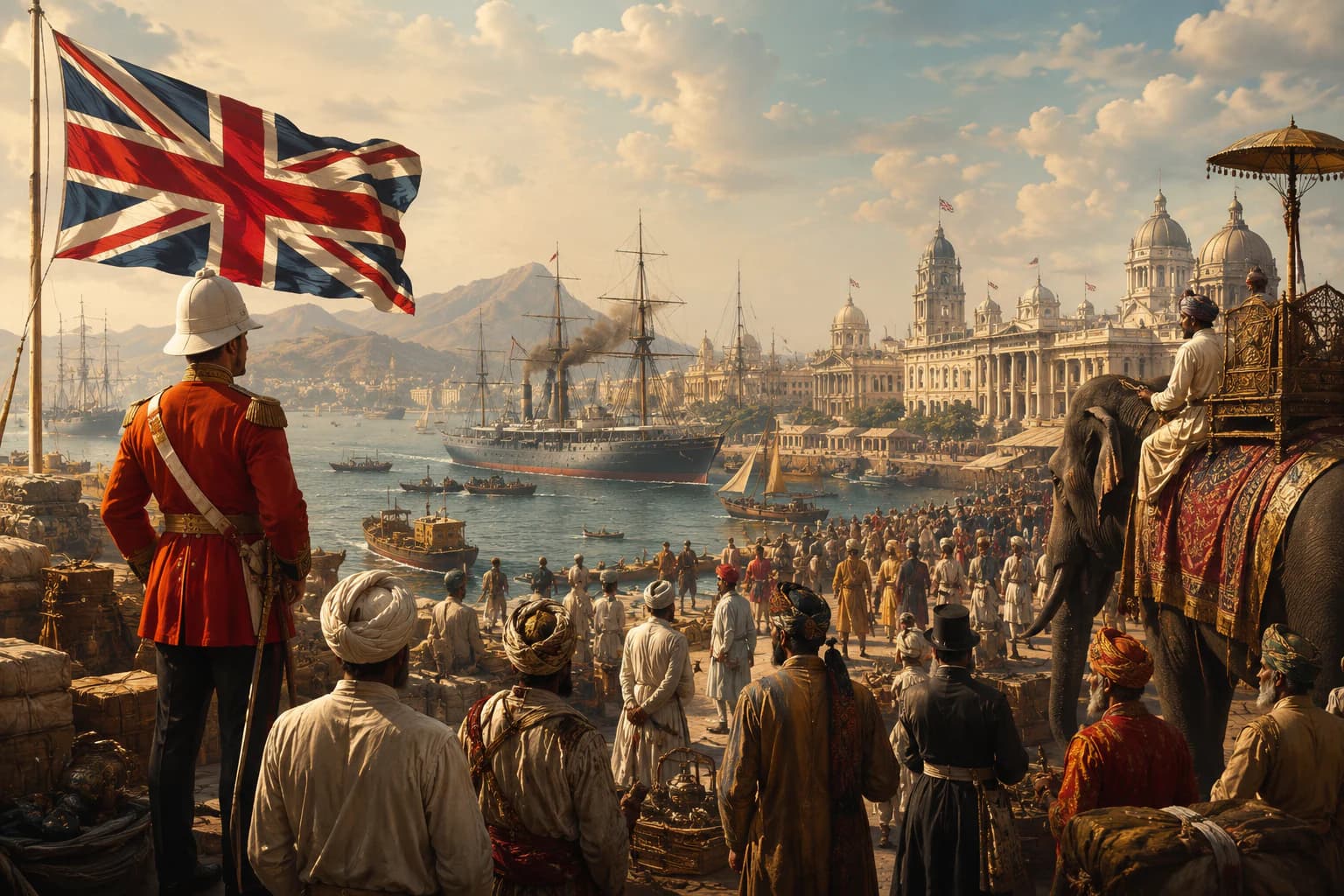
Liverpool's government presided over Britain's decisive role in Napoleon's defeat. Wellington's campaigns in the Peninsula, coalition warfare in Europe, naval supremacy and British finance all contributed to the outcome. After Napoleon's first abdication in 1814 and final defeat at Waterloo in 1815, Britain emerged with enormous prestige but also enormous problems. Peace brought demobilisation, unemployment, debt and pressure on agriculture and industry. Liverpool supported a European settlement aimed at preventing another revolutionary or Napoleonic war, but he also had to govern a society whose wartime sacrifices had not produced immediate comfort. Victory was real; so was postwar distress.

1815–1819

Postwar unrest

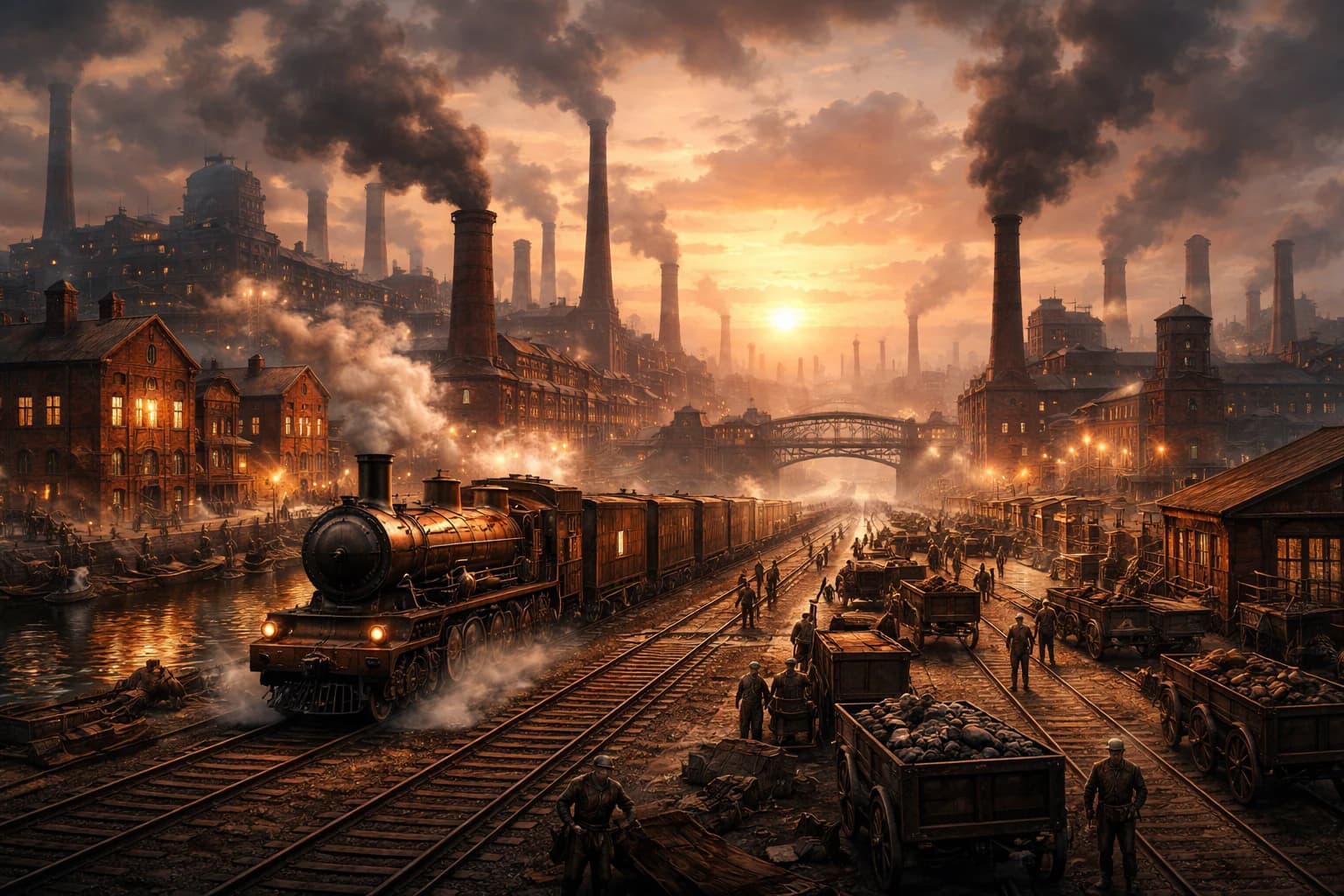
The postwar years exposed the cost of victory. Soldiers and sailors returned to a weak labour market, wartime industries contracted, and the Corn Laws of 1815 protected landowners while keeping bread politically explosive. Industrial towns such as Manchester had grown faster than the old representative system could absorb. Reformers demanded wider representation, cheaper government and relief from hardship. Liverpool and many ministers read these movements through the memory of the French Revolution. Some protests were peaceful; some radicals used threatening language; the government tended to treat both as signs of possible disorder. His caution kept the state firm, but it also made reformers feel unheard.

1819

Peterloo response

Peterloo became the darkest domestic symbol of Liverpool's premiership. On 16 August 1819, a huge reform meeting at St Peter's Field in Manchester was broken up by local cavalry, causing deaths and many injuries. Liverpool was not on the field, but his government defended the magistrates and responded with the Six Acts, laws restricting large meetings, drilling, weapons, seditious publications and speedy trial procedure. Supporters saw the measures as necessary protection against insurrection. Critics saw repression of legitimate political grievance. The episode fixed Liverpool in reform memory as a guardian of order at the expense of liberty, even though his government later showed more flexibility in economic policy.

1827

Health and resignation

Liverpool's later government was not simply reactionary. With ministers such as George Canning, William Huskisson and Robert Peel, it moved cautiously toward commercial liberalisation, legal reform and administrative modernization. The so-called liberal Tory phase reduced some trade barriers and softened parts of the penal code, while Catholic emancipation remained unresolved and divisive. Liverpool's great skill was holding together men who did not always agree about the future of Toryism. In February 1827, he suffered a severe stroke and could no longer continue. His resignation ended one of the longest continuous premierships in British history and opened a succession struggle that fractured the Tory party.

1828 and beyond

Legacy debated

Lord Liverpool died in 1828, only a year after leaving office. His legacy is easy to underestimate because he lacked the theatrical quality of Pitt, Canning, Wellington or Peel. Yet his importance is considerable. He led Britain through the end of the Napoleonic struggle, managed the transition to peace, held together a long Tory ministry and presided over the first cautious adjustments to a changing economy. The charge against him is also substantial: Peterloo, the Six Acts, resistance to parliamentary reform and a governing instinct that often treated popular pressure as danger before listening to it as politics. To ask why Lord Liverpool was important is to understand Britain between war and reform, when stability looked essential but adaptation was already unavoidable.

Continue in context

Connected stories

Move from the profile into the wider events and settings this figure belongs to.

British Prime Ministers lineage
LineagePrime ministers in sequence
British Prime Ministers
1721 CE–present

Explore British prime ministers from Walpole to the present.

View lineage
Tertiary paths

Content note

This profile is written for educational use and connects to related Stories of History pages. The main portrait is an AI-assisted historical reconstruction, included as an illustrative aid rather than documentary evidence. Image policy

References

Sources & Further Reading

Reliable reference works, archives and reading paths connected to this profile.

Further reading

  1. Encyclopaedia Britannica, Search results for Robert Jenkinson,” accessed June 2026.Open source
  2. WorldCat, Books and library holdings for Robert Jenkinson,” accessed June 2026.Open source

Primary sources

  1. Library of Congress, Search results for Robert Jenkinson,” accessed June 2026.Open source

Reviewed claim sources

Loading reviewed claim sources...

A weekly route through history

Find out first about the latest published stories, feature notes and occasional Premium offers in one weekly email.