People

George Canning

George Canning was a British statesman and Liberal Tory Prime Minister in 1827. As Foreign Secretary he championed Catholic emancipation, backed Latin American independence, and reshaped British diplomacy before dying in office.

Born
1770 CE
Died
1827 CE
Role
Liberal Tory Prime Minister

Liberal Tory Prime Minister (1770–1827)

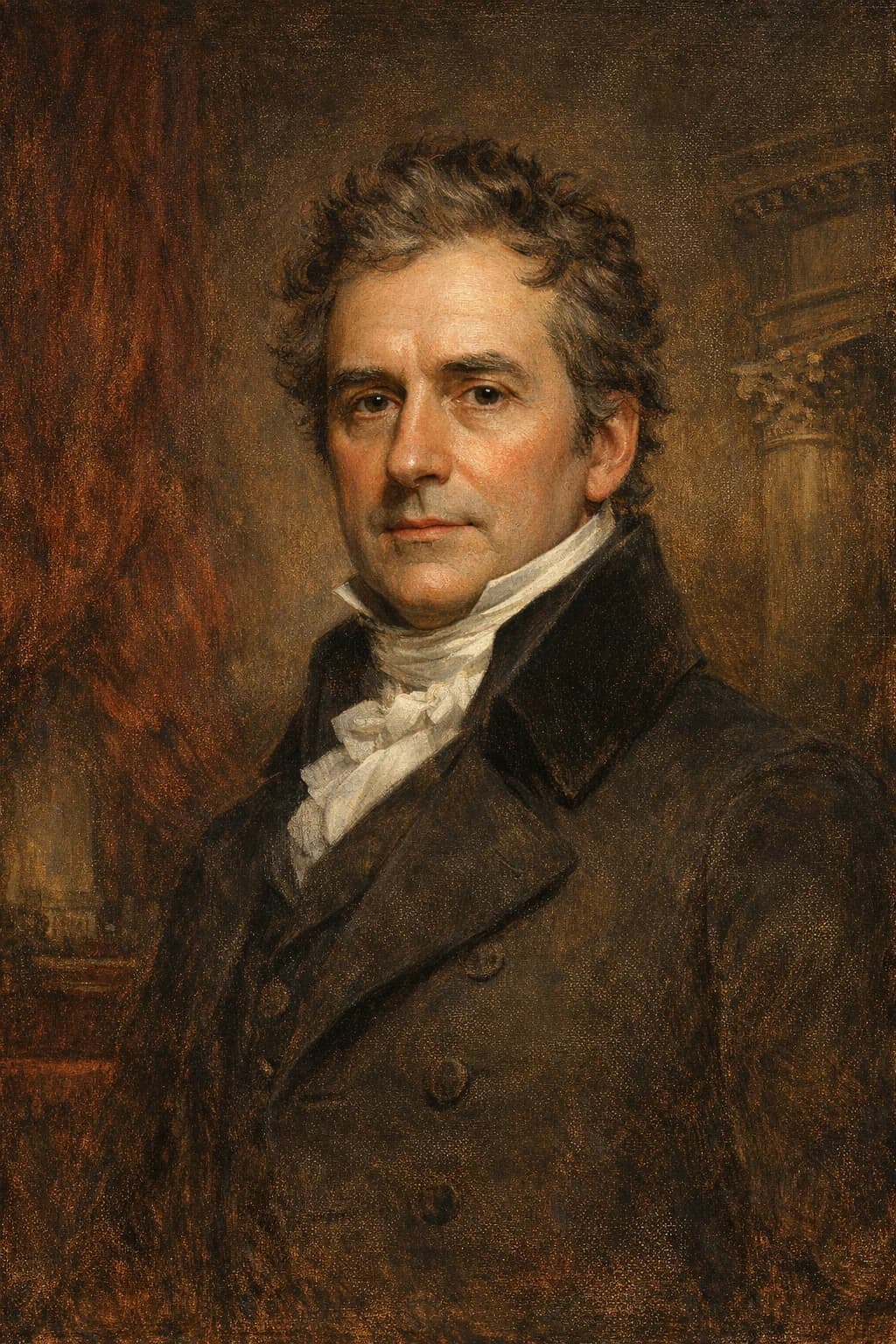
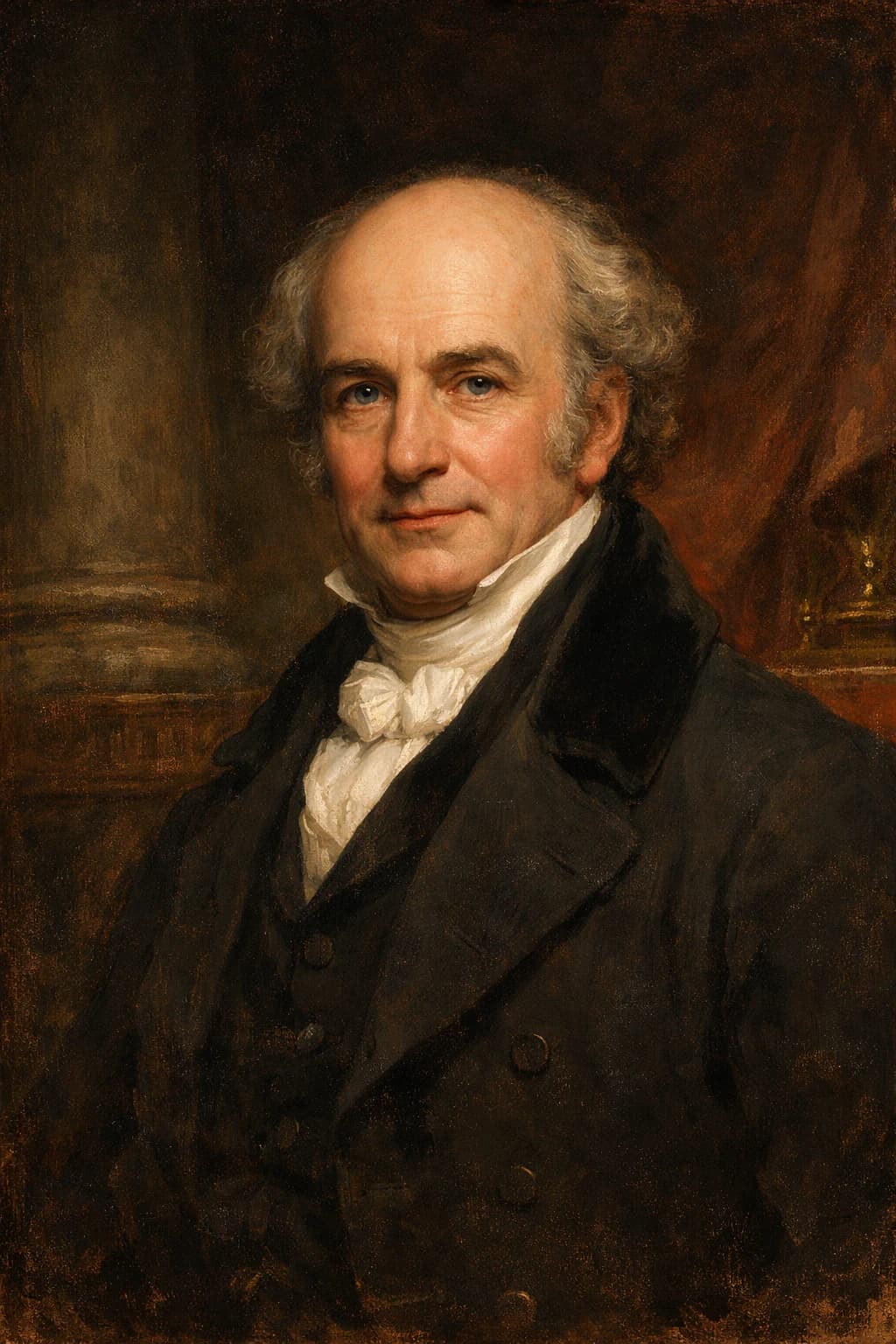
AI-generated portrait of George Canning in formal Regency-era attire
AI-assisted historical reconstruction

An illustrative reconstruction based on historical context. It is not a photograph or documentary likeness. Image policy

Quick answer

George Canning was a British statesman and Liberal Tory Prime Minister in 1827. As Foreign Secretary he championed Catholic emancipation, backed Latin American independence, and reshaped British diplomacy before dying in office.

Born
1770 CE
Died
1827 CE
Role
Liberal Tory Prime Minister
Years
1770-1827 CE
Quick facts

Profile details

Additional identity and tagging details that are not already covered in the introduction.

Also known as
Prime Minister Canning
Facts

George Canning timeline facts

Selected specifics from this profile's life story.

1770
Humble beginnings

George Canning was born into difficult financial circumstances, losing his father early and relying on relatives to support his education and upbringing.

1800s
Rising influence

Canning gained prominence through his speeches and government roles, becoming known for his persuasive style and bold positions on foreign policy.

1820s
Return to power

After years outside top leadership, Canning returned to government and regained influence, especially in shaping Britain’s foreign relations.

1827
Sudden end

He died just months after taking office, leaving behind a reputation for brilliance and unfulfilled potential at the highest level.

Life Journey

A political ascent cut abruptly short

Follow the story in a more continuous narrative, with a reading mode that matches how much depth you want.

Complete chronology

1770

Humble beginnings

George Canning was born in London on 11 April 1770 into insecurity rather than settled power. His father, a failed lawyer and literary struggler, died when Canning was still an infant, leaving his mother Mary Ann in difficult circumstances. Her later work on the stage was socially damaging in the eyes of polite Georgian society, and Canning never entirely escaped the vulnerability of that background. His prospects changed because an uncle, Stratford Canning, paid for his education and opened the path into elite life. That mixture of dependence and brilliance mattered. Canning grew into a politician with extraordinary confidence in speech, but also with a sharp awareness that status had to be won, performed and defended.
1780s

Elite education

At Eton and Christ Church, Oxford, Canning became known for wit, polish and verbal speed. He edited and wrote for the school periodical The Microcosm, learning how satire could wound as well as entertain. His education gave him more than classical fluency. It placed him among future ministers, aristocrats and patrons, teaching him the social grammar of a world into which he had not been securely born. Canning's gift was language under pressure: he could turn argument into performance without losing precision. That talent would carry him far, but it also made enemies. In politics, a brilliant tongue can win a debate and poison a relationship in the same minute.

1793

Entering politics

Canning entered Parliament in 1793 with the support of William Pitt the Younger, at a moment when Britain was at war with Revolutionary France and domestic politics was charged with fear of radicalism. He attached himself to Pittite Toryism, defending order and national security while still carrying a more liberal instinct on questions such as Catholic relief. His early speeches confirmed him as a rare parliamentary performer: clever, cutting and difficult to ignore. He helped found The Anti-Jacobin, a satirical paper that attacked revolutionary ideology with literary bite. This made him valuable to government and dangerous to opponents. Canning rose because he could make politics memorable.

1800s

Rising influence

Canning's rise through office showed the range and limits of his talent. He served at the Board of Control and as Treasurer of the Navy, absorbing the machinery of empire and war finance while sharpening his reputation in the Commons. He was no administrator of dull competence only; he wanted policy to have imagination. The Napoleonic Wars convinced him that Britain had to fight France with naval power, alliances, subsidies and strategic nerve rather than timid reaction. His confidence was attractive to those frustrated by caution, but it also made colleagues wary. Canning did not simply disagree. He often made disagreement feel like humiliation.

1807

Foreign secretary role

Canning became Foreign Secretary in 1807 during the struggle against Napoleon. His first tenure was dramatic. He supported the attack on Copenhagen to seize the Danish fleet before it could fall under French control, a ruthless decision defended as strategic necessity. He also favored active support for resistance to Napoleon in the Iberian Peninsula, seeing Spain and Portugal as openings against French domination. Canning's foreign policy was energetic, maritime and opportunistic. He believed Britain should shape events rather than merely survive them. Yet his aggressiveness collided with cabinet distrust, especially with Lord Castlereagh, whose conduct of war policy Canning judged inadequate.

1809

Political clash

The quarrel with Castlereagh became one of the most damaging episodes of Canning's career. Canning had pressed for Castlereagh's removal from the War Office while continuing to sit with him in cabinet, a maneuver Castlereagh considered dishonorable when he discovered it. In September 1809 the two men fought a duel on Putney Heath; Canning was wounded in the thigh. Both resigned. The affair exposed Canning's weakness as well as his brilliance. He could identify a policy failure and argue fiercely for change, but his handling of colleagues could be secretive, theatrical and personally destructive. For years afterward, the duel shadowed his prospects.

1820s

Return to power

Canning returned to high office gradually, including service as ambassador to Portugal and later as President of the Board of Control. His decisive comeback came in 1822, after Castlereagh's death, when he again became Foreign Secretary and Leader of the House of Commons under Lord Liverpool. This second foreign secretaryship made his historical reputation. Canning recognized the independence of new Latin American republics, not from pure idealism but because it served British trade, checked Spanish restoration and limited French influence. He also supported Greek independence cautiously while trying to preserve European balance. His diplomacy was liberal in tone, national in interest and unusually alive to the wider Atlantic world.

1827

Prime ministership

When Lord Liverpool was incapacitated in 1827, Canning became Prime Minister. The appointment split the Tory party. Ultra-Tories distrusted his support for Catholic emancipation and disliked the social and ideological looseness they associated with him. Several leading figures refused to serve, forcing Canning to build a fragile coalition with Whigs and moderate Tories. His premiership therefore signaled a realignment before he had time to govern. He entered office exhausted by years of work and factional struggle, then fell ill almost immediately. The office he had pursued for decades became less a platform than a race against his failing body.

1827

Sudden end

Canning died on 8 August 1827, after only 119 days as prime minister. His death left British politics unsettled and opened the way to the brief Goderich ministry, then Wellington. His legacy does not rest on Downing Street so much as on the kind of Toryism he represented: anti-Jacobin in youth, but open to Catholic emancipation, commercial expansion and a foreign policy that treated the post-Napoleonic world as fluid rather than frozen. Critics saw vanity, intrigue and dangerous brilliance. Admirers saw eloquence joined to strategic imagination. To ask why George Canning was important is to see how British conservatism contained a liberal, international current before the old Tory coalition broke apart.

Continue in context

Connected stories

Move from the profile into the wider events and settings this figure belongs to.

British Prime Ministers lineage
LineagePrime ministers in sequence
British Prime Ministers
1721 CE–present

Explore British prime ministers from Walpole to the present.

View lineage
Tertiary paths

Content note

This profile is written for educational use and connects to related Stories of History pages. The main portrait is an AI-assisted historical reconstruction, included as an illustrative aid rather than documentary evidence. Image policy

References

Sources & Further Reading

Reliable reference works, archives and reading paths connected to this profile.

Further reading

  1. Encyclopaedia Britannica, Search results for George Canning,” accessed June 2026.Open source
  2. WorldCat, Books and library holdings for George Canning,” accessed June 2026.Open source

Primary sources

  1. Library of Congress, Search results for George Canning,” accessed June 2026.Open source

Reviewed claim sources

Loading reviewed claim sources...

A weekly route through history

Find out first about the latest published stories, feature notes and occasional Premium offers in one weekly email.