People

Frederick Robinson

Frederick Robinson, Viscount Goderich, was British Prime Minister in 1827-1828. A capable minister but weak premier, he resigned before Parliament met and later served as Earl of Ripon.

Born
1782 CE
Died
1859 CE
Role
Prime Minister of the United Kingdom

British Prime Minister (1782–1859)

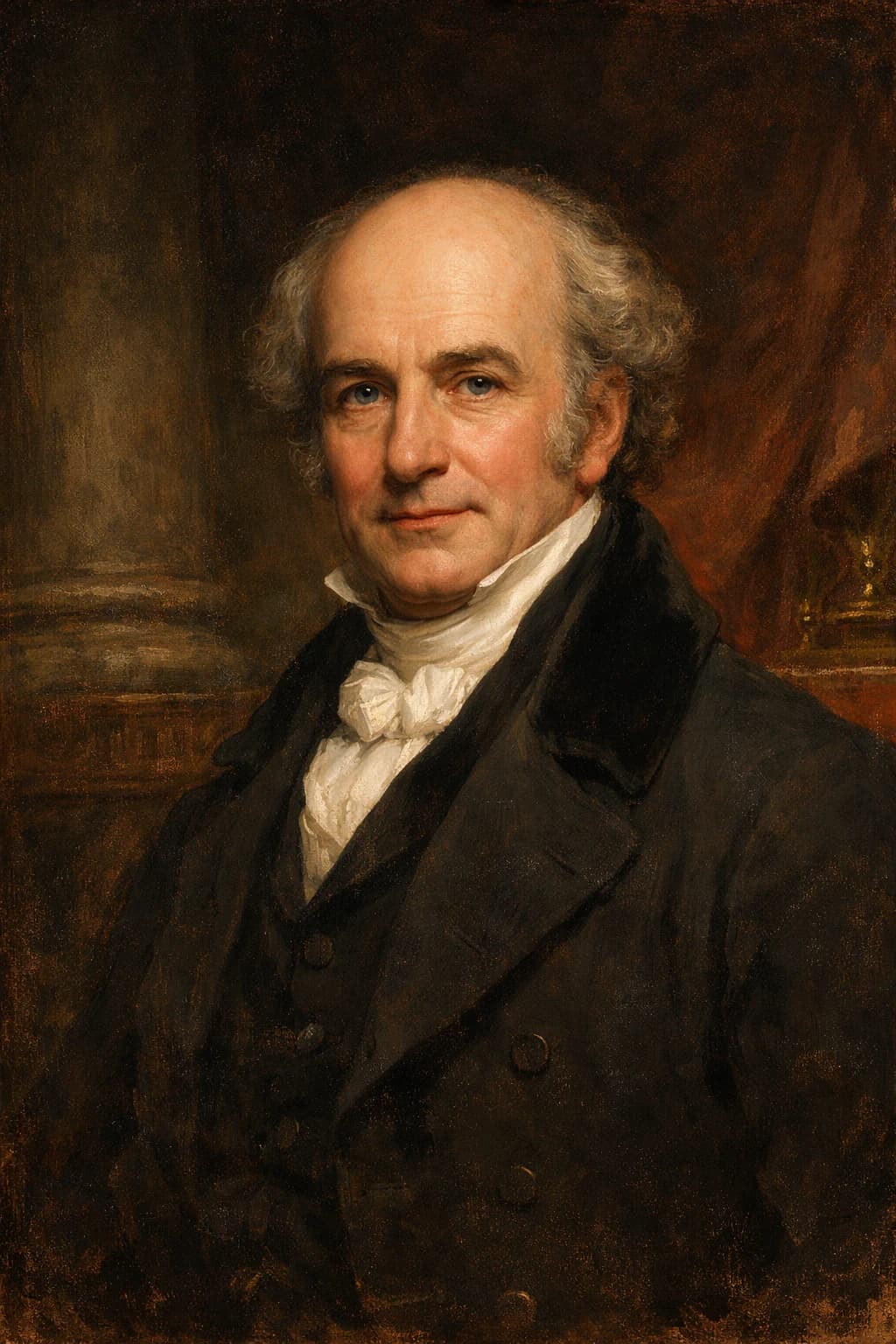
AI-generated portrait of Viscount Goderich in formal Regency-era attire
AI-assisted historical reconstruction

An illustrative reconstruction based on historical context. It is not a photograph or documentary likeness. Image policy

Quick answer

Frederick Robinson, Viscount Goderich, was British Prime Minister in 1827-1828. A capable minister but weak premier, he resigned before Parliament met and later served as Earl of Ripon.

Born
1782 CE
Died
1859 CE
Role
Prime Minister of the United Kingdom
Years
1782-1859 CE
Quick facts

Profile details

Additional identity and tagging details that are not already covered in the introduction.

Full name
Frederick Robinson, Viscount Goderich
Also known as
Viscount Goderich, Lord Goderich, Frederick John Robinson
Facts

Frederick Robinson timeline facts

Selected specifics from this profile's life story.

1782
Privileged beginnings

Frederick Robinson was born into a well-connected political family, giving him early access to influence and opportunity within British public life.

1810s–1820s
Financial expertise

He became known for his work in financial policy, helping manage Britain’s economy during a period of post-war adjustment.

1827–1828
Government collapse

His government quickly fell apart as internal disagreements intensified, forcing him to resign after only a short time in office.

1859
A fleeting premiership

Robinson is remembered for his unusually short time as prime minister and his role as a cautious figure in British political life.

Life Journey

A career shaped by caution, compromise, and a fleeting premiership

Follow the story in a more continuous narrative, with a reading mode that matches how much depth you want.

Complete chronology

1782

Privileged beginnings

Frederick John Robinson was born on 1 November 1782 into a family with the connections, land and expectations that eased entry into Georgian public life. He was not a political outsider trying to break a closed system. He belonged to the world of patronage, kinship and parliamentary management that supplied Britain with many of its ministers. That background gave him access, but it also shaped his instincts. Robinson learned politics as a craft of balance, loyalty and advancement inside existing institutions. He would become useful because he was intelligent, courteous and administratively able. He would become vulnerable because the same habits made him hesitant when a divided government required forceful command.
1790s–1800s

Elite education

Robinson passed through Harrow and St John's College, Cambridge, a route that trained young men for Parliament as much through manners and networks as through books. His education placed him among the sons of the governing elite at a moment when Britain was fighting revolutionary and Napoleonic France. Public service meant managing war finance, trade, empire and domestic strain. Robinson's later reputation for fiscal and administrative competence did not come from theatrical brilliance. It came from a mind comfortable with detail, procedure and negotiation. In an age when many political careers rested on family introduction, he made himself more than well born: he became useful.

1806

Entering Parliament

Robinson entered the House of Commons in 1806, during a period when party labels were looser than modern ones but loyalty still mattered intensely. He attached himself to the Tory administrations that dominated wartime government and learned the machinery of office through junior posts. His value lay in reliability. He was not a mass politician, not a popular tribune and not a figure who frightened colleagues with ideological schemes. He understood paperwork, committees, revenue and the personal diplomacy of cabinet politics. That made him a natural servant of government in a state expanding its fiscal and imperial reach during and after the Napoleonic Wars.

1810s–1820s

Financial expertise

Robinson's reputation was made in the practical departments of government. As President of the Board of Trade and later Chancellor of the Exchequer, he worked in the difficult aftermath of war, when Britain faced debt, pressure for tax relief, industrial change and unrest among workers and farmers. He supported a cautious easing of trade restrictions and became associated with the more liberal Tory current around Lord Liverpool and George Canning. His budgets were not revolutionary, but they showed the early nineteenth-century shift away from wartime controls toward freer commerce. Robinson's importance lies partly here: before his famous failure as prime minister, he was a serious minister helping Britain adjust to peace.

1820s

Cabinet prominence

By the 1820s Robinson stood near the center of government. He was trusted by Liverpool, friendly to Canning's reform-minded Toryism, and experienced in questions of trade, finance and colonial administration. Britain was changing around him: Catholic emancipation, parliamentary reform, free trade, slavery and imperial governance were all pressing against older assumptions. Robinson's temperament was conciliatory, and that could be a strength in cabinet. He could soften disputes and keep business moving. But he was not the kind of figure around whom followers naturally rallied. His career had trained him to mediate between stronger men. The premiership would ask him to become one.

1827

Becoming prime minister

The crisis that made Robinson prime minister began with Lord Liverpool's collapse and George Canning's brief, controversial premiership. Canning's death in August 1827 left a government already split between Canningites, old Tories and uneasy Whigs. Robinson, now Viscount Goderich, was chosen because he seemed acceptable enough to hold the coalition together. That was the problem. His appointment expressed exhaustion rather than authority. He inherited men who disagreed over policy, patronage and the direction of Tory politics after Liverpool. The king expected stability, colleagues expected satisfaction, and Goderich expected goodwill to do work that required hard power. From the start, he was prime minister of an arrangement rather than a movement.

1827–1828

Government collapse

Goderich's ministry lasted only from August 1827 to January 1828. Its collapse was not caused by one grand national disaster, but by the accumulation of cabinet quarrels he could not master. Disputes over finance, appointments and the balance between Canningites and Whigs exposed the weakness of his authority. He was personally distressed by the pressure and struggled to impose decisions on men who doubted his command. The result was historically striking: he resigned before his government had faced Parliament. His premiership became the shortest peacetime tenure in British history, a reminder that administrative competence and political leadership are related but not identical skills.

1830s–1840s

Return to service

Goderich's resignation did not end his career. Later elevated as Earl of Ripon, he returned to office under governments with different political colors, including service as Colonial Secretary and Lord Privy Seal. That later usefulness matters because it complicates the joke often made at his expense. He was a failed prime minister, but not a failed public servant. In colonial and administrative work he could again operate through diligence, judgment and negotiation. His career crossed the age of reform, including the years around the Great Reform Act and the abolition of slavery in the British Empire. He remained part of the governing class as it adjusted, often reluctantly, to a changing political nation.

1859

A fleeting premiership

Frederick Robinson died in 1859, remembered chiefly as the prime minister who barely had time to be prime minister. That verdict is memorable but incomplete. His biography shows how nineteenth-century British government depended on capable second-rank ministers whose work in finance, trade and empire mattered even when their names faded. Goderich's failure at the top was real: he could not discipline a divided cabinet or give a fragile coalition a reason to live. Yet his long service before and after 1827 shows a different kind of significance. He was a man built for administration who was briefly asked to embody command. His legacy is therefore not simply comic brevity, but the political lesson that compromise only works when someone has the authority to enforce it.

Continue in context

Connected stories

Move from the profile into the wider events and settings this figure belongs to.

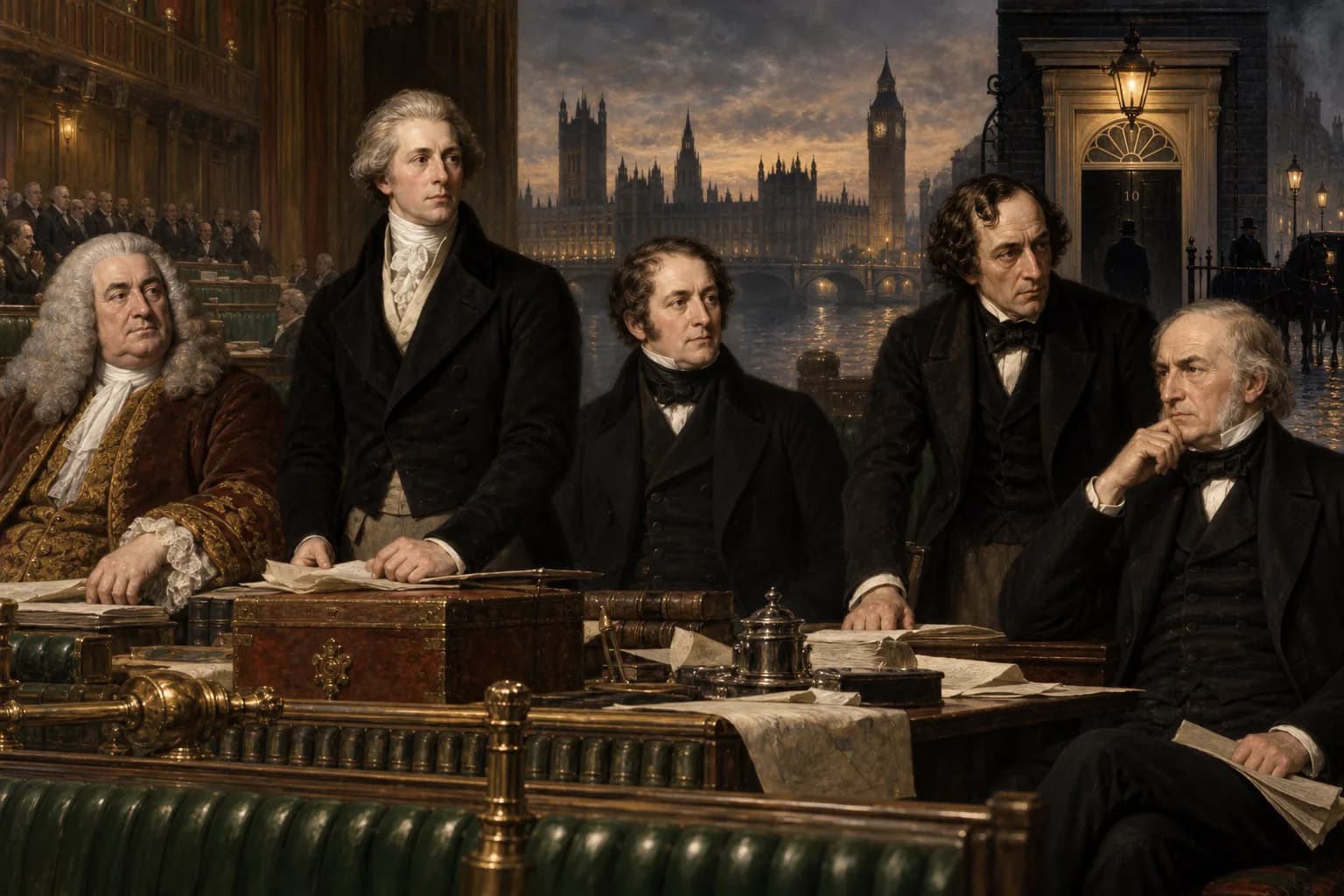
British Prime Ministers lineage
LineagePrime ministers in sequence
British Prime Ministers
1721 CE–present

Explore British prime ministers from Walpole to the present.

View lineage
Tertiary paths

Content note

This profile is written for educational use and connects to related Stories of History pages. The main portrait is an AI-assisted historical reconstruction, included as an illustrative aid rather than documentary evidence. Image policy

References

Sources & Further Reading

Reliable reference works, archives and reading paths connected to this profile.

Further reading

  1. Encyclopaedia Britannica, Search results for Frederick Robinson,” accessed June 2026.Open source
  2. WorldCat, Books and library holdings for Frederick Robinson,” accessed June 2026.Open source

Primary sources

  1. Library of Congress, Search results for Frederick Robinson,” accessed June 2026.Open source

Reviewed claim sources

Loading reviewed claim sources...

A weekly route through history

Find out first about the latest published stories, feature notes and occasional Premium offers in one weekly email.