People

Keir Starmer

Sir Keir Starmer was Labour Prime Minister of the United Kingdom from 2024 to 2026. A former human rights barrister and Director of Public Prosecutions, he became Labour leader in 2020, won the 2024 general election, and left office on 20 July 2026.

Born
1962 CE
Role
British Prime Minister

British Prime Minister (born 1962)

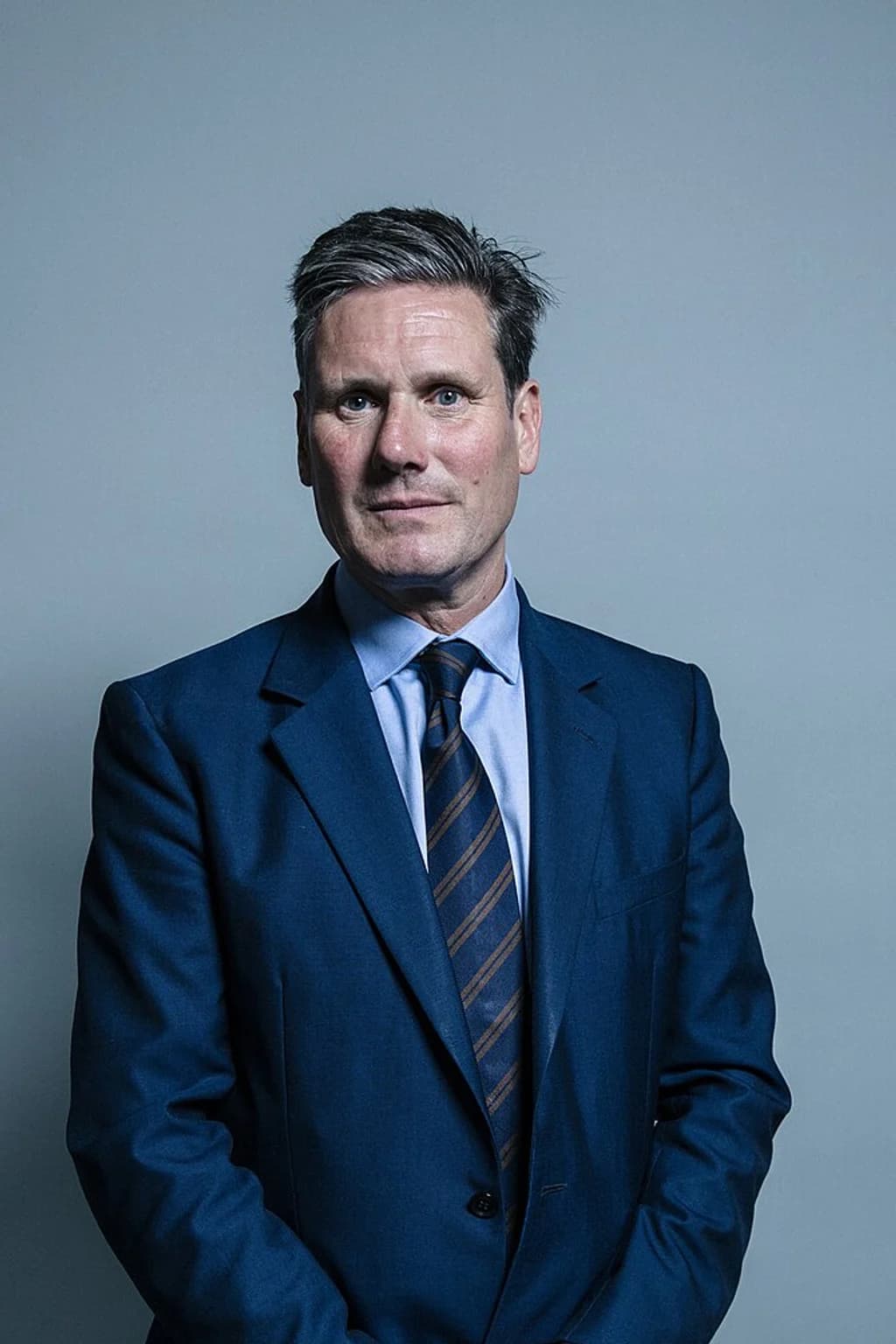
Official portrait photograph of Sir Keir Starmer
Licensed archival image

A real historical or editorial image is used here. Source, licence and transformation details are publicly recorded. Image policy Attribution

Quick answer

Sir Keir Starmer was Labour Prime Minister of the United Kingdom from 2024 to 2026. A former human rights barrister and Director of Public Prosecutions, he became Labour leader in 2020, won the 2024 general election, and left office on 20 July 2026.

Born
1962 CE
Role
British Prime Minister
Years
Born 1962 CE
Quick facts

Profile details

Additional identity and tagging details that are not already covered in the introduction.

Full name
Sir Keir Starmer
Facts

Keir Starmer timeline facts

Selected specifics from this profile's life story.

1962
Working class roots

Keir Starmer was born in London in 1962 and raised in Surrey in a family shaped by skilled work, public service, illness, and Labour loyalties.

2008–2013
Public prosecution role

As Director of Public Prosecutions from 2008 to 2013, Starmer led the Crown Prosecution Service through sensitive cases and public scrutiny.

2024
Election success

Starmer led Labour to victory in July 2024, ending fourteen years of Conservative government and becoming prime minister on 5 July.

After 2026
Post-premiership legacy

Starmer's legacy is still being written, but now rests on why a commanding majority did not turn into durable personal authority.

Life Journey

From courtroom advocacy to national leadership

Follow the story in a more continuous narrative, with a reading mode that matches how much depth you want.

Complete chronology

1962

Working class roots

Keir Starmer's political biography often returns to his parents: a toolmaker father and a nurse mother whose long illness affected family life. He grew up in Oxted, attended Reigate Grammar School as it moved from state grammar to independent status, and became the first in his family to go to university. The details matter because Starmer has built much of his public identity around seriousness, duty, and ordinary work rather than ideological romance. His background was not poverty, but neither was it the effortless security associated with many senior politicians. It gave him a language of respectability, fairness, and public service.


1980s

Legal education

At the University of Leeds, and then at Oxford for postgraduate legal study, Starmer entered the world of constitutional argument, rights, and public law. He was not initially a career politician. His path ran through the courtroom, where evidence, procedure, and disciplined argument mattered more than slogans. This legal formation has remained visible in his politics: cautious language, emphasis on institutions, and a preference for demonstrating competence before offering sweeping promises. Admirers see seriousness and respect for the rule of law. Critics see excessive caution. Both responses begin in the same professional formation.

1990s–2000s

Human rights law

Starmer built a legal reputation through cases that often involved the power of the state, corporate accountability, and individual rights. He worked with campaigners as well as in formal legal settings, including challenges connected to the death penalty abroad and environmental protest. His career was not simply that of a courtroom technician. It placed him in debates about how law protects vulnerable people and restrains authority. That history later complicated attacks on him from both left and right: he could be portrayed as establishment-minded because of high office, yet his earlier legal work had often challenged powerful institutions.

2008–2013

Public prosecution role

Starmer's appointment as Director of Public Prosecutions moved him from advocate to decision-maker. The role required judgements about evidence, public interest, victims, defendants, and trust in the justice system. He oversaw the Crown Prosecution Service during controversies involving assisted dying guidance, sexual abuse prosecutions, public disorder, and media-related cases. No DPP leaves office without criticism, because prosecution is where law meets public anger and human damage. Starmer's knighthood in 2014 recognised services to law and criminal justice, but the deeper political effect was experience: he learned how institutions can fail, and how accountability feels when final decisions carry your name.

2015

Entry into politics

Starmer entered Parliament in 2015, the year Labour lost under Ed Miliband and then chose Jeremy Corbyn as leader. He was immediately part of a party argument about identity, ideology, and electability. As Shadow Brexit Secretary, he became one of Labour's most visible figures during the turmoil after the 2016 referendum. His position had to navigate competing pressures: members who wanted a second referendum, voters in Leave-supporting seats, parliamentary tactics, and the constitutional reality of withdrawal. The role gave him national profile and taught him how unresolved questions can consume a party from within.

2020

Party leadership

Starmer inherited Labour after its worst general election result since 1935. His leadership was defined by recovery: tightening message discipline, shifting policy positions, confronting antisemitism within the party, and distancing Labour from parts of the Corbyn era. This was not painless. Supporters argued he made Labour credible to voters who had abandoned it; critics accused him of retreating from promises made during the leadership contest. The political calculation was clear. Starmer believed Labour could not change the country unless it first became trusted to govern. That made electability the organising principle of his opposition leadership.

2024

Election success

The 2024 general election gave Labour a commanding majority and ended a Conservative era shaped by austerity, Brexit, pandemic government, rapid leadership changes, and economic strain. Starmer's victory was large in seats, though built on a relatively efficient and cautious appeal rather than mass enthusiasm. His campaign promised stability, growth, public service repair, clean energy ambition, and a break from political chaos. The scale of the result gave him authority, but also raised expectations quickly. Winning was the easier half of the transformation he had promised. Governing would test whether discipline in opposition could become delivery in office.

2024–2026

Governing crisis

Starmer entered office with a huge majority but limited fiscal room, public services under pressure, and voters impatient for visible improvement. His government had to balance promises on economic growth, NHS recovery, housing, energy transition, immigration control, workers' rights, and Britain's role abroad. The political challenge was sharpened by the nature of the 2024 mandate: many voters supported Labour to remove the Conservatives rather than out of deep loyalty to Starmer. By mid-2026, disappointing election results and pressure inside Labour had become a leadership crisis. Starmer resigned as prime minister on 20 July 2026, handing power to Andy Burnham after Labour chose a new leader.

After 2026

Post-premiership legacy

It is too early to give Starmer a settled historical verdict. His importance is already clear in one respect: he took Labour from the wreckage of 2019 to government in 2024, proving that party recovery can be rapid when discipline, opponent weakness, and public fatigue converge. The later question is harsher: why that authority proved so difficult to hold after such a large victory. His legacy will depend on what survives of his government's policies on growth, public services, constitutional standards, climate policy, social trust, and Britain's international role, as well as on how historians explain the gap between electoral scale and governing momentum.

Continue in context

Connected stories

Move from the profile into the wider events and settings this figure belongs to.

British Prime Ministers lineage
LineagePrime ministers in sequence
British Prime Ministers
1721 CE–present

Explore British prime ministers from Walpole to the present.

View lineage
Tertiary paths

Content note

This profile is written for educational use and connects to related Stories of History pages. The main portrait uses a real historical or editorial image, with source and licence details recorded for attribution review. Image policy Image attribution

References

Sources & Further Reading

Reliable reference works, archives and reading paths connected to this profile.

Sources used

  1. UK Parliament, Parliamentary career for Sir Keir Starmer,” accessed July 2026.Open source

Further reading

  1. Encyclopaedia Britannica, Search results for Keir Starmer,” accessed June 2026.Open source
  2. WorldCat, Books and library holdings for Keir Starmer,” accessed June 2026.Open source

Primary sources

  1. GOV.UK, Keir Starmer's final speech as Prime Minister: 20 July 2026,” accessed July 2026.Open source
  2. Library of Congress, Search results for Keir Starmer,” accessed June 2026.Open source

Reviewed claim sources

Loading reviewed claim sources...

A weekly route through history

Find out first about the latest published stories, feature notes and occasional Premium offers in one weekly email.