People

Gordon Brown

Gordon Brown was UK Chancellor from 1997 to 2007 and Prime Minister from 2007 to 2010. His career is defined by New Labour economics, the 2008 financial crisis, global education work, and debates over Britain's constitutional future.

Born
1951 CE
Role
British Prime Minister

British Prime Minister (born 1951)

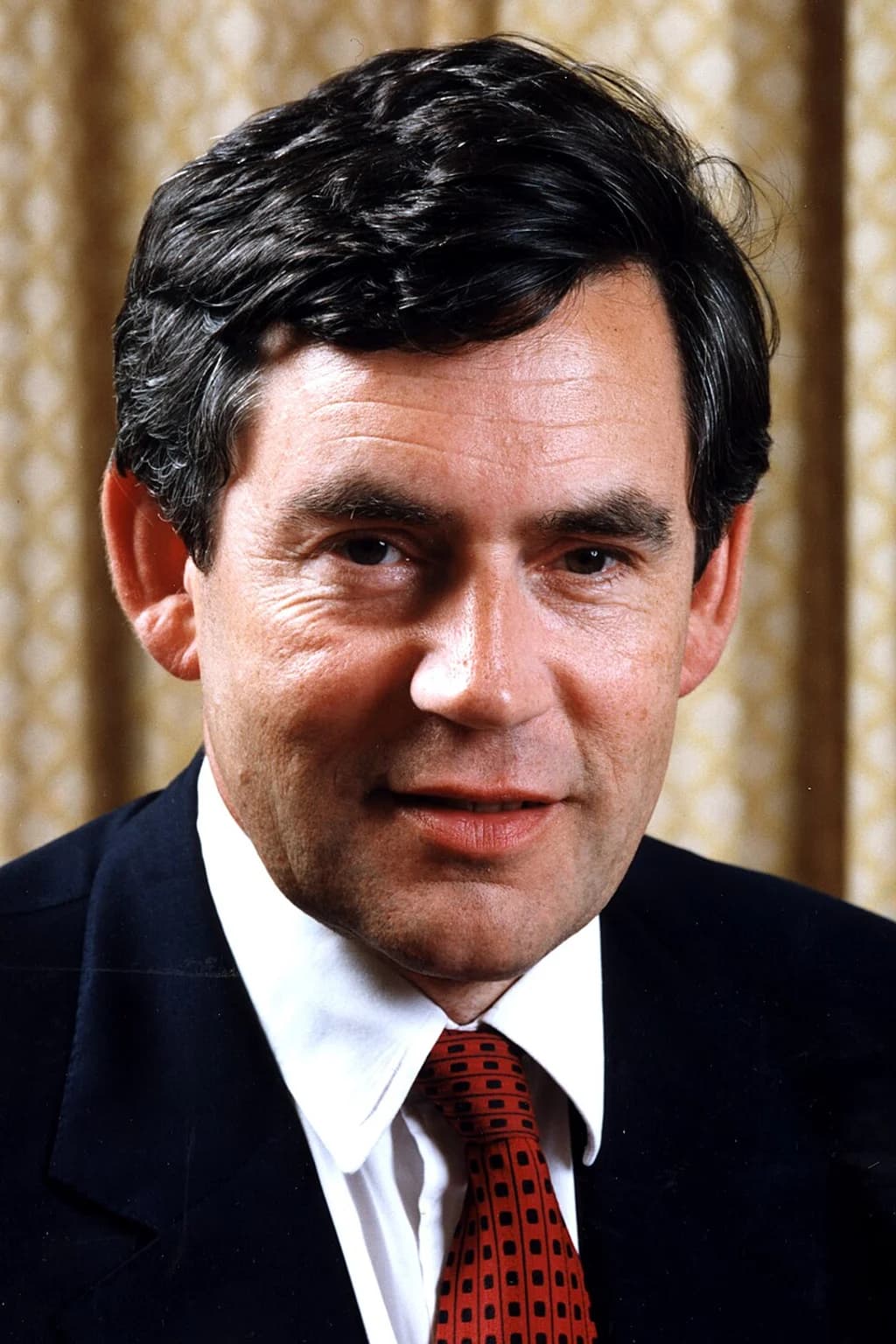
Official portrait photograph of Gordon Brown
Licensed archival image

A real historical or editorial image is used here. Source, licence and transformation details are publicly recorded. Image policy Attribution

Quick answer

Gordon Brown was UK Chancellor from 1997 to 2007 and Prime Minister from 2007 to 2010. His career is defined by New Labour economics, the 2008 financial crisis, global education work, and debates over Britain's constitutional future.

Born
1951 CE
Role
British Prime Minister
Years
Born 1951 CE
Quick facts

Profile details

Additional identity and tagging details that are not already covered in the introduction.

Also known as
Prime Minister Brown, Chancellor Brown
Facts

Gordon Brown timeline facts

Selected specifics from this profile's life story.

1951–1967
Early years

Born in Scotland to a Church of Scotland minister's family, Brown showed exceptional academic promise and entered Edinburgh University unusually young.

1990s
Alliance with Blair

Brown's partnership and rivalry with Tony Blair helped create New Labour, joining electoral appeal to economic credibility before the 1997 victory.

2008–2009
Financial crisis

The 2008 financial crisis dominated Brown's premiership, leading to bank recapitalisation, nationalisations, stimulus measures, and the London G20 summit.

2010–present
Later influence

After leaving Parliament in 2015, Brown remained active on global education, poverty, Scottish constitutional questions, and international financial cooperation.

Life Journey

From intellectual prodigy to crisis-era prime minister

Follow the story in a more continuous narrative, with a reading mode that matches how much depth you want.

Complete chronology

1951–1967

Early years

James Gordon Brown was born in Glasgow in 1951 and grew up in Kirkcaldy, Fife, in a household shaped by Presbyterian duty, books, and public service. His father, John Ebenezer Brown, was a Church of Scotland minister whose sermons and community work left a deep impression on him. Brown's academic talent was obvious early; he entered the University of Edinburgh at sixteen, an acceleration that gave him opportunity but also exposed him to pressure while still very young. A rugby injury and subsequent eye problems added a lasting personal seriousness to his public character. The themes that later dominated his politics — fairness, work, education, and moral obligation — were not campaign inventions. They grew from a Scottish upbringing in which intellect and duty were tightly bound together.


Late 1960s–1970s

Student politics

Brown's university years made him both an intellectual and a political operator. He studied history, later completing a doctorate on the Labour politician James Maxton, and became active in student politics during a period of intense debate about inequality, deindustrialisation, and Britain's place in the world. As rector of the University of Edinburgh, he was not merely rehearsing slogans; he was learning how institutions work, how arguments are won, and how moral language can be attached to practical reform. His early politics combined radical sympathy with a respect for seriousness, evidence, and administrative competence. That mixture would later make him a formidable Treasury figure, but it also encouraged the intensity and impatience that colleagues sometimes found difficult.

1983

Entering Parliament

Brown was elected MP for Dunfermline East in 1983, arriving at Westminster as Labour suffered one of the worst defeats in its history. The party faced a brutal strategic question: hold to older economic certainties or rebuild credibility with voters who associated Labour with inflation, union conflict, and instability. Brown became part of the generation that chose reconstruction. He developed authority through preparation rather than charm, mastering economic briefs and presenting himself as a politician who could make Labour trusted with money again. His rise through shadow Treasury roles reflected that discipline. By the early 1990s, he was one of the party's central figures, not because he softened his belief in social justice, but because he argued it had to be funded and administered credibly.

1990s

Alliance with Blair

The Blair-Brown partnership was one of the engines of New Labour. Blair supplied public ease, constitutional imagination, and a language of modernisation that reached beyond Labour's traditional base. Brown supplied economic discipline, party weight, and a moral argument about opportunity and poverty. Their shared project reassured voters that Labour had changed, while promising that market economics could be harnessed for social ends. Yet the relationship was never simple. Brown had his own claim to leadership after John Smith's death in 1994, and the informal understandings around succession became a source of lasting bitterness. The alliance won power magnificently in 1997, but the unresolved question of who truly owned the project shadowed the government from the beginning.

1997–2007

Chancellor decade

Brown's decade at the Treasury was unusually powerful. Within days of taking office he gave the Bank of England operational independence over interest rates, a reform that signalled seriousness to markets and distinguished New Labour from earlier Labour governments. He created fiscal rules, used tax credits to support low-income families, increased spending on health and education after initial restraint, and promoted debt relief and development aid internationally. For much of the period, growth, low inflation, and rising employment strengthened his reputation. The later financial crisis changed the assessment. Critics argued that light-touch regulation, faith in financial services, and confidence in the end of boom-and-bust left Britain exposed. Brown's record as Chancellor remains central to any biography because it combines real achievements in stability and anti-poverty policy with vulnerabilities that became visible only when the global system cracked.

2007

Becoming prime minister

Brown finally entered Downing Street in June 2007, after years in which his succession had been expected, delayed, argued over, and mythologised. He wanted to mark a change of tone: less presentation, more seriousness; less presidential style, more cabinet government. Early crises, including attempted terrorist attacks and flooding, briefly suited his image as a steady administrator. But the decision not to call an autumn 2007 election after speculation about doing so damaged him badly, allowing opponents to frame him as cautious and politically calculating. More importantly, he inherited a governing party that had been in power for ten years, divided by Iraq, and increasingly vulnerable to the charge that its best period was behind it.

2008–2009

Financial crisis

The financial crisis turned Brown's premiership into an emergency government. Northern Rock had already exposed fragility in 2007; by autumn 2008, global banking panic threatened the wider economy. Brown and Chancellor Alistair Darling moved to recapitalise banks, guarantee parts of the system, and take extraordinary steps to prevent collapse. The measures were expensive and politically contested, but they influenced responses beyond Britain and helped stabilise confidence at a critical moment. In April 2009, Brown hosted the London G20 summit, where leaders agreed a large international support package for the world economy. His command of financial detail became an asset, and abroad he often received more credit than at home. Domestically, recession, rising debt, and the expenses scandal made recovery feel remote to voters.

2010

Election defeat

By 2010, Brown faced an electorate weighing crisis management against fatigue with Labour rule. He argued that recovery was too fragile for rapid spending cuts and presented himself as the leader with the experience to protect it. David Cameron offered change, while Nick Clegg's televised debate performance briefly transformed the campaign. Labour lost its majority and finished behind the Conservatives. Brown remained in office during negotiations, as the constitution required, but resigned once it became clear that a Conservative-Liberal Democrat coalition would command support. His departure ended thirteen years of Labour government and closed the long Blair-Brown era: a period of reform, war, prosperity, inequality, crisis, and unresolved argument about what New Labour had truly achieved.

2010–present

Later influence

Brown left the House of Commons in 2015, but he did not disappear from public life. He became the United Nations Special Envoy for Global Education in 2012 and continued to campaign on schooling, development finance, child poverty, and vaccine access. In Scottish politics, he argued for the Union while pressing for constitutional reform and a more federal settlement, especially during and after the 2014 independence referendum. His post-premiership has also returned him to global economic questions: in May 2026 he was appointed the Prime Minister's Special Reviewer on Global Finance and Cooperation, an unpaid part-time role advising Keir Starmer ahead of the UK's G20 presidency. Brown's legacy remains contested, but unusually substantial: Treasury architect, crisis premier, and restless advocate for a politics of duty after office.

Continue in context

Connected stories

Move from the profile into the wider events and settings this figure belongs to.

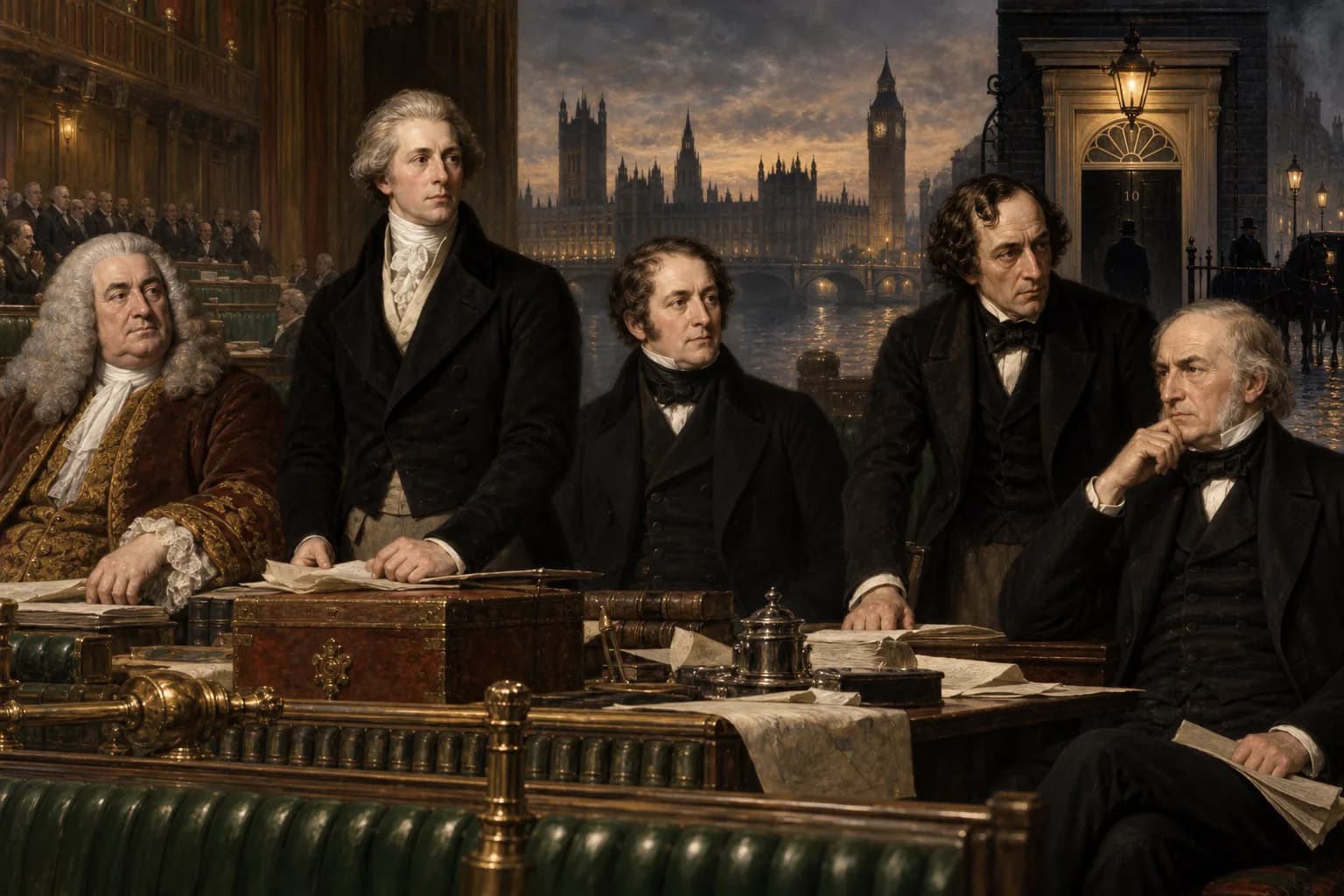
British Prime Ministers lineage
LineagePrime ministers in sequence
British Prime Ministers
1721 CE–present

Explore British prime ministers from Walpole to the present.

View lineage
Tertiary paths

Content note

This profile is written for educational use and connects to related Stories of History pages. The main portrait uses a real historical or editorial image, with source and licence details recorded for attribution review. Image policy Image attribution

References

Sources & Further Reading

Reliable reference works, archives and reading paths connected to this profile.

Further reading

  1. Encyclopaedia Britannica, Search results for Gordon Brown,” accessed June 2026.Open source
  2. WorldCat, Books and library holdings for Gordon Brown,” accessed June 2026.Open source

Primary sources

  1. Library of Congress, Search results for Gordon Brown,” accessed June 2026.Open source

Reviewed claim sources

Loading reviewed claim sources...

A weekly route through history

Find out first about the latest published stories, feature notes and occasional Premium offers in one weekly email.