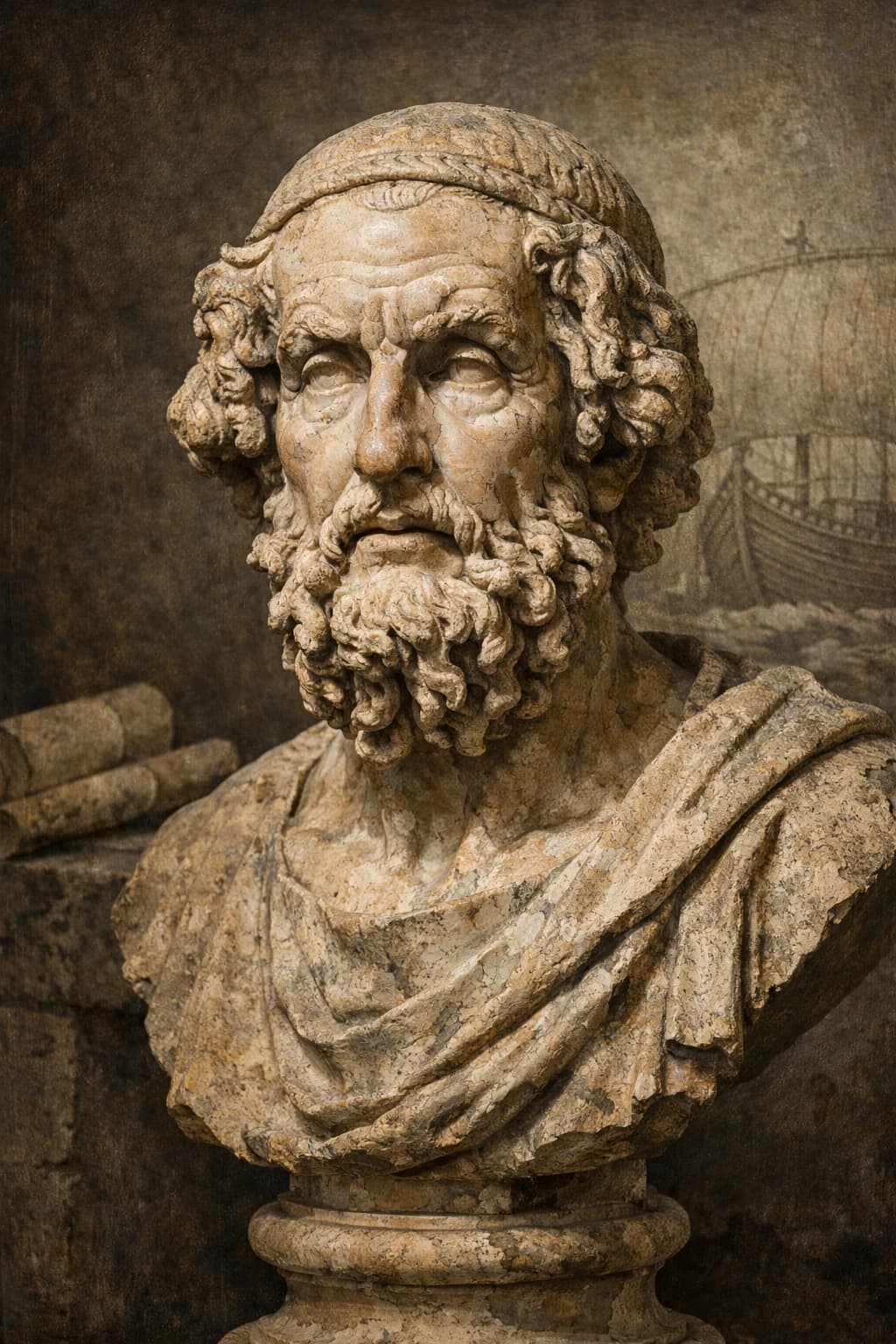
Aristocratic Origins
Plato was born around 427 BC into one of Athens's distinguished families, at a time when the city was fighting Sparta in the Peloponnesian War. His relatives connected him to aristocratic politics, including figures associated with the oligarchic coups that later wounded Athenian democracy. This background gave him access to education, poetry, athletics, public debate and the expectation of political life. But Athens also showed him instability: plague, war, imperial overreach, demagogic politics, oligarchic terror and democratic restoration. Plato's philosophy did not emerge from quiet abstraction. It grew from a city brilliant enough to produce tragedy, comedy and Socrates, yet unstable enough to condemn Socrates to death. His lifelong question was how human beings could know, govern and live well in a world so vulnerable to appetite, fear and opinion.