People

Homer

Homer was the ancient Greek poet traditionally credited with the Iliad and the Odyssey. Whether one bard or an oral tradition, Homer shaped Greek education, epic poetry, ideas of heroism, the Trojan War tradition, and the foundations of Western literature.

Born
800 BCE
Died
701 BCE
Role
Ancient Greek poet

Ancient Greek poet (c. 800–700 BC)

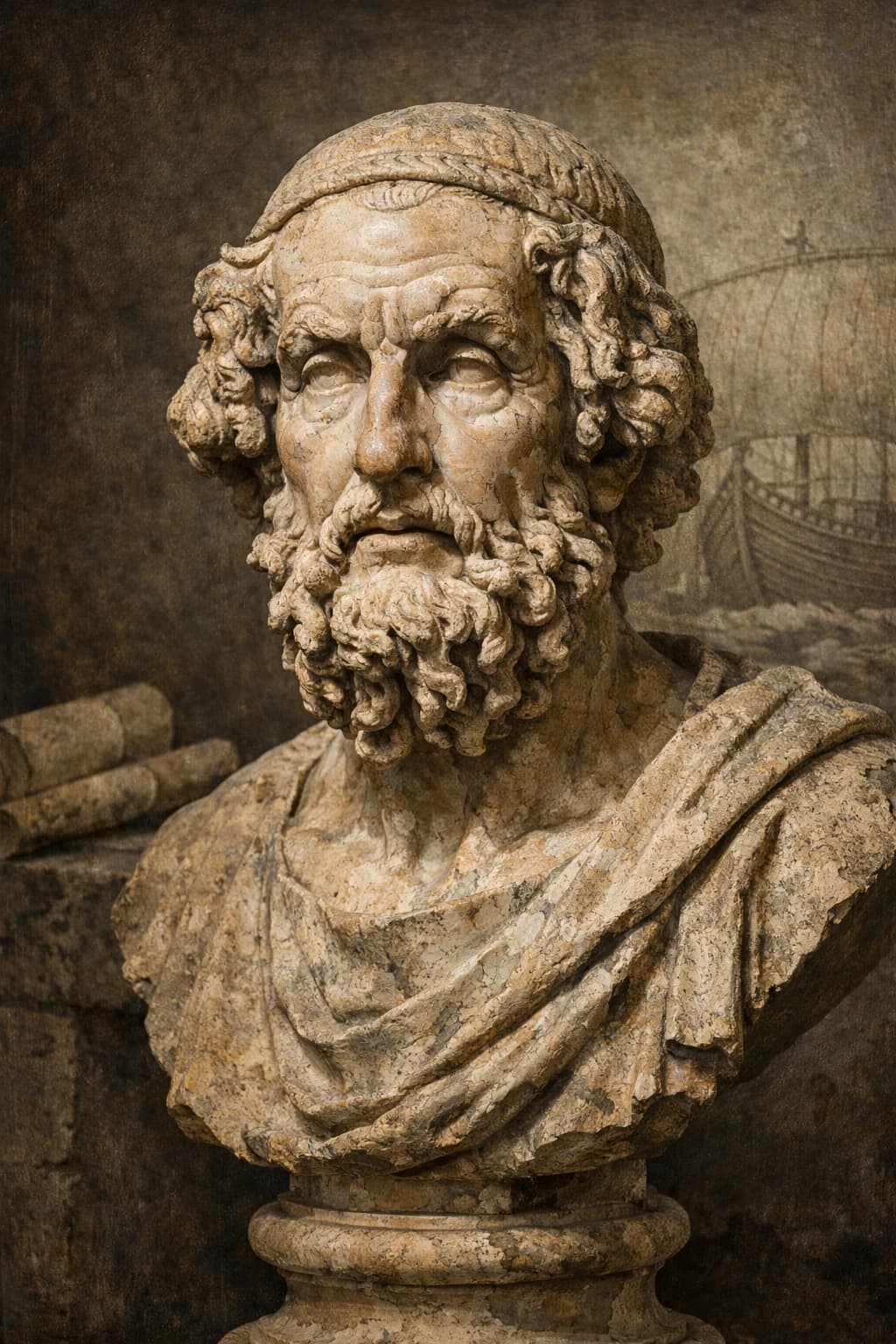
AI-generated portrait of Homer, ancient Greek poet
AI-assisted historical reconstruction

An illustrative reconstruction based on historical context. It is not a photograph or documentary likeness. Image policy

Quick answer

Homer was the ancient Greek poet traditionally credited with the Iliad and the Odyssey. Whether one bard or an oral tradition, Homer shaped Greek education, epic poetry, ideas of heroism, the Trojan War tradition, and the foundations of Western literature.

Born
800 BCE
Died
701 BCE
Role
Ancient Greek poet
Years
800-701 BCE
Facts

Homer timeline facts

Selected specifics from this profile's life story.

c. 800 BC
The Homer question

Almost nothing is certain about Homer's life: ancient tradition imagined a blind bard, while modern scholars debate whether the name belongs to one poet or a tradition.

c. 750 BC–700 BC
The Odyssey

The Odyssey follows Odysseus' long return to Ithaca, turning monsters, storms, temptation, and disguise into a meditation on home and identity.

c. 300 BC–19 BC
Influence on Rome and Virgil

Homer's influence extended to Rome: Virgil's Aeneid was consciously modelled on both epics, using Homer as a framework through which to tell the founding story of Rome.

After 700 BC
The foundation of Western literature

Homer's two poems stand at the beginning of the Western literary tradition, and their influence — on epic poetry, drama, the novel, film, and philosophy — remains visible in virtually every subsequent...

Life Journey

The poet behind Western literature

Follow the story in a more continuous narrative, with a reading mode that matches how much depth you want.

Complete chronology

c. 800 BC

The Homer question

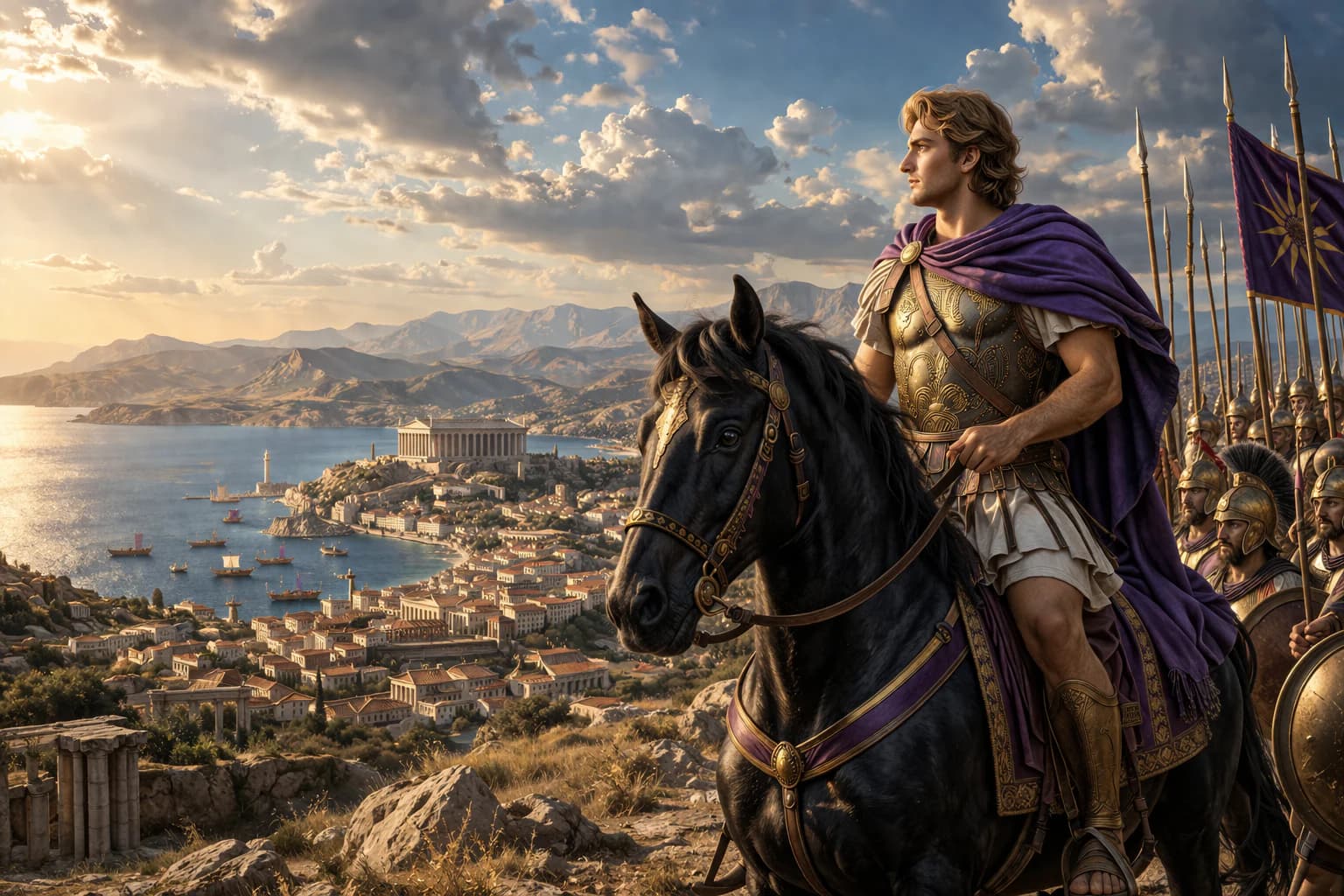
The historical Homer is one of literature's most productive mysteries. Ancient Greeks argued over his birthplace, with cities such as Smyrna and Chios making claims, and later tradition pictured him as blind. That blindness may preserve a biographical memory, but it may also be symbolic, linking the poet to the figure of the inspired singer who sees more deeply because ordinary sight is absent. The larger Homeric Question asks whether the Iliad and Odyssey were created by one extraordinary poet, shaped by several singers, or fixed from a long oral tradition by editors in the age of writing. The uncertainty is not a weakness in the story. It reminds us that these poems emerged from a culture where memory, performance, and authorship worked differently from modern books.
c. 1200 BC–800 BC

The oral tradition

Before Homer was a text, Homer was sound. Greek aoidoi performed stories of the heroic age in metrical verse, drawing on inherited episodes, stock descriptions, epithets, and patterns that helped sustain enormous poems in memory and performance. Repeated phrases such as swift-footed Achilles or dawn's rosy fingers were not lazy ornament. They were the working technology of oral composition. Modern scholarship, especially the work of Milman Parry and Albert Lord on oral-formulaic poetry, transformed understanding of how such epics could be made. The Iliad and Odyssey preserve memories of a Bronze Age past filtered through centuries of later Greek experience. Their authority comes from that layered depth.

c. 750 BC–700 BC

The Iliad

The Iliad does not try to narrate the whole Trojan War. Its genius is concentration. The poem begins with the anger of Achilles after Agamemnon dishonours him, then follows the consequences as the Greeks suffer, Patroclus dies, Hector falls, and Priam enters the enemy camp to beg for his son's body. Around that arc, the poem holds battlefield terror, divine interference, heroic pride, family tenderness, and the terrible beauty of a world where glory and death are inseparable. Achilles is not simply a warrior; he is a human being asking whether honour can compensate for mortality. Hector is not merely an enemy; he is a defender, husband, father, and doomed man. The poem makes war unforgettable by refusing to make it simple.

c. 750 BC–700 BC

The Odyssey

The Odyssey is looser, stranger, and more domestic than the Iliad. Odysseus survives the Cyclops, Circe, the Sirens, shipwreck, the dead, and years of delay with Calypso, but the poem's deepest question is not how far he travels. It is whether he can return as himself after so much cunning, suffering, and concealment. Ithaca is not only a place. It is memory, marriage, kingship, fatherhood, and recognition. Penelope's intelligence mirrors his; Telemachus' coming of age gives the homecoming a generational shape. Odysseus is heroic because he thinks, lies, adapts, and endures. That makes him morally fascinating as well as admirable. The poem invents adventure as inward testing.

c. 700 BC–550 BC

Writing and transmission

The transition from oral performance to written text was not a single event but a gradual process. The Greek alphabet, adapted from Phoenician around 800 BC, made possible the first written versions of poems that had previously existed only in performance. Ancient tradition credits the Athenian tyrant Pisistratus or his sons with commissioning a standardised edition of the Homeric poems for performance at the Panathenaic festival in the sixth century BC. Whether or not this tradition is accurate, a relatively stable text was established by the Hellenistic period, when scholars at the Library of Alexandria — particularly Aristarchus — produced critical editions that form the basis of the text we have today. The survival of the Homeric poems through the transitions from antiquity to the medieval world was not inevitable but depended on their consistent use as educational and cultural touchstones.

c. 700 BC–300 BC

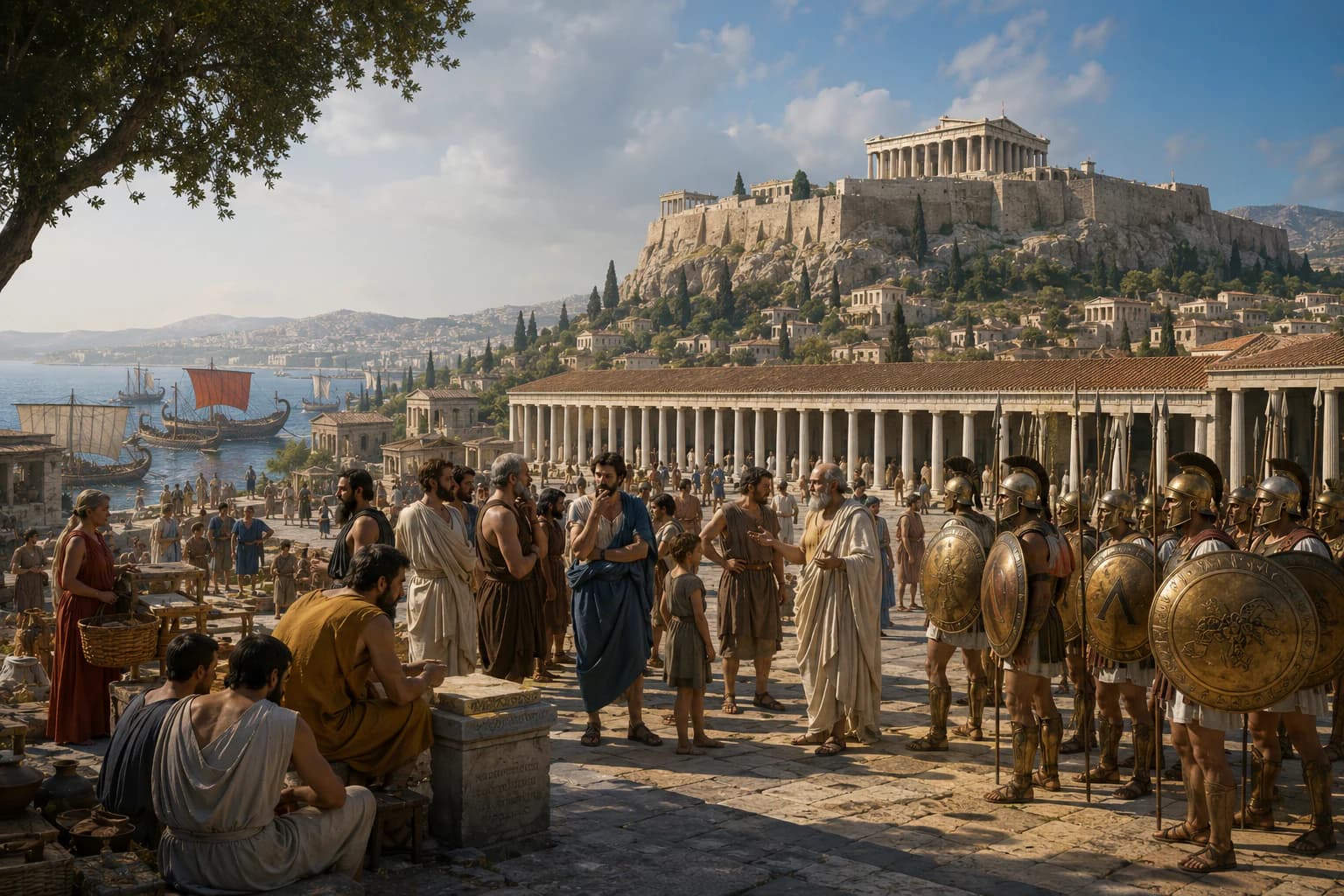
Homer and Greek education

The centrality of Homer to Greek culture is difficult to overstate. Children learning to read in classical Athens used the Homeric poems as their primary texts. The heroes of the Iliad — Achilles, Ajax, Hector — provided the models of martial excellence against which Greek men measured themselves. Plato wanted to expel Homer from his ideal republic because the poems were so influential: they depicted the gods behaving badly and the heroes experiencing grief and fear, which Plato thought morally dangerous. This is a remarkable testimony to their cultural weight. Alexander the Great carried a copy of the Iliad annotated by Aristotle on his campaigns. The poems were the common reference for the entire Greek world — the frame within which values, heroism, and the human condition were discussed.

c. 300 BC–19 BC

Influence on Rome and Virgil

The Roman reception of Homer was both reverent and competitive. The poet Livius Andronicus translated the Odyssey into Latin in the third century BC, and Homer became part of Roman elite education. But the most consequential engagement was Virgil's Aeneid, composed under Augustus in the first century BC. The Aeneid's first half echoes the Odyssey in its sea voyage and encounters; its second half echoes the Iliad in its Italian wars. Virgil used the Homeric framework to give Rome a foundation myth of equivalent cultural weight, tracing Roman origins to the Trojan Aeneas. The imitation was the sincerest form of homage: Virgil was acknowledging that Homer had defined what an epic was, and that any subsequent poet working in the same form was necessarily in conversation with the original.

500 AD–1453 AD

Survival and rediscovery

The fate of Homer in the western medieval world was one of near-disappearance: direct knowledge of Greek virtually vanished from western Europe after the fifth century AD, and Homer was known primarily through summaries, the Aeneid, and a few Latin prose translations of uncertain quality. The Byzantine east maintained the tradition of Greek scholarship, and the Homeric poems remained part of Byzantine education. When scholars fled Constantinople after its fall to the Ottomans in 1453, they brought their manuscripts and their expertise in Greek to Italy, initiating the process of recovery that became part of the Renaissance. The printed editions that followed made Homer available across Europe for the first time since antiquity, and the subsequent five centuries of Western engagement with the poems began.

After 700 BC

The foundation of Western literature

Calling Homer foundational is not a ceremonial compliment. The Iliad and Odyssey gave later writers a repertoire of forms and questions: what is heroism, what does war cost, how does rage destroy judgement, what makes home worth returning to, and how does a person survive by intelligence as well as force? Greek tragedy drew on the same heroic storehouse. Virgil answered Homer in Roman form; Dante and Milton built Christian epics under his shadow; James Joyce remade the Odyssey as a single day in Dublin. Even modern war stories and road narratives inherit Homeric patterns. Whether Homer was one poet, many singers, or a name for a tradition, the poems remain among humanity's most powerful machines for thinking about glory, grief, memory, and return.

Continue in context

Connected stories

Move from the profile into the wider events and settings this figure belongs to.

Tertiary paths

Content note

This profile is written for educational use and connects to related Stories of History pages. The main portrait is an AI-assisted historical reconstruction, included as an illustrative aid rather than documentary evidence. Image policy

References

Sources & Further Reading

Reliable reference works, archives and reading paths connected to this profile.

Further reading

  1. Encyclopaedia Britannica, Search results for Homer,” accessed June 2026.Open source
  2. WorldCat, Books and library holdings for Homer,” accessed June 2026.Open source

Primary sources

  1. Library of Congress, Search results for Homer,” accessed June 2026.Open source

Reviewed claim sources

Loading reviewed claim sources...

A weekly route through history

Find out first about the latest published stories, feature notes and occasional Premium offers in one weekly email.