People

Moctezuma II

Moctezuma II was huey tlatoani of the Mexica, often called the Aztec emperor, from 1502 to 1520. He ruled Tenochtitlan at its imperial height before Hernan Cortes, Spanish forces and Indigenous allies transformed central Mexico.

Born
1466 CE
Died
1520 CE
Role
Aztec emperor

Aztec emperor (1466–1520)

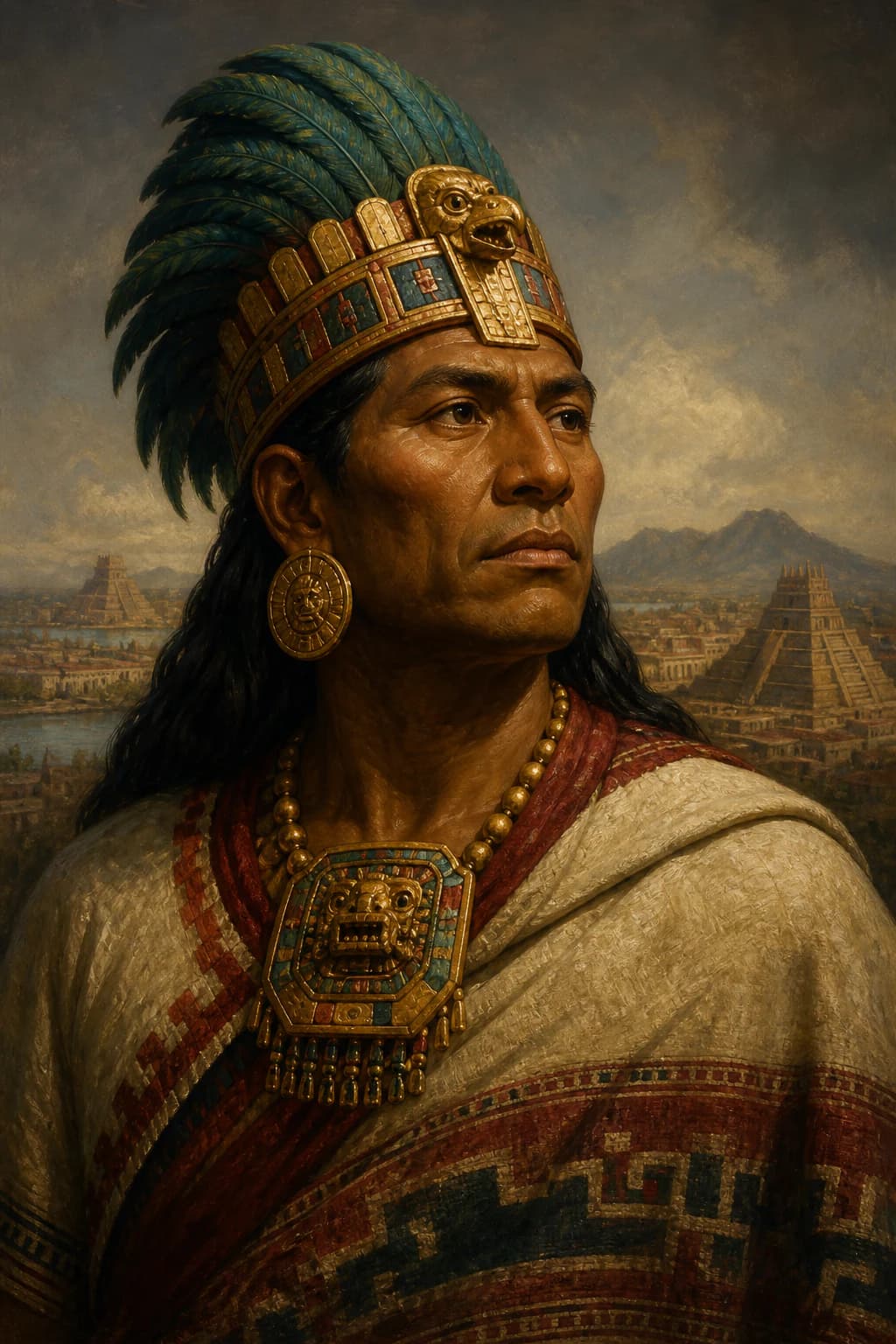
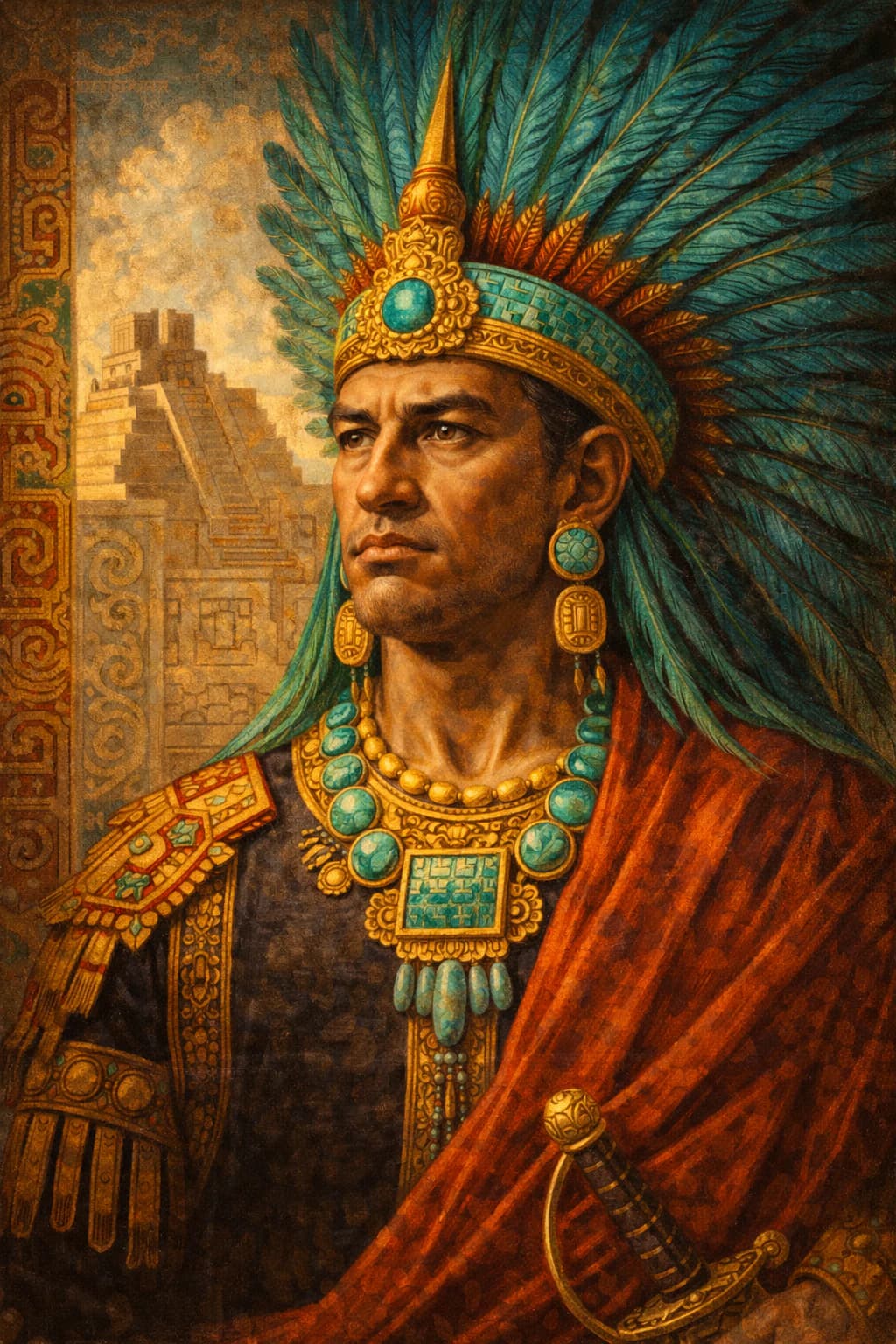
AI-generated portrait of Moctezuma II in Aztec imperial attire
AI-assisted historical reconstruction

An illustrative reconstruction based on historical context. It is not a photograph or documentary likeness. Image policy

Quick answer

Moctezuma II was huey tlatoani of the Mexica, often called the Aztec emperor, from 1502 to 1520. He ruled Tenochtitlan at its imperial height before Hernan Cortes, Spanish forces and Indigenous allies transformed central Mexico.

Born
1466 CE
Died
1520 CE
Role
Aztec emperor
Years
1466-1520 CE
Facts

Moctezuma II timeline facts

Selected specifics from this profile's life story.

1466–1502
Noble upbringing

Moctezuma II was born into the Mexica royal elite and trained for command in war, ritual, law and imperial government.

1510s
Height of empire

Under Moctezuma, Tenochtitlan stood at the centre of a wealthy empire, but frontier resistance and tribute resentment remained unresolved.

1520
Loss of control

The massacre at the festival of Toxcatl and the uprising in Tenochtitlan destroyed any remaining chance that Moctezuma could manage the crisis.

1520 onward
Enduring legacy

Moctezuma II is remembered not as a simple failure, but as a powerful ruler caught in an unprecedented collision of empire, invasion and alliance.

Life Journey

A reign of power, encounter and dramatic transformation

Follow the story in a more continuous narrative, with a reading mode that matches how much depth you want.

Complete chronology

1466–1502

Noble upbringing

Moctezuma Xocoyotzin, remembered in English as Moctezuma II or Montezuma, was born around 1466 into the ruling family of Tenochtitlan. He grew up inside a political culture where noble birth mattered, but where military reputation, religious discipline and public ceremony also shaped authority. The Mexica ruler was not simply a king in a European sense. As huey tlatoani, the great speaker, he stood at the centre of tribute, warfare, diplomacy and sacred order. Moctezuma was educated in the expectations of that role: self-control, knowledge of ritual, command of nobles and soldiers, and the ability to present imperial power as part of cosmic balance. He inherited not only privilege, but a demanding language of rule.
1502

Becoming ruler

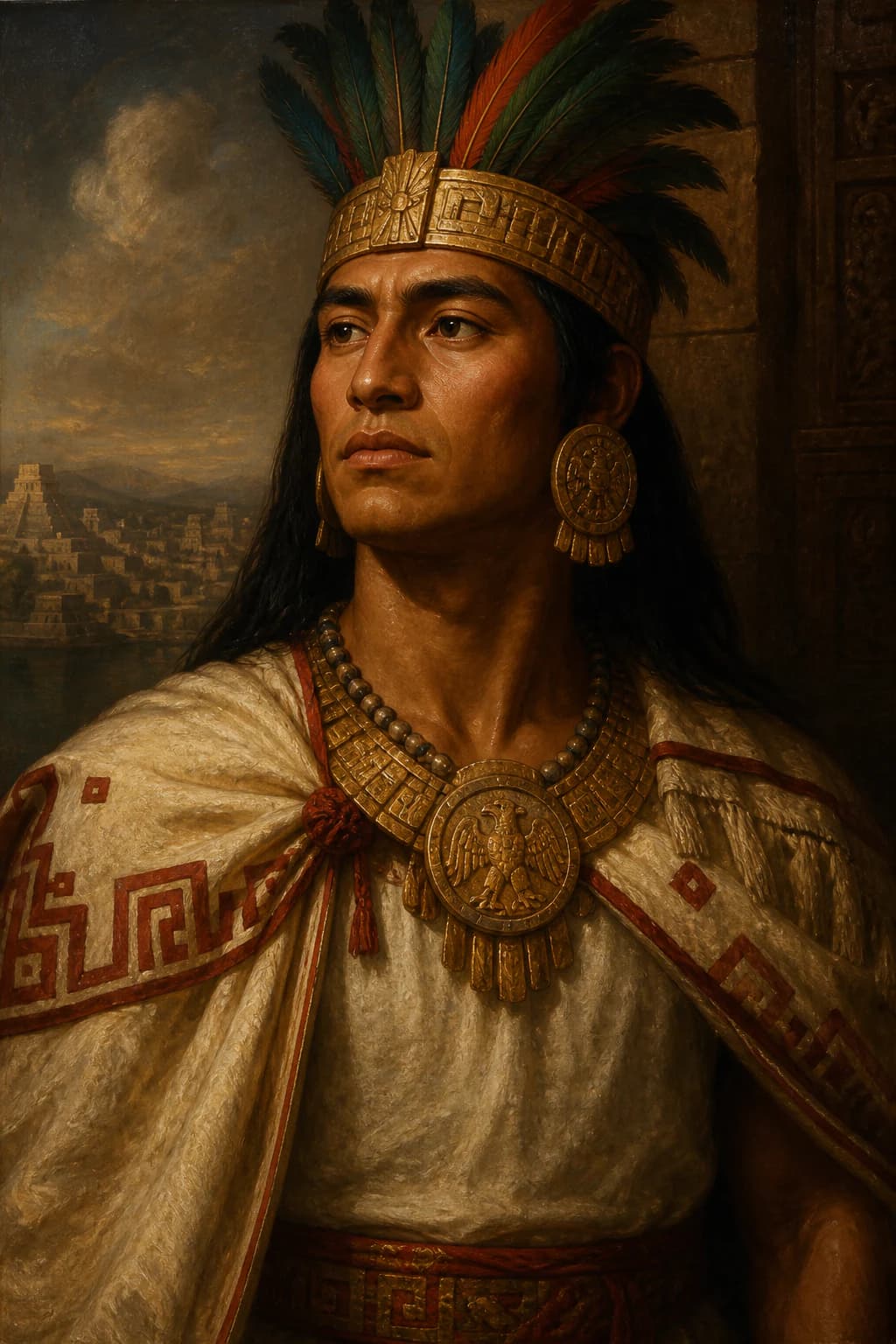
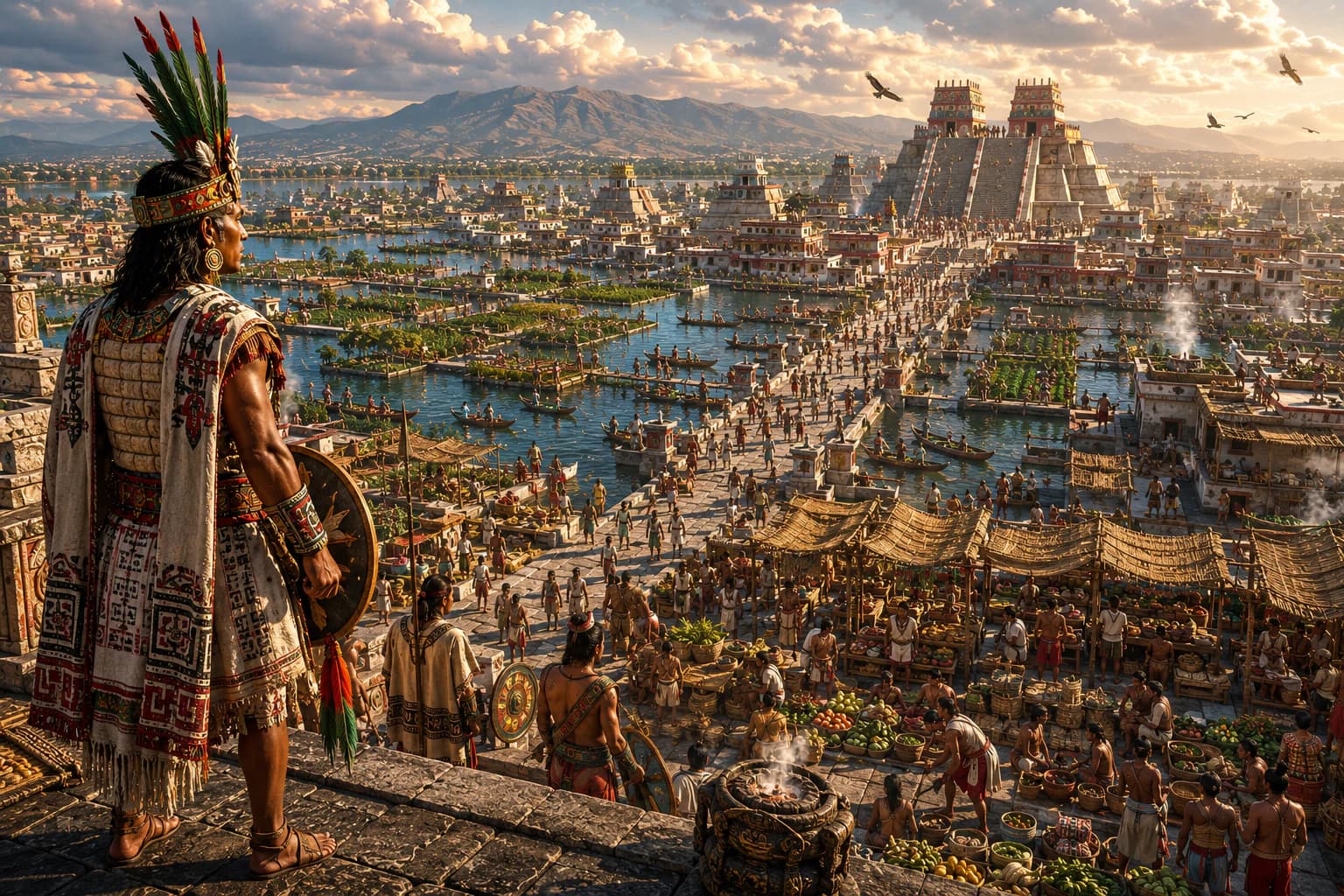
When Moctezuma came to power in 1502, the Triple Alliance dominated much of central Mexico. Its authority rested less on direct administration than on tribute, intimidation, strategic marriage, military campaigns and local rulers left in place under pressure. Tenochtitlan, the island capital in Lake Texcoco, was one of the largest and most impressive cities in the world, with markets, causeways, canals, temples and palaces that stunned later Spanish observers. Moctezuma inherited this system at its height, but also its tensions. Many subject peoples resented tribute demands and Mexica military dominance. The empire was powerful, but not beloved everywhere. That distinction would matter enormously when outsiders arrived.

1502–1515

Consolidating rule

Moctezuma's early rule appears to have emphasised hierarchy, discipline and the magnificence of kingship. Later sources describe him as enforcing stricter court etiquette, replacing some officials with nobles and increasing the separation between ruler and subject. These accounts must be read carefully because post-conquest narratives often tried to explain the empire's fall through Moctezuma's personality. Even so, they point toward a reign concerned with order and prestige. He expanded campaigns, managed tribute flows and made Tenochtitlan's royal centre a stage for power. The strength of this system was its ability to gather resources from far beyond the capital. Its weakness was that compulsion created enemies who waited for a chance to change sides.

1510s

Height of empire

The empire Moctezuma ruled was formidable. Tribute brought cotton, maize, cacao, feathers, precious stones, warriors' clothing and luxury goods into Tenochtitlan. Merchants, or pochteca, connected distant regions, while armies enforced Mexica demands and supplied captives for ritual sacrifice. Yet the empire's reach was uneven. Tlaxcala, east of the Basin of Mexico, remained fiercely independent and hostile. Other communities submitted but resented tribute burdens and military coercion. Moctezuma's reign therefore represents both the height of Mexica power and the fragility of imperial dominance built through fear. The Spanish did not conquer Mexico alone. They entered a landscape already shaped by local rivalries and anti-Mexica grievances.

1519

Arrival of foreigners

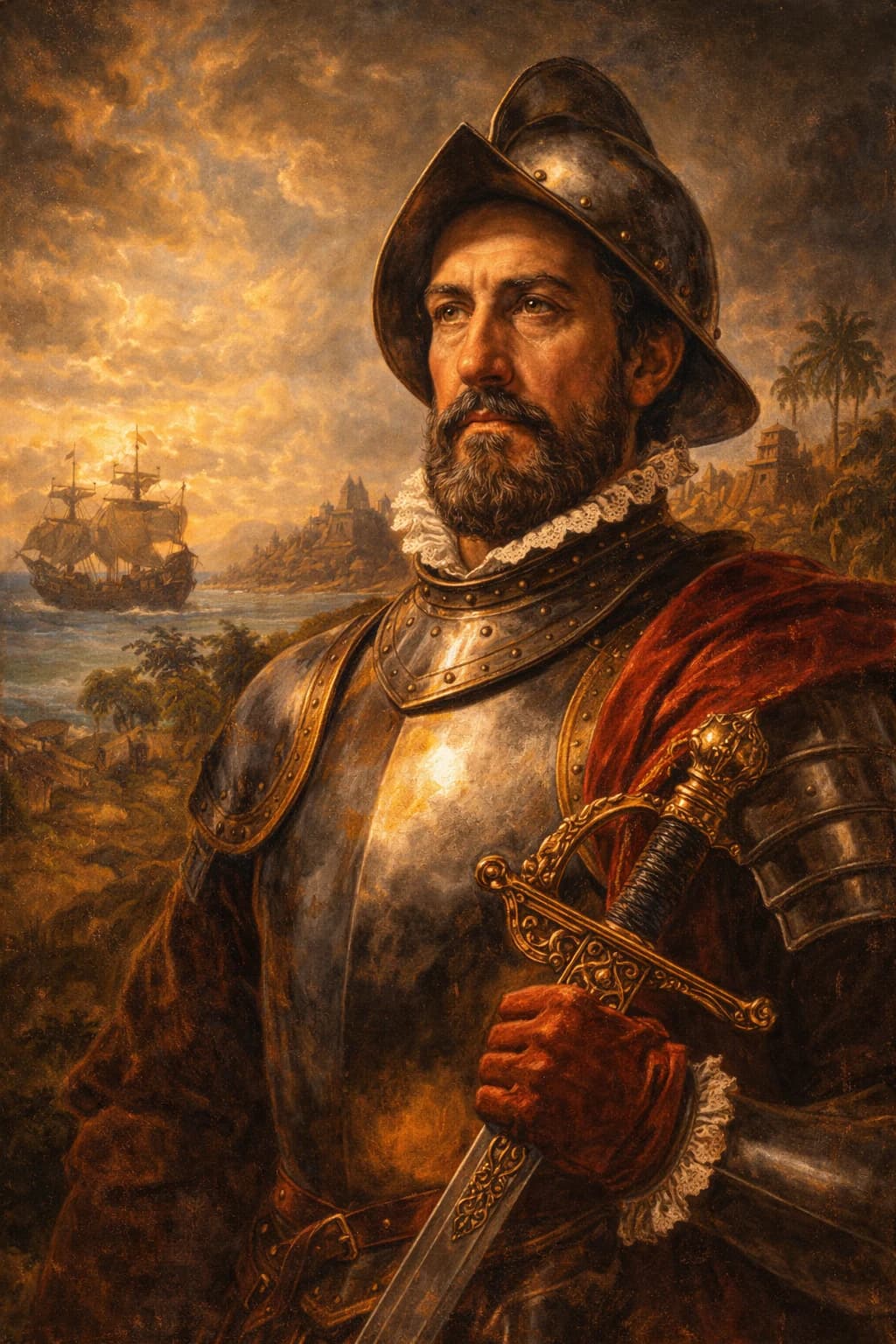
Reports of Spaniards on the Gulf Coast reached Moctezuma in 1519. The newcomers brought horses, steel weapons, firearms, ships and Christian symbols, but their numbers were small. Their real danger grew when Cortes defied his own governor, founded Veracruz and began making alliances with Indigenous peoples hostile to Mexica rule, especially the Tlaxcalans. Older stories claim Moctezuma believed Cortes was the returning god Quetzalcoatl. Modern historians treat that claim with caution, because it served Spanish narratives that made conquest seem destined and Indigenous response seem passive. Moctezuma was not simply fooled by myth. He was confronting an unprecedented political and military problem with incomplete information, trying to contain risk without igniting a wider revolt.

1519–1520

Meeting and tension

Moctezuma allowed Cortes and his allies into Tenochtitlan in November 1519, an extraordinary moment of ceremony, calculation and danger. The meeting has often been told as paralysis, but Moctezuma's options were limited. Destroying the Spaniards immediately risked war with their Indigenous allies and uncertainty about Spanish reinforcements; hosting them kept them visible and contained. Cortes, however, used the situation more ruthlessly. After conflict at the coast, he seized Moctezuma within his own capital and ruled through him as a captive intermediary. This shattered the political meaning of Mexica kingship. A ruler whose authority depended on distance, ritual command and sacred prestige was now being compelled to speak under foreign pressure.

1520

Loss of control

In 1520 Cortes left Tenochtitlan to confront a Spanish force sent to arrest him, leaving Pedro de Alvarado in command. During the festival of Toxcatl, Alvarado's men massacred Mexica nobles and participants, triggering a massive uprising. By the time Cortes returned, the Spaniards were trapped in the palace and Moctezuma's authority had collapsed. The captive ruler could no longer mediate between invaders and his own people. Whether he was seen as compromised, powerless or still sacred, events had moved beyond him. The crisis shows how quickly imperial systems can fracture when symbolic authority is publicly humiliated. Tenochtitlan did not fall because Moctezuma lacked intelligence. It fell after violence, disease, alliances and political rupture overwhelmed the old order.

1520

Death and collapse

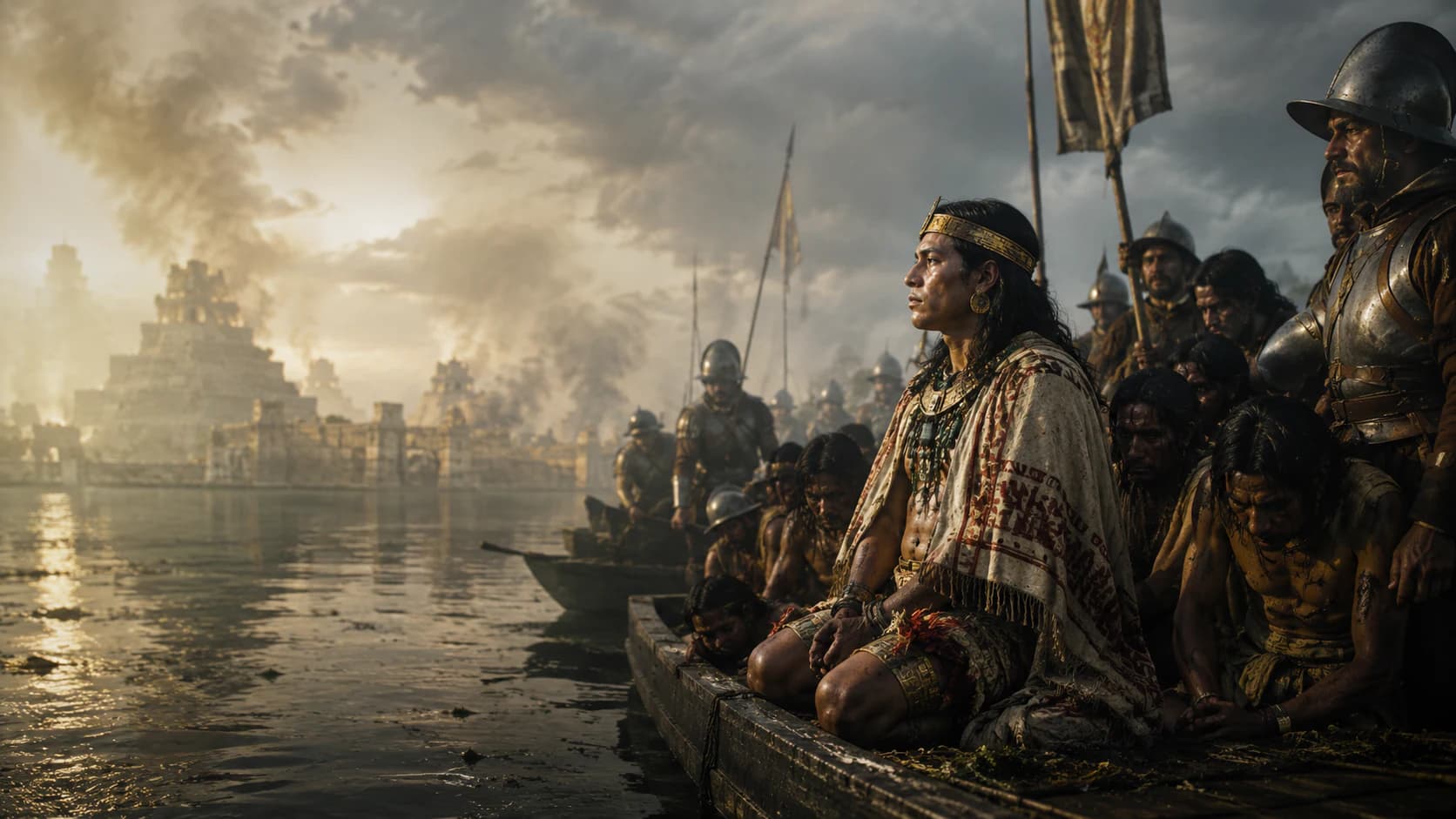
Moctezuma's death remains contested. Spanish accounts claimed he was struck by stones from his own people after trying to calm them. Indigenous traditions and later interpretations often suggest the Spaniards killed him when he was no longer useful. Certainty is impossible, and the dispute itself reveals the politics of memory after conquest. Soon after, the Spaniards fled Tenochtitlan during the bloody retreat later called La Noche Triste. The Mexica continued resistance under Cuitlahuac and then Cuauhtemoc, proving that Moctezuma's death was not immediate surrender. But smallpox, siege warfare, brigantines on the lake and tens of thousands of Indigenous allies fighting with the Spanish eventually brought Tenochtitlan down in 1521.

1520 onward

Enduring legacy

Moctezuma's legacy has been heavily shaped by conquest narratives. Spanish writers often portrayed him as hesitant, superstitious or providentially defeated, while later national histories sometimes turned him into a tragic symbol of a lost world. A fuller view is more demanding. He ruled a sophisticated imperial capital and commanded vast resources. He also governed a coercive tribute system that produced enemies ready to ally with Cortes. His response to the Spaniards was cautious because the situation was genuinely difficult, not because he was incapable of action. To ask why Moctezuma II was important is to see the conquest of Mexico as more than a meeting between Europeans and Indigenous peoples. It was a crisis inside Mesoamerican politics, intensified by Spanish ambition, Indigenous strategy, epidemic disease and the collapse of royal legitimacy at the centre of Tenochtitlan.

Continue in context

Connected stories

Move from the profile into the wider events and settings this figure belongs to.

Tertiary paths

Content note

This profile is written for educational use and connects to related Stories of History pages. The main portrait is an AI-assisted historical reconstruction, included as an illustrative aid rather than documentary evidence. Image policy

References

Sources & Further Reading

Reliable reference works, archives and reading paths connected to this profile.

Further reading

  1. Encyclopaedia Britannica, Search results for Moctezuma II,” accessed June 2026.Open source
  2. WorldCat, Books and library holdings for Moctezuma II,” accessed June 2026.Open source

Primary sources

  1. Library of Congress, Search results for Moctezuma II,” accessed June 2026.Open source

Reviewed claim sources

Loading reviewed claim sources...

A weekly route through history

Find out first about the latest published stories, feature notes and occasional Premium offers in one weekly email.