People

Ahuitzotl

Ahuitzotl was tlatoani of Tenochtitlan from 1486 to 1502. A major Mexica conqueror, he expanded the Aztec Empire across large parts of Mesoamerica, strengthened tribute flows, and completed important works in Tenochtitlan before the reign of Moctezuma II.

Born
1440 CE
Died
1502 CE
Role
Tlatoani of Tenochtitlan

Tlatoani of Tenochtitlan (1486-1502)

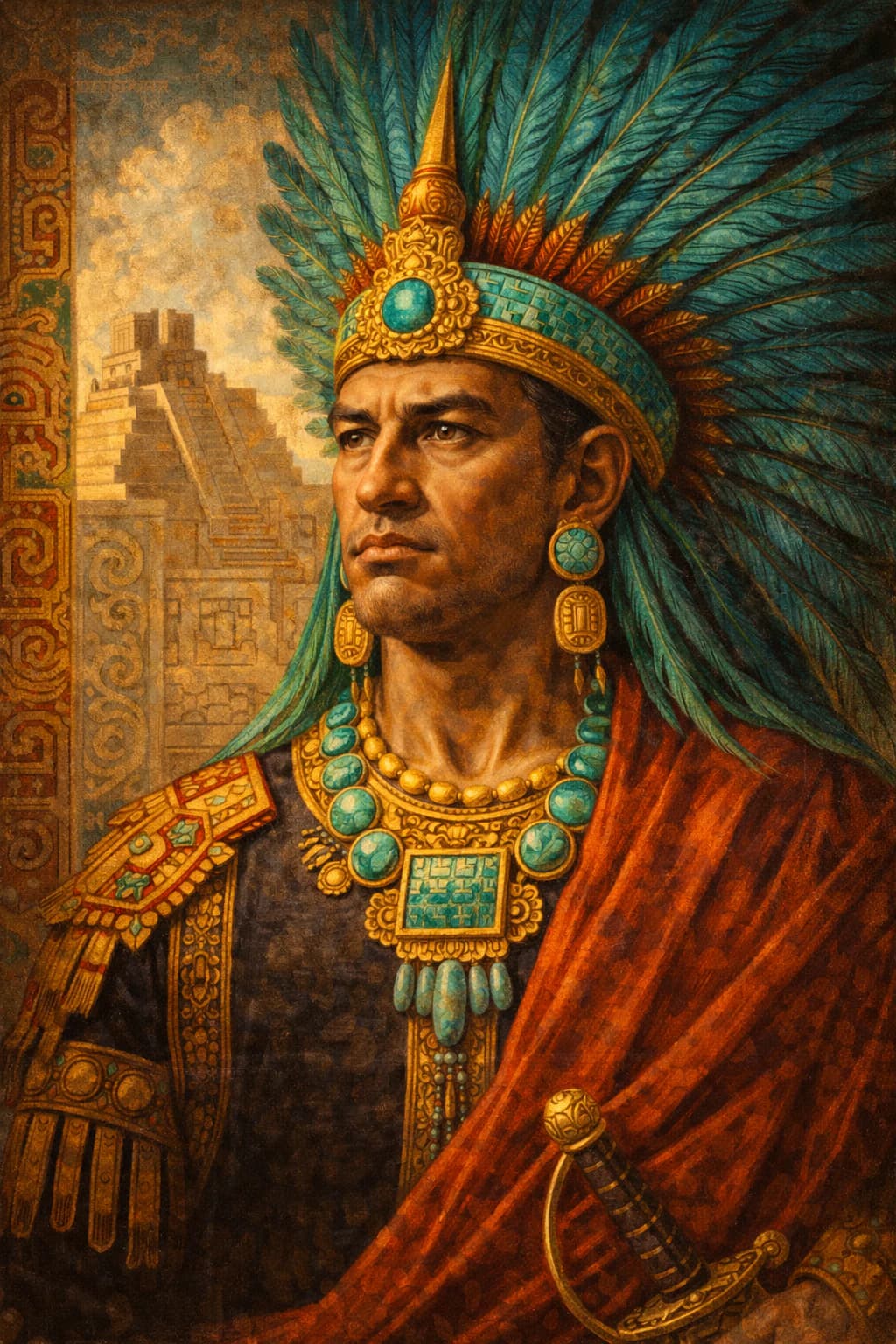
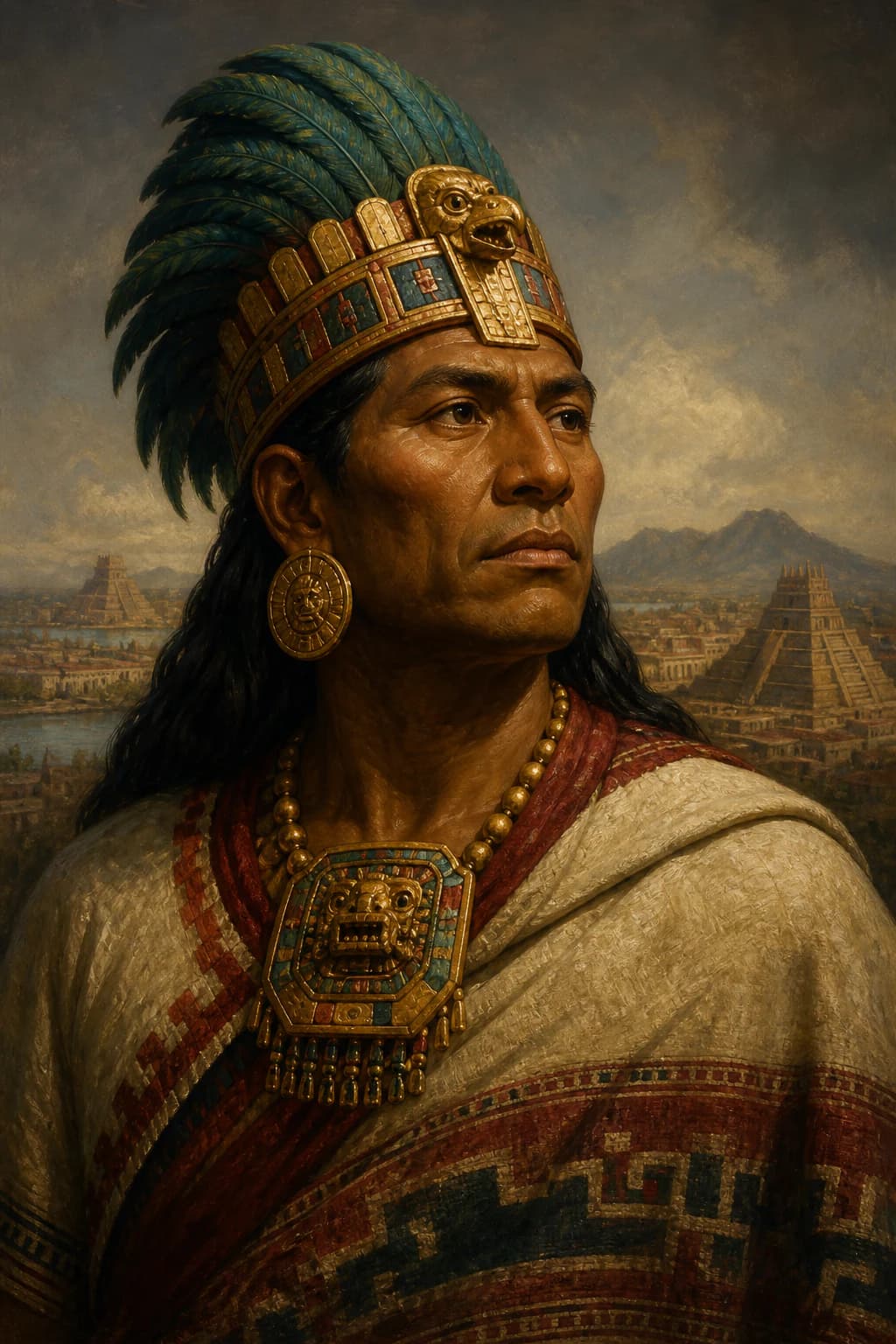
AI-generated portrait of Ahuitzotl in a feathered royal headdress overlooking Tenochtitlan
AI-assisted historical reconstruction

An illustrative reconstruction based on historical context. It is not a photograph or documentary likeness. Image policy

Quick answer

Ahuitzotl was tlatoani of Tenochtitlan from 1486 to 1502. A major Mexica conqueror, he expanded the Aztec Empire across large parts of Mesoamerica, strengthened tribute flows, and completed important works in Tenochtitlan before the reign of Moctezuma II.

Born
1440 CE
Died
1502 CE
Role
Tlatoani of Tenochtitlan
Years
1440-1502 CE
Quick facts

Profile details

Additional identity and tagging details that are not already covered in the introduction.

Also known as
Ahuizotl
Facts

Ahuitzotl timeline facts

Selected specifics from this profile's life story.

c. 1440-1486
Royal house

Ahuitzotl was born into the Mexica ruling dynasty after Tenochtitlan had already become the leading power of the Triple Alliance.

1487
Great Temple dedication

The rededication of the Templo Mayor in 1487 became one of the most famous ritual events of Ahuitzotl's reign, remembered for large-scale sacrifice.

1490s
Water and the city

Ahuitzotl sponsored major works in Tenochtitlan, including water projects that tradition links to flooding and the injury that may have contributed to his death.

1502 onward
Peak before contact

Ahuitzotl died in 1502 and was succeeded by Moctezuma II, leaving an empire powerful, wealthy, and structurally tense.

Life Journey

The conqueror before the catastrophe

Follow the story in a more continuous narrative, with a reading mode that matches how much depth you want.

Complete chronology

c. 1440-1486

Royal house

Ahuitzotl grew up in an empire created by Itzcoatl, expanded by Moctezuma I, and consolidated by later rulers. By his lifetime, Tenochtitlan had become the dominant partner in the Triple Alliance with Texcoco and Tlacopan. He was a younger brother of Tizoc, whose short reign was remembered as militarily unimpressive. That contrast shaped Ahuitzotl's opportunity. The Mexica elite wanted a ruler who could restore momentum, honour the gods through victory, and maintain the tribute system on which imperial splendour depended.
1486

Accession

Ahuitzotl's accession followed the death of Tizoc and began with a deliberate restoration of martial prestige. Mexica kingship was not merely administrative. A tlatoani had to demonstrate favour from the gods, courage in war, generosity to nobles, and the ability to bring tribute into the capital. Ahuitzotl answered those expectations with campaigns on multiple fronts. His reign projected energy: armies moved, tribute lists expanded, captives entered ritual life, and Tenochtitlan's aristocracy saw imperial ambition revived.

1487

Great Temple dedication

Soon after taking power, Ahuitzotl presided over the rededication of the Templo Mayor, the great ceremonial centre of Tenochtitlan dedicated above all to Huitzilopochtli and Tlaloc. Later sources describe enormous numbers of human sacrifices at the event. The exact figures are debated and may be exaggerated, but the political meaning is clear: the ceremony displayed imperial reach, religious obligation, and the ruler's ability to feed the gods with captives taken in war. The dedication fused architecture, theology, conquest, and spectacle.

1480s-1490s

Campaigns of expansion

Ahuitzotl's conquests pushed Aztec power to its widest pre-contact extent. His campaigns reached into regions valuable for cacao, cotton, feathers, precious stones, and other goods that sustained elite life and ritual display. Expansion did not always mean direct occupation in a modern sense; Aztec power often worked through tribute obligations, intimidation, garrisons, client rulers, and periodic military punishment. The result was a wide and uneven empire: immensely wealthy at the centre, but dependent on compliance from many communities with their own identities and grievances.

1490s

Water and the city

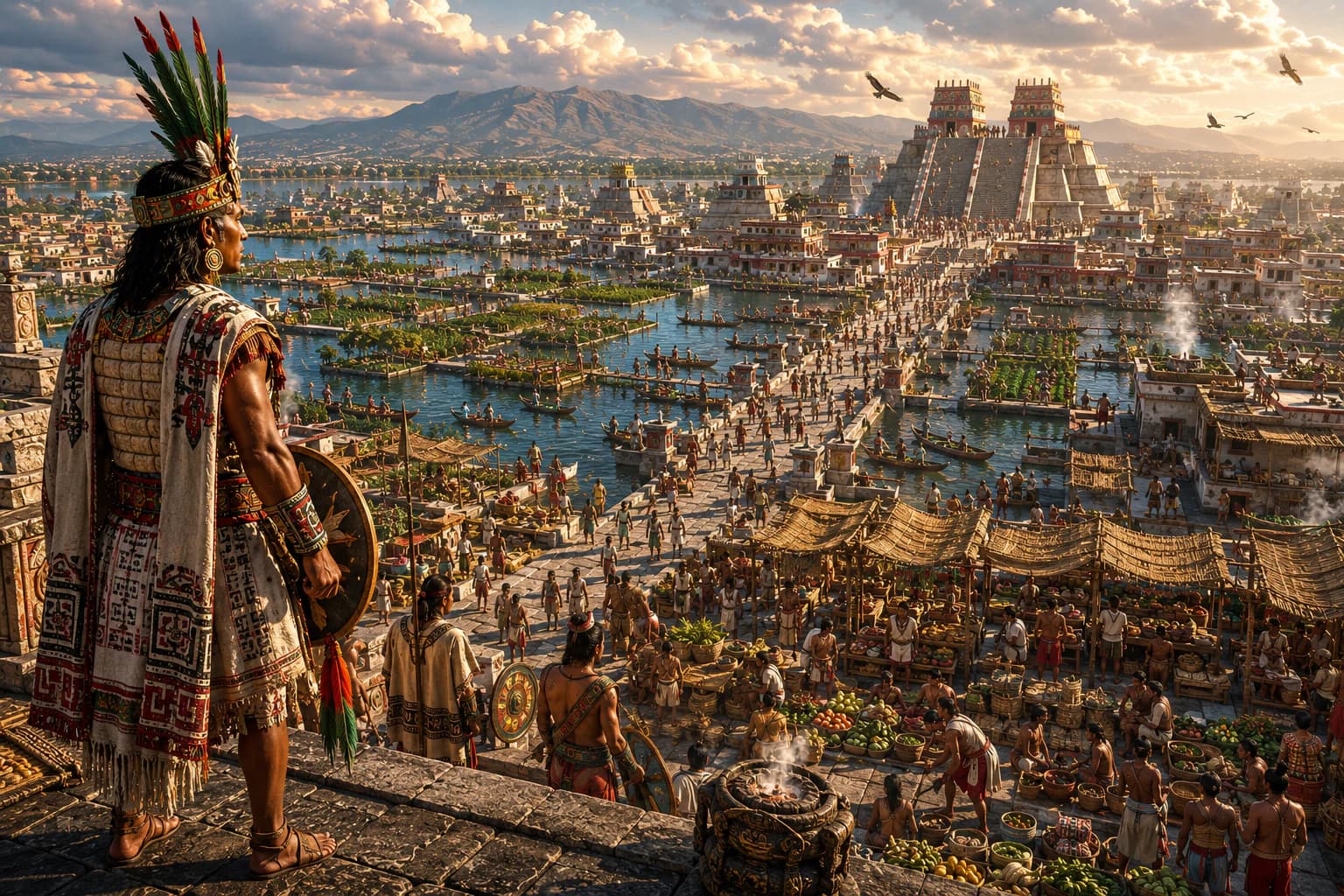
Tenochtitlan's brilliance depended on engineering: causeways, dikes, canals, chinampas, and aqueducts made life in the lake city possible. Ahuitzotl is associated with efforts to bring fresh water from Coyoacan into the capital. Later accounts say the project contributed to damaging floods and that Ahuitzotl injured his head during the crisis, an injury sometimes linked to his death in 1502. The details are difficult to separate from retrospective storytelling, but the episode reflects a real feature of Mexica power: ruling Tenochtitlan meant managing nature as well as enemies.

1502 onward

Peak before contact

When Ahuitzotl died, the Aztec Empire had reached a peak of scale and prestige. His successor, Moctezuma II, inherited tribute routes, military expectations, sacred obligations, and a capital more magnificent than ever. He also inherited the resentments created by generations of conquest. Within two decades, those resentments would matter enormously, as Tlaxcalans and other Indigenous allies joined Cortes against Tenochtitlan. Ahuitzotl did not cause the Spanish conquest, but his reign sharpened the imperial system that shaped the conditions of contact.

Continue in context

Connected stories

Move from the profile into the wider events and settings this figure belongs to.

Tertiary paths

Content note

This profile is written for educational use and connects to related Stories of History pages. The main portrait is an AI-assisted historical reconstruction, included as an illustrative aid rather than documentary evidence. Image policy

References

Sources & Further Reading

Reliable reference works, archives and reading paths connected to this profile.

Further reading

  1. Encyclopaedia Britannica, Search results for Ahuitzotl,” accessed June 2026.Open source
  2. WorldCat, Books and library holdings for Ahuitzotl,” accessed June 2026.Open source

Primary sources

  1. Library of Congress, Search results for Ahuitzotl,” accessed June 2026.Open source

Reviewed claim sources

Loading reviewed claim sources...

A weekly route through history

Find out first about the latest published stories, feature notes and occasional Premium offers in one weekly email.