People

Cuauhtemoc

Cuauhtemoc was the last tlatoani of Tenochtitlan, ruling from 1520 to 1521 during the final Spanish and Indigenous allied siege of the Aztec capital. Captured by Hernan Cortes after the fall of the city, he was executed in 1525 during the Honduras expedition.

Born
1496 CE
Died
1525 CE
Role
Tlatoani of Tenochtitlan

Tlatoani of Tenochtitlan (1520-1521)

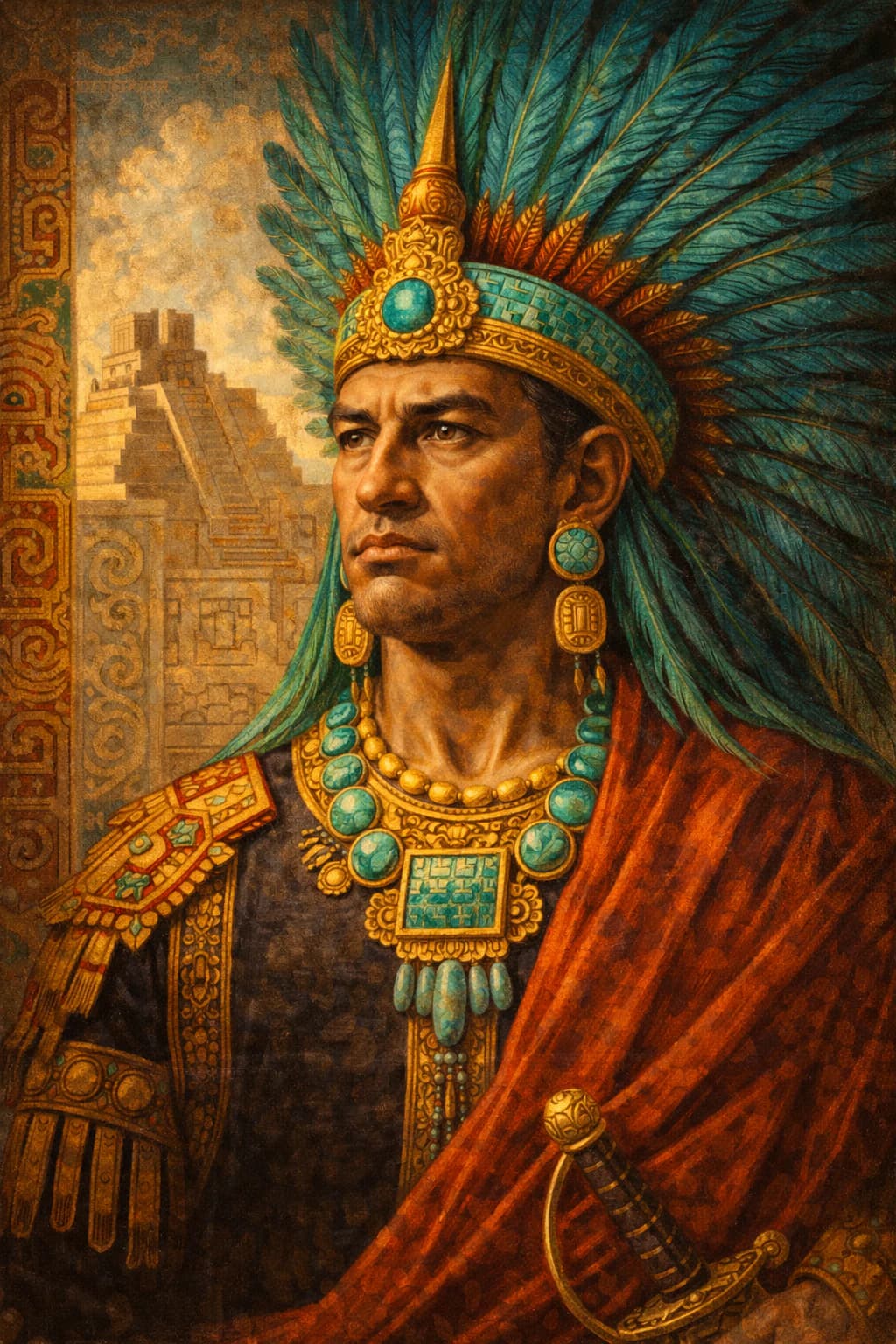
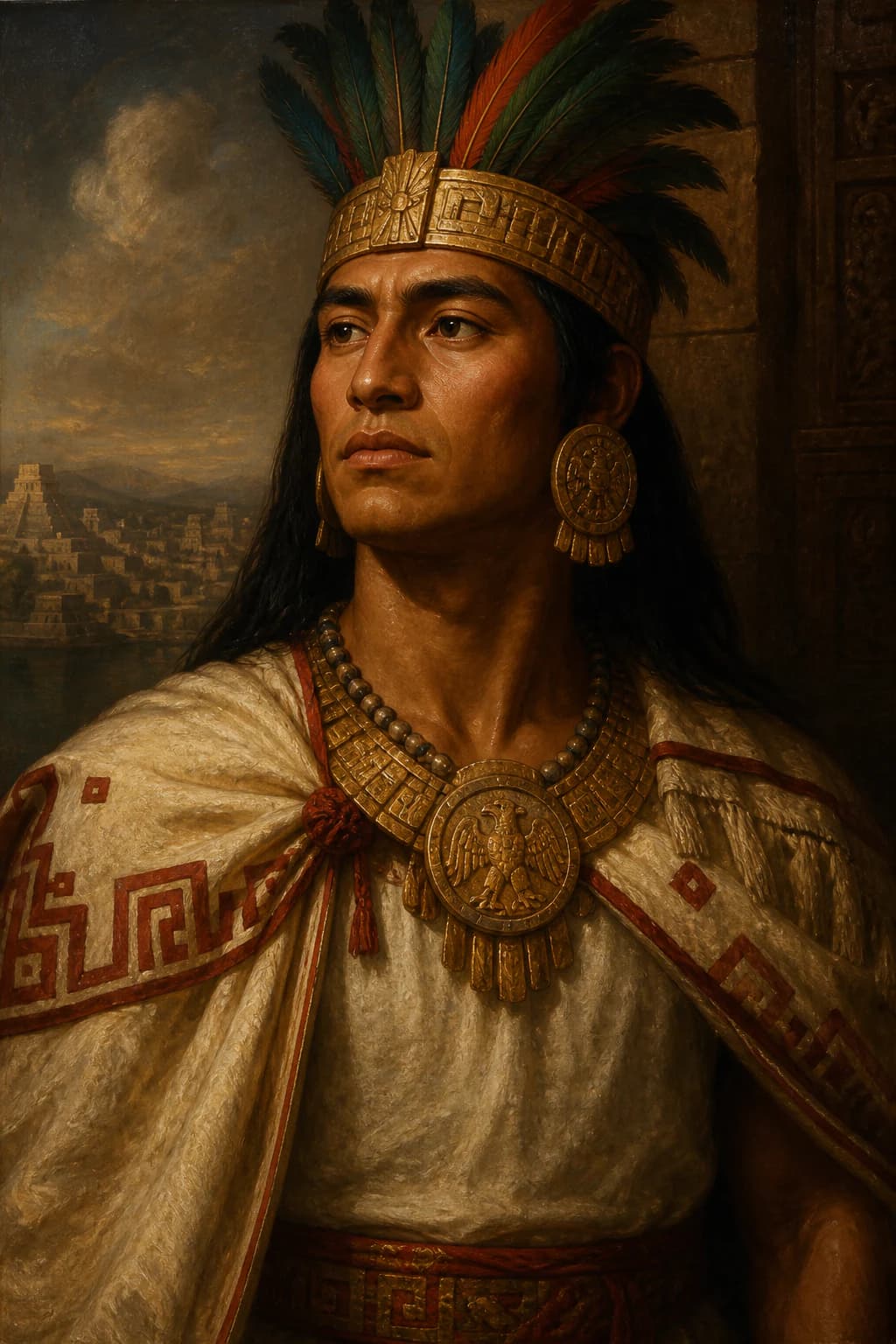
AI-generated portrait of Cuauhtemoc in white ceremonial dress and feathered crown
AI-assisted historical reconstruction

An illustrative reconstruction based on historical context. It is not a photograph or documentary likeness. Image policy

Quick answer

Cuauhtemoc was the last tlatoani of Tenochtitlan, ruling from 1520 to 1521 during the final Spanish and Indigenous allied siege of the Aztec capital. Captured by Hernan Cortes after the fall of the city, he was executed in 1525 during the Honduras expedition.

Born
1496 CE
Died
1525 CE
Role
Tlatoani of Tenochtitlan
Years
1496-1525 CE
Quick facts

Profile details

Additional identity and tagging details that are not already covered in the introduction.

Also known as
Cuauhtémoc, Cuauhtemotzin, Cuauhtémotzin
Facts

Cuauhtemoc timeline facts

Selected specifics from this profile's life story.

c. 1496-1519
Royal youth

Cuauhtemoc was born into the Mexica royal family in the final generation before Spanish contact, when Tenochtitlan stood at the centre of a powerful but resented empire.

1520-1521
Preparing resistance

Cuauhtemoc strengthened Tenochtitlan's defences, rallied remaining allies, and prepared for Cortes's return with Spanish forces and a large Indigenous coalition.

13 August 1521
Capture

Cuauhtemoc was captured while trying to escape across the lake, and his surrender marked the fall of Tenochtitlan.

1525
Execution and memory

Cortes later took Cuauhtemoc on his Honduras expedition and ordered his execution in 1525, accusing him of conspiracy.

Life Journey

The last defence of Tenochtitlan

Follow the story in a more continuous narrative, with a reading mode that matches how much depth you want.

Complete chronology

c. 1496-1519

Royal youth

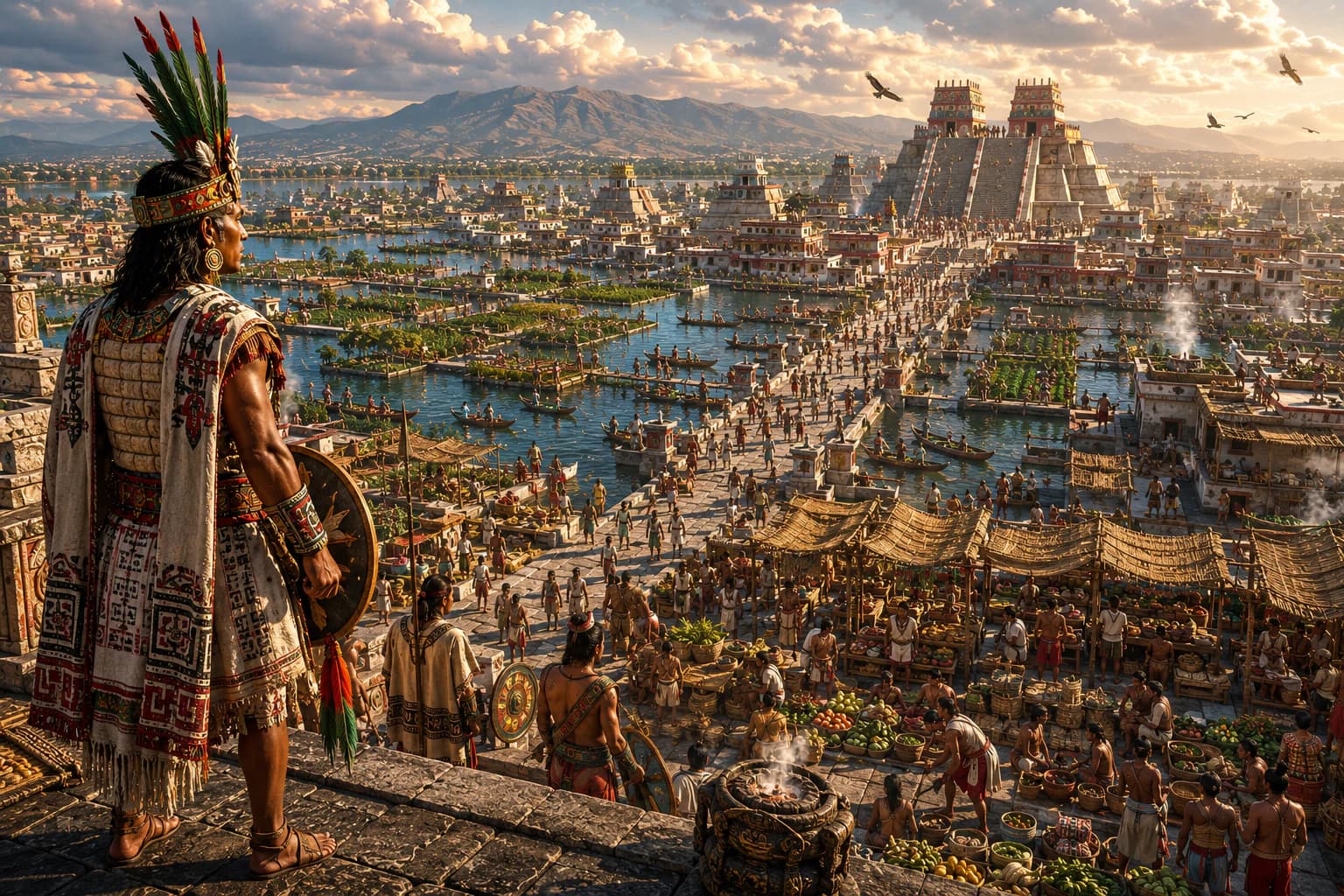
Cuauhtemoc belonged to the ruling world of Tenochtitlan. He was related to earlier rulers and grew up inside an imperial society built on military prestige, tribute, ritual obligation, and noble education. The city of his youth was extraordinary: a lake capital of causeways, canals, markets, temples, and political ceremony. Yet the empire around it was not universally loved. Subject peoples paid tribute and supplied labour, and many communities remembered conquest bitterly.
1520

After Moctezuma

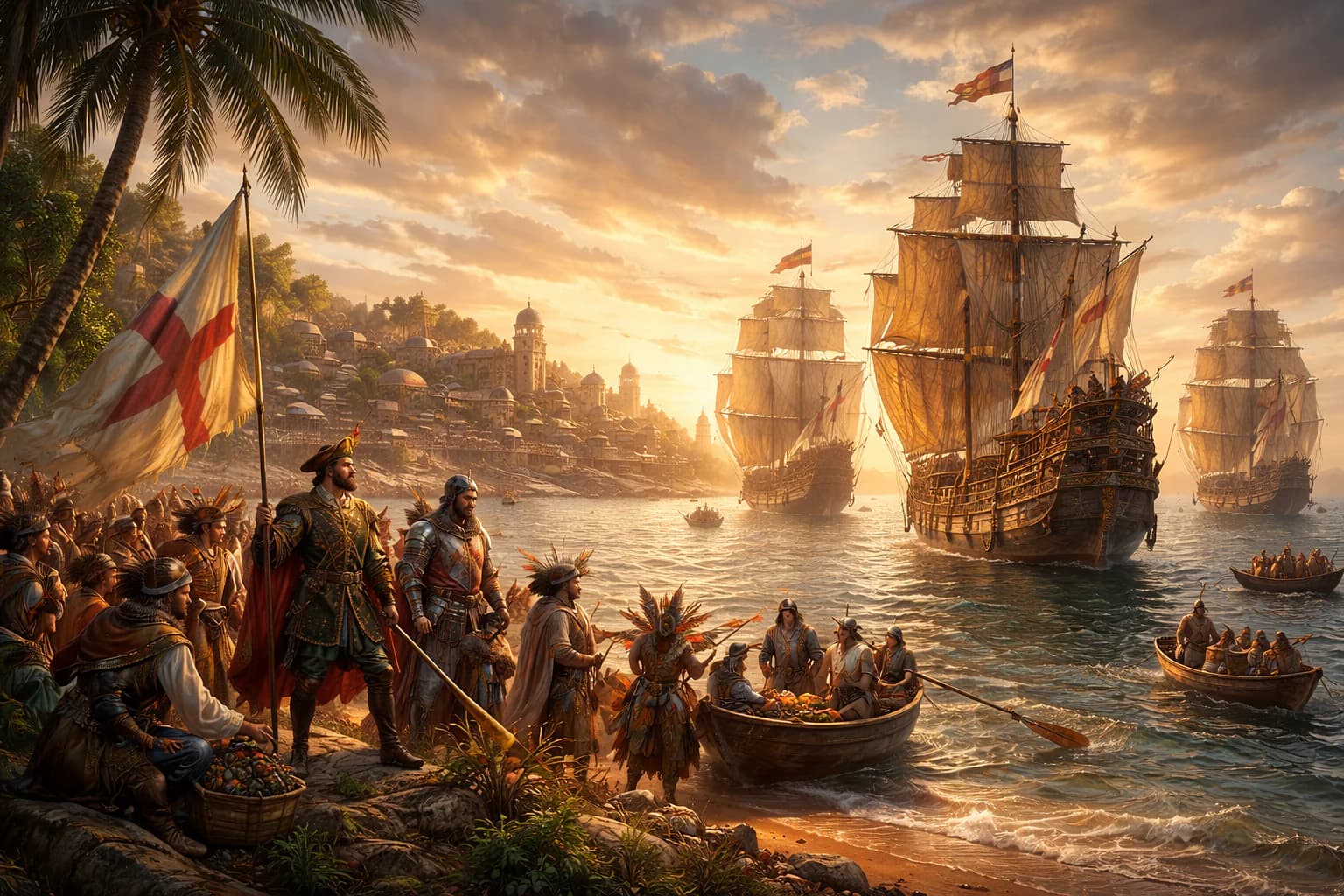
The Spanish arrival in 1519 created a crisis unlike anything Tenochtitlan had faced. Moctezuma II received Cortes, was taken into Spanish custody, and died during the uprising in the capital in 1520. Cuitlahuac, who helped drive the Spanish from the city during La Noche Triste, became ruler but died soon afterward, almost certainly during the smallpox epidemic that ravaged central Mexico. Cuauhtemoc then took power in late 1520. He inherited a traumatised city: politically shaken, biologically devastated, and surrounded by enemies.

1520-1521

Preparing resistance

Cuauhtemoc's resistance was not passive desperation. He organised defence, sought to maintain loyalty, and prepared the city for a siege fought across water, causeways, canals, rooftops, and temple precincts. Cortes rebuilt his campaign with Tlaxcalan and other Indigenous allies, constructed brigantines to control Lake Texcoco, and cut Tenochtitlan's access to supplies. The war was therefore not simply Spain against the Aztecs. It was a Mesoamerican coalition war in which Spanish weapons, horses, steel, disease, diplomacy, and Indigenous grievances combined against the Mexica capital.

1521

Siege of Tenochtitlan

The siege of Tenochtitlan in 1521 was one of the decisive urban battles in world history. Cortes's forces and allies attacked along causeways while brigantines fought on the lake, gradually isolating the city. Cuauhtemoc's defenders counterattacked, rebuilt barricades, used the urban landscape, and fought for neighbourhoods already collapsing under hunger and disease. By the final weeks, Tenochtitlan was no longer the glittering city Cortes had first entered; it was a battlefield of ruins, bodies, broken canals, and exhausted defenders.

13 August 1521

Capture

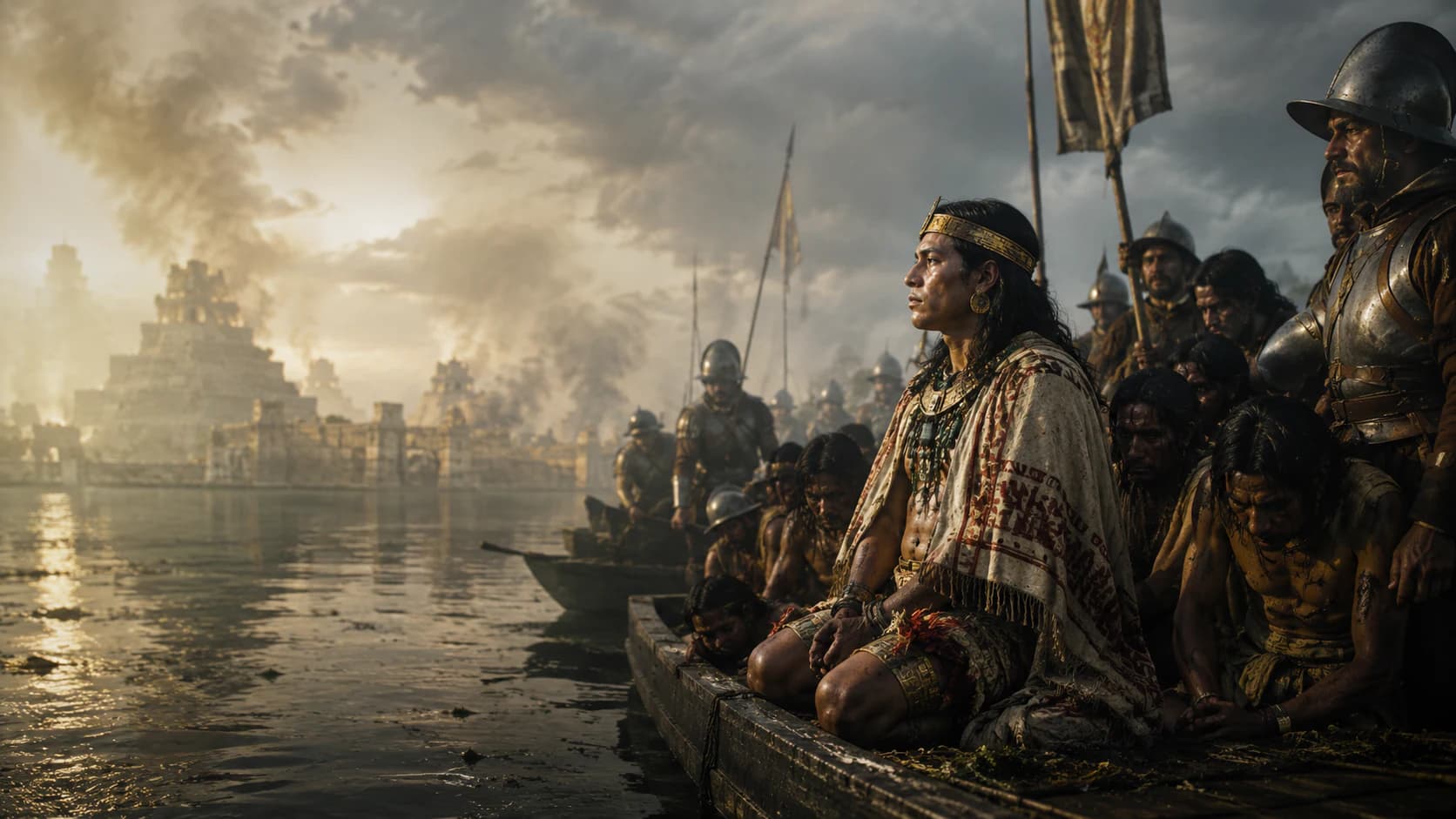
On 13 August 1521, Cuauhtemoc was captured on the water while attempting to leave the ruined city. Brought before Cortes, he is traditionally said to have asked to be killed, though the exact wording comes through Spanish accounts and must be treated cautiously. His capture ended organised Mexica resistance in the capital. It did not instantly create colonial Mexico, but it broke the political centre of the Triple Alliance and gave Spain a symbolic victory of immense force.

1525

Execution and memory

After the conquest, Cuauhtemoc remained politically dangerous because he embodied surviving legitimacy. Cortes took him on the difficult expedition to Honduras, where fears of rebellion grew among the Spaniards. In 1525 Cortes ordered Cuauhtemoc hanged, accusing him of plotting revolt. The evidence is uncertain, and the execution has often been read as an act of political elimination. In later Mexican memory, Cuauhtemoc became a national symbol of resistance, dignity, and the refusal to surrender identity even after military defeat.

Continue in context

Connected stories

Move from the profile into the wider events and settings this figure belongs to.

Tertiary paths

Content note

This profile is written for educational use and connects to related Stories of History pages. The main portrait is an AI-assisted historical reconstruction, included as an illustrative aid rather than documentary evidence. Image policy

References

Sources & Further Reading

Reliable reference works, archives and reading paths connected to this profile.

Further reading

  1. Encyclopaedia Britannica, Search results for Cuauhtemoc,” accessed June 2026.Open source
  2. WorldCat, Books and library holdings for Cuauhtemoc,” accessed June 2026.Open source

Primary sources

  1. Library of Congress, Search results for Cuauhtemoc,” accessed June 2026.Open source

Reviewed claim sources

Loading reviewed claim sources...

A weekly route through history

Find out first about the latest published stories, feature notes and occasional Premium offers in one weekly email.