People

Matthew Perry

Matthew Perry was a United States naval officer whose 1853 and 1854 expeditions to Japan led to the Convention of Kanagawa, opened Japanese ports and intensified the political crisis of the Tokugawa shogunate.

Born
1794 CE
Died
1858 CE
Role
United States naval officer

U.S. naval commodore (1794-1858)

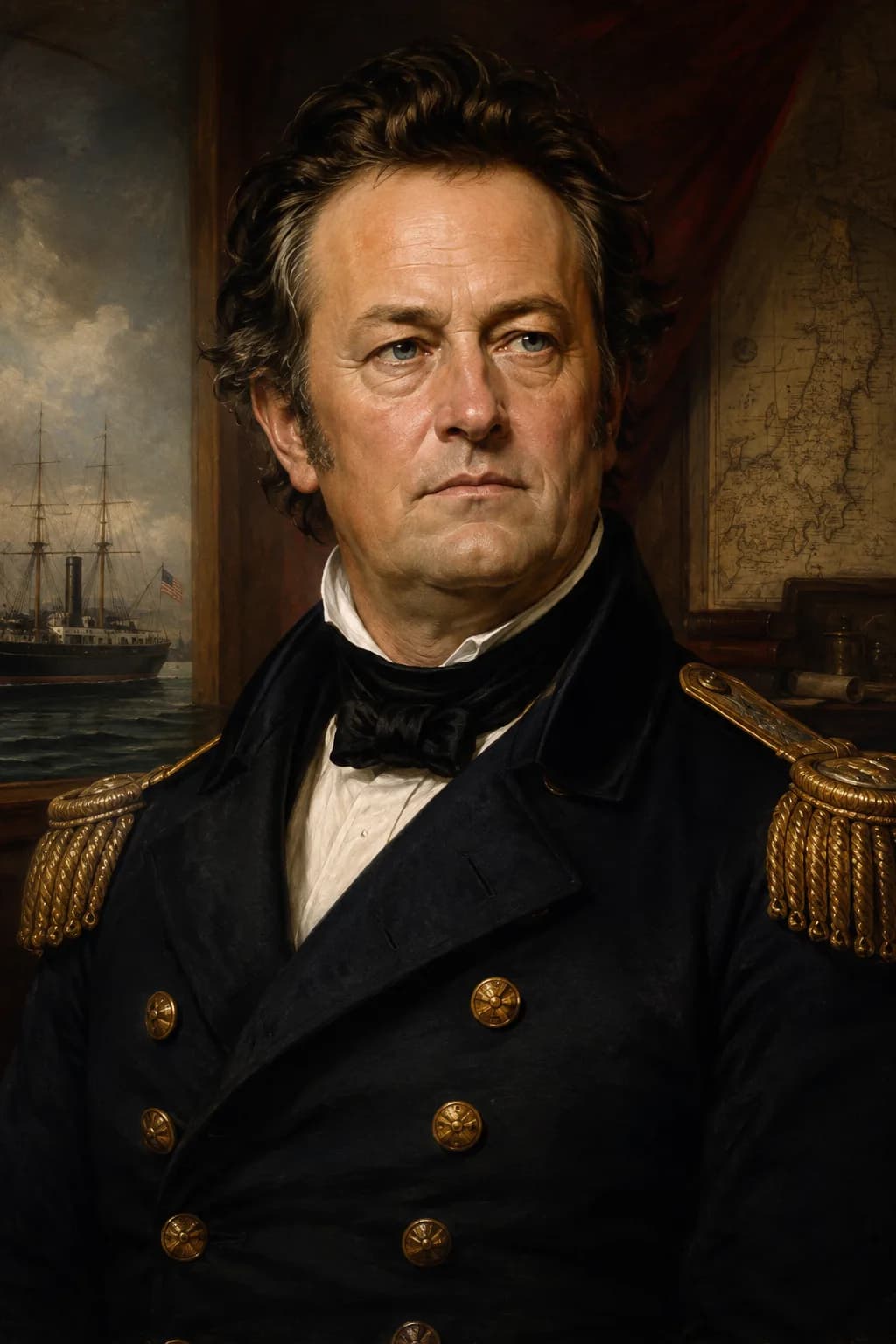
AI-generated portrait of Commodore Matthew Perry in naval uniform
AI-assisted historical reconstruction

An illustrative reconstruction based on historical context. It is not a photograph or documentary likeness. Image policy

Quick answer

Matthew Perry was a United States naval officer whose 1853 and 1854 expeditions to Japan led to the Convention of Kanagawa, opened Japanese ports and intensified the political crisis of the Tokugawa shogunate.

Born
1794 CE
Died
1858 CE
Role
United States naval officer
Years
1794-1858 CE
Quick facts

Profile details

Additional identity and tagging details that are not already covered in the introduction.

Full name
Matthew Calbraith Perry
Also known as
Commodore Perry, Matthew C. Perry
Facts

Matthew Perry timeline facts

Selected specifics from this profile's life story.

1794-1852
Naval career

Perry built a long career in the United States Navy before being chosen to lead an expedition to Japan.

1853
Black Ships

In 1853 Perry sailed into Edo Bay with steam-powered warships that shocked Tokugawa officials.

1850s
Crisis for the shogunate

Perry's expedition helped turn foreign policy into a domestic legitimacy crisis for Tokugawa rule.

After 1858
Unintended legacy

Perry died before the Restoration, but his Black Ships remained the symbol of the pressure that forced Japan to change.

Life Journey

The commodore whose ships broke Japan's isolation

Follow the story in a more continuous narrative, with a reading mode that matches how much depth you want.

Complete chronology

1794-1852

Naval career

Matthew Calbraith Perry was born in Rhode Island in 1794 and entered the United States Navy as a young man. His career unfolded as steam power, naval logistics and American overseas ambitions grew together. Perry became associated with modernising naval practice, including steam vessels, and served in the War of 1812, anti-piracy operations and the Mexican-American War. By the early 1850s, the United States wanted coaling stations, protection for shipwrecked sailors and access to Asian trade. Perry's experience made him a natural choice for a mission that was diplomatic, commercial and military all at once.
1853

Black Ships

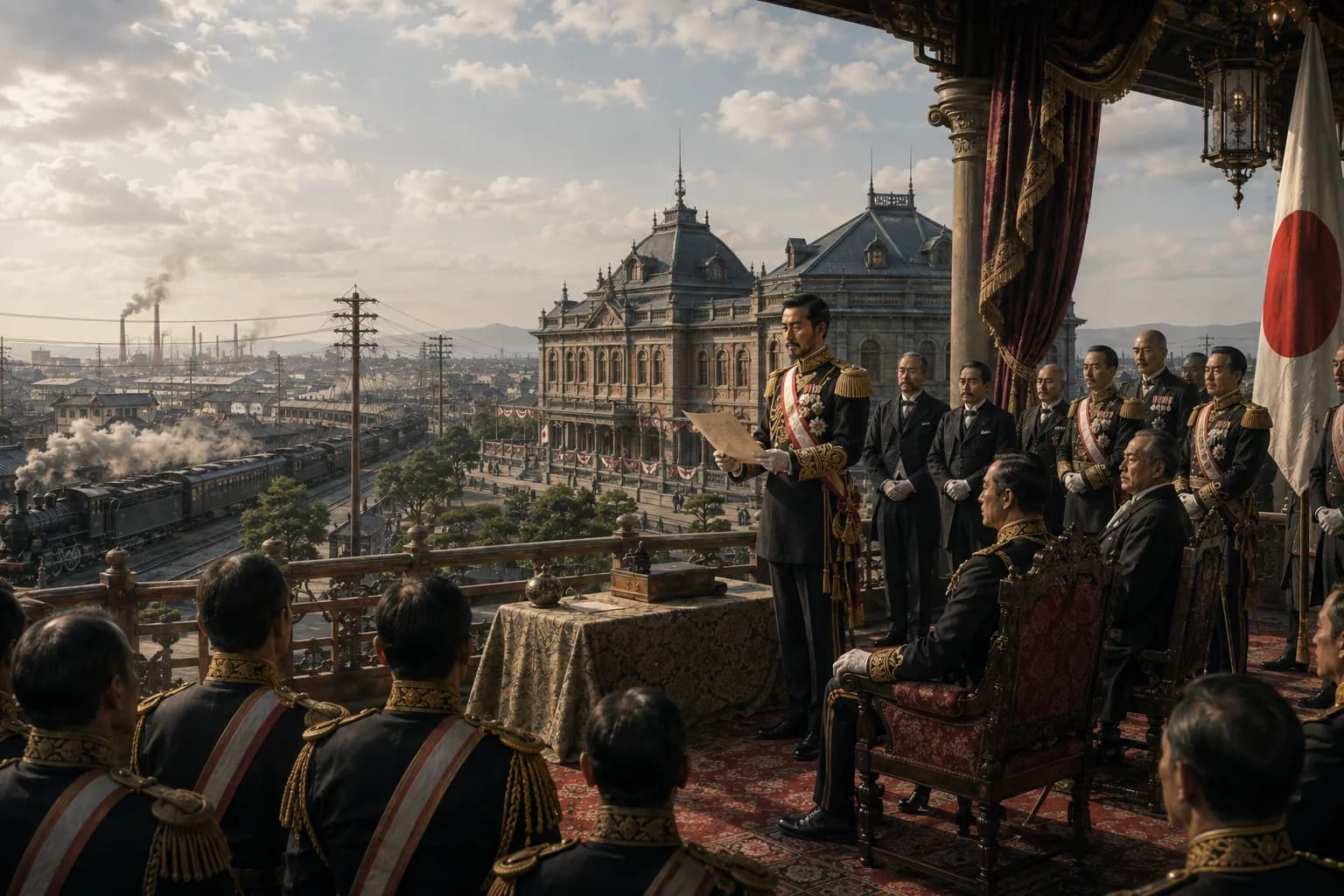
Perry arrived near Uraga in Edo Bay in July 1853 with a squadron whose dark-hulled steamships became known in Japan as the Black Ships. The visual shock mattered as much as the written demands. Tokugawa Japan had restricted foreign contact for generations, but Western empires had already forced their way into much of Asia. Perry carried a letter from the U.S. president demanding better treatment for American sailors, supplies and opened ports. He refused to follow ordinary restricted channels and made clear that he would return. The shogunate had to decide whether resistance was possible against naval power it could not match.

1854

Treaty opening

When Perry returned in 1854 with a larger force, the shogunate agreed to the Convention of Kanagawa. The agreement opened Shimoda and Hakodate to American vessels, provided for shipwrecked sailors and created a U.S. consular presence. It was not yet the full commercial treaty system that would follow, but it broke the logic of Tokugawa seclusion. Other Western powers soon demanded similar arrangements. Perry had achieved his mission, but for Japan the consequences were far larger than port access. The shogunate's decision to concede under pressure made critics ask whether it could still defend the country.

1850s

Crisis for the shogunate

Perry left Japan before the Tokugawa system collapsed, but his expedition exposed its vulnerability. The shogunate had maintained order partly by controlling foreign contact and claiming responsibility for national security. Western pressure made that claim harder to sustain. Debates over whether to expel foreigners, strengthen the state or rally around the emperor became sharper. Samurai activists and powerful domains used the treaty crisis to challenge Edo's authority. In that sense Perry was not the cause of the Meiji Restoration by himself. He was the shock that made older tensions impossible to hide.

After 1858

Unintended legacy

Perry died in 1858, the same year Japan signed deeper commercial treaties with Western powers. His legacy in Japan was larger than his personal involvement. The Black Ships became shorthand for a moment when the outside world arrived with steam, cannon and demands that could not be ignored. For the United States, Perry represented successful gunboat diplomacy. For Japan, the memory was more ambivalent: humiliation, alarm and forced contact, but also the beginning of a reform movement that would make the country strong enough to resist domination. The Meiji state would modernise partly so that no foreign squadron could dictate terms so easily again.

Continue in context

Connected stories

Move from the profile into the wider events and settings this figure belongs to.

Tertiary paths

Content note

This profile is written for educational use and connects to related Stories of History pages. The main portrait is an AI-assisted historical reconstruction, included as an illustrative aid rather than documentary evidence. Image policy

References

Sources & Further Reading

Reliable reference works, archives and reading paths connected to this profile.

Further reading

  1. Encyclopaedia Britannica, Search results for Matthew Perry,” accessed June 2026.Open source
  2. WorldCat, Books and library holdings for Matthew Perry,” accessed June 2026.Open source

Primary sources

  1. Library of Congress, Search results for Matthew Perry,” accessed June 2026.Open source

Reviewed claim sources

Loading reviewed claim sources...

A weekly route through history

Find out first about the latest published stories, feature notes and occasional Premium offers in one weekly email.