People

Margaret Thatcher

Margaret Thatcher was British Prime Minister from 1979 to 1990. Her Conservative governments reshaped the economy through monetarism, privatisation, union reform, council house sales and a combative Cold War foreign policy.

Born
1925 CE
Died
2013 CE
Role
First female British Prime Minister

First female British Prime Minister (1925–2013)

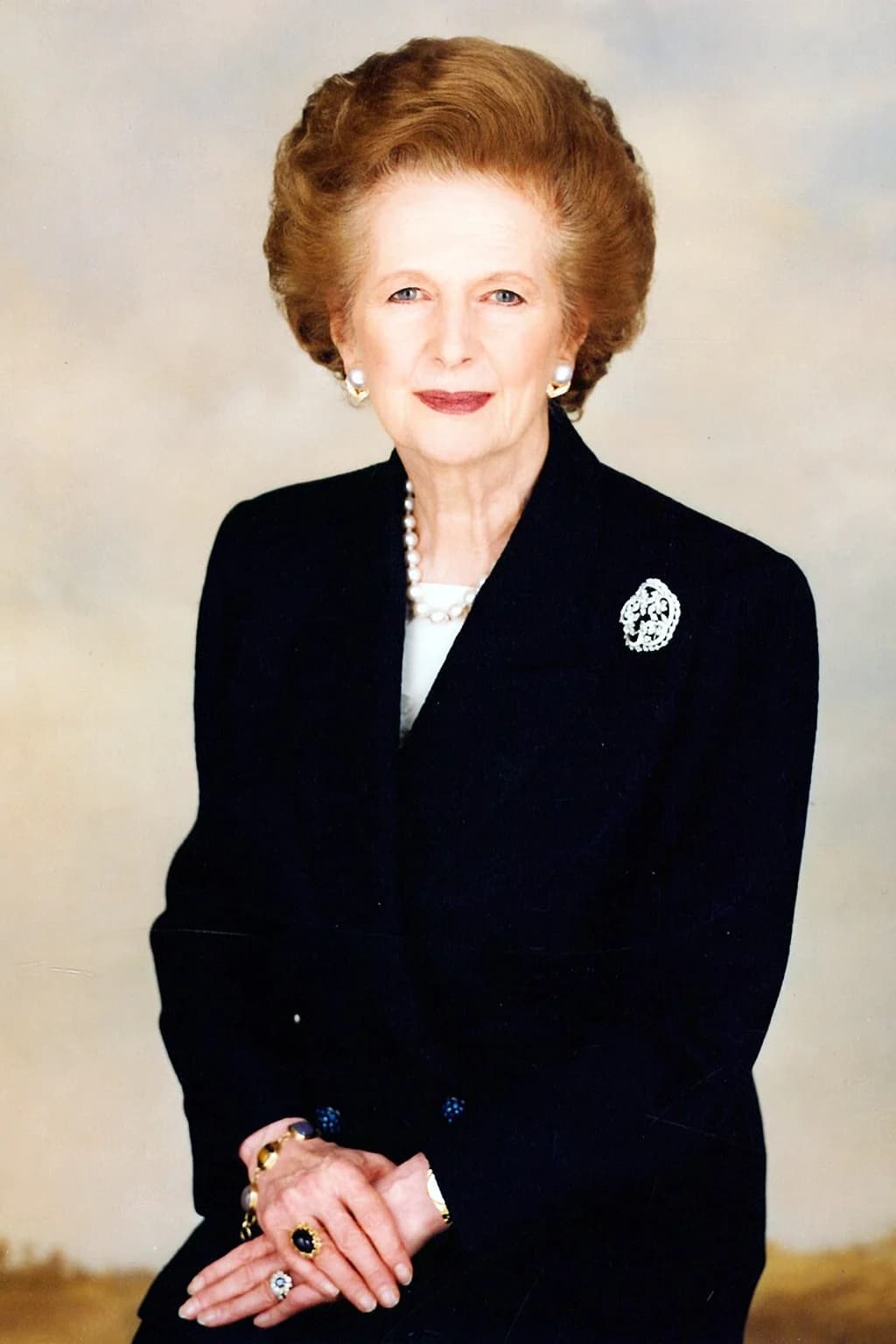
Portrait photograph of Margaret Thatcher
Licensed archival image

A real historical or editorial image is used here. Source, licence and transformation details are publicly recorded. Image policy Attribution

Quick answer

Margaret Thatcher was British Prime Minister from 1979 to 1990. Her Conservative governments reshaped the economy through monetarism, privatisation, union reform, council house sales and a combative Cold War foreign policy.

Born
1925 CE
Died
2013 CE
Role
First female British Prime Minister
Years
1925-2013 CE
Facts

Margaret Thatcher timeline facts

Selected specifics from this profile's life story.

1925–1943
Modest beginnings

Margaret Roberts grew up above her father's grocery shop in Grantham, absorbing Nonconformist discipline, thrift and local civic duty.

1960s–1975
Rising influence

After Conservative defeat and economic turmoil, Thatcher challenged Edward Heath and became party leader in 1975.

1980s
Foreign policy stance

The Falklands War, close ties with Ronald Reagan and dealings with Mikhail Gorbachev made Thatcher a major Cold War figure.

1990–2013
Legacy and impact

Thatcher's legacy remains one of modern Britain's central arguments: renewal to admirers, rupture to critics, unavoidable to everyone.

Life Journey

A determined rise through conviction, reform and controversy

Follow the story in a more continuous narrative, with a reading mode that matches how much depth you want.

Complete chronology

1925–1943

Modest beginnings

Margaret Thatcher was born Margaret Roberts in Grantham, Lincolnshire, in 1925. The world she later described as formative was not aristocratic Conservatism but small-town Methodism: work, saving, self-command, respectability and suspicion of waste. Her father Alfred Roberts was a grocer, lay preacher, alderman and later mayor, and his seriousness left a deep mark on her. This background matters because Thatcher's politics drew emotional force from a moral story as much as from economics. She believed household discipline could be scaled up into national policy, that debt and dependency weakened character, and that effort should be rewarded. Critics saw a narrow moralism that ignored structural hardship. Supporters saw the source of her clarity.


1943–1959

Education and ambition

Thatcher studied chemistry at Somerville College, Oxford, during the Second World War and became active in university Conservative politics. Science did not make her technocratic in style, but it did encourage precision, preparation and impatience with vagueness. After Oxford she worked as a research chemist and later trained as a barrister, while pursuing parliamentary selection in a political world still dominated by men from more conventional backgrounds. Her early candidacies in Dartford were defeats, but useful ones: they gave her national visibility, campaign practice and experience presenting Conservative ideas to industrial working-class voters. Marriage to Denis Thatcher brought personal stability and financial support, but her rise remained the product of unusual stamina.

1959

Entry to Parliament

Thatcher entered Parliament in 1959 as Conservative MP for Finchley. She was not immediately a front-rank star, but she worked with a relentlessness that colleagues noticed. Early ministerial experience exposed her to pensions, education, science and the machinery of government. As Education Secretary under Edward Heath, she became nationally notorious for ending universal free school milk for older primary children, a small budget decision that produced a large political wound. The episode taught her something about symbolism: policies acquire nicknames, opponents find emotional shortcuts, and a minister must either retreat or harden. Thatcher hardened. By the early 1970s she was already marked by an unusual combination of policy grip and ideological appetite.

1960s–1975

Rising influence

The 1970s shook confidence in Britain's postwar settlement. Inflation, strikes, weak growth and arguments over the power of trade unions created an atmosphere of national drift. Edward Heath's Conservative government had tried confrontation, then compromise, and lost office in 1974. Thatcher's leadership challenge in 1975 was startling because she was not the obvious candidate and no woman had led a major British party. Yet she became the vehicle for a party ready to rethink itself. Around her gathered thinkers and politicians who rejected the old consensus around nationalised industry, incomes policy and corporatist negotiation. Thatcher did not invent all of Thatcherism, but she gave it voice, discipline and a willingness to fight.

1979

Becoming prime minister

Thatcher entered Downing Street in May 1979 after strikes during the Winter of Discontent damaged the Labour government and made the question of governability urgent. She inherited high inflation, industrial conflict, anxious public finances and a country uncertain about its relative decline. Her answer was not simply managerial. She believed the state had become too large, unions too powerful and economic policy too willing to purchase temporary peace with long-term weakness. The first years were painful. Tight monetary policy, spending restraint and recession drove unemployment sharply upward and provoked deep criticism, including inside her own party. Thatcher's survival in this period mattered. Had she turned back, her premiership might have become a failed experiment. Instead she made persistence part of her authority.

1980s

Economic reforms

The core of Thatcher's domestic legacy was structural change. Her governments restricted trade union powers through successive laws, culminating politically in the defeat of the National Union of Mineworkers during the 1984-1985 miners' strike. They sold council houses to tenants, privatised companies such as British Telecom, British Gas and British Airways, and encouraged share ownership and financial deregulation. The City of London's Big Bang in 1986 accelerated Britain's turn toward finance. Supporters argue these reforms broke inflationary stagnation, modernised inefficient industries and widened ownership. Critics point to deindustrialisation, regional inequality, weakened labour protections and a sharper social order. Both views grasp something real. Thatcher made Britain more dynamic in some places and more wounded in others.

1980s

Foreign policy stance

Foreign policy amplified Thatcher's image of resolve. When Argentina invaded the Falkland Islands in 1982, she sent a task force across the Atlantic and won a military victory that transformed her domestic standing. In the Cold War she formed a close ideological partnership with Ronald Reagan, supporting nuclear deterrence and a hard line toward Soviet power. Yet she was not simply rigid. She recognised Mikhail Gorbachev as a Soviet leader with whom the West could do business, helping create political space for late Cold War diplomacy. Her approach to Europe was more troubled. She supported the single market but resisted moves toward deeper political integration, delivering the Bruges speech in 1988 and turning European policy into a fault line inside the Conservative Party.

Late 1980s–1990

Decline in support

Thatcher's fall came from the qualities that had made her dominant: conviction, combativeness and distrust of compromise. The community charge, widely known as the poll tax, replaced domestic rates with a flat local tax that many voters experienced as unfair and administratively chaotic. Protests and political damage mounted. At the same time, senior Conservatives grew alarmed by her hostility to European integration and by a governing style that seemed increasingly imperious. Geoffrey Howe's resignation speech in November 1990 gave permission for rebellion. Michael Heseltine challenged her leadership; when she failed to win decisively on the first ballot, cabinet colleagues told her the support was gone. She resigned in tears, a reminder that even the hardest political figures can be undone by the party machines they once mastered.

1990–2013

Legacy and impact

Margaret Thatcher died in 2013, but Thatcherism did not end with her premiership. Later Conservative and Labour leaders accepted parts of the world she helped create: privatisation, limits on union power, suspicion of inflation, market language and a smaller role for the state in many economic sectors. Tony Blair's New Labour was in part a response to her victory over the old settlement. Yet the costs remain fiercely debated. Former industrial communities, public housing, inequality, Scotland's political alienation, financialisation and Britain's relationship with Europe all sit inside arguments about her record. To ask why Margaret Thatcher was important is not only to list achievements. It is to see a leader who shifted the boundaries of what British politics considered possible, and made neutrality about her almost impossible.

Continue in context

Connected stories

Move from the profile into the wider events and settings this figure belongs to.

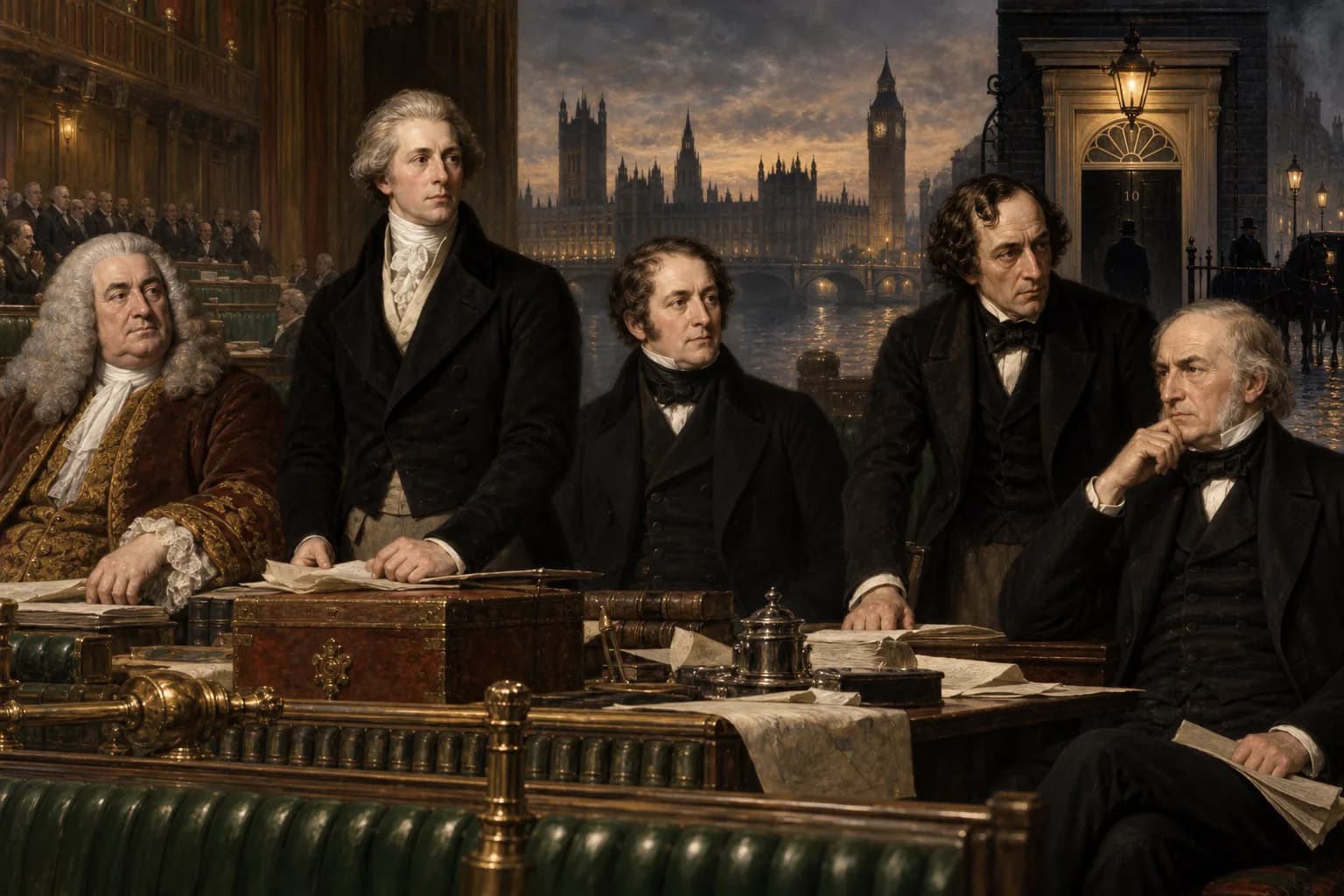
British Prime Ministers lineage
LineagePrime ministers in sequence
British Prime Ministers
1721 CE–present

Explore British prime ministers from Walpole to the present.

View lineage
Tertiary paths

Content note

This profile is written for educational use and connects to related Stories of History pages. The main portrait uses a real historical or editorial image, with source and licence details recorded for attribution review. Image policy Image attribution

References

Sources & Further Reading

Reliable reference works, archives and reading paths connected to this profile.

Further reading

  1. Encyclopaedia Britannica, Search results for Margaret Thatcher,” accessed June 2026.Open source
  2. WorldCat, Books and library holdings for Margaret Thatcher,” accessed June 2026.Open source

Primary sources

  1. Library of Congress, Search results for Margaret Thatcher,” accessed June 2026.Open source

Reviewed claim sources

Loading reviewed claim sources...

A weekly route through history

Find out first about the latest published stories, feature notes and occasional Premium offers in one weekly email.