People

Leif Erikson

Leif Erikson was a Norse explorer from Iceland and Greenland who reached North America around 1000 AD, centuries before Columbus, in the region remembered as Vinland.

Born
970 CE
Died
1020 CE
Role
Norse explorer

Norse explorer (970–1020)

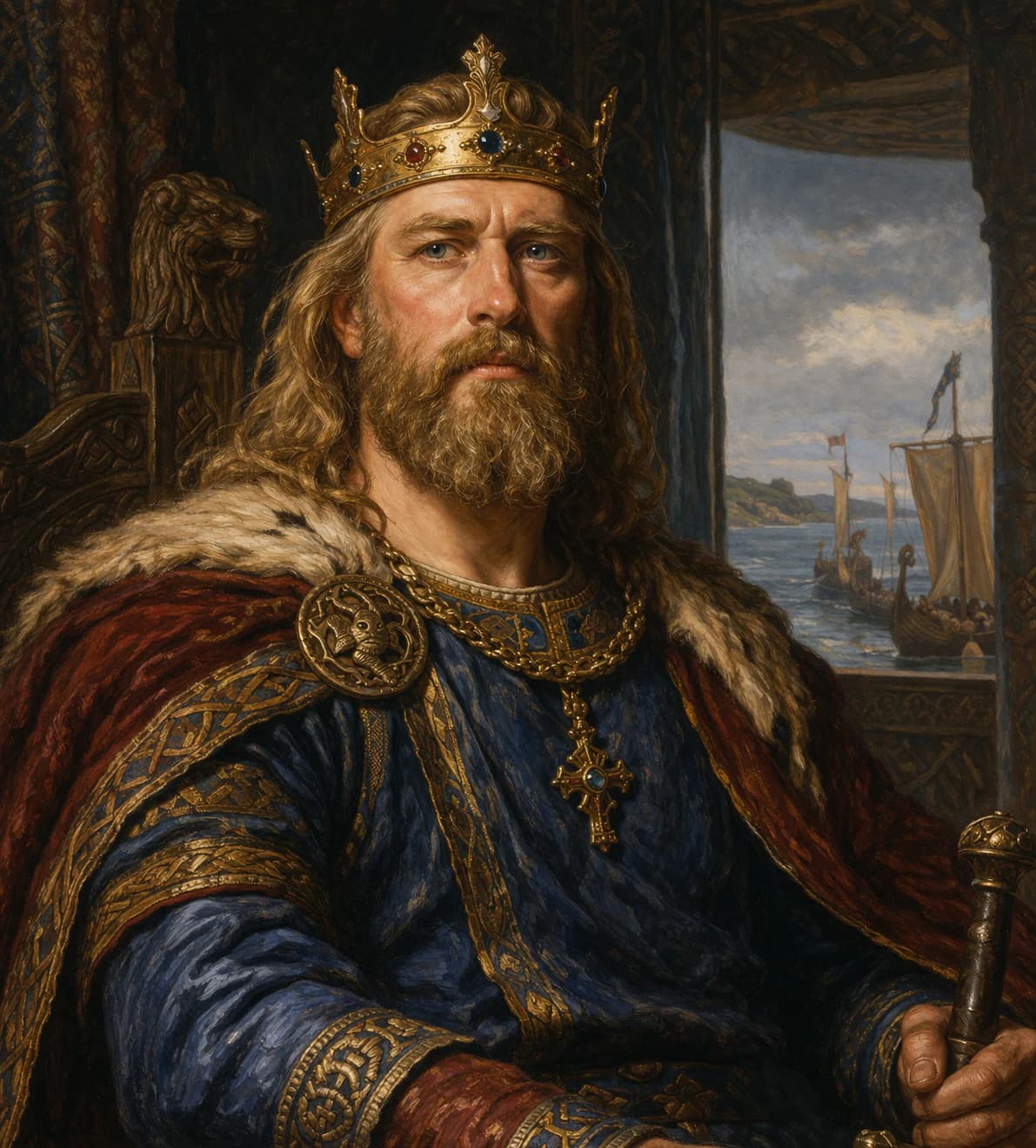
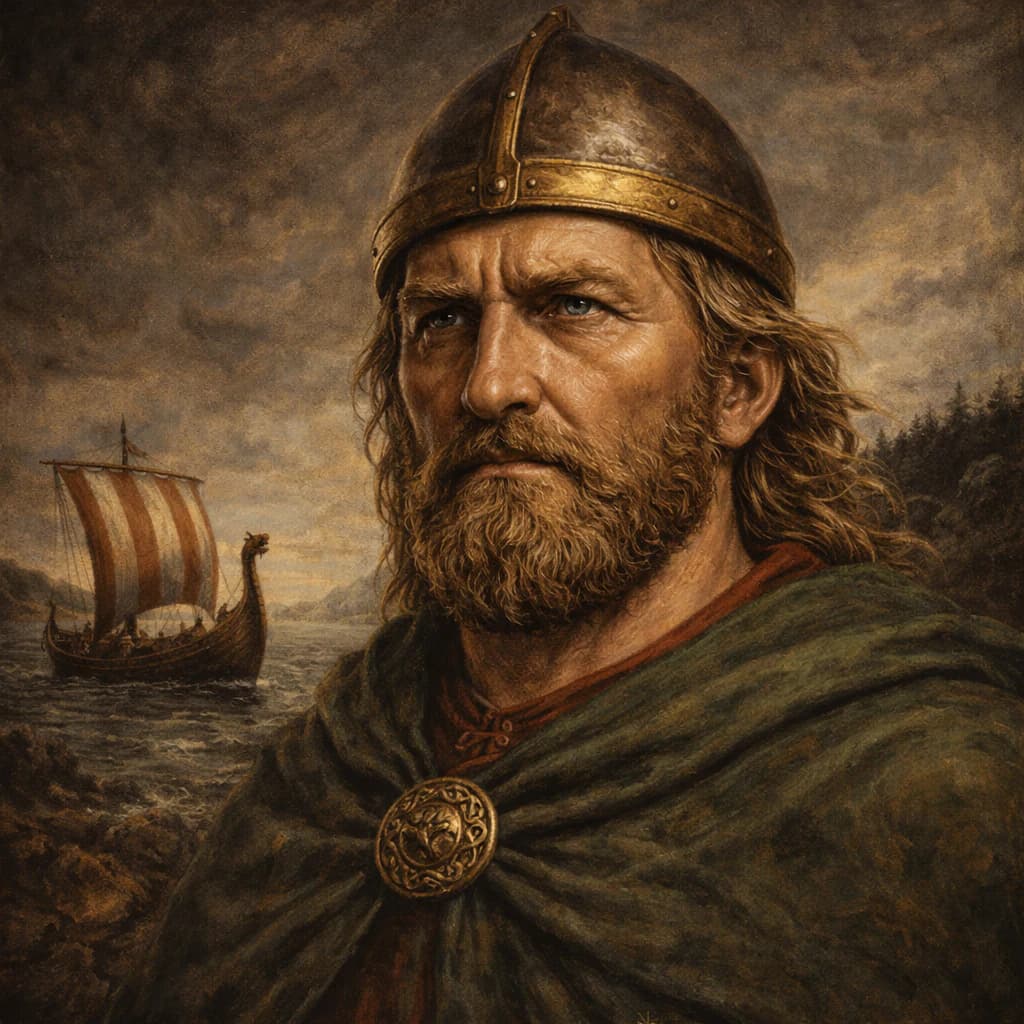
AI-generated portrait of Leif Erikson in Viking explorer attire
AI-assisted historical reconstruction

An illustrative reconstruction based on historical context. It is not a photograph or documentary likeness. Image policy

Quick answer

Leif Erikson was a Norse explorer from Iceland and Greenland who reached North America around 1000 AD, centuries before Columbus, in the region remembered as Vinland.

Born
970 CE
Died
1020 CE
Role
Norse explorer
Years
970-1020 CE
Facts

Leif Erikson timeline facts

Selected specifics from this profile's life story.

c. 970
Born into exploration

Leif Erikson was born in Iceland into the family of Erik the Red, growing up in a Norse Atlantic world where exile, settlement, trade, and sea travel were part of survival.

c. 1000
Setting westward

According to one major saga account, Leif followed reports from Bjarni Herjolfsson, who had sighted western lands without landing on them.

c. 1002
Return to Greenland

Leif returned to Greenland with knowledge of western lands, and later Norse expeditions tried to build on what his voyage had proved possible.

After 1020
Enduring legacy

Leif Erikson is remembered as one of the first Europeans known to have reached North America, but his legacy is strongest when saga, archaeology, and Indigenous context are held together.

Life Journey

From northern seas to distant shores

Follow the story in a more continuous narrative, with a reading mode that matches how much depth you want.

Complete chronology

c. 970

Born into exploration

Leif Erikson's biography begins on the edge of the medieval European world. He was the son of Erik the Red, the forceful Norse settler associated with Greenland, and probably grew up between Icelandic family networks and the new Greenland colonies. The sources for Leif are saga sources, especially the Saga of the Greenlanders and the Saga of Erik the Red, written down long after the events they describe. That means details must be handled carefully. Still, the larger setting is secure: Norse communities were pushing across the North Atlantic by ship, linking Norway, Iceland, Greenland, and eventually lands west of Greenland. Leif inherited a culture of skilled navigation, practical courage, and household reputation. Exploration was not a romantic hobby. It was bound to land hunger, timber needs, prestige, trade, and the hard economics of life in marginal northern settlements.
c. 985

Journey to Greenland

Greenland shaped Leif as much as Iceland did. The Norse settlements there depended on livestock farming, hunting, trade, imported goods, and careful seasonal planning. They also lacked some resources that Iceland and Norway could provide more easily, especially good timber. That scarcity made reports of wooded lands to the west immediately practical. Greenland was not simply a distant colony; it was a launch point into a wider Atlantic geography. Leif would have understood the risks of such voyages: weather shifts, fog, sea ice, uncertain coastlines, and the danger of being blown far from intended routes. He also lived in a society that rewarded the person who could convert risk into land, resources, and reputation. His later voyage makes sense only in that frontier context.

c. 1000

Voyage to Norway

One important strand of Leif's story places him in Norway at the court of Olaf Tryggvason, the king remembered for promoting Christianity across Norse communities. The sagas differ in emphasis, and exact chronology is debated, but Leif's association with conversion reflects a real historical transition. Around his lifetime, older Norse religious practices and Christian kingship were colliding and blending across the North Atlantic. If Leif did carry Christianity back toward Greenland, his role was not only that of explorer but also cultural messenger. This matters because the Atlantic voyages were never purely geographical. Ships carried beliefs, laws, stories, technologies, and political loyalties. Leif moved through a world where sea routes connected spiritual change with settlement expansion.

c. 1000

Setting westward

The best-known version of Leif's breakthrough begins with another sailor's missed opportunity. Bjarni Herjolfsson was said to have seen unknown coasts after being blown off course but did not go ashore. Leif, by contrast, turned rumor into investigation. He bought or used a suitable ship, gathered a crew, and sailed west from Greenland. The voyage required judgment rather than maps: reading currents, stars, birds, coastlines, wind, and weather, then deciding when to press on and when to land. Saga geography names several regions, often interpreted as Helluland, Markland, and Vinland, though their exact identifications remain debated. What matters is the pattern: rocky land, forested land, and a more promising southern base. Leif's importance lies in transforming Atlantic possibility into a documented Norse crossing to North America.

c. 1000

Arrival in new lands

Vinland was not just a point on a map. To Norse Greenlanders, it represented resources that could change the balance of frontier life. Timber could repair ships and buildings. New grazing land suggested seasonal use or settlement. Wild grapes, berries, or other foods in the saga memory gave the land a sense of abundance compared with Greenland's harsher environment, though the exact meaning of Vinland's name is debated. Modern archaeology at L'Anse aux Meadows in Newfoundland confirms a Norse presence in North America around this period, even if it cannot prove every saga detail about Leif personally. That distinction is important. The sagas preserve memory shaped by storytelling; archaeology anchors the broader claim that Norse people crossed the Atlantic and built at least a temporary base.

c. 1001

Short-lived settlement

The North American venture did not become a permanent Norse colony. That limitation is as revealing as the voyage itself. The settlement evidence at L'Anse aux Meadows points to repair work, iron production, timber activity, and a staging post rather than a large farming society. The distances were punishing, Greenland's population was small, and sustained support across the Atlantic was difficult. Saga accounts also describe encounters and conflict with Indigenous peoples, whom the Norse called Skraelings. These episodes are filtered through Norse storytelling and cannot be treated as neutral reports, but they point to a decisive reality: North America was already inhabited, known, and used by Indigenous communities. Leif's voyage was not the discovery of an empty world. It was a European arrival in lands with their own histories.

c. 1002

Return to Greenland

Leif's return mattered because exploration only changes history when information survives the voyage home. Saga tradition presents him as Leif the Lucky, a reputation linked both to the Vinland journey and to rescue episodes at sea. His report gave Greenlanders a usable mental map of lands west of their settlements. Later voyages associated with Thorvald Erikson, Freydis Eiriksdottir, Thorfinn Karlsefni, and Gudrid Thorbjarnardottir show that Vinland remained part of Norse imagination and planning. These later attempts also reveal why the route did not become a stable bridge between continents. The Atlantic crossing was possible, but possible is not the same as sustainable. Leif opened a door that his society could not keep open for long.

c. 1003–1020

Later leadership

Leif's later life is harder to reconstruct than his voyage. He is usually understood to have taken over family responsibilities in Greenland after Erik the Red, becoming a leading figure in the settlement rather than a continual wanderer. That shift from explorer to local leader is historically plausible. In Greenland, authority required managing households, alliances, law, trade, faith, and seasonal survival. The famous voyage did not remove Leif from the ordinary pressures of Norse frontier life. It gave him prestige within them. The absence of a dramatic later career also tells us something useful: medieval exploration was often episodic. A person could make one extraordinary crossing and then spend the rest of life maintaining the fragile community that made such voyages possible.

After 1020

Enduring legacy

Leif's legacy has often been used to correct a simple myth: Columbus was not the first European to reach the Americas. That correction is true, but it should not flatten the larger story. Indigenous peoples had inhabited the Americas for thousands of years before any Norse sail appeared. Norse contact was early, remarkable, and temporary. Columbus's later voyages had a very different global consequence because they were followed by sustained conquest, colonization, disease exchange, slavery, and empire. Leif's voyage did not create that transformation. Its power lies elsewhere. It proves the extraordinary reach of medieval Norse seafaring, preserves the value of saga memory when tested against archaeology, and reminds us that history is often wider and stranger than the narratives later ages choose to center.

Continue in context

Connected stories

Move from the profile into the wider events and settings this figure belongs to.

Tertiary paths

Content note

This profile is written for educational use and connects to related Stories of History pages. The main portrait is an AI-assisted historical reconstruction, included as an illustrative aid rather than documentary evidence. Image policy

References

Sources & Further Reading

Reliable reference works, archives and reading paths connected to this profile.

Further reading

  1. Encyclopaedia Britannica, Search results for Leif Erikson,” accessed June 2026.Open source
  2. WorldCat, Books and library holdings for Leif Erikson,” accessed June 2026.Open source

Primary sources

  1. Library of Congress, Search results for Leif Erikson,” accessed June 2026.Open source

Reviewed claim sources

Loading reviewed claim sources...

A weekly route through history

Find out first about the latest published stories, feature notes and occasional Premium offers in one weekly email.