People

Cnut the Great

Cnut the Great, also known as King Canute, was a Danish king who conquered England in 1016 and later ruled Denmark and Norway, creating an 11th-century North Sea empire. His reign combined Viking military power, English administration, Christian kingship, and European diplomacy.

Born
995 CE
Died
1035 CE
Role
Danish king

Danish king (995–1035)

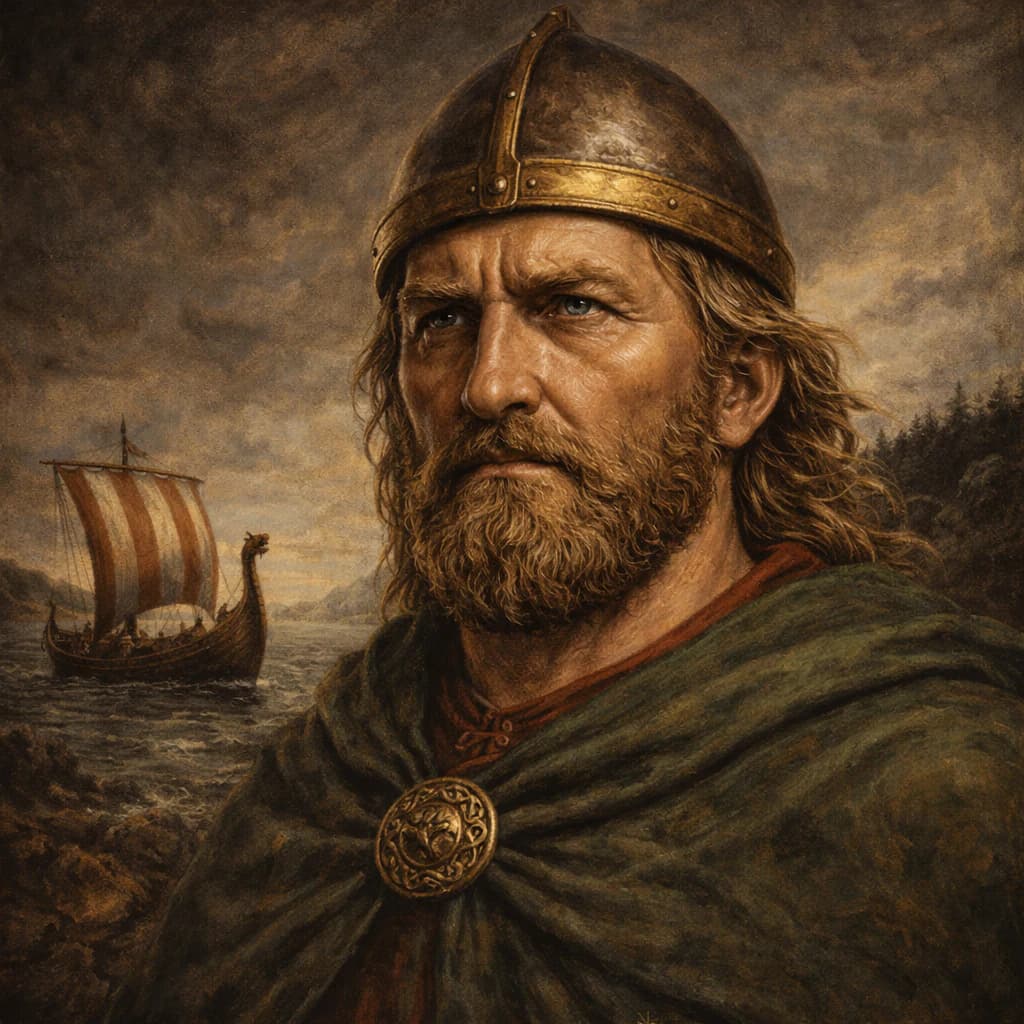
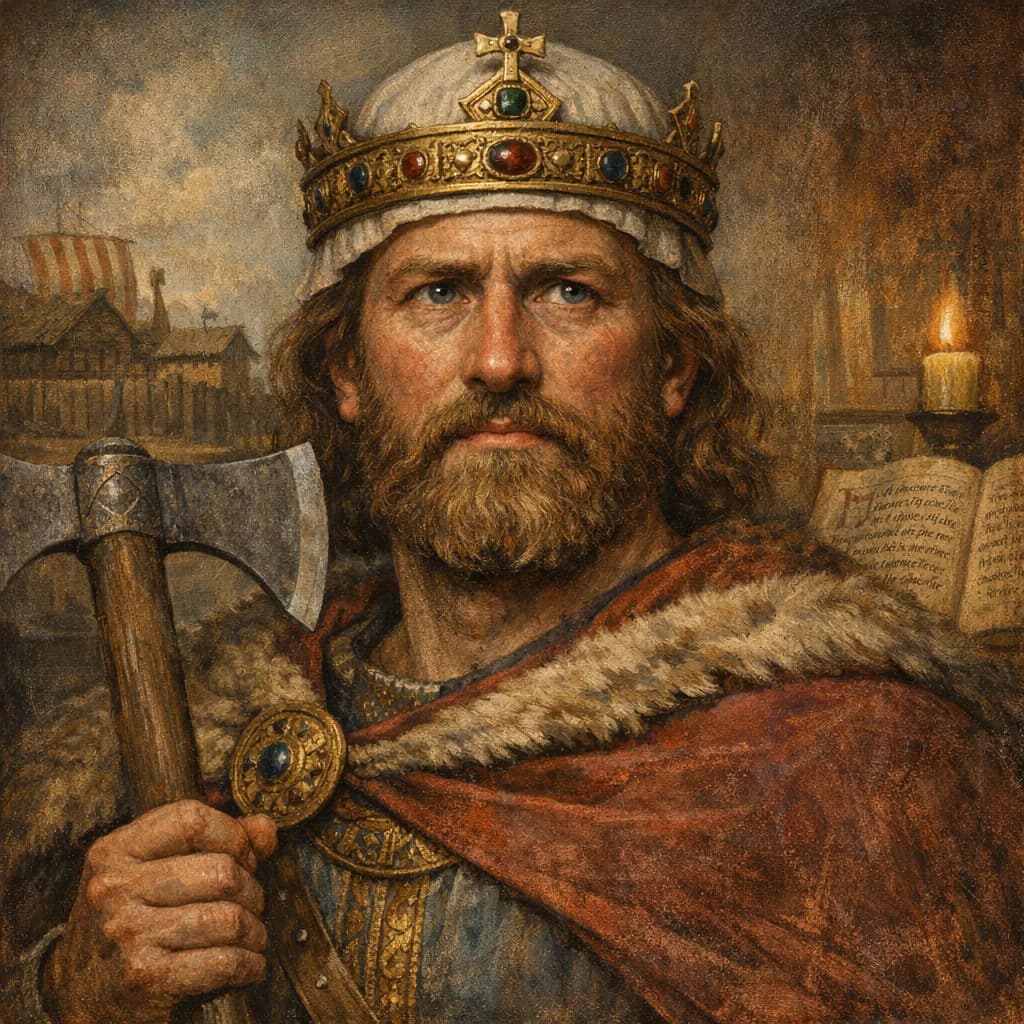
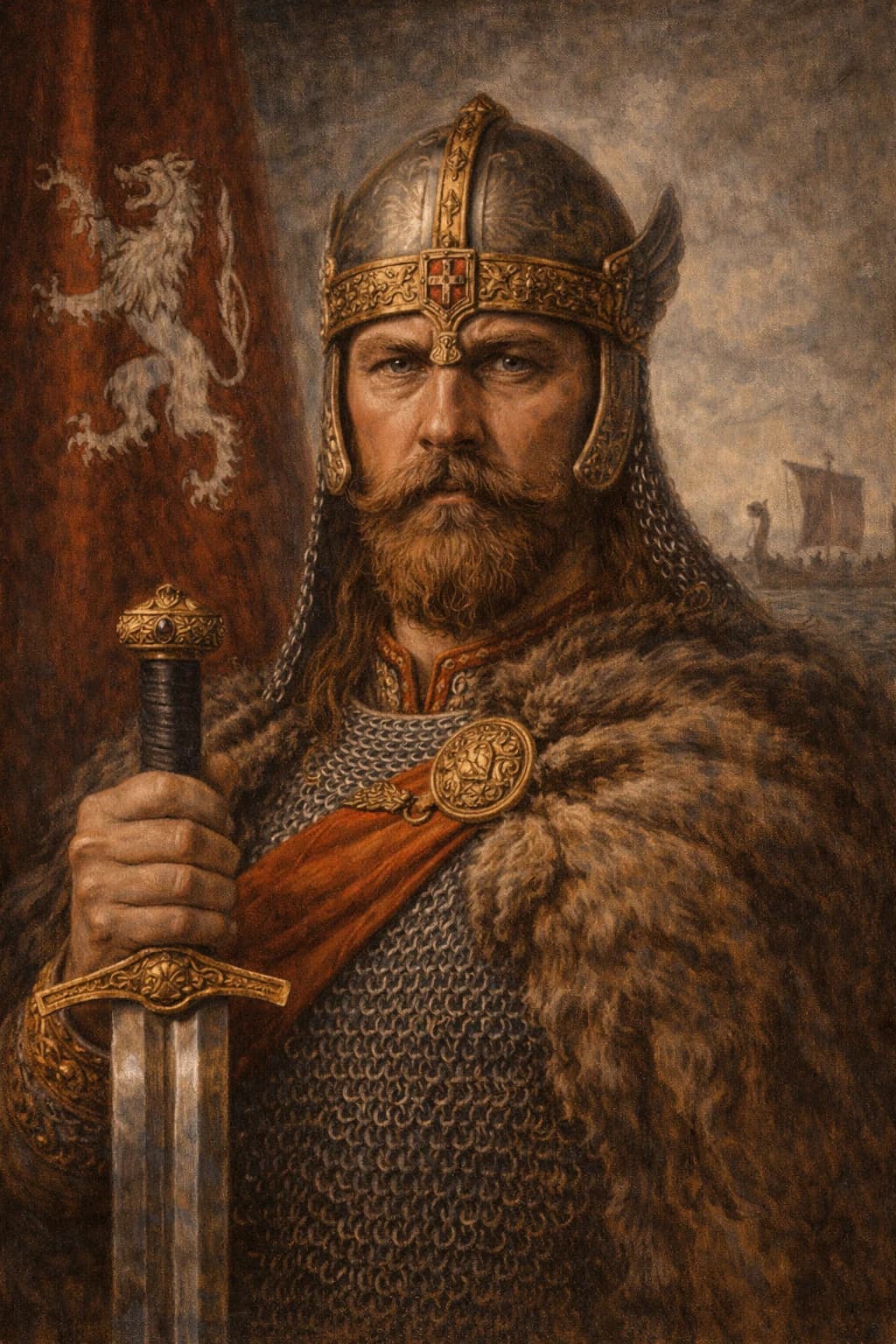
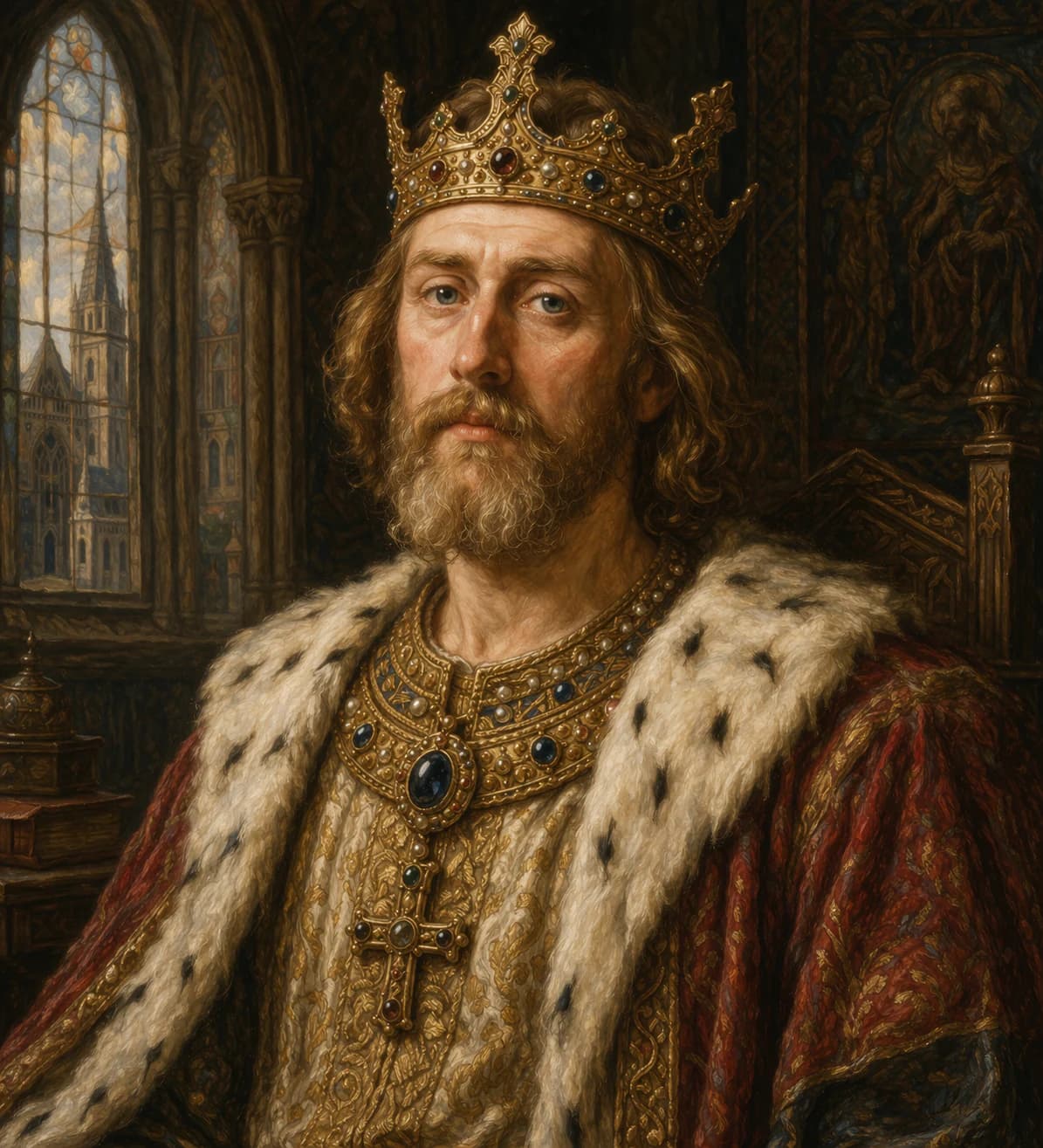
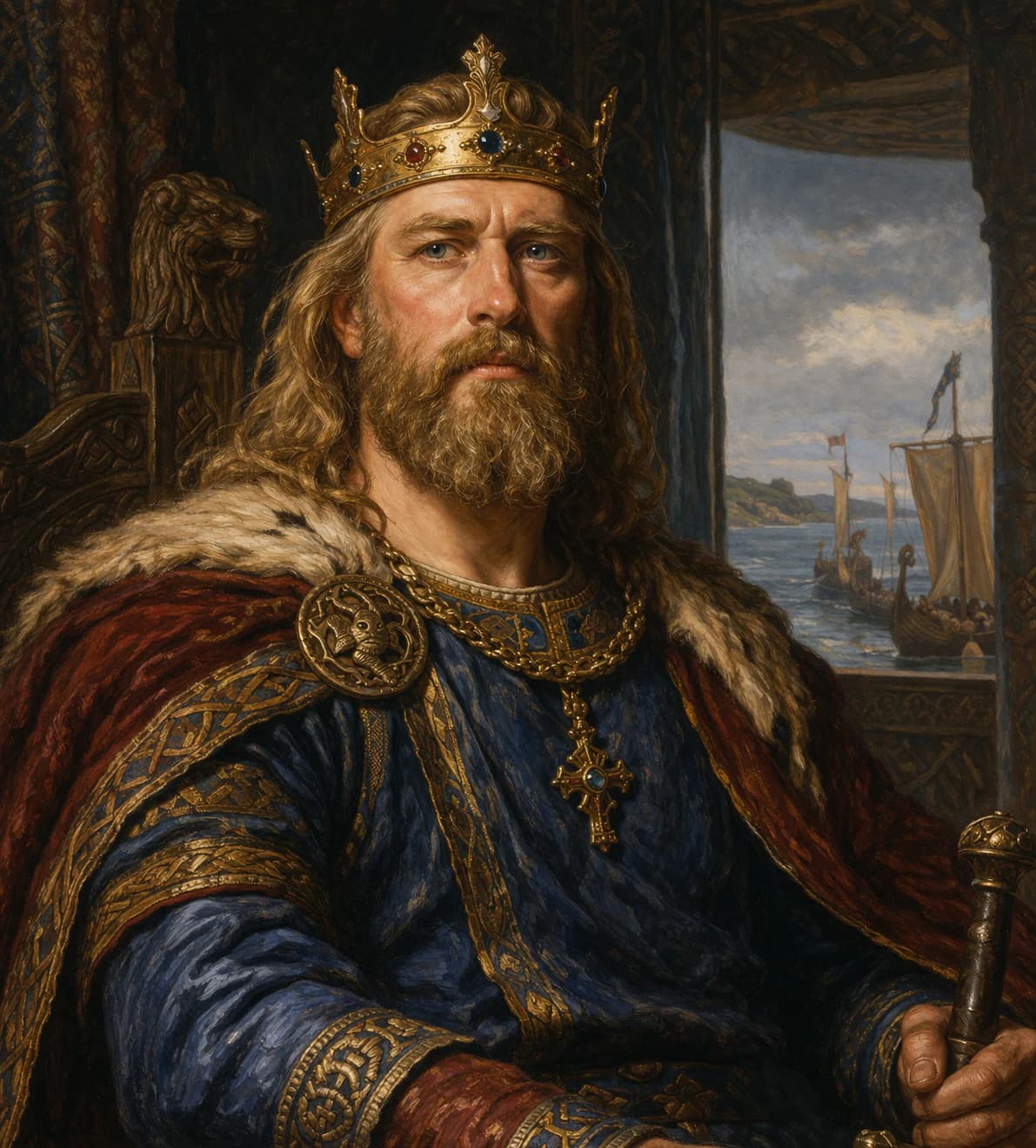
AI-generated portrait of Cnut the Great in Viking royal attire
AI-assisted historical reconstruction

An illustrative reconstruction based on historical context. It is not a photograph or documentary likeness. Image policy

Quick answer

Cnut the Great, also known as King Canute, was a Danish king who conquered England in 1016 and later ruled Denmark and Norway, creating an 11th-century North Sea empire. His reign combined Viking military power, English administration, Christian kingship, and European diplomacy.

Born
995 CE
Died
1035 CE
Role
Danish king
Years
995-1035 CE
Quick facts

Profile details

Additional identity and tagging details that are not already covered in the introduction.

Also known as
King Canute, Canute the Great, Canute
Facts

Cnut the Great facts

Key facts about Cnut the Great, the ruler also remembered as King Canute, including his conquest of England, Scandinavian kingdoms and North Sea empire.

Also known as
King Canute, Canute the Great

Canute is a common English form of his name, while Cnut is closer to the form often used by modern historians.

King of England
1016-1035

Cnut became sole king after the defeat and death of Edmund Ironside in 1016.

Other kingdoms
Denmark and Norway

He added Denmark in 1018 and took control of Norway in 1028, reaching the height of his North Sea empire.

Known for
The North Sea empire

His rule connected England, Denmark and Norway under one king, though the empire fragmented after his death.

Tide legend
A later story about royal limits

The famous tale of King Canute commanding the tide was later told as a lesson in humility, not as evidence of foolish arrogance.

Life Journey

From Viking prince to North Sea emperor

Follow the story in a more continuous narrative, with a reading mode that matches how much depth you want.

Complete chronology

c. 995

Royal beginnings

Cnut was born into the dynasty of Sweyn Forkbeard, the Danish king who challenged the old boundaries between raiding, tribute-taking, and conquest. His grandfather Harald Bluetooth had helped consolidate Danish kingship and promote Christianity, while Sweyn projected Scandinavian power across the North Sea. Cnut therefore grew up in a political world where ships were instruments of government as much as weapons of plunder. England was not a distant curiosity. It was rich, divided, and already familiar with Danish armies through decades of warfare and payment of tribute. Cnut’s youth trained him in a harsh lesson: kingship in the Viking age belonged to men who could command fleets, reward followers, exploit dynastic weakness, and turn temporary occupation into recognized rule.


1013–1014

First campaigns

In 1013 Cnut joined Sweyn’s invasion of England, a campaign that forced King AEthelred II into exile and briefly made Sweyn master of the kingdom. The victory looked spectacular but rested on a narrow foundation. Sweyn died in early 1014, and the English elite recalled AEthelred, leaving the young Cnut exposed. His fleet withdrew, but not before he mutilated hostages at Sandwich, a brutal warning that his claim had not vanished. The episode taught him that conquest was only the first act. England could be won by military pressure, but it had to be held through bargaining with nobles, managing the church, controlling taxation, and presenting rule as more than foreign occupation. Cnut’s later success grew from this early failure.

1015

Return to England

Cnut returned in 1015 with a stronger army and a clearer political programme. England was vulnerable: AEthelred’s long reign had been damaged by invasion, taxation, mistrust, and noble rivalries. Cnut exploited those fractures. He won support from powerful figures, including Eadric Streona, whose shifting loyalty reflected the instability of English politics. The campaign was not a quick raid but a sustained bid for kingship, moving through Wessex, Northumbria, and Mercia while forcing local submissions. After AEthelred died in 1016, resistance centered on his son Edmund Ironside, a formidable opponent whose energy almost saved the dynasty. The struggle became a test of endurance. Cnut had to prove that he was not merely another Scandinavian attacker but a king capable of commanding England’s political class.

1016

Victory secured

The decisive year was 1016. Cnut and Edmund Ironside fought a series of campaigns that culminated at Assandun, where Edmund was defeated. The two rulers then agreed to divide England, with Cnut taking the north and Edmund retaining Wessex, but Edmund died soon afterward. Cnut became sole king. His first task was to end the logic of invasion and begin the practice of government. He eliminated some dangerous rivals, rewarded Scandinavian followers, and married Emma of Normandy, AEthelred’s widow, giving his rule a bridge to the old English dynasty and to Norman politics. He also preserved much of the English administrative system, including shires, law codes, coinage, taxation, and the role of bishops. Cnut’s genius was adaptation. He conquered as a Viking and governed as an English king.

1017–1020

Strengthening rule

Cnut divided England among great earls, including figures such as Thorkell the Tall, Eric of Hlathir, and Godwin, while gradually balancing Scandinavian military power with English aristocratic cooperation. He issued laws that echoed earlier English royal traditions, supported the church, and cultivated the memory of saintly kings such as Edmund of East Anglia. This was smart politics. A foreign conqueror needed moral legitimacy, and Christian kingship provided it. Cnut’s famous letter to his English subjects after his pilgrimage to Rome in 1027 presented him as a just ruler committed to fair law, protection of the church, and restraint by officials. The letter was propaganda, but effective propaganda reveals priorities. Cnut wanted his subjects to see him as lawful, pious, and stable, not simply victorious.

1018

Danish crown

When Cnut’s brother Harald II died, Cnut added Denmark to his English crown, creating a dual monarchy across the North Sea. The achievement changed the meaning of his rule. England supplied wealth, administrative sophistication, and coinage; Denmark supplied dynastic legitimacy, naval reach, and Scandinavian authority. Holding both required delegation and movement. Cnut could not be everywhere, so he relied on earls, family members, and trusted commanders while using marriage, hostages, church patronage, and royal display to maintain cohesion. His pilgrimage to Rome placed him among Europe’s Christian rulers, not outside them. He negotiated over tolls and protection for pilgrims, attended the imperial coronation of Conrad II, and presented himself as a king whose authority was recognized from Scandinavia to Rome.

1028

Empire expands

Cnut’s takeover of Norway in 1028 completed the high point of his North Sea empire. Norway’s King Olaf Haraldsson had made enemies among local magnates, and Cnut used money, diplomacy, and force to turn those divisions to his advantage. He was accepted as king and installed representatives to govern, including his son Svein and Svein’s mother AElfgifu of Northampton. The arrangement looked powerful on a map: England, Denmark, Norway, and influence over parts of the Baltic and North Atlantic. In practice, it was a personal empire held together by sea routes, tribute, elite bargains, and Cnut’s reputation. Norway soon proved difficult to control, especially after Olaf’s death at Stiklestad in 1030 turned him into a saintly symbol of Norwegian kingship. Cnut had reached the limits of conquest by proxy.

1030–1035

Later rule

Cnut’s later reign was dominated by maintenance rather than fresh conquest. He had to manage competing sons, two major royal partnerships, English and Scandinavian aristocracies, and the expectations of Christian kingship. The famous story of Cnut placing his throne by the sea and commanding the tide not to rise is later legend, recorded to show humility before God rather than foolish arrogance. Whether or not the event happened, the story attached itself to him because it captured a truth about his reign: even the greatest king had limits. Cnut died at Shaftesbury in 1035 and was buried at Winchester, one of the symbolic centers of English royal power. He left behind a realm that had worked impressively under him but lacked an obvious mechanism to survive his absence whole.

1035 and beyond

Enduring legacy

Cnut’s empire fragmented quickly after his death. England passed through the troubled reigns of his sons Harold Harefoot and Harthacnut before the old West Saxon line returned with Edward the Confessor. Denmark and Norway followed their own paths. That collapse should not obscure Cnut’s achievement. He ruled England for nearly two decades with a level of effectiveness rare among conquerors. He preserved and used English institutions, strengthened royal authority, engaged seriously with the Church, and made the North Sea a political center rather than a frontier. His reign also foreshadowed the connected world that would shape 1066: English, Danish, Norwegian, and Norman claims all overlapped. Cnut the Great matters because he showed that Viking power could become Christian monarchy, but also that an empire built around one ruler could recede almost as quickly as the tide.

Continue in context

Connected stories

Move from the profile into the wider events and settings this figure belongs to.

Tertiary paths

Content note

This profile is written for educational use and connects to related Stories of History pages. The main portrait is an AI-assisted historical reconstruction, included as an illustrative aid rather than documentary evidence. Image policy

References

Sources & Further Reading

Reliable reference works, archives and reading paths connected to this profile.

Further reading

  1. Encyclopaedia Britannica, Search results for Cnut the Great,” accessed June 2026.Open source
  2. WorldCat, Books and library holdings for Cnut the Great,” accessed June 2026.Open source

Primary sources

  1. Library of Congress, Search results for Cnut the Great,” accessed June 2026.Open source

Reviewed claim sources

Loading reviewed claim sources...

A weekly route through history

Find out first about the latest published stories, feature notes and occasional Premium offers in one weekly email.