People

Joan of Arc

Joan of Arc was a French visionary and wartime leader during the Hundred Years War. She helped lift the siege of Orleans in 1429, supported Charles VII's coronation at Reims, was captured by Burgundian forces, tried by an English-backed church court, and executed in 1431.

Born
c. 1412 CE
Died
1431 CE
Role
Wartime leader

French wartime leader (c. 1412-1431)

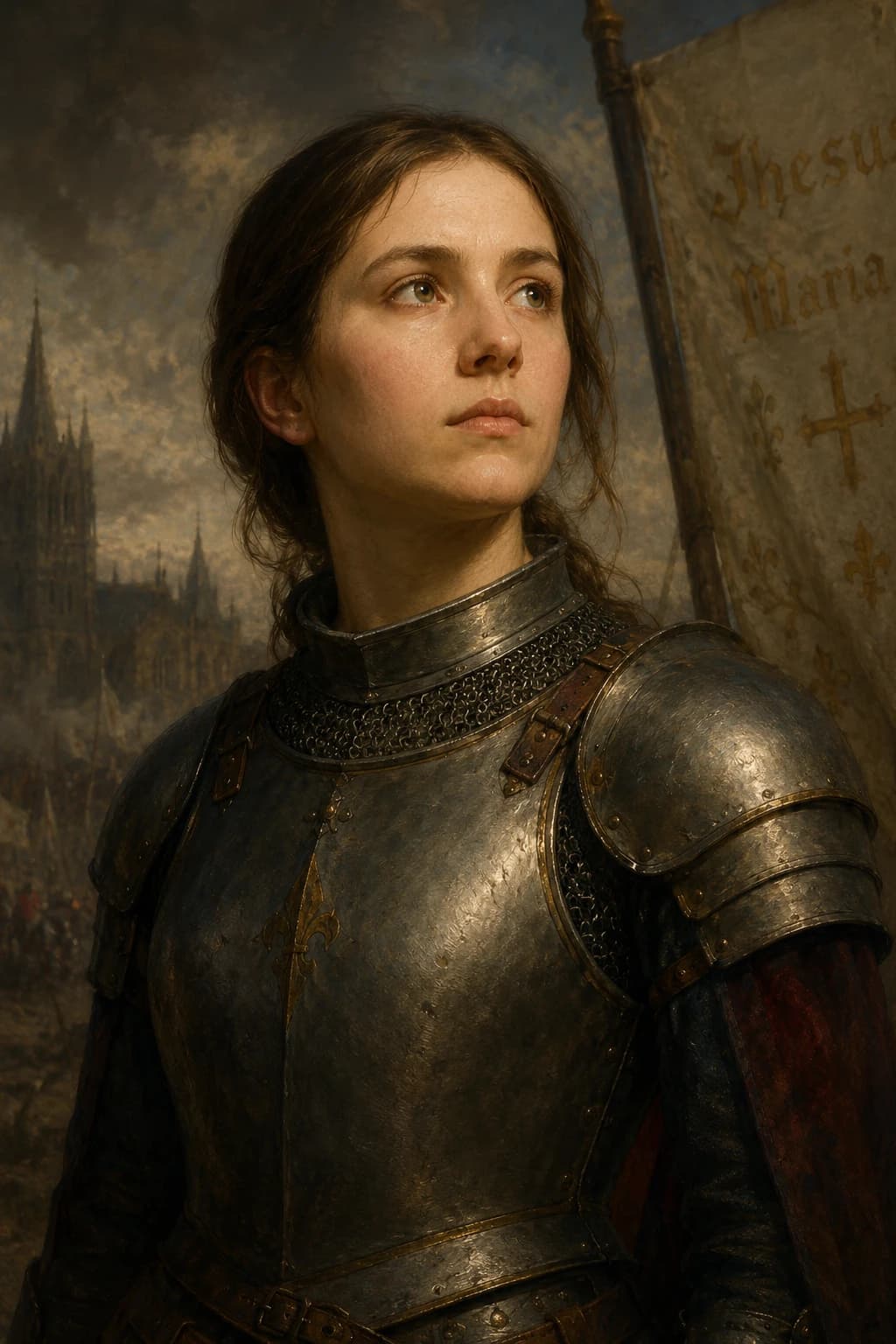
AI-generated portrait of Joan of Arc in armour with her banner
AI-assisted historical reconstruction

An illustrative reconstruction based on historical context. It is not a photograph or documentary likeness. Image policy

Quick answer

Joan of Arc was a French visionary and wartime leader during the Hundred Years War. She helped lift the siege of Orleans in 1429, supported Charles VII's coronation at Reims, was captured by Burgundian forces, tried by an English-backed church court, and executed in 1431.

Born
c. 1412 CE
Died
1431 CE
Role
Wartime leader
Years
c. 1412-1431 CE
Quick facts

Profile details

Additional identity and tagging details that are not already covered in the introduction.

Also known as
Jeanne d'Arc, Joan
Facts

Joan of Arc timeline facts

Selected specifics from this profile's life story.

c. 1412-1428
Voices and mission

Joan grew up in Domremy during a war-torn period and came to believe that saints had given her a mission to help the Dauphin Charles.

1429
Orleans

Joan joined French forces at Orleans and helped inspire the attacks that lifted the English siege in May 1429.

1430-1431
Capture and trial

Joan was captured near Compiegne, handed to the English, tried by an English-backed church court and executed at Rouen in 1431.

After 1431
Legacy

Joan's conviction was later overturned, and her memory became central to French ideas of courage, sacrifice and national resistance.

Life Journey

A village girl who changed the direction of a war

Follow Joan's life from Domremy to Orleans, Reims, trial and memory.

Complete chronology

c. 1412-1428

Voices and mission

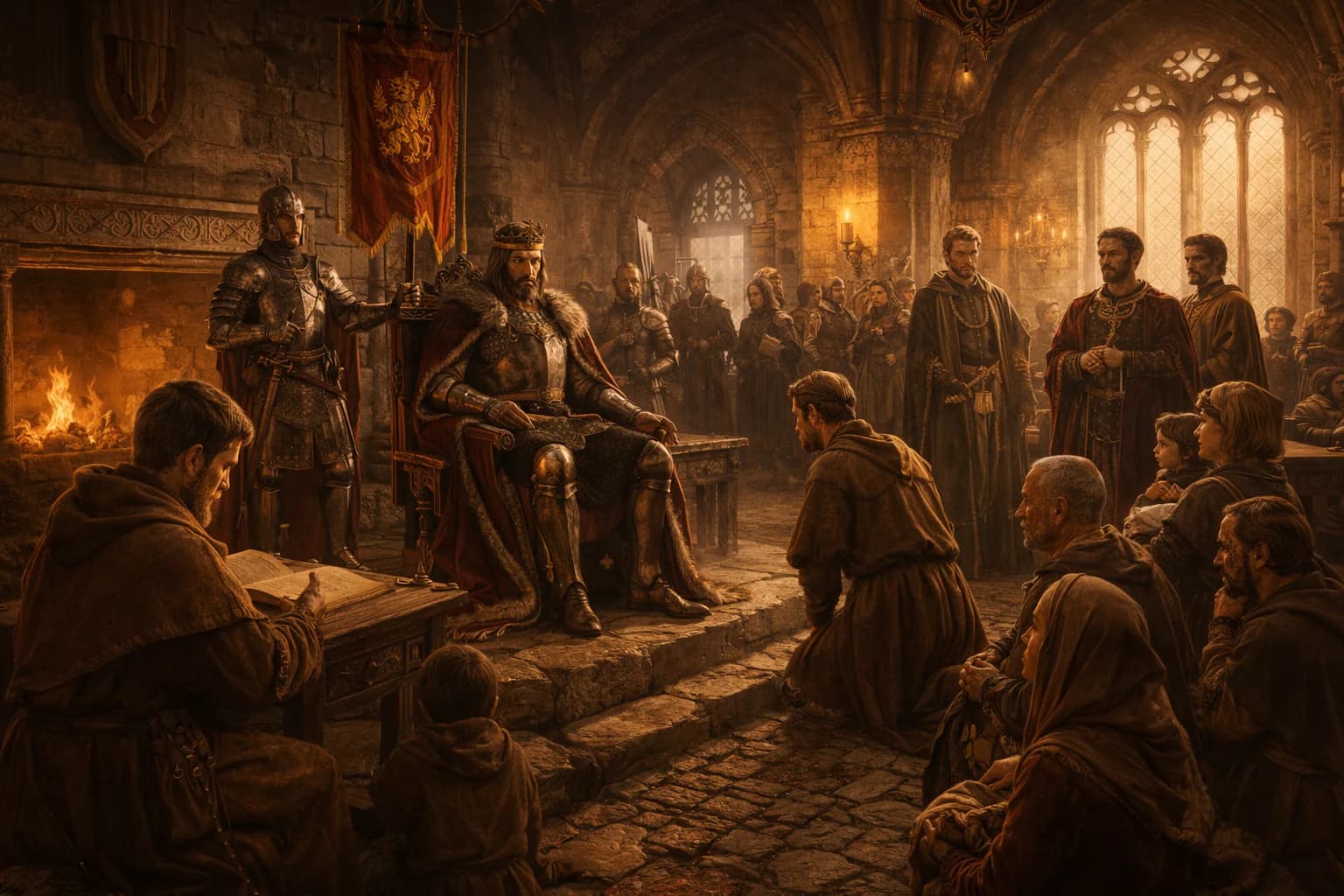
Joan was born into a village world shaped by insecurity, local violence and the wider collapse of French royal confidence. Her claim that saints commanded her to aid the Dauphin Charles was extraordinary, but it arrived when the Valois cause badly needed hope. Joan's importance began before battle. She gave political despair a language of divine purpose, making resistance feel possible again.
1429

Orleans

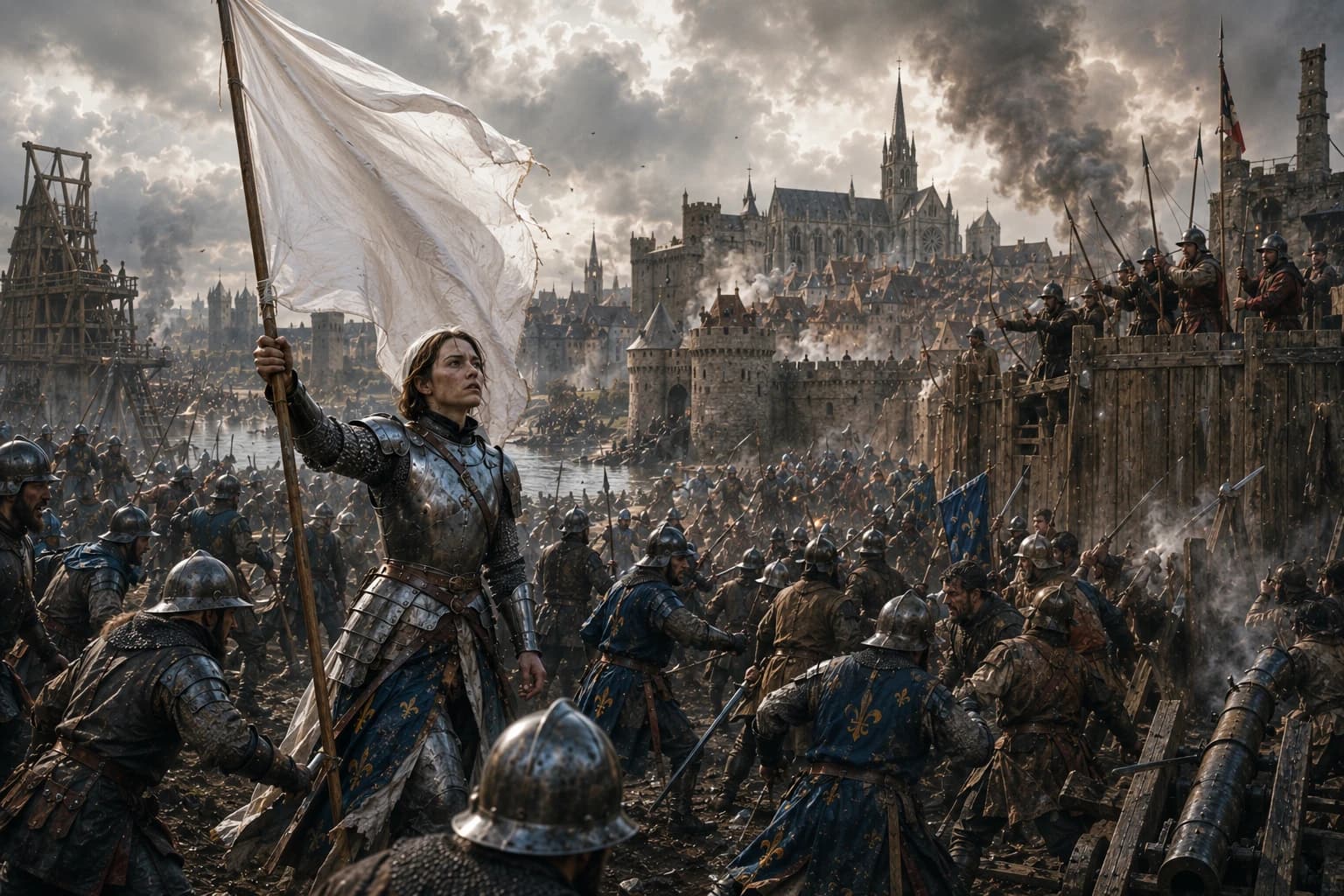
Orleans was strategically and emotionally vital. Joan did not command alone, but her presence changed the atmosphere of the campaign. French forces acted with renewed aggression, attacked English siege positions and lifted the siege. The victory showed that English pressure could be broken and that Charles's cause was not doomed.

1429

Reims and legitimacy

The march to Reims turned battlefield momentum into political legitimacy. French kings were traditionally crowned there, and Charles VII's coronation allowed supporters to present him as an anointed monarch rather than a regional claimant. Joan's campaign therefore attacked the Treaty of Troyes not only with arms, but with ceremony and belief.

1430-1431

Capture and trial

Joan's enemies understood that her symbolic power had to be destroyed as well as contained. Her trial attacked the spiritual claims that had made her politically dangerous. Condemned as a heretic, she was burned at Rouen in 1431. The execution removed Joan from the war, but it could not undo what Orleans and Reims had already changed.

After 1431

Legacy

Joan's posthumous reputation outgrew the immediate politics of 1431. A later rehabilitation trial overturned the verdict against her, while French victory made her intervention look prophetic rather than futile. She became one of the most powerful figures in French historical memory: soldier, martyr, saint and symbol of a kingdom recovering itself.

Continue in context

Connected stories

Move from the profile into the wider events and settings this figure belongs to.

Tertiary paths

Content note

This profile is written for educational use and connects to related Stories of History pages. The main portrait is an AI-assisted historical reconstruction, included as an illustrative aid rather than documentary evidence. Image policy

References

Sources & Further Reading

Reliable reference works, archives and reading paths connected to this profile.

Further reading

  1. Encyclopaedia Britannica, Search results for Joan of Arc,” accessed June 2026.Open source
  2. WorldCat, Books and library holdings for Joan of Arc,” accessed June 2026.Open source

Primary sources

  1. Library of Congress, Search results for Joan of Arc,” accessed June 2026.Open source

Reviewed claim sources

Loading reviewed claim sources...

A weekly route through history

Find out first about the latest published stories, feature notes and occasional Premium offers in one weekly email.