People

Charles VII of France

Charles VII of France ruled from 1422 to 1461. Disinherited by the Treaty of Troyes, he gained legitimacy through coronation at Reims, reorganised royal finance and military forces, and oversaw the French recovery that ended the Hundred Years War.

Born
1403 CE
Died
1461 CE
Role
King of France

King of France (1403-1461)

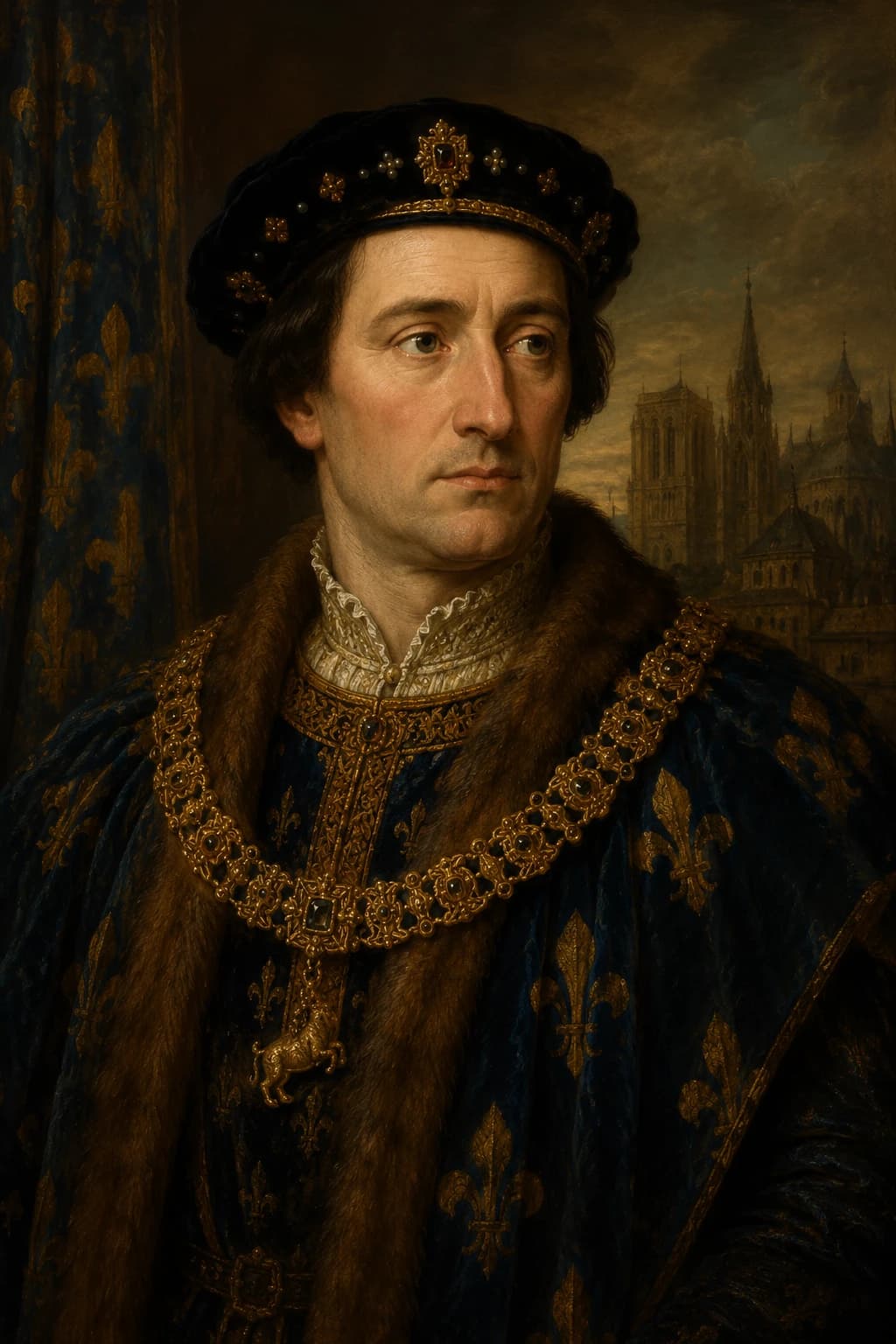
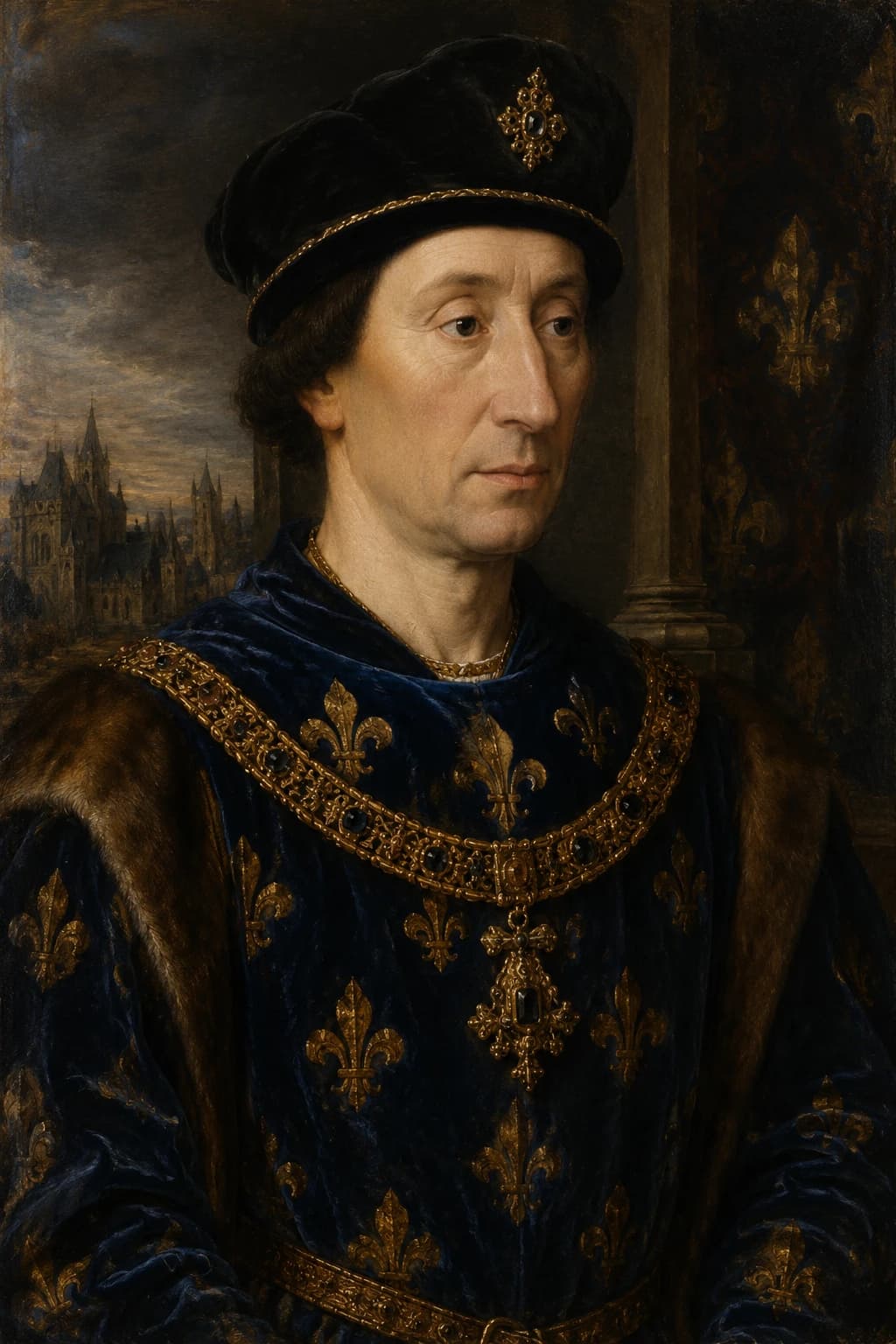
AI-generated portrait of Charles VII of France in a blue fleur-de-lis robe
AI-assisted historical reconstruction

An illustrative reconstruction based on historical context. It is not a photograph or documentary likeness. Image policy

Quick answer

Charles VII of France ruled from 1422 to 1461. Disinherited by the Treaty of Troyes, he gained legitimacy through coronation at Reims, reorganised royal finance and military forces, and oversaw the French recovery that ended the Hundred Years War.

Born
1403 CE
Died
1461 CE
Role
King of France
Years
1403-1461 CE
Quick facts

Profile details

Additional identity and tagging details that are not already covered in the introduction.

Also known as
Charles VII, Dauphin Charles
Facts

Charles VII of France timeline facts

Selected specifics from this profile's life story.

1403-1420
A fragile heir

Charles grew up as France was weakened by civil division, English invasion and the illness of his father Charles VI.

1420
Disinherited at Troyes

The Treaty of Troyes recognised Henry V as heir to France and disinherited Charles, forcing him to continue from the south.

1430s-1440s
Reform and recovery

Charles strengthened royal finance and created more permanent military forces, giving France better tools for sustained war.

1453
English France falls

By 1453, French victory at Castillon and the surrender of Bordeaux ended England's major continental possessions apart from Calais.

Life Journey

From doubtful claimant to restorer of France

Follow Charles VII through disinheritance, coronation, reform and final victory.

Complete chronology

1403-1420

A fragile heir

Charles's inheritance was badly damaged before he could shape it. Factional conflict between Armagnacs and Burgundians weakened the French monarchy, while Henry V's invasion exposed the kingdom's military vulnerability. Charles VI's illness made royal authority unstable. The young Dauphin inherited not confidence, but a claim under siege.

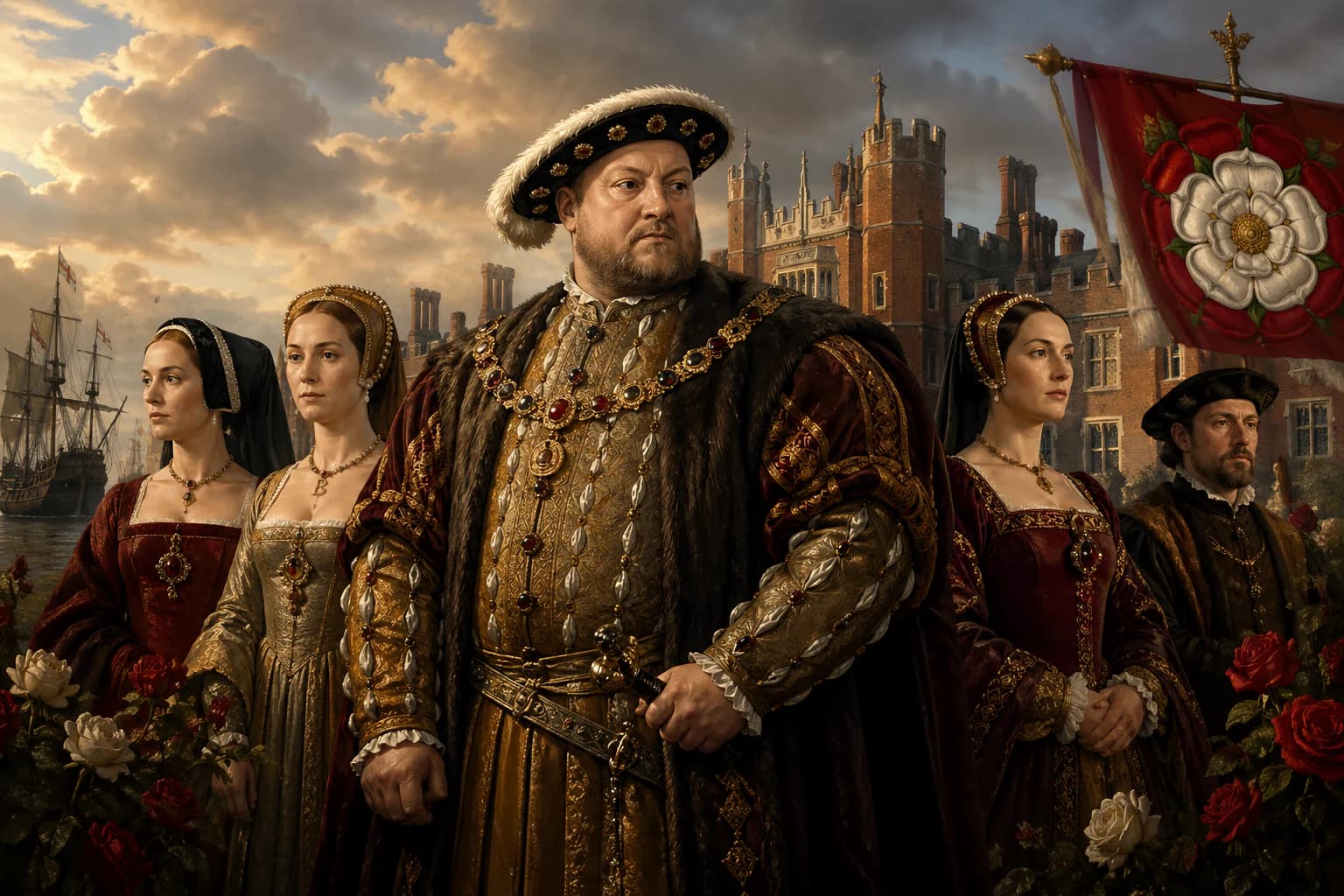
1420

Disinherited at Troyes

Troyes was a political attempt to erase Charles's future. By recognising Henry V as heir to Charles VI, the treaty turned the Dauphin into a rebel in English and Burgundian eyes. Yet Charles still controlled territory in the south and retained supporters who refused to accept the settlement. His kingship would have to be built through endurance before it could be crowned by victory.

1429

Coronation at Reims

The coronation at Reims changed Charles's political position. Joan of Arc's campaign gave the journey emotional force, but the ceremony itself mattered because French kingship depended on sacred recognition. Charles could now present himself as the anointed king of France, not simply the Dauphin rejected by Troyes.

1430s-1440s

Reform and recovery

Charles VII's later success rested on institutions as much as inspiration. Royal taxation became more regular, military companies served the crown more directly, and artillery improved French siege warfare. These reforms made recovery durable. France no longer had to rely only on noble levies or sudden bursts of enthusiasm.

1453

English France falls

The final collapse of English France showed how far the balance had shifted. French artillery and royal coordination helped defeat English forces at Castillon, and Bordeaux surrendered soon afterward. Charles VII emerged as the king under whom France survived, recovered and began to look more like a centralised territorial monarchy.

Continue in context

Connected stories

Move from the profile into the wider events and settings this figure belongs to.

Tertiary paths

Content note

This profile is written for educational use and connects to related Stories of History pages. The main portrait is an AI-assisted historical reconstruction, included as an illustrative aid rather than documentary evidence. Image policy

References

Sources & Further Reading

Reliable reference works, archives and reading paths connected to this profile.

Further reading

  1. Encyclopaedia Britannica, Search results for Charles VII of France,” accessed June 2026.Open source
  2. WorldCat, Books and library holdings for Charles VII of France,” accessed June 2026.Open source

Primary sources

  1. Library of Congress, Search results for Charles VII of France,” accessed June 2026.Open source

Reviewed claim sources

Loading reviewed claim sources...

A weekly route through history

Find out first about the latest published stories, feature notes and occasional Premium offers in one weekly email.