People

James Monroe

James Monroe was the 5th U.S. President, Revolutionary War veteran and author of the Monroe Doctrine, which warned European powers against new colonisation in the Americas.

Born
1758 CE
Died
1831 CE
Role
5th President of the United States

5th President of the United States (1758–1831)

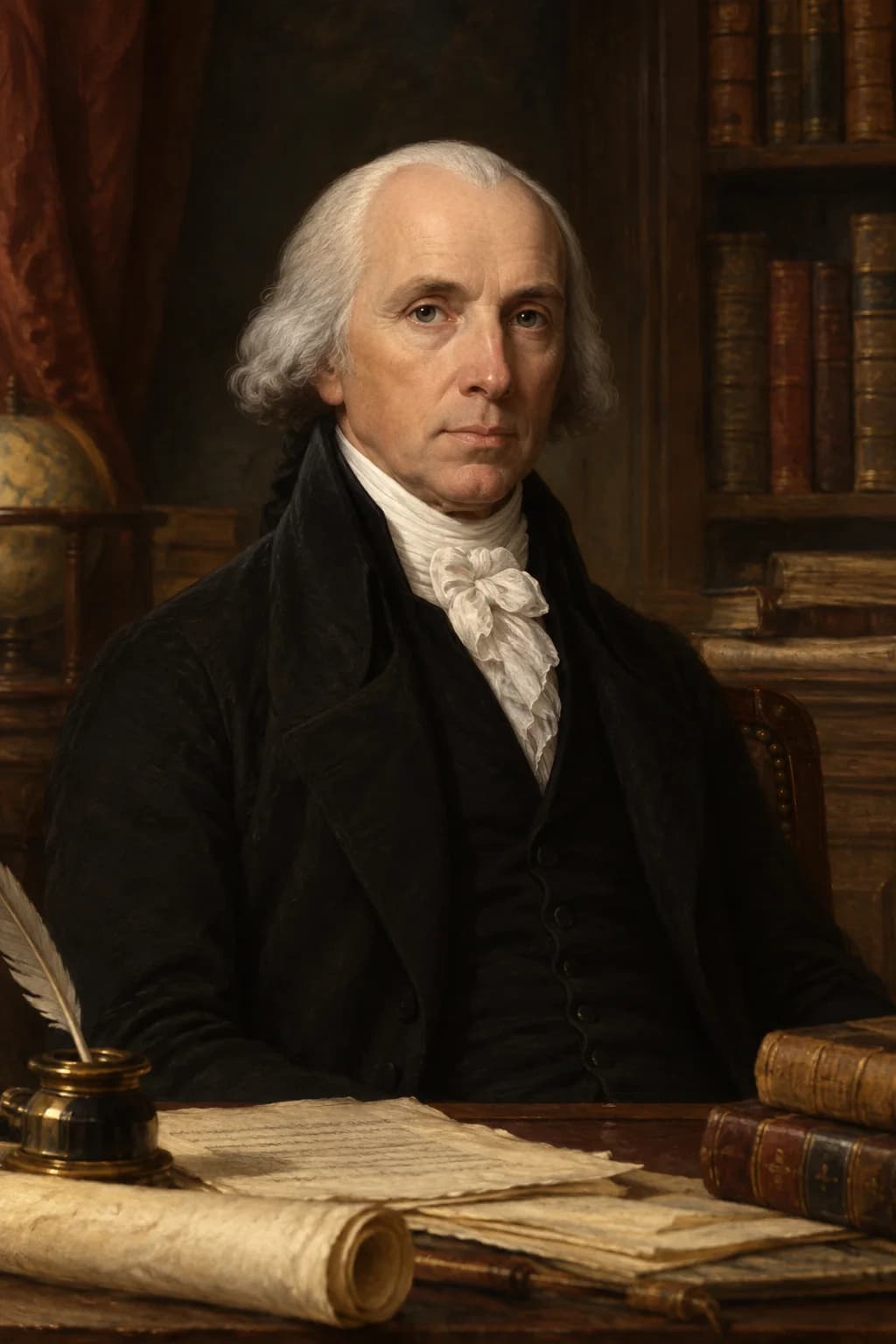
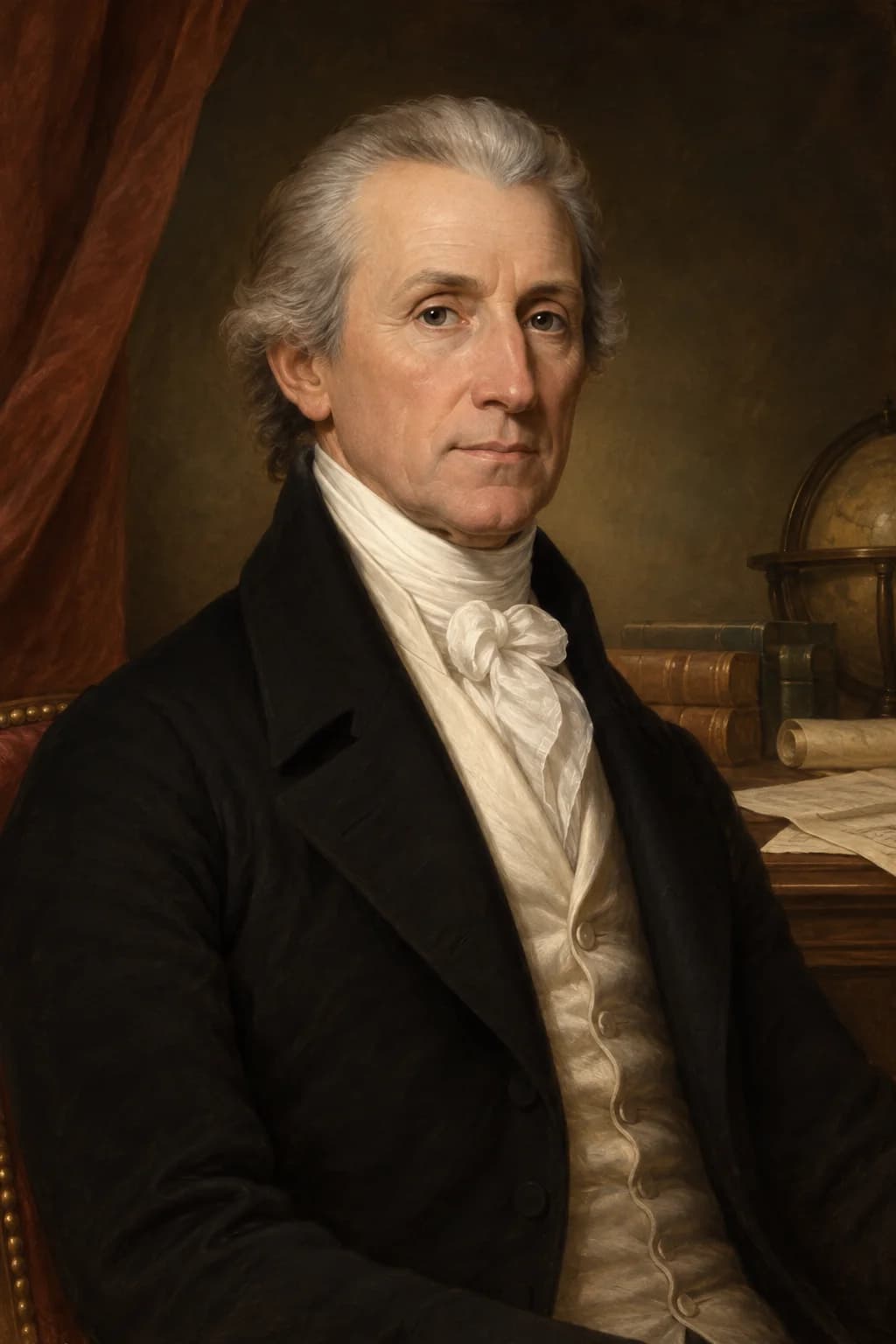
AI-generated portrait of James Monroe in formal presidential attire
AI-assisted historical reconstruction

An illustrative reconstruction based on historical context. It is not a photograph or documentary likeness. Image policy Attribution

Quick answer

James Monroe was the 5th U.S. President, Revolutionary War veteran and author of the Monroe Doctrine, which warned European powers against new colonisation in the Americas.

Born
1758 CE
Died
1831 CE
Role
5th President of the United States
Years
1758-1831 CE
Facts

James Monroe timeline facts

Selected specifics from this profile's life story.

1758–1774
Virginia beginnings

James Monroe was born in Virginia in 1758, orphaned young and educated in a colony moving rapidly toward revolution.

1790–1803
Diplomatic missions

Monroe served as minister to France and Britain during the wars of the French Revolution and Napoleon, learning diplomacy under pressure.

1817–1825
Presidential unity

As president from 1817 to 1825, Monroe presided over the so-called Era of Good Feelings while sectional tensions persisted beneath the surface.

1825–1831
Final reflections

Monroe died in 1831 after decades of public service, remembered for national expansion, republican continuity and a doctrine with a long afterlife.

Life Journey

A journey of revolution, diplomacy and national definition

Follow the story in a more continuous narrative, with a reading mode that matches how much depth you want.

Complete chronology

1758–1774

Virginia beginnings

James Monroe was born on 28 April 1758 in Westmoreland County, Virginia, into the world of the Tidewater gentry, though not at its richest heights. The deaths of his parents while he was still young gave him responsibility early. He studied at the College of William and Mary just as imperial crisis turned into rebellion. Monroe's formation was less philosophical than Madison's and less literary than Jefferson's. He was practical, dutiful and drawn to service. Like other Virginia founders, he also lived within a slaveholding society whose contradictions would shape the nation he helped lead.
1775–1778

Revolutionary soldier

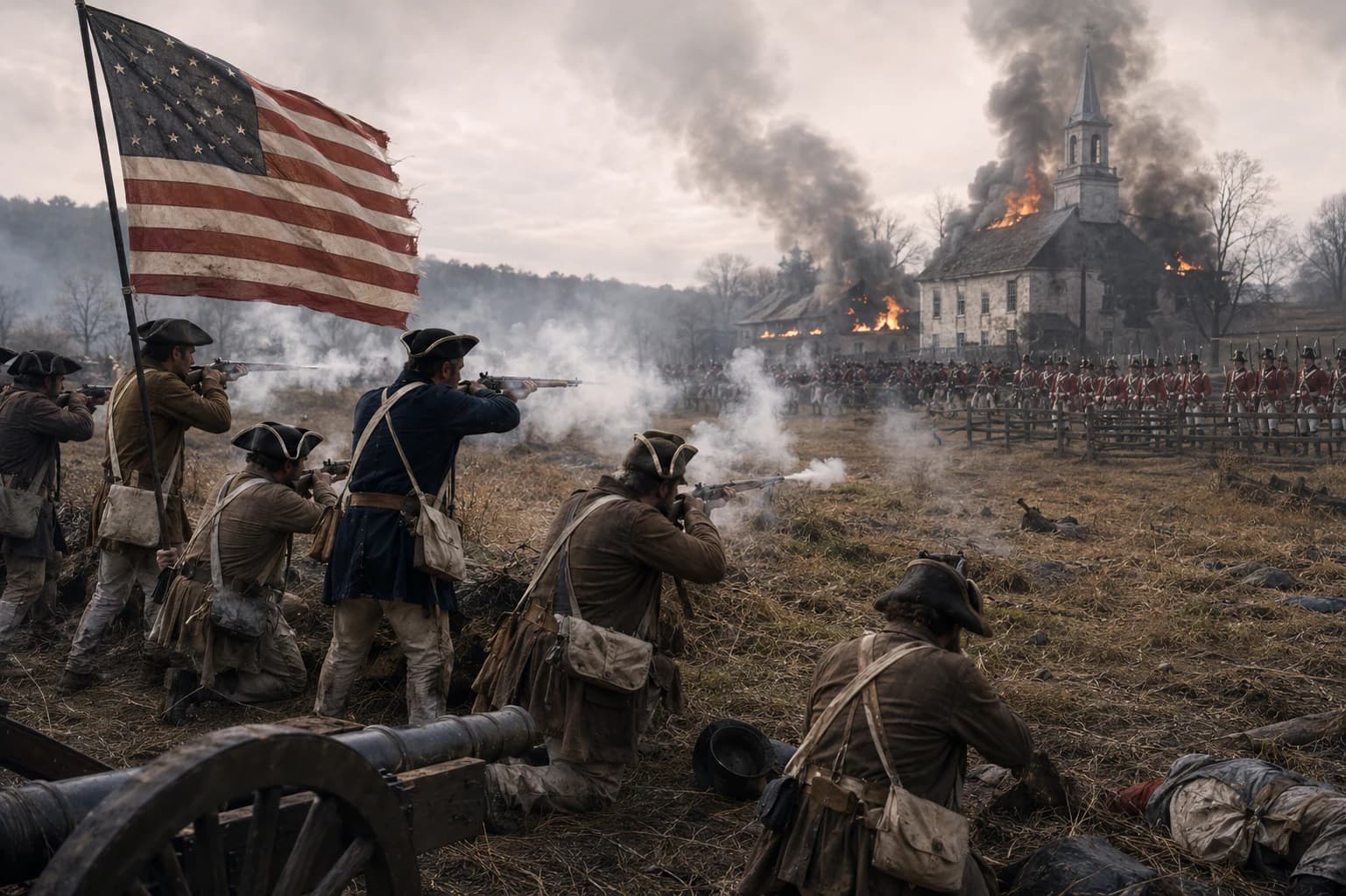
Monroe left college to join the Continental Army, giving him a revolutionary credential that remained central to his identity. He crossed the Delaware with George Washington in December 1776 and was seriously wounded at Trenton, where a musket ball struck his shoulder. The injury nearly killed him. Military service connected Monroe to Washington, Lafayette and the generation that understood independence as sacrifice before it became memory. Unlike some founders whose revolution was mainly legislative, Monroe's was physical. He carried the marks of the war into a political career devoted to securing what the war had won.

1780–1786

Entry into politics

Monroe studied law under Thomas Jefferson and entered public life in Virginia. He served in the Confederation Congress and became skeptical of the new Constitution because he feared it lacked adequate protections for liberty. Unlike Madison, he was not one of the document's architects; he stood closer to the Anti-Federalist unease that helped produce the Bill of Rights. Yet Monroe accepted the new system and became a U.S. senator, aligning with Jefferson and Madison against Federalist policies. His career shows how early American politics was not a simple founders' consensus. The republic was argued into shape by allies who often disagreed sharply about power.

1790–1803

Diplomatic missions

Monroe's diplomatic career placed him in Europe when revolution, empire and war were remaking the Atlantic world. As minister to France in the 1790s, he sympathized with the French Republic more openly than President Washington's administration wanted, leading to his recall. Later missions to France, Britain and Spain demanded a colder realism. Monroe learned that the United States was still weak compared with European empires, but also that European conflict could create openings for American expansion. His diplomacy mixed idealism about republicanism with hard calculation about land, security and national advantage.

1803

Louisiana negotiations

Jefferson sent Monroe to join Robert Livingston in France with instructions to seek New Orleans and access to the Mississippi. Napoleon unexpectedly offered the entire Louisiana territory. Monroe and Livingston seized the opportunity, agreeing to a purchase that doubled the size of the United States. The deal transformed American geography and future power, though it also intensified pressure on Indigenous nations and raised constitutional questions even Jefferson found awkward. Monroe's role was not solitary, but it was important. He helped turn a diplomatic opening into one of the most consequential land acquisitions in world history.

1811–1815

War leadership

Monroe became Secretary of State under James Madison and, during the darkest period of the War of 1812, also took on the War Department. The conflict exposed American military weakness, poor preparation and political division. After the British burned Washington in 1814, Monroe worked to improve defense and administration. He was not a battlefield commander in this phase, but he was one of the administration's most active crisis managers. The war's ending allowed Republicans to claim renewed national confidence, even though the military record had been uneven. Monroe emerged as the natural heir to the Virginia Republican dynasty.

1817–1825

Presidential unity

Monroe's presidency followed the collapse of the Federalist Party, giving the appearance of national political harmony. His goodwill tours encouraged newspapers to speak of an Era of Good Feelings, and his reelection in 1820 was nearly unanimous. Yet the phrase can mislead. The Panic of 1819 brought severe economic pain, and the Missouri Crisis of 1819-1820 revealed how explosive slavery's expansion had become. The Missouri Compromise admitted Missouri as a slave state and Maine as a free state while drawing a sectional line across the Louisiana Purchase. Monroe's presidency therefore combined national confidence with warnings of future fracture.

1823

Foreign policy doctrine

The Monroe Doctrine emerged from a specific international moment. Spain's American colonies were winning independence, and U.S. leaders feared European powers might help restore Spanish control. In his 1823 annual message, Monroe declared that the Western Hemisphere was no longer open to European colonization and that intervention against independent American states would be viewed as unfriendly to the United States. The doctrine relied partly on British naval power, not American strength alone, and it was shaped by Secretary of State John Quincy Adams. Over time, however, Monroe's name became attached to a broad claim of U.S. strategic authority in the Americas, later used in ways he could not have fully foreseen.

1825–1831

Final reflections

Monroe left office respected but financially strained, a reminder that early American public service could be personally costly. He died on 4 July 1831, the third president to die on Independence Day. His legacy stretches across the Revolution, Louisiana Purchase, War of 1812, Era of Good Feelings, Missouri Compromise and Monroe Doctrine. He was not as intellectually original as Jefferson or Madison, nor as commanding as Washington, but he was a durable nation-builder whose career linked the founding struggle to the United States' emergence as a continental power. To ask why James Monroe was important is to see how the early republic moved from survival to assertion, and how unity and expansion carried consequences that later generations would have to face.

Continue in context

Connected stories

Move from the profile into the wider events and settings this figure belongs to.

American Presidents lineage
Lineage47 presidents
American Presidents
1789 CE–present

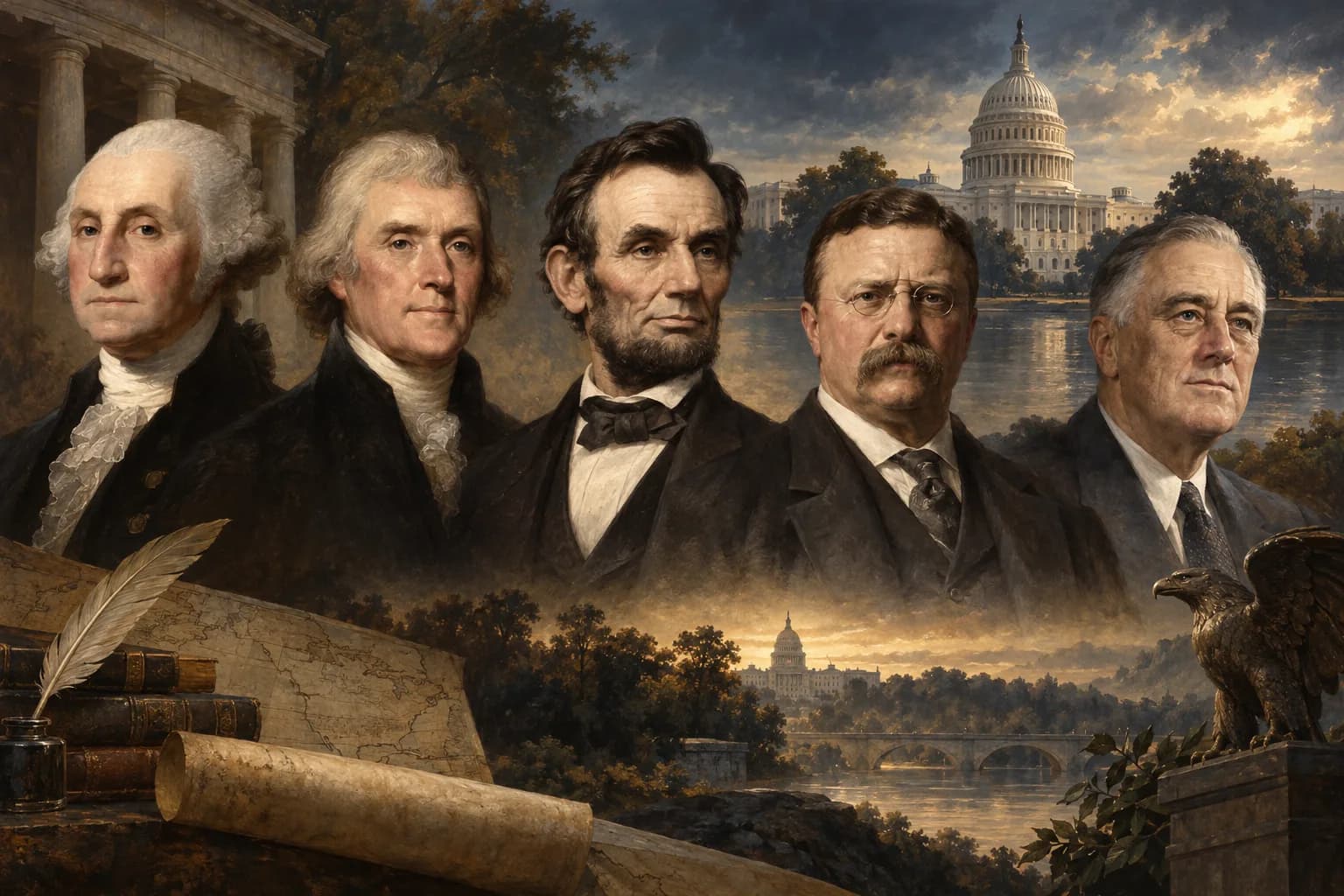
The succession of American presidents from George Washington to today.

View lineage
Tertiary paths

Content note

This profile is written for educational use and connects to related Stories of History pages. The main portrait is an AI-assisted historical reconstruction, included as an illustrative aid rather than documentary evidence. Image policy Image attribution

References

Sources & Further Reading

Reliable reference works, archives and reading paths connected to this profile.

Further reading

  1. Encyclopaedia Britannica, Search results for James Monroe,” accessed June 2026.Open source
  2. WorldCat, Books and library holdings for James Monroe,” accessed June 2026.Open source

Primary sources

  1. Library of Congress, Search results for James Monroe,” accessed June 2026.Open source

Reviewed claim sources

Loading reviewed claim sources...

A weekly route through history

Find out first about the latest published stories, feature notes and occasional Premium offers in one weekly email.