People

James Madison

James Madison was the 4th U.S. President, a principal architect of the U.S. Constitution, author of key Federalist essays and sponsor of the Bill of Rights.

Born
1751 CE
Died
1836 CE
Role
4th President of the United States and chief architect of the Constitution

4th President of the United States and chief architect of the Constitution (1751–1836)

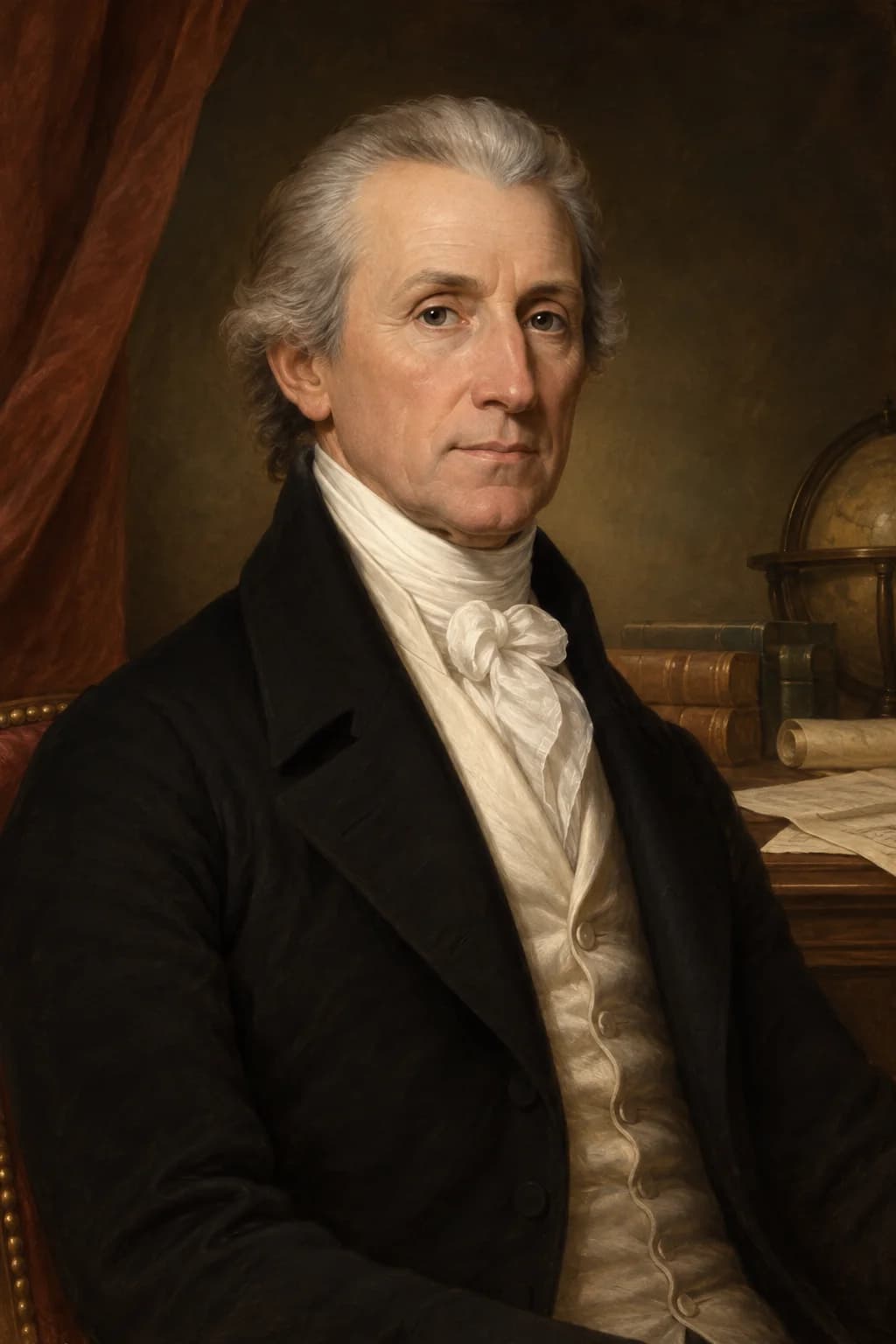
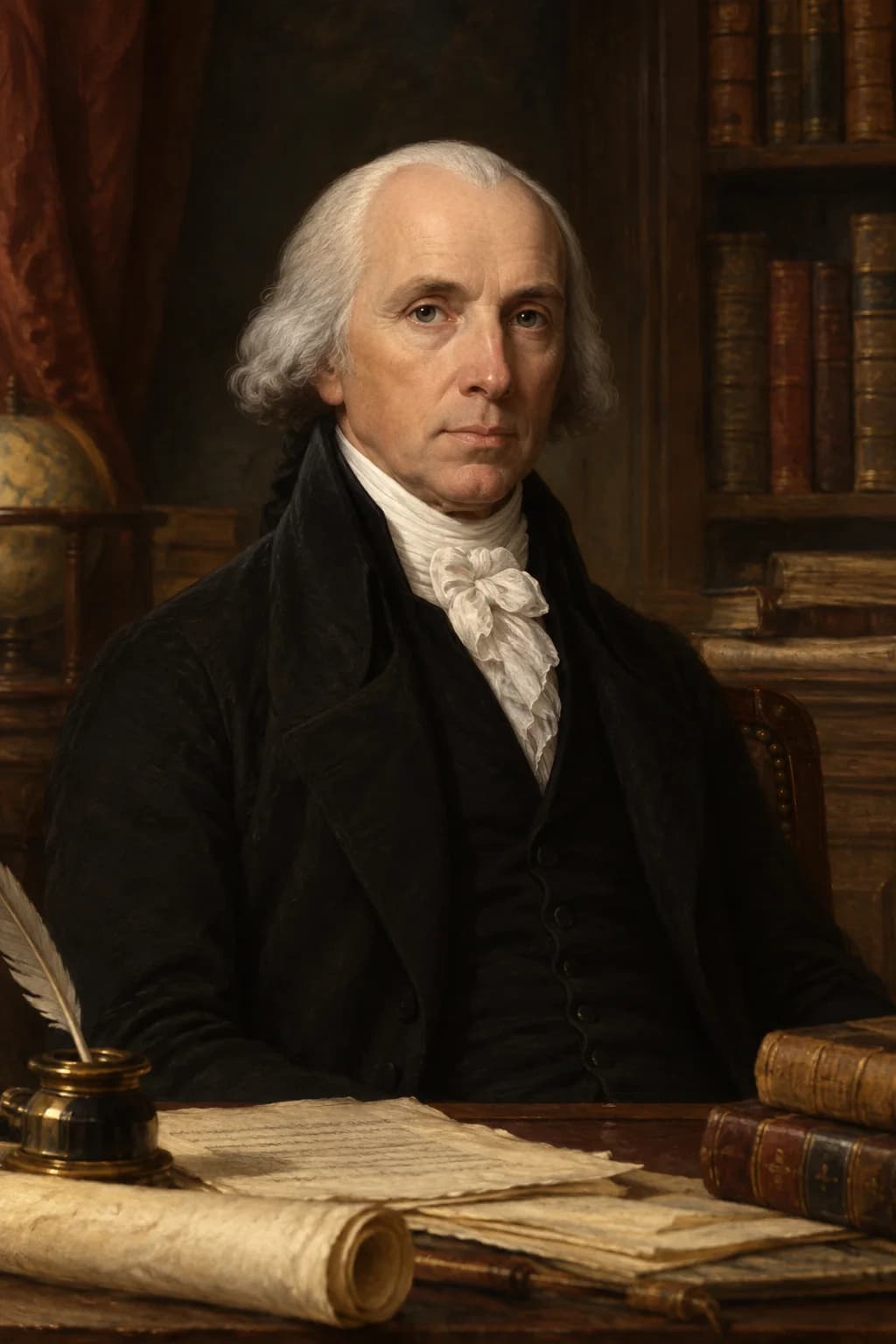
AI-generated portrait of James Madison in formal presidential attire
AI-assisted historical reconstruction

An illustrative reconstruction based on historical context. It is not a photograph or documentary likeness. Image policy Attribution

Quick answer

James Madison was the 4th U.S. President, a principal architect of the U.S. Constitution, author of key Federalist essays and sponsor of the Bill of Rights.

Born
1751 CE
Died
1836 CE
Role
4th President of the United States and chief architect of the Constitution
Years
1751-1836 CE
Facts

James Madison timeline facts

Selected specifics from this profile's life story.

1751–1771
Virginia upbringing

James Madison was born in Virginia in 1751 into a plantation family, gaining elite education while living inside a slaveholding society.

1786–1787
Constitutional architect

At the Constitutional Convention in 1787, Madison arrived with the Virginia Plan and became central to designing the new federal system.

1809–1817
Presidential leadership

As president from 1809 to 1817, Madison led the United States into the War of 1812 against Britain.

1830–1836
Enduring legacy

Madison died in 1836, leaving a legacy as Constitution-maker, rights sponsor, party founder, president and deeply imperfect architect of liberty.

Life Journey

A path through ideas, nation-building and tested leadership

Follow the story in a more continuous narrative, with a reading mode that matches how much depth you want.

Complete chronology

1751–1771

Virginia upbringing

James Madison was born on 16 March 1751 at Belle Grove, Virginia, and raised at Montpelier, the plantation that would remain his home. He was physically slight, often anxious about health, and intellectually formidable from a young age. His world was one of books, land, hierarchy and enslaved labor. That contradiction is essential to any serious Madison biography. He became one of history's most important theorists of liberty and constitutional restraint while remaining a slaveholder who never solved, in his own life, the moral crisis his principles exposed. The tension between political freedom and human bondage ran through the republic he helped create.


1771–1776

Intellectual formation

Madison's education at the College of New Jersey gave him a wider intellectual world than many Virginia planters knew. He studied under John Witherspoon, encountered Scottish Enlightenment ideas and pushed himself through an intense course of reading. Religious liberty became one of his earliest serious commitments. In Virginia he saw dissenting Baptists and Presbyterians penalized under Anglican establishment, and he came to believe that conscience could not be safely entrusted to government. Before he became the Constitution's great architect, Madison was already asking the question that defined his career: how can power be strong enough to govern, yet limited enough not to oppress?

1776–1783

Revolutionary service

Madison was not a battlefield hero of the American Revolution. His contribution was institutional. He served in the Virginia convention and legislature, then in the Continental Congress, where he watched the wartime union struggle to raise money, supply armies and secure cooperation from jealous states. The Articles of Confederation looked increasingly inadequate to him. Independence had been declared, but independence alone did not create a functioning republic. Madison's revolutionary experience convinced him that liberty could be lost through weakness as well as tyranny. A government unable to act might invite disorder, foreign manipulation or collapse.

1786–1787

Constitutional architect

Madison prepared for the Philadelphia Convention with extraordinary seriousness, studying ancient confederacies, modern republics and the failures of the Articles. The Virginia Plan, which he helped shape, proposed a stronger national government with executive, legislative and judicial branches. Not all of Madison's ideas survived. He wanted a federal veto over state laws, and he lost key fights over representation. Yet his imprint was everywhere: separated powers, checks and balances, an extended republic large enough to contain faction, and a national government with real authority. He was not the sole father of the Constitution, but he was its most systematic mind.

1787–1788

Defending ratification

The Constitution still had to be ratified, and opposition was fierce. Madison joined Hamilton and Jay under the shared name Publius to write The Federalist Papers. Madison's essays, especially Federalist 10 and Federalist 51, became classic arguments about faction, ambition and institutional design. He did not pretend human beings were naturally virtuous enough for politics to be simple. Instead, he argued that a large republic and divided government could channel rivalry into stability. These essays were immediate political advocacy, but they became something larger: a map of the Constitution's logic and an enduring explanation of why liberty needs structure.

1789–1791

Bill of Rights

Madison initially doubted whether a bill of rights was necessary, fearing that incomplete lists might imply unlisted rights were unprotected. Political reality changed his mind. Ratification had depended partly on promises of amendments, and Madison understood that legitimacy mattered. In the First Congress he sifted proposals from the states and guided amendments that became the Bill of Rights in 1791. The achievement was both principled and tactical. It reassured skeptics, limited federal power and placed freedoms of religion, speech, press, assembly and due process at the heart of American constitutional culture.

1809–1817

Presidential leadership

Madison's presidency was dominated by the problem of Britain and France at war with each other and abusing neutral American commerce. British impressment of sailors, restrictions on trade and frontier tensions pushed Madison toward war in 1812. The decision remains debated: some see a necessary defense of national honor, others a poorly prepared gamble. The war exposed American weakness. Washington was burned in 1814, the army struggled, New England Federalists flirted with resistance, and Madison's earlier suspicion of executive overreach met the demands of wartime command. Yet the republic survived, and the Treaty of Ghent restored peace without territorial change. Survival itself became part of the war's political meaning.

1817–1830

Later influence

After leaving office in 1817, Madison returned to Montpelier as the last major founder still able to interpret the founding era from memory. He corresponded widely, defended the Union and warned against both consolidation and nullification. His later views were sometimes invoked by men pushing arguments he did not fully accept, especially on states' rights. Slavery remained the great unresolved contradiction. Madison supported colonization schemes that imagined free Black Americans leaving the United States, a proposal that failed to confront the claims of citizenship and justice directly. His mind stayed subtle; his solutions did not always match the scale of the problem.

1830–1836

Enduring legacy

Madison died on 28 June 1836, having lived long enough to see the United States grow far beyond the fragile union of 1787. His legacy is immense and complicated. He helped create the Constitution, explain it, amend it and operate it from the presidency. He also helped found the Democratic-Republican opposition with Thomas Jefferson, proving that organized parties would become part of constitutional life despite the founders' fears of faction. Yet Madison's slaveholding and his inability to imagine a just biracial republic expose the limits of his political vision. To ask why James Madison was important is to see both the brilliance and the incompleteness of the American founding: a system designed to manage ambition, protect liberty and endure conflict, built by people who left their greatest contradiction unresolved.

Continue in context

Connected stories

Move from the profile into the wider events and settings this figure belongs to.

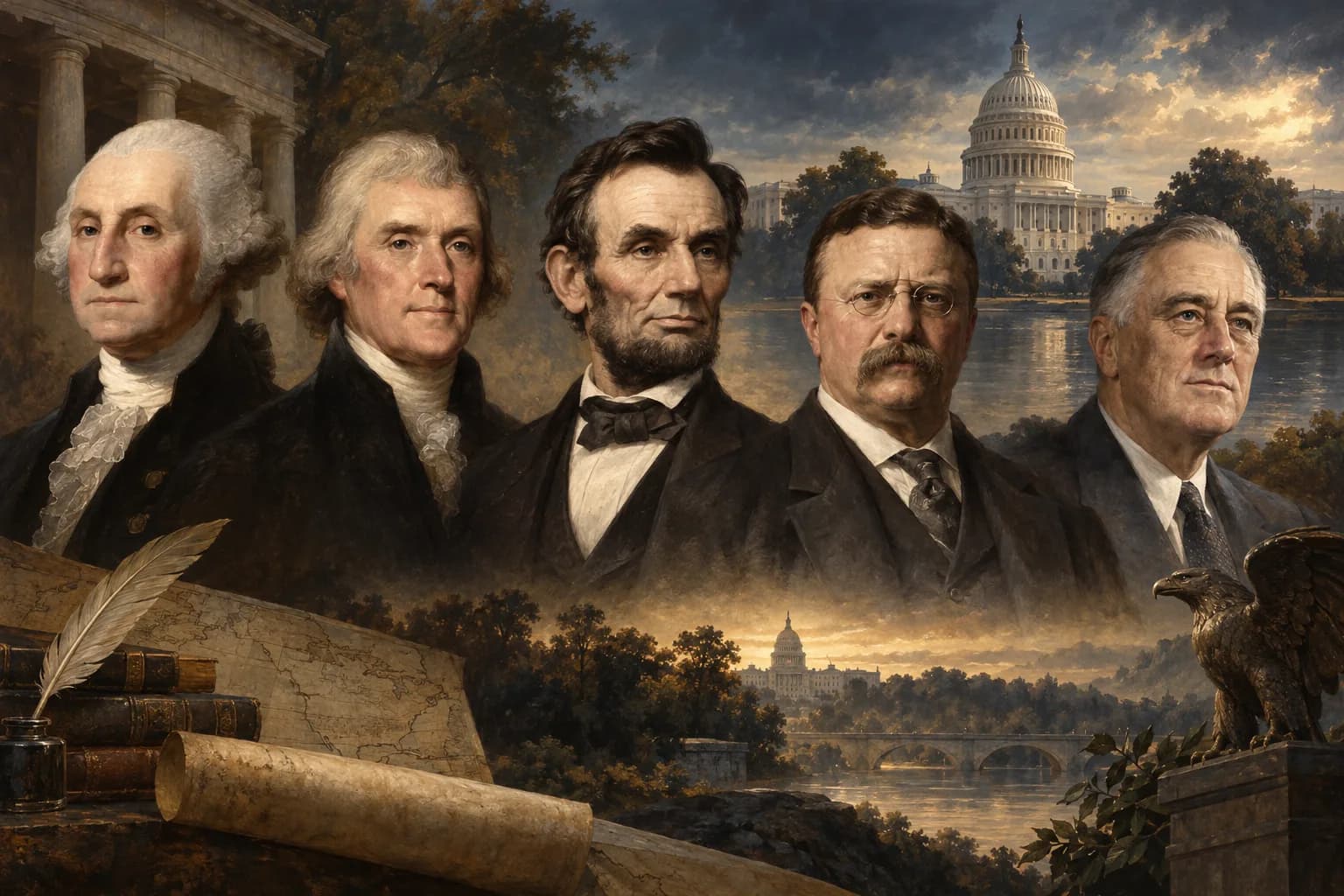
American Presidents lineage
Lineage47 presidents
American Presidents
1789 CE–present

The succession of American presidents from George Washington to today.

View lineage
Tertiary paths

Content note

This profile is written for educational use and connects to related Stories of History pages. The main portrait is an AI-assisted historical reconstruction, included as an illustrative aid rather than documentary evidence. Image policy Image attribution

References

Sources & Further Reading

Reliable reference works, archives and reading paths connected to this profile.

Further reading

  1. Encyclopaedia Britannica, Search results for James Madison,” accessed June 2026.Open source
  2. WorldCat, Books and library holdings for James Madison,” accessed June 2026.Open source

Primary sources

  1. Library of Congress, Search results for James Madison,” accessed June 2026.Open source

Reviewed claim sources

Loading reviewed claim sources...

A weekly route through history

Find out first about the latest published stories, feature notes and occasional Premium offers in one weekly email.