People

Hu Jintao

Hu Jintao was General Secretary of the Chinese Communist Party from 2002 to 2012 and President of China from 2003 to 2013. He oversaw rapid economic growth, the 2008 Beijing Olympics, the Scientific Outlook on Development, cautious collective leadership, and intensified stability maintenance.

Born
1942 CE
Role
Chinese President and General Secretary

Chinese President and General Secretary (born 1942)

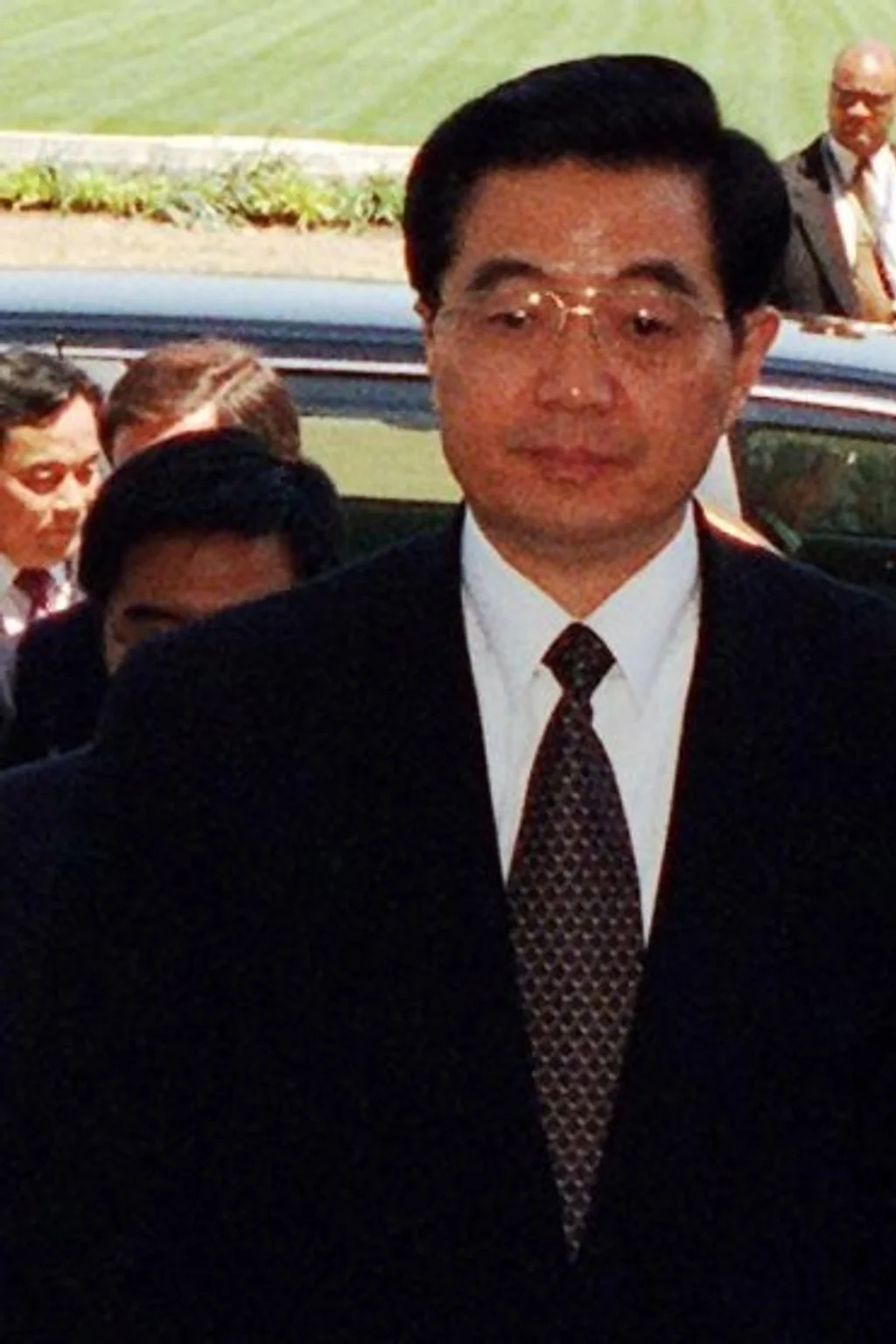
Official photograph of Hu Jintao
Historical photograph

A real historical or editorial image is used here. Source, licence and transformation details are publicly recorded. Image policy Attribution

Quick answer

Hu Jintao was General Secretary of the Chinese Communist Party from 2002 to 2012 and President of China from 2003 to 2013. He oversaw rapid economic growth, the 2008 Beijing Olympics, the Scientific Outlook on Development, cautious collective leadership, and intensified stability maintenance.

Born
1942 CE
Role
Chinese President and General Secretary
Years
Born 1942 CE
Quick facts

Profile details

Additional identity and tagging details that are not already covered in the introduction.

Also known as
President Hu, General Secretary Hu, Hu
Facts

Hu Jintao timeline facts

Selected specifics from this profile's life story.

1942–1964
Early beginnings

Hu Jintao was born in 1942 and studied hydraulic engineering at Tsinghua University, entering politics as a cautious technocrat.

1985–1992
Regional leadership

Hu led Guizhou and then Tibet, where his handling of unrest showed Beijing he could enforce stability in sensitive regions.

2002–2003
Becoming president

As top leader, Hu inherited a booming China marked by inequality, corruption, social unrest, and growing global expectations.

2012–present
Orderly transition

Hu stepped down from party, state, and military posts in a relatively orderly transfer to Xi Jinping, then withdrew from public life.

Life Journey

A quiet ascent to controlled power

Follow the story in a more continuous narrative, with a reading mode that matches how much depth you want.

Complete chronology

1942–1964

Early beginnings

Hu belonged to the generation formed after revolution but before China's full market transformation. His education at Tsinghua placed him among technically trained officials who saw development, infrastructure, and planning as central to national strength. He joined the Communist Party in the 1960s, when political loyalty could determine survival as much as advancement. Hu's public personality was reserved, careful, and almost deliberately unmemorable. That was not a flaw in the system he entered. In a party still marked by the traumas of Maoist upheaval, caution, discipline, and administrative reliability were valuable political assets.

1964–1980

Provincial work

Hu's early assignments in Gansu put him in one of China's poorer inland provinces, where development was constrained by geography, resources, and central planning. He worked through the Cultural Revolution years and the early reform era without becoming known for ideological flamboyance or factional adventure. That survival mattered. The party rewarded officials who could endure difficult postings, implement instructions, and avoid becoming liabilities. Hu's experience outside Beijing also gave him a practical understanding of regional inequality, a theme that later shaped his language of balanced development. His career grew from the party's interior, not from coastal celebrity.

1980–1985

Rise in youth league

The Communist Youth League became Hu's ladder into national politics. It trained cadres, connected ambitious officials, and offered a route upward for men who were not princelings of the revolutionary elite. Hu worked under Hu Yaobang, whose reformist reputation later became politically sensitive after 1989, but Hu Jintao avoided being defined as a rebel reformer. His style remained controlled and procedural. The Youth League network, later associated with the tuanpai faction, gave him allies and identity inside the party. More importantly, it showed senior leaders that he could manage a national organisation without creating personal drama.

1985–1992

Regional leadership

Hu's provincial record combined poverty governance with political control. In Guizhou he worked in one of China's least developed provinces; in Tibet he became party secretary during a period of protest and unrest. The imposition of martial law in Lhasa in 1989 became a defining test of his reliability to the central leadership. Human rights critics view this period as evidence of coercive rule; party leaders saw proof that Hu would preserve order when challenged. This dual reading follows him throughout his career. His administrative competence cannot be separated from the party-state's insistence that stability outranked political freedom.

1992

Entry to top ranks

Hu's elevation to the Politburo Standing Committee at the 14th Party Congress was striking because he was young by top-leadership standards. It placed him beside far more established figures and marked him as a successor-in-waiting. The decision reflected Deng Xiaoping's effort to regularise succession after decades of personalistic upheaval. Hu remained understated, learning the choreography of elite politics: consensus language, careful hierarchy, and avoidance of visible rivalry. He became vice president in 1998 and vice chair of the Central Military Commission before taking supreme party office. His rise was designed to look orderly, and that orderliness was itself the message.

1992–2002

Succession planning

Hu became General Secretary in 2002 and President in 2003, but Jiang Zemin retained influence, including over the military for a time. The transition was therefore orderly but not instantaneous. Hu had to govern inside a collective leadership shaped by predecessors, factions, and bureaucratic interests. His caution helped him survive this environment. He did not announce a personal revolution. He emphasised continuity, party unity, and technocratic problem-solving. The very smoothness of his succession was historically significant: after Mao's dominance and Deng's informal supremacy, China was experimenting with predictable elite turnover. Hu embodied that experiment.

2002–2003

Becoming president

Hu's leadership coincided with one of the most dramatic economic transformations in modern history. China entered the World Trade Organization just before his tenure, exports surged, cities expanded, and hundreds of millions experienced rising living standards. But growth also brought land disputes, labour unrest, environmental damage, corruption, and a widening gap between coast and interior. Hu responded with the language of the Scientific Outlook on Development and the Harmonious Society, promising more balanced, people-centred growth. These ideas recognised real problems, but they did not loosen the party's monopoly on political power. Reform meant better management, not pluralism.

2003–2012

Controlled governance

The 2008 Beijing Olympics symbolised China's arrival as a global power, projecting confidence, organisation, and national pride. Months later, the global financial crisis tested that confidence; Hu's government responded with a huge stimulus that sustained growth but deepened dependence on investment, local debt, and state-led infrastructure. Abroad, China became more influential while still speaking in relatively cautious diplomatic tones. At home, stability maintenance expanded through censorship, policing, surveillance, and pressure on lawyers, activists, ethnic minorities, and religious groups. Hu's China was not politically liberalising beneath a technocratic surface. It was learning how to combine market dynamism with party control.

2012–present

Orderly transition

Hu's retirement reinforced the idea, briefly plausible, that Chinese elite politics had settled into regular succession. He gave up the party leadership in 2012, the presidency in 2013, and the military chairmanship without the prolonged overlap that had marked Jiang's exit. His later public appearances were rare, and his unexpected removal from the closing session of the 20th Party Congress in 2022 drew intense international attention, though the full circumstances remain unclear. Hu's legacy now looks different in light of Xi Jinping's centralisation. He represents the high point of collective, technocratic, term-limited leadership, but also the period in which the security state and inequalities that followed were already deepening.

Continue in context

Connected stories

Move from the profile into the wider events and settings this figure belongs to.

China Presidents lineage
Lineage8 heads of state
China Presidents
1949 CE–present

Heads of state of the People's Republic of China from Mao Zedong to Xi Jinping.

View lineage
Tertiary paths

Content note

This profile is written for educational use and connects to related Stories of History pages. The main portrait uses a real historical or editorial image, with source and licence details recorded for attribution review. Image policy Image attribution

References

Sources & Further Reading

Reliable reference works, archives and reading paths connected to this profile.

Further reading

  1. Encyclopaedia Britannica, Search results for Hu Jintao,” accessed June 2026.Open source
  2. WorldCat, Books and library holdings for Hu Jintao,” accessed June 2026.Open source

Primary sources

  1. Library of Congress, Search results for Hu Jintao,” accessed June 2026.Open source

Reviewed claim sources

Loading reviewed claim sources...

A weekly route through history

Find out first about the latest published stories, feature notes and occasional Premium offers in one weekly email.