People

George H. W. Bush

George H. W. Bush was the 41st U.S. President from 1989 to 1993. He managed the end of the Cold War, German reunification and the Gulf War, after earlier service as vice president, CIA director and diplomat.

Born
1924 CE
Died
2018 CE
Role
41st President of the United States

41st President of the United States (1924–2018)

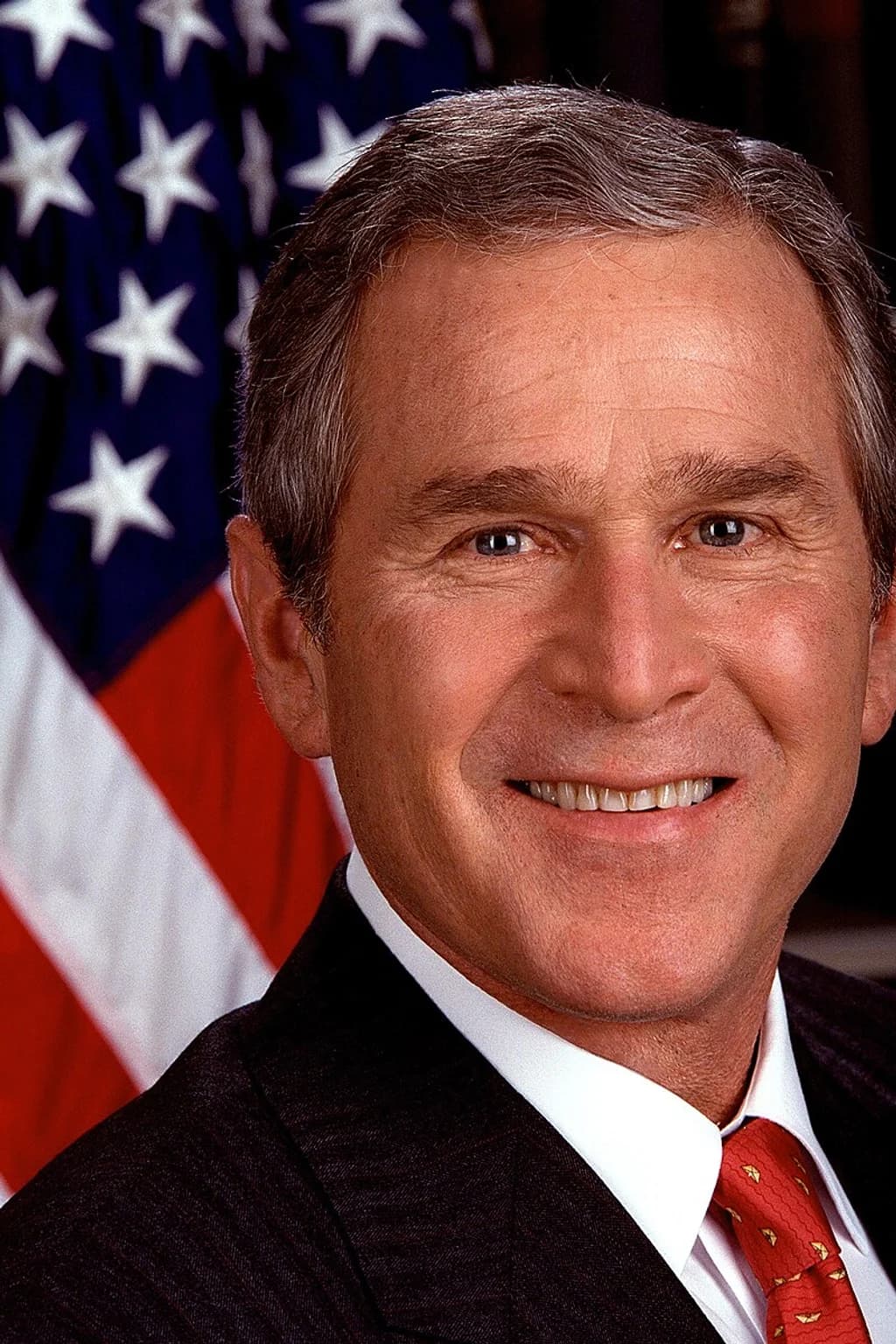
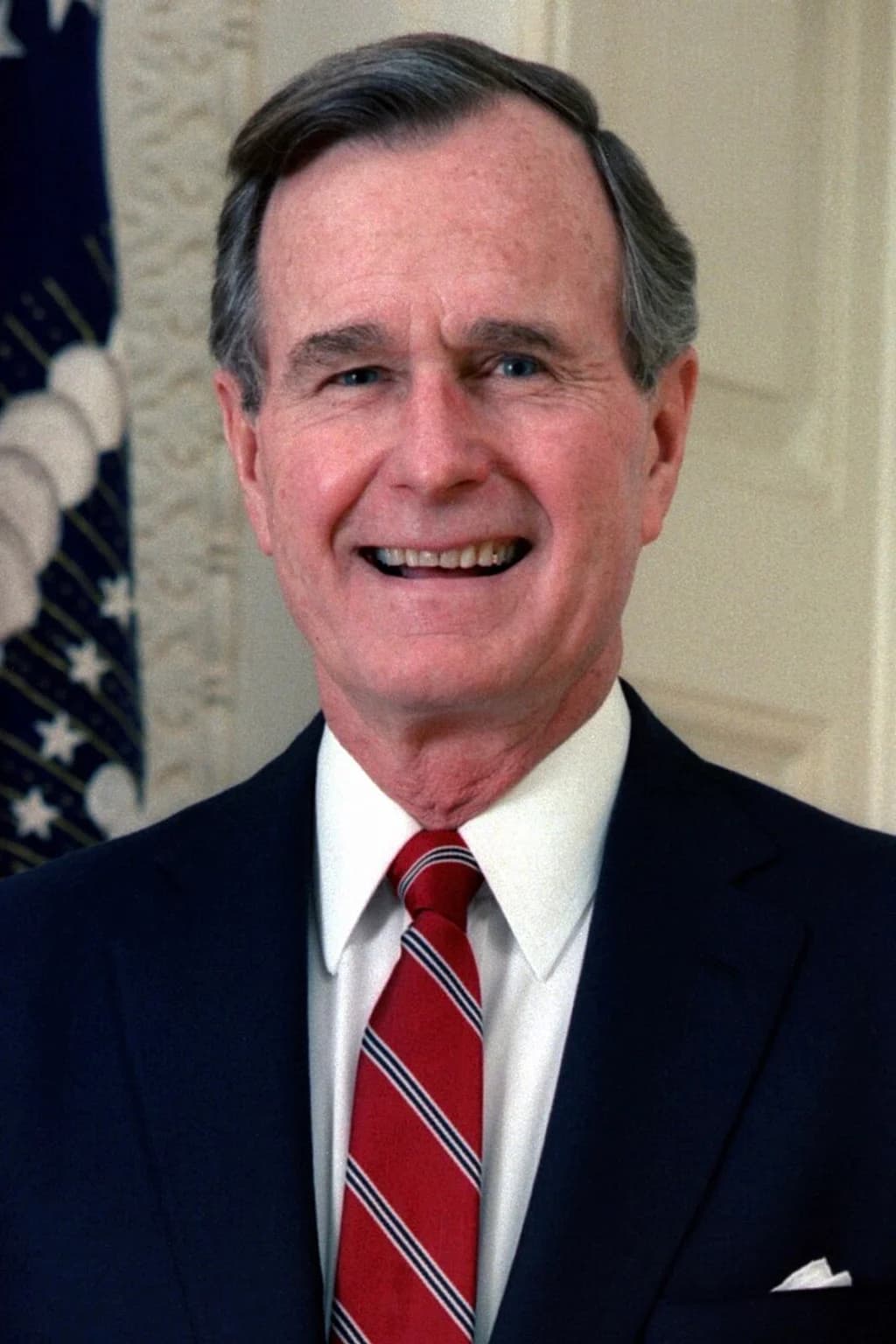
Portrait photograph of George H. W. Bush
Historical photograph

A real historical or editorial image is used here. Source, licence and transformation details are publicly recorded. Image policy Attribution

Quick answer

George H. W. Bush was the 41st U.S. President from 1989 to 1993. He managed the end of the Cold War, German reunification and the Gulf War, after earlier service as vice president, CIA director and diplomat.

Born
1924 CE
Died
2018 CE
Role
41st President of the United States
Years
1924-2018 CE
Facts

George H. W. Bush timeline facts

Selected specifics from this profile's life story.

1924–1942
Privileged upbringing

Born into a well-connected family, he grew up with strong expectations of service, shaping his early sense of duty and public responsibility.

1964–1970
Entering politics

He began his political career in Texas, winning a seat in Congress and establishing himself as a moderate, pragmatic Republican voice.

1989
Becoming president

He won the presidency and entered office during a period of major global change, requiring careful handling of shifting international dynamics.

1993–2018
Post-presidency

After leaving office, he remained active in public life, earning respect for his service and maintaining a reputation for steady leadership.

Life Journey

From wartime pilot to steady global leader

Follow the story in a more continuous narrative, with a reading mode that matches how much depth you want.

Complete chronology

1924–1942

Privileged upbringing

George Herbert Walker Bush was born in Milton, Massachusetts, on 12 June 1924 and grew up in a family of wealth, discipline and public expectation. His father, Prescott Bush, became a U.S. senator; his mother, Dorothy Walker Bush, drilled into her children the old Protestant ethic of modesty, competition and service. Educated at Greenwich Country Day and Phillips Academy Andover, Bush learned leadership through school, sport and family culture long before he entered politics. Privilege shaped his opportunities, but it also shaped his code: do not boast, do not complain, serve when called. That code could make him seem restrained or emotionally guarded, yet it gave his public life a consistency rare in modern American politics.

1942–1945

World War II pilot

Bush enlisted on his eighteenth birthday and became one of the youngest naval aviators in the U.S. Navy. Flying torpedo bombers in the Pacific, he saw war as danger rather than abstraction. On 2 September 1944, his aircraft was hit during an attack on Chichi Jima. Bush completed the run, bailed out over the ocean, and was rescued by the submarine USS Finback; his two crewmen did not survive. The experience marked him permanently. He rarely turned it into public drama, but it reinforced his belief in duty, teamwork and the cost of military decisions. Later, as president, he would use force with clear objectives and a deep awareness that war should not be entered casually.

1945–1963

Building a career

After Yale, marriage to Barbara Pierce and the beginning of family life, Bush moved to Texas rather than remain inside the eastern establishment that had formed him. The oil business gave him a new regional identity and a reputation for energetic ambition. He co-founded Zapata Petroleum and later Zapata Offshore, learning the risks of exploration, capital and partnership in the postwar energy economy. Texas also gave him a political base. Bush never became a natural populist, but he learned to campaign in a changing Sun Belt Republican world. His business career gave him wealth and independence; it also helped bridge northeastern privilege and southwestern conservatism.

1964–1970

Entering politics

Bush's first major campaign, for the U.S. Senate in Texas in 1964, failed in a Democratic state during a difficult year for Republicans. He returned by winning a Houston-area congressional seat in 1966 and served two terms in the House. There he was conservative but not theatrical, loyal to party but interested in governing. He supported parts of the civil rights settlement more cautiously than later admirers sometimes suggest, and he tried to position himself as a serious, national Republican rather than a regional protest candidate. A second Senate defeat in 1970 redirected him away from electoral office for a time and into appointed service.

1971–1977

Global experience

Between 1971 and 1977, Bush accumulated one of the broadest resumes of any future president. He served as U.S. ambassador to the United Nations, chairman of the Republican National Committee during the Watergate crisis, chief of the U.S. Liaison Office in Beijing, and director of the CIA after the agency had been battered by investigations. These jobs taught him diplomacy, party survival, intelligence discipline and the importance of personal trust. In China he watched a communist power opening cautiously to the United States; at the CIA he tried to restore morale while accepting oversight. The pattern was clear: Bush was repeatedly sent where steadiness mattered.

1981–1989

Vice presidency

Bush lost the 1980 Republican nomination to Ronald Reagan, then accepted the vice presidency and served loyally for eight years. The partnership was not ideologically seamless. Bush had criticized 'voodoo economics' during the primaries, and Reagan's movement conservatives never fully trusted him. Yet he became a disciplined deputy, chairing task forces, traveling widely, attending national security meetings and building relationships with foreign leaders. The Iran-Contra scandal touched the administration but did not destroy Bush's viability. By 1988 he could campaign as Reagan's heir while presenting himself as more experienced, more managerial and more comfortable with the machinery of government.

1989

Becoming president

Bush became president in January 1989 after defeating Michael Dukakis. He entered office with foreign-policy experience but without Reagan's ideological magnetism. His domestic slogan, a 'kinder, gentler nation,' suggested continuity softened by civility, while his pledge of 'no new taxes' boxed him in politically. Bush assembled a formidable national security team, including James Baker, Brent Scowcroft, Dick Cheney and Colin Powell. His governing style favored process, private diplomacy and coalition management. That could look uninspiring on television, but in 1989 it proved valuable. The world order was beginning to move, and a president addicted to drama could have made it more dangerous.

1989–1991

Cold War ending

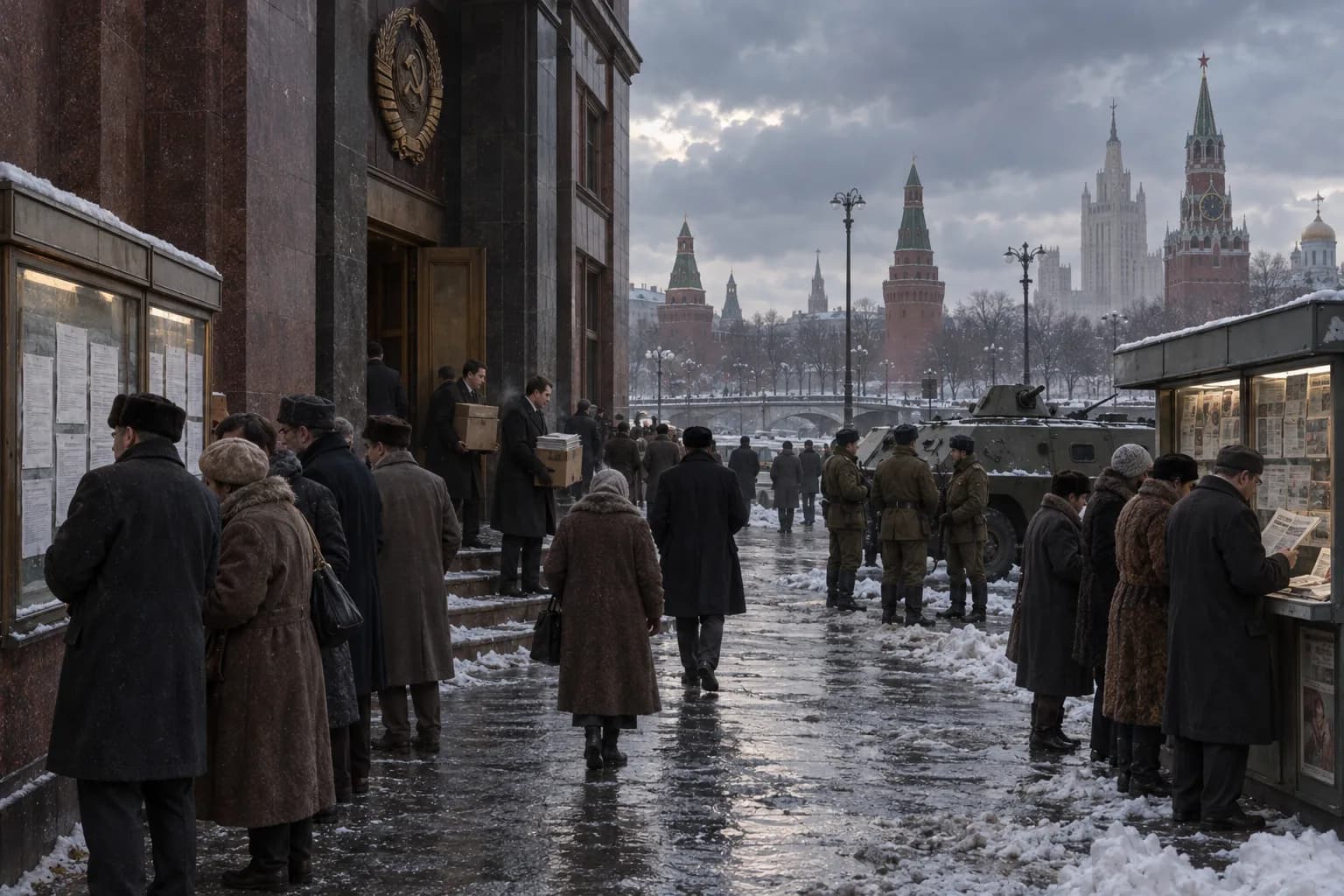
The fall of the Berlin Wall, revolutions in Eastern Europe, German reunification and the collapse of the Soviet Union all unfolded during Bush's presidency. His achievement was not that he caused these events, but that he managed the American response with restraint. He avoided humiliating Mikhail Gorbachev, worked closely with Helmut Kohl on reunification, reassured allies and accepted change without reckless triumphalism. In 1990-1991 he also built a broad international coalition after Saddam Hussein's Iraq invaded Kuwait. Operation Desert Storm achieved its limited objective: expel Iraqi forces from Kuwait, not march to Baghdad. Critics later debated that limit, but at the time it reflected Bush's preference for legitimacy, alliance discipline and clear ends.

1993–2018

Post-presidency

Bush lost the 1992 election to Bill Clinton after recession, a third-party challenge from Ross Perot and conservative anger over his broken tax pledge. The defeat revealed the limit of foreign-policy achievement in a domestic election. In retirement, his reputation improved. He worked with Clinton on disaster relief, watched his son George W. Bush become president, and became a symbol of a more courteous, service-oriented Republican tradition. His legacy remains mixed: praised for managing the Cold War's end and the Gulf War, criticized for domestic drift, the Willie Horton campaign climate of 1988, and limited response to the AIDS crisis and economic anxiety. To ask why George H. W. Bush was important is to see the value and limits of prudence in a political age beginning to reward sharper edges.

Continue in context

Connected stories

Move from the profile into the wider events and settings this figure belongs to.

American Presidents lineage
Lineage47 presidents
American Presidents
1789 CE–present

The succession of American presidents from George Washington to today.

View lineage
Tertiary paths

Content note

This profile is written for educational use and connects to related Stories of History pages. The main portrait uses a real historical or editorial image, with source and licence details recorded for attribution review. Image policy Image attribution

References

Sources & Further Reading

Reliable reference works, archives and reading paths connected to this profile.

Further reading

  1. Encyclopaedia Britannica, Search results for George H. W. Bush,” accessed June 2026.Open source
  2. WorldCat, Books and library holdings for George H. W. Bush,” accessed June 2026.Open source

Primary sources

  1. Library of Congress, Search results for George H. W. Bush,” accessed June 2026.Open source

Reviewed claim sources

Loading reviewed claim sources...

A weekly route through history

Find out first about the latest published stories, feature notes and occasional Premium offers in one weekly email.