People

Saddam Hussein

Saddam Hussein was President of Iraq from 1979 to 2003. His biography spans Ba'ath Party rule, the Iran-Iraq War, the invasion of Kuwait, sanctions, the Iraq War, trial, execution, and contested legacy.

Born
1937 CE
Died
2006 CE
Role
President of Iraq

President of Iraq (1937–2006)

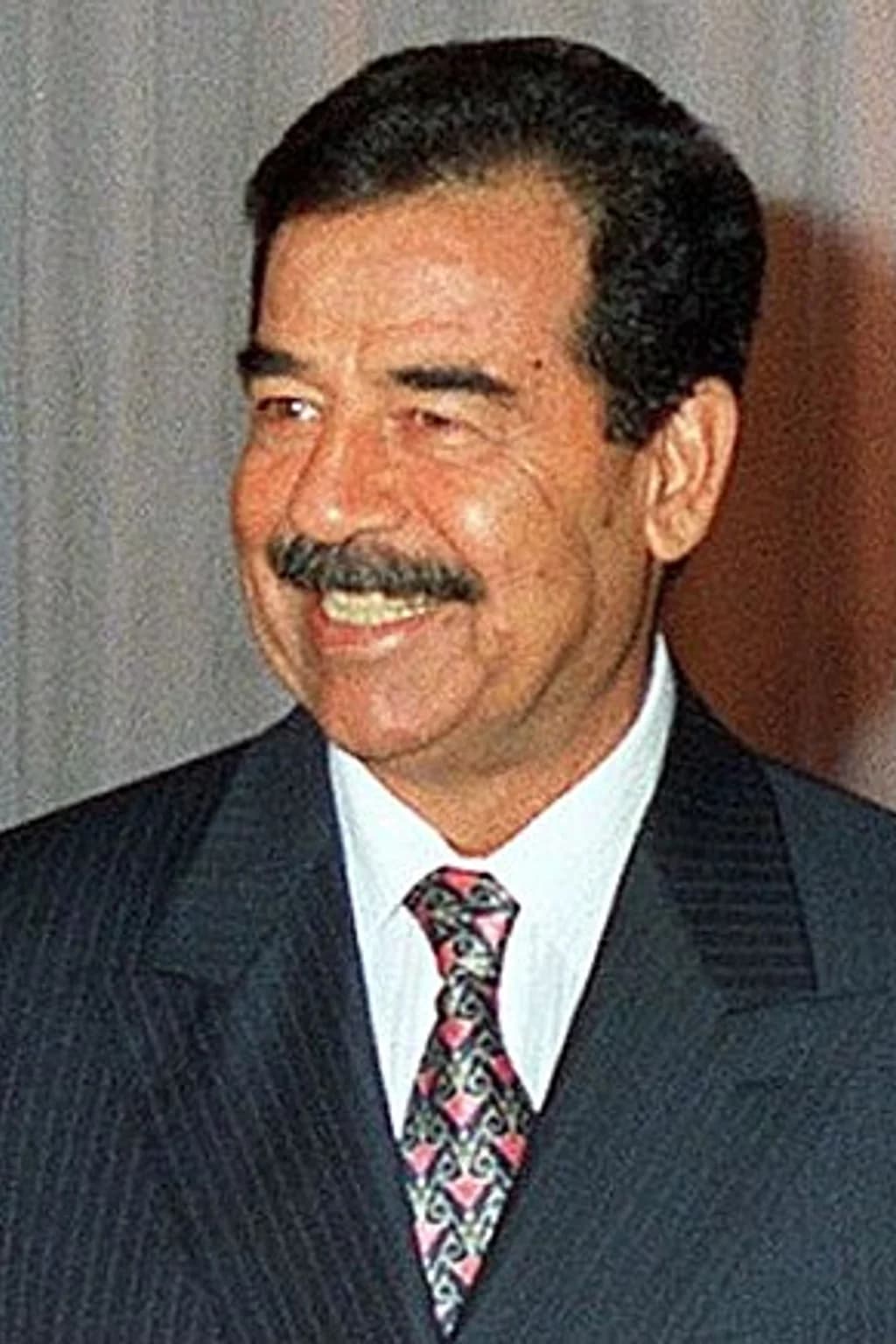
Portrait photograph of Saddam Hussein
Historical photograph

A real historical or editorial image is used here. Source, licence and transformation details are publicly recorded. Image policy Attribution

Quick answer

Saddam Hussein was President of Iraq from 1979 to 2003. His biography spans Ba'ath Party rule, the Iran-Iraq War, the invasion of Kuwait, sanctions, the Iraq War, trial, execution, and contested legacy.

Born
1937 CE
Died
2006 CE
Role
President of Iraq
Years
1937-2006 CE
Quick facts

Profile details

Additional identity and tagging details that are not already covered in the introduction.

Full name
Saddam Hussein Abd al-Majid al-Tikriti
Also known as
Saddam, Saddam Hussein al-Tikriti
Facts

Saddam Hussein timeline facts

Selected specifics from this profile's life story.

1937–1957
Tikrit origins

Saddam Hussein was born near Tikrit in 1937 and grew up in a rural, insecure world that shaped his later obsession with family networks, force, and control.

1980–1988
War with Iran

Saddam invaded Iran in 1980, expecting advantage after the Iranian Revolution, but the conflict became an eight-year war of attrition.

1991–2003
Sanctions and isolation

The 1990s left Saddam contained by sanctions, inspections, no-fly zones, and internal decay while his regime preserved control through fear and patronage.

2003–2006
Trial and legacy

Saddam was tried by the Iraqi High Tribunal, convicted of crimes against humanity in the Dujail case, and executed in 2006.

Life Journey

From Ba'ath Party enforcer to the dictator whose fall reshaped Iraq

Follow the story in a more continuous narrative, with a reading mode that matches how much depth you want.

Complete chronology

1937–1957

Tikrit origins

Saddam Hussein Abd al-Majid al-Tikriti was born in 1937 in al-Awja, near Tikrit, north of Baghdad. His early life was marked by hardship, tribal ties, and the absence or loss of close male protection. Later official propaganda turned these beginnings into a legend of toughness and destiny, but the more important point is political: Saddam learned early that kinship, loyalty, and fear could be instruments of survival. Iraq itself was a young state built from Ottoman provinces under British influence, divided by region, sect, class, tribe, and ideology. The monarchy and later republican governments struggled to hold together army officers, landowners, urban nationalists, communists, Kurds, Shi'a religious networks, and Sunni Arab elites. Saddam entered politics in a country where violence was already part of the language of power.

1957–1968

Ba'athist ascent

Saddam joined the Ba'ath Party as a young man, attracted by its mix of Arab nationalism, republicanism, secular state power, and hostility to communism and Western domination. In 1959 he took part in an attempted assassination of Iraqi leader Abd al-Karim Qasim, was wounded, and fled into exile, spending time in Syria and Egypt. The episode became central to his revolutionary image, but it also revealed the method that would follow him: politics as conspiracy, loyalty tests, and calculated violence. The Ba'athists briefly seized power in 1963, lost it, and returned in the coup of July 1968. Saddam was not yet president, but he became one of the regime's indispensable organisers. He understood that modern dictatorship required more than speeches. It needed party structures, intelligence files, patronage, prisons, and men who feared being seen as insufficiently loyal.

1968–1979

Power behind the presidency

After 1968, Saddam rose under President Ahmed Hassan al-Bakr, a relative and fellow Tikriti, but the younger man increasingly became the regime's driving force. He supervised security organs, party discipline, internal surveillance, and economic modernisation funded by oil. Iraq nationalised its oil industry in the 1970s, and rising revenues allowed the state to expand education, health care, infrastructure, military power, and patronage. That development made Saddam more than a crude strongman. He offered many Iraqis social mobility and national pride while simultaneously making independent politics impossible. The contradiction was central to Ba'athist Iraq: modernising ambition tied to coercion. In 1979, Saddam forced al-Bakr aside and became president. Soon after, a staged party purge showed the ruling elite what the new order meant. Loyalty would not merely be expected. It would be performed under threat.

1980–1988

War with Iran

In September 1980, Saddam launched war against Iran, calculating that the Islamic Revolution had weakened Iraq's neighbour and that Iraq could secure disputed territory, regional prestige, and leadership in the Arab world. The decision became the defining disaster of his presidency. Initial gains hardened into trench warfare, missile attacks, mass casualties, and economic exhaustion. The conflict drew in outside powers indirectly, as Gulf states, the United States, the Soviet Union, and others weighed fears of Iranian revolutionary expansion against discomfort with Saddam's regime. Iraq used chemical weapons during the war, including against Iranian forces, and the conflict normalised brutality on a staggering scale. By the ceasefire in 1988, neither side had achieved the decisive victory promised. Saddam survived politically, but Iraq was militarised, indebted, traumatised, and ruled by a leader whose legitimacy now depended on never admitting the cost of his own gamble.

1980s

Repression at home

Saddam's Iraq was held together by fear as much as ideology. Dissent from communists, Islamists, Kurdish parties, Shi'a activists, suspected coup plotters, and ordinary critics could bring imprisonment, torture, execution, or punishment of families. The Dujail case, later used at his trial, involved retaliation after an assassination attempt in 1982. The Anfal campaign against Kurdish areas in 1987-1988 devastated villages and killed large numbers of civilians; the chemical attack on Halabja in March 1988 became one of the most notorious atrocities associated with his rule. Exact death tolls across Saddam's campaigns remain debated, partly because dictatorship hides evidence and war destroys records. But the pattern is not in doubt: the state treated whole communities as security problems. Saddam's achievement was not stability in any humane sense. It was the construction of a republic where fear was administrative policy.

1990–1991

Kuwait and defeat

In August 1990, Saddam invaded Kuwait after disputes over debt, oil production, borders, and regional leadership. He expected, or convinced himself, that Iraq could absorb Kuwait and withstand international reaction. Instead, the invasion produced a broad U.S.-led coalition backed by United Nations resolutions. Operation Desert Storm in 1991 destroyed much of Iraq's military capacity and expelled Iraqi forces from Kuwait. Saddam remained in power, but the aftermath was brutal. Uprisings by Shi'a groups in the south and Kurds in the north were crushed, while sanctions and weapons inspections defined Iraq's next decade. The Gulf War revealed a pattern already visible in the Iran-Iraq War: Saddam could act with startling aggression, survive the consequences personally, and leave Iraqi society to bear the damage.

1991–2003

Sanctions and isolation

After the Gulf War, Iraq entered a long period of containment. United Nations sanctions, weapons inspections, no-fly zones, and periodic military strikes limited Saddam's room for manoeuvre. The regime surrendered or dismantled major weapons programmes under pressure, but its secrecy, obstruction, and history of chemical weapons kept suspicion alive. Sanctions damaged ordinary Iraqis severely, while Saddam used scarcity politically, protecting loyal networks and blaming outside powers for suffering his own decisions had helped create. Palaces rose even as infrastructure decayed. The regime's propaganda presented endurance as victory; in reality, Iraq was poorer, more isolated, and more brittle. The 1990s also mattered for later U.S. politics. Saddam became a standing problem in Washington, a dictator contained but not resolved, increasingly folded into arguments about credibility, weapons, and unfinished business.

2003

Overthrow in 2003

After the September 11 attacks, the George W. Bush administration placed Iraq inside a wider argument about terrorism, weapons of mass destruction, rogue states, and preventive war. Saddam had not carried out 9/11, and the claimed active WMD stockpiles used to justify invasion were not found. Yet his record of aggression, repression, chemical weapons use, and defiance of inspections made him easier to cast as an intolerable threat. The U.S.-led invasion began in March 2003. Baghdad fell quickly, statues came down, and the regime collapsed faster than plans for the aftermath could manage. Saddam fled, then was captured by U.S. forces near Tikrit in December 2003. His fall ended one dictatorship but opened another crisis: occupation, insurgency, sectarian violence, state collapse, and a long argument over whether removing a tyrant can be separated from responsibility for what follows.

2003–2006

Trial and legacy

Saddam's trial was meant to show that Iraq's former ruler would face law rather than disappear into exile or martyrdom. The Iraqi High Tribunal tried him first over crimes against humanity connected to Dujail, where residents were punished after a 1982 assassination attempt. He used the courtroom as theatre, challenging its legitimacy and trying to appear defiant before supporters. Human rights observers criticised aspects of the process, including security pressures, political interference concerns, and the conduct of the execution. Even so, the evidence of regime crimes was overwhelming beyond that single case. Saddam was executed by hanging on 30 December 2006. His legacy remains bitterly divided in memory and politics. Some remember order, nationalism, or resistance to foreign power; many more remember prisons, wars, mass graves, chemical attacks, fear, and ruin. To ask why Saddam Hussein was important is to confront how dictatorship can build a state around one man's survival, then leave a country broken when that survival ends.

Continue in context

Connected stories

Move from the profile into the wider events and settings this figure belongs to.

Tertiary paths

Content note

This profile is written for educational use and connects to related Stories of History pages. The main portrait uses a real historical or editorial image, with source and licence details recorded for attribution review. Image policy Image attribution

References

Sources & Further Reading

Reliable reference works, archives and reading paths connected to this profile.

Further reading

  1. Encyclopaedia Britannica, Search results for Saddam Hussein,” accessed June 2026.Open source
  2. WorldCat, Books and library holdings for Saddam Hussein,” accessed June 2026.Open source

Primary sources

  1. Library of Congress, Search results for Saddam Hussein,” accessed June 2026.Open source

Reviewed claim sources

Loading reviewed claim sources...

A weekly route through history

Find out first about the latest published stories, feature notes and occasional Premium offers in one weekly email.