People

Osama bin Laden

Osama bin Laden was the founder of al-Qaeda and the leader behind the September 11 attacks. His biography links the Afghan-Soviet war, global jihadism, 9/11, and the War on Terror.

Born
1957 CE
Died
2011 CE
Role
Founder and leader of al-Qaeda

Founder and leader of al-Qaeda (1957–2011)

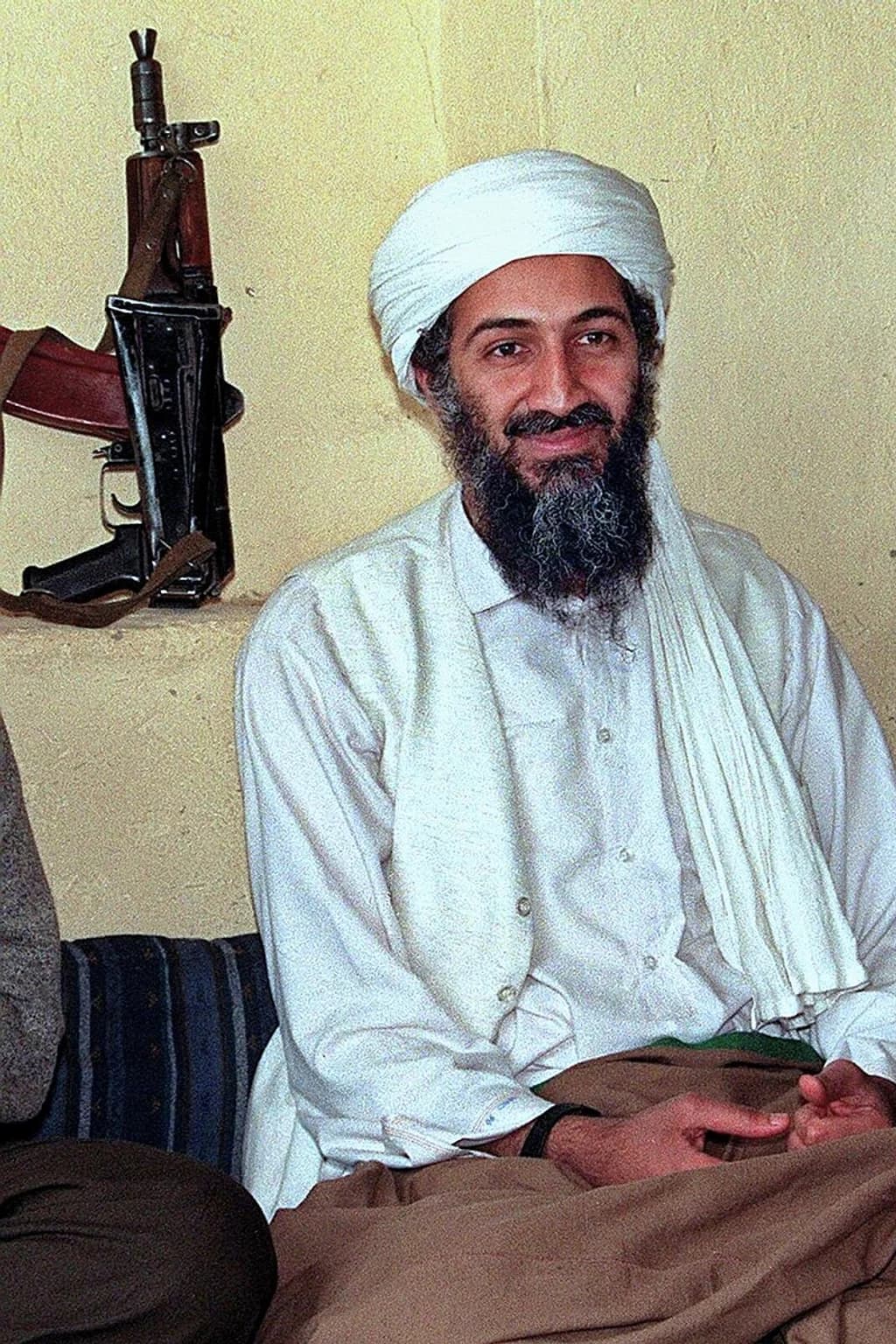
Portrait photograph of Osama bin Laden
Licensed archival image

A real historical or editorial image is used here. Source, licence and transformation details are publicly recorded. Image policy Attribution

Quick answer

Osama bin Laden was the founder of al-Qaeda and the leader behind the September 11 attacks. His biography links the Afghan-Soviet war, global jihadism, 9/11, and the War on Terror.

Born
1957 CE
Died
2011 CE
Role
Founder and leader of al-Qaeda
Years
1957-2011 CE
Quick facts

Profile details

Additional identity and tagging details that are not already covered in the introduction.

Full name
Osama bin Mohammed bin Awad bin Laden
Also known as
bin Laden, Usama bin Laden
Region
Middle East, South Asia
Facts

Osama bin Laden timeline facts

Selected specifics from this profile's life story.

1957–1979
Saudi beginnings

Osama bin Laden was born in Saudi Arabia in 1957 into the wealthy bin Laden construction family, a world of privilege, religion, monarchy, and oil-boom transformation.

1988–1992
Founding al-Qaeda

Near the end of the Afghan war, bin Laden helped create al-Qaeda as a base for continuing transnational jihad beyond Afghanistan.

2001
September 11 attacks

Al-Qaeda's September 11 attacks made bin Laden the central figure of the War on Terror and triggered the U.S.-led invasion of Afghanistan.

2011
Death and legacy

U.S. forces killed bin Laden in Abbottabad, Pakistan, in 2011, ending the manhunt but not the conflicts and security politics his actions had helped unleash.

Life Journey

From Saudi privilege to the architect of global jihadist terror

Follow the story in a more continuous narrative, with a reading mode that matches how much depth you want.

Complete chronology

1957–1979

Saudi beginnings

Osama bin Mohammed bin Awad bin Laden was born in Riyadh in 1957, one of many children in a vast family made powerful by construction contracts with the Saudi royal state. His father, Mohammed bin Awad bin Laden, had risen from Yemeni origins to become one of the kingdom's most important builders, linked to roads, palaces, and holy-site projects. Osama grew up inside wealth but also inside a conservative religious culture shaped by Saudi Wahhabism, Arab politics, and the shocks of the 1967 Arab-Israeli War. He studied in Jeddah, absorbed Islamist currents that criticised Western influence and secular Arab nationalism, and developed a reputation among supporters for personal austerity. None of this made terrorism inevitable. What mattered was the later fusion of money, religious militancy, war experience, and a talent for turning grievance into organisation.

1979–1989

Afghan-Soviet war

The turning point in bin Laden's biography came after the Soviet Union invaded Afghanistan in 1979. Across the Muslim world, Afghanistan became a rallying cause: a place where religious obligation, anti-communism, geopolitics, and charitable mobilisation overlapped. Bin Laden travelled to Pakistan and Afghanistan, raised funds, supported guesthouses and camps, and worked with figures such as Abdullah Azzam, whose call for Muslim volunteers gave the conflict transnational meaning. Bin Laden's personal battlefield role is sometimes inflated by later myth, but his organisational importance was real. He helped connect money, recruits, logistics, and reputation. The war also created a dangerous lesson: a superpower could be worn down by committed irregular fighters. For bin Laden and those around him, the Soviet withdrawal was interpreted not only as an Afghan victory but as evidence that militant jihad could alter world history.

1988–1992

Founding al-Qaeda

Al-Qaeda emerged in 1988 as the Afghan war was nearing its end and foreign volunteers were debating what should come next. Its name, often translated as 'the base', reflected both an organisational register of fighters and a wider ambition: to preserve a cadre for future campaigns. Bin Laden broke with the idea that the Afghan struggle should end at Afghanistan's borders. He increasingly imagined a global conflict against regimes he saw as corrupt or impious and against the United States, whose military and political presence in the Middle East he treated as the central obstacle. The 1990 Iraqi invasion of Kuwait sharpened this break. Bin Laden offered to help defend Saudi Arabia with veteran fighters, but the kingdom relied instead on U.S. troops. For him, the stationing of American forces near Islam's holy places became a defining grievance and a recruiting argument.

1991–1996

Sudan and exile

After pressure in Saudi Arabia, bin Laden relocated to Sudan in the early 1990s. The Sudanese Islamist government offered room for business activity and militant contacts, while bin Laden invested in agriculture, construction, roads, and other ventures. This period mattered because al-Qaeda was not merely hiding in caves. It was building relationships, training capacity, propaganda, finance, and a worldview that linked local conflicts to a single global struggle. Bin Laden's citizenship was revoked by Saudi Arabia in 1994, deepening his rupture with the kingdom. Under international pressure, Sudan expelled him in 1996. He returned to Afghanistan, where the Taliban's rise gave him sanctuary. Exile hardened his message: he presented himself as a man stripped of homeland and status because he had spoken against foreign domination, a self-serving narrative that helped convert personal defeat into ideological authority.

1996–2000

Declaring war

Back in Afghanistan, bin Laden found the sanctuary that made al-Qaeda far more dangerous. Taliban rule gave him space to train, plan, broadcast, and receive recruits. In 1996 and 1998 he issued declarations framing violence against the United States as religious duty. The language was sweeping, but the strategy was deliberate: provoke the United States, claim leadership of a global cause, and bind scattered militants into a single anti-American narrative. Al-Qaeda's attacks on the U.S. embassies in Kenya and Tanzania in 1998 killed more than two hundred people, most of them Africans, and brought American missile strikes against targets in Afghanistan and Sudan. In 2000, the attack on the USS Cole in Yemen killed seventeen U.S. sailors. These operations showed al-Qaeda's growing reach and bin Laden's importance as financier, symbol, strategist, and legitimising voice.

2001

September 11 attacks

On 11 September 2001, nineteen al-Qaeda hijackers seized four U.S. commercial aircraft. Two were flown into the World Trade Center in New York, one into the Pentagon, and one crashed in Pennsylvania after passengers resisted. Nearly three thousand people were killed. Bin Laden did not pilot a plane or act alone; the plot also involved figures such as Khalid Sheikh Mohammed and a wider operational network. But he approved, supported, and celebrated the attacks, and al-Qaeda under his leadership claimed a scale of violence that changed world politics. The United States responded by invading Afghanistan, removing the Taliban from power, expanding counterterrorism agencies, and launching a global War on Terror. Bin Laden achieved visibility beyond anything he had possessed before, but at catastrophic human cost and with consequences that devastated Afghanistan, destabilised regions, and reshaped law, security, and war.

2001–2011

Years in hiding

Bin Laden escaped capture after the opening phase of the Afghanistan war, most famously around the Tora Bora period, and spent years as a fugitive. His absence did not remove his symbolic power. Audio and video messages kept him present for supporters and enemies alike, while al-Qaeda franchises and affiliated movements spread across parts of the Middle East, Africa, and South Asia. Yet the organisation also came under intense pressure: leaders were killed or captured, communications became risky, and the Iraq War produced both opportunities and ideological complications. Documents recovered later from his Abbottabad compound suggest a leader still trying to guide strategy but frustrated by affiliates, security constraints, and the loss of control that comes when a movement becomes a brand. The hidden bin Laden was less a battlefield commander than a remote strategist, symbol, and problem manager.

2011

Death and legacy

On 2 May 2011 in Pakistan, U.S. special operations forces killed bin Laden in a compound in Abbottabad. The location, near a major Pakistani military academy, intensified questions about how he had lived there undetected or protected, though the full picture remains contested. His death gave the United States a moment of closure after a decade of pursuit, but it did not end jihadist violence, al-Qaeda's ideology, or the wider War on Terror. Bin Laden's legacy is therefore both immense and grim. He did not command a state, win a conventional war, or build a lasting political order. His historical importance lies in showing how a non-state network, built from money, sanctuary, ideology, and media strategy, could provoke superpower war and alter daily life across continents. To ask who Osama bin Laden was is to ask how modern terrorism learned to use spectacle as strategy.

Continue in context

Connected stories

Move from the profile into the wider events and settings this figure belongs to.

Tertiary paths

Content note

This profile is written for educational use and connects to related Stories of History pages. The main portrait uses a real historical or editorial image, with source and licence details recorded for attribution review. Image policy Image attribution

References

Sources & Further Reading

Reliable reference works, archives and reading paths connected to this profile.

Further reading

  1. Encyclopaedia Britannica, Search results for Osama bin Laden,” accessed June 2026.Open source
  2. WorldCat, Books and library holdings for Osama bin Laden,” accessed June 2026.Open source

Primary sources

  1. Library of Congress, Search results for Osama bin Laden,” accessed June 2026.Open source

Reviewed claim sources

Loading reviewed claim sources...

A weekly route through history

Find out first about the latest published stories, feature notes and occasional Premium offers in one weekly email.