People

Bill Clinton

Bill Clinton was the 42nd U.S. President. He oversaw 1990s economic growth, welfare reform, NAFTA, NATO action in the Balkans, and impeachment over the Monica Lewinsky scandal.

Born
1946 CE
Role
42nd President of the United States

42nd President of the United States (born 1946)

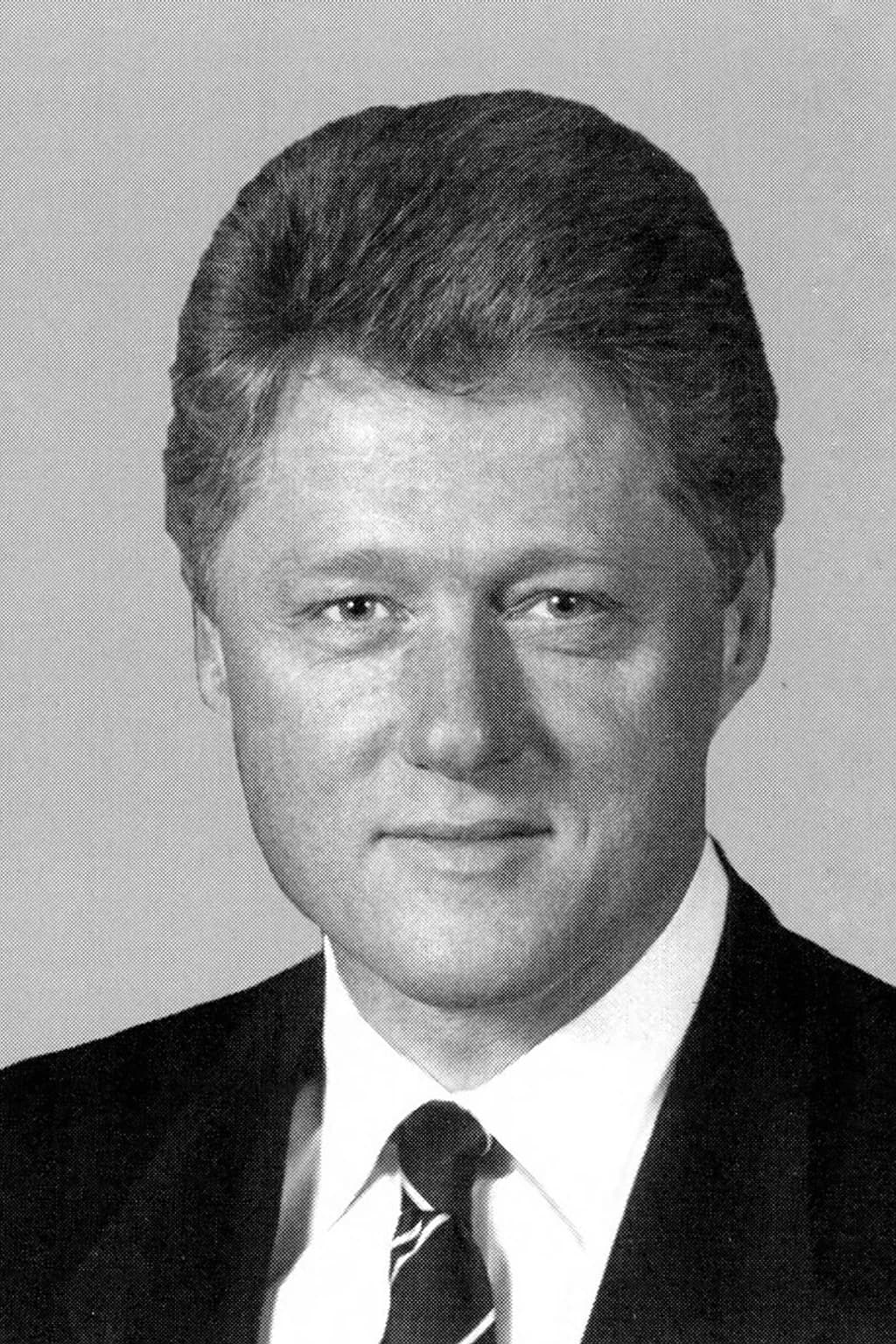
Official portrait photograph of Bill Clinton
Historical photograph

A real historical or editorial image is used here. Source, licence and transformation details are publicly recorded. Image policy Attribution

Quick answer

Bill Clinton was the 42nd U.S. President. He oversaw 1990s economic growth, welfare reform, NAFTA, NATO action in the Balkans, and impeachment over the Monica Lewinsky scandal.

Born
1946 CE
Role
42nd President of the United States
Years
Born 1946 CE
Facts

Bill Clinton timeline facts

Selected specifics from this profile's life story.

1946–1960s
Arkansas Roots

Bill Clinton was born William Jefferson Blythe III in Hope, Arkansas, in 1946, three months after his father's death.

1979–1992
Governor of Arkansas

Elected governor in 1978, defeated in 1980, and returned to office in 1982, Clinton learned politics through failure as much as victory.

1997–2001
Second Term

Clinton's second term brought budget surpluses, a booming technology economy and diplomatic activism, but it was dominated by the Monica Lewinsky scandal.

Ongoing
Enduring Legacy

Clinton's legacy is unusually divided: economic expansion, fiscal discipline and political reinvention on one side; mass incarceration debates, financial deregulation, failed health reform and impeachment...

Life Journey

Ambition, boom years and a presidency under investigation

Follow the story in a more continuous narrative, with a reading mode that matches how much depth you want.

Complete chronology

1946–1960s

Arkansas Roots

Clinton's biography began far from the usual corridors of presidential power. His father died in a car accident before he was born, and his mother, Virginia Kelley, trained as a nurse while relatives helped raise him. In Hot Springs, Arkansas, he grew up amid Southern small-town politics, segregation, evangelical culture and the complicated private life of his stepfather, Roger Clinton, whose surname he later adopted. The young Clinton was not simply a natural campaigner; he was a watchful child learning how institutions, personal stories and public performance overlapped. Meeting President John F. Kennedy as a Boys Nation delegate in 1963 became part of his origin story, but the deeper influence was Arkansas itself: a poor state with sharp racial and economic divisions, where politics rewarded personal contact and practical bargaining.

1960s–1970s

Academic Achievement

Clinton's education turned regional promise into national possibility. At Georgetown University he studied international affairs and worked for Senator J. William Fulbright, absorbing both the language of public service and criticism of the Vietnam War. At Oxford, he entered the world of Rhodes Scholars and future decision-makers, but his avoidance of military service during Vietnam later became a politically damaging issue. Yale Law School connected him to Hillary Rodham, whose intellect and political seriousness became central to his career. These years sharpened two traits that defined him: an appetite for policy detail and an instinct for personal persuasion. They also created a tension that opponents repeatedly exploited, between the gifted reformer who understood government and the ambitious operator whose choices invited mistrust.

1970s

Return to Arkansas

Returning to Arkansas was both a personal choice and a strategic one. Clinton understood that his quickest route to power lay through a state where he knew the culture, the voters and the Democratic machinery. He taught law at the University of Arkansas, married Hillary Rodham in 1975, and won election as state attorney general in 1976. His 1974 challenge to Republican congressman John Paul Hammerschmidt failed, but it made Clinton a serious figure by showing that he could campaign hard in conservative territory. The Arkansas years built the Clinton method: meet voters relentlessly, master local detail, sound moderate without abandoning reformist intent, and recover quickly from mistakes.

1979–1992

Governor of Arkansas

Clinton became one of the youngest governors in American history, then promptly discovered the limits of talent without discipline. Voter anger over a vehicle tax increase and resentment connected to Cuban refugees housed at Fort Chaffee contributed to his 1980 defeat. The loss was formative. When he returned in 1982, he governed with a more cautious, adaptive style, emphasising education, teacher testing, job creation and administrative competence. Hillary Clinton played an important role in the education reform push, and the couple became a distinctive political partnership. The governorship also placed Clinton inside the Democratic Leadership Council world, where younger Democrats argued that the party needed to reconnect with middle-class voters, fiscal responsibility and cultural moderation after the Reagan era.

1991–1992

Presidential Run

Clinton's 1992 campaign succeeded because it read the moment accurately. The Cold War had ended, recession had damaged Bush's standing, and many voters wanted competence on the economy more than grand ideological argument. Clinton presented himself as a Southern moderate who could speak to working families, suburban voters and Democrats tired of losing presidential elections. The campaign nearly collapsed under allegations about his private life and Vietnam-era choices, but his televised resilience helped turn crisis into proof of endurance. James Carville's famous focus on the economy captured the campaign's discipline. Clinton did not win a majority of the popular vote, partly because Ross Perot drew substantial support, but he won the presidency by making Democratic politics sound practical, intimate and future-facing.

1993–1997

First Term

The early Clinton presidency was more turbulent than later memories of 1990s prosperity suggest. His 1993 budget passed without Republican support and raised taxes on higher incomes while seeking deficit reduction, a gamble that helped define his economic record. NAFTA tied the United States more deeply to Canada and Mexico, winning business support and union anger. Domestic wins such as the Family and Medical Leave Act and the Brady handgun law sat beside a dramatic health-care failure, as the administration's complex reform plan collapsed under political attack and internal overreach. The 1994 Republican Revolution, led by Newt Gingrich, forced Clinton into divided government. From that defeat came the sharper triangulation of his presidency: oppose Republican cuts he considered excessive, adopt some conservative language on welfare and crime, and claim the pragmatic centre.

1997–2001

Second Term

Clinton's re-election in 1996 seemed to confirm the success of his centrist strategy. Welfare reform had been signed, the economy was expanding, unemployment was low, and federal budgets moved into surplus. Abroad, his administration faced the unfinished violence of the post-Cold War world: NATO intervention in Bosnia and Kosovo, peace efforts in Northern Ireland and the Middle East, and the growing threat of al-Qaeda. Yet the Lewinsky scandal changed the emotional temperature of the presidency. Clinton's relationship with a White House intern, his misleading public denials and sworn testimony became the basis for impeachment. Republicans argued that the rule of law was at stake; defenders saw a partisan effort to remove a president over private misconduct. Acquittal preserved his office, but not an uncomplicated reputation.

2001–present

Post-Presidency Work

Clinton left office popular with the public but burdened by scandal and controversy over last-minute pardons. In the years that followed, he built one of the most active post-presidencies in American history. The Clinton Foundation and Clinton Global Initiative worked on public health, development, climate and disaster response, especially after the 2004 Indian Ocean tsunami and Hurricane Katrina. He campaigned for Democratic candidates, supported Hillary Clinton's Senate, presidential and secretary of state careers, and remained an unusually skilled explainer of Democratic policy. Yet the very scale of his network generated scrutiny. Donors, speaking fees and access to power became recurring questions, especially during Hillary Clinton's 2016 campaign. The post-presidency showed both Clinton's genuine appetite for practical problem-solving and the risks of influence that never quite leaves politics.

Ongoing

Enduring Legacy

Bill Clinton matters because he governed at a hinge point. He was the first Democratic president after the Reagan realignment to win and hold the White House, and he did so by reshaping the party's language around markets, opportunity, crime, welfare and the middle class. Supporters credit him with prosperity, deficit reduction, pragmatic reform and a confident American role after the Cold War. Critics argue that some compromises - on criminal justice, welfare restrictions, trade and financial deregulation - carried long-term social costs. His personal conduct, especially the Lewinsky scandal, has also been reassessed through changing expectations about power, gender and accountability. Clinton's presidency is therefore not a tidy success story or a simple cautionary tale. It is a map of the 1990s: optimistic, globalising, media-saturated, prosperous for many, unequal for many others, and already carrying the tensions that would define the next century.

Continue in context

Connected stories

Move from the profile into the wider events and settings this figure belongs to.

American Presidents lineage
Lineage47 presidents
American Presidents
1789 CE–present

The succession of American presidents from George Washington to today.

View lineage
Tertiary paths

Content note

This profile is written for educational use and connects to related Stories of History pages. The main portrait uses a real historical or editorial image, with source and licence details recorded for attribution review. Image policy Image attribution

References

Sources & Further Reading

Reliable reference works, archives and reading paths connected to this profile.

Further reading

  1. Encyclopaedia Britannica, Search results for Bill Clinton,” accessed June 2026.Open source
  2. WorldCat, Books and library holdings for Bill Clinton,” accessed June 2026.Open source

Primary sources

  1. Library of Congress, Search results for Bill Clinton,” accessed June 2026.Open source

Reviewed claim sources

Loading reviewed claim sources...

A weekly route through history

Find out first about the latest published stories, feature notes and occasional Premium offers in one weekly email.