People

Cassivellaunus

Cassivellaunus was a British tribal chieftain, probably linked to the Catuvellauni, who resisted Julius Caesar's invasion of Britain in 54 BC using chariot warfare, guerrilla tactics and negotiation.

Role
British tribal chieftain

British tribal chieftain (1st century BC)

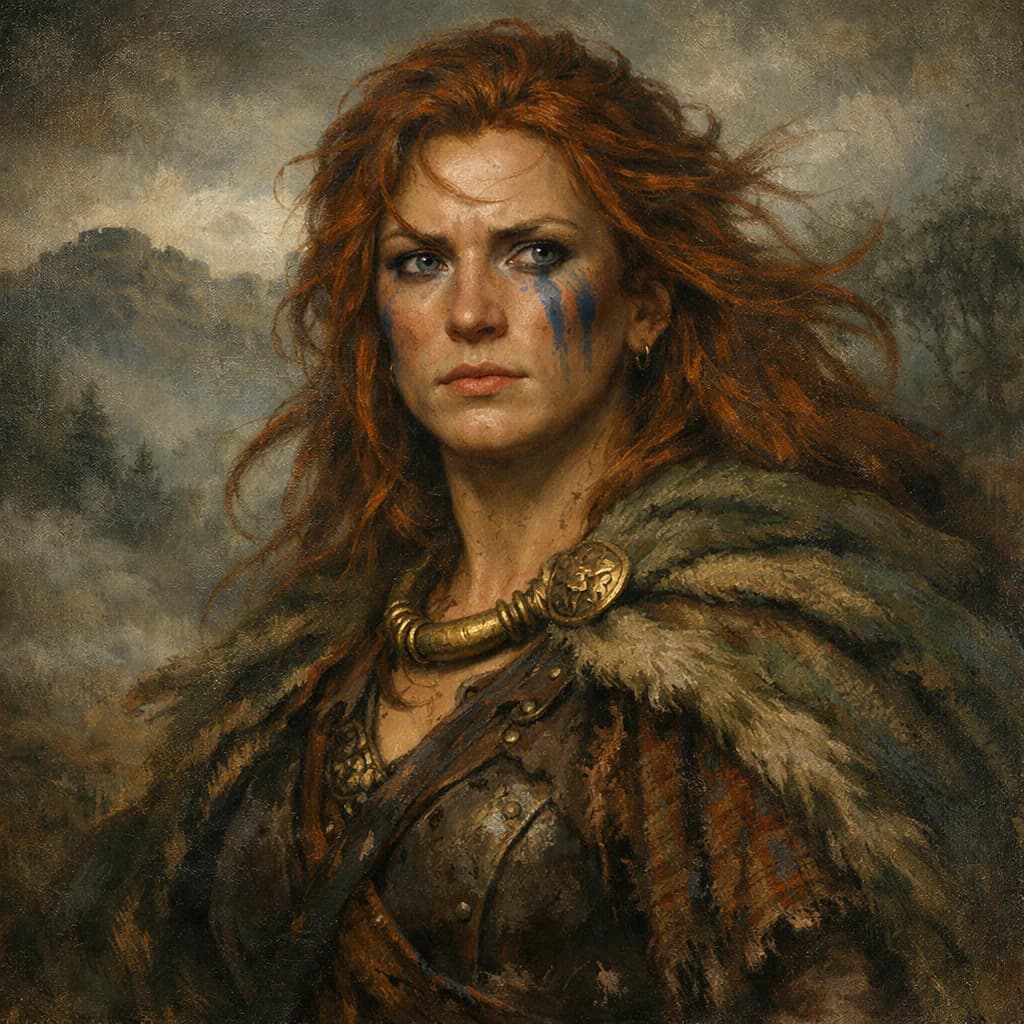
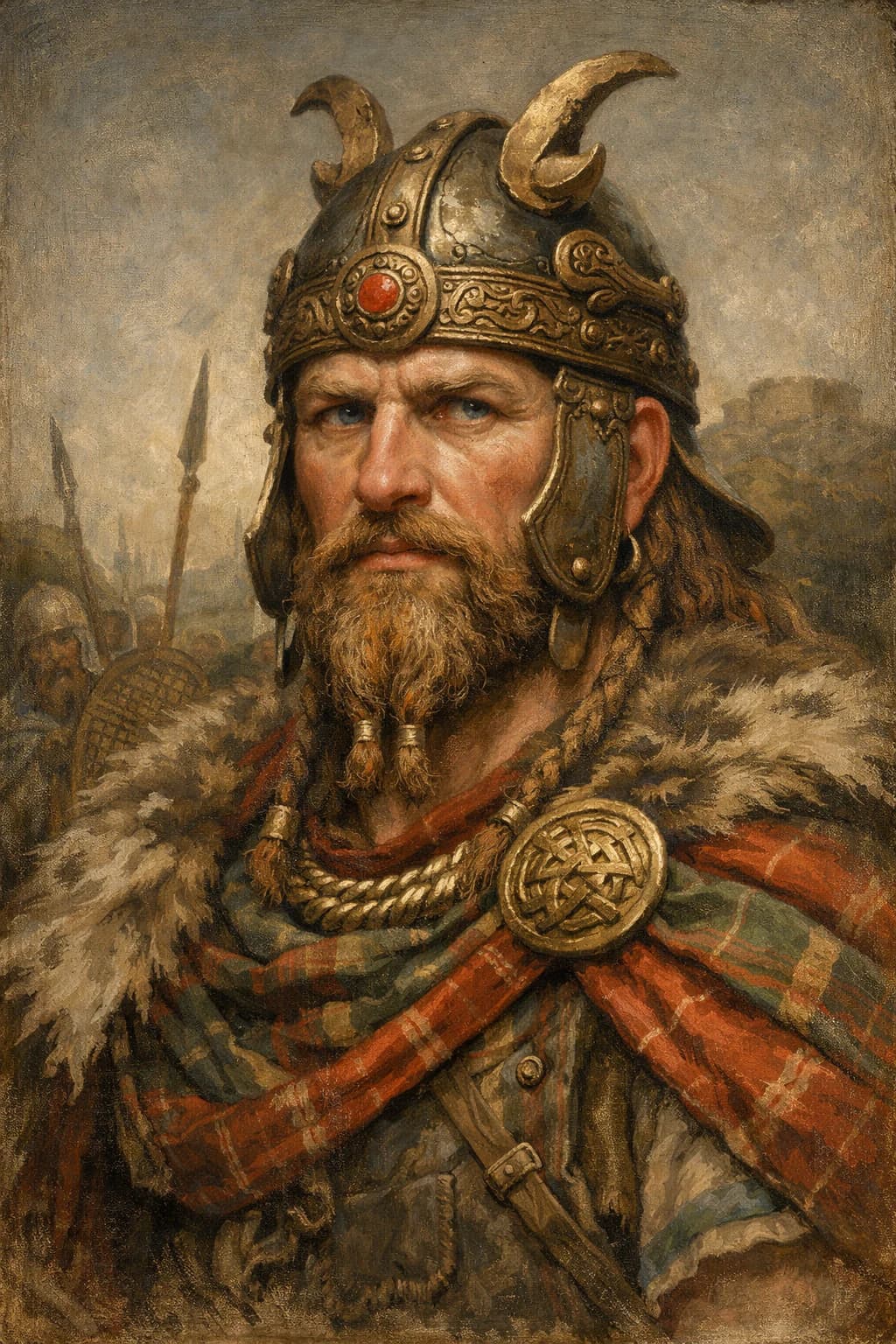
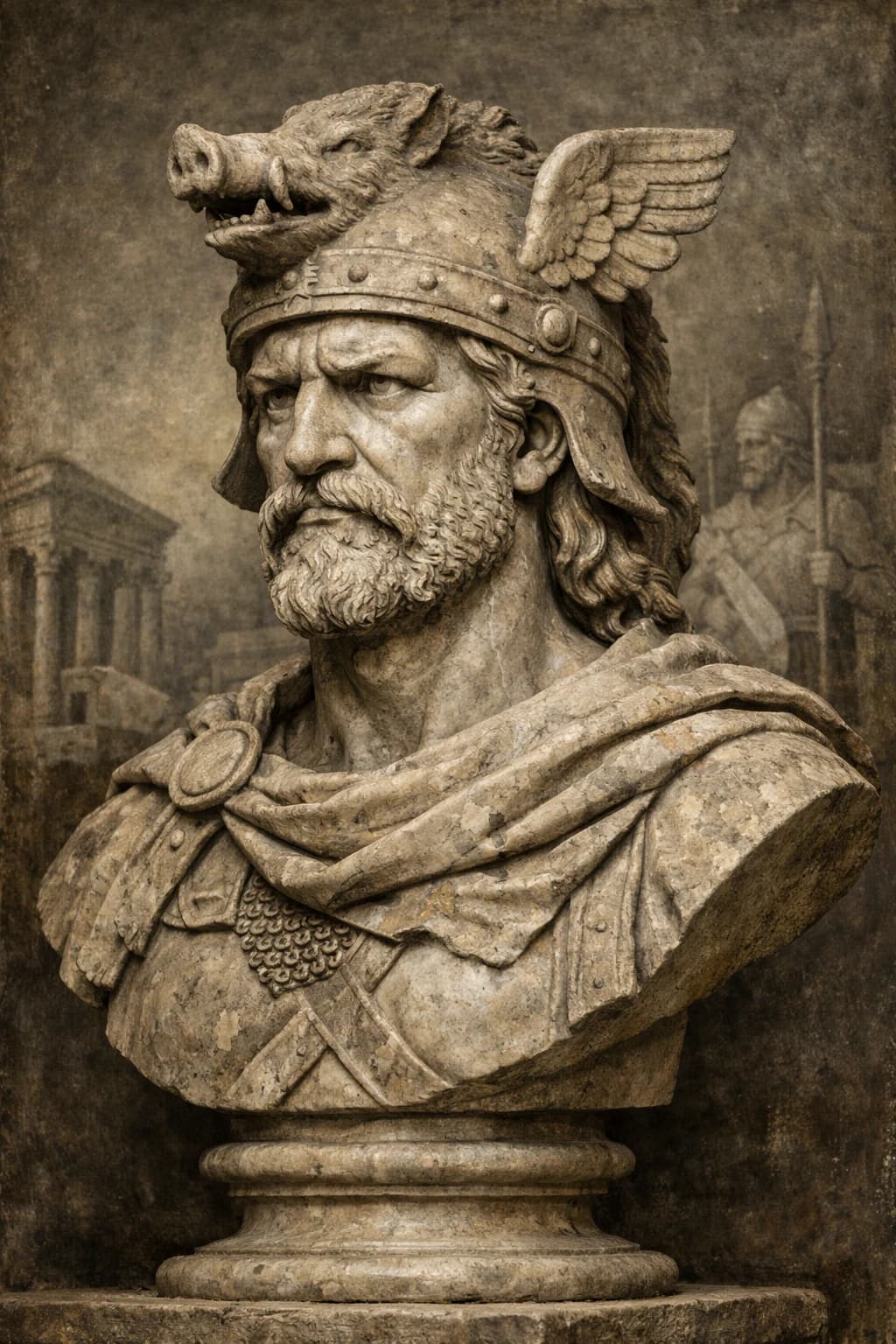
AI-generated portrait of Cassivellaunus, British tribal chieftain
AI-assisted historical reconstruction

An illustrative reconstruction based on historical context. It is not a photograph or documentary likeness. Image policy

Quick answer

Cassivellaunus was a British tribal chieftain, probably linked to the Catuvellauni, who resisted Julius Caesar's invasion of Britain in 54 BC using chariot warfare, guerrilla tactics and negotiation.

Role
British tribal chieftain
Years
1st century BCE
Facts

Cassivellaunus timeline facts

Selected specifics from this profile's life story.

c. 60 BC
A powerful tribal leader

Cassivellaunus was a powerful chieftain north of the Thames, probably connected with the Catuvellauni, whose influence had been expanding before Caesar arrived.

54 BC
Chariot warfare

Cassivellaunus avoided the kind of pitched battle Caesar wanted. He used mobile chariot forces to harass foragers, strike exposed troops and make every Roman movement through unfamiliar country more expensive.

54 BC
Negotiated peace

Cassivellaunus negotiated through Commius and accepted terms: hostages, promised tribute and limits on action against the Trinovantes.

After 54 BC
Legacy of resistance

Cassivellaunus is the first named British leader to resist Roman invasion. His achievement was not driving Caesar into the sea, but forcing a limited expedition to settle for terms rather than permanent...

Life Journey

The chieftain who made Caesar negotiate

Follow the story in a more continuous narrative, with a reading mode that matches how much depth you want.

Complete chronology

c. 60 BC

A powerful tribal leader

Almost everything we know about Cassivellaunus comes from Julius Caesar's Gallic Wars, and Caesar was writing as conqueror, politician and self-advertiser. His account says Cassivellaunus had fought neighbouring tribes and had recently killed the king of the Trinovantes, one of the important peoples of southeastern Britain. That implies a leader already engaged in regional power-building before Rome crossed the Channel. He was not simply a freedom fighter waiting for invasion; he was a local hegemon whose dominance frightened rivals. This explains why some British groups submitted to Caesar. They may have seen Rome as a danger, but they also saw an opportunity to weaken Cassivellaunus. His story begins, then, in the hard politics of Iron Age Britain, where resistance to empire could coexist with local ambition.
55 BC

Caesar's first expedition

Caesar's first crossing to Britain in 55 BC was more exploratory than conquering. He landed on the Kent coast, faced beach resistance, secured a limited bridgehead, and returned to Gaul before winter. The forces he encountered on the beach were led by local Kentish leaders rather than Cassivellaunus, who operated north of the Thames. The expedition established that a second, larger operation was possible and desirable — it made Caesar look adventurous in Rome without costing much. The real test of British resistance would come the following year, when Caesar returned in greater strength and pushed northward beyond the coast.

54 BC

Caesar's second expedition

The second expedition was no mere gesture. Caesar brought five legions, about two thousand cavalry and the logistical machinery needed for a deeper campaign. He landed in Kent, overcame initial resistance and advanced toward the Thames, then a more formidable obstacle than its modern urban image suggests. Caesar says the crossing was defended with sharpened stakes in the riverbed and on the bank, details that may preserve real British preparation even if the account serves Roman drama. Once across, Caesar was no longer dealing with coastal resistance. He had entered Cassivellaunus's sphere of power. The campaign changed character. Cassivellaunus could not reliably defeat legions in open battle, so he shifted toward mobility, harassment and denial of supplies.

54 BC

Chariot warfare

Caesar's account of British chariot warfare is one of the most vivid passages in ancient military writing. Cassivellaunus understood that Roman heavy infantry was lethal when given a clear battlefield. His answer was to deny that battlefield. He dismissed much of his less mobile force and relied on chariots that could approach quickly, drop warriors to fight on foot, then recover them before Roman cavalry could force a decisive engagement. The tactic required coordination, nerve and intimate knowledge of terrain. It turned foraging into a military operation and made the campaign costly without offering Caesar the triumph of a single crushing victory. Caesar admired the skill even while presenting it as an obstacle overcome. Cassivellaunus's strategy was not primitive resistance; it was adaptive warfare against a superior military system.

54 BC

Holding a coalition together

The difficulty of Cassivellaunus's position went beyond military tactics. Several tribes whose cooperation he needed had reason to prefer Roman patronage to Cassivellaunus's dominance. The Trinovantes — whose king's murder had created enemies — submitted to Caesar and received the promise of Roman protection. Four other Kentish tribes also submitted. Each defection reduced the resources available to Cassivellaunus, provided Caesar with local intelligence and supplies, and complicated the operational picture. This dimension of the conflict — the political fragility of any British coalition against Rome — would recur nearly a century later in the Claudian conquest. British unity in the face of Roman invasion was never automatic.

54 BC

Siege of the stronghold

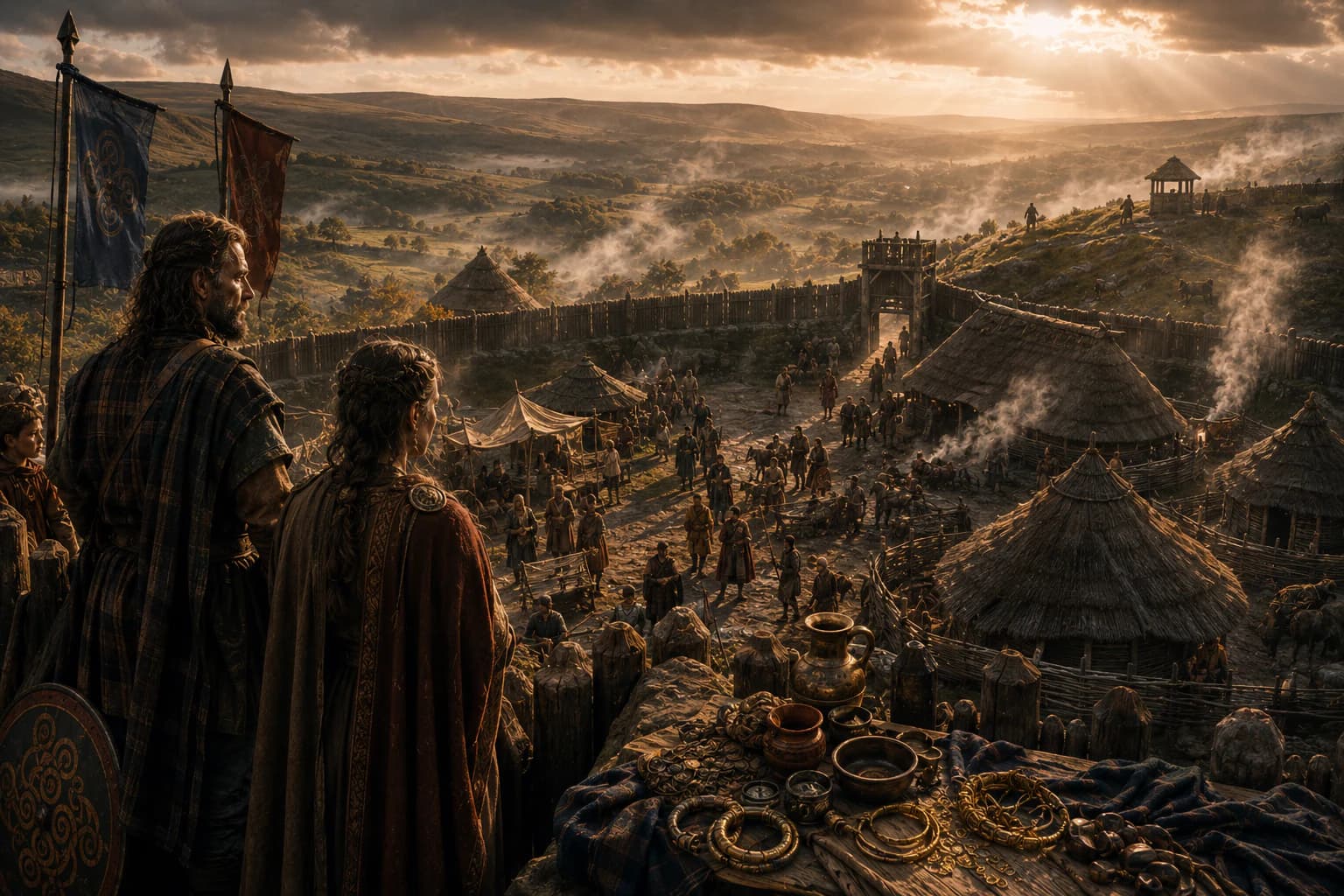
Despite the difficulties of the campaign, Caesar eventually located what he describes as Cassivellaunus's main stronghold — a large enclosure in the forest, probably a hilltort of the kind common in Iron Age Britain, protected by marshland and woodland barriers. Caesar stormed it from two sides simultaneously, capturing cattle and forcing Cassivellaunus's supporters to flee. The attack demonstrated that despite the guerrilla campaign, Cassivellaunus could not ultimately deny Caesar the ability to strike at his bases if he could find them. Around the same time, a diversionary attack by Cassivellaunus on Caesar's camp at the coast was repulsed. The strategic situation was tilting.

54 BC

Negotiated peace

The negotiation that ended the campaign was a practical settlement dressed in Roman victory language. Cassivellaunus had suffered defections and the storming of a stronghold; Caesar faced autumn, supply pressure and the risk that unrest in Gaul would worsen during his absence. Through Commius, a Gallic intermediary trusted by Caesar, terms were agreed. Cassivellaunus would provide hostages, promise tribute and stop threatening the Trinovantes. Caesar would withdraw. Whether the tribute was ever paid is uncertain, and Rome did not return in force for nearly a century. That matters. Caesar had demonstrated reach, gathered prestige and imposed formal submission, but he had not conquered Britain. Cassivellaunus had lost ground and accepted constraints, yet preserved enough power to disappear undefeated from Roman control.

After 54 BC

After Caesar's withdrawal

What happened to Cassivellaunus personally after the Roman withdrawal is unknown. He vanishes from the surviving record with the same completeness as before it. His people, however — the Catuvellauni — did not. In the first century AD, a powerful Catuvellaunian dynasty under kings including Cunobelinus (the historical basis for Shakespeare's Cymbeline) dominated much of southeastern Britain, expanding precisely the kind of regional dominance Cassivellaunus had exercised. When the Romans returned under Claudius in AD 43, the Catuvellauni were the main force resisting them — their leaders Caratacus and Togodumnus continuing, in a sense, the resistance their ancestor had mounted a century before.

After 54 BC

Legacy of resistance

Cassivellaunus occupies a distinctive place in the history of Rome's expansion. He is the first named British leader to confront Roman invasion, and he did so against Julius Caesar at the height of his Gallic career. His achievement should not be exaggerated: Caesar crossed the Thames, took hostages and compelled formal submission. But it should not be minimised either. Vercingetorix in Gaul was defeated and executed; many western peoples were absorbed into Roman systems; Cassivellaunus survived a direct encounter and helped make Britain a campaign Caesar could publicise but not hold. Later British resistance figures, including Caratacus and Boudica, fought in a different world after Rome returned under Claudius. Cassivellaunus belongs to the earlier moment, when Britain was still beyond the frontier and Roman power could be frustrated by distance, weather, politics and mobile warfare.

Continue in context

Connected stories

Move from the profile into the wider events and settings this figure belongs to.

Tertiary paths

Content note

This profile is written for educational use and connects to related Stories of History pages. The main portrait is an AI-assisted historical reconstruction, included as an illustrative aid rather than documentary evidence. Image policy

References

Sources & Further Reading

Reliable reference works, archives and reading paths connected to this profile.

Further reading

  1. Encyclopaedia Britannica, Search results for Cassivellaunus,” accessed June 2026.Open source
  2. WorldCat, Books and library holdings for Cassivellaunus,” accessed June 2026.Open source

Primary sources

  1. Library of Congress, Search results for Cassivellaunus,” accessed June 2026.Open source

Reviewed claim sources

Loading reviewed claim sources...

A weekly route through history

Find out first about the latest published stories, feature notes and occasional Premium offers in one weekly email.