People

Julius Caesar

Julius Caesar was the Roman general and dictator who conquered Gaul, crossed the Rubicon, defeated Pompey and helped end the Roman Republic.

Born
100 BCE
Died
44 BCE
Role
Roman general and dictator

Roman general and dictator (100 BC–44 BC)

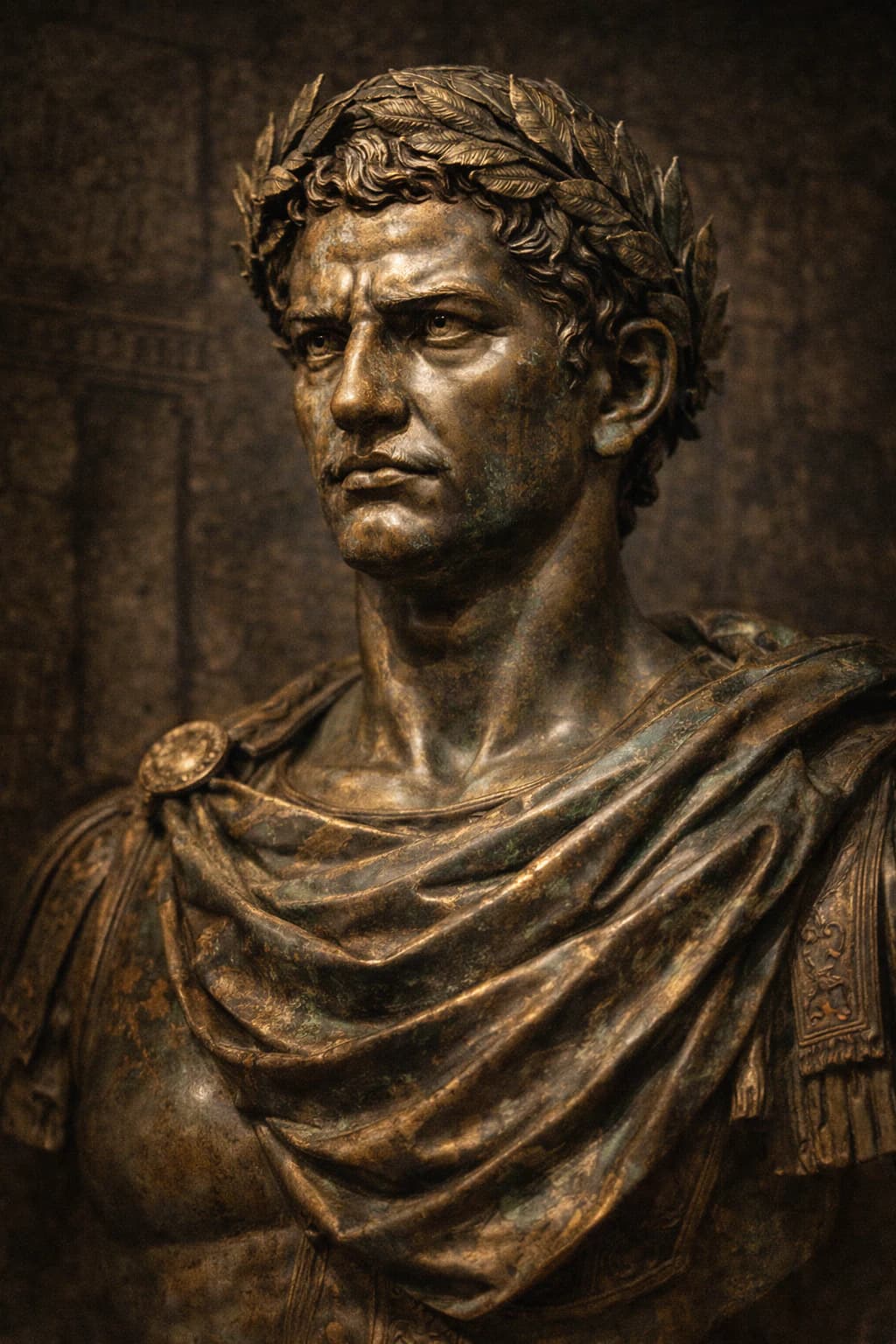
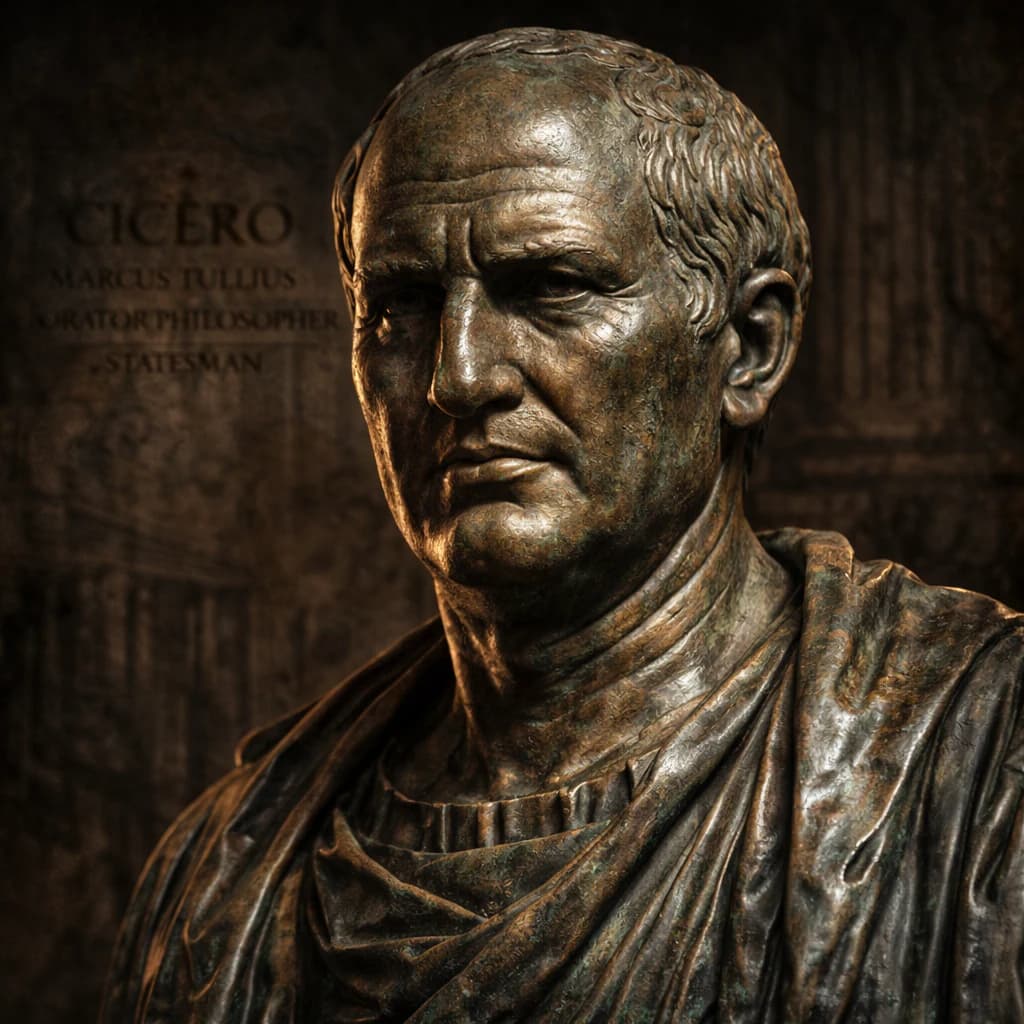
AI-generated portrait of Julius Caesar in Roman military attire
AI-assisted historical reconstruction

An illustrative reconstruction based on historical context. It is not a photograph or documentary likeness. Image policy

Quick answer

Julius Caesar was the Roman general and dictator who conquered Gaul, crossed the Rubicon, defeated Pompey and helped end the Roman Republic.

Born
100 BCE
Died
44 BCE
Role
Roman general and dictator
Years
100-44 BCE
Facts

Julius Caesar timeline facts

Selected specifics from this profile's life story.

-100–-85
Noble beginnings

Julius Caesar was born in 100 BC into the patrician Julii, an ancient family with prestige but limited recent political power.

-60
Power alliance

In 60 BC, Caesar allied with Pompey and Crassus in the First Triumvirate, using private power to override republican obstruction.

-48–-44
Dictatorship

After defeating Pompey and other rivals, Caesar became Rome's dominant ruler, reforming the state while concentrating unprecedented power.

-44 onward
Lasting impact

Caesar's death led to further civil war, the rise of Augustus and the transformation of Rome from republic to empire.

Life Journey

A rise through ambition, conquest and dramatic downfall

Follow the story in a more continuous narrative, with a reading mode that matches how much depth you want.

Complete chronology

-100–-85

Noble beginnings

Gaius Julius Caesar was born in July 100 BC into the Julii Caesares, a patrician family that claimed ancient and even divine ancestry through Venus, but did not command the wealth or dominance of Rome's leading houses. His youth unfolded during the violent age of Marius and Sulla, when Roman politics had already learned to settle disputes with armies and proscriptions. Caesar's family connections tied him to the populares tradition associated with Marius, his aunt's husband. He inherited status, danger and ambition rather than security. From the beginning, his career belonged to a republic whose rules were still spoken but increasingly broken.
-85–-70

Early challenges

Sulla's dictatorship nearly ended Caesar before his career began. Ordered to divorce Cornelia, daughter of the Marian ally Cinna, Caesar refused and temporarily fled Rome. He was stripped of inheritance and priestly office, then pardoned only through intercession. Military service in Asia and Cilicia gave him early distinction, and his capture by pirates became part of his legend: he reportedly joked with them, raised his own ransom and later had them crucified. Some details are shaped by later storytelling, but the episode captured a real feature of Caesar's personality. He had theatrical courage, icy memory and a taste for turning humiliation into dominance.

-70–-60

Political rise

Caesar's rise through the cursus honorum was expensive and calculated. He cultivated the people through games, public generosity and association with popular causes, borrowing heavily to finance prestige. As quaestor, aedile, pontifex maximus and praetor, he built networks while alarming conservative senators who saw him as dangerously ambitious. He was not simply a demagogue. He was a gifted lawyer, speaker, organizer and political reader of men. Debt tied him to patrons like Crassus; ambition pushed him toward offices that could bring military command. In Rome, glory required money, and money required power.

-60

Power alliance

The so-called First Triumvirate was not a formal constitutional office but a private bargain among three men who wanted the Senate to stop blocking them. Pompey needed land settlements for veterans and ratification of eastern arrangements. Crassus wanted financial relief for tax contractors and influence. Caesar wanted the consulship and then a major command. Together they could dominate Roman politics more effectively than any could alone. Caesar's consulship in 59 BC was aggressive and divisive, but it delivered what he needed: a proconsular command in Gaul. The alliance solved immediate problems by deepening the republic's larger one, the replacement of public norms by personal power.

-58–-50

Gallic campaigns

Caesar's Gallic campaigns were militarily brilliant, politically transformative and devastating for the peoples he conquered. He defeated tribal coalitions, crossed the Rhine, invaded Britain twice and crushed the great revolt led by Vercingetorix at Alesia in 52 BC. His Commentaries presented the war in clean, controlled prose that made conquest look like necessity and Caesar like Rome's indispensable servant. The human cost was enormous: mass killing, enslavement and the destruction of communities. For Caesar, Gaul provided wealth, hardened legions and unmatched prestige. For his enemies in Rome, it produced a commander too powerful to prosecute and too dangerous to trust.

-49

Crossing the Rubicon

The crisis came when Caesar's command neared its end and his enemies demanded he return to Rome as a private citizen, vulnerable to prosecution. Caesar insisted on standing for office in absentia or on mutual disarmament with Pompey. When compromise failed, he crossed the Rubicon River in January 49 BC with the Thirteenth Legion. The act was treasonous in republican terms: a governor bringing troops into Italy. It was also a calculated gamble that speed would break resistance. Pompey and many senators fled Rome. Caesar had turned years of constitutional evasion into open civil war.

-48–-44

Dictatorship

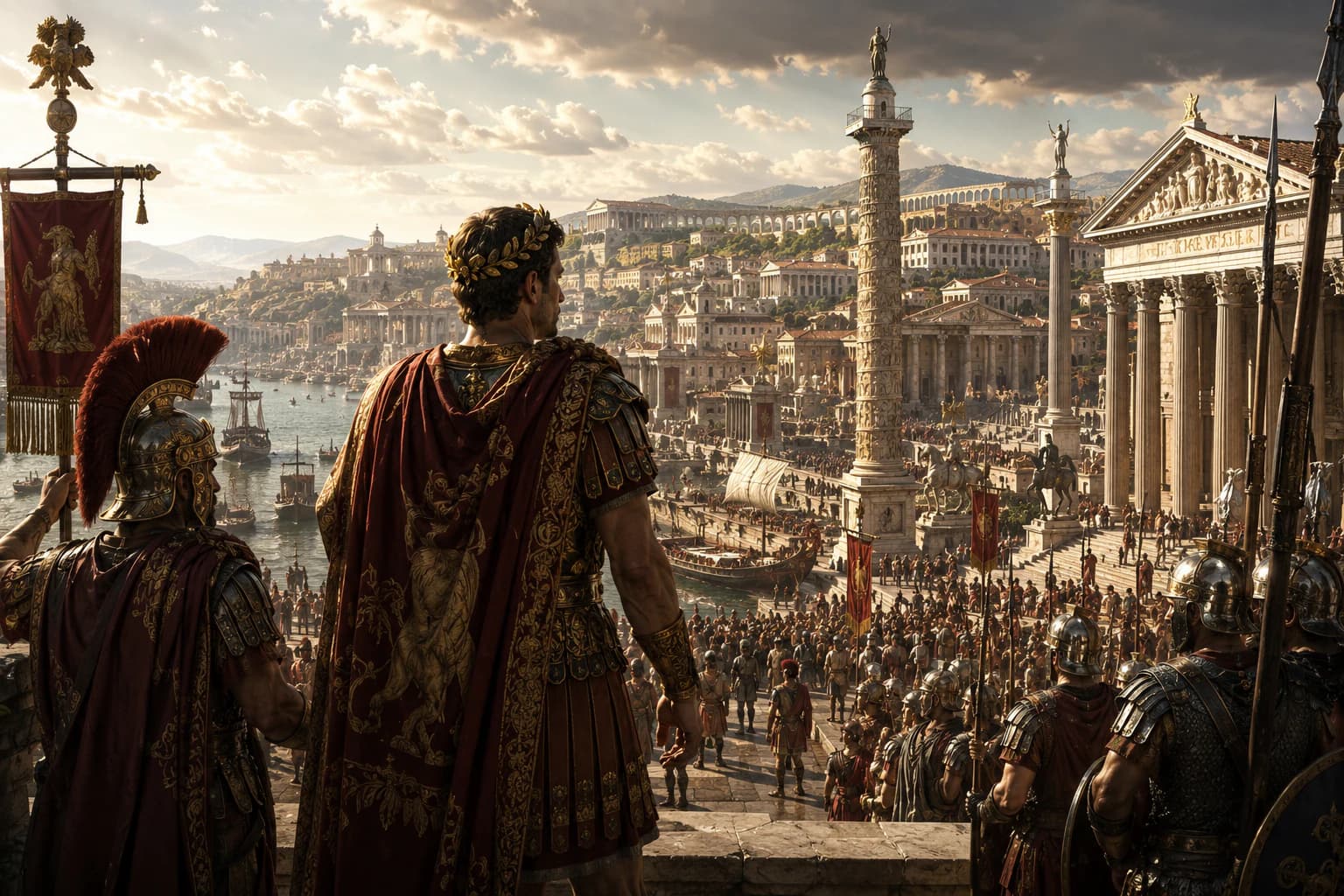
Caesar defeated Pompey at Pharsalus in 48 BC, pursued him to Egypt, became entangled with Cleopatra VII, and then fought further campaigns in Asia, Africa and Spain against remaining republican forces. His famous phrase veni, vidi, vici followed a rapid victory at Zela. Back in Rome, he accepted repeated dictatorships and finally dictatorship for life. His reforms were real: calendar reform, colonization, debt measures, expansion of the Senate, citizenship grants and administrative changes across the empire. Yet reform came fused with personal supremacy. He wore honors that looked monarchical to Roman eyes, placed his image in public life and made the republic's offices orbit one man.

-44

Assassination

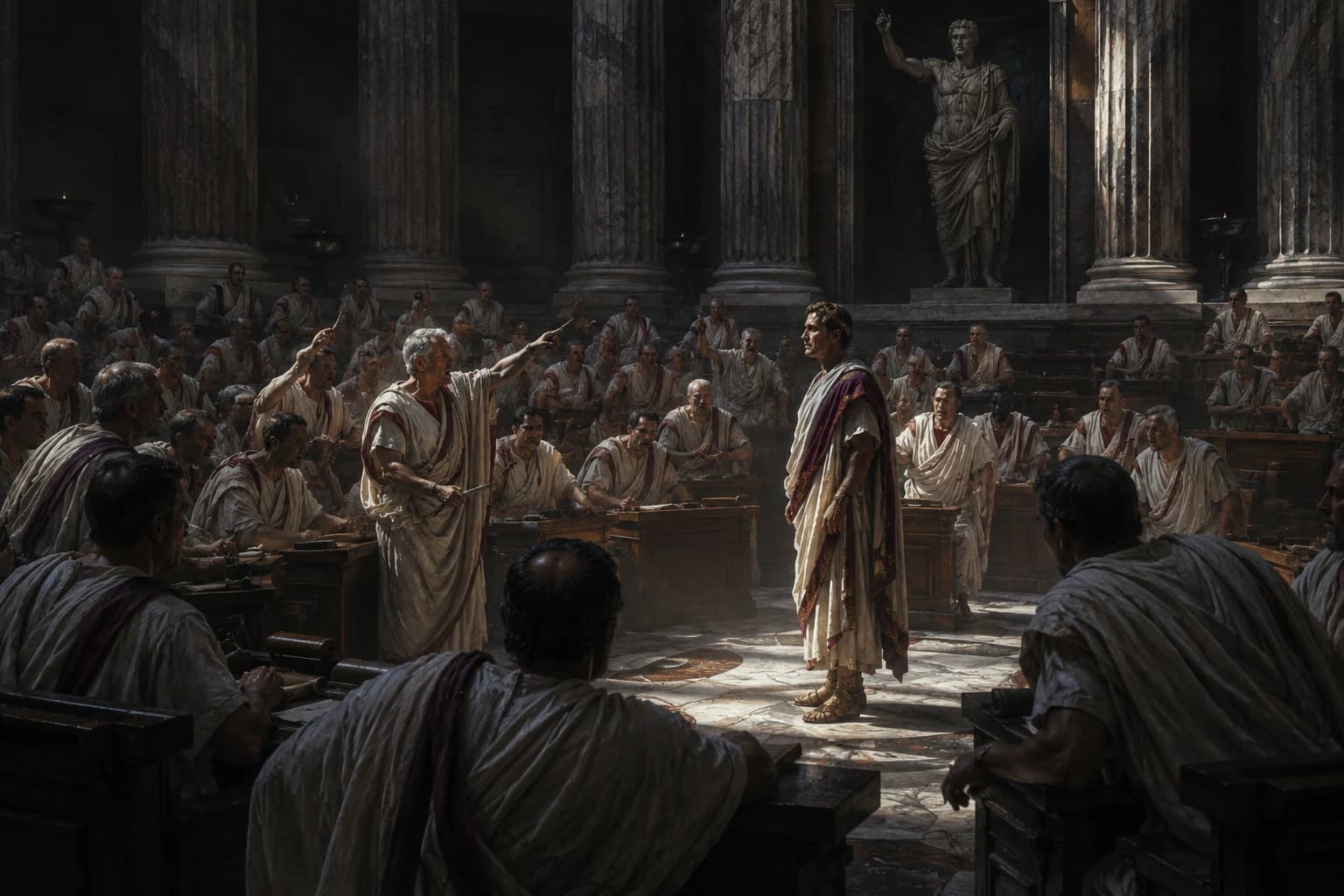
On 15 March 44 BC, a group of senators stabbed Caesar to death at a meeting in the Theatre of Pompey. The conspirators included Marcus Junius Brutus and Gaius Cassius Longinus, men who believed Caesar's dictatorship had made republican liberty impossible. Their fear was not imaginary; Caesar had concentrated power to an unprecedented degree. Their solution was disastrously naive. They killed the dictator without a credible plan to restore the republic or command the armies and people. The assassination was meant as liberation, but it produced panic, propaganda and another cycle of civil war.

-44 onward

Lasting impact

Caesar's assassins failed because Caesarism survived Caesar. His funeral turned public emotion against the conspirators, and his adopted heir Octavian, later Augustus, used Caesar's name, money and legacy to build power. After more civil war, the Roman Republic gave way to imperial monarchy in all but name. Caesar's legacy is therefore double. He was a military genius, political reformer and writer of lasting power. He was also a destroyer of republican norms whose ambition made one-man rule thinkable. To ask why Julius Caesar was important is to see the moment Rome's old system could no longer contain the forces it had created: conquest, wealth, armies loyal to generals and citizens hungry for order.

Continue in context

Connected stories

Move from the profile into the wider events and settings this figure belongs to.

Tertiary paths

Content note

This profile is written for educational use and connects to related Stories of History pages. The main portrait is an AI-assisted historical reconstruction, included as an illustrative aid rather than documentary evidence. Image policy

References

Sources & Further Reading

Reliable reference works, archives and reading paths connected to this profile.

Sources used

  1. Encyclopaedia Britannica, Julius Caesar,” accessed June 2026.Open source
  2. The Metropolitan Museum of Art, The Roman Republic,” accessed June 2026.Open source

Further reading

  1. Adrian Goldsworthy, Caesar: Life of a Colossus, Yale University Press, 2006.

Primary sources

  1. Perseus Digital Library, Julius Caesar, Gallic War,” accessed June 2026.Open source

Reviewed claim sources

Loading reviewed claim sources...

A weekly route through history

Find out first about the latest published stories, feature notes and occasional Premium offers in one weekly email.