Related Moment
Caesar at the Rubicon
The river was small. The decision was not.
A winter crossing in 49 BCE turned a political crisis into civil war and changed the Roman world.
The was not a grand river. It did not look like the border of an age. Yet for a Roman governor returning from Gaul with soldiers under arms, it marked a political line. South of it lay Italy, Rome, and the authority of the Senate. To cross it with a legion was to make a public answer to a private crisis.
Caesar's victories in Gaul had made him wealthy, famous, and dangerous. His enemies in Rome wanted him to surrender command before seeking further office. Caesar feared that returning as a private citizen would expose him to prosecution and political ruin. The dispute was legal on the surface, but everyone understood the deeper question: who could command Rome's loyalty, the Senate or the general with an army?
Ancient writers later shaped the scene into drama, giving Caesar memorable words and a sense of destiny. The exact details are uncertain. What is clear is the political meaning. Caesar did not simply travel south. He brought soldiers across a boundary he was expected to respect. That made negotiation harder, fear sharper, and neutrality less believable.
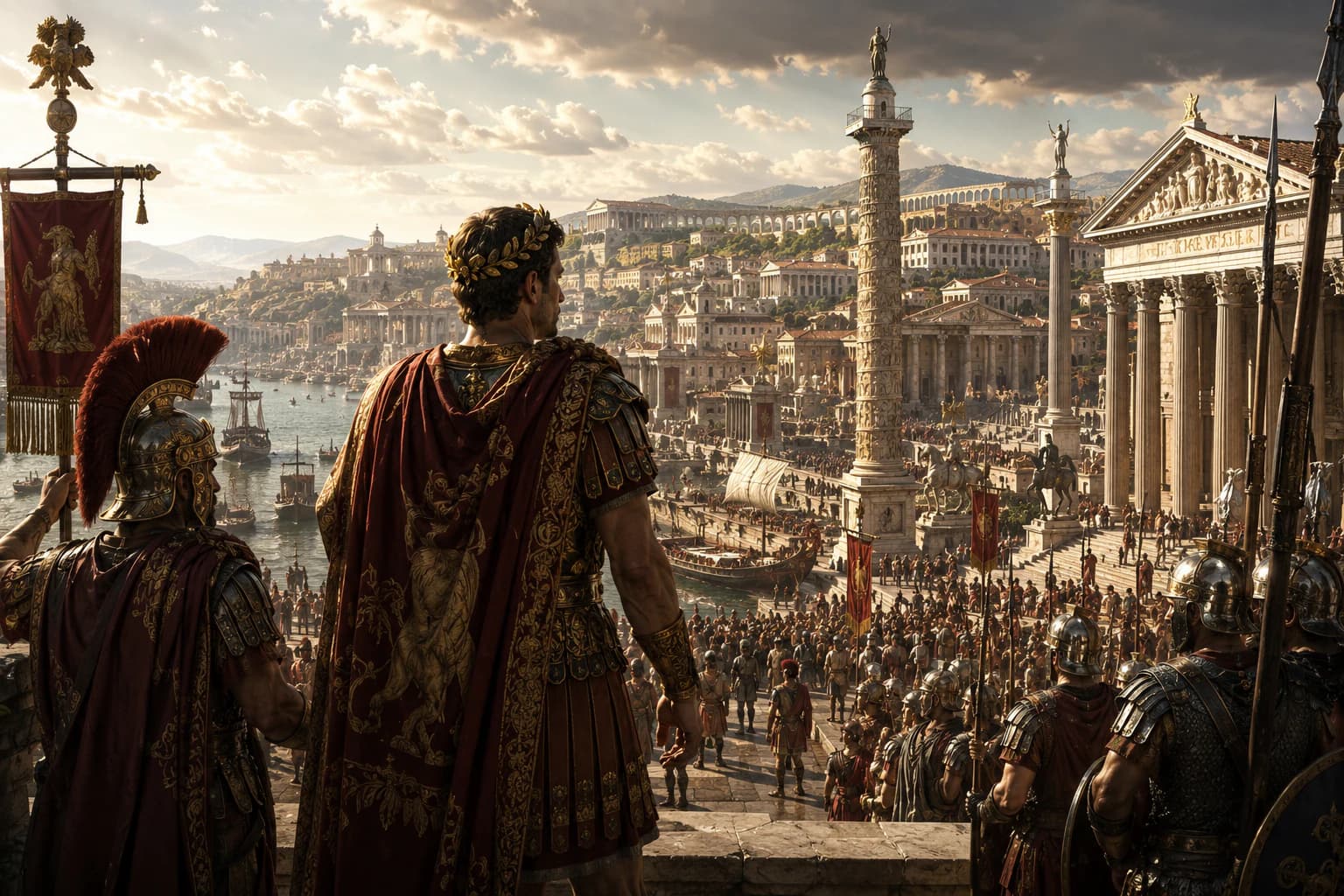
The crossing created speed. Caesar moved before his opponents could settle their response. Many senators fled Rome with Pompey, choosing distance over immediate confrontation. The city did not fall in a single night, but the psychological break had already happened. The Republic's institutions still existed, yet their ability to contain military power had been exposed as fragile.
Caesar's choice did not create Rome's crisis from nothing. It revealed how far the crisis had already gone. The river was small because the danger was not geographic. It was institutional, emotional, and political.