People

Brennus

Brennus was a Gallic chieftain of the Senones who sacked Rome around 390 BC after the Battle of the Allia. His raid, ransom and legendary 'Vae victis' humiliation shaped Roman memory and military reform.

Died
390 BCE
Role
Gallic chieftain

Gallic chieftain (died c. 390 BC)

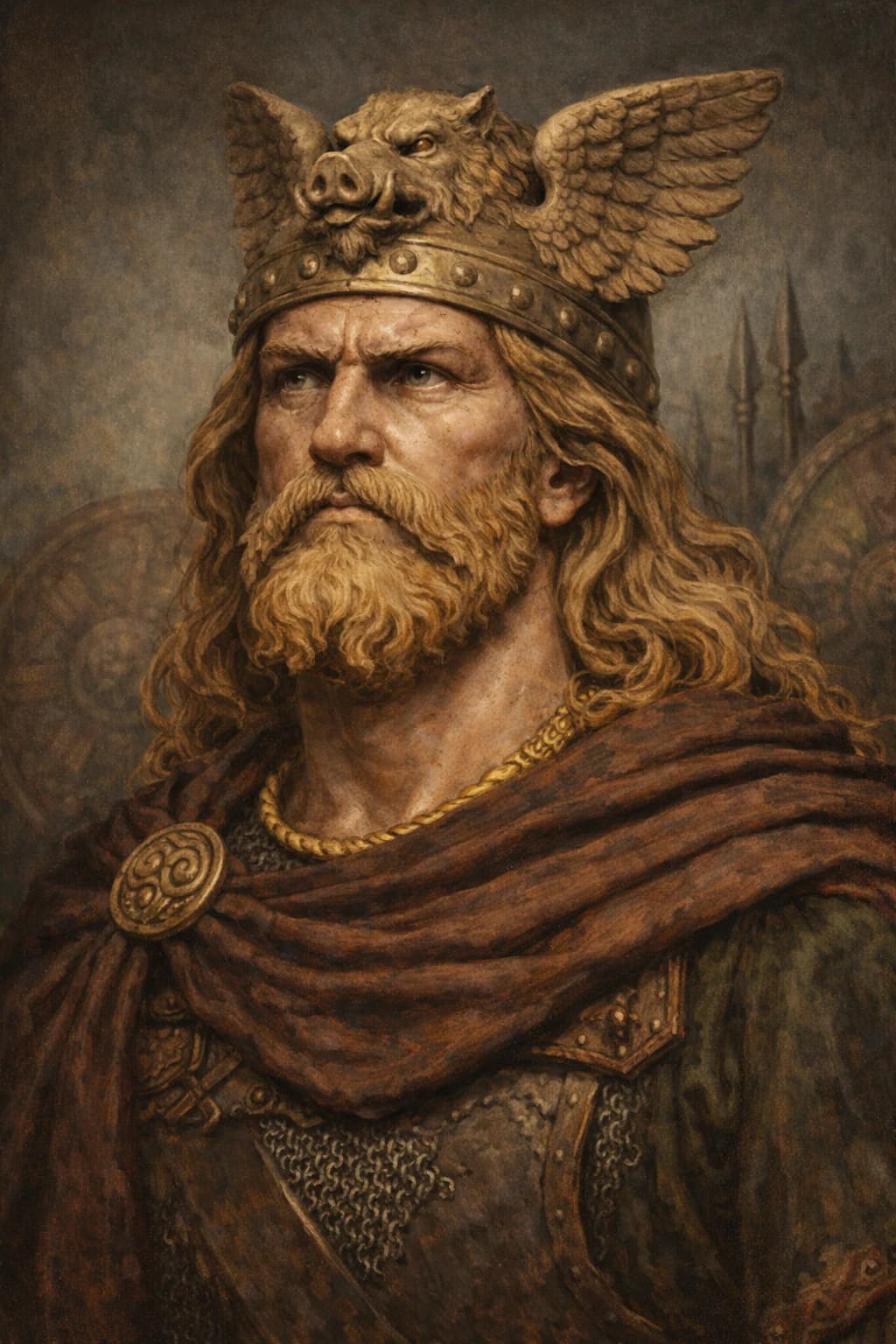
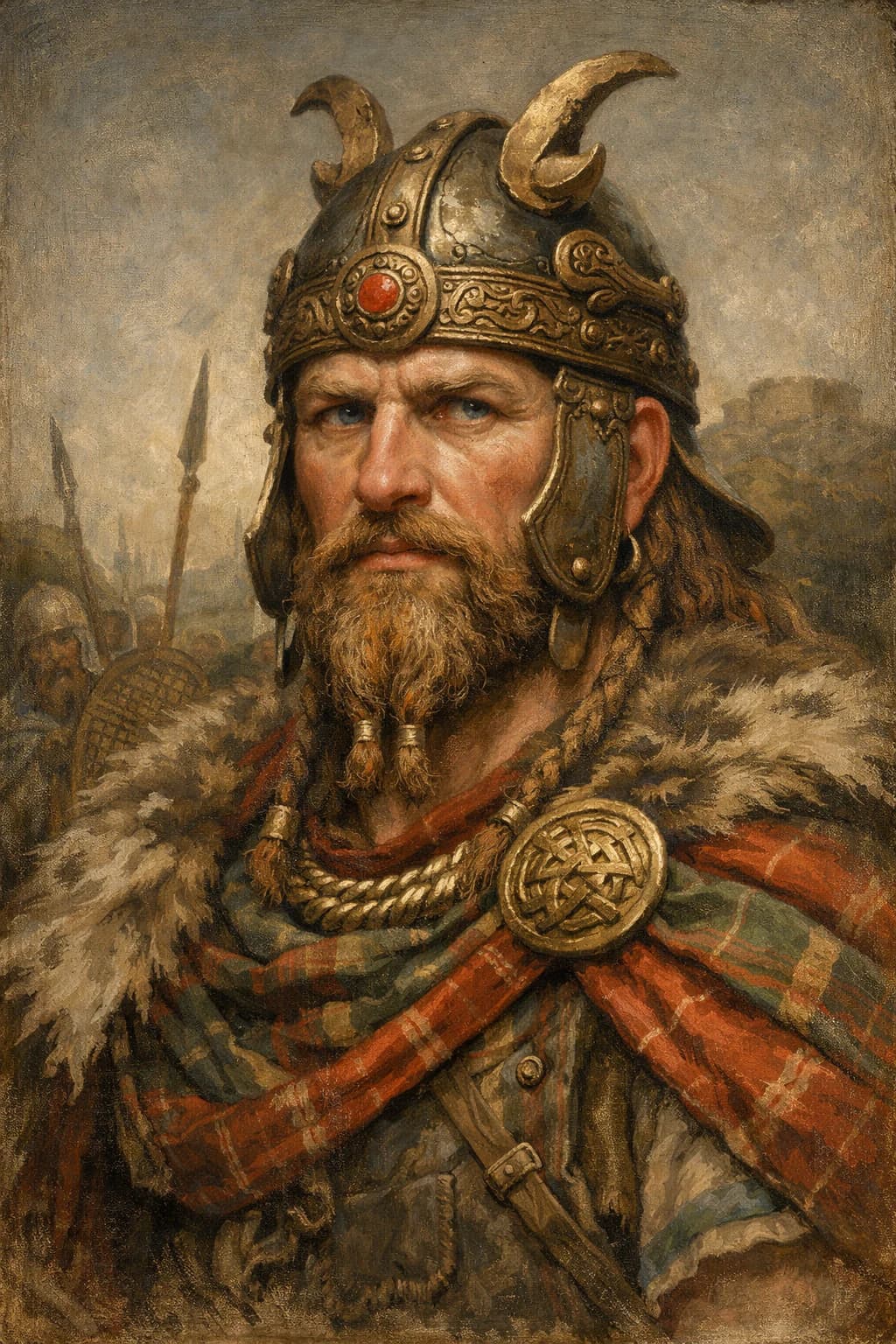
AI-generated portrait of Brennus, Gallic chieftain
AI-assisted historical reconstruction

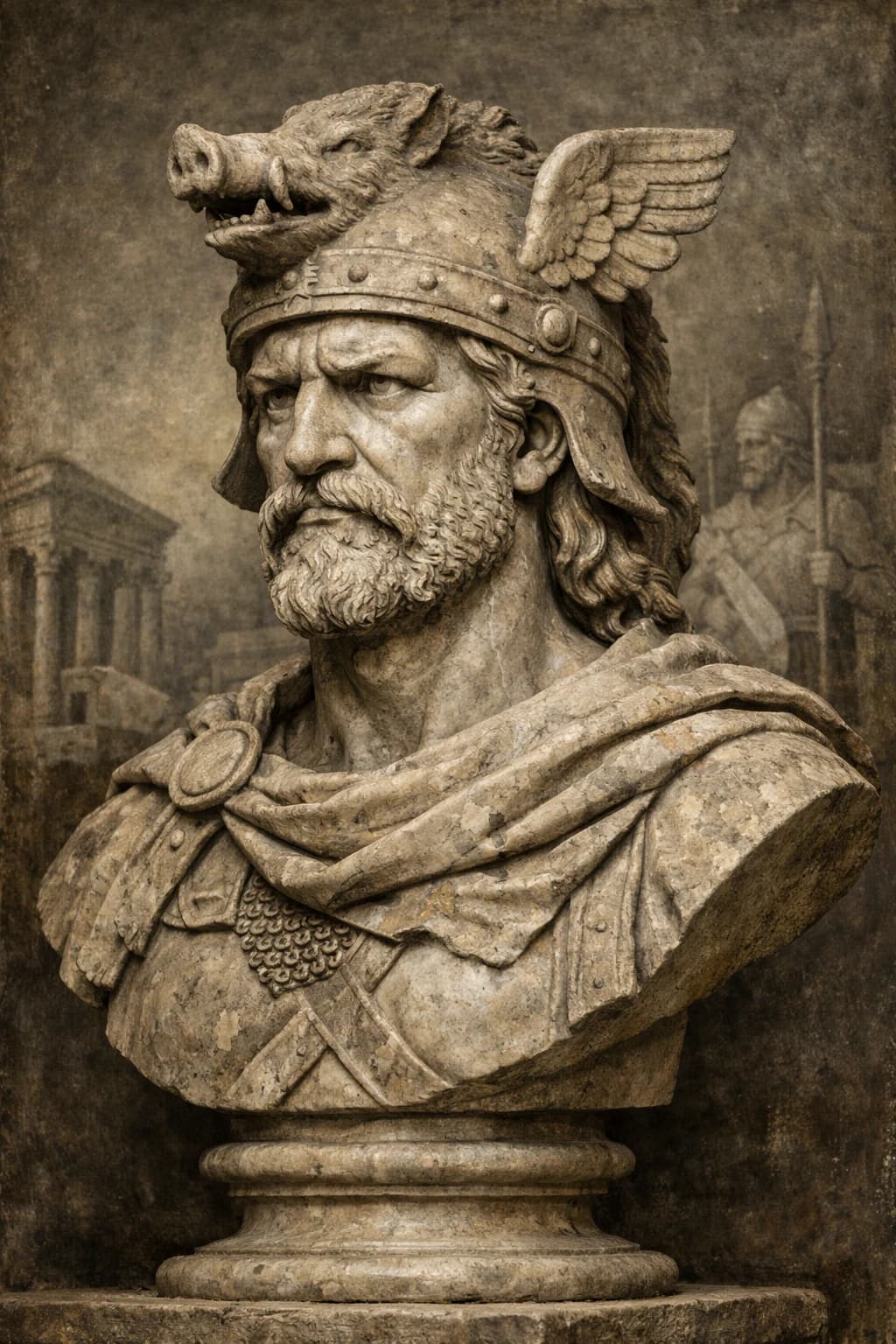
An illustrative reconstruction based on historical context. It is not a photograph or documentary likeness. Image policy

Quick answer

Brennus was a Gallic chieftain of the Senones who sacked Rome around 390 BC after the Battle of the Allia. His raid, ransom and legendary 'Vae victis' humiliation shaped Roman memory and military reform.

Died
390 BCE
Role
Gallic chieftain
Years
Died 390 BCE
Facts

Brennus timeline facts

Selected specifics from this profile's life story.

c. 400 BC
The Senones and their migration

Brennus led the Senones, a Gallic people linked with the region around modern Sens who had moved into northern Italy.

390 BC
Sack of Rome

Brennus led his forces into Rome, burning and looting most of the city, while a small Roman garrison held out on the Capitoline Hill.

390 BC–350 BC
Rome's response

The sack drove Rome to rebuild its city walls, reform its army, and develop a deep institutional distrust of being caught unprepared — changes that would shape Roman military strategy for generations.

After 390 BC
Legacy of the sack

The sack of Rome by Brennus remained one of the defining traumas of Roman historical memory, shaping strategy, culture, and the deep Roman determination never to be vulnerable again.

Life Journey

The raid that scarred a republic

Follow the story in a more continuous narrative, with a reading mode that matches how much depth you want.

Complete chronology

c. 400 BC

The Senones and their migration

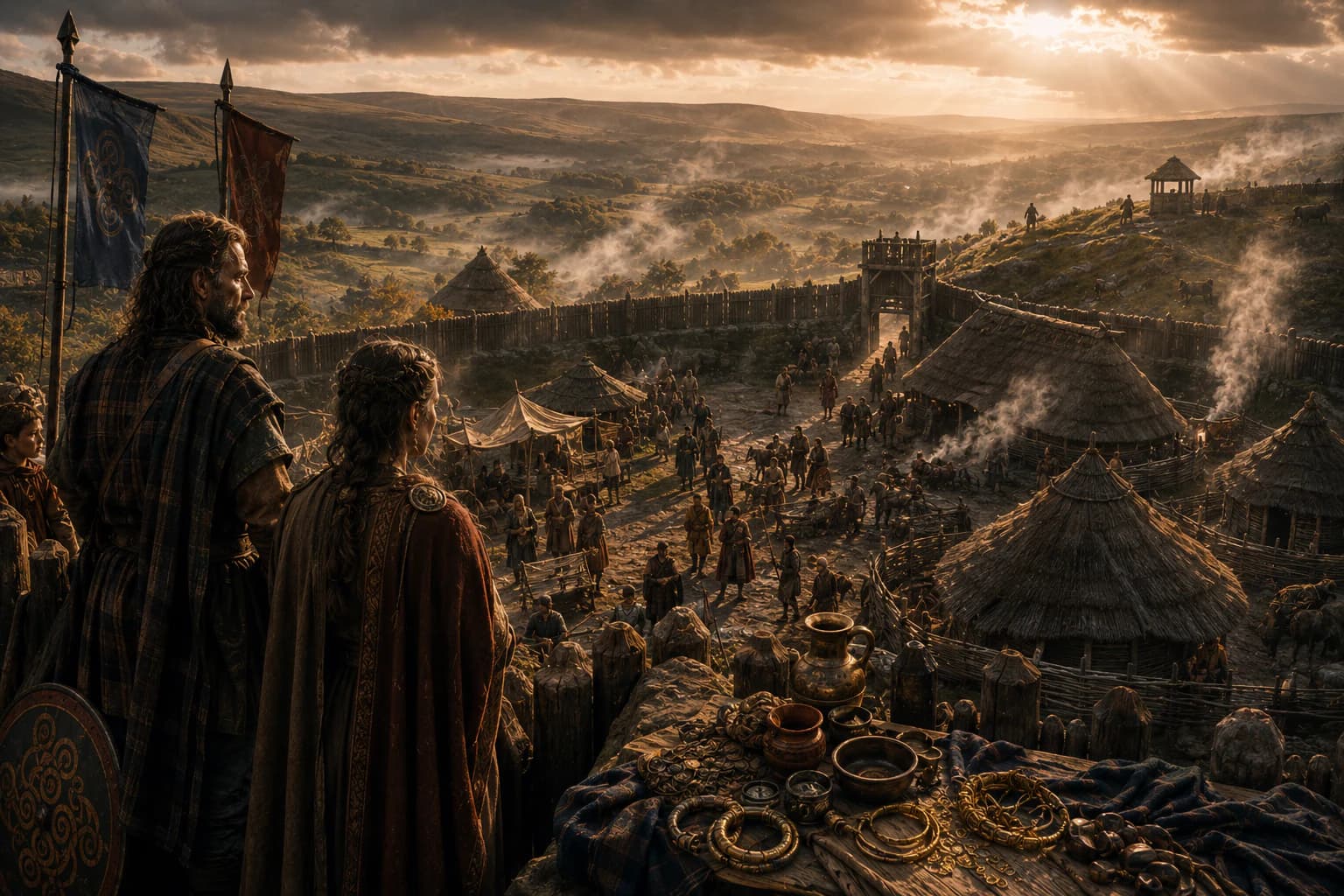
The peoples Romans called Gauls were not a single nation but a shifting collection of Celtic-speaking groups with related cultures, rival leaders and mobile war bands. The Senones, whose name is connected with the later French city of Sens, had migrated into northern Italy, the region Romans later called Gallia Cisalpina, and settled along the Adriatic coast. Their movement south was part migration, part raiding and part elite competition: leaders needed land, followers, plunder and reputation. Brennus emerges from the record only when Roman memory needs a name for catastrophe, so his early life is hidden. What can be said is that he commanded a force strong enough to intervene in Etruria and disciplined enough to move from a local dispute to an assault on Rome itself.
c. 391 BC

Siege of Clusium

The Etruscan city of Clusium, under pressure from Brennus's forces, asked Rome for help. Rome sent three ambassadors from the prominent Fabii family, but the mission turned into a diplomatic disaster. Later Roman tradition says the Fabii abandoned neutrality, fought for Clusium and killed a Gallic leader. Brennus demanded that Rome surrender the offenders. Rome refused, whether from aristocratic solidarity, contempt for Gallic power or inability to admit wrongdoing. The story may have been shaped by Roman historians who wanted a moral explanation for the disaster that followed. Even so, it captures something real about frontier politics: a local siege, a breach of diplomatic norms and a leader ready to convert insult into escalation. Brennus now had a reason to march south.

390 BC

Battle of the Allia

The Battle of the Allia was less a contest than a collapse. The Roman force that met Brennus north of the city seems to have been badly deployed, perhaps stretched too thin and psychologically unprepared for the shock of a Gallic attack. Later accounts, written centuries afterward, describe panic, flight and disintegration. Many survivors fled not back to Rome but to Veii, leaving the city exposed; others reached the Capitoline Hill, the defensible heart around which resistance would continue. The date, traditionally 18 July, was remembered as a dies nefastus, a day of ill omen. For a republic still early in its rise, the defeat revealed a terrifying truth: Rome's expansion in central Italy had outpaced its ability to guarantee the safety of Rome itself.

390 BC

Sack of Rome

The sack of Rome by Brennus's forces was the single most dramatic event in the early republic's history. Most of the city was abandoned, looted, and burned; the population had either fled or been killed. A small Roman force — how large is uncertain — held the Capitoline Hill, the city's most defensible point. According to later Roman tradition, Brennus's forces attempted to scale the hill at night but were betrayed by the cackling of the sacred geese of Juno, alerting the defenders. The story may be legendary, but it became one of the canonical tales of Roman survival — the small, sacred thing that saved the city when everything else had failed. The siege lasted for months, with Gauls unable to take the hill and Romans unable to drive them out.

390 BC

Vae victis

The ransom negotiation became one of the most famous scenes in Roman history. The Romans agreed to pay a thousand pounds of gold for the departure of Brennus's forces. When Roman envoys complained that the weights used to measure the gold were heavier than standard, Brennus reportedly threw his sword onto the scales, adding its weight to the demand, and delivered the phrase that would echo through centuries: Vae victis — woe to the vanquished. Whether the scene is historically accurate or a later elaboration, it perfectly captures the Roman memory of this event: not just a defeat but a humiliation, a moment of absolute vulnerability in which even the terms of departure were dictated by the conqueror.

390 BC

Withdrawal from Rome

The details of Brennus's withdrawal are obscured by Roman patriotic memory. Later tradition, especially the story of Marcus Furius Camillus arriving as a 'second Romulus', claimed that the ransom was interrupted, the Gauls defeated and Roman honour restored. Even ancient writers recognised the difficulty. The more plausible historical core is harsher: Brennus took the gold and left because occupation was costly, disease and supply problems may have pressed his army, and raiding forces did not need to hold Rome permanently to win. The Camillus version mattered because it made humiliation bearable. It converted payment into resistance, defeat into recovery and shame into moral renewal. Brennus himself disappears after the withdrawal, a leader known almost entirely through the trauma he inflicted on others.

390 BC–350 BC

Rome's response

The sack left Rome with a set of practical lessons it applied with characteristic thoroughness. New city walls — the Servian Wall — were built around Rome in the years following, substantial stone fortifications that remained the city's primary defence for centuries. Military organisation was reformed; the manipular legion, more flexible than the old phalanx, was developed in part as a response to the tactical failure at the Allia. Culturally, the sack created what historians sometimes call the Gallic anxiety — a persistent Roman fear of a northern barbarian threat that would drive both military and diplomatic strategy for the next four hundred years. The terror of the Cimbri and Teutons in the late second century BC and even the northern campaigns of Julius Caesar can be traced, in part, to the psychic wound Brennus inflicted.

After 390 BC

The fate of Brennus

There is no reliable ancient account of what happened to Brennus after his forces left Rome. He does not appear in subsequent historical events, and no account of his death or later career has survived with any credibility. He exists in the historical record almost entirely through the Roman sources that described what he had done to Rome — sources that were written long after the events and that shaped him according to the needs of Roman memory rather than independent documentation. He may have died on the return journey; he may have returned to leadership among the Senones; he may have lived for years afterward. The uncertainty is itself significant: Rome remembered the event vividly but seems to have known little about the man who had caused it.

After 390 BC

Legacy of the sack

For Roman historians, the sack of 390 BC was a before-and-after moment in the republic's story. Livy, writing four centuries later, used it to structure his narrative of Rome's early development, making it the great crisis from which Roman virtue and Roman determination emerged renewed. The practical consequences — walls, army reform, diplomatic caution toward Gaul — persisted for generations. The cultural consequences — a deep aversion to the idea of Rome being sacked, an almost sacred quality attached to the city's inviolability — would not be seriously tested again until the Visigothic sack of AD 410, eight hundred years later, which in turn provoked Augustine of Hippo's City of God. In a very real sense, the wound Brennus inflicted on Roman psychology was never fully healed.

Continue in context

Connected stories

Move from the profile into the wider events and settings this figure belongs to.

Tertiary paths

Content note

This profile is written for educational use and connects to related Stories of History pages. The main portrait is an AI-assisted historical reconstruction, included as an illustrative aid rather than documentary evidence. Image policy

References

Sources & Further Reading

Reliable reference works, archives and reading paths connected to this profile.

Further reading

  1. Encyclopaedia Britannica, Search results for Brennus,” accessed June 2026.Open source
  2. WorldCat, Books and library holdings for Brennus,” accessed June 2026.Open source

Primary sources

  1. Library of Congress, Search results for Brennus,” accessed June 2026.Open source

Reviewed claim sources

Loading reviewed claim sources...

A weekly route through history

Find out first about the latest published stories, feature notes and occasional Premium offers in one weekly email.