Complete chronology
Full overview and deeper context for every journey step.
c. 82 BC–53 BC
Arverni origins
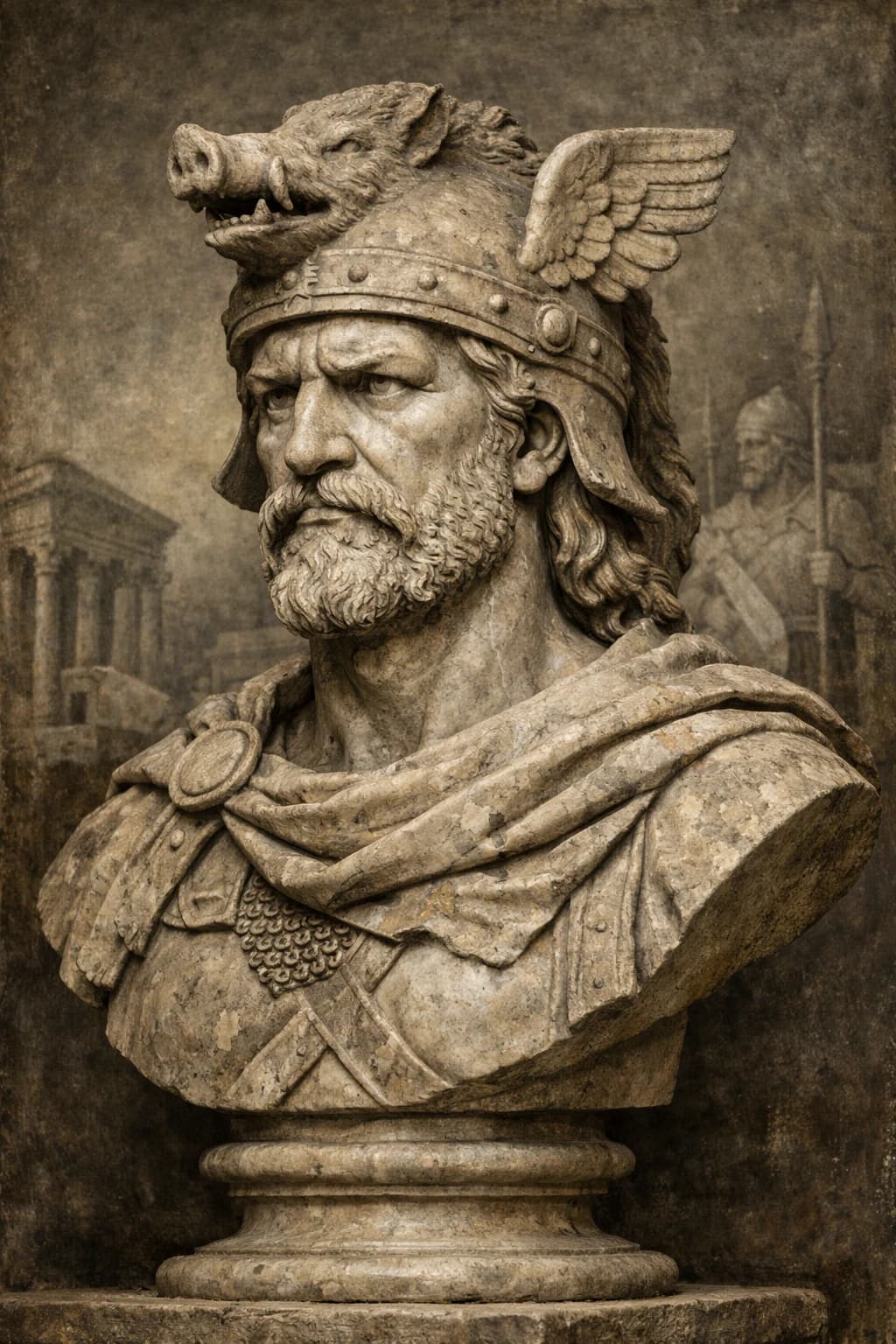
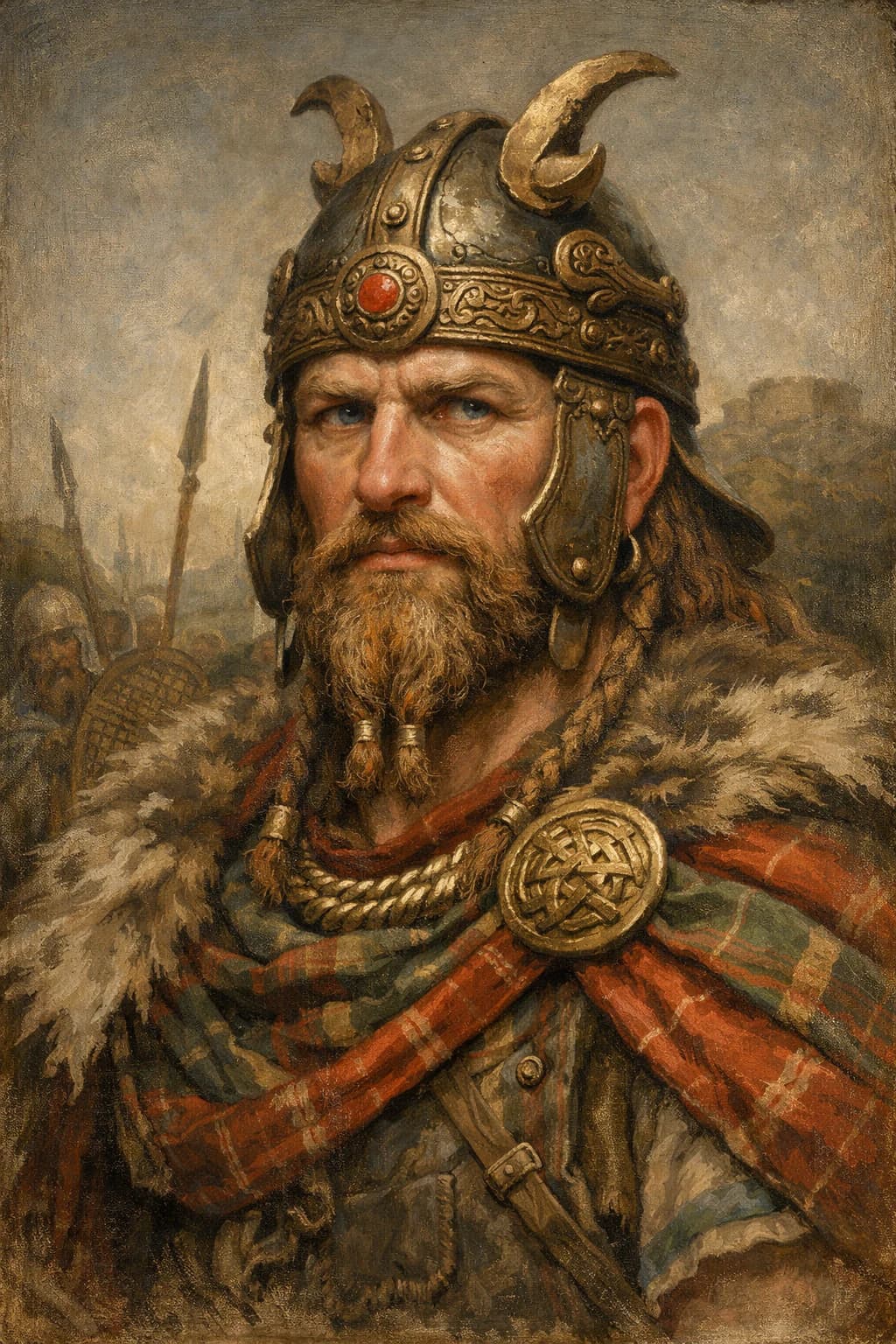
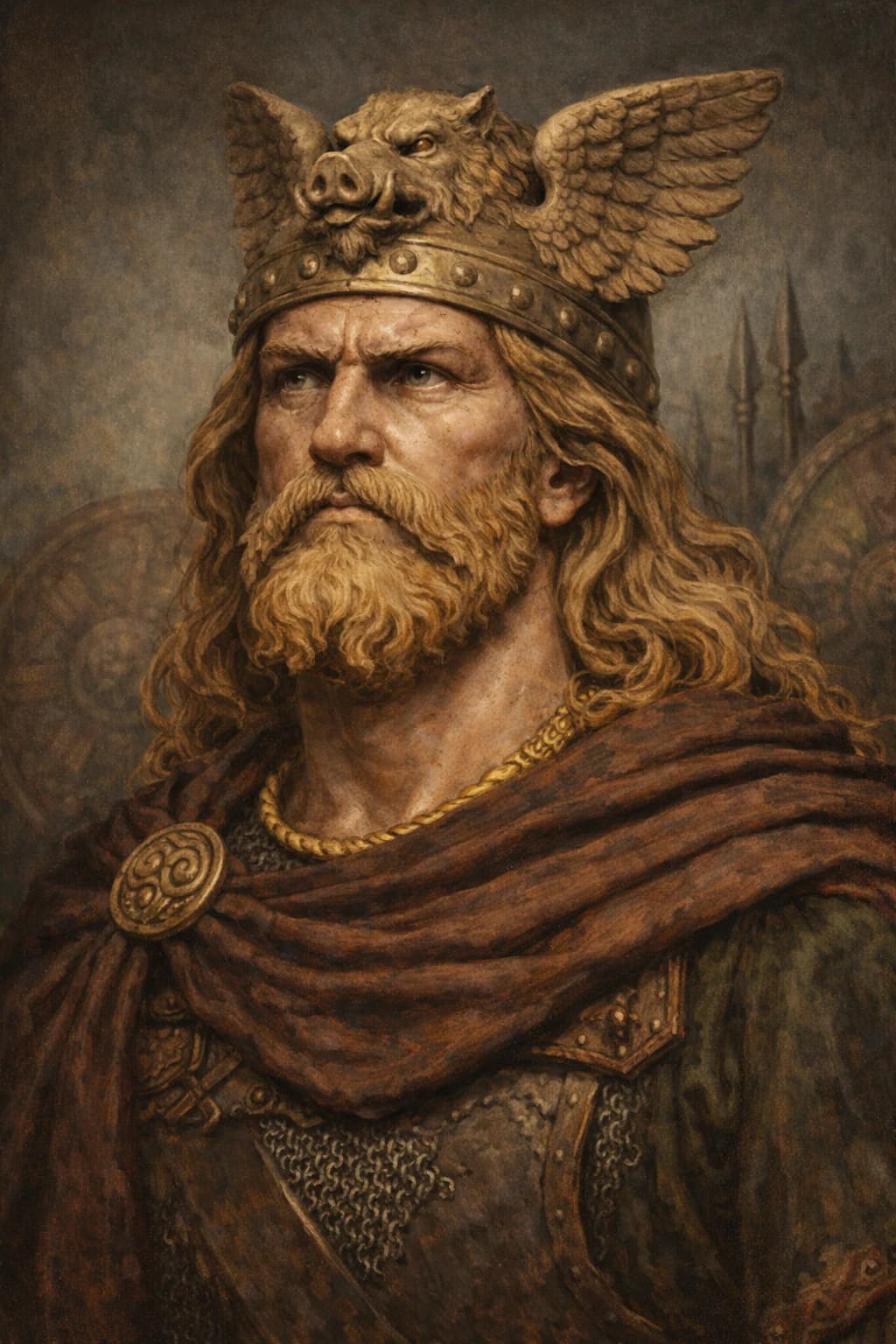
The Arverni — whose territory corresponds roughly to the Auvergne region of modern France — had once been among the most formidable peoples in Gaul, though their older dominance had been checked by Rome after the defeat of King Bituitus in the second century BC. Vercingetorix was born into that landscape of prestige, rivalry and caution. His father, Celtillus, was reportedly executed by the Arverni after seeking overall kingship in Gaul, a charge that may preserve either a real political crisis or the hostile memory of aristocrats wary of one man's supremacy. The detail matters because Vercingetorix later attempted something similar on a larger scale: not mere tribal leadership, but command across communities that normally guarded their independence from one another.
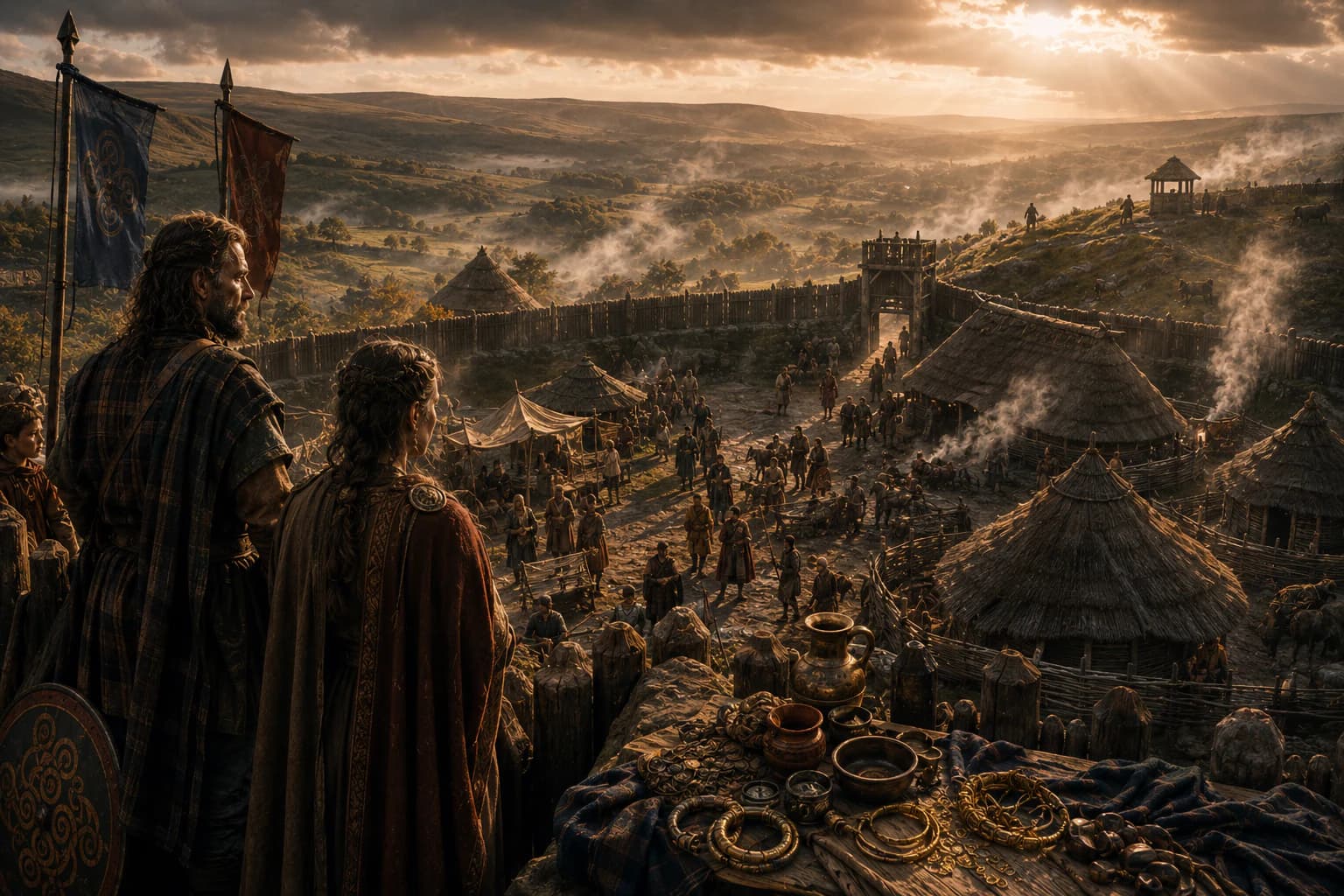
A background of contested ambition can produce either caution or a different kind of risk-taking.
58 BC–53 BC
Caesar's conquest of Gaul
Caesar had entered Gallic politics in 58 BC and within six campaigning seasons had transformed a zone of alliances, rivalries and border conflicts into a theatre of Roman conquest. He defeated major peoples, took hostages, imposed client relationships and repeatedly turned local divisions to Roman advantage. His own Commentaries present this as order imposed on disorder, but even Caesar's polished narrative reveals brutality: massacres, enslavement, punitive destruction and the hard arithmetic of feeding legions from conquered land. By 53 BC, Gaul appeared pacified from a Roman viewpoint. It was not pacified from within. The winter revolts of 54-53 BC showed how fragile obedience remained. What the resistance lacked was not courage, but coordination.
A conqueror who mistakes compliance for acceptance may be creating the conditions for a larger uprising.
52 BC
Rallying Gaul
The rising began when the Carnutes killed Roman citizens and traders at Cenabum, modern Orléans. Vercingetorix seized the political moment. Caesar says his own uncle and other Arverni nobles first drove him from Gergovia, unwilling to follow a young aristocrat into open rebellion. Vercingetorix responded by raising support outside the formal elite and returning with enough force to take control. From there he sent envoys, demanded hostages, imposed discipline and drew neighbouring peoples into a coalition. The achievement is easy to flatten into a patriotic story, but it was a remarkable political operation: tribes with old grievances against one another, no permanent national structure and urgent local interests accepted a single commander because Rome had made disunity dangerous.
Creating unity among the disunited is a form of leadership as demanding as any military campaign.
52 BC
Scorched earth strategy
Vercingetorix understood the central problem. Gallic cavalry, hill forts and local knowledge could frustrate Caesar, but a set-piece battle against veteran legions risked disaster. His answer was strategically severe: destroy supplies before the Romans could use them, harass movement, and force Caesar's army to live in a country stripped by its own defenders. Caesar describes Gallic councils debating the horror of burning their towns, a reminder that resistance demanded sacrifice from civilians as well as warriors. The town of Avaricum, modern Bourges, was spared after pleading from allied leaders and then captured by Caesar, with catastrophic consequences for its inhabitants. The episode showed both the logic and the emotional cost of Vercingetorix's war.
A strategy that requires you to destroy your own assets demands a quality of collective resolve that is harder to maintain than physical courage.
52 BC
Victory at Gergovia
The Battle of Gergovia was one of the few clear reverses in Caesar's Gallic career. Caesar tried to pressure the Arverni capital and exploit opportunities around its hilltop defences, but Roman troops overextended during an assault. Vercingetorix's forces counterattacked and inflicted serious losses; Caesar himself admits nearly seven hundred dead, including forty-six centurions. He withdrew, and the political effect mattered as much as the casualties. The Aedui, long Rome's most valuable Gallic ally, shifted toward the rebellion, while undecided communities saw that Caesar could be beaten. For a brief moment after Gergovia, Vercingetorix was not only resisting conquest. He seemed to be changing its direction.
A single tactical victory at the right moment can change the political calculus of every uncommitted observer.
52 BC
Siege of Alesia
The siege of Alesia was one of the most audacious engineering feats in ancient military history. Caesar surrounded the hilltop fortress with a wall of circumvallation — facing inward to contain Vercingetorix's forces — and then built a second wall of contravallation facing outward, to hold off the relief army that arrived from across Gaul, numbering perhaps two to three hundred thousand by Caesar's (probably inflated) account. For weeks, Vercingetorix's army inside the walls and the relief force outside attempted to break through simultaneously. Caesar held both lines. The relief force eventually withdrew, its attacks having failed at enormous cost. Vercingetorix, with his men starving and no prospect of escape, was left with one rational option.
The greatest military engineering achievements are sometimes more decisive than the battles they make possible.
52 BC
Surrender
The surrender of Vercingetorix is one of the iconic moments of ancient history, partly because Caesar described it so effectively. Vercingetorix rode out from Alesia on horseback, fully armed, circled Caesar where he sat before his camp, and then dismounted, removed his armour, and placed it on the ground. He said nothing — at least in Caesar's account. The gesture was the statement. He was taken prisoner, transported to Rome, and held there for six years while Caesar's civil wars played out, kept alive as a trophy of conquest. When Caesar finally held his Gallic triumph in 46 BC, Vercingetorix was paraded through Rome and then executed, as Roman custom required of notable prisoners displayed in a triumph.
The defeated are often preserved precisely because their defeat is more useful to the victor than their death.
52 BC–46 BC
Imprisonment and execution
The six years of Vercingetorix's imprisonment are historically invisible: no source records what his conditions were, whether he was well or ill, whether he retained any hope of release. Roman practice did not typically allow prominent military prisoners to survive indefinitely — they were kept for the moment of triumph and then killed, their deaths part of the ceremony. His execution in 46 BC followed the standard pattern. He was strangled in the Tullianum prison after Caesar's triumph, the conventional Roman end for defeated foreign leaders of the highest status. Whatever his thoughts in those years, whatever the quality of his resistance, the last entry in his account was determined by his captor's calendar.
The captive's fate belongs entirely to the captor's schedule — a final, total expression of what conquest means.
After 46 BC
National symbol of France
For most of European history after the Roman conquest, Vercingetorix was known only through Caesar's own account — a figure in the victor's narrative. His transformation into a French national hero was a nineteenth-century project, driven in part by Napoleon III's personal interest in Gallic antiquity and in part by the political needs of a France that was constructing its national identity. The colossal statue of Vercingetorix erected at Alesia in 1865 — with facial features that somewhat resembled Napoleon III's own — became the anchor of a founding myth: that the French are descended from the Gauls and that Vercingetorix was their first defender. The historical reality — that he led tribes who would not have identified as 'French' against a Roman general who was also invading what is now France — is more complicated than the myth. But the myth answered a genuine need.
National founding myths require a founding figure, and history is regularly revisited to find one who fits the need.