People

Calvin Coolidge

Calvin Coolidge was the 30th U.S. President. Known as Silent Cal, he restored confidence after Harding, cut taxes, supported business growth, limited federal activism, and governed during the Roaring Twenties.

Born
1872 CE
Died
1933 CE
Role
30th President of the United States

30th President of the United States (1872–1933)

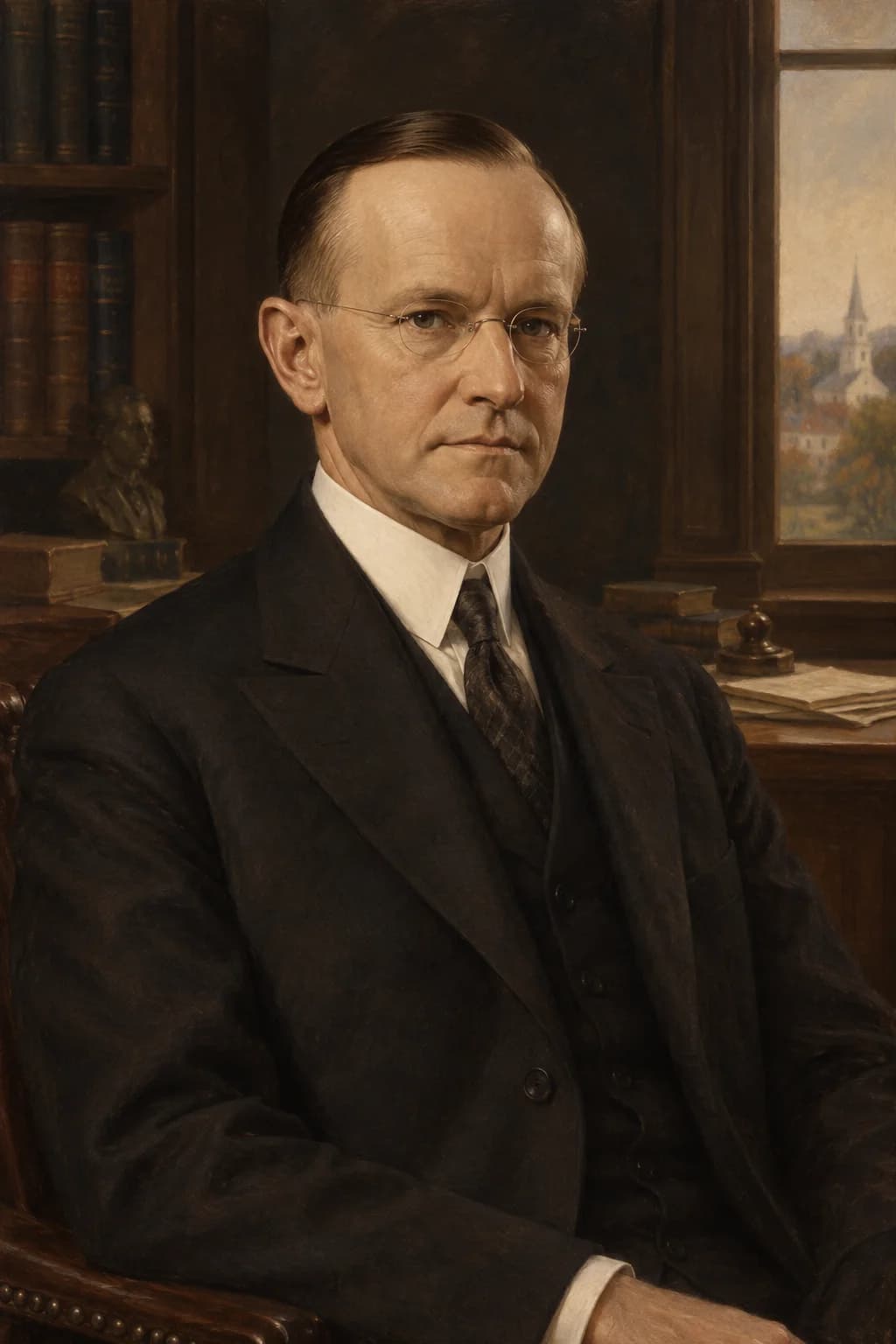
AI-generated portrait of Calvin Coolidge in presidential attire
AI-assisted historical reconstruction

An illustrative reconstruction based on historical context. It is not a photograph or documentary likeness. Image policy Attribution

Quick answer

Calvin Coolidge was the 30th U.S. President. Known as Silent Cal, he restored confidence after Harding, cut taxes, supported business growth, limited federal activism, and governed during the Roaring Twenties.

Born
1872 CE
Died
1933 CE
Role
30th President of the United States
Years
1872-1933 CE
Facts

Calvin Coolidge timeline facts

Selected specifics from this profile's life story.

1872–1890s
Vermont Upbringing

Calvin Coolidge was born in Plymouth Notch, Vermont, in 1872, into a rural New England world of farms, town meetings, church habits and family duty.

1919–1921
Governor of Massachusetts

As Massachusetts governor, Coolidge became nationally famous during the Boston Police Strike of 1919.

1923–1929
Economic Approach

Coolidge worked with Treasury Secretary Andrew Mellon to cut taxes, reduce debt and restrain federal spending.

After 1933
Enduring Reputation

Coolidge's legacy divides historians and citizens. Admirers see integrity, fiscal discipline and respect for constitutional limits.

Life Journey

Silence, prosperity and the limits of restraint

Follow the story in a more continuous narrative, with a reading mode that matches how much depth you want.

Complete chronology

1872–1890s

Vermont Upbringing

Coolidge's political character cannot be separated from rural Vermont. Born on 4 July 1872, he grew up in Plymouth Notch, a small community where public life was local, frugal and personal. His father held local offices, ran a store, farmed and embodied the civic habits of a village republic. Coolidge's mother died when he was young, and the emotional austerity of his childhood deepened his self-control. The world around him prized thrift, work, law, religion and suspicion of unnecessary fuss. These were not campaign costumes he later adopted; they were his native language. When Americans looked at Coolidge in the 1920s, many saw an older republic inside a modern one: plain, restrained, moralistic and almost stubbornly calm.


1890s

Legal Education

Coolidge's education at Amherst exposed him to serious moral and civic argument, especially through teachers who treated public service as a duty. He then studied law by apprenticeship in Northampton, Massachusetts, rather than through a grand national route. This mattered for his temperament. Legal practice in a small city rewarded patience, exactness and reputation. Coolidge learned that institutions worked best when rules were understood and respected, and he carried that view into politics. He was not anti-government in a simple sense; he believed government had real responsibilities, but that those responsibilities were limited by law, cost and human fallibility. His preference for economy and caution was therefore philosophical as well as personal.

1900s–1910s

Local Political Rise

Few presidents arrived with a more methodical apprenticeship. Coolidge served in municipal office, the Massachusetts legislature, the state senate and executive roles before reaching national power. Each post taught him a different scale of government, from local services to budgets, legislation and executive responsibility. He was not a mass orator, but he understood the discipline of showing up, keeping promises and not alarming voters. In the Progressive Era, when many politicians competed to sound energetic and transformative, Coolidge offered a narrower but coherent model: government should be honest, solvent and limited; reform should be careful; public office should not become personal theatre. That record made him acceptable to conservatives while still credible as a clean-government figure.

1919–1921

Governor of Massachusetts

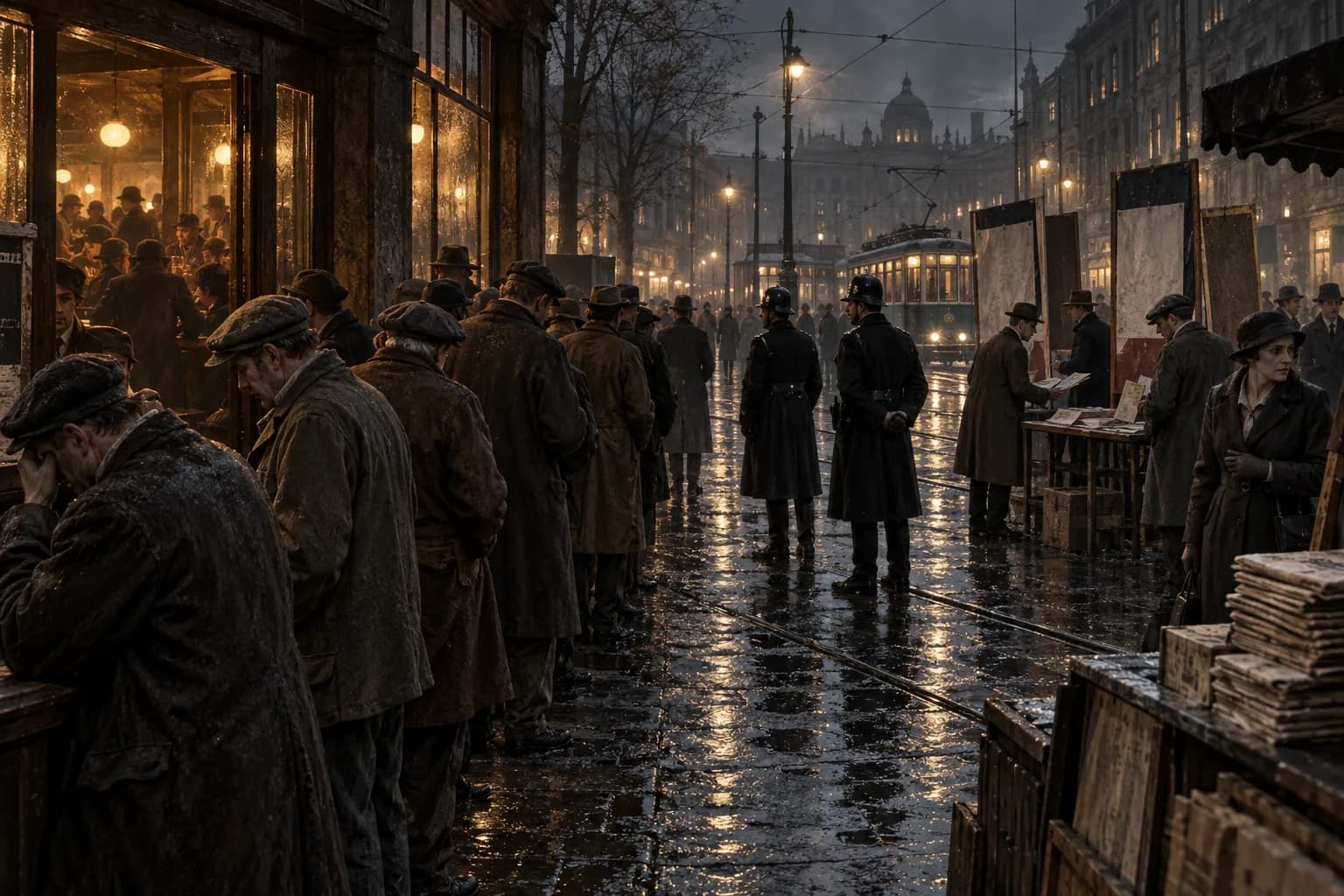
The Boston Police Strike turned Coolidge into a national conservative hero. In 1919, police officers seeking union recognition walked out, and disorder in Boston followed. Coolidge supported the police commissioner's hard line and rejected Samuel Gompers's appeal with a phrase that travelled instantly: there was no right to strike against public safety by anybody, anywhere, any time. The sentence captured postwar anxieties about labour militancy, Bolshevism, urban disorder and the meaning of public authority. To supporters, Coolidge had defended law when hesitation would have invited chaos. To critics, he showed limited sympathy for labour grievances. Politically, the result was unmistakable: a quiet state governor suddenly looked like the man who could restore order to a nervous nation.

1921–1923

Vice Presidency

The vice presidency suited and frustrated Coolidge. Under Harding, he attended cabinet meetings, an unusual opportunity at the time, but the office still left him largely ceremonial. Harding's promise of a 'return to normalcy' matched the country's postwar fatigue, yet corruption scandals connected to figures in his administration were already forming beneath the surface. Coolidge did not create those scandals, but he inherited their consequences. His low profile turned out to be an asset. When Harding died suddenly in August 1923, Coolidge could present himself as continuity without contamination. The famous oath, administered by his father by lamplight in Vermont, gave the transition a republican simplicity that perfectly matched the image he would cultivate.

1923

Assuming the Presidency

Coolidge's first achievement as president was atmospheric but important: he made the federal government feel sober again. Harding's death left grief, uncertainty and emerging scandal, especially Teapot Dome and other corruption cases. Coolidge did not launch a crusading presidency, but he allowed investigations to proceed and distanced himself from tainted associates. His manner helped. At a moment when Americans were weary of war, inflation, strikes and scandal, Coolidge offered steadiness so complete it looked almost medicinal. He believed the president should speak carefully, spend cautiously and avoid promising what government could not deliver. That restraint helped him win election in his own right in 1924, even after the death of his son Calvin Jr. brought private grief into the White House.

1923–1929

Economic Approach

The Coolidge economy was built on a clear theory: lower taxes, smaller federal budgets and confidence for private enterprise would encourage growth. With Treasury Secretary Andrew Mellon, he supported repeated tax cuts and debt reduction. He vetoed measures he considered too expensive, including farm relief bills, and resisted large federal expansion even as agriculture struggled. The 1920s boom was real: productivity rose, automobiles reshaped daily life, radio created mass culture and consumer goods entered more homes. But prosperity was uneven. Farmers, many Black Americans, industrial workers and regions outside the boom experienced the decade differently. Credit expanded, stock prices climbed and regulation remained light. Coolidge did not cause the Great Depression, but his presidency embodied assumptions about markets and restraint that the crash later forced Americans to re-examine.

1927

Choosing Not to Run

Coolidge's decision not to run again has invited debate ever since. He was popular, the economy looked strong and Republicans were well positioned. Yet he had never loved the performative burdens of the presidency, and the death of his son in 1924 had left a lasting shadow. His terse 1927 announcement, 'I do not choose to run for President in 1928', sounded perfectly Coolidge: controlled, ambiguous and final. The choice also fitted his constitutional instincts. He disliked the idea of power held too long and may have sensed that another term would bring diminishing returns. Herbert Hoover succeeded him and inherited the presidency just before the crash. Coolidge did not flee a crisis he foresaw clearly, but he did leave at the peak of the world his policies had helped sustain.

After 1933

Enduring Reputation

Calvin Coolidge matters because he represents one of the purest experiments in presidential restraint. He believed the federal government should be honest, economical and limited; he also believed prosperity came chiefly from private enterprise, not executive activism. That philosophy appealed powerfully in the 1920s and still attracts defenders who see in him a model of humility and fiscal seriousness. Yet his limits were real. He offered little federal answer to agricultural depression, racial violence or the speculative excesses gathering in the financial system. He supported civil rights in principle more clearly than many contemporaries, but did not make racial justice a central presidential project. The Great Depression transformed his reputation because it changed the question: was limited government prudent, or had it missed dangers only public power could confront? Coolidge remains important precisely because that argument has never disappeared.

Continue in context

Connected stories

Move from the profile into the wider events and settings this figure belongs to.

American Presidents lineage
Lineage47 presidents
American Presidents
1789 CE–present

The succession of American presidents from George Washington to today.

View lineage
Tertiary paths

Content note

This profile is written for educational use and connects to related Stories of History pages. The main portrait is an AI-assisted historical reconstruction, included as an illustrative aid rather than documentary evidence. Image policy Image attribution

References

Sources & Further Reading

Reliable reference works, archives and reading paths connected to this profile.

Further reading

  1. Encyclopaedia Britannica, Search results for Calvin Coolidge,” accessed June 2026.Open source
  2. WorldCat, Books and library holdings for Calvin Coolidge,” accessed June 2026.Open source

Primary sources

  1. Library of Congress, Search results for Calvin Coolidge,” accessed June 2026.Open source

Reviewed claim sources

Loading reviewed claim sources...

A weekly route through history

Find out first about the latest published stories, feature notes and occasional Premium offers in one weekly email.