People

Theodore Roosevelt

Theodore Roosevelt was the 26th President of the United States from 1901 to 1909. A Progressive reformer, trust regulator, conservationist and Nobel Peace Prize winner, he reshaped modern presidential power.

Born
1858 CE
Died
1919 CE
Role
26th President of the United States

26th President of the United States (1858–1919)

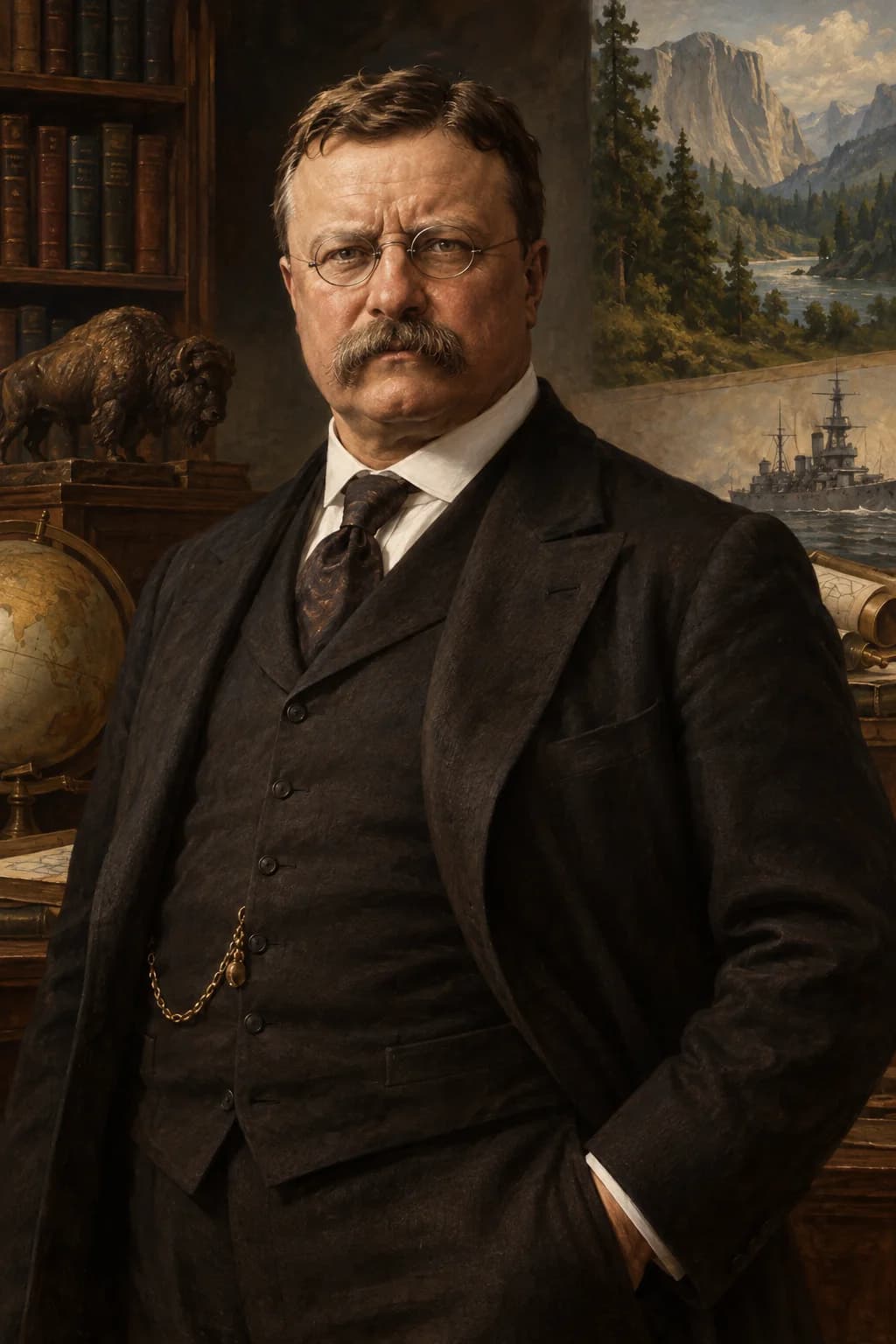
AI-generated portrait of Theodore Roosevelt in formal presidential attire
AI-assisted historical reconstruction

An illustrative reconstruction based on historical context. It is not a photograph or documentary likeness. Image policy Attribution

Quick answer

Theodore Roosevelt was the 26th President of the United States from 1901 to 1909. A Progressive reformer, trust regulator, conservationist and Nobel Peace Prize winner, he reshaped modern presidential power.

Born
1858 CE
Died
1919 CE
Role
26th President of the United States
Years
1858-1919 CE
Facts

Theodore Roosevelt timeline facts

Selected specifics from this profile's life story.

1858–1876
Fragile beginnings

Theodore Roosevelt was born in New York City in 1858 into wealth, but childhood asthma pushed him toward the discipline and self-making that defined his public image.

1886–1897
Reform crusader

Back in public life, Roosevelt became a civil service reformer, New York police commissioner and assistant secretary of the navy.

1901–1909
Progressive leadership

As president, Roosevelt pursued the Square Deal, regulated trusts, protected consumers, conserved public lands and made the United States more assertive abroad.

1912–1919
Enduring influence

Roosevelt spent his final years writing, exploring, criticising Wilson and urging preparedness before his death at Sagamore Hill in 1919.

Life Journey

Reform, conservation, empire, and the modern presidency

Follow the story in a more continuous narrative, with a reading mode that matches how much depth you want.

Complete chronology

1858–1876

Fragile beginnings

Roosevelt's childhood combined privilege with physical vulnerability. He grew up in a wealthy, reform-minded New York family, surrounded by books, travel and moral expectation, but severe asthma made strength feel like something that had to be built rather than assumed. His father urged him to make his body, and Roosevelt took the lesson almost as a creed. Exercise, boxing, riding and outdoor life became part of a larger philosophy: character was forged through struggle. That idea later shaped his politics, his writing and his sometimes aggressive nationalism. The boy who studied natural history indoors became the man who made strenuous action a public identity.
1876–1884

Harvard and loss

Roosevelt entered public life young, winning election to the New York State Assembly in 1881 as a Republican reformer impatient with corruption. He was already writing history, studying public questions and testing himself against party machines. Then, on 14 February 1884, his mother and his first wife, Alice Hathaway Lee Roosevelt, died in the same house on the same day. The double bereavement shattered him. Rather than remain in the emotional world of New York, he withdrew to the Dakota Territory. The move was not a simple escape from politics. It was a search for recovery through hardship, distance and reinvention.

1884–1886

Western reinvention

The West gave Roosevelt material he would use for the rest of his life: the cowboy, the hunter, the conservationist, the believer in national toughness. He bought ranches in the Badlands, chased cattle thieves, endured brutal weather and wrote about frontier life with romantic intensity. The experience was partly genuine hardship and partly self-fashioning. Roosevelt was never an ordinary ranch hand; he was an eastern gentleman making himself into a western type. Yet the transformation mattered. The severe winter of 1886-1887 ruined much of his cattle operation, but the West had already given him a political language of courage, land, masculine citizenship and national destiny.

1886–1897

Reform crusader

Roosevelt's pre-presidential career was a series of battles against inertia. On the Civil Service Commission he attacked patronage and defended merit appointments. As New York City police commissioner, he tried to enforce discipline in a corrupt department, sometimes patrolling at night to catch officers neglecting duty. As assistant secretary of the navy, he argued for preparedness and a stronger fleet. These roles sharpened his belief that government should be active, moral and energetic. They also displayed his weakness: impatience with those who did not share his urgency. Roosevelt was a reformer, but rarely a quiet one.

1897–1898

War and fame

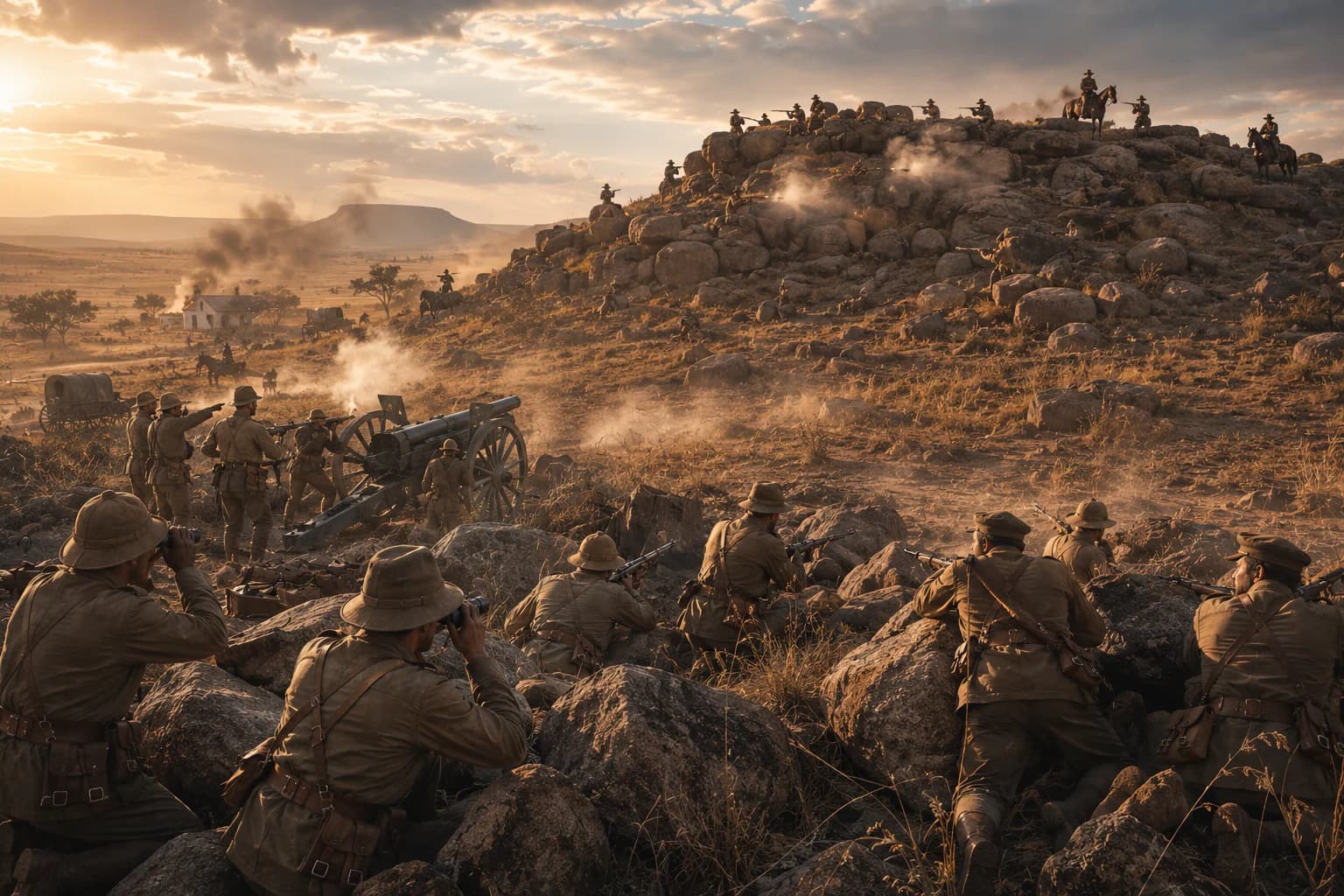
In 1898, Roosevelt chose action over administration. He resigned as assistant secretary of the navy and helped organise the First U.S. Volunteer Cavalry, remembered as the Rough Riders. Their charge up Kettle Hill during the fighting around Santiago became the centrepiece of his heroic image, though the broader battle involved many regular soldiers, including Black regiments whose contribution was often minimised in popular memory. Roosevelt understood publicity and wrote his own war narrative with energy and skill. The war turned him from reform politician into national celebrity, opening the path to governor of New York, vice president and then the White House.

1901

Unexpected president

Republican bosses had placed Roosevelt in the vice presidency partly to contain him. McKinley's assassination did the opposite. Suddenly president at forty-two, Roosevelt treated the office as what he called a bully pulpit: a platform from which to shape national debate. He did not believe the president should merely execute narrow instructions from Congress. Unless the Constitution forbade action, he argued, energetic leadership was legitimate when public welfare required it. This theory helped make the modern presidency more visible, personal and interventionist. Roosevelt's accession was accidental, but his expansion of executive expectation was deliberate.

1901–1909

Progressive leadership

Roosevelt's domestic programme was not anti-capitalist, but it insisted that national government had a duty to police corporate power. His administration challenged the Northern Securities Company, strengthened railroad regulation, and responded to public outrage over food and drug safety with landmark legislation in 1906. His conservation record was even more far-reaching: forests, monuments, wildlife refuges and public lands were placed under federal protection on a vast scale. Abroad, Roosevelt backed the Panama Canal, asserted a more interventionist role in the Caribbean and Latin America through the Roosevelt Corollary, and mediated the Russo-Japanese War, earning the Nobel Peace Prize. His achievements were substantial, but his imperial confidence and racial assumptions remain deeply contested.

1909–1912

Return and rupture

Roosevelt promised not to seek another full term in 1908 and supported William Howard Taft as his successor. The relationship soured as Roosevelt judged Taft too cautious and too friendly to conservative Republicans. In 1912 he challenged Taft for the nomination, lost amid bitter disputes and launched the Progressive Party. His New Nationalism called for stronger regulation, social welfare measures and a more direct democracy. The campaign was dramatic: Roosevelt survived being shot in Milwaukee and still delivered a speech. But the split handed the presidency to Woodrow Wilson. Roosevelt showed extraordinary personal appeal, yet also the destructive force of a leader unable to accept retirement from the centre.

1912–1919

Enduring influence

Roosevelt's final years were restless. He explored the River of Doubt in Brazil, an expedition that nearly killed him, and returned physically weakened but still politically loud. During the First World War, he attacked Woodrow Wilson's neutrality and later pressed for military preparedness. Personal grief struck when his son Quentin was killed in aerial combat in 1918. Roosevelt died in January 1919 at Sagamore Hill. His legacy is enormous and uneven: conservation pioneer, Progressive reformer, architect of a stronger presidency, imperial nationalist, racial thinker of his age and master of political performance. He made the presidency feel like a moving force in American life, for better and for worse.

Continue in context

Connected stories

Move from the profile into the wider events and settings this figure belongs to.

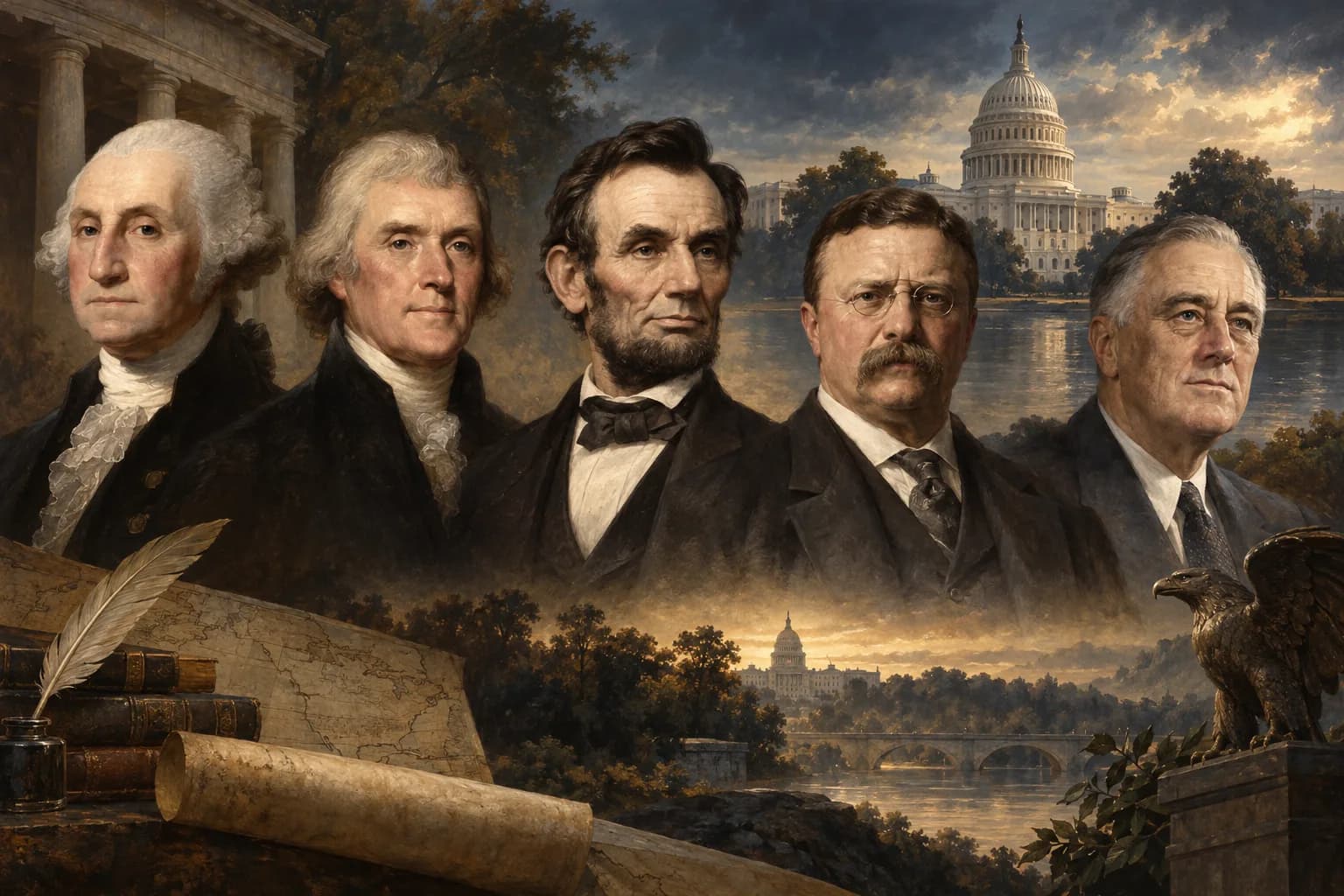
American Presidents lineage
Lineage47 presidents
American Presidents
1789 CE–present

The succession of American presidents from George Washington to today.

View lineage
Tertiary paths

Content note

This profile is written for educational use and connects to related Stories of History pages. The main portrait is an AI-assisted historical reconstruction, included as an illustrative aid rather than documentary evidence. Image policy Image attribution

References

Sources & Further Reading

Reliable reference works, archives and reading paths connected to this profile.

Further reading

  1. Encyclopaedia Britannica, Search results for Theodore Roosevelt,” accessed June 2026.Open source
  2. WorldCat, Books and library holdings for Theodore Roosevelt,” accessed June 2026.Open source

Primary sources

  1. Library of Congress, Search results for Theodore Roosevelt,” accessed June 2026.Open source

Reviewed claim sources

Loading reviewed claim sources...

A weekly route through history

Find out first about the latest published stories, feature notes and occasional Premium offers in one weekly email.