People

William Howard Taft

William Howard Taft was the 27th President of the United States and later Chief Justice of the Supreme Court. His biography spans Progressive Era reform, antitrust policy, the Philippines and judicial leadership.

Born
1857 CE
Died
1930 CE
Role
27th President of the United States

27th President of the United States (1857–1930)

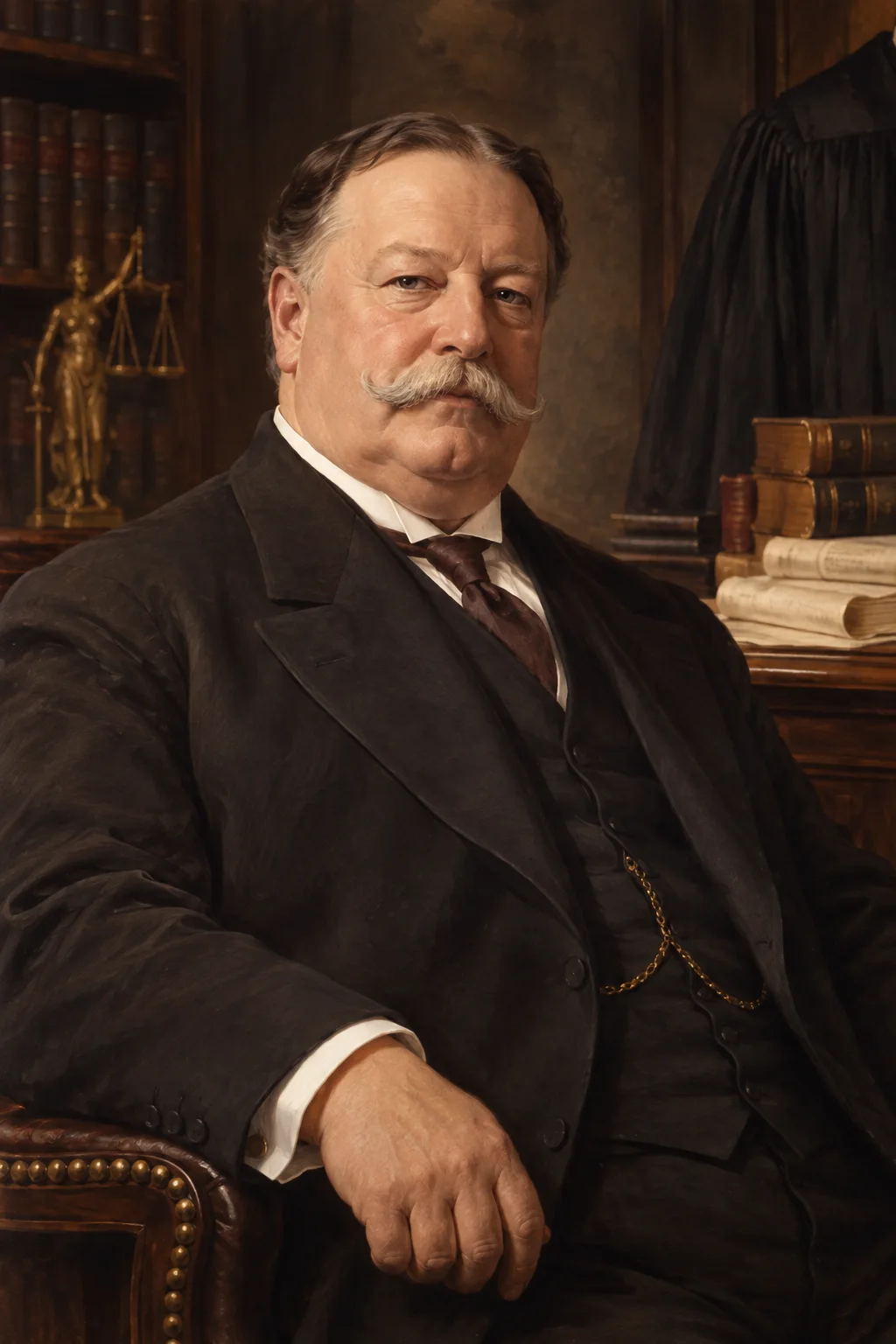
AI-generated portrait of William Howard Taft in formal presidential attire
AI-assisted historical reconstruction

An illustrative reconstruction based on historical context. It is not a photograph or documentary likeness. Image policy Attribution

Quick answer

William Howard Taft was the 27th President of the United States and later Chief Justice of the Supreme Court. His biography spans Progressive Era reform, antitrust policy, the Philippines and judicial leadership.

Born
1857 CE
Died
1930 CE
Role
27th President of the United States
Years
1857-1930 CE
Facts

William Howard Taft timeline facts

Selected specifics from this profile's life story.

1857
Cincinnati beginnings

William Howard Taft was born in Cincinnati in 1857 into a family steeped in law, Republican politics and public service.

1900–1908
Administrative leadership

Before the presidency, Taft governed the Philippines, served as Secretary of War and became Theodore Roosevelt's trusted administrator.

1912
Election defeat

The election of 1912 split the Republican Party when Roosevelt ran against Taft, allowing Woodrow Wilson to win the presidency.

1930
Enduring legacy

Taft's legacy rests on his unique service in two branches of government, his complicated Progressive record and his lasting remaking of the federal judiciary.

Life Journey

Law, reluctant power, and the presidency he never loved

Follow the story in a more continuous narrative, with a reading mode that matches how much depth you want.

Complete chronology

1857

Cincinnati beginnings

Taft grew up in a household where law and government were not distant abstractions. His father, Alphonso Taft, served as a judge, cabinet officer and diplomat, giving the family a strong expectation of public usefulness. William absorbed that world with unusual seriousness. He was sociable and warm, but his mind moved naturally toward order, procedure and institutional duty rather than theatrical politics. The Cincinnati of his youth was a post-Civil War city of growth, commerce and party organisation, and Taft learned early that public life could be a career of disciplined service. What he did not develop was the appetite for combat and self-display that modern presidential politics increasingly demanded.

1870s–1880

Legal education

Taft's education gave him both elite confidence and practical legal training. At Yale he became known for diligence, geniality and ambition disciplined by family expectation. Back in Ohio, law offered him the kind of work he liked best: arguments arranged carefully, authority located precisely, conclusions reached through reason rather than applause. He entered public legal roles early, serving as a prosecutor and then judge, and built a reputation for steadiness rather than brilliance for its own sake. That mattered. Taft's later presidency is sometimes treated as a detour, but his life makes more sense if viewed from the bench outward. He wanted public office to operate by rules, and he trusted institutions more than personality.

1890s

Judicial rise

Judicial office suited Taft almost perfectly. He served on the Ohio Superior Court and then on the United States Court of Appeals for the Sixth Circuit, where he handled complex legal questions with a temperament colleagues found balanced and reliable. He was no radical, but he was not simply passive either. In labour and business cases he tried to reconcile legal order with the changing realities of industrial America, sometimes drawing criticism from organised labour for injunctions that seemed to favour employers. Still, his reputation grew. Presidents saw him as able, loyal and administratively sound. Taft himself longed for appointment to the Supreme Court, but national leaders kept finding other uses for him.

1900–1908

Administrative leadership

Taft's largest pre-presidential responsibility came in the Philippines after the Spanish-American War. As civil governor from 1901, he argued for a more civilian, developmental approach than the harsher military rule that had accompanied the Philippine-American War. His famous phrase that the islands should be governed for the 'Philippines for the Filipinos' expressed a paternalistic imperial reformism rather than a promise of immediate independence. He promoted courts, education, infrastructure and public health while still administering an American colonial possession. Roosevelt later made him Secretary of War, a position that involved not only military administration but also the Panama Canal and colonial questions. Taft became indispensable because he could make systems work.

1909

Becoming president

Taft did not seize the presidency so much as accept it from the machinery around Roosevelt. The outgoing president believed his friend would continue Progressive reform while restoring legal balance after Roosevelt's more personal executive style. Taft won comfortably in 1908, defeating William Jennings Bryan, but the office exposed the difference between administrative competence and political command. He disliked the constant performance of leadership, found press management distasteful and underestimated the symbolic power of presidential gestures. He prosecuted more antitrust cases than Roosevelt had, yet appeared less Progressive because he lacked Roosevelt's dramatic language of reform. In politics, perception became its own form of fact.

1909–1912

Policy and division

Taft's record was more substantial than his reputation suggests. His administration pursued Standard Oil and American Tobacco, supported the Mann-Elkins Act to strengthen railroad regulation, and backed constitutional amendments for a federal income tax and direct election of senators. Yet political damage came early with the Payne-Aldrich Tariff, which many Progressives saw as a betrayal of reform promises. A bitter conservation dispute involving Interior Secretary Richard Ballinger and forester Gifford Pinchot widened the rupture with Roosevelt's wing of the party. Taft believed in lawful process and cabinet responsibility; his critics wanted moral crusade and public discipline. The Republican Party was becoming two parties inside one shell.

1912

Election defeat

The break with Roosevelt became personal and historic. Roosevelt decided Taft had betrayed Progressivism; Taft believed Roosevelt had abandoned constitutional restraint and party loyalty. At the 1912 Republican convention, Taft retained the nomination, but Roosevelt formed the Progressive or Bull Moose Party. The result was electoral disaster for Republicans. Taft finished third in the popular vote and carried only Utah and Vermont. Woodrow Wilson won the presidency with a divided opposition. For Taft, the defeat was humiliating but also liberating. The office he had never loved was gone, and the work he most valued, law and constitutional reflection, again became possible.

1921–1930

Chief Justice role

Taft's return to the judiciary was the happiest public chapter of his life. As Chief Justice from 1921 to 1930, he was less famous for a single constitutional doctrine than for reshaping the federal courts as an institution. He lobbied for the Judiciary Act of 1925, which gave the Supreme Court greater control over its docket and allowed it to focus on questions of national importance. He also championed a dedicated Supreme Court building, though he did not live to see it completed. On the bench, he generally favoured limited judicial intervention in economic regulation, but his deepest contribution was administrative: making the Court work like a modern branch of government.

1930

Enduring legacy

Taft remains an unusual figure because his career cuts across the American constitutional system. As president, he was not the failure caricature sometimes suggests: he enforced antitrust law, supported important constitutional amendments and governed during a difficult transition inside Republican politics. Yet he lacked the instinctive emotional command that makes a president seem larger than procedure. As Chief Justice, he found a role that matched his gifts. He improved court administration, strengthened judicial independence and helped define the Supreme Court's modern operating structure. Taft's biography is therefore not simply the story of a president who became a judge. It is the story of a legal mind temporarily trapped in the wrong kind of power, then restored to the institution where he could leave his clearest mark.

Continue in context

Connected stories

Move from the profile into the wider events and settings this figure belongs to.

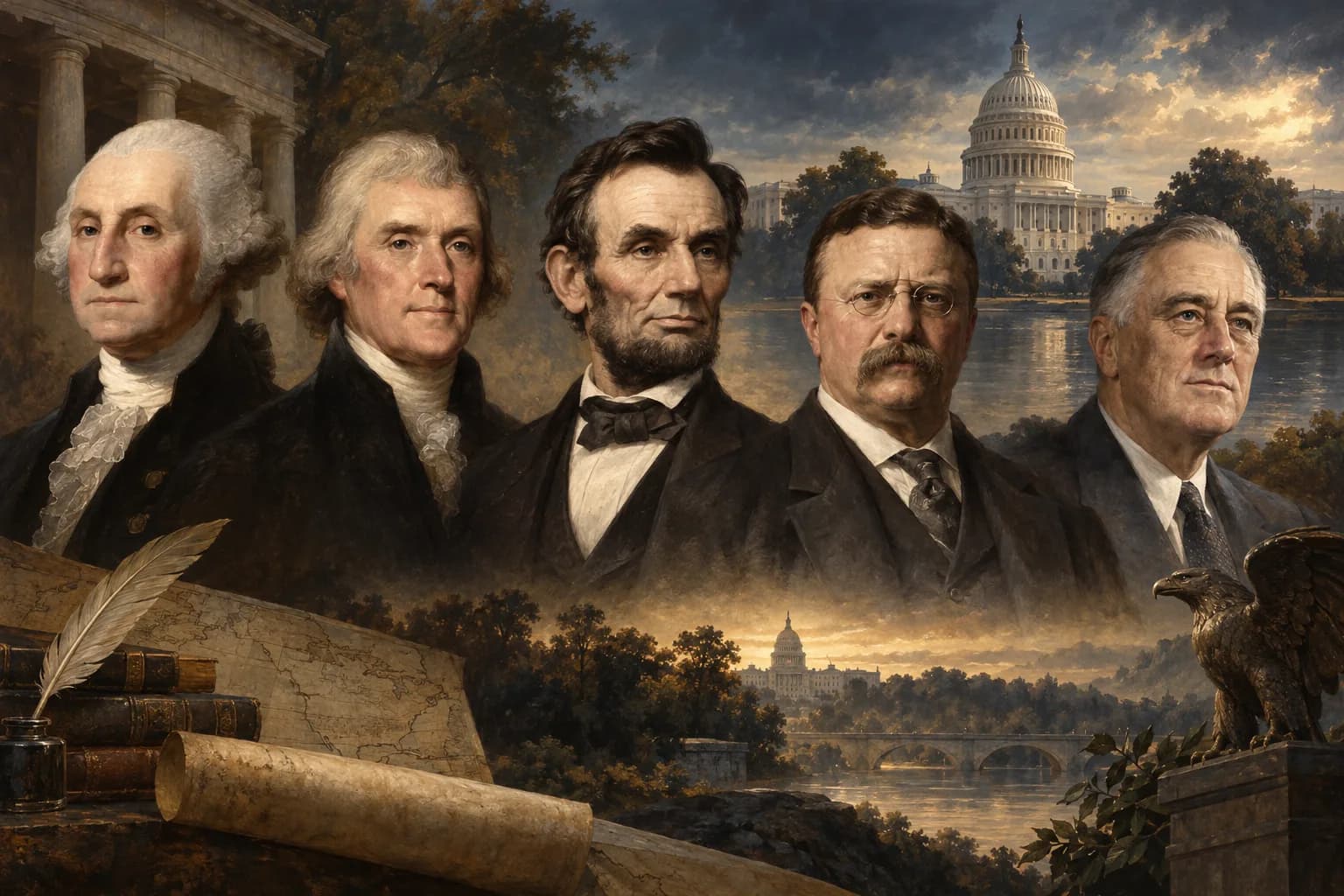
American Presidents lineage
Lineage47 presidents
American Presidents
1789 CE–present

The succession of American presidents from George Washington to today.

View lineage
Tertiary paths

Content note

This profile is written for educational use and connects to related Stories of History pages. The main portrait is an AI-assisted historical reconstruction, included as an illustrative aid rather than documentary evidence. Image policy Image attribution

References

Sources & Further Reading

Reliable reference works, archives and reading paths connected to this profile.

Further reading

  1. Encyclopaedia Britannica, Search results for William Howard Taft,” accessed June 2026.Open source
  2. WorldCat, Books and library holdings for William Howard Taft,” accessed June 2026.Open source

Primary sources

  1. Library of Congress, Search results for William Howard Taft,” accessed June 2026.Open source

Reviewed claim sources

Loading reviewed claim sources...

A weekly route through history

Find out first about the latest published stories, feature notes and occasional Premium offers in one weekly email.